Remembrance Day 2012: “War is like a flower…”: poems of War world-wide
Posted: November 11, 2012 Filed under: IMAGES, Louise Glück | Tags: Remembrance Day poems Comments Off on Remembrance Day 2012: “War is like a flower…”: poems of War world-wide
.
Louise Glück
“The Red Poppy”
.
The great thing
is not having
a mind. Feelings:
oh, I have those; they
govern me. I have
a lord in heaven
called the sun, and open
for him, showing him
the fire of my own heart, fire
like his presence.
What could such glory be
if not a heart? Oh my brothers and sisters,
were you like me once, long ago,
before you were human? Did you
permit yourselves
to open once, who would never
open again? Because in truth
I am speaking now
the way you do. I speak
because I am shattered.
. . .
Remembrance Day: poems about Palestine, Iraq, Afghanistan
Posted: November 11, 2012 Filed under: Arabic, Dunya Mikhail, English, Mahmoud Darwish | Tags: Remembrance Day poems Comments Off on Remembrance Day: poems about Palestine, Iraq, Afghanistan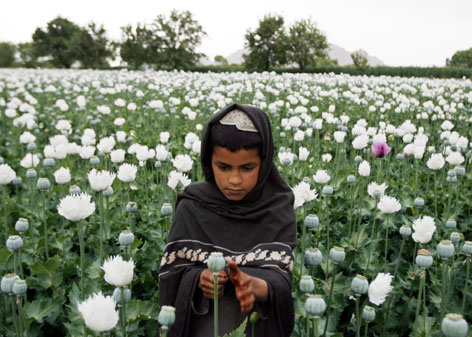
Mahmoud Darwish (born 1941, Palestine/Israel, died 2008, USA)
“I am from there”
.
I am from there and I have memories.
Like any other man I was born, I have a mother,
A house with several windows, friends and brothers.
I have a prison cell’s cold window, a wave
Snatched by seagulls, my own view, an extra blade
Of grass, a moon at word’s end, a life-supply
Of birds, and an olive tree that cannot die.
I walked and crossed the land before the cross
Of swords banqueted on what its body was.
.
I come from there, and I return the sky
To its mother when it cries for her, and cry
For a cloud on its return to recognize me.
I have learned all words befitting of blood’s court to break
The rule; I have learned all the words to take
The lexicon apart for one noun’s sake,
The compound I must make:
Homeland.
Sami Mahdi
Poems from “War Diaries”
(translated from Arabic by Ferial J Ghazoul)
.
I (Feb.14th 1991)
From gazelles’ eyes the pupils dropped
When the bridge was bombed
Lovers’ rings shattered
And mothers were bewildered.
.
II (Feb.16th 1991)
With fire we perform our ablutions every morning
Collecting our remnants
And the debris of our houses
We purge our souls with the blood of our wounds.
.
III (Feb.24th 1991)
Plenty we have received
What shall we offer you, O land of patient destitutes?
Plenty we have received
So receive us
And pave with us the paths of wayfarers.
.
Sami Mahdi (born 1940, Iraq) wrote the above poems about the Gulf War (1990-1991) when he was living in Baghdad and working as editor of an Iraqi daily newspaper.
. . .
Dunya Mikhail (born 1965, Baghdad, Iraq, now living in the USA)
“The Prisoner”
(translated from Arabic by Salaam Yousif and Elizabeth Winslow)
.
She doesn’t understand
what it means to be “guilty”
She waits at the prison door
until she sees him
to tell him “Take care”
as she used to remind him
when he was going to school
when he was going to work
when he was going on vacation
She doesn’t understand
what they are uttering now
those who are behind the bar
with their uniforms
as they decided that
he should be put there
with strangers in gloomy days
It never came to her mind
when she was saying lullabies
upon his bed
during those faraway nights
that he would be put
in this cold place
without moons or windows
She doesn’t understand
The mother of the prisoner doesn’t understand
why should she leave him
just because “the visit has finished” !
(2003)
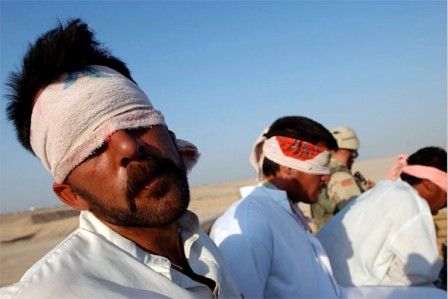
“The War works hard”
(translated from Arabic by Elizabeth Winslow)
.
How magnificent the war is!
How eager
and efficient!
Early in the morning
it wakes up the sirens
and dispatches ambulances
to various places
swings corpses through the air
rolls stretchers to the wounded
summons rain
from the eyes of mothers
digs into the earth
dislodging many things
from under the ruins…
Some are lifeless and glistening
others are pale and still throbbing…
It produces the most questions
in the minds of children
entertains the gods
by shooting fireworks and missiles
into the sky
sows mines in the fields
and reaps punctures and blisters
urges families to emigrate
stands beside the clergymen
as they curse the devil
(poor devil, he remains
with one hand in the searing fire)…
The war continues working, day and night.
It inspires tyrants
to deliver long speeches
awards medals to generals
and themes to poets
it contributes to the industry
of artificial limbs
provides food for flies
adds pages to the history books
achieves equality
between killer and killed
teaches lovers to write letters
accustoms young women to waiting
fills the newspapers
with articles and pictures
builds new houses
for the orphans
invigorates the coffin makers
gives grave diggers
a pat on the back
and paints a smile on the leader’s face.
It works with unparalleled diligence!
Yet no one gives it
a word of praise.
(2003)
.
Dunya Mikhail’s poem “The War works hard” has been described as being not about a specific war – although it could easily be about The Iraq War (2003-2011) – but rather “about War itself, seemingly a force as insistent and powerful as Life, in fact the very motor of human history. The poet’s verbs (“works” “sows”, “reaps”, “teaches”, “paints”) work rhetorically to make war seem like any other worthwhile human activity. Her (Mikhail’s) speaking voice exhibits not the slightest trace of shock, but in doing so forces the reader into shock…”
. . .
Alex Cockers
The Brutal Game
.
I’m sitting here now
Trying to put pen to paper
Trying to write something
That you can relate to.
.
It’s hard to relate
To my personal circumstances
I’m out here in Afghanistan now
Taking my chances.
.
Read what you read
And say what you say
You won’t understand it
Until you’ve lived it day by day.
.
Poverty-stricken people
With mediaeval ways
Will take your life without a thought.
.
And now we’re all the same
Each playing our part in this brutal game.
. . .
Morals……two for a pound
.
I’ve been and seen
And feel slightly unclean
About the things I’ve done
Under a hot sun.
.
Away in a place
The British public don’t understand
A place where every day
Man kills fellow man.
.
Is it right to fight
In an unjust war?
Well I don’t have a choice
And peace is such a bore.
.
Being paid tuppence
To put my life on the line
Trying to pretend
That everything is fine.
. . .
Alex Cockers (born 1985, UK) was a Royal Marines Commando from 2005 to 2009. He served in Helmand province, Afghanistan, for fourteen months. He explains:
” I had many feelings and thoughts that I was unable to share with anyone…Under the stars in the desert, rhymes would manifest in my head. I would write them down, construct them into poems and somehow I felt better for getting it off my chest. ”
. . . . .
Remembrance Day: “No Secret: the Rwandan Genocide”
Posted: November 11, 2012 Filed under: English, Paul Hartal | Tags: Remembrance Day poems Comments Off on Remembrance Day: “No Secret: the Rwandan Genocide”
“Revenge is barren of itself; itself is the dreadful food it feeds on; its delight is murder, and its satiety, despair.”
(Johann Christoph Friedrich von Schiller)
.
Paul Hartal
(Canadian painter and poet, born 1936, Hungary)
“No Secret: the Rwandan Genocide”
.
A remote source of The Nile,
the Kagera River originates in Burundi.
On its way to Lake Victoria it flows
into a steep gorge along the natural border
between Rwanda and Tanzania.
Before entering the ravine,
the river cascades in a small waterfall
that swells in the rainy season.
.
As the Kagera sweeps down from
the highlands it carries within its currents
vast clusters of uprooted trees embedded
in gigantic dollops of elephant grass.
In the spring and summer of 1994
it was still much the same.
However, this time also thousands
of human corpses floated on the river.
.
Rwanda and Burundi
are two tiny African countries,
each with a territory somewhat smaller
than Belgium. Most of the population
belong to Hutu tribes,
who are traditionally crop growers.
.
But beginning in the 1300s
warrior herdsmen
from the highlands of Ethiopia
migrated to the region.
They originally spoke Somali or Oromo,
but in adopting the local Bantu language
and settling among the Hutus,
they became known as Tutsis.
.
The German colonists favoured
the Ethiopian look of the Tutsi minority.
They employed them as overseers
in the administration of Ruanda-Urundi,
as the colony was called then.
.
Then during the First World War Belgium
took over governing the territory
but continued to support the Tutsis
as the ruling class.
.
In 1919 Brussels received a mandate
from the League of Nations to administer
the colony. The Belgian colonists divided
Tutsis and Hutus on the basis
of cattle ownership, church documents,
physical measurements
and physiognomic appearance.
.
Basically, they had designated
the wealthy and tall as Tutsis,
and classified those poorer
and shorter as Hutus.
The Tutsis got used fast
to their privileged status
as Rwandan aristocrats.
They worshipped their king
as a god-like ruler and treated
the Hutus with disdain as peasants.
.
But the aristocratic Tutsi monarchy
came to an end in 1959
when Belgium allowed holding
universal elections.
King Kigeli V of Ruanda-Urundi
was forced to go to exile
and the majority Hutus
assumed control of the government.
.
These were turbulent times
that deteriorated into wide spread
communal violence.
In 1962 two independent countries
emerged from the former colony,
Rwanda and Burundi.
But the transition from colony
to independence was not
a peaceful one.
.
At the time that Rwanda
became independent,
Hutus comprised more than 80 percent
of the country’s seven million people.
Nevertheless, the Tutsi minority
was reluctant to give up
its privileged ruling status.
.
Consequently, Hutus and Tutsis
were at each other’s throat
in the power struggle
for governing the country.
In Rwanda hundreds of Tutsis
were killed while thousands of others
fled to neighbouring Burundi and Uganda.
.
In the aftermath of the atrocities,
President Grégoire Kayibanda
made the Hutus the governing majority
of the nation. Yet the leaders
of the new regime did not choose
a policy of national reconciliation.
Instead, they opted for oppression
and discrimination.
.
They blamed the problems of Rwanda
on the Tutsis. In the 1970s
the Hutu-led military
continued to murder Tutsis in Rwanda.
They excluded the Tutsis
from the governmental administration,
the armed forces, even from schools
and universities.
.
Yet meanwhile Tutsis had their share
in violent ethnic cleansing as well.
In 1972, in response to a Hutu rebellion,
the Tutsi controlled army
in the Republic of Burundi
killed over 100,000 Hutus.
.
Similarly to Rwanda, over 80 percent
of the population in Burundi
consists of Hutu tribes.
.
Harking back on the shame and humiliation
of the past, the Hutu leadership in Rwanda
intensified their hateful propaganda,
inflaming bitterness and hostility
against the tall, aristocratic Tutsi.
.
They claimed that the Tutsis
intended to restore a feudal system
to enslave the Hutu population.
They recruited writers and teachers
to travel the country to raise Hutu pride
and to create a pan-Hutu consciousness.
They sowed the seeds of spite,
unfurled the propaganda of hate
and prepared the hurricane of genocide.
.
However, in the neighbouring countries
the Tutsi refugee Diaspora organized
militia forces to overthrow
the Hutu regime in Rwanda.
In 1990 civil war broke out
as the Rwandan Patriotic Front (RPF)
of the Tutsi minority
invaded the country from Uganda.
.
Then on April 6,1994, an airplane
carrying the Hutu presidents
of two African nations,
Juvénal Habyarimana of Rwanda and
Cyprien Ntaryamira of Burundi,
had been shot down.
The fanatic Akazu organization
of the Hutu Power ideologists
immediately blamed the Tutsis
for the shooting down of the plane.
.
They spread hate and hysteria.
By radio and word of mouth
they told Hutu civilians that it was
their patriotic duty
to “fill the half-empty graves”
with the bodies of Tutsis.
They called for the slaughter
of all Tutsis, as well as of Hutus
who sympathized with the Tutsi.
.
They even incited Hutu wives
and husbands to murder
their own spouses.
.
Although throughout the centuries
both Hutus and Tutsis
unleashed violent actions
and slaughtered each other,
the tragic events of 1994 culminated
in one of the most horrible atrocities
of history.
.
The Rwandan radio exhorted people
to fight for Rwanda and to kill
the Tutsis like ‘cockroaches’
and sweep them from the country.
The radio inflamed the Hutus
to massacre the Tutsis,
urging them to use
every kind of weapons;
if not guns and grenades,
then arrows, spears,
machetes, knives and clubs.
.
And so they did.
Frenzied Hutu squads killed
Tutsi men, women, children
and babies by the thousands
in the streets, in churches,
schools and in their houses.
In the countryside the murderers
covered the dead with banana leaves
in order to screen them
from aerial photography.
.
In about100 days,
between April 6 and mid-July in 1994,
approximately one million people
were killed. The victims also included
Hutus who refused to participate
in the massacres or were
on friendly relations with Tutsis.
.
The cold blooded murderers
who perpetrated these heinous crimes
were fuelled by fanatic dedication
to a pan-nationalist identity politics.
.
The killers were often not strangers
but familiar faces to the victims,
neighbours and workmates,
even relatives or former friends.
.
The December 1993 issue
of the Hutu Kangura magazine shows
a picture of the Rwandan President
Grégoire Kayibanda next to a machete.
Adjacent to the picture appear the words:
“Tutsi: Race of God”, and then
the magazine poses the question:
“Which weapons are we going to use
to beat the cockroaches for good? ”
.
The genocide
that followed was no secret!
It occurred uninterrupted
by United Nations forces
that were in place
monitoring a ceasefire.
.
And journalists and TV cameras
from all over the world reported
the massacres.
Viewers in cities and villages
on different continents
sat in front of their television screens,
sipping coffee or eating popcorn,
and watched in shock
the horrible mass murders.
.
The genocide ended in July 1994
when the Tutsi rebels of the RPF
defeated the Hutu military forces
of Rwanda. Fearing retributions,
two million Hutus fled
to neighbouring Burundi, Tanzania,
Uganda and Zaire. Many of them
participated in the massacres.
.
Conditions in the refugee camps were
dreadful and thousands died
in epidemics of cholera and dysentery.
.
The international community
could have intervened in order to stop
the Rwandan genocide, but governments
lacked the political will to do that.
And, indeed,
the United Nations Security Council
accepted responsibility
for failing to prevent the massacres.
.
The unchecked brutality
of the perpetrators of this genocide
“made a mockery, once again,
of the pledge ‘never again’”,
said the Canadian Foreign Minister,
Lloyd Axworthy.
He was referring to the promise
made after the Holocaust.
. . .
Editor’s note:
Paul Hartal presents this poem to us almost like a computer printer dishing up page after page of a dense document. There is little of the poem in his poem but perhaps that’s because the most urgent thing – if one can speak urgently of an event in time from 18 years ago – is to make history known, to tell the facts, to keep on telling the facts, of the Rwandan Genocide.
.
Ask yourself – honestly – do you remember very much about world events in the summer of 1994? Because the Canadian and U.S. media’s scandal-vulture coverage after the murder of O.J. Simpson’s wife was top of the news in June and July while Rwanda’s horrific social cataclysm received far less scrutiny on TV news programmes. Rwanda, Burundi – Hutus, Tutsis? What countries were those? And which people were they? And: who are they – today?
.
Any reader wishing to find out more is encouraged to make a beginning by reading Shake Hands with the Devil: The Failure of Humanity in Rwanda, published in 2003 by Canada’s Roméo Dallaire. In 1993 Lieutenant-General Dallaire received the commission as Force Commander of UNAMIR, the United Nations Assistance Mission in Rwanda.
.
Lloyd Axworthy quotation (April 15th 2000, BBC News): “The unchecked brutality of the genocidaires made a mockery, once again, of the pledge ‘Never again’.” (‘Never again’ – this phrase is inscribed in several languages at the Dachau monument marking the Nazi Holocaust.)

“There’s a man who drinks nothing but memories”: Vietnamese poems: Nguyen Quang Thieu, Nguyen Ba Chung, Thich Nhat Hanh
Posted: November 11, 2012 Filed under: English, Nguyen Ba Chung, Nguyen Quang Thieu, Thich Nhat Hanh Comments Off on “There’s a man who drinks nothing but memories”: Vietnamese poems: Nguyen Quang Thieu, Nguyen Ba Chung, Thich Nhat Hanh
.
Nguyen Quang Thieu (Vietnamese poet, born 1957)
“The Inn of Snake Alcohol”
.
The snakes are buried in alcohol.
Their spirits creep over the mouth of the jug,
They lie in the bottoms of cups.
Creep on, please creep on through white lips —
Listen: Drunk is shouting his vagabond song.
.
With the top of a hat, with a pair of shoes
With glazed eyes that search the horizon
With anger setting fires in the temple
A whole life stunned by nothingness —
.
Like a broken stone, like a bending reed
With the startling turns of a poem
With a frenzy of fears that lick like fire
With the laugh in the sleepwalker’s crying —
.
Creep on, spirits of snakes, creep on!
Dazzling venom spurts from the jug.
There’s a man who drinks nothing but memories
Whose veins are the paths of snakes.
.
The little inn buries the great night
The forest recalls the name of Autumn
Alcohol carries the spirits of snakes
And Drunk is making a song from his own venom.

“My Mother’s Hair”
.
One of your hairs fell out last night,
a piece of your life was gone without a sound.
I know a difficult day is coming,
my heart, pierced, utters a quiet cry.
.
Let my childhood smile again, in the sun,
and turn me into an innocent little headlouse
so I can crawl through the jungle of your hair
and sing a song of darkness in its fragrance.
.
Under your fingernail-roof I’ll sleep in my house;
in my black dream I’ll water your black trees.
I’ll pick black fruits, and hair-jungle bees
will bring me black poems to be opened.
.
How will I live, without your hair?
How will I breathe without its fragrance?
How will I survive when I am discovered
by ghosts of wooden combs combing your hair?
.
Let me wear shows made of dawn-flowers
and crawl without a sound into your sleep.
I’ll take the place of the hair that’s gone
and sing of hair-clouds flying from night to day.
.
“The Inn of Snake Alcohol” and “My Mother’s Hair” © Nguyen Quang Thieu
Translations from Vietnamese by the poet – with Martha Collins
. . .
Nguyen Ba Chung (born 1949, Vietnam)
“Non-attachment”
.
Let’s gather every fragment of our memories,
it’s all that we have at the end of our life.
Warring days and nights, showers of sun and rain –
what’s left of love?
Let’s gather what remains of our memories,
it’s all that we have at the close of our life.
Warring days and nights make us wonder:
Should the bundle we gather be empty or full?
. . .
Thich Nhat Hanh
(Buddhist monk, poet, peace activist – born 1926, Vietnam)
“For Warmth”
.
I hold my face between my hands
– no, I am not crying
I hold my face between my hands
– to keep my loneliness warm
– two hands protecting
– two hands nourishing
– two hands to prevent my soul from leaving me
– in anger.
. . . . .
Remembrance Day: reflections upon the Vietnam War: Yusef Komunyakaa
Posted: November 11, 2012 Filed under: English, Yusef Komunyakaa | Tags: Remembrance Day poems Comments Off on Remembrance Day: reflections upon the Vietnam War: Yusef Komunyakaa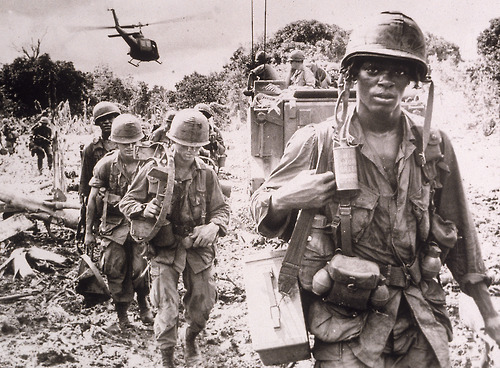
Editor’s note:
What eventually came to be known as The Vietnam War began in 1955 and ended twenty years later when Saigon “fell” to Communist North Vietnam and became known as Ho Chi Minh City. (In 2012 Vietnam is a unified Socialist-oriented free-market economy.) Vietnam was a a Cold-War era ‘hot button’ zone for the USSR and the USA. The U.S. sent soldiers in the early 1960s but American troupes did not become involved in combat until 1965 and by 1973 had withdrawn. Three million Vietnamese (from both sides) died, a million and a half Laotians and Cambodians, and close to 60,000 U.S. soldiers. It was not a war that could be “won”.
. . .
Yusef Komunyakaa
(U.S. Vietnam War Veteram, born James William Brown, 1947, Bogalusa, Louisiana)
“Roll Call”
.
Through rifle sights
We must’ve looked like crows
perched on a fire-eaten branch,
lined up for reveille, ready
to roll-call each M-16
propped upright
between a pair of jungle boots,
a helmet on its barrel
as if it were a man.
The perfect row aligned
with the chaplain’s cross
while a metallic-gray squadron
of sea gulls circled. Only
a few lovers have blurred
the edges of this picture.
Sometimes I can hear them
marching through the house,
closing the distance. All
the lonely beds take me back
to where we saluted those
five pairs of boots
as the sun rose against our faces.
. . .
“The Dead at Quang Tri”
.
This is harder than counting stones
along paths going nowhere, the way
a tiger circles and backtracks by
smelling his blood on the ground.
The one kneeling beside the pagoda,
remember him? Captain, we won’t
talk about that. The Buddhist boy
at the gate with the shaven head
we rubbed for luck
glides by like a white moon.
He won’t stay dead, dammit !
Blades aim for the family jewels;
the grass we walk on
won’t stay down.
. . .
“Tu Do Street”
.
Music divides the evening.
I close my eyes and can see
men drawing lines in the dust.
America pushes through the membrane
of mist and smoke, and I’m a small boy
again in Bogalusa. White Only
signs and Hank Snow. But tonight
I walk into a place where bar girls
fade like tropical birds. When
I order a beer, the mama-san
behind the counter acts as if she
can’t understand, while her eyes
skirt each white face, as Hank Williams
calls from the psychedelic jukebox.
We have played Judas where
only machine-gun fire brings us
together. Down the street
black GIs hold to their turf also.
An off-limits sign pulls me
deeper into alleys, as I look
for a softness behind these voices
wounded by their beauty and war.
Back in the bush at Dak To
and Khe Sanh, we fought
the brothers of these women
we now run to hold in our arms.
There’s more than a nation
inside us, as black and white
soldiers touch the same lovers
minutes apart, tasting
each other’s breath,
without knowing these rooms
run into each other like tunnels
leading to the underworld.
. . .
“A Reed Boat”
.
The boat’s tarred and shellacked to a water-repellent finish, just sway-
dancing with the current’s ebb, light as a woman in love. It pushes off
again, cutting through lotus blossoms, sediment, guilt, unforgivable dark-
ness. Anything with half a root or heart could grow in this lagoon.
.
There’s a pull against what’s hidden from day, all that hurts. At dawn the
gatherer’s shadow backstrokes across water, an instrument tuned for gods
and monsters in the murky kingdom below. Blossoms lean into his fast
hands, as if snapping themselves in half, giving in to some law.
.
Slow, rhetorical light cuts between night and day, like nude bathers em-
bracing. The boat nudges deeper, with the ease of silverfish. I know by his
fluid movements, there isn’t the shadow of a bomber on the water any-
more, gliding like a dream of death. Mystery grows out of the decay of
dead things – each blossom a kiss from the unknown.
.
When I stand on the steps of Hanoi’s West Lake Guest House, feeling that
I am watched as I gaze at the boatman, it’s hard to act like we’re the only
two left in the world. He balances on his boat of Ra, turning left and right,
reaching through and beyond, as if the day is a woman he can pull into his
arms.
. . .
“Facing It”
.
My black face fades,
hiding inside the black granite.
I said I wouldn’t,
dammit: No tears.
I’m stone. I’m flesh.
My clouded reflection eyes me
like a bird of prey, the profile of night
slanted against morning. I turn
this way – the stone lets me go.
I turn that way – I’m inside
the Vietnam Veterans Memorial
again, depending on the light
to make a difference.
I go down the 58,022 names,
half-expecting to find
my own in letters like smoke.
I touch the name Andrew Johnson;
I see the booby trap’s white flash.
Names shimmer on a woman’s blouse
but when she walks away
the names stay on the wall.
Brushstrokes flash, a red bird’s
wings cutting across my stare.
The sky. A plane in the sky.
A white vet’s image floats
closer to me, then his pale eyes
look through mine. I’m a window.
He’s lost his right arm
inside the stone. In the black mirror
a woman’s trying to erase names:
No, she’s brushing a boy’s hair.
. . .
“Ode to the Maggot”
.
Brother of the blowfly
And godhead, you work magic
Over battlefields,
In slabs of bad pork
.
And flophouses. Yes, you
Go to the root of all things.
You are sound and mathematical.
Jesus, Christ, you’re merciless
.
With the truth. Ontological and lustrous,
You cast spells on beggars and kings
Behind the stone door of Caesar’s tomb
Or split trench in a field of ragweed.
.
No decree or creed can outlaw you
As you take every living thing apart. Little
Master of earth, no one gets to heaven
Without going through you first.
. . . . .
All poems (except “Reed Boat” and “Ode to the Maggot”) are from the poet’s 1988 collection, Dien Cai Dau.
© Yusef Komunyakaa
Remembrance Day: Japanese + American poems of war and “peece”
Posted: November 11, 2012 Filed under: Akiko Yosano, English, Hiroshi Kashiwagi, Japanese, Sadako Kurihara | Tags: Remembrance Day poems Comments Off on Remembrance Day: Japanese + American poems of war and “peece”
Ouchi Yoshitaka (a “daimyo” or feudal lord, 1507-1551)
.
Both the victor and the vanquished are
but drops of dew, but bolts of lightning –
thus should we view the world.
. . .
Uesugi Kenshin (a “daimyo” or feudal lord, 1530-1578)
.
Even a life-long prosperity is but one cup of ‘sake’;
A life of forty-nine years is passed in a dream;
I know not what life is, nor death.
Year in year out – all but a dream.
Both Heaven and Hell are left behind;
I stand in the moonlit dawn,
Free from clouds of ‘attachment’.
. . .
北条 氏政
(1538-1590)
雨雲の おほへる月も 胸の霧も はらひにけりな 秋の夕風
我が身今 消ゆとやいかに 思ふべき 空より来たり 空へ帰れば
吹きとふく 風な恨みそ 花の春 紅葉も残る 秋あらばこそ
. . .
Hojo Ujimasa (1538-1590)
Hojo was a “daimyo” and “samurai” who, after a shameful defeat, committed “seppuku” or ritual suicide by self-disembowelment. He composed a poem before he killed himself:
“Death Poem”
.
Autumn wind of evening,
blow away the clouds that mass
over the moon’s pure light
and the mists that cloud our mind –
do thou sweep away as well.
Now we disappear –
well, what must we think of it?
From the sky we came – now we may go back again.
That’s at least one point of view.
. . .
The following poem by Akiko Yosano was composed as if to her younger brother who was drafted to fight in the Russo-Japanese War (1904-1905). It was never specifically anti-war only that the poet wished that her brother not sacrifice his life. At the time the poem was not censored but in the militaristic 1930s it was banned in Japan.
.
Akiko Yosano / 与謝野 晶子 (1878-1942)
.
Oh, my brother, I weep for you.
Do not give your life.
Last-born among us,
You are the most belovéd of our parents.
Did they make you grasp the sword
And teach you to kill?
Did they raise you to the age of twenty-four,
Telling you to kill and die?
.
Heir to our family name,
You will be master of this store,
Old and honoured, in Sakai, and therefore,
Brother, do not give your life.
For you, what does it matter
Whether Lu-Shun Fortress falls or not?
The code of merchant houses
Says nothing about this.
.
Brother, do not give your life.
His Majesty the Emperor
Goes not himself into the battle.
Could he, with such deeply noble heart,
Think it an honour for men
To spill one another’s blood
And die like beasts?
.
Oh, my brother, in that battle
Do not give your life.
Think of mother, who lost father just last autumn.
How much lonelier is her grief at home
Since you were drafted.
Even as we hear about peace in this great Imperial Reign,
Her hair turns whiter by the day.
.
And do you ever think of your young bride,
Who crouches weeping behind the shop curtains
In her gentle loveliness?
Or have you forgotten her?
The two of you were together not ten months before parting.
What must she feel in her young girl’s heart?
Who else has she to rely on in this world?
Brother, do not give your life.

Nogi Maresuke / 乃木 希典
(1849-1912)
Two poems written during the Russo-Japanese War of 1904-1905
– Nogi Maresuke was a commanding general:
.
Mountain and river, grass and tree, grow more barren;
for ten miles winds smell of blood in the fresh battlefield.
Conquering horses do not advance nor do men talk;
outside Jinzhou Castle, I stand in the setting sun.
…..
Emperor’s army, a million, conquered the powerful foe;
field battles and fort assaults made mountains of corpses.
Ashamed – how can I face their fathers, grandfathers?
We triumph today?
. . .
Kenzo Ishijima (Japanese Kamikaze pilot, WW2)
.
Since my body is a shell
I am going to take it off
and put on a glory that will never wear out.
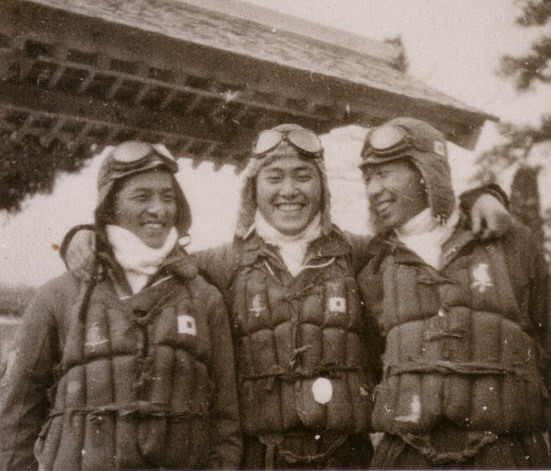
A popular soldiers’ song of the Japanese Imperial Navy during WW2 in which a Kamikaze naval aviator addresses his fellow pilot – parted in death:
“Doki no Sakura” (Cherry blossoms from the same season)
.
You and I, blossoms of the same cherry tree
That bloomed in the naval academy’s garden.
Blossoms know they must blow in the wind someday,
Blossoms in the wind, fallen for their country.
.
You and I, blossoms of the same cherry tree
That blossomed in the flight school garden.
I wanted us to fall together, just as we had sworn to do.
Oh, why did you have to die, and fall before me?
.
You and I, blossoms of the same cherry tree,
Though we fall far away from one another.
We will bloom again together in Yasukuni Shrine.
Spring will find us again – blossoms of the same cherry tree.
. . .
Sadako Kurihara (1912-2005)
Sadako was a controversial poet in Japan, censored during the post-War American Occupation for describing in detail the horrors post-Atomic Bomb in Hiroshima (she was present Aug.6th 1945). She also took a tough, critical stand toward Japan’s aggressions (sometimes referred to as the Asian Holocaust) against China and Korea.
.
“ When we say ‘Hiroshima’ ”
.
When we say Hiroshima, do people answer,
gently, Ah, Hiroshima? ..Say Hiroshima,
and hear Pearl Harbor. Say Hiroshima,
and hear Rape of Nanjing. Say Hiroshima,
and hear women and children in Manila, thrown
into trenches, doused with gasoline, and
burned alive. Say Hiroshima, and hear
echoes of blood and fire. Ah, Hiroshima,
we first must wash the blood off our own hands.
. . .
Hiroshi Kashiwagi (Librarian and poet, born 1922, Sacramento, California)
Hiroshi is a “Nisei”(2nd generation Japanese-American). He was interned at Tule Lake Segregation Camp from 1942-1946. Here is a poem he wrote about his childhood in California:
.
“Pee in the puddle”
.
Wes was fat, something
of a classroom joke
we laughed when he
was late which was
almost every day and
we laughed when he
came on time. John
was always so fair
he let me play
Chinese tag with
them on the way
home from school
but I’d like to remember
him as our fourth
grade Santa Claus
though actually he
was slender with
a high nose and
very German it was
he who thought we
.
should pee in the
puddle. He called
our things brownies
I know he got it
from mine theirs
were white blue
white I wonder
what became of
Wes. I know John
was killed during
World War II
flying for the RAF
crazy guy couldn’t
wait for the U.S.
to enter the war.
I suppose Wes is
still fat and lazy
probably a father many times
.
anyway we wasted
a lot of time
after school. Three
golden loops rising
out of the
brown puddle into
which in time we
all three were
shoved when at
last I came home
crying for my
bread and jam I
was smelling quite
a bit of pee.
Remembering now
I can almost
smell it Wes’s
John’s and mine.
. . . . .
Poems about Elections / Los poetas hablan de Elecciones: 6 nov. 2012
Posted: November 6, 2012 Filed under: Alexander Best, English, Spanish Comments Off on Poems about Elections / Los poetas hablan de Elecciones: 6 nov. 2012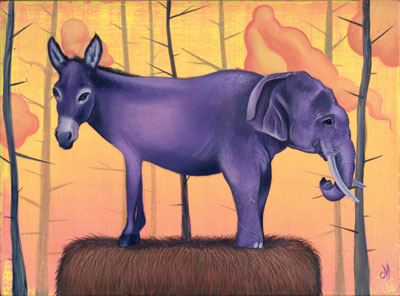
Poems about Elections / Los poetas hablan de Elecciones: 6 nov. 2012
.
By now many citizens of the USA – and countless people worldwide – are good and tired of news coverage – hasn’t media been droning on for twelve months? – of the Democratic (Obama) and Republican (Romney) campaigns leading up to the USA’s presidential election. And today – Tuesday, November 6th – is when voters cast their ballots – in hope, in anger, out of a mechanical sense of duty – or even for their very first time…
And so we present a selection of poems – some of them satirical – about election politics.
. . .
They’re predicting this one’ll be a nailbiter and a humdinger,
like Kennedy’s election over Nixon back in 1960
– just too close to call.
.
Alexander Best
“Swing-State Boogie”
.
“It’s no exaggeration to say
That the undecideds could
Go either way.”<*>
And gosh, who knew? that
How it goes
Depends on news from
O – HI – O ?
<*>Quotation from George Bush Sr., whose mastery of the backwards witty and bafflingly mundane in political comment was surpassed only by his son, George Bush Jr.
. . .
The following poem, “The Poor Voter on Election Day”, was written at a time when Democracy meant only white men voted – and no women. (And people doubtless did vote with their left hands too, though Whittier seemed to think all power lay in the right…)
But Whittier’s idealistic political sentiment is as American in 2012 – even with contemporary cynicism factored in – as it was in 1852.
.
John Greenleaf Whittier (1807-1892)
“The Poor Voter on Election Day” (1852)
.
The proudest now is but my peer,
The highest not more high;
Today, of all the weary year,
A king of men am I.
Today alike are great and small,
The nameless and the known
My palace is the people’s hall,
The ballot-box my throne!
.
Who serves today upon the list
Beside the served shall stand;
Alike the brown and wrinkled fist,
The gloved and dainty hand!
The rich is level with the poor,
The weak is strong today;
And sleekest broadcloth counts no more
Than homespun frock of gray.
.
Today let pomp and vain pretence
My stubborn right abide;
I set a plain man’s common sense
Against the pedant’s pride.
Today shall simple manhood try
The strength of gold and land
The wide world has not wealth to buy
The power in my right hand!
.
While there’s a grief to seek redress,
Or balance to adjust,
Where weighs our living manhood less
Than Mammon’s vilest dust —
While there’s a right to need my vote
A wrong to sweep away,
Up! clouted knee and raggéd coat!
A man’s a man to-day!
. . .
Hoy, en la ocasión de la Elección en los EE.UU., le presentamos poemas de dos poetas que hablaron de la política con pasión y con escepticismo:
.
Guillermo Aguirre y Fierro*
(1887-1949, San Luis Potosí, México)
“La Elección”
*Poema anónimo publicado en el periódico “El Cronista del Valle” (Brownsville, Texas, mayo de 1926). Historiador Antonio Saborit ha dicho que –seguramente – el poema fue escrito por Guillermo Aguirre y Fierro.
.
El león falleció ¡triste desgracia!
Y van, con la más pura democracia,
a nombrar nuevo rey los animales.
Las propagandas hubo electorales,
prometieron la mar los oradores,
y aquí tenéis algunos electores:
aunque parézcales a ustedes bobo
las ovejas votaron por el lobo;
como son unos buenos corazones
por el gato votaron los ratones;
a pesar de su fama de ladinas
por la zorra votaron las gallinas;
la paloma inocente,
inocente votó por la serpiente;
las moscas, nada hurañas,
querían que reinaran las arañas;
el sapo ansía, y la rana sueña
con el feliz reinar de la cigüeña;
con un gusano topo
que a votar se encamina por el topo;
el topo no se queja,
más da su voto por la comadreja;
los peces, que sucumben por su boca,
eligieron gustosos a la foca;
el caballo y el perro, no os asombre,
votaron por el hombre,
y con dolor profundo
por no poder encaminarse al trote,
arrastrábase un asno moribundo
a dar su voto por el zopilote.
Caro lector que inconsecuencias notas,
dime: ¿no haces lo mismo cuándo votas?
. . .
Jorge Valenzuela (Chile)
“Poema sobre las Elecciones”
.
A prepararse señores
se vienen las municipales
se renovarán los alcaldes
y también los concejales.
Volverán las calles sucias
las paredes muy pintadas
afiches en las casas
y las voces destempladas.
Las campañas en terreno
las visitas puerta a puerta
para cuadrar como sea
las ficticias encuestas.
Los diarios-la televisión
y las radios saturadas
destacando al candidato
ofreciendo todo y nada.
Los operativos sociales
los alimentos en cajas
materiales de todo tipo
para reparar bien las casas.
Al final de la contienda
vencedores y vencidos
si te he visto no me acuerdo
y el voto se ha perdido.
. . .
At the age of 27 NDP candidate Ruth Ellen Brosseau won the Québec seat of Berthier-Maskinongé in the May 2011 Canadian federal election. A French-speaking riding of which she had little knowledge – she has since been on a big learning curve with the French language – and she lived in Kingston at the time, not Trois-Rivières – Brosseau campaigned only barely because she was on vacation in Las Vegas in the days leading up to the vote. Yet she won – and by a healthy margin. What’s her secret ?!? Because Barack Obama and Mitt Romney – who spent over a billion dollars each on their campaigns – would dearly love to know!
.
Adrian deKuyper
“When the Bell Tolls” (A Limerick)
.
With hard work and much dedication
Our MPs do their best for our nation
So we salute Ms. Brosseau
Who it seems did not know
That when the bell tolls – don’t take a vacation.
. . .
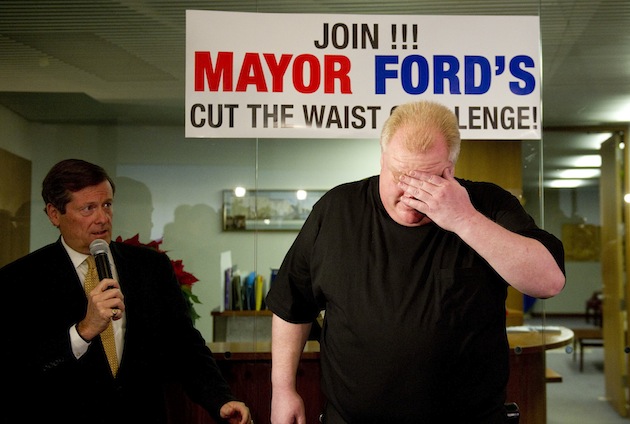
And a poetical angle on local (Toronto) politics in-the-moment…
.
Alexander Best
“Pass the gravy boat!”
or
“Stop the almost-a-train-wreck!”
(A poem for Rob Ford)
.
He barked: I’ll stop the gravy train!
Toronto folks, they listened.
But pugfaced Rob, our city’s mayor,
Keeps changing his positions.
.
He drives himself to City Hall
And, ‘texting’, gives ‘the finger’.
When brought to task, shrugs: Lighten up, o-kay!?
Bad feelings linger.
.
Please hire a driver, Mr. Ford,
And concentrate on business:
The mayoralty and civic tasks – the voters’ god-damn business.
.
Don’t commandeer a rush-hour bus
For your high-school football team
– shenanigans like that just make the People – goofball! – steam.
.
Our previous mayor froze out the Right
– that’s why there’s hothead You.
But calling Leftys pinko-fascists’s
Not the thing to do.
.
People joke about your weight,
Yeah, you’re an easy target.
But being mayor’s a hefty job
So please, won’t you get on it?!
.
You are a big man, 300 pounds plus,
With energy to burn.
So show big spirit for Trawno – Team Us –
And focus, listen, learn!
. . . . .
Robert Gurney: “Santiago de Chuco”… y César Vallejo
Posted: November 1, 2012 Filed under: César Vallejo, English, Robert Gurney, Spanish Comments Off on Robert Gurney: “Santiago de Chuco”… y César Vallejo
Robert Gurney
“Santiago de Chuco”
(to César Vallejo)
.
El reloj
con la cara azul
.
la Virgen negra
en la parroquia oscura
.
la foto de Vallejo
en la fachada del Cabildo
.
las placas de latón
que necesitaban limpiarse
.
las nubes tan bajas
como las de Inglaterra
.
el paraguas negro
que tal vez llevara en París,
colgado de un clavo,
que se encontraba abierto
.
la escultura del poeta
sentado
.
los baúles
donde quizás guardara una vez
el Orbe de Juan Larrea
.
esa momia extraña
agachada
en una vitrina de cristal
.
el pequeño horno,
extrañamente erótico,
cavado en el muro
.
el poema a la madre
.
la foto de la cara
de su madre
.
el altar familiar
.
vi estas cosas
en Santiago de Chuco.
.
Pero el objeto que me llamó
realmente la atención
fue ese gramófono RCA,
His Master’s Voice,
La Voz del Amo,
con la misma imagen del perro blanco
y la trompeta enorme
que yo escuché una vez,
la cabeza sostenida en las manos ahuecadas,
tendido en la alfombra,
bajo la aspidistra de mi abuela
en Dunstable.
. . .
Robert Gurney
“Santiago de Chuco”
(to César Vallejo)
.
The clock
with the blue face
.
the black Madonna
in the Parish Church
.
the photo of Vallejo
on the wall
of the Town Hall
.
the brass plaques
in need of polishing
.
the grey clouds
as low as those of England
.
the black umbrella
he may have used in Paris
hanging from a nail
open on a wall
.
the sculpture of the poet
sitting down
.
the trunks
where once
he may have kept
his copy of Juan Larrea’s Orbe
.
that strange mummy
sitting in a glass case
.
the little oven,
strangely erotic,
sunk in the white wall
.
the poem to the mother
.
the photograph of
his mother’s face
.
the altar
in the family house
.
these things caught my eye
in Santiago de Chuco
but none of them more
than that RCA gramophone,
His Master’s Voice,
with the same picture of the white dog
and the enormous horn,
as on the one that I once listened to,
my head cupped in my hands,
lying on the floor
beneath my grandmother’s aspidistra
in Dunstable.
. . . . .
César Vallejo
(born in Santiago de Chuco, Perú, 1892,
died in Paris, France, 1938)
“Black Stone on Top of a White Stone”
.
I shall die in Paris, in a downpour,
on a day I already remember.
Shall die in Paris – this doesn’t throw me off –
maybe on a Thursday, like today, in autumn.
.
Thursday it shall be, because today, Thursday,
as I set down these lines, I have ‘put my shoulder
to the grindstone’ – for evil. Never before have I turned,
as today, to seeing my total way to aloneness.
.
César Vallejo is dead. They all struck him,
though he did nothing to them; let him have it
hard with a stick, the lash of a rope as well.
The witnesses are:
Thursdays, shoulder bones, loneliness, rain, the roads…
. . .
César Vallejo (1892-1938)
“Piedra Negra Sobre Piedra Blanca”
.
Me moriré en París con aguacero,
un día del cual tengo ya el recuerdo.
Me moriré en París – y no me corro –
tal vez un jueves, como es hoy, de otoño.
.
Jueves será, porque hoy, jueves, que proso
estos versos, los húmeros me he puesto
a la mala y, jamás como hoy, me he vuelto,
con todo mi camino, a verme solo.
.
César Vallejo ha muerto, le pegaban
todos sin que él les haga nada;
le daban duro con un palo y duro
también con una soga; son testigos
los días jueves y los huesos húmeros,
la soledad, la lluvia, los caminos…
.
Vallejo translation into English: Alexander Best
. . . . .
Robert Gurney nació en Luton, Inglaterra, en 1939. Es un profesor de poesía francesa moderna, y de literatura española y latinomericana. Ha publicado diversos libros incluyendo tres poemarios: Luton Poems (2005), El cuarto oscuro (2008), y Poemas a la Patagonia (2004 y 2009). Él, su esposa Paddy, sus hijos y nietos viven en St Albans, Inglaterra. ‘Santiago de Chuco’ se toma de su próximo libro La libélula y otros poemas/The Dragonfly and Other Poems (edición bilingüe, Lord Byron Ediciones, Madrid, 2012). En prensa: La casa de empeño/The Pawn Shop (bilingüe, 2013).
.
Robert Gurney was born in Luton, England, in 1939. He is a Lecturer in modern French poetry, Spanish and Latin- American Literature. He writes in both Spanish and English and his poetry collections include: Luton Poems (2005), El cuarto oscuro (2008), and Poemas a la Patagonia (2004 and 2009). He, his wife Paddy, sons and grandsons live in St Albans, England. ‘Santiago de Chuco’ is taken from his forthcoming book La Libélula y otros poemas/The Dragonfly and Other Poems (bilingual edition, Lord Byron Ediciones, Madrid, 2012). Upcoming: La casa de empeño/The Pawn Shop (bilingual, 2013).
Filíocht do Samhain, Là na Marbh / Irish poems, verses for Samhain + All Souls Day
Posted: October 31, 2012 Filed under: Cathal Ó Searcaigh, English, Irish, Rody Gorman | Tags: Samhain and All Souls Day poems Comments Off on Filíocht do Samhain, Là na Marbh / Irish poems, verses for Samhain + All Souls Day
Cathal Ó Searcaigh
“Samhain 1994”
.
Anocht agus mé ag meabhrú go mór fá mo chroí
Gan de sholas ag lasadh an tí ach fannsholas gríosaí
Smaointím airsean a dtug mé gean dó fadó agus gnaoi.
A Dhia, dá mba fharraige an dorchadas a bhí eadrainn
Dhéanfainn long den leabaidh seo anois agus threabhfainn
Tonnta tréana na cumhaí anonn go cé a chléibhe…
Tá sé ar shiúl is cha philleann sé chugam go brách
Ach mar a bhuanaíonn an t-éan san ubh, an crann sa dearcán;
Go lá a bhrátha, mairfidh i m’anamsa, gin dá ghrá.
. . .
Cathal Ó Searcaigh
(born 1956, Gort an Choirce, County Donegal, Ireland)
“November* 1994”
Editor’s note: the word Samhain is, in contemporary Irish,
also synonymous with the word for November.
.
Tonight as I search the depths of my heart,
in the dark of the house and the last ember-light,
I’m thinking of one I loved long ago.
.
And if the darkness between us became like the sea,
I’d make a boat of this bed, plunge its bow
through the waves that barge the heart’s quay.
.
Although he is gone and won’t ever be back,
I’ll guard in my soul the last spark of his love,
like the bird in the egg and the tree in the nut.
.
Translation from Irish: Nigel McLoughlin
.
. . .
Rody Gorman
“Mo Mharana”
.
D’fhág mé an suíochán
Ina gcaitheadh is a gcognaíodh sé féin
Gan bhogadh tamall fada,
Mar a bhfuair sé bás
Thall i gcois an tinteáin.
.
Shuigh mé go ndearna mé mo mharana
Sa deireadh. Cheap mé dán
Agus fuair mé réidh leis.
. . .
Rody Gorman (born 1960, Dublin, Ireland)
“Contemplation”
.
I avoided the chair
in which he’d spent and chewed away,
and didn’t move for a long time,
he’d died
over there by the fireplace.
.
In the end, I sat
in contemplation. I composed a poem
and had done with it.
.
Translation from Irish: Michael S. Begnal
.
“Samhain 1994” and “Mo Mharana” © Cathal Ó Searcaigh, Rody Gorman
. . .
“All Hallow’s”
(Irish-American poem – Author unknown)
.
The voices of the dead…
Are you with me, grandfather?
Do you hear me, spirits of the past?
Is the night hurrying because of you?
.
The answers are not in unhoped for words
but the images of night:
the cloak, the stillborn wind ripping brown leaves,
rain on the sidewalk, clay earth
becoming mud, mute stars,
the tree sighing as it dies,
the ending of the day, the halo of dawn,
the night-touch, the wolves’ howl,
the heart, the soul, of the dark.
.
Because we know, we know you well.
The voices of the dead carry my heart,
whispering, wind-voiced.
What do they know but Time?
Timelessness is not theirs;
they surpass it, as they surpass the images of night.
My time is coming.
I must leave, as we all must, as the dead have,
wandering in their cities of different light,
strange and still, touching each other
as they pass, tenderly,
with the fingertips, as they pass,
walking home.
. . .
Irish lyric tenor John McCormack (1884-1945) was one of the earliest singing voices to be put on “phonograph record”. Pianist and composer Charles Marshall (1857-1927) wrote the music and words for the following sentimental popular song, “I Hear You Calling Me”, which was recorded by both men (John’s voice, Charles at the piano) in 1908. The song’s tender theme is entirely appropriate for All Souls Day.
.
“I Hear You Calling Me”
.
I hear you calling me –
You called me when the moon had veiled her light,
before I went from you into the night…
I came,
do you remember?
back to you
for one last kiss
beneath the kind star’s light.
.
I hear you calling me –
And oh, the ringing gladness of your voice,
that warmth that made my longing heart rejoice.
You spoke,
do you remember?
and my heart
still hears
the distant music of your voice.
.
I hear you calling me –
Though years have stretched their weary length between
and on your grave the mossy grass is green.
I stand –
do you behold me listening here?
.
Hearing your voice through all the years between
– I hear you calling me…
. . .
Thomas Moore (born Dublin, 1779, died 1852)
Editor’s note: Moore was a great collector of Irish Traditional poems and songs,
told or sung to him by people who were illiterate. Some of these verses he ‘tweaked’, making them rather more sophisticated than the folk originals – but the presence of Death remains, as in the earlier anonymous oral versions.
.
“Oh, ye Dead!”
(Irish Traditional)
.
Oh, ye Dead! oh, ye Dead! whom we know by the light you give
From your cold gleaming eyes, though you move like men who live,
Why leave you thus your graves,
In far off fields and waves,
Where the worm and the sea-bird only know your bed,
To haunt this spot where all
Those eyes that wept your fall,
And the hearts that wail’d you, like your own, lie dead?
.
It is true, it is true, we are shadows cold and wan;
And the fair and the brave whom we loved on earth are gone;
But still thus even in death,
So sweet the living breath
Of the fields and the flowers in our youth we wander’d o’er,
That ere, condemn’d, we go
To freeze ‘mid *Hecla’s snow,
We would taste it a while, and think we live once more!
.
* Hecla refers to Mount Hecla, the active volcano in Iceland (not Ireland). Stories grew up around reports – possibly by mediaeval sailors – of the mystical strangeness of Hecla.
. . .
“The Unquiet Grave”
(Traditional – Ireland, Scotland, England)
.
The wind doth blow today, my Love,
A few small drops of rain
I never had but one true Love
In cold clay she is laid.
.
I’ll do as much for my true Love
As any young man may
I’ll sit and mourn all on her grave
A twelve-month and a day.
.
The twelve-month and the day being gone
A voice spoke from the deep:
Who is it sits all on my grave
And will not let me sleep?
.
”Tis I, ’tis I, thine own true Love
Who sits upon your grave
For I crave one kiss from your sweet lips
And that is all I seek.
.
You crave one kiss from my clay cold lips
But my breath is earthly strong,
Had you one kiss from my clay cold lips
Your time would not be long.
.
My time be long, my time be short,
Tomorrow or today,
May God in Heaven have all my soul
– But I’ll kiss your lips of clay!
.
See down in yonder garden green,
Love, where we used to walk
The sweetest flower that ever grew
Is withered to the stalk.
The stalk is withered dry, my Love,
And will our hearts decay
So make yourself content, my Love,
Till death calls you away…
“Quick! we have but a second!”
(Irish Traditional)
.
Quick! we have but a second,
Fill round the cup while you may;
For Time – the churl – hath beckon’d,
And we must away, away!
Grasp the pleasure that’s flying,
For oh, not Orpheus’ strain
Could keep sweet hours from dying,
Or charm them to life again.
.
Then, quick! we have but a second,
Fill round the cup while you may.
For Time – the churl – hath beckon’d,
And we must away, away!
.
See the glass, how it flushes,
Like some young (maiden’s) lip,
And half meets thine, and blushes
That thou shouldst delay to sip.
Shame, oh shame unto thee,
If ever thou see’st that day,
When a cup or lip shall woo thee,
And turn untouch’d away!
.
Then, quick! we have but a second,
Fill round, fill round while you may,
For Time – the churl – hath beckon’d,
And we must away, away!
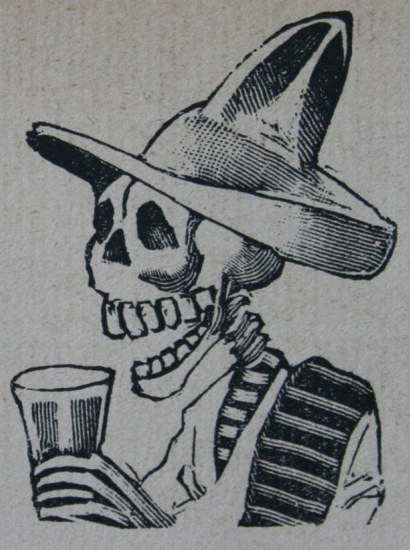
“I seek freedom in the indefinable”: Five Poems by Lelawattee Manoo-Rahming
Posted: October 27, 2012 Filed under: English, Lelawattee Manoo-Rahming | Tags: Poets from Trinidad and Tobago Comments Off on “I seek freedom in the indefinable”: Five Poems by Lelawattee Manoo-RahmingLelawattee Manoo-Rahming
(born 1960, Trinidad and Tobago)
The Om
.
My Tanty used to sing/pray
evening ragas to the Earth Goddess
morning oblations to the Sun God
.
Now my Aunty prays
that I find salvation in the cross
in the church that has freed her
from indenture, from coolieness
.
Yet I seek freedom
in the indefinable
the OM
the puja breath that expands
my rib cage
with blessed pitchpine smoke
into an oval
large as the cosmic egg
.
The sea breath
OM
That echoes
In the conch shell
Blowing across the Caroni
Infinite like green plains
Of sugarcane
Or a milky river veiling
The face of the goddess
. . .
The Broken Key
.
1
Half left in the keyhole
Bright bronze blocking
Locking the door
.
Only a tiny drill
Can turn into powder
The hardened one
Reopen the door
Allow a human being
To become the way
For grace to come through
.
2
Half broken off
Round with jagged edge
As if the full moon
Had been gnawed by some
Celestial beast
Gnawed like the ropes
That bind us together
One tug away from
SNAP
CRACK
The sound of a key breaking
In the keyhole of our door
How can we reopen the door?
How can we ever let grace
Come through again?
. . .
Fusion
.
A quartet of ospreys calls
Kee-uk kee-uk cheep cheep
Kee-uk kee-uk cheep cheep
Riding on air currents
Beneath a periwinkle sky
Decibelled by steelpan carols
.
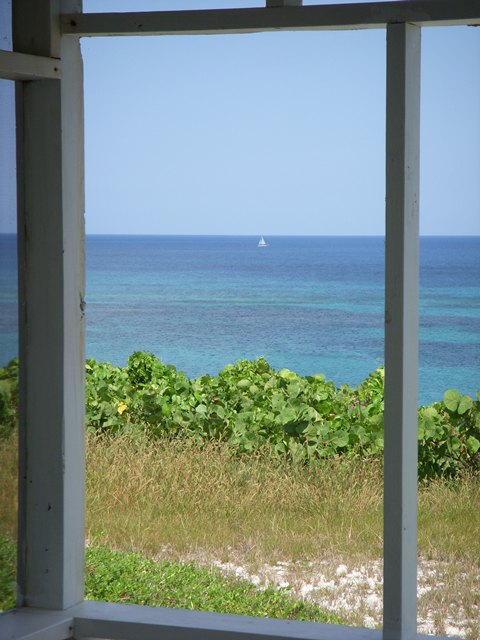
A sailboat chips along
Over cobalt blue near the horizon
As David Rudder’s voice solos
From the CD-player
.
A soulful Go Tell It on The Mountain
.
A white and orange tabby saunters
Along the boardwalk
Sasses Meow
Without stopping to marvel
At the ingenuity
Of Zanda and Hadeed’s
Playful panjazz fusion
.
The Mighty Shadow melodies
Greetings in a lover’s kaiso
While at the foot of the dune
Sixty feet down
The sea swashes in threes
A soft wetsandsmooth
Rake and Scrape response
Submerged voices of ghost Tainos
. . .
Beneath the Trees
.
These round roots encircle me
Like tubes
In a hospital bed but here there is no
Antiseptic scent
No sterile handwashing
.
Here the earth smells like wet moss
And when I bite into these roots
They taste of peppery pine
And green fruit: sugar apple maybe
.
Beneath these trees
I need no clothes to feel clothed
These gnarled roots with their humus
Coating warm my nakedness
In a cocoon soft like corn silk
.
The phloem and xylem passages
That carry messages
Between the sun and these roots
Water and feed my muscles
Giving them a turgidity
Like the fullness of youth
.
These roots do not just encase me
They cradle me
Like a mother’s arms
.
My heartbeat echoes
Through these roots
This earth
And I know
I have become
an incarnation
of Sita
Returning to her mother
Bhumi Devi: the great Earth Mother
Beneath these trees
. . .
Alphabet of Memory
.
I took with me seeds
Tiny dots of bhandhania
Flat, almost round disks of pimento pepper
And oval, plump legumes of seim
That I planted
With varying degrees of success
Wanting to feel at home
Where I have traveled to
.
Then I found
In a cobwebby closet
The alphabet of memory
I had brought with me
Some letters sharp as a tropical noonday
Others hazy
As a smoky dry season dusk
.
Letters which I shuffled
And then played a game of scrabble
Until I had used them all up
To create words
Then poems
To make me feel at home
. . .
Poet’s glossary:
Coolieness: East Indian Indentured Labourers who were brought to the West Indies, and their descendents are sometimes called ‘coolie’, as an insult. In my poem, ‘Coolieness’ refers to the East Indian culture that still exists in Trinidad and Tobago.
.
Puja (Bhojpuri Hindi): A personal, familial, or public Hindu prayer service or worship.
.
Caroni: A river in Trinidad and Tobago. The river plains, called the Caroni Plains were once used for sugar cane farming.
.
David Rudder: A calypsonian from Trinidad and Tobago.
.
Zanda: Clive Alexander, aka Zanda, or Clive Zanda Alexander, is a jazz pianist from Trinidad and Tobago.
.
Hadeed: Annise Hadeed is a steel pan soloist and composer from Trinidad and Tobago.
.
The Mighty Shadow: A calypsonian from Trinidad and Tobago.
.
Kaiso (Trinidad and Tobago Creole): Calypso
.
phloem and xylem: The primary components of the vascular tissues in plants, which transport the fluid and nutrients throughout the plant.
.
Sita: (Sanskrit: meaning “furrow”) is the wife of Lord Rama and one of the principal figures of the Ramayana, the epic Hindu scripture. As the devoted wife of Lord Rama, Sita is regarded as the most esteemed exemplar of womanly elegance and wifely virtue in Hinduism.
.
Bhandhania: The Hindi name for the herb, used in cooking, otherwise known as wild coriander or culantro.
.
Seim: The Hindi name for the Hyacinth bean, the green pods of which are used as a vegetable.
. . . . .
Lelawattee Manoo-Rahming is an engineer, poet and fiction writer. She won the David Hough Literary Prize (2001) and the Canute A. Brodhurst Prize (2009) from The Caribbean Writer Literary Journal; and the Commonwealth Broadcasting Association 2001 Short Story Competition. She is the author of two poetry collections: Curry Flavour, published by Peepal Tree Press (2000) and Immortelle and Bhandaaraa Poems, published by Proverse Hong Kong (2011).
.
Zócalo Poets wishes to thank guest-editor Andre Bagoo
for introducing us to the poetry of Lelawattee Manoo-Rahming.
 Zócalo Poets