José Guadalupe Posada: the ‘calaveras’ of a Mexican master of social reportage and satire
Posted: November 2, 2014 Filed under: Alexander Best, IMAGES, Retratos por José Guadalupe Posada | Tags: Day of the Dead (Mexico) Comments Off on José Guadalupe Posada: the ‘calaveras’ of a Mexican master of social reportage and satire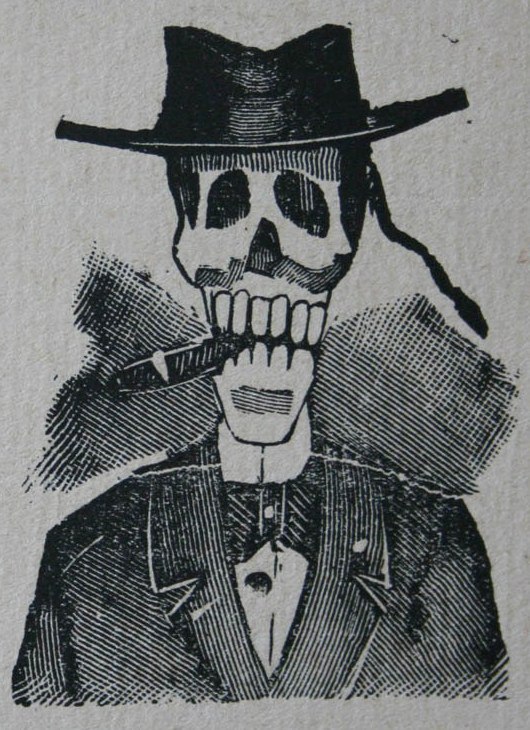
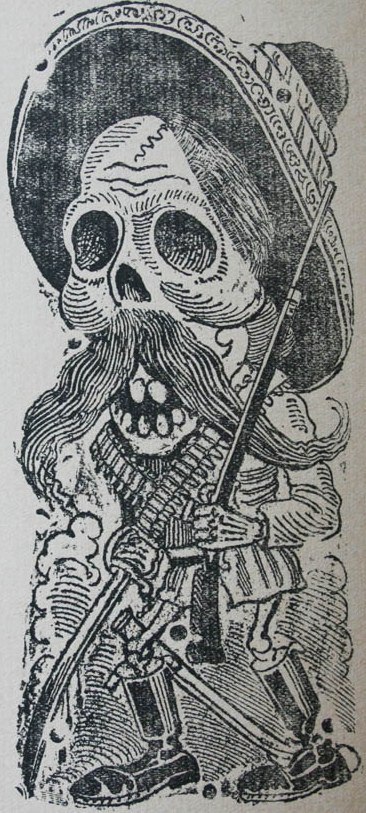
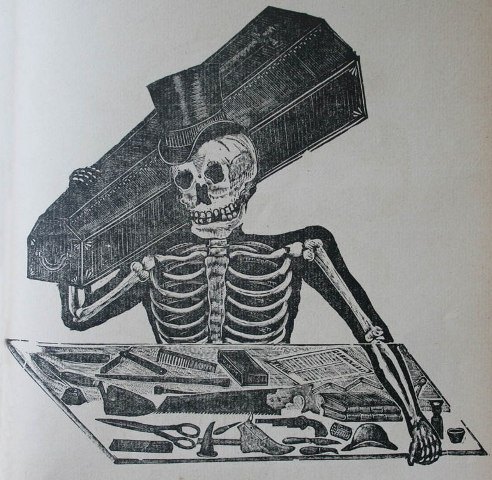
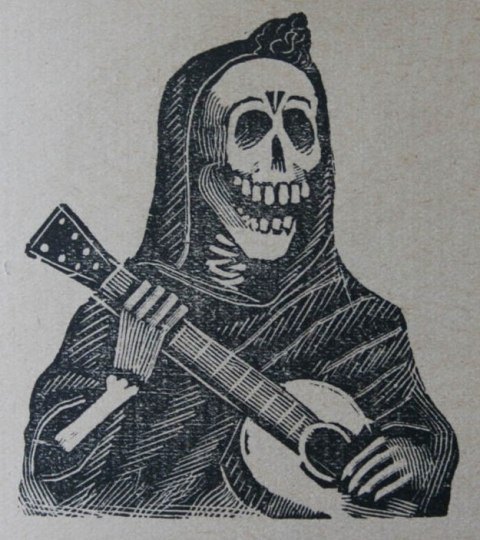
The etchings of José Guadalupe Posada (1852-1913) demonstrated a worldview that was, and often still is, profoundly Mexican. A commercial illustrator who also printed political broadsides, Posada invented the ‘calavera’ portrait. Calavera means skull, and by extension, skeleton. Aspects of the nation’s Indigenous heritage (skulls and death-goddesses were central to Aztec and Maya cultures) plus its Spanish cultural inheritance (death-oriented monastic orders, the ‘dance of death’ and ‘memento mori’ traditions) combine in Posada’s rustic yet sophisticated prints to give us the flavour of the average Mexican’s stoical yet humorous appreciation of Death.
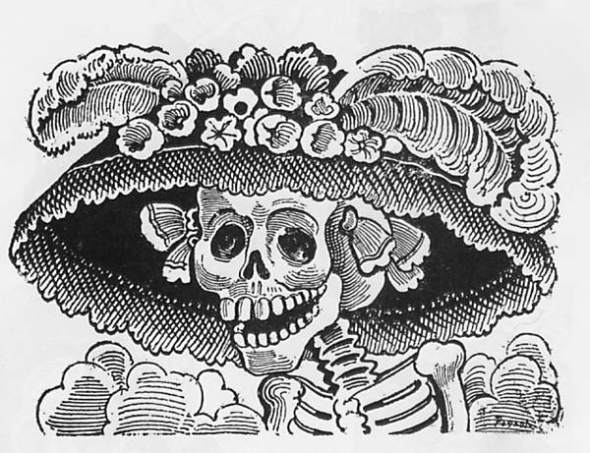
La Catrina_zinc etching by J.G. Posada
……….
A Sincere Tale for The Day of The Dead :
“ Lady Catrina goes for a stroll / Doña Catrina da un paseo ”
*
“¡ Santa Mictecacihuatl !
These Mandible Bone-nix (Manolo Blahniks) weren’t meant for
The Long Haul – certainly not worth the silver I shelled out for ’em ! ”
Thus spoke that elegant skeleton known as La Catrina.
And she clunked herself down at the stone curb, kicking off the
jade-encrusted, ocelot-fur-trimmed high-heel shoes.
“ Well, I haven’t been ‘bone-foot’ like this since I was an escuincle. ”
She chuckled to herself as she began rummaging through her Juicy handbag.
Extracting a shard of mirror, she held it up to her face – a calavera
with teardrop earrings grinned back at her. ¡Hola, Preciosa!
she said to herself with quiet pride. She adjusted her necklace of
cempasúchil blossoms and smoothed her yellow-white-red-and-black
designer-huipil.
*
Just then a lad and lassie crossed her path…
“ Yoo-hoo, Young Man, Young Woman !
Be dears, would you both, and escort an old dame
across La Plaza de la Existencia ! My feet are simply
worn down to the bone ! ”
*
“ Certainly, madam – but we’re new here…
Where is La Plaza de la Existencia ? ”
*
“ We’re just at the edge of it – El Zócalo ! ”
And La Catrina gestured beyond them where an
immense public square stretched far and wide.
She clasped their hands – the Young Man on her left,
the Young Woman on her right – and the trio set out
across a sea of cobbles…
*
By the time they reached the distant side of the Plaza the
Young Man and Young Woman had shared much with the
calaca vivaz – their hopes, fears, sadness and joy – their Lives.
*
The Woman by now had grown a long, luxurious
silver braid and The Man a thick, salt-and-pepper
beard. Both knew they’d lived fully – and were satisfied.
But my… – they were tired !
*
In the company of the strange and gregarious Catrina 5 minutes
to cross The Zócalo had taken 50 years…
*
“ Doña Catrina, here we are at your destination – will you be
alright now ? ”
*
“ Never felt better, Kids ! I always enjoy charming company
on a journey ! ” And she winked at them, even though she had
no eyeballs – just sockets. “ Join me for a caffè-latte? Or a café-pulque,
if you’re lactose-intolerant ! ”
*
“Thank you, no,” said the Man and Woman, in unison.
And both laughed heartily, breathed deeply, and sat down
at the curb.
*
When they looked up, Doña Catrina had clattered gaily out of sight.
And before their eyes the vast Zócalo became peopled with
scenes from their Lives.
The Man and Woman smiled, then sighed contentedly. And, side by side, they leaned closer together – and died.
* finis *
Alexander Best – November 2nd, 2011
……….
Glossary:
Mictecacihuatl – Aztec goddess of the AfterLife, and Keeper of The Bones
La Catrina – from La Calavera Catrina (The Elegant Lady-Skull),
a famous zinc etching by Mexican political cartoonist and print-maker
Jose Guadalupe Posada (1852-1913). Posada’s “calavera” prints depict
society from top to bottom – even the upper-class woman of wealth –
La Catrina – must embrace Death, just like everyone else…
She has since become a “character”,
invented and re-invented, for The Day of The Dead (Nov.2nd).
escuincle – little kid or street urchin
calavera – skull
¡Hola, Preciosa! – Hello, Gorgeous!
cempasúchil – marigold (the Day of The Dead flower)
huipil – blouse or dress, Mayan-style
El Zócalo – the main public square (plaza mayor) in Mexico City,
largest in The Americas
calaca vivaz – lively skeleton
pulque – a Mexican drink make from fermented
agave or maguey – looks somewhat like milk
……….
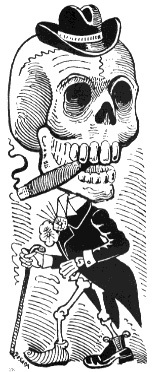
¡Chaucito, chavos! Ciao, kiddies!
Claribel Alegría: And I dreamt that I was a tree / I love to handle leaves / A Letter to “Time” / Autumn
Posted: October 28, 2014 Filed under: Claribel Alegría, Claribel Alegría: And I dreamt that I was a tree, English, Spanish, ZP Translator: Alexander Best Comments Off on Claribel Alegría: And I dreamt that I was a tree / I love to handle leaves / A Letter to “Time” / Autumn
Claribel Alegría (Nicaragua / El Salvador, nacido 1924)
Y soñe que era un árbol – a Carole
(1981)
.
Y soñe que era un árbol
y que todas mis ramas
se cubrían de hojas
y me amaban los pájaros
y me amaban también
los forasteros
que buscaban mi sombra
y yo también amaba
mi follaje
y el viento me amaba
y los milanos
pero un día
empezaron las hojas
a pesarme
a cubrirme las tardes
a opacarme la luz
de las estrellas.
Toda mi savia
se diluía
en el bello ropaje
verdinegro
y oía quejarse a mi raíz
y padecía el tronco
y empecé a despojarme
a sacudirme
era preciso despojarse
de todo ese derroche
de hojas verdes.
Empecé a sacudirme
y las hojas caían.
Otra vez con más fuerza
y junto con las hojas que importaban apenas
caía una que yo amaba:
un hermano
un amigo
y cayeron también
sobre la tierra
todas mis ilusiones
más queridas
y cayeron mis dioses
y cayeron mis duendes
se iban encogiendo
se arrugaban
se volvían de pronto
amarillentos.
Apenas unas hojas
me quedaron:
cuatro o cinco
a lo sumo
quizá menos
y volví a sacudirme
con más saña
y esas no cayeron
como hélices de acero
resistían.
. . .
Claribel Alegría (Nicaragua / El Salvador, born 1924)
And I dreamt that I was a tree – To Carole
(1981)
.
And I dreamt that I was a tree
and all my branches – leafy –
were belovéd of the birds
– and of strangers seeking my shade.
And I too loved my canopy,
as did the wind – and the hawks.
But there came the day when
my leaves weighed heavily upon me,
they blocked out my afternoons
and the light of the stars.
My sap became diluted by
my gorgeous dark-green robe;
my roots were heard groaning
and the trunk of me, how it suffered;
and I began to dis-robe myself,
to shake loose;
I needed to be free of
that profusion of green leaves.
I really shook; and the leaves fell.
Again, more fiercely,
and more leaves fell – along with a certain one I loved:
a brother? friend?
And then there fell right to the ground all the illusions
most dear to me.
My gods fell, my charms, my animating spirits.
Dried up, wrinkled, completely yellowed.
I had hardly any leaves left, four or five at the very most;
and I shook again, in total fury.
The last of these leaves, no, they wouldn’t fall;
like steel helixes they clung to me.
. . .
Carta al Tiempo (1982)
.
Estimado señor:
Esta carta la escribo en mi cumpleaños.
Recibí su regalo. No me gusta.
Siempre y siempre lo mismo.
Cuando niña, impaciente lo esperaba;
me vestía de fiesta
y salía a la calle a pregonarlo.
No sea usted tenaz.
Todavía lo veo
jugando al ajedrez con el abuelo.
Fue perdiendo su brillo.
Y usted insistía
y no respetaba la humildad
de su carácter dulce,
y sus zapatos.
Después me cortejaba.
Era yo adolescente
y usted con ese rostro que no cambia.
Amigo de mi padre
para ganarme a mí.
Pobrecito del abuelo.
En su lecho de muerte
estaba usted presente,
esperando el final.
Un aire insospechado
flotaba entre los muebles.
Parecían mas blancas las paredes.
Y había alguién más,
usted le hacía señas.
Él le cerró los ojos al abuelo
y se detuvo un rato a contemplarme.
Le prohibo que vuelva.
Cada vez que lo veo
me recorre las vértebras el frío.
No me persiga más,
se lo suplico.
Hace años que amo a otro
y ya no me interesan sus ofrendas.
¿Por qué me espera siempre en las vitrinas,
en la boca del sueño,
bajo el cielo indeciso del domingo?
Sabe a cuarto cerrado su saludo.
Lo he visto el otro día con los niños.
Reconocí su traje:
el mismo tweed de entonces
cuando era yo estudiante
y usted amigo de mi padre.
Su ridículo traje de entretiempo.
No vuelva,
le repito.
No se detenga más en mi jardín.
Se asustarán los niños
y las hojas se caen:
las he visto.
¿De qué sirve todo esto?
Se va a reír un rato
con esa risa eterna
y seguirá sabiéndome al encuentro.
Los niños,
mi rostro,
las hojas,
todo extraviado en sus pupilas.
Ganará sin remedio.
Al comenzar mi carta lo sabía.

A Letter to “Time” (1982)
.
Dear Sir:
I am writing this letter to you on my birthday.
I received your gift – and I don’t like it.
Always, always it’s the same thing.
When I was a girl, impatiently I waited;
got all dressed up, and went out into the street
to proclaim it.
Don’t be stubborn.
I can still picture you playing chess with my grandfather,
and at first your appearances were few and far between,
but soon they were daily and
grandfather’s voice lost its sparkle.
And you insisted on such visits, without any respect for
the humbleness of his gentle soul – or his shoes.
Later on, you attempted to court me.
Of course I was still young – and you with your unchanging face:
a friend of my dad’s with an eye trained on me.
Oh, poor Grand-dad…And didn’t you hang around his deathbed
till the end came!
The very walls seemed to fade out, and there was a kind of
unpinpointable something or other floating among the rooms.
You were that someone who was making signs and wonders,
and Dad closed Grand-dad’s eyes – then paused to contemplate me.
I forbid you to return…
Every time I see you my spine goes stiff – stop pursuing me, I beg you.
It’s been years since I loved anyone else
but your gifts no longer interest me.
Why are you waiting for me, in shop windows,
in the mouth of my dreams,
beneath a vague Sunday sky?
Your greeting reminds me of the air in shut-up rooms.
The other day I saw you with some kids;
I recognized that tweed suit, from when I was a student and
you were my father’s friend – that ridiculous Autumn tweed suit!
I repeat: Don’t come back, don’t hang around my garden;
you’ll scare the children and the leaves will all drop (I’ve seen it happen.)
What’s the use in all of this?
You’ll laugh a little, with that forever-laugh of yours,
and you’ll keep popping up.
The kids, my face, the falling leaves…
we all go lost or missing – in your eyes.
There’s no remedy for any of this: you’ll win.
I knew that from the moment I put pencil to paper.
. . .
Otoño (1981)
.
Has entrado al otoño
me dijiste
y me sentí temblar
hoja encendida
que se aferra a su tallo
que se obstina
que es párpado amarillo
y luz de vela
danza de vida
y muerte
claridad suspendida
en el eterno instante
del presente.
. . .
Autumn (1981)
.
You told me:
You’ve entered your Autumn.
And I shudder,
a leaf aflame that clings to its stem,
obstinate,
a yellow eyelid,
the light of a candle,
a dance of both life and death,
Open-ness hanging
in that eternal instant of the present.
. . .
Me gusta palpar hojas (1997)
.
Más que libros
revistas
y periódicos
más que móviles labios
que repiten los libros,
las revistas,
los desastres,
me gusta palpar hojas
y sentir su frescura,
ver el mundo
a través de su luz tamizada
a través de sus verdes
y escuchar mi silencio
que madura
y titila en mis labios
y se rompe en mi lengua
y escuchar a la tierra
que respira
y la tierra es mi cuerpo
y yo soy el cuerpo
de la tierra
Claribel.
. . .
I love to handle leaves (1997)
.
More than books,
more than magazines or newspapers,
more even than moving lips that recite from books, magazines, disasters…
how I love to handle leaves
– to feel their freshness,
to see the world through their filtered light,
through their green-ness;
and to hear my own silence
maturing – a-twinkling – upon my lips,
breaking against my tongue;
and to listen to the earth breathing.
And the earth is my body,
and I am the body of a land called
Claribel.
. . .
Translations from Spanish to English: Alexander Best
. . . . .
नया साल मुबारक हो Poema para Diwali
Posted: October 23, 2014 Filed under: Alexander Best, Spanish Comments Off on नया साल मुबारक हो Poema para Diwali
Poema para Diwali
.
Abran las ventanas, abran las puertas
– ¡llega Diwali est’anochecer!
Ignorancia –¡esfúmate! – ¡Comprensión nacerá!
Ofrezcan gran Luz con lámparas de aceite,
y entonen el mantra que Laksmí entre.
Ganesha, también, veneramos este día,
y la exaltada Kali con su intensa manera.
Se desmaterializa Desesperanza y Esperanza se consolida;
y triunfa Bondad, no Mal.
Niños lanzan sus barcos-papel y flotan llamas en arroyos y charcos,
pues explotan petardos – un gozo ‘chamaco’ –
y todo que pasa celebra La Luz
esta noche de luna nueva.
Mis compañeras se apuntan Diwali
– aquí en Toronto, Canadá.
Merle y Kasturie; Suba, Nanthini
– de Trinidad y de Sri Lanka.
Mezclando comida, familia, amigos y diversión,
El Diwali – como Cinco de Mayo – es la fecha de reunión.
. . . . .
https://zocalopoets.com/category/poems/hindi/
Jorge Luis Borges: “Eternity” / “Eternidad” / “Ewigkeit”
Posted: October 15, 2014 Filed under: English, Jorge Luis Borges, Spanish Comments Off on Jorge Luis Borges: “Eternity” / “Eternidad” / “Ewigkeit”
Jorge Luis Borges (1899-1986, Argentina)
Ewigkeit (“Eternity”)
.
Let Spanish verse turn on my tongue, affirm
Once more in me what it has always said
Since Seneca in Latin: that true dread
Sentence that all is fodder for the worm.
Let it turn back with song to hail pale ash,
The calends of death, and the victory
Of that word-ruler queen whose footfalls smash
The banners of our empty vanity.
Not that. I’ll cravenly deny not one
Thing that has blessed my clay. I know of all
Things, one does not exist: oblivion.
That in eternity beyond recall
The precious things I’ve lost stay burning on:
That forge, that risen moon, that evening-fall.
. . .
Jorge Luis Borges
Ewigkeit (“Eternidad”)
.
Torne en mi boca el verso castellano
a decir lo que siempre está diciendo
desde el latín de Séneca: el horrendo
dictamen de que todo es del gusano.
Torne a cantar la pálida ceniza,
los fastos de la muerte y la victoria
de esa reina retórica que pisa
los estandartes de la vanagloria.
No así. Lo que mi barro ha bendecido
no lo voy a negar como un cobarde.
Sé que una cosa no hay. Es el olvido;
sé que en la eternidad perdura y arde
lo mucho y lo precioso que he perdido:
esa fragua, esa luna y esa tarde.
. . .
Ewigkeit es Eternidad en alemán.
Ewigkeit means Eternity in German.
. . .
Visit translator A.Z. Foreman’s Poems Found In Translation site:
http://poemsintranslation.blogspot.ca/
. . . . .
Two “Autumn” Poems: translations by A.Z. Foreman
Posted: October 15, 2014 Filed under: Dino Campana, English, German, Italian, Rainer Maria Rilke Comments Off on Two “Autumn” Poems: translations by A.Z. Foreman
Dino Campana (1885-1932, Italy)
Autumn Garden
.
Unto the ghostly garden, unto the laurels mute
Of the green garlands,
Unto the autumn land
– one last salute!
Out to the dried hillsides
Reddened hard in the terminal sun,
Confounded into grumbles,
Gruff life afar is crying:
Crying to the dying sun that sheds
A blood that dyes the flowerbeds.
A brass band plays
Ear-piercingly away; the river fades
Out amidst the gilded sands. In the quiet
The great white statues stand at the bridgehead
Turned; and what was once is now no more.
And from the depths of quiet, as if it were a chorus
Soft and splendorous
Yearns its way to the heights of my terrace.
And in an air of laurel,
In an air of laurel, languorous and blade-bare,
Among the statues immortal under sundown,
She appears to me – is there.
. . .
Dino Campana
Giardino Autunnale
.
Al giardino spettrale al lauro muto
De le verdi ghirlande
A la terra autunnale
Un ultimo saluto!
A l’aride pendici
Aspre arrossate nell’estremo sole
Confusa di rumori
Rauchi grida la lontana vita:
Grida al morente sole
Che insanguina le aiole.
S’intende una fanfara
Che straziante sale: il fiume spare
Ne le arene dorate: nel silenzio
Stanno le bianche statue a capo i ponti
Volte: e le cose già non sono più.
E dal fondo silenzio come un coro
Tenero e grandioso
Sorge ed anela in alto al mio balcone:
E in aroma d’alloro,
In aroma d’alloro acre languente,
Tra le statue immortali nel tramonto
Ella m’appar, presente.
. . .
Rainer Maria Rilke (1875-1926, Bohemia-Austria-Germany)
Autumn Day
.
Lord: it is time. The summer days were grand.
Now set Thy shadows out across the sun-dials
And set the winds loose on the meadowland.
Bid the last fruits grow full upon the vine,
do them the good of two more southern days
then thrust them on to their fulfillment, chase
the final sweetness into bodied wine.
Whoever has no house yet will build none,
Whoever is alone will stay alone
And stay up, write long letters out, and go
Through avenues to wander on his own
Uneasily when leaves begin to blow.
. . .
Rainer Maria Rilke
Herbsttag
.
Herr: Es ist Zeit. Der Sommer war sehr groß.
Leg deinen Schatten auf die Sonnenuhren,
und auf den Fluren laß die Winde los.
Befiehl den letzten Früchten voll zu sein;
gieb ihnen noch zwei südlichere Tage,
dränge sie zur Vollendung hin und jage
die letzte Süße in den schweren Wein.
Wer jetzt kein Haus hat, baut sich keines mehr.
Wer jetzt allein ist, wird es lange bleiben,
wird wachen, lesen, lange Briefe schreiben
und wird in den Aleen hin und her
unruhig wandern, wenn die Blätter treiben.
. . .
Translations from the Italian and the German:
A. Z. Foreman
. . . . .
Poemas sobre la casa / la calle / la ciudad
Posted: October 10, 2014 Filed under: Anna Akhmatova, César Vallejo, Czeslaw Milosz, English, Héctor Pedro Blomberg, Konstantin Kavafis, Miguel Hernandez Gilabert, Octavio Paz, Spanish Comments Off on Poemas sobre la casa / la calle / la ciudad
Ana Ajmátova (1889-1966, Rusia)
Sótano del recuerdo
.
Es pura tontería que vivo entristecida
y que estoy por el recuerdo torturada.
No soy yo asidua invitada en su guarida
y allí me siento trastornada.
Cuando con el farol al sótano desciendo,
me parece que de nuevo un sordo hundimiento
retumba en la estrecha escalera empinada.
Humea el farol. Regresar no consigo
y sé que voy allí donde está el enemigo.
Y pediré benevolencia… pero allí ahora
todo está oscuro y callado. ¡Mi fiesta se acabó!
Hace treinta año se acompañaba a la señora,
hace treinta que el pícaro de viejo murió…
He llegado tarde. ¡Qué mala fortuna!
Ya no puedo lucirme en parte alguna,
pero rozo de las paredes las pinturas
y me caliento en la chimenea. ¡Qué maravilla!
a través del moho, la ceniza y la negrura
dos esmeraldas grises brillan
y el gato maulla. ¡Vamos a casa, criatura!
¿Pero dónde está mi casa y dónde mi cordura?
. . .
Héctor Pedro Blomberg (1889-1955, Argentina)
Las casas donde hemos vivido
.
¡Casas, donde vivimos
los días que se fueron para siempre!
Hoy hay rostros extraños,
se oyen vibrar desconocidas voces
y se escuchan los pasos de otras gentes
en las habitaciones donde un día,
enloquecidos de dolor, cerramos
las pupilas sin luz de nuestros muertos…
Ajenos corazones
laten bajo los techos familiares,
viven, lloran, esperan, sufren y aman,
lo mismo que nosotros
bajo la estrella roja de la vida.
Otras sombras divagan
por los patios de antaño;
otras lágrimas corren
detrás de los cristales,
cuando nieva la luna en la ventana;
el rumor de otros besos
ahuyentan nuestras sombras
en esas casas donde ayer vivimos.
Allí, en los aposentos olvidados,
donde bendijo Dios nuestros amores,
donde mecimos, trémulos, las cunas
y creímos morir junto a los féretros;
allí se ha quedado algo de nosotros,
de los días que huyeron para siempre;
amor, dolor, ensueño y esperanza,
recuerdo y juventud…
Nuestros ojos se nublan
cuando pasamos por las viejas casas
y las poblamos con las cosas muertas
que sólo viven en nosotros mismos. . .
Esos extraños rostros,
voces desconocidas,
esas vidas ajenas y lejanas…
¡Cómo nos hacen daño!
. . .
Miguel Hernandez Gilabert (1910-1942, España)
Poema No. 50
.
Mi casa contigo era
la habitación de la bóveda.
Dentro de mi casa entraba
por ti la luz victoriosa.
Mi casa va siendo un hoyo.
Yo no quisiera que toda
aquella luz se alejara
vencida, desde la alcoba.
Pero cuando llueve, siento
que las paredes se ahondan
y reverdecen los muebles,
rememorando las hojas.
Mi casa es una ciudad
con la puerta a la aurora,
otra más grande a la tarde,
y a la noche, inmensa, otra.
Mi casa es un ataúd,
bajo la lluvia redobla
y ahuyenta las golondrinas
que no la quisieron torva.
En mi casa falta un cuerpo.
Dos en nuestra casa sobran.


. . .
César Vallejo (1892-1938, Perú)
No vive ya nadie…
.
– No vive ya nadie en la casa – me dices; todos se han ido. La sala el dormitorio, el patio,
yacen despoblados. Nadie ya queda, pues que todos han partido.
Y yo te digo. Cuando alguien se va, alguien queda. El punto por donde pasó un hombre, ya no esta solo.
Unicamente está solo, de soledad humana, el lugar por donde ningún hombre ha pasado. Las casas nuevas
están mas muertas que las viejas, por que sus muros son de piedra o de acero, pero no de hombres. Una
casa viene al mundo, no cuando la acaban de edificar, sino cuando la empiezan a habitarla. Una casa vive
únicamente de hombres, como una tumba. Sólo que la casa se nutre de la vida del hombre, mientras que la
tumba se nutre de la muerte del hombre. Por eso la primera está de piie, mientras que la segunda está tendida.
Todos han partido de la casa, en realidad, pero todos se han quedado en verdad. Y no es el recuerdo de ellos lo que
queda, sino ellos mismos. Y no es tampoco que ellos queden en la casa, sino que continúan por la casa. Las funciones y
los actos se van de la casa en tren o en avión o a caballo, a pie o arrastrándose. Lo que continua en la casa es el
órgano, la gente en gerundio y en círculo. Los pasos se han ido, los besos, los perdones, los crímenes. Lo que continúa
en la casa es el pie, los labios, los ojos, el corazón. Las negaciones y las afirmaciones, el bien y el mal, se han
dispersado. Lo que continúa en la casa, es el sujeto del acto.


. . .
Czeslaw Milosz (1911-2004, Lituania/Polonia)
Pórtico
.
Bajo el pórtico de piedra esculpida
al sol entre claridad y sombra,
casi sereno. Pensando con alivio: esto permanecerá aquí
mientras, tan frágil, desaparezca el cuerpo
y de pronto no haya nadie.
palpando la porosidad del muro. Asombrado,
porque mi propio declina acepto tranquilo
aunque no debiera. ¿Qué hay entre tú y yo, tierra?
¿Qué tengo en común con tus paredes, donde las bestias taciturnas
pastaban antes del diluvio, sin levantar las cabezas?
¿Qué tengo en común con tu irrevocable renacer?
¿De dónde, pues, esta benévola melancolía?
¿Acaso porque es inútil la ira?
. . .
Octavio Paz (1914-1998, México)
La Calle
.
Es una calle larga y silenciosa.
Ando en tinieblas y tropiezo y caigo
y me levanto y piso con pies ciegos
las piedras mudas y las hojas secas
y alguien detrás de mí también las pisa:
si me detengo, se detiene;
si corro, corre. Vuelvo el rostro: nadie.
Todo está oscuro y sin salida,
y doy vueltas en esquinas
que dan siempre a la calle
donde nadie me espera ni me sigue,
donde yo sigo a un hombre que tropieza
y se levanta y dice al verme: nadie.

Constantino Cavafis (1863-1933, poeta griego-egipcio)
La Ciudad (1911)
.
Dijiste:
” Iré a otro país, veré otras playas;
buscaré una ciudad mejor que ésta.
Todos mis esfuerzos son fracasos
y mi corazón como muerto, está enterrado.
¿ por cuánto tiempo más estaré contemplando estos despojos?
A donde vuelvo la mirada,
veo sólo las negras ruinas de mi vida,
aquí donde tantos años pasé, destruí y perdí.”
No encontrarás otro país ni otras playas,
llevaras por doquier y a cuestas tu ciudad;
caminarás las mismas calles,
envejecerás en los mismos suburbios,
encanecerás en las mismas casas.
Siempre llegarás a esta ciudad;
no esperes otra,
no hay barco ni camino para ti.
Al arruinar tu vida en esta parte de la tierra,
la has destrozado en todo el universo.
. . . . .
John Brack y T.S. Eliot: pinturas + poemas
Posted: October 4, 2014 Filed under: English, Spanish, T. S. Eliot Comments Off on John Brack y T.S. Eliot: pinturas + poemas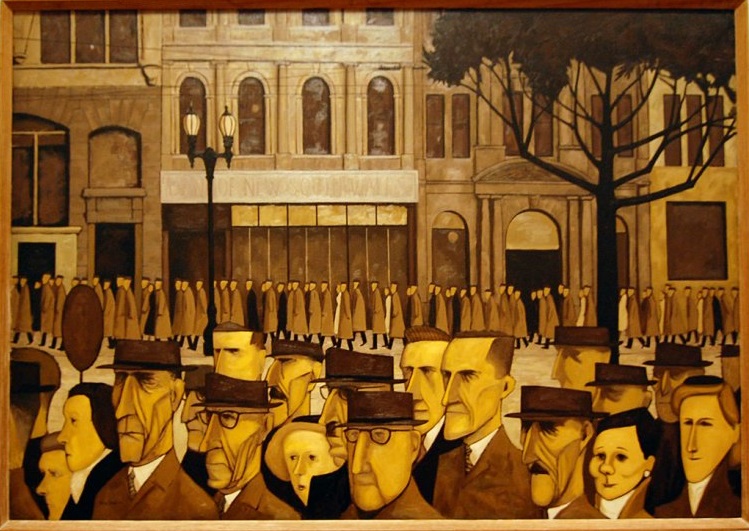
John Brack_Collins Street, 5 p.m._1955
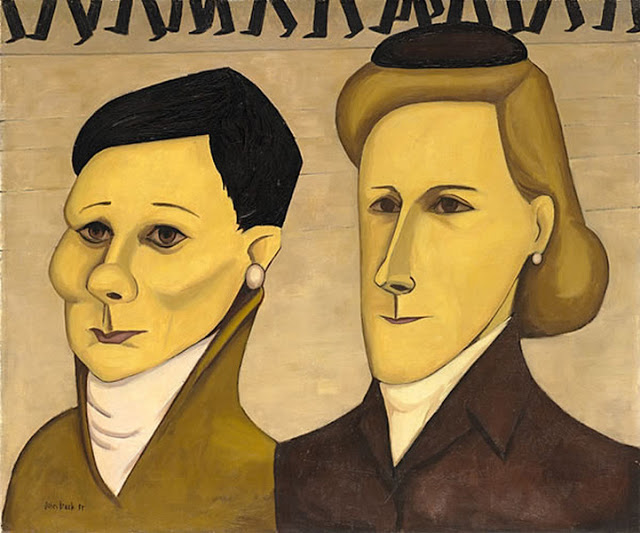
John Brack_Two Typists_1954
T.S. Eliot (poeta anglo-estadounidense, 1888-1965)
Preludios 1-4 (1917)
.
I
En los pasadizos, se establece la tarde del invierno
con olor a filete,
Las seis en punto.
Colillas de los días humeantes.
Y ahora un chaparrón
ventoso arremolina entre sus pies
los residuos mugrientos
de hojarasca marchita
y periódicos volados de solares vacíos.
Los chaparrones baten
persianas rotas, chimeneas,
y en la esquina de la calle
un solitario caballo de tiro piafa y bufa.
Y se encienden entonces las farolas.
II
La mañana recobra su conciencia
de los tenues y rancios
olores de cerveza que provienen
del serrín pisoteado en las calles
por todos esos pies
fangosos que se agolpan
en los madrugadores kioscos de café.
Con las otras mascaradas
que hace suyas el tiempo,
uno piensa en todas esas manos
que levantan persianas deslustradas
en un millar de cuartos de alquiler.
III
Arrojaste la manta de la cama,
te tumbaste de espaldas y esperaste,
adormilada, viste de qué modo la noche revelaba
el millar de sórdidas imágenes,
titilantes en el techo,
que constituían tu alma.
Y cuando el mundo entero volvió
y la luz se filtro sigilosa
por las contraventanas
y oíste a los gorriones en las cornisas,
tuviste una visión tal de la calle
que la calle difícilmente entiende;
sentada al borde de la cama, enrollaste
los bigudíes de tu pelo, o te masajeaste las plantas
amarillas de los pies
con las palmas sucias de tus manos.
IV
Su alma tensamente se alargaba
a través de los cielos
desvanecidos detrás de una manzana de edificios,
o bien con pies urgentes caminaba
a las cuatro, a las cinco y a las seis;
y cortos y cuadrados dedos
que rellenaban pipas de fumar,
periódicos vespertinos, y ojos
seguros de unas ciertas certidumbres,
la conciencia de una calle ennegrecida
impaciente por apropiarse del mundo,
Movido soy por quimeras que se enroscan
en torno a esas imágenes, y se adhieren a ellas:
la noción de algo infinitamente amable
que infinitamente sufre.
Pásate la mano por la boca, y ríe;
los mundos dan vueltas como ancianas mujeres
que recogen la leña en los derribos.
.
Traducción de Felipe Benítez Reyes
. . .
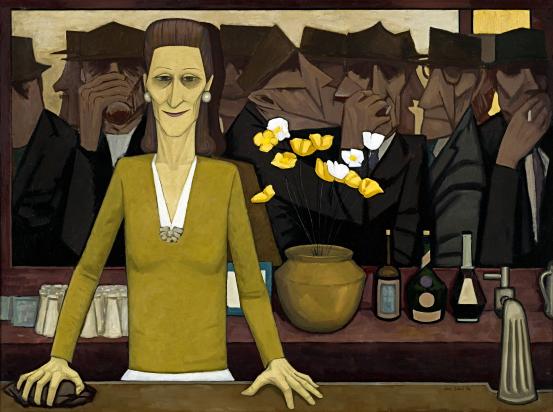
John Brack_The Bar_1954
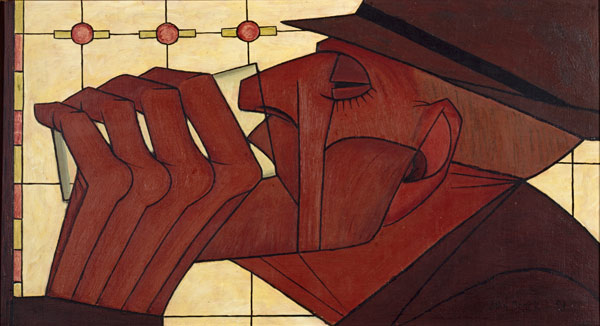
John Brack_Portrait of a man drinking ale
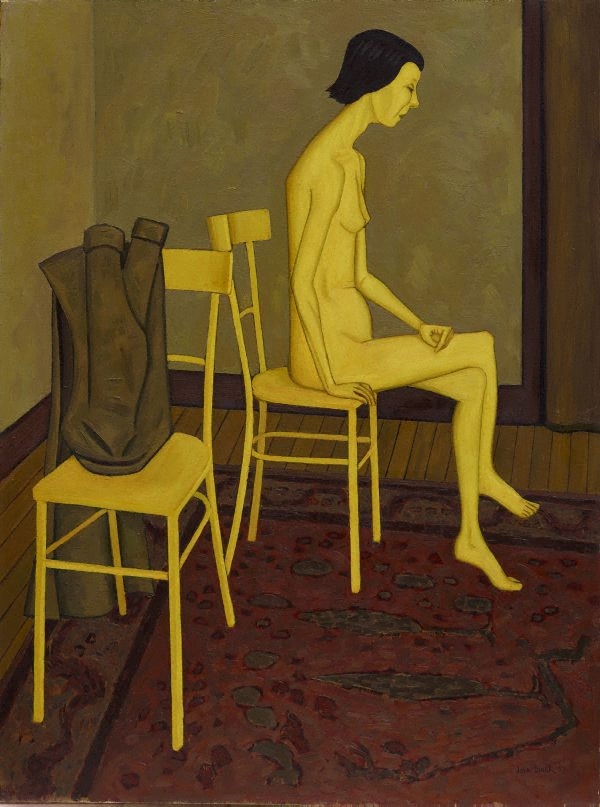
John Brack_Nude with two chairs_1957
T.S. Eliot (Anglo-American poet, 1888-1965)
Preludes 1-4 (1917)
.
I
The winter evening settles down
With smell of steaks in passageways.
Six o’clock.
The burnt-out ends of smoky days.
And now a gusty shower wraps
The grimy scraps
Of withered leaves about your feet
And newspapers from vacant lots;
The showers beat
On broken blinds and chimneypots,
And at the corner of the street
A lonely cab-horse steams and stamps.
And then the lighting of the lamps.
II
The morning comes to consciousness
Of faint stale smells of beer
From the sawdust-trampled street
With all its muddy feet that press
To early coffee-stands.
With the other masquerades
That times resumes,
One thinks of all the hands
That are raising dingy shades
In a thousand furnished rooms.
III
You tossed a blanket from the bed
You lay upon your back, and waited;
You dozed, and watched the night revealing
The thousand sordid images
Of which your soul was constituted;
They flickered against the ceiling.
And when all the world came back
And the light crept up between the shutters
And you heard the sparrows in the gutters,
You had such a vision of the street
As the street hardly understands;
Sitting along the bed’s edge, where
You curled the papers from your hair,
Or clasped the yellow soles of feet
In the palms of both soiled hands.
IV
His soul stretched tight across the skies
That fade behind a city block,
Or trampled by insistent feet
At four and five and six o’clock;
And short square fingers stuffing pipes,
And evening newspapers, and eyes
Assured of certain certainties,
The conscience of a blackened street
Impatient to assume the world.
I am moved by fancies that are curled
Around these images, and cling:
The notion of some infinitely gentle
Infinitely suffering thing.
Wipe your hand across your mouth, and laugh;
The worlds revolve like ancient women
Gathering fuel in vacant lots.
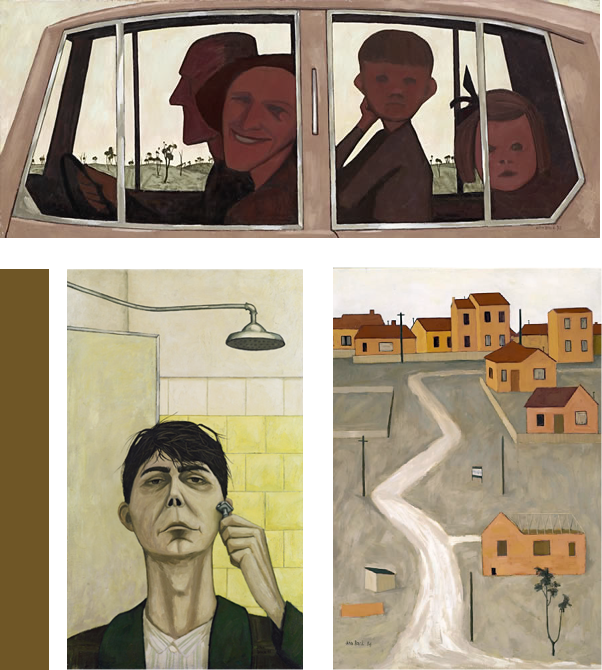
John Brack_Suburban Life 1
. . .
John Brack (1920-1999) fue un pintor australiano, nacido en Melbourne. Registró con sus pinturas de los años 50 “El Sueño australiano” – y lo mostró en la luz deprimante del invierno melbournense. Su grande fuente poética: Los Preludios de T.S. Eliot.
. . .
“Melburnian” Helen Bordeaux – from her Objects of Whimsy website, 2012:
“I’m not sure but when I was young I visited the National Gallery of Victoria in Melbourne and fell in love with a painting. I remember it being different from the other works. It was a streetscape holding a sea of faces. There was nothing pretty about the imagery; the faces of tobacco-stained complexions and haughty expressions were a dramatic contrast to the richly coloured landscape that surrounded it.
The painting was Collins St., 5 p.m., by John Brack (1920-1999).
Thirty years later I am living that painting – I live in Melbourne. Winter in Melbourne is just as Brack depicted: cold and grey, and there is a certain afternoon light unique to Melbourne that occurs when the sun shines behind thick grey clouds causing a tobacco-coloured hue to colour the sky and all that exists underneath it.
John Brack was a realist of the human condition, when post-War humans became the machine of industry, toiling fodder driving prosperity. How glad I am Brack documented these intriguing snapshots of ordinary life during the 1950s and 60s in Melbourne, Australia. This painting and other works of John Brack describe Melbourne’s character with imagery. They’re intriguing, with dark notes that keep a certain electric energy running through the streets and veins of those people who choose to live here !”
Editor’s note: We have paired Brack’s paintings with Eliot’s poems because Brack once said in an interview that his reading of The Preludes had been the poetic inspiration for him to paint Collins St., 5 p.m.
. . .
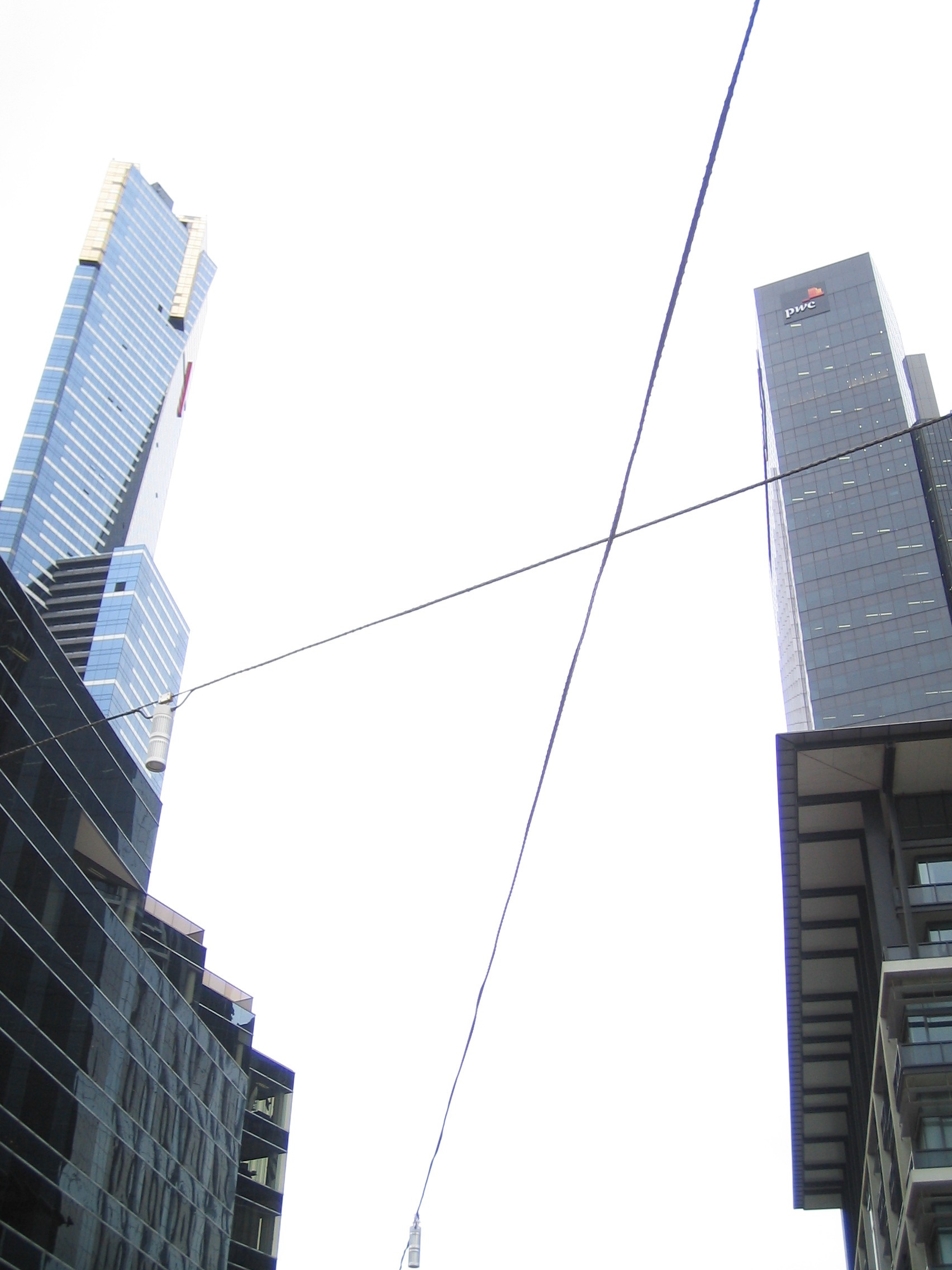
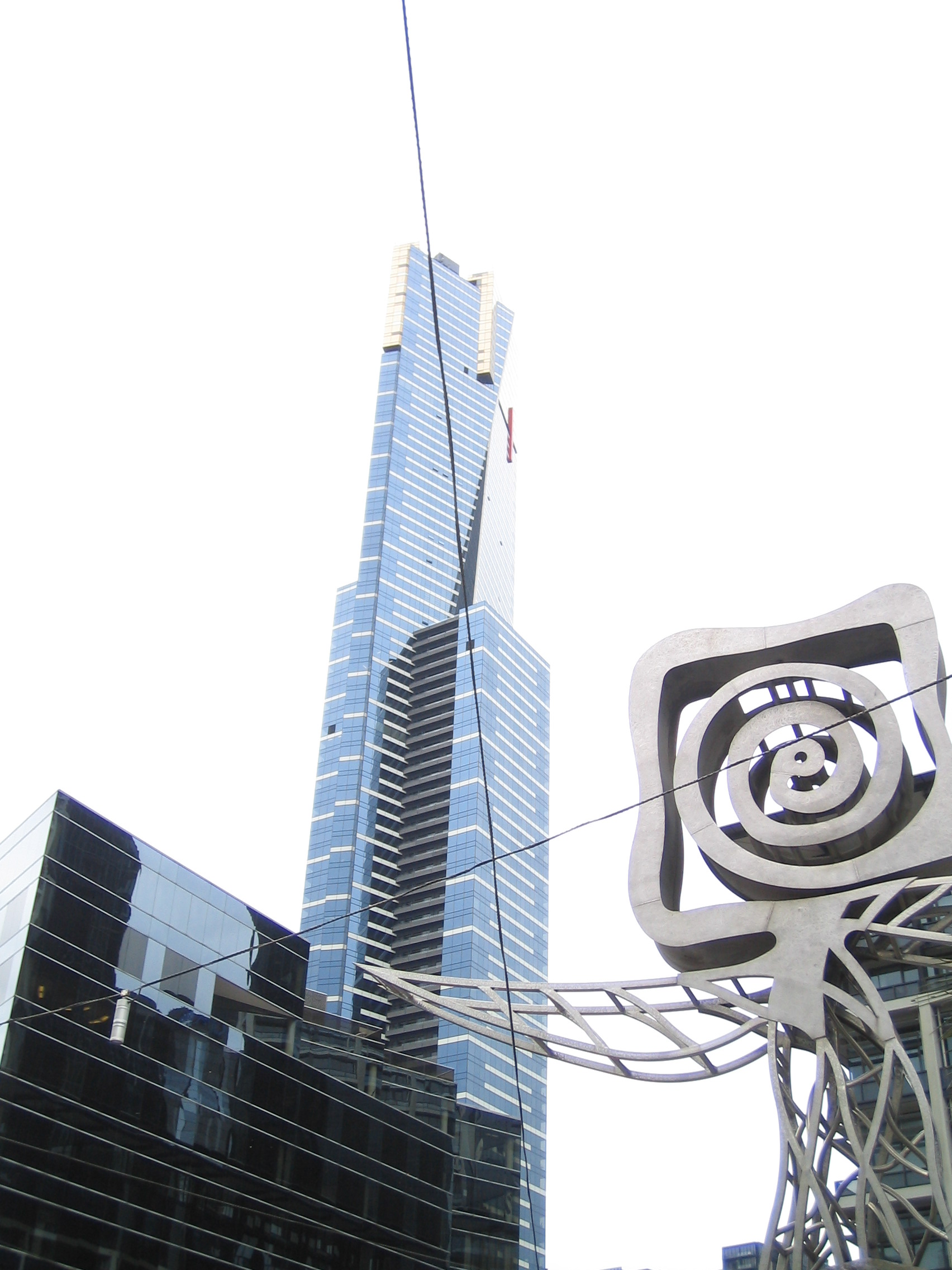
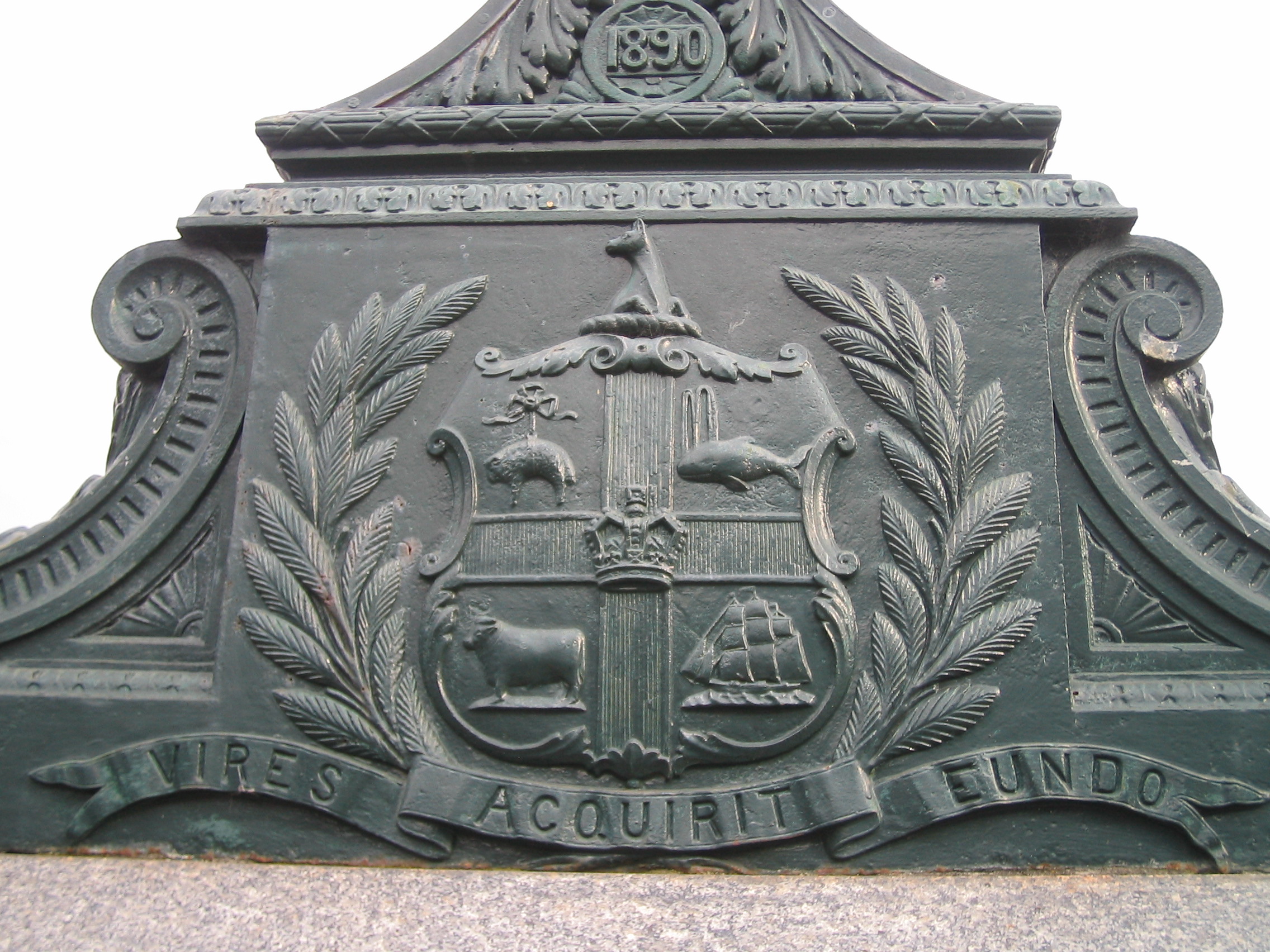
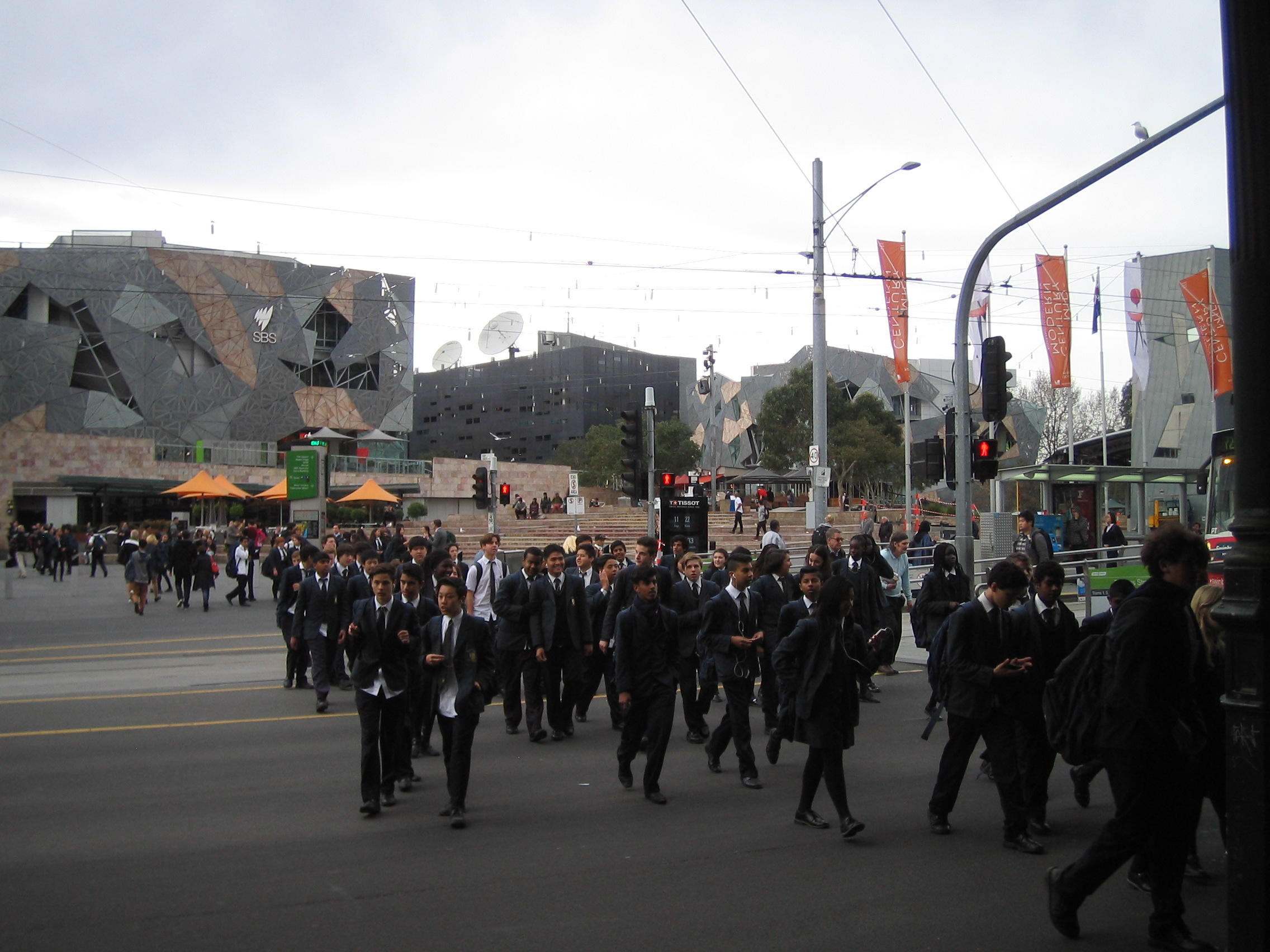
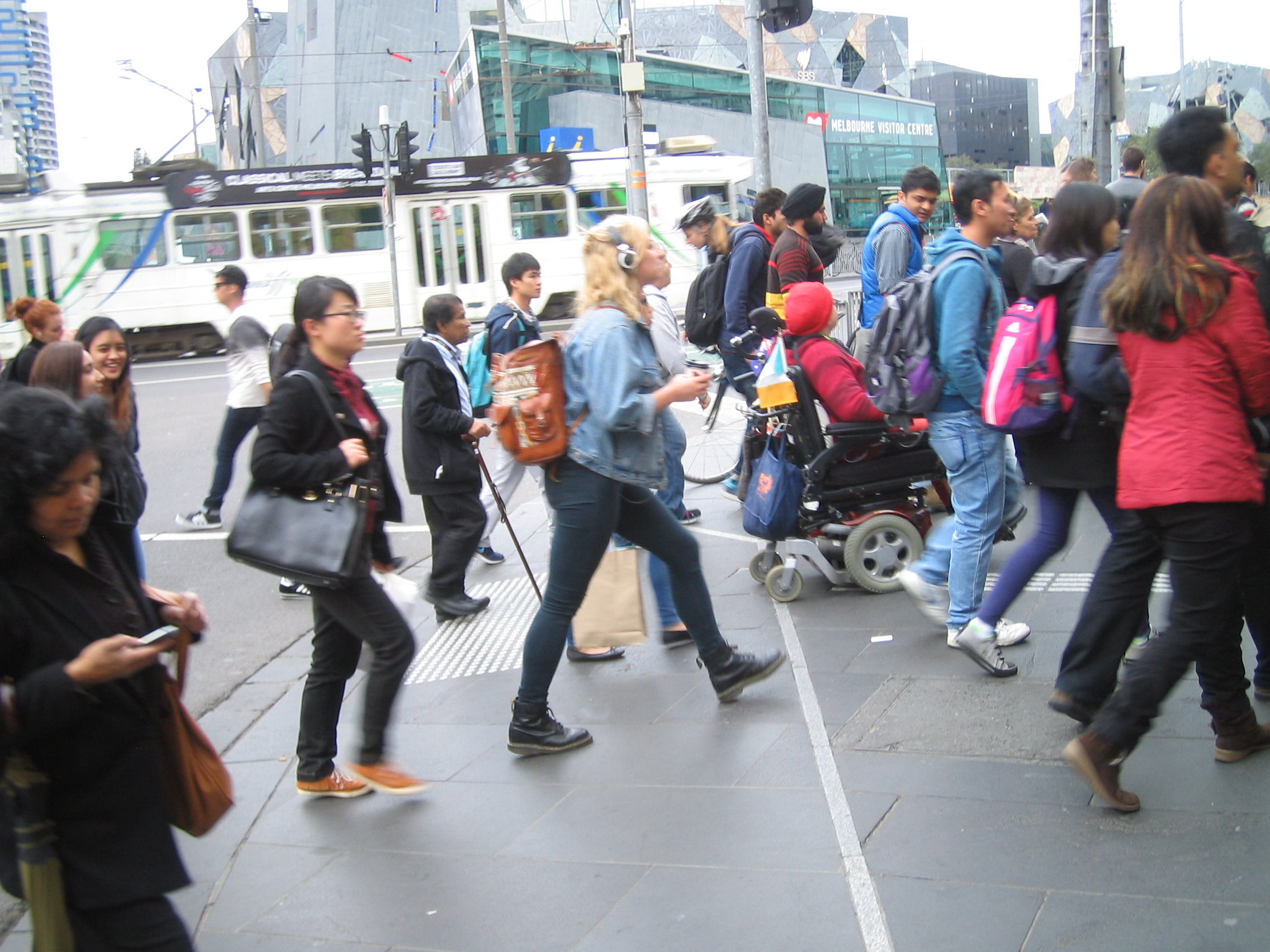
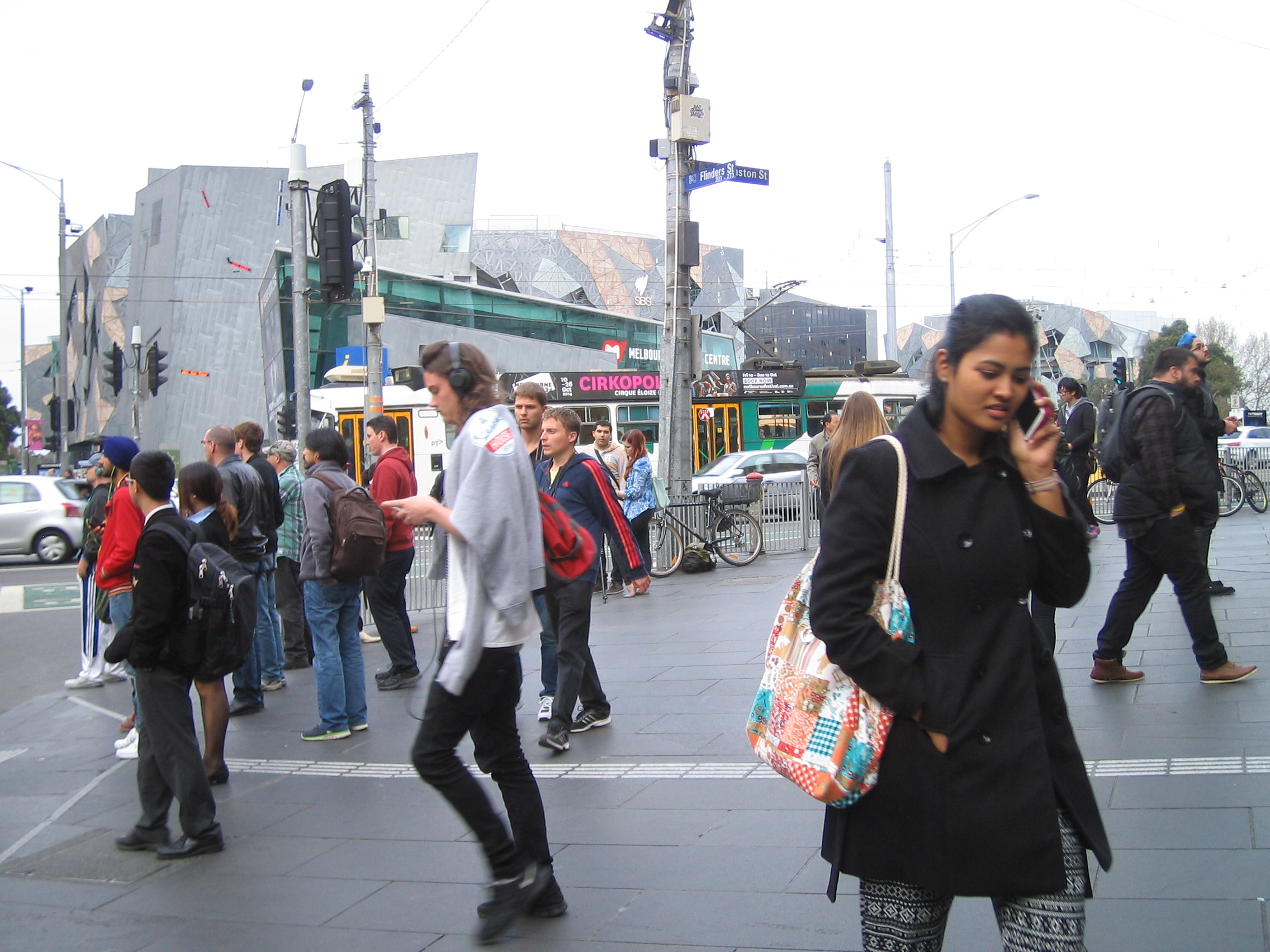
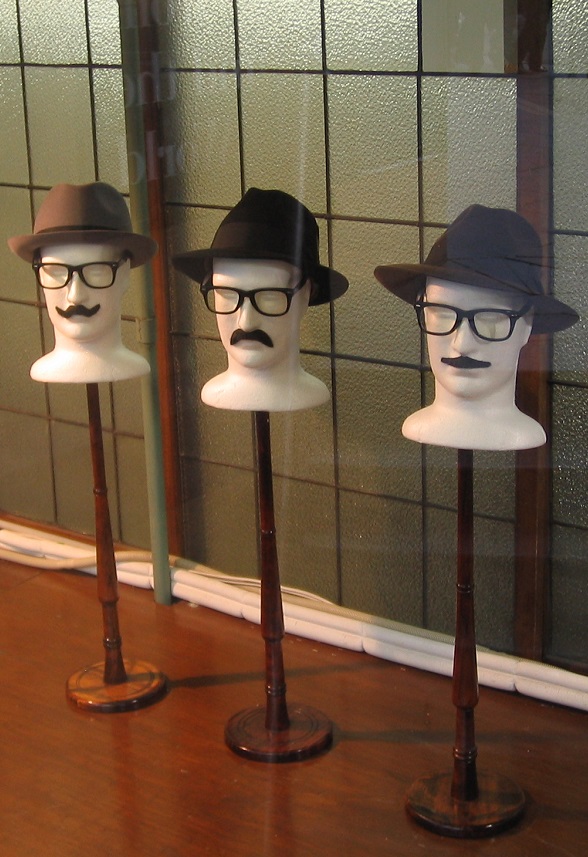
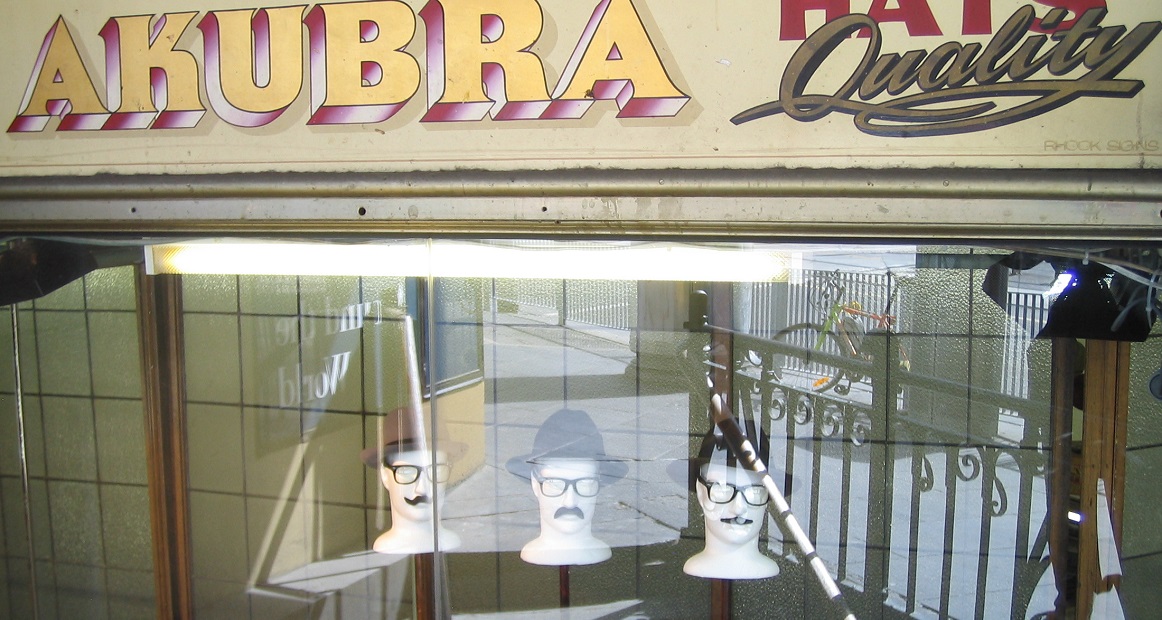
Melbourne Today…..

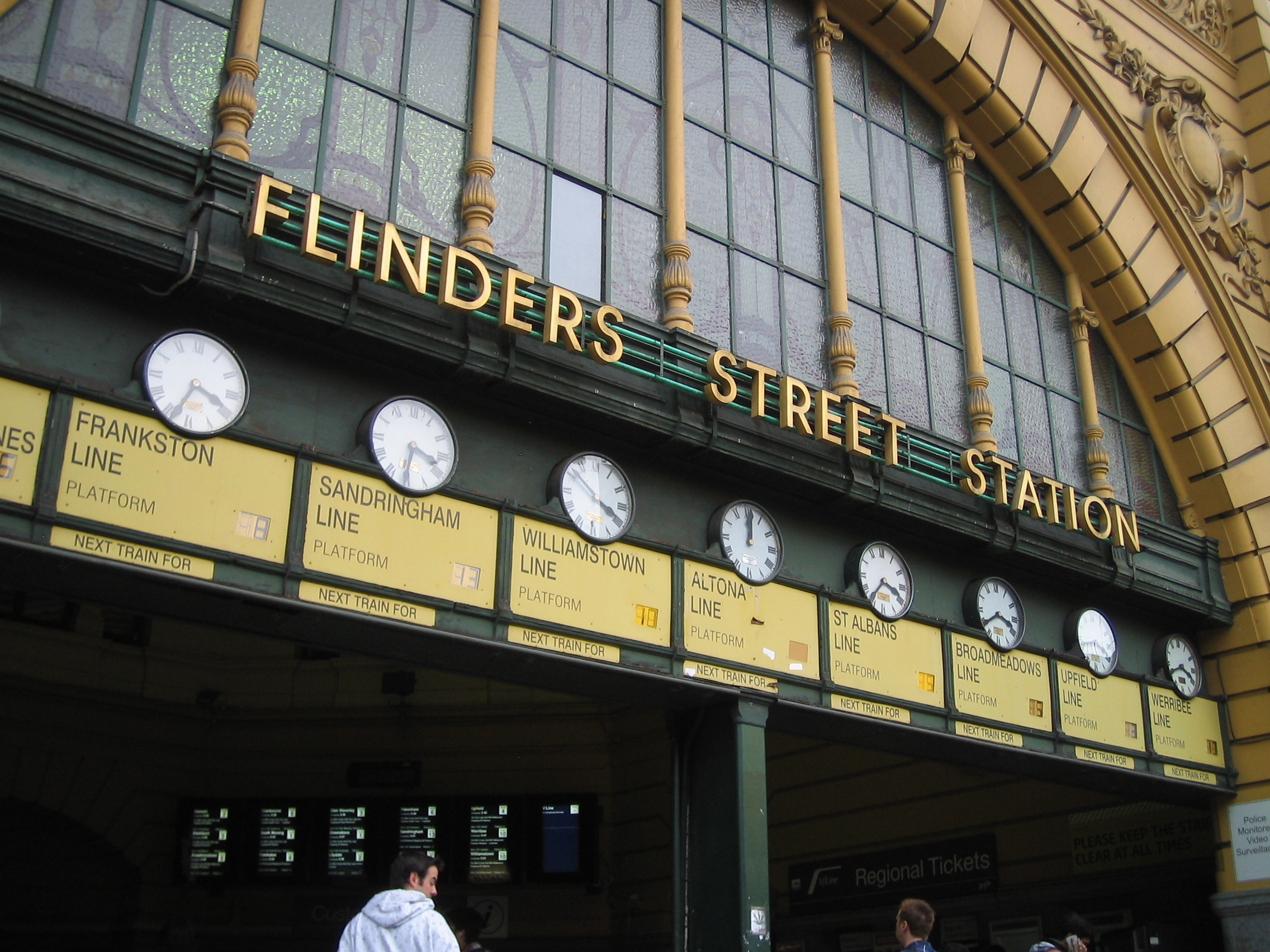
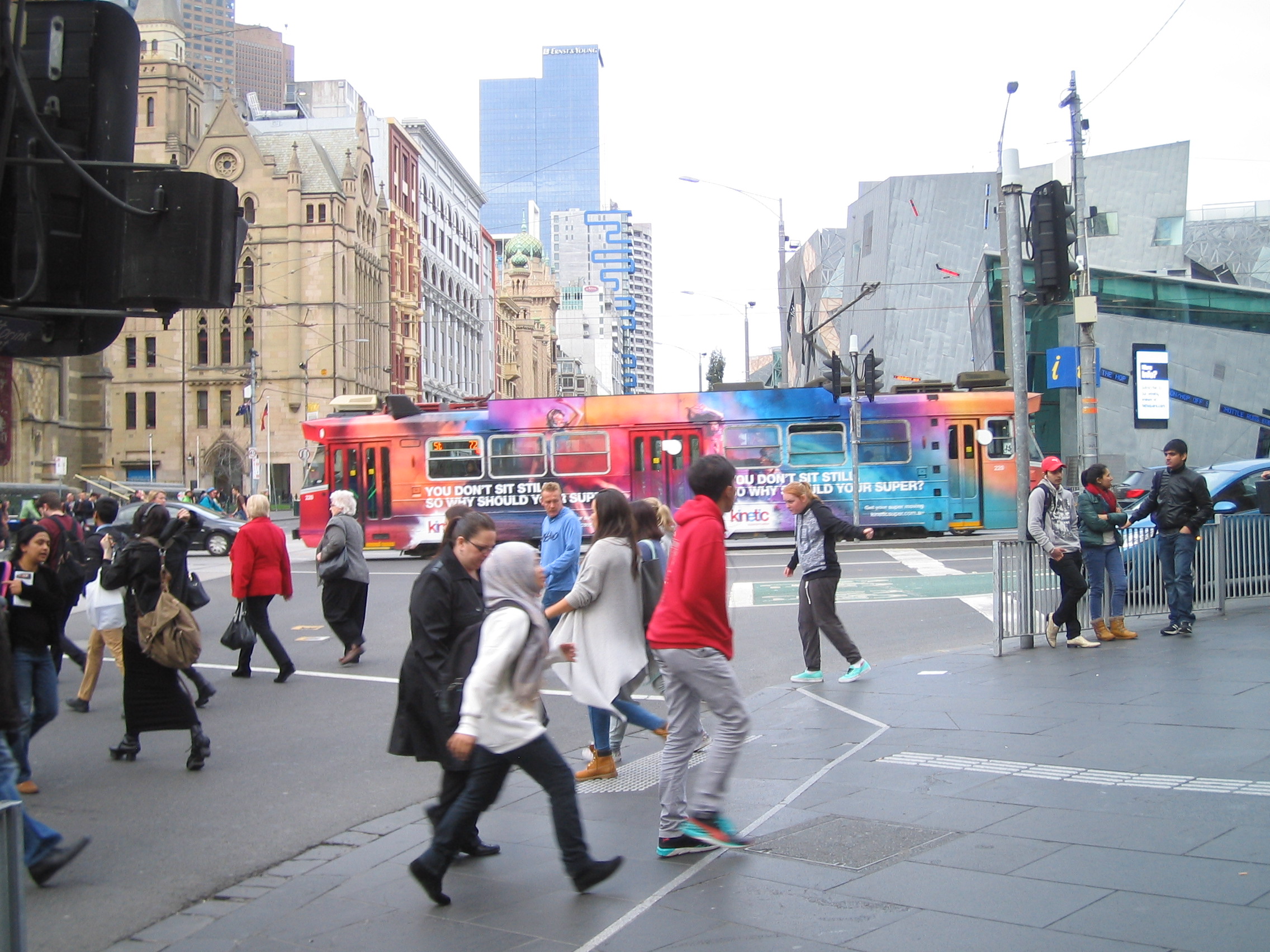
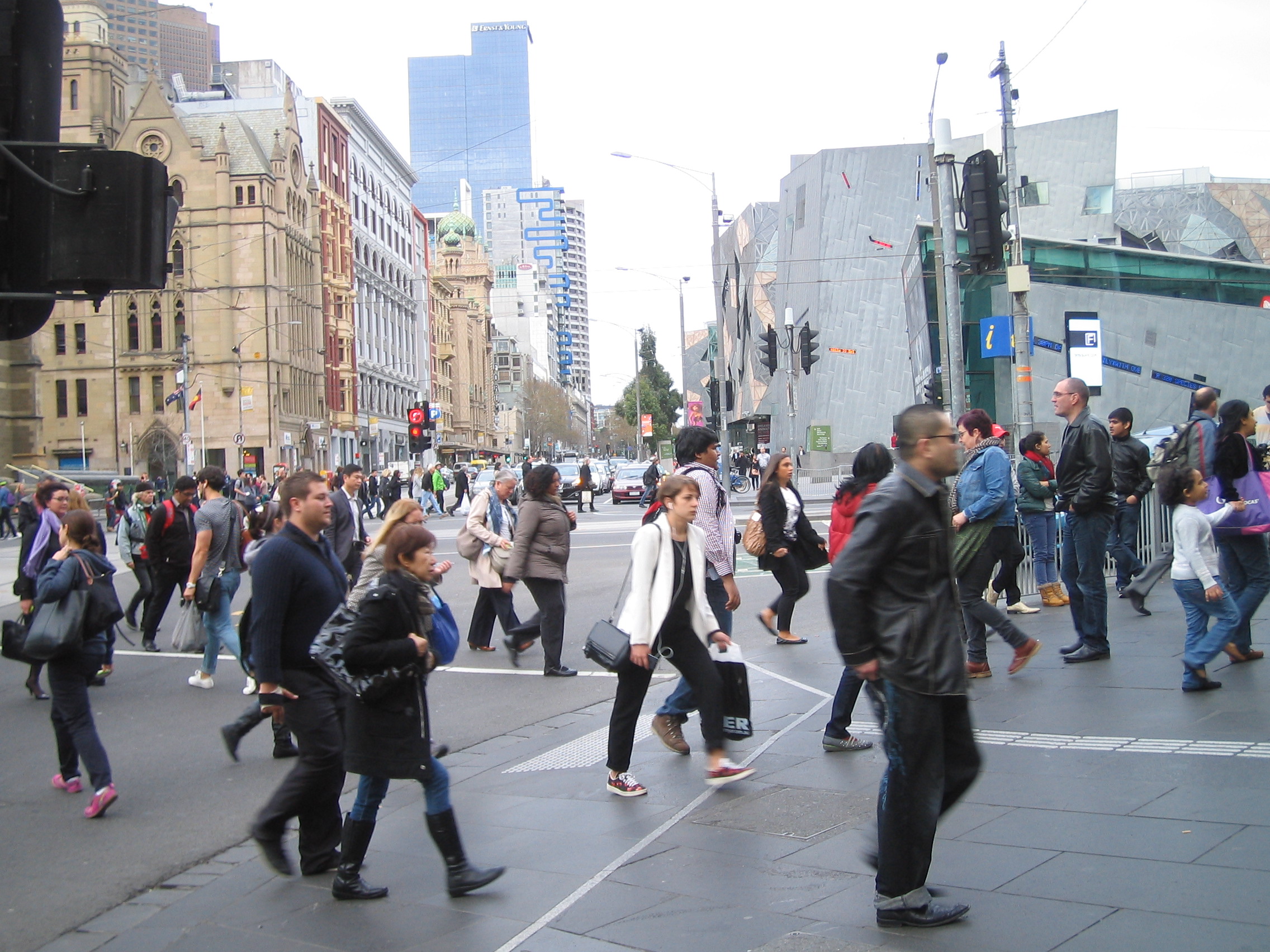
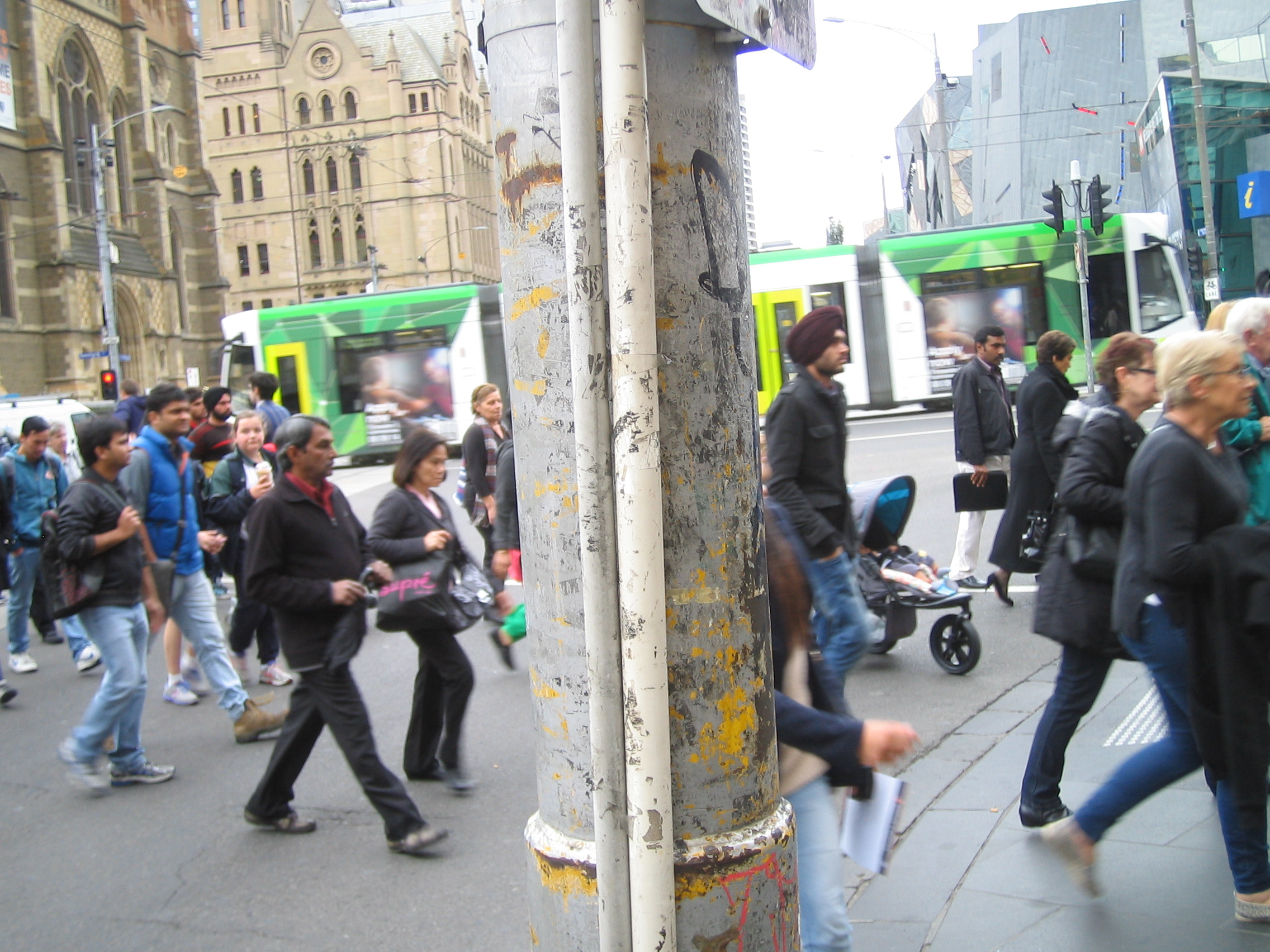

La vuelta de hoja
Posted: September 30, 2014 Filed under: Alexander Best, Spanish | Tags: Poemas del Alma, Poemas para el Cambio de Estaciones Comments Off on La vuelta de hoja
La vuelta de hoja
.
Entonces, estoy volteando las hojas en el cuento de la vida…
Y, hojeando las experiencias de la mediana edad,
llego a la comprensión que
mi ser es de un color demasiado intenso – audaz – para algún amante.
¿Existe el hombre que se atreverá a agarrar el amor del poeta?
Estoy agotado, aun en esta breve-eternal Ahora del corazón resplandeciente.
Me marchitaré pronto, como muerto, o eso parezca.
Pero voy a resurgir en la primavera – nos vemos allí.
. . . . .
Rabindranath Tagore: “El Último Trato” / “The Last Bargain”
Posted: September 29, 2014 Filed under: English, Rabindranath Tagore, Spanish | Tags: Poemas del Alma Comments Off on Rabindranath Tagore: “El Último Trato” / “The Last Bargain”
 Zócalo Poets