Kofi Awoonor: poemas traducidos por Raúl Jaime Gaviria
Posted: August 17, 2015 Filed under: Kofi Awoonor, Spanish | Tags: Poetas africanos Comments Off on Kofi Awoonor: poemas traducidos por Raúl Jaime Gaviria
Kofi Awoonor nació en Wheta, Gold Coast (ahora Ghana) en 1935. Su abuela lo involucró en la tradición oral de los Ewe. Algunas de sus libros de poemas son: Rediscovery and Other Poems, 1964; Messages: poems from Ghana, 1970; y Night of my Blood, 1971; Until the Morning After: Collected Poems, 1987; y la novela experimental, que él define como poema en prosa, This Earth, My Brother, 1971. Su libro The House by the Sea, 1978, habla acerca de su tiempo en la cárcel, a la que llegó por persecución política. Otros libros suyos libros publicados son: South of Sahara, 1975; The Ghana Revolution : A Background Account from a Personal Perspective, 1984; Comes the Voyager at Last, 1992; Latin American & Caribbean Notebook, y Africa: The Marginalized Continent, 1992.
La obra de Awoonor combina las tradiciones poéticas de su nativo pueblo Ewe y el simbolismo contemporáneo y religioso para representar África durante la descolonización. Él fue una de las víctimas que murieron en septiembre de 2013 durante un ataque terrorista en el centro comercial de Westgate en Nairobi, Kenia, por el grupo militante Al-Shabaab.
. . .
LOS PECES EN BÚSQUEDA
.
Algunas veces leemos líneas en la hoja verde
deslizamos nuestros dedos a través de la suavidad
de la preciosa madera de nuestros árboles vetustos;
Algunas veces incluso
una puesta de sol nos confunde,
mientras buscamos las líneas que propulsan las nubes
el esquema cromático
consta de múltiples diseños
que el primer artista compuso
Hay danzas en las calles de nuevo
la risa de los niños resuena
por toda la casa.
En la orilla del mar,
vestigios recientes de las últimas tormentas
hablan de una riqueza ancestral saqueada
arrancada, empeñada
por un padre irreflexivo
que vivía la vida de un Lord
y guiaba a las generaciones por venir
hacia la desesperación
y la ruina
¿Pero quién dice que nuestro tiempo ha concluido,
que el fabricante de cajas y el sepulturero
están de acuerdo,
o que los predicadores han oreado sus túnicas
y el coro y los tamborileros
están en ensayo?
No, donde el gusano come
un grano crece.
Las deidades conocidas
han medido el tiempo
con argumentos de eternidad
extendidos a través del viento
Y la muerte, aunque vendrá a la puerta
con su propia e inimitable tarjeta de entrada
habrá de encontrar una granja resucitada
con la risa y la danza
y el carnaval y la carne
del borrego y la hogaza
del nuevo maíz
Somos los celebrantes
cuyo campo en carnaval
fue una vez invadido por pícaros
y otros malos hombres
que interrumpen nuestra danza
con canciones y gestos obscenos
alguien dijo que un pez enfermo
nadó en nuestro lago
buscando un lugar en donde dejar su fardo
en consonancia con el Plan Original
Maestro, si puedes ser el remero
de nuestro bote
hazlo por favor.
Te pregunté antes
¿érase una vez una orilla
en casa, donde el malecón se ha estrechado
hasta el vértice de la infancia? Le damos la bienvenida a los viajeros
que vienen a casa en nuestro bote
frescos desde el árbol enhiesto.
. . .
VOLVIENDO A CASA
.
Muy
marcado
en el margen de nuestra vida
así está, el alado y desesperado anhelo
quema y sostiene
siempre.
El eterno dolor se resuelve
en el ojo inflamado
en el corte del codo.
Dios nos observa.
No buscamos más
que la belleza singular
de la victoria
y la muerte
la muerte extermina
los rojos rubores de la rosa
la curvatura del cuello del cardo
los anillos en el árbol del desierto.
Por eso ahora rechazo la muerte
contraproducente
terminal y mortífera
escojo más bien las colinas
y el mar cercano.
. . .
DESEO
.
Las estrellas arriba
artificiosas como alegres campanillas
El fragante rocío
cae en las hojas estropeadas
por la tormenta de ayer
me asomo al pote de hierbas
para leer el mensaje del más allá
Ni una voz, no hay fantasmas que susurren
Sólo voces de pescadores,
recogiendo las redes de caballas
venciendo al tiempo en los tambores de calabaza
En canciones que resuenan en el mar ante ellos
¿Dónde, dónde podrá estar?
¿Adónde habrá ido?
El alegre payaso de la aldea me
llama por mi nombre,
y me da un caurí colorido
en el caurí colorido tú escuchas el mar
y las palpitantes vibraciones de tu propia alma
¿Pero dónde? ¿Dónde podría ser?
El día permanece en quietud
a medida que los años pasan
y me sujetan en la única búsqueda
¿Qué es lo que buscas
en estas cenizas esparcidas por hogares olvidados?
Y en la chimenea donde cuelgan las ollas de la madre
Revelando pasadas tribulaciones
y futuras glorias
¿Glorias? ¿Quién dice que son glorias?
Siento el aroma de sus cuerpos entalcados tras de mí
humedecidos en palmas de olivo
las ropas con olor de alcanfor
sacadas ayer de la caja de la vieja dama.
Dicen que al final del viaje hay un lugar para el descanso
lleno de vacas muertas y sepulturas hambrientas
Que no te dan la oportunidad
Sí, la oportunidad de medir
tus propias limitaciones
Además de tus futuras glorias
Los que llevan los féretros hieden a licor y a vómito
el muerto se levanta, los mira
y vuelve a morir
La luciérnaga te muestra el camino al lugar de los cráneos
y allí te encuentras a ti mismo
reclinándote en una mecedora
observando la armonía de los perdidos
Sí, la ceremonia de los
trotamundos que extraviaron
su camino de regreso a casa
y escogieron el putrefacto
olor de la muerte.
. . .
ALIMENTAR A NUESTRO PUEBLO
.
No me vistas todavía
no me lleves al montículo ante los dolientes.
Aún tengo una cita con
el rocío de la mañana
un poema por escribir
un campo a ser arado
un amante que tocar
alguien a quien consolar
antes que me amortajes
¿Ha llegado ya la invitación desde la India?
Debo ir al encuentro del atardecer
y compartir con las palomas en aquella isla
Debo reencontrarme con mis amigos en Agra
allí me deben cuatro cuadros y una memoria
¿Por qué no estamos pariendo las vacas
o pastoreando las ovejas perdidas
nosotros mismos?
¿Por qué creemos que otros deben guiar nuestros caballos
pastorear nuestras ovejas
y alimentar a nuestro pueblo?
Debemos criar a los niños
y construir caminos
despejar los senderos que van a los campos de cultivo
y purificar los santos lugares,
y ¡oh! debemos encontrarnos
con el húmedo rocío matutino,
trabajar con el sol tempranero
hasta el punto de que venga a casa con nosotros.
Sólo después de la limpieza
podremos sacar afuera nuestros tambores
recordar viejas glorias
y antiguos dolores
con la danza
nuestra danza
cuando la noche final se descargue sobre nuestras cabezas
como lo hizo sobre las de nuestros padres
habremos de retirarnos
a nuestro humilde hogar
tierra segura, satisfechos de haber cumplido
con nuestro deber con el pueblo.
Nos enfrentamos al reto de la historia
y no tuvimos miedo.
. . .
Traducciones del inglés al español © 2007, Raúl Jaime Gaviria
. . . . .
Kofi Awoonor: “America” y “A los viejos poetas”
Posted: August 16, 2015 Filed under: English, Kofi Awoonor, Spanish | Tags: African poetry - Ghana Comments Off on Kofi Awoonor: “America” y “A los viejos poetas”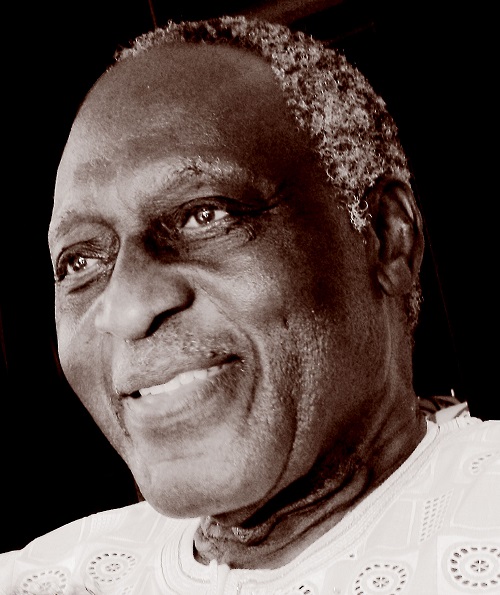
. . .
Kofi Awoonor (Ghanaian poet, 1935-2013)
America
.
A name only once
crammed into the child’s fitful memory
in malnourished villages,
vast deliriums like the galloping foothills of the Colorado:
of Mohawks and the Chippewa,
horsey penny-movies
brought cheap at the tail of the war
to Africa. Where indeed is the Mississippi panorama
and the girl that played the piano and
kept her hand on her heart
as Flanagan drank a quart of moonshine
before the eyes of the town’s gentlemen?
What happened to your locomotive in Winter, Walt,
and my ride across the prairies in the trail
of the stage-coach, the gold-rush and the Swanee River?
Where did they bury Geronimo,
heroic chieftain, lonely horseman of this apocalypse
who led his tribesmen across deserts of cholla
and emerald hills
in pursuit of despoilers,
half-starved immigrants
from a despoiled Europe?
What happened to Archibald’s
soul’s harvest on this raw earth
of raw hates?
To those that have none,
a festival is preparing at graves’ ends
where the mockingbird’s hymn
closes evening of prayers
and supplication, as
new winds blow from graves
flowered in multi-coloured cemeteries,
even where they say the races are intact.
.
From: The Promise of Hope: New and Selected Poems, 1964-2013 (University of Nebraska Press, 2014)
. . .
Kofi Awoonor (1935-2013) was born George Awoonor-Williams in Wheta, Ghana, to ethnic Ewe parents. He was a poet, literary critic, and professor of comparative literature; he served as a kind of “ambassador” for Ghana. Awoonor earned a BA from University College of Ghana, an MA from University College, London, and a PhD in comparative literature from SUNY at Stony Brook, New York state, U.S.A.. He wrote novels, plays, political essays, literary criticism, and several volumes of poetry, including Rediscovery and Other Poems (1964), Night of My Blood (1971), Ride Me, Memory (1973), The House by the Sea (1978), The Latin American and Caribbean Notebook (1992), and a volume of collected poems, Until the Morning After (1987).
.
Awoonor’s grandmother was an Ewe dirge singer, and the form of his early poetry draws from the Ewe oral tradition. He translated Ewe poetry in his critical study Guardians of the Sacred Word and Ewe Poetry (1974). Other works of literary criticism include: The Breast of the Earth: A Survey of the History, Culture, and Literature of Africa South of the Sahara (1975).
.
In the early 1970s, Awoonor served as chairman of the Department of Comparative Literature at SUNY Stony Book. He returned to Ghana in 1975 to teach at University College of Cape Coast. In Ghana, he was arrested and tried for suspected involvement in a coup d’état. He was imprisoned without trial and was later released; he wrote about his time in jail in The House by the Sea. Awoonor resumed teaching after his prison sentence. In the 1980s he was the Ghanaian ambassador to Brazil and Cuba and served as ambassador to the United Nations from 1990 to 1994; in 1990 he published Ghana: A Political History from Pre-European to Modern Times.
.
Awoonor is author of the novels This Earth, My Brother (1971) and Comes the Voyager at Last: A Tale of Return to Africa (1992). He died randomly with other innocents in the Westgate shopping-mall attack in Nairobi, Kenya in September of 2013.
. . .
“A los viejos poetas” por Kofi Awoonor de Ghana – su poema traducido en español durante El Festival de la Poesía Internacional de Medellín (Colombia), 2007:
Festival Kompa Zouk Ontario 2015 – et poèmes par les haïtiens Joelle Constant, Emanyel Ejen, Suze Baron, Dominik Batravil, etc.
Posted: August 5, 2015 Filed under: Creole / Kréyòl, Emanyel Ejen, English, French, Joelle Constant Comments Off on Festival Kompa Zouk Ontario 2015 – et poèmes par les haïtiens Joelle Constant, Emanyel Ejen, Suze Baron, Dominik Batravil, etc.

Une famille congolaise qui habite á Toronto…prête pour Le Festival Kompa Zouk Ontario 2015_02 août 2015
Translations from Creole (Kréyòl) into English by Merete Mueller:
Dominik Batravil
PAPYE 33
.
Depi lapli
Pa vini ak van
Siyati chovsouri
Chaje mi prizon
PAPER 33
As long as rain
marks no wind
signatures of bats
burden prison walls
. . .
Woudof Mile
Yo Ti Fanm Sezan Ki Kanpe
On ti fanm sezan
ki kanpe
kwen gran ri ak ri demirak
a onze diswa
lan yon to wob fatigue
On ti fanm sezan
ki kanpe kon yon I
anba on galeri
Li pa p’tann pesonn moun
Selman lakay li
manman-l grangou
prêt pou mouri
lit pito ret kanpe la
gwo onze diswa
lan fredi anba yon galeri
sou gran ri.
A SIXTEEN YEAR OLD GIRL STANDS
Sixteen year old girl
standing
corner of Miracle and Main
at eleven p.m.
in a faded dress
A sixteen year old girl
stands alone
under the arcade
Not waiting for the bus
Not waiting for anybody
at home her
starving mother is
about to die
But she’d rather be standing
here with the eleven
p.m. crowd in the cold
on Main Street.
. . .
Suze Baron
YO DI
Yo di
san kretyen
enrichi
late
Si sete vre
Si sete vret
mezanmi
ala diri
pitmi
ak mayi
ki ta genyen
la peyi
D’Ayiti
.
They say
human blood
enriches
soil
If that were true
If that were true
my friends
how rice
millet
and corn
would thrive
in
Haiti
. . .
Lenour Suprice
TI BO LANMOU LITTLE LOVE KISS
(Pou A-F.L.) (For A-F.L.)
Soley kouchan Sunlight reclines
Ti bouch ou your little mouth
K’ap pentire paints my eyes with
Syel grenn je-m flecks of sky
Fe dan-m siret siret My sweet mango tender
Nan dan-w between your teeth
Fe dan-w siret siret Your sweet mango tender
Nan dan-m between mine
Fe mwen domi I fall asleep
Nan bra-w in your arms
Fe ou domi You fall asleep
Anba-m down below me
. . .
Merete Mueller:
Creole Poetry from Haiti:
These are poems that I translated as part of a poetry project in 2005, as a student at Naropa University.
Despite not speaking the Creole language, I was inspired to explore the poetry of Haiti by my dear friend, Dominique, who is Haitian and also a writer. I first began reading Haitian poetry in an attempt to learn about the culture of a person whom I admire and care for, and ended up realizing how little I knew about the history of Haiti, despite my own country’s (U.S.A.) influence on its ups and downs.
I made a conscious choice to translate poetry originally written in Creole, rather than French, because Creole has long been the language of Haiti’s dis-empowered majority—less than 10% of the country can read and speak French, despite the fact that it was the country’s official language until 1961. For many writers in Haiti and in the Haitian diaspora, to write in Creole is a political statement, a conscious effort to include all Haitians, and not just an educated élite.
As I dug into the Creole language, word by word, I discovered for the first time that a language is actually a worldview.
Syntax and vocabulary are not only tools for communication, but for organizing and understanding the world that surrounds us. The moment that I really understood this was when I looked up the word “poverty” in my Creole-English dictionary and found that it was also the used to describe a “hollow tin can.” The power of this image is breathtaking, and one that belongs solely to Creole.
I decided to dig up these poems and share them online when I read an email from Dominique…She wrote that amidst the heartbreak of seeing the country that she loves so much in devastation (the 2010 earthquake), and her worry for family members still living there, she had been focusing on the beauty of the country, its history and culture:
“The most beautiful sight I remember ever seeing was in Haiti. And people associate Haiti with ugly, but I see beauty in its complicated history. I see beauty in what I know of Haiti, not what people think they know or read.” I believe that it is important for us to send our appreciation to the people of Haiti, for their accomplishments and artistic vitality, as well as our aid during difficult times. Let’s remember that it’s a country of life, and not just devastation.”
. . .
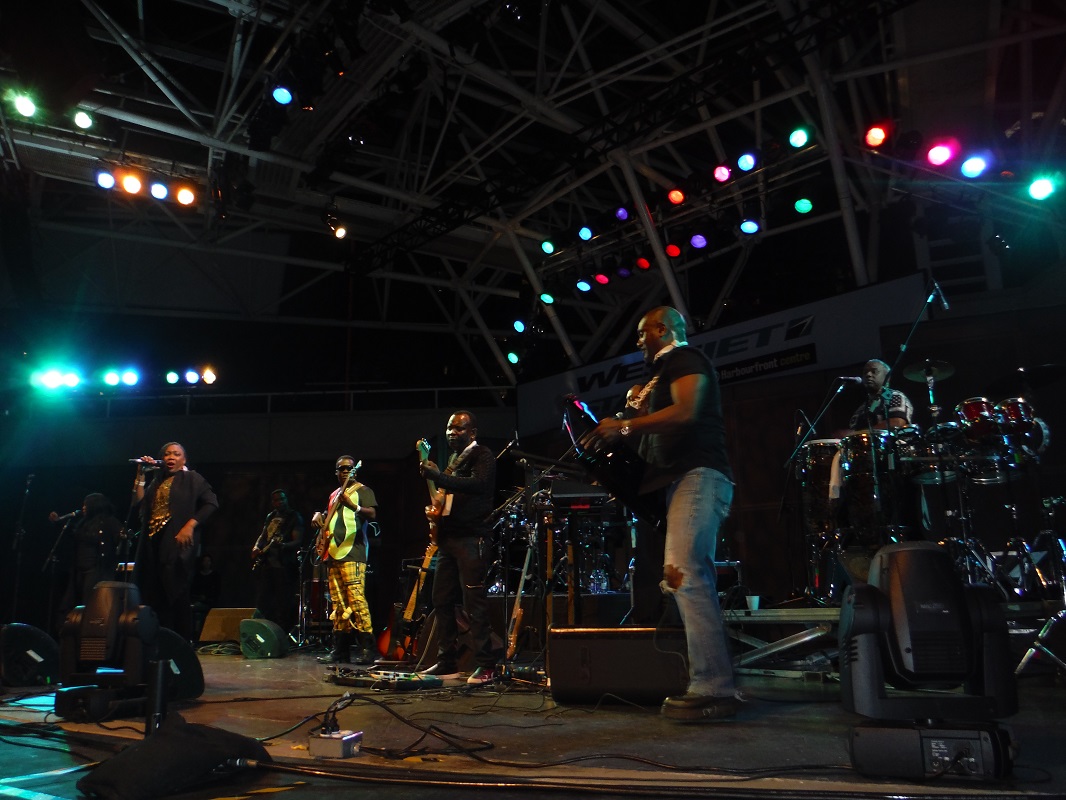
Les Phantoms avec King Kino_Harbourfront, Toronto_02 août 2015
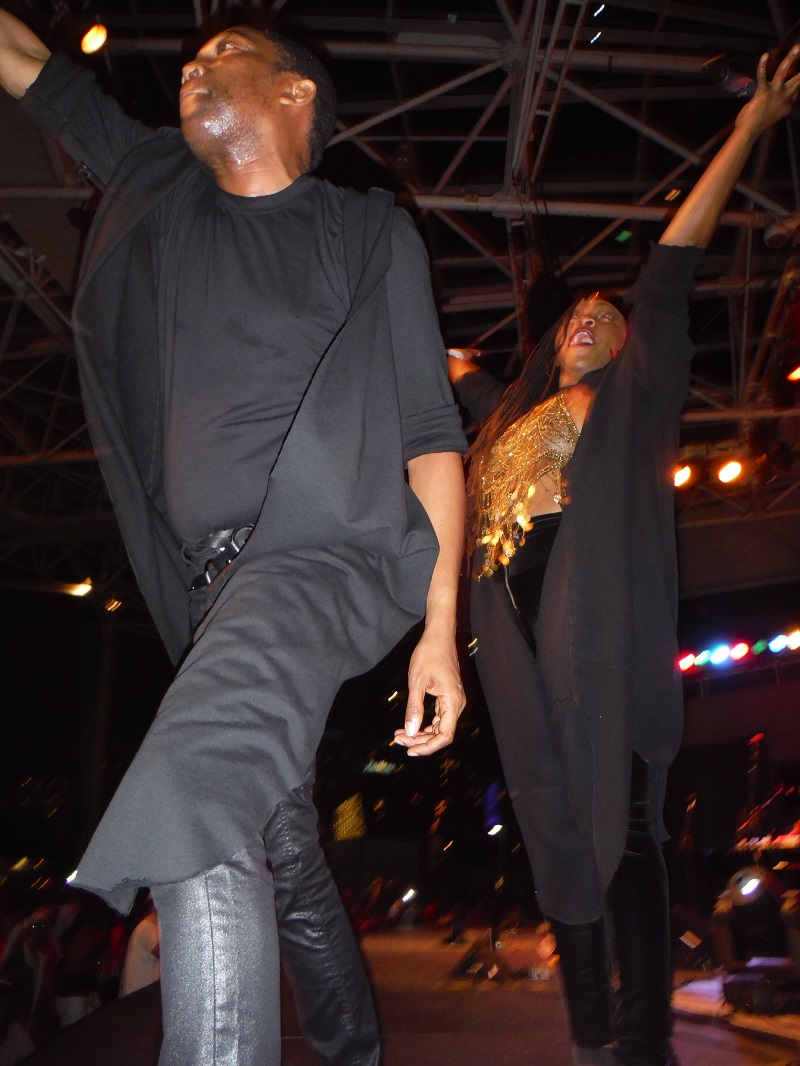
Chanteurs haïtiens du grand spectacle du groupe Les Phantoms_Festival Kompa Zouk Ontario 2015
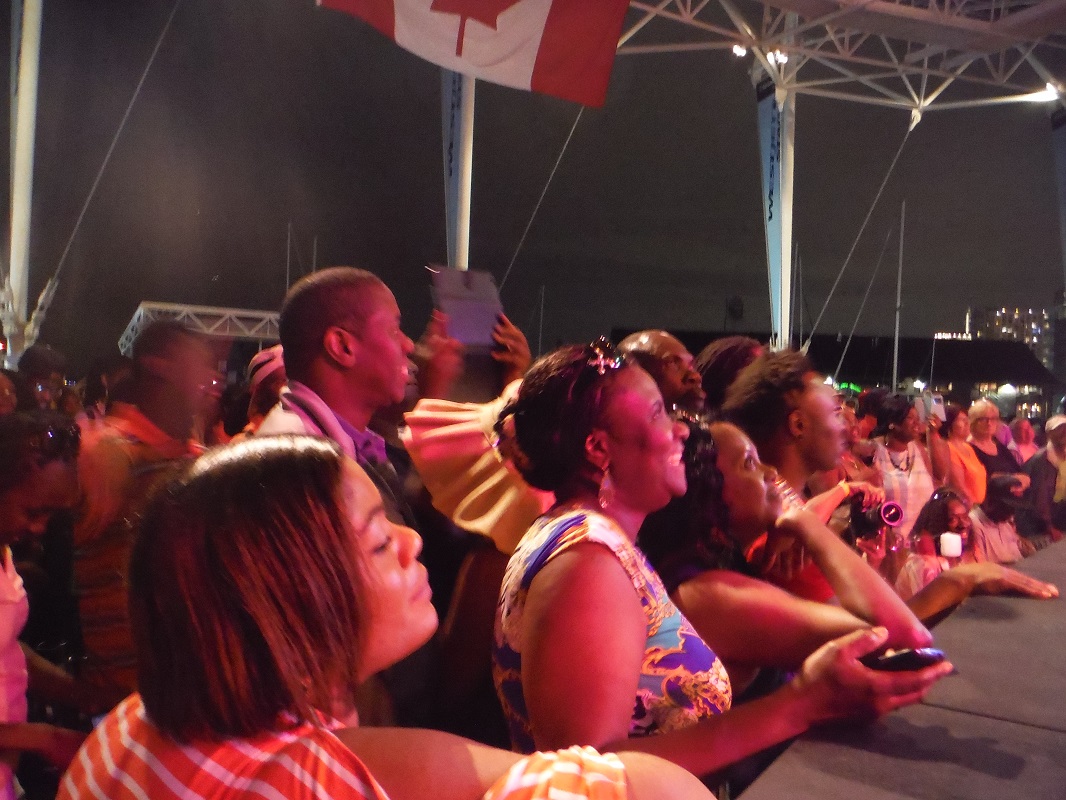
La joyeuse foule durant le spectacle-musicale “zouk” à Harbourfront, Toronto_02 août 2015
EMANYEL EJEN
WONGOL POEM
Pwezi Wongol
Pou Ayida
I.
Gendele m’rete
M’gade-ou Ayida
Loloj-mwen vire
Tet-ou gridap se vre
Men lannuit genle
Domi nan cheve-ou
Ayida o!
Soley galonnen
Nan tout plenn lakay
Timounn-yo manje grangou
Vant deboutonnen
Poban lannuit
Tonbe sou fey lavi
Lalin-nan tounen biva
Men nwase-a pews konpe!
Ayida o!
Kile jou-a va sevre?
Zonbi sige l’ale
Zetwal file tonbe
Zwazo leve chante
Nan veye kay Ayida
Zekle file pase
Zam rale tire
Zanset leve kanpe
Deblozay pete kay Ayida
I.
Sometimes I stop
I look at you Ayida
My head spins
Your hair may be kinky
but the night rests
in its tangles
Ayida o!
sunlight pours onto
each pity of our home
Children feasting on hunger
bellies unscrewed
Night fills a jar
collapses into life, paper thin
daydreams become blotters but
man, darkness is thick
Ayida o!
When will daylight attack?
Zombies struggle to die
Stars streak, fall
Birds wake, sing
Watch over the house, Ayida
Lightning shoots through
weapons drawn
Ancestors rise erect
Riots shake the house, Ayida
II.
Youn zetwal file tonbe
Fann fonten tet-mwen
Pakanpak
Youn loray gwonde tonbe
Nan mitan zantray-mwen
Tidife boule kale nan ke-m tou wouj
Ou met koupe-m
Rache-m jete-m
Ou met boule-m
Fe chabon ak mwen
Zwazo p’ap sispann
Fe nich nan rasin-mwen
Lespwa p’ap bouke
Fleri nan ke-m
Mwen se samba
Rasin-mwen pa gen tobout
II.
Star sharpens and falls
splits my forehead
temple to temple
Lightning burns
within my gut
Flames hatch in
my pounding heart
You can cut me off
uproot me, toss me away
You can burn me
into charcoal
Birds won’t quit
nesting in my roots
Hope doesn’t wither
but blossoms in me
I am a poet
my roots grow thick
III.
Le youn fledize blese
A dize tapan
Li mouri tetanus
Pa gen anyen nan sa
Le youn choublak senyen
San ko-l benyen ko-l
Wanganeges rele
Sa pa di anyen
Men le youn pye flanbwayan
Fe emoraji
Tout zwazo vole gage
Nan ekziltik y’al chante
Lot bo dlo y’al kriye
Lapenn sa k’rete deye
Van pote nouvel
Nouvel gaye
Zorey Ayida Konen
Li pa tande anyen
III.
When a ten o’clock flower is wounded
at ten o’clock sharp
It dies of tetanus
Nothing gained
When one hibiscus bleeds, its
body bathed in its own blood
hummingbirds cry out
but say nothing
Here, when one poinciania bush
hemorrhages, all the birds
scratch to leave the cockfight
In exile their singing fades
Across the water their weeping fades
Sorrow for those left behind
Wind brings and
scatters the news
Ayida’s ears ring
She hears nothing
IV.
Chak gout lannuit ki koule
Se youn tas kafe anme nan ke-nou
Nan je-nou lawouze koule
Detenn kouch poud
Nan machwa douvanjou
Malfini gagannen jou
Beke soley nan grenn je
Limye bite twa fwa
Anvan li trepase gran jounen
Tout kat libete-nou anba kod
Rev-nou mezire nan timamit
Silans-nou fele
Pasyans-nou kankannen sou nou
Men oumenm ki mezire node
Ki lonnen jipon-ou
Nan kat pwendino
Ki peze lanme nan balans-ou
Loray pete twa fwa nan patmen-ou
Le van kase kod
Ki mounn ki va koupe jaret-li
Le lanme souke jipon-l
Ki mounn ki va di-l san lizay
Le loray va bat kalinda-a
Ki mounn ki va leve danse
IV.
Each drop that sinks through the night
Is a cup of bitter coffee in our stomachs
Dew trickles from our eyes
streaks the gunpowder
that coats the jaws of dawn
Hawk strangles daylight
Pecks sunlight into pieces
Light flickers three times
Before the whole day dies
All four freedoms under arrest
Our dreams held in tin cans
Our silence breaks
Patience blisters among us
You watch for the storm
measuring out your hem
to the four directions
You weigh the ocean on scales
Thunder cracks three times in your palm
When wind breaks the law
Whose blade will gash its haunches?
When the ocean shakes its underskirt
Who will say it has no breeding?
When thunder comes beating the kalinda
Who will rise to dance?
. . .
Merete Mueller’s
Notes on “Wongol Poem”:
The Wongol is a form of poetry developed in Haiti during the 1960s. Traditionally a poem of two to six lines, the Wongol conveys a brief message expressing deep discontent against the status-quo. Wongols were meant to inspire dissent towards the government.
The Kalinda were the nocturnal dances performed before the Haitian Revolution, probably to conceal the outlawed practices of Voudun ceremonies.
The Zombie is a constant theme in Haitian literature and poetry. Jean Zombi, aiding in the execution of all remaining French settlers after the Haitian Revolution, forced men to strip naked before having their stomachs slit open. In Voudun, the zombie is a dead person resurrected through sacred ritual. After being resurrected, the body has no will of its own, remaining under the control of whomever performed the ritual. Figuratively, the zombie has come to represent an easily manipulated, apathetic person with little awareness of his or her surroundings.
In Rasin-mwen pa gen tobout, the last line of Part II, gen, which I have translated as ‘grow’, can also be translated as ‘earn’. Tobout, ‘thick’ or ‘tough’, also means “prison cell”. While one meaning of the line is “My roots grow thick”, Ejen is also saying, “My origins earn me a prison cell”.
. . .
Emanyel Ejen (born Emmanuel Eugène, in 1946) – pseudonym Manno Ejen – was forced to leave Haiti, but chose to return in 1986, after the end of the Duvalier régime. Upon returning, he co-founded the weekly Creole newspaper Libete (Freedom) in Port-au-Prince, where he currently lives and serves on the newspaper’s editorial board.
Né à Cuba en 1946 de parents haïtiens, Emmanuel Eugène vivait à Montréal pour plus de trente ans. Il est ouvrier et poète. Sa poésie engage le meilleur de nous-mêmes : l’enfance, l’amour, l’espoir.
. . .
Jeanie Bogart Jourdain
Distance
.
Je marche pieds nus
déshabillée
dans les ruelles de ton coeur
tous les sentiers
me mènent à toi
là, je retrouve
mon lever de soleil
mes jeux de cache-cache
parler sans cesse
continuer d’avancer
ce que nous réserve l’avenir
mystère
décembre
le froid pénètre mon cerveau
Père Noël m’a oubliée
j’essaie de tendre la main
au-delà des frontières
pour que nos doigts
puissent se toucher
s’électriser
jusqu’au tressaillement
je t’envoie mon coeur
tu m’envoies le tien
ils restent suspendus
en cours de route
gelés par le froid
d’Amérique du nord
un verre de rhum
comme je les aime
un petit coup fil
au milieu de la nuit
quelques mots qui me glacent
qui me brûlent
qui ressuscitent mes sens
ma passion
mes désirs
mes rêves
mes sensations
mes vilaines pensées
une si longue distance
condamné notre cœur
de côté l’amour
. . .
Distans
.
M ap mache pye atè
toutouni nan riyèl kè w
tout santye
mennen m yon sèl kote
de pla men w
se la m jwenn
solèy leve m
sere liben m
pale pale
mache bouske pi devan
sa demen sere pou nou
se mistè
mwa d desanm
gen yon fredi k antre
jouk nan sèvo m
tonton nwèl bliye m
m lonje menm tout longè
eseye fè l janbe fwontyè
wè si pwent dwèt nou
te ka touche
pase kouran
fè san n mache
mwen voye kè m ba ou
ou voye pa w ban mwen
yo ret kwoke nan wout
fredi lamerik dinò
fè yo tounen glas
yon vè wonm
jan m renmen l la
yon ti kout fil
nan mitan lanwit
de twa ti mo
ki fè m frèt fè m cho
ki reveye dènye sans mwen
pasyon mwen
anvi mwen
rèv mwen
sansasyon mwen
panse malelve mwen
yon distans lan mitan nou
kè nou kondane
lanmou fè jeretyen
. . .
Joelle Constant
Toi
.
Ton visage
Reflet de ta beauté intérieure
Ton expression
Témoin de ton cœur d’écrivain
Tes lèvres
Porte-parole de tes amours non avouées
Tes mains
Messagers infatigables de ta tendresse
Tes yeux
Porteurs de tes désirs inassouvis
Ton corps
Aimant attirant le pôle opposé
. . .
Joelle Constant
Ton Franc Sourire
.
Ton franc sourire
Une source d’émotions
Qui ne peut tarir
Une invitation
Chargée de désirs
La représentation
D’une histoire à écrire
Une poignée de chansons
Entonnées en délire
L’annonce d’une saison
Qui tarde à venir
Ton franc sourire
L’image de ton nom
Que je me plais à redire
. . .
Joelle Constant
Le poète
On ne touche pas un poète
Avec des mains d’acier
On ne parle pas à un poète
Avec des mots vulgaires
On ne regarde pas un poète
Avec des yeux méchants
On ne sent pas un poète
Juste parce qu’il est présent
On n’écoute pas un poète
Avec des oreilles distraites
On ne goûte pas un poète
Comme on goûte l’homme naturel
Un poète, on le traite
Avec délicatesse
Un poète, on le touche
Avec des doigts d’artiste
En interpelant son art
Un poète, on lui parle
Avec révérence
Comme à une divinité
Un poète, on le regarde
Avec les yeux d’un peintre
Car il peint aussi ses mots
Dans sa pensée
Un poète, on le sent
Même absent
Car son œuvre le tient présent
Un poète, on l’écoute
Même si son message
Nous déroute
Un poète, on le goûte
Tout en dégustant
La saveur de ses vers
Un poète, on l’élève
Parce qu’il transcende
Et parce qu’il est
Un poète.
. . . . .
. . . . .
El verano es un sueño que nos sueña…
Posted: July 31, 2015 Filed under: Alexander Best, Spanish Comments Off on El verano es un sueño que nos sueña…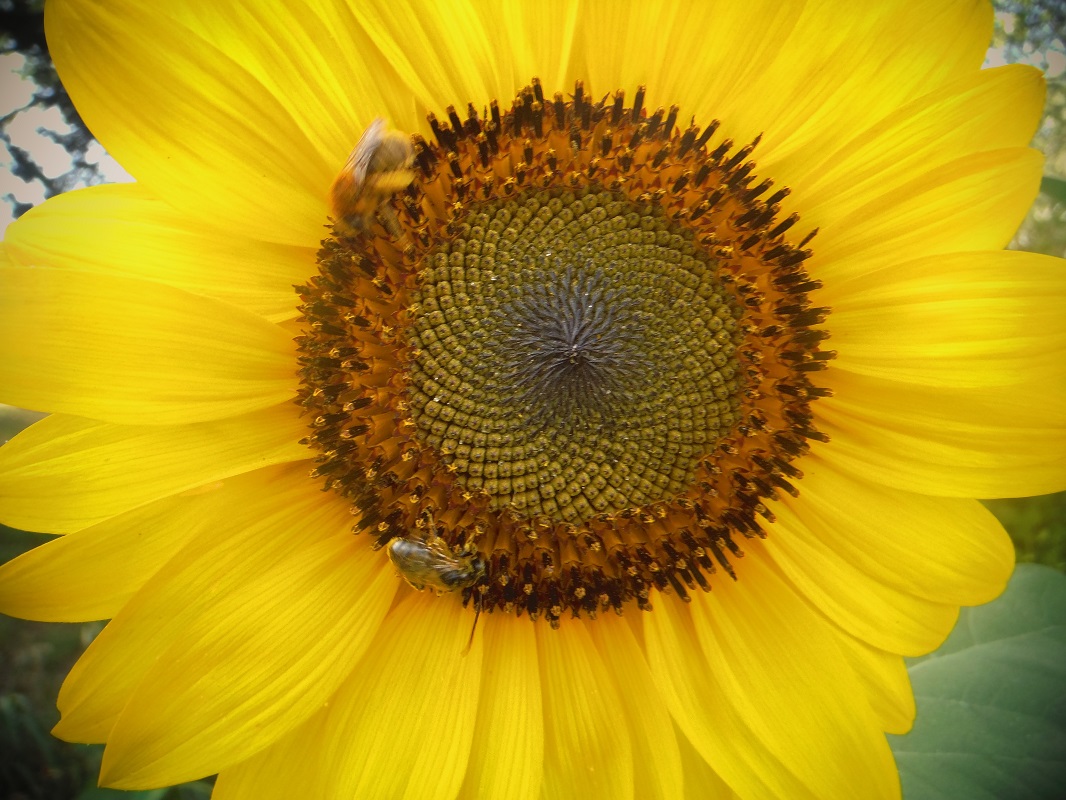
El verano es un sueño que nos sueña; es el mismo el invierno. Son dos estaciones en un equilibrio de extremos: + 30 grados centígrados o negativo 20; banquetas abrasadores o la nariz cambiando azul. El girasol es la grande cara del calor (julio/agosto), y el copo de nieve es la flor diminuta del frío (enero/febrero). ¡Me dan placer estas dos flores! Y son las caras de unas hermanas preciosas canadienses – hermanas mías.
. . .
Alexander Best
31.07.2015
. . .
Summer is a dream, a dream that dreams us…
And it’s the same with Winter.
These are two seasons in an equilibrium of extremes:
+ 30 degrees celsius or minus 20;
baking-hot sidewalks or your nose turning blue.
Sunflowers are the big face of Heat (July/August),
and the Snowflake is that tiny “flower” of the Cold (January/February).
I love these two flowers.
They are sisterly faces, special and Canadian – and they’re
my sisters!
. . .
Alexander Best
31.07.2015
. . . . .
Wayne Keon: poemas de “Hierba Dulce II”
Posted: July 31, 2015 Filed under: Spanish, Wayne Keon, ZP Translator: Alexander Best Comments Off on Wayne Keon: poemas de “Hierba Dulce II”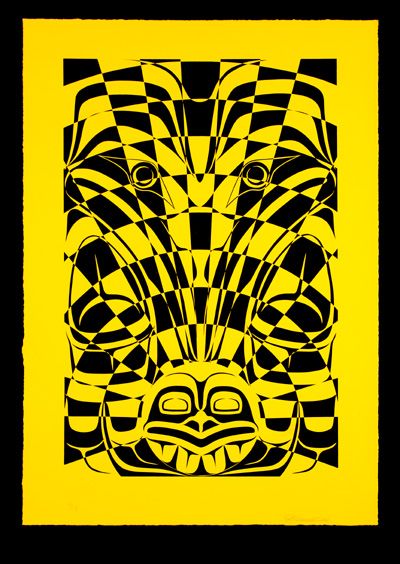
El Cuervo Grande Roba La Luz_Raven Steals The Light_por John Brent Bennett_artista de la Nación Haida Gwaii_Canadá
Wayne Keon (Nación Nipissing-Ojibwe, n. 1946, Pembroke, Ontario, Canadá)
.
en este pueblito
.
En este pueblito,
este gran pueblito
.
soy
el profeta del sol
de ningún hombre
.
llamado “Canadá”
en la lengua
.
apenas
puedo dirigir
mis propios incidentes
día a día
.
de mi madre,
tierra-ojibwe,
tierra-algonkin
.
o resolver
lo que es el pasado
también
el misterio del sol
.
el Pueblo
del tiempo atrás
.
me paro
ante de ti,
sol
. . .
sueño-despertar
.
en mis sueños
los caballeros del espíritu
.
vuela
sobre el sol
radiente en azul
cielo y Cielo
.
mientras todo la gente
está mirando
y
locamente aclama
.
la carrera
completerá
.
ningún vencedor
declarado
.
y
es porque
el hombre-cuervo
.
todavía
no ha regresado de
.
afuera
mi puerta
la gata está rascando,
arañando
la pared
por algo a comer,
el hambre despierta a ella
.
también
se ha levantado
mi mujer
.
abre la puerta,
conecta la pava eléctrica para café
. . .
xxiv
.
me dijiste tarde de noche
que hacías bien tu trabajo
.
naturalmente tu tipo de trabajo
era ayudar – la profesión de ayuda
.
yo tenía miedo
decirte que
la mía era
la profesión de
desesperanza
. . .
color plata y negro
.
necesitó tres noches
para inscribir ésto:
sus brazaletes
están hechos de
plata y negro
plateado y negro
plata-morado
plateado-negro
plata y negro
.
no tengo ningunos pretextos
– buenas líneas son una obra ardua
. . .
bahía de trueno
.
afuera
en la
bahía donde
.
duerme
el
gigante
.
las
olas
son silenciosas
.
aquí
a lo largo de
la costa
.
donde
yacen
los ancianos
.
lamen
las rocas y
.
el viento
continua hacia
la estación tercera
mientras
la cámara de comercio
pide
.
setenta y cinco centavos
por un tour-lección de los huesos
.
todavía
no está aclarado
el gran misterio
.
el color plateado
refleja
a lo largo de la costa
. . .
noches de tierra
.
he estado fuera
de esta tierra y suelo natal
tan largo tiempo
.
llamé a
una banda plata, simple,
de círculos
.
donde la luna
monta al lado
.
radiante del sol
ella lucía una máscara
y miraba a
.
los ancianos
girando
las luces
.
le veo a ella
allí
júpiter
.
¿pueda yo verle
de nuevo?
.
dijo
no hay prisa
.
ahora
veo al hombre-cuervo
no hay que
relatar el cuento
alrededor de las fogatas
tarde de noche
.
y deseo esa senda
flameante
entre las estrellas
.
tierra
he estado
fuera de ella
demasiado tiempo
.
el planeta-estrella júpiter
es más cerca
que creas
.
está por encima de
tu comprensión
.
puedo
ver eso
puedo
ver
eso
.
puedo ver
que no habrá
ningún descanso
ahora
. . .
el trabajo del águila
.
ella – el águila – ella
golpea a su presa
agarrado del aire
.
con un solo porrazo
chillando
sangre y garra
.
rauda, limpia, orgullosa
.
y estoy torturando esta página
cada hora
.
hasta que
mi alma se tropeza con
su ser de testigo oficial
– estando enferma de todo
.
pero mi alma
empieza a caminar y hablar y
bailar
en alto
. . .
rueda sur
.
es
todas esas fogatas
mágicas
el fuego encendido
tarde de noche
.
es leones
y zorros
y el oso
.
es el naranja
y rojo
ámbar y blanco
.
es lavar tus ojos
con el sol
con la luz
.
es
“hierba dulce”
y canela
cedro
y oro
.
es
bailar con el amor,
amar hasta que
envejeces
. . .
truco de un cuervo
.
hay un río que
fluye con colores
.
en un sueño donde
fue el oso para esconderse
.
hay una cinta de
“hierba dulce”
alrededor de ti
.
en un sueño donde nunca lloró el alce
.
hay una pluma azul
del cuervo
junto a ti
.
hay una turquesa de piedra
en tu mano
.
hay una sombra de amor
en tu entrada
.
en un sueño hecho de
plata y arena
.
hay una piedra lunar
atrapado en tu belleza
.
hay un bolsillo de
oro recién descubierto
.
hay el hombre
en la noche,
esperando
.
en tu sueño que
nunca puede
envejecer
.
en tu sueño que nunca puede envejecer
. . .
humo y tomillo
.
me dijeron
dejar de vestir
esa vieja “camisa-medicina”
a la oficina
.
y esta vez
accedí
.
pero nunca les dije
de la “bolsa-medicina”
que hice
muy tarde de una noche
.
o sobre la llama de cedro
el humo y el tomillo
. . .
“atrapasueños” y la danza
.
cuando
yo bailaba con
el Pueblo
bajo del cielo negro
.
sueño en el ojo de ella
y el cuervo que baila
.
yo no podía creer – ya no
yo miraba su sonrisa
yo no podía creer – ya no
yo miraba su sonrisa
y el zorro que baila
en frente de mi
.
tambor aporreando
dentro mi cabeza
y yo no podía pensar en nada
en medio de
un trance
.
lo que yo podía sentir – ya no – fue
el “atrapasueños”
el plateado
y las estrellas
– todos llenos en mi mano
. . .
Poemas del poemario “Hierba Dulce” II por Wayne Keon
Sweetgrass II: poems by Wayne Keon, © 1990, Wayne Keon and The Mercury Press (Aya Press), Stratford, Ontario, Canadá
Traducción en español: Alexander Best
. . . . .
Rabia y El Diente de León: poemas de Lee Maracle
Posted: July 21, 2015 Filed under: Lee Maracle, POETS / POETAS, Spanish, ZP Translator: Alexander Best Comments Off on Rabia y El Diente de León: poemas de Lee Maracle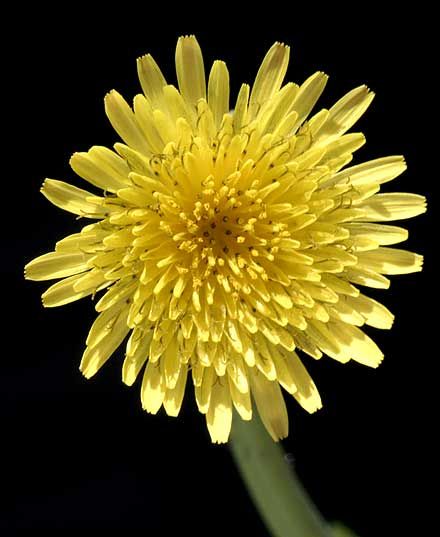
Lee Maracle
(Escritora/poeta Salish-Sto:lo, n. 1950, Vancouver, British Columbia, Canadá)
Rabia
.
Voceo mi rabia
hacia las páginas de un libro
– que yo trate bien humanamente posible
a la gente.
. . .
Sin título
.
No discutamos ninguna cosa,
No seamos razonable;
porque éso supone que somos humanos:
seres cariñosos y solícitos,
que necesitan paciencia, dulzura y amor.
.
La meta no es unidad; es ganar esta lucha.
Contraataca. Patea el orgullo de tu amante.
Desmantela su dignidad.
Y bebe, bebe, bebe
a los fantasmas en tu clóset.
. . .
Sola
.
Estoy sola, tan sola.
Solitaria, sí – y quiero permanecer como eso.
.
Me gustan sombras breves y entreviendos de los hombres.
.
En la ausencia de un auténtico amor,
me conformaré con el engaño.
. . .
Esfuerzos
.
Tomé fuertemente del vino del colonizador,
aprendí muy bien su lengua,
y contemplé con asombro en su éxito.
.
Me tambaleé a través de su cultura, fermentado en escuelas del oeste.
.
Mi empeño me sirvió para nada.
Ahora es ese seguir intentando que me provoca tan vergüenza.
. . .
Diente de León
.
Hay un diente de león al lado de una calle de hormigón – en Toronto.
Sus hojas: una mezcla desarreglada en verde y marrón.
Este diente de león ralo está rengueando.
.
Hay una flor junto a un bloque de concreto,
en la calle Bay, en la ciudad de Toronto.
Permanentemente rebelándose contra
tacones con clavos y trajes de sarga azul.
.
El desfile monetario por la calle Bay a las cinco de la tarde
desdeña:
“¡Flor amarilla de pollito!”
Y está sordo a los chillidos silenciosos del león delgado y envejecido.
.
Mis hojas, mi rostro, mi piel…
Ellos me rascan, ellos me descarapelan la piel.
.
Hay una flor, al arcén del camino…
Necesita martillos neumáticos y aparatos brutos
para desenterrar el hormigón de las banquetas de las calles de Toronto
– ¡para hermosear la ciudad por los trajes de sarga azul!
.
Pero, con este león “dandy” (chachi),
solo existía una semilla,
unas gotas de lluvia-ácida,
“pantalones” y temple,
y un deseo negro de renguearse hacia adelante
(si un poco mugroso).
.
Hay una flor…
. . .
Poemas del poemario Bent Box (Caja de Madera Curvada) por Lee Maracle, © 2000 (Theytus Books Ltd., Penticton, British Columbia)
. . . . .
“Uma perfeita, excepcional e amável existência de girassol!” Uma tradução de Ginsberg por Tomaz Amorim Izabel
Posted: July 18, 2015 Filed under: Allen Ginsberg, Portuguese Comments Off on “Uma perfeita, excepcional e amável existência de girassol!” Uma tradução de Ginsberg por Tomaz Amorim Izabel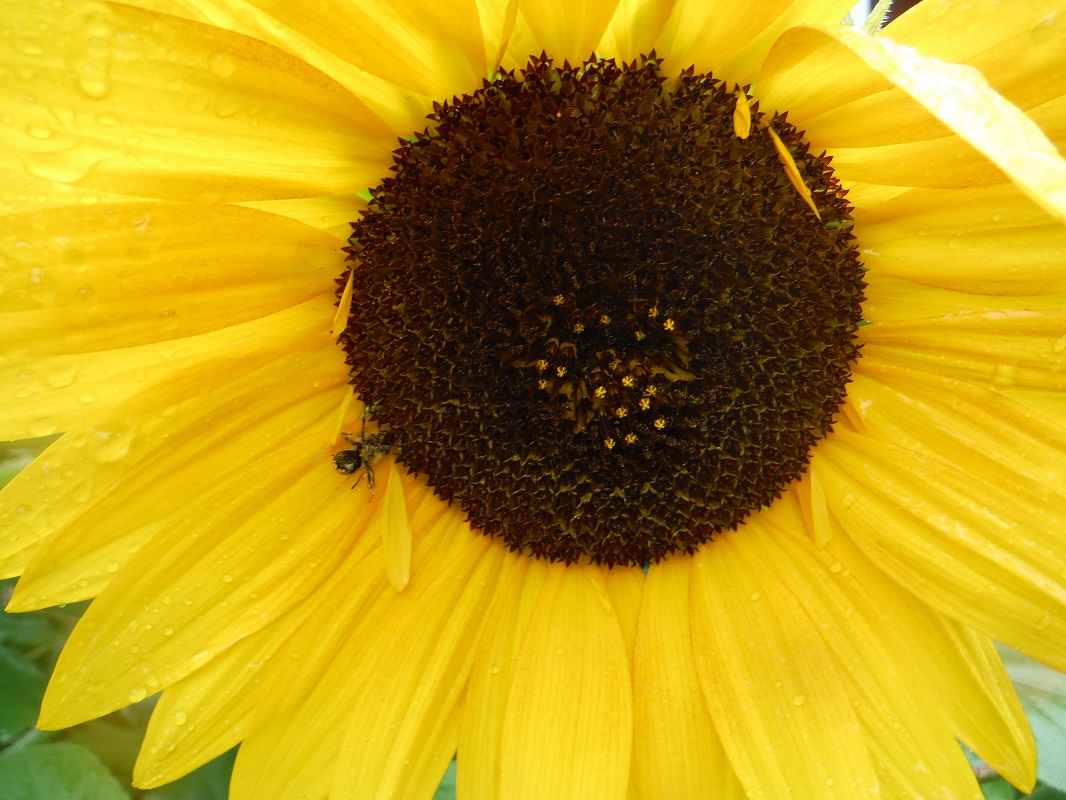
Allen Ginsberg (1926-1997)
Sutra do Girassol (1955)
Tradução por Tomaz Amorim Izabel
.
Eu caminhava às margens da doca de latão onde se descarregavam bananas e
me sentei sob a sombra gigante de uma locomotiva da Southern
Pacific para olhar o pôr-do-sol sobre os
morros de casinhas em forma de caixas e chorar.
Jack Kerouac, companhia, sentou-se do meu lado em uma coluna de ferro arrebentada
e enferrujada, pensamos as mesmas coisas
sobre a alma, desolada e azul e de olhos tristes,
cercada pelas raízes de aço cheias de nós das árvores de
maquinaria.
A água oleosa no rio espelhava o céu vermelho, sol
mergulhado no topo dos últimos picos de São Francisco, sem peixe
naquele rio, sem ermitão naqueles montes, apenas nós
olhos marejados e ressaca como velhos vagabundos
na beira do rio, cansados e astutos.
Olhe o Girassol, ele disse, tinha uma sombra cinza
e morta contra o céu, grande como um homem, sentada
seca sobre uma pilha antiga de serragem –
eu corri encantado – era meu primeiro girassol,
memórias de Blake – minhas visões – o Harlem
e Infernos dos rios do leste, pontes retinindo sanduíches
do Joe Greasy, carrinhos de bebês mortos, pneus
carecas esquecidos e não recauchutados, o
poema da beira do rio, camisinhas e vasos, facas
de aço, nada inoxidável, só a nojeira úmida
e os artefatos afiados se afundando no
passado –
e o Girassol cinza se equilibra contra o pôr-do-sol,
desolação que quebra e poeirenta com a fuligem e a fumaça
e a poluição de locomotivas velhas em seu olho –
corola de espinhos embaçados decaídos e quebrados como
uma coroa espancada, sementes caídas de seu rosto,
boca quase desdentada de ar cheio de sol, raios de sol
obliterados em sua cabeça cabeluda como um arame
teia seca de aranha,
folhas esticadas como braços saindo do tronco, gestos
vindos da raiz de serragem, pedaços quebrados de gesso
caídos de galhos negros, uma mosca negra em seu ouvido,
Profana coisa espancada era você, meu girassol, oh
minha alma, eu te amava tanto então!
O lodo não era lodo de gente, mas morte e locomotivas
humanas,
toda aquele vestido de poeira, aquele véu de pele escurecida
em ferrovias, aquela poluição do rosto, aquelas pálpebras de
miséria negra, aquela mão de fuligem ou falo ou protuberância
artificial de algo mais que sujo – industrial –
moderno – toda aquela civilização manchando sua
louca coroa dourada –
e aqueles pensamentos lacrimejantes de morte e insensíveis
e empoeirados olhos e fins e raízes murchas no fundo, na
pilha natal de areia e serragem, notas de dólar
de borracha, pele de maquinaria, as entranhas e interiores
do carro que chora e tosse, as vazias e solitárias
latas com suas línguas enferrujadas, ai, o que
mais posso eu nomear, as cinzas fumadas de algum
charuto de pinto, as bucetas de carrinhos de mão e
os seios leitosos de carros, cus arrombados de cadeiras
e esfíncteres de dínamos – todos estes
emaranhados em suas raízes mumificadas – e você lá
em pé na minha frente durante o pôr-do-sol, toda a sua glória
em sua forma!
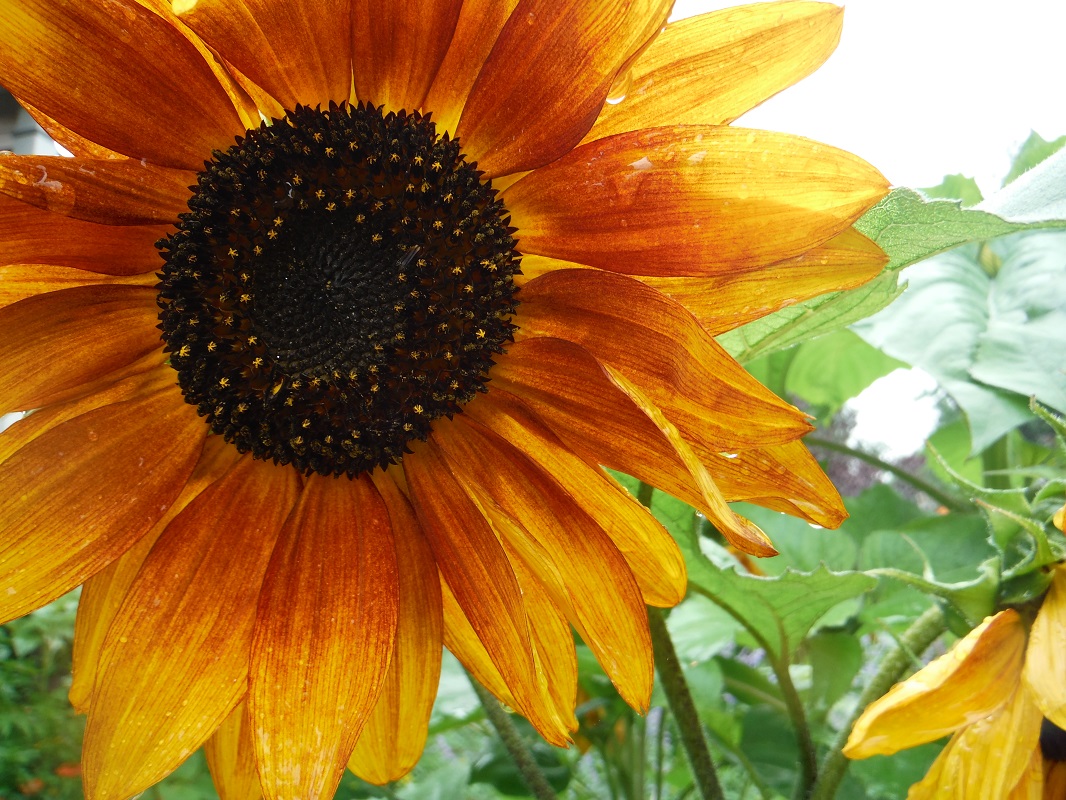
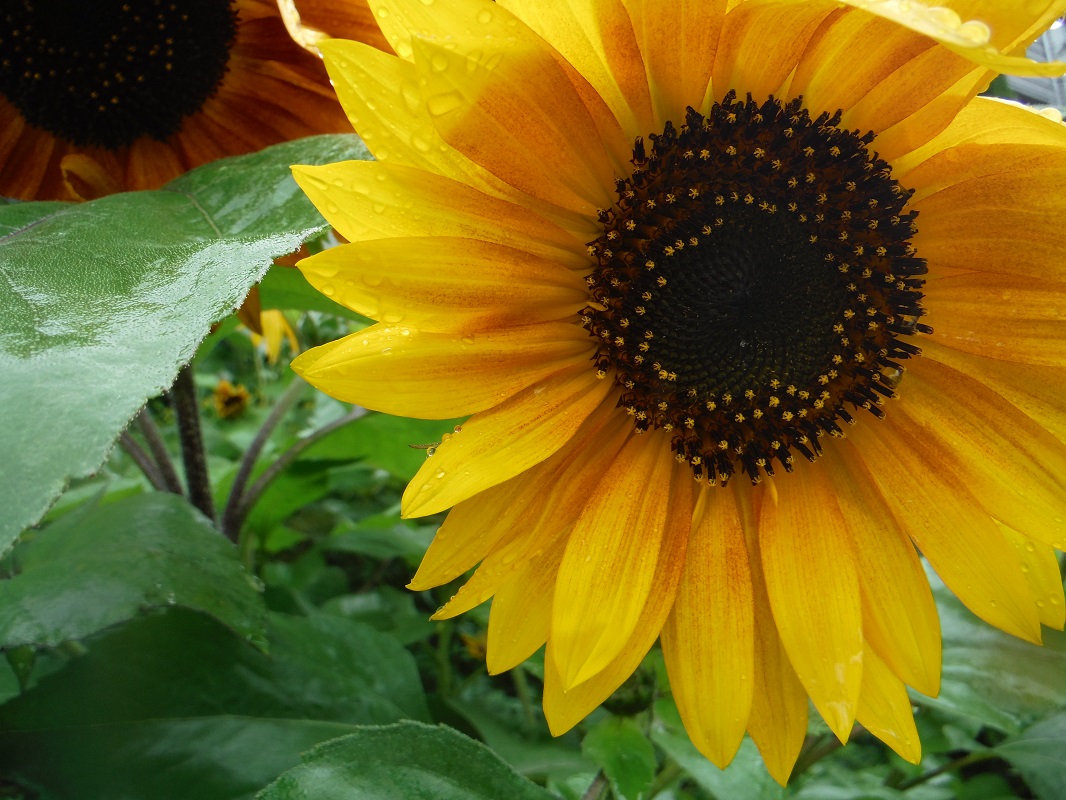

Uma beleza perfeita de um girassol! Uma perfeita, excepcional
e amável existência de girassol! Um doce olho natural
para a nova lua sensual, acordou vivo e excitado
agarrado na sombra do poente nascente mensal
brisa dourada!
Quantas moscas zumbiram inocente ao redor do seu
lodo enquanto você amaldiçoava os céus das
ferrovias e sua alma floral?
Pobre flor morta? quando você se esqueceu de que era uma
flor? quando você olhou para sua pele e
decidiu que você era uma velha locomotiva suja e impotente?
o fantasma de uma locomotiva? o espectro e
a sombra de uma outrora poderosa locomotiva americana?
Você nunca foi locomotiva alguma, Girassol, você foi um
girassol!
E você locomotiva, você é uma locomotiva, não me
esqueça!
Então eu apanhei o espesso esqueleto do girassol e o enfiei
ao meu lado como um cetro,
e profira o sermão à minha alma, à alma de Jack
também e para qualquer que o ouça,
– Nós não somos nossa pele de lodo, nós não somos nossa pavorosa
desolada enferrujada locomotiva sem imagem, nós somos todos
lindos girassóis dourados por dentro, nós somos abençoados
por nossa própria semente e loiros corpos
completos crescendo tornando-se loucos girassóis
formais e negros no pôr-do-sol, espionados por nossos
olhos sob a sombra da louca locomotiva
beira do rio pôr-do-sol São Francisco tarde montanhosa de latão
vendo tudo sentado.
. . .
http://tomazizabel.blogspot.ca/
. . . . .
Kateri Akiwenzie-Damm: Poetisa mestiza chippewa
Posted: July 14, 2015 Filed under: English, Kateri Akiwenzie-Damm, Spanish, ZP Translator: Alexander Best Comments Off on Kateri Akiwenzie-Damm: Poetisa mestiza chippewa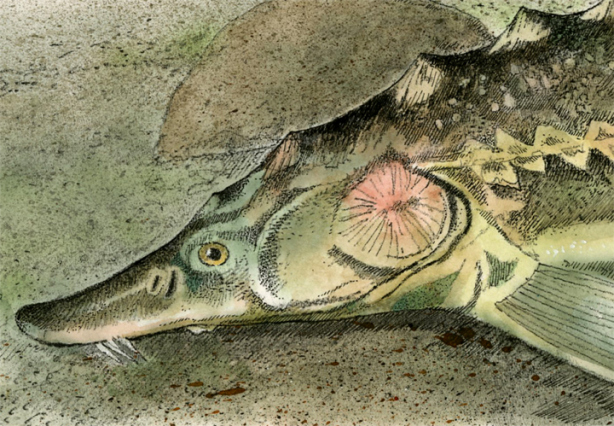
Kateri Akiwenzie-Damm
(Poetisa mestiza Chippewa de la Península Saugeen, Ontario, Canadá)
Sangre extraña
.
Las mujeres se callan…
Es como la voz de mujer fue contigo
al mundo-espíritu.
Y tengo hambre para ese sonido en mis oídos.
.
No hay nadie charlarme…
El pueblito está lleno de ruídos raros
y un silencio que me asusta.
Estoy perdida
y, aunque puedo ver las estrellas de noches puras,
todavía no hay ninguno que me explique sus direcciones.
.
Entonces vagabundeo…
Ahora oigo voces pero nadie me habla;
estoy confundida pero nadie me busca;
estoy sangrando pero nadie me ayuda.
.
Hay voces que gritan – y sangre.
Hay noches que no puedo recordar;
estrellas en mi cabeza.
Y gritos – y sangre.
.
(1999)
. . .
Canción de Perdiz
.
Acércate, mi amor – te llamo.
Escucha mi canto, querido – estoy tamborileando.
En los juncos estoy esperando para ti – mi vida.
Ven, corazón – te llamo.
.
(1997)
. . .
Esturión del lago
.
Me retuerzo, jadeo; abro y cierro mi boca,
cada vez que está cachado un esturión en el río lluvioso.
Conozco el tacto de manos extrañas sobre mi cuerpo;
la lucha ser libre; el anhelo de ir donde quiero ir.
.
Me siento el golpe del palo o de la piedra – en mis huesos;
la salpicadura de color
pues el vacío que es mi cabeza – mi cabeza como el cielo de medianoche
si están capturado por un otro paraíso la luna y las estrellas.
.
Lo sé, aún cuando estoy despierto, de nuevo,
y me siento a la mesa de la cocina,
mirando fijo a mi plato con su diseño de zarzamora
y sus bordes rugosos y quebrados.
Lo entiendo…
Y eso es por que no como el esturión:
porque lo comprendo que
cuando está tomado un estirón del río lluvioso
soy yo un estirón
y cuelgo en los anzuelos.
.
(1997)
. . .
La Resurrección de Deseo
.
La resurrección de deseo,
el arte de devoción,
es la pasión de los santos/imbéciles/amantes
– y abusadores de todos tipos –
aquellos que tienen cabezas llenas de reflexión y dolor.
Ellos flotan lentamente con la corriente
mientras sus labios mueven como rezan.
Contando las ramas que agitan de la orilla…
Marineros – sin techo, olvidados –
se embalan en una ola de marea de su propia creación.
Destructores de piel,
devotos de Siempre,
mapeando el camino al cielo;
cruzando pies, manos, cabezas y torsos;
rechazando las bellas mortificaciones que persiguen la mente del pervertido;
la culpa de granujas (cabelleras arrancadas colgando de sus cinturones);
severamente, intensamente bonito.
.
Delicados en su vuelo, estos pájaros sin alas,
se transforman en dulce, sangrientos, gozozos mesíases;
en silencio desvistiéndose de la piel,
a la envidia de ellos que cantan del dolor y que hacen el amor en la oscuridad.
.
Manitouwan, ah Manitouwan…
Exilios eminentes, terrenales,
¿Dónde está el cuervo azabache?
¿O esos raros monstruos ancianos de los caminos de agua
que arrastren a un ingenuo hasta ese otro mundo donde duerme la muerte?
.
Díganos, ¿Cuál ceremonia – o locura – salvaguardará su regreso?
. . .
Kateri Akiwenzie-Damm
Strange Blood
.
The women are quiet
it is though woman’s voice went with you
to the spirit world
and i am hungry for the sound
in my ears
.
there is no one to talk to
the village is filled with strange noises
and a silence that frightens me
i am lost
and although i can see the stars on clear nights
there is no one to explain their directions
.
so i wander still
now
i hear voices but no one talks to me
i am lost but no one looks for me
i am bleeding
but no one helps me
.
there are voices
screaming
and blood
nights i can’t remember
stars in my head
screaming
and blood.
.
from: Bloodriver Woman (1999)
. . .
Partridge Song
.
come to me
my love
i am calling
.
hear my song
sweet one
i am drumming
.
in the reeds
dear one
i am waiting
.
come to me
my love
i am calling
.
(1997)
. . .
Sturgeon
.
i twist and gasp
open and close my mouth
whenever a sturgeon is caught in the rainy river
i know
the feel of strange hands touching my body
the struggle
to be free
the longing to go where i want to go
i feel
the impact of stick or rock on bone
the splash of colour
then the emptiness that is my head
my head like a midnight sky if the stars and moon were captured
by another heaven
i know
even when i am awake again
sitting at the kitchen table
staring at my plate with its bramble design
and rough chipped edges
i know
that is why i do not eat sturgeon
because i know
when a sturgeon is caught in the rainy river
i am a sturgeon
and i dangle on hooks
.
from: My Heart is a Stray Bullet (1997)
. . .
The Resurrection of Desire
.
the resurrection of desire
the craft of devotion
is the passion of saints idiots lovers
and abusers of every kind
those whose heads of filled reflections and suffering
float slowly downstream
while their lips move as if in prayer
counting branches waving from the shore
homeless
forgotten sailors
swept in a tidal wave of their own creation
destroyers of flesh
worshippers of forever
mapping the way to heaven
across feet and hands and heads and torsos
rejecting the beautiful mortifications that haunt the minds of perverts
the guilt of sinners three scalps hanging from their belts
starkly insanely lovely
.
delicate in flight these wingless birds
transform into sweet bloody joyous messiahs
noiselessly stripping themselves of flesh
to the envy of those who sing of pain and make love in the dark
.
manitouwan oh manitouwan
earthy earthly exalted exiles
where is the raven
or those strange ancient monsters of the waterways
who would drag an innocent to that other world
where death sleeps
.
tell us
what ceremony or madness will safeguard their return?
.
from: My Heart is a Stray Bullet (1997)
. . .
Kateri Akiwenzie-Damm es un escritor mestizo de la Nación Chippewa en Ontario, Canadá. Ha vivido/trabajado en el pueblito de Neyaashiinigmiing, Reseva India de Cape Croker de la Península Saugeen – desde 1994.
Traducciones del inglés al español: Alexander Best
La emprensa editora de Kateri Akiwenzie-Damm: http://www.kegedonce.com/
. . .
Kateri Akiwenzie-Damm is an Anishinaabe writer of mixedblood from the Chippewas of Nawash First Nation. She has lived and worked at Neyaashiinigmiing, Cape Croker Reserve, on the Saugeen Peninsula in southwestern Ontario since 1994. The poet has said: “I know I belong here and regardless of where else I might live, this will always be my home. This is where I live and write and remember who I am.”
Translations into Spanish: Alexander Best
Visit Kateri Akiwenzie-Damm’s bookpress site: http://www.kegedonce.com/
. . . . .
“I yearn to learn”: poems in English and Cree
Posted: July 1, 2015 Filed under: Cree, English, Naomi McIlwraith | Tags: Poems about the Cree language, Poems for Canada Day 2015 Comments Off on “I yearn to learn”: poems in English and Cree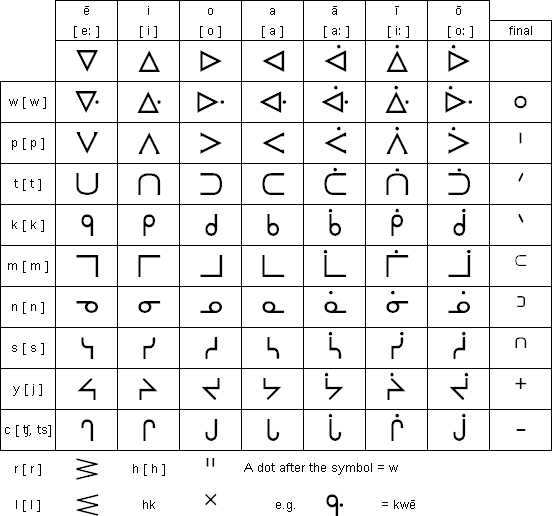
The old Plains Cree syllabary, now not often used. Romanization i.e. the use of English alphabet letters has taken its place.
Naomi McIlwraith
nôhtâwiy opîkiskwêwin – Father Tongue
.
I read about the –ikawi suffix
and the unspecified actor form,
wonder about the curiosities
of active or passive voice in Cree,
but mostly I yearn to learn
real Cree words, am eager to hear
nêhiyawêwin itwêwina in the air.
Want to hear your voice.
.
Food words like bread and tea
and water –
pahkwêsikan, maskihkîwâpoy,
êkwa nipiy.
.
Words for tree and bud and leaf –
mistik, osimisk, êkwa nîpiy.
.
Seasonal words for winter, spring,
summer, and fall –
pipon, miyoskamin,
nîpin, êkwa takwâkin.
.
Weather words like snow and rain,
sunshine and wind –
mispon êkwa kimiwan,
wâsêskwan êkwa yôtin.
.
More food words like cookie,
tomato, and cheese –
wîhki-pahkwêsikanis,
kihci-okiniy, êkwa
âpakosîsi-mîciwin.
.
Nature words for lake, mountain,
prairie –
sâkahikan, asinîwaciy,
paskwâw.
How to say picnic and camping –
papâ-mîcisowin êkwa kapêsiwin.
How we always picked bottles
when we went picnicking or camping –
kâkikê ê-kî-môsâhkinamâhk
môtêyâpiskwa ispî
kâ-kî-papâ-mîcisoyâhk
ahpô ê-nitawi-kapêsiyâhk.
.
How the sky is blue just now,
when it’s been grey for so long.
sîpihkonâkwan mêkwâc kîsik
mâka kinwês ê-kî-pihkonâkwahk.
.
I want to hear words for car and canoe
and toboggan and cradleboard –
sêhkêpayîs êkwa cîmân
napakitâpânâsk êkwa tihkinâkan.
Baby, boy, girl, man, and woman –
oskawâsis, nâpêsis, iskwêsis, nâpêw, êkwa iskwêw.
.
Kinship terms like mother and father –
nikâwiy êkwa nôhtâwiy.
Grandmother and grandfather –
nôhkom êkwa nimosôm.
My little siblings, sister and brother –
nîcisânak, nimis êkwa nistês.
Auntie and uncle –
nikâwis êkwa nôhcâwîs.
.
If only I had stopped long enough
to say “my girl” or “my boy” –
“nitânis” êkwa “nikosis”.
.
Words for old woman and old man –
nôcokwêsîs êkwa kisêyinîs.
Words for hard and soft,
loud and quiet –
ê-maskawâk êkwa ê-yôskâk
ê-sôhkihtâkwahk êkwa
ê-kâmwâtahk.
.
Words for the ground is hard –
ê-maskawahcâk,
the silence is loud –
ê-sôhkihtâkwahk kipihtowêwin,
your voice soft and quiet –
ê-miyotâmoyan êkwa ê-kâmwâtahk.
.
You always spoke so softly
like a steady rain on parched land.
kâkikê ê-ki-manâcimiyâhk
tâpiskôc kimiwan,
ê-pahkipêstâk
itê ê-pâhkwahcâk.
.
Maybe that’s why you sound
so far away now –
kiyâwihtâkosin êkwa anohc.
Verbs for listening and persevering –
ê-nitohtawiyan êkwa ê-âhkamêyihtamohiyan,
and loving and raising children –
ê-kî-sâkihiyâhk êkwa
kiya êkwa nikâwînân
ê-kî-nihtâwôsêyêk.
Words for birth and death and funeral –
ê-kî-miyo-pimâtisiyan, mâka
ispîhk ê-kî-kisipipayiyan
êkwa kikî-âstêsinin kitaywêpiwinihk.
.
Verbs for kind and just
and humble and soft-spoken –
ê-kî-kisêwâtisiyan
êkwa ê-kî-kwayaskwâtisiyan,
ê-kî-tapahtêyimisoyan
êkwa ê-kî-pêyâhtakowêyan.
.
The verb for soft-hearted –
ê-kî-yôskâtisiyan,
and how you had a soft spot
in your heart for all
Cree people –
ê-kî-yôskitêhêstawacik
kahkiyaw nêhiyawak.
.
Verbs for generous and caring –
ê-kî-sawêyimacik êkwa ê-kî-nâkatêyimacik.
Words for thoughtful and oh,
such good Cree speech –
ê-kî-kâh-kakihcihiwêyan,
ê-kî-miyo-tôtaman
tahtwâw ê-kî-nêhiyawêyan.
.
Words for being so good
at so many things –
ê-kî-nahîyan mistahi kîkway.
.
Words for sadness and regret –
nipîkiskâtisin êkwa kikîsinâtêyihtamâtin.
Because sickness stole your speech
and I came too late to listen –
osâm kitâhkosiwin
kipîkiskwêwin ê-kimotamâkoyan
êkwa ê-kî-mwêstasisiniyân
ka-nitohtâtân.
.
Yet now you’re whispering
and I’m listening –
mâka êkwa anohc âta ê-kîmwêyan
kina-nahihtâtin.
. . .
Like Bead on a String
.
Like an umbilical cord, the rainbow
connects sky to earth:
mother and child hold each other close.
.
tâpiskôc otisiyêyâpiy pîsimwêyâpiy
ê-itâpêkamohtât askîhk kîsikohk ohci
ê-âkwaskitinitocik awâsis êkwa okâwîmâw.
.
Like a rawhide rope, the vocal cords
secure the gift of story and song:
grandfather and grandchild hold each other close.
.
tâpiskôc pîsâkanâpiy pîkiskwêyâpîsa
ê-tipahpitahk miyikowisiwin âcimowin êkwa nikamowin
ê-âkwaskitinitocik mosôm êkwa ôsisima
.
Like a bead on a string, my great-grandmother
sits next to her kin just long enough
for me to reach for her hands.
.
tâpiskôc kâ-tâpisahoht mîkis, nitâniskotâpân
apîstawêw owâhkômâkana nahiyikohk
kici-têpinamwak ocihciya.
. . .
ihkatawâw ay-itwêhiwêw – The Marsh Sends a Message
.
Reeds breathe and I sense
that in this wet world
the breath utters a language
not yet lost, whispers words
not yet forgotten
cries a marsh message
that must be heard. âniskowaskwa
speak to me of kinosêw,
sâkahikan, manitow-sâkahikan,
êkwa nipiy. Reeds
confident and eloquent
ê-sôhkêyimocik êkwa ê-nihtâwêcik
tell me a story
ê-âcimostawicik
âniskowaskwa, fluid and flowing
a fluent kind of knowing,
whispering a story about this great land.
.
ê-kîmwêcik, ê-âtotahkik ôma kihci-askiy.
. . .
Naomi McIlwraith is an educator, poet, and essayist, with a mixed Cree, Ojibwe, Scottish, and English inheritance. Most recently at Grant MacEwan University in Edmonton, she has also held instructional positions at the University of Alberta and the King’s University College.
.
The poet here explores linguistic identity – loss and discovery, family history, belonging – as she experiments with two languages: Plains Cree (nêhiyawêwin) and English (âkayâsîmowin – “English” in Cree).
.
The poems above were selected from Kiyâm: Poems by Naomi McIlwraith,© 2012, and published by AU Press, Athabasca University, Edmonton, Alberta, Canada.
. . . . .


 Zócalo Poets