Rita Bouma-Pappa: “If I go walking with my dead friends”
Posted: January 5, 2016 Filed under: English, Rita Bouma-Pappa | Tags: Greek women poets Comments Off on Rita Bouma-Pappa: “If I go walking with my dead friends”
Rita Bouma-Pappa (1906-1984)
If I Go Walking with My Dead Friends
.
If I go walking with my dead friends
the city will be flooded with mute girls
the wind with the acrid odour of death
the watchtowers will raise white flags
and cars in the streets will stop
– if I go walking with my dead friends.
.
If I go walking with my dead friends
you will see a thousand girls with bare
pierced chests, shouting at you:
“Why did you send us so soon to sleep
in so much snow, tear-stained and uncombed?”
– if I go walking with my dead friends.
.
If I go walking with my dead friends
the stunned crowds will see
that no airier phalanx ever walked the earth
that no holier litany ever paraded
a resurrection more glorious or more bloody
– if I go walking with my dead friends.
.
If I go walking with my dead friends
the bridal flower of the full moon will rise to adorn them
and orchestras will cry in their hollow eyes,
and the curling locks, their bandages, will flutter;
O many are they who will die then of remorse
– if I go walking with my dead friends.
. . .
Translation from the Greek: Karen Emmerich
. . .
Rita Bouma-Pappa was a well-known literary personality in Greece. An editor of several literary journals, she also wrote more than a dozen volumes of poetry. As a translator, she brought Akhmatova, Brecht, Neruda, Pasternak and Beckett to a Greek readership.
. . . . .
Zoe Karelli: “El Árbol”
Posted: January 5, 2016 Filed under: Spanish, Zoe Karelli | Tags: Poetisas griegas Comments Off on Zoe Karelli: “El Árbol”
Zoe Karelli (1901-1998, Salónica, Grecia)
El Árbol
.
Me extiendo como las ramas, como las hojas,
sensaciones tengo alrededor de mi cuerpo, recuerdos
murmullan, se tocan, se mueven
tranquila o fuertemente.
.
Parecen iguales las ramas,
el viento de la vida
con juegos y luces,
muestra su diferencia.
.
Parecen iguales todos los días,
pasan por encima de mí.
Me rodea el día,
la noche me abraza.
.
Se doblan las ramas, las hojas,
los recuerdos, las sensaciones chocan contra mí,
pájaros hacen su nido en secreto,
voces escondidas en las más densas
y frondosas ramas de la fantasía.
.
Como si se avecinara una tormenta,
el embellecimiento de las cosas me golpea.
Mi cuerpo recto se sostiene,
se queda inmóvil el alma y crece
como si no le importara mi atavío…
.
que se va y regresará,
se marchita y se cae
para brotar otra vez mi vida.
. . .
Traducción del griego: Alejandro Aguilar
. . . . .
Zoe Karelli: Άνθρωπος / “Woman Man”
Posted: January 4, 2016 Filed under: English, Greek, Zoe Karelli | Tags: Greek women poets Comments Off on Zoe Karelli: Άνθρωπος / “Woman Man”
Zoe Karelli (1901-1998, born Thessaloniki, Greece)
Άνθρωπος
.
Εγώ γυναίκα, η άνθρωπος,
ζητούσα το πρόσωπό Σου πάντοτε,
ήταν ως τώρα του ανδρός
και δεν μπορώ αλλιώς να το γνωρίσω.
Ποιός είναι και πώς
πιο πολύ μονάχος,
παράφορα, απελπισμένα μονάχος,
τώρα, εγώ ή εκείνος;
Πίστεψα πως υπάρχω, θα υπάρχω,
όμως πότε υπήρχα δίχως του
και τώρα,
πώς στέκομαι, σε ποιό φως,
ποιός είναι ο δικός μου ακόμα καημός;
Ω, πόσο διπλά υποφέρω,
χάνομαι διαρκώς,
όταν Εσύ οδηγός μου δεν είσαι.
Πώς θα δω το πρόσωπό μου,
την ψυχή μου πώς θα παραδεχτώ,
όταν τόσο παλεύω
και δεν μπορώ ν΄αρμοστώ.
«Ότι δια σου αρμόζεται
γυνή τω ανδρί.»
Δεν φαίνεται ακόμα το τραγικό
του απρόσωπου, ούτε κι εγώ
δεν μπορώ να το φανταστώ ακόμα, ακόμα.
Τι θα γίνει που τόσο καλά,
τόσο πολλά ξέρω και γνωρίζω καλύτερα,
πως απ΄το πλευρό του δεν μ΄έβγαλες.
Και λέω πως είμαι ακέριος άνθρωπος
και μόνος. Δίχως του δεν εγινόμουν
και τώρα είμαι και μπορώ
κι είμαστε ζεύγος χωρισμένο, εκείνος
κι εγώ έχω το δικό μου φως,
εγώ ποτέ, σελήνη,
είπα πως δεν θα βαστώ απ΄τον ήλιο
κι έχω τόσην υπερηφάνεια
που πάω τη δική του να φτάσω
και να ξεπεράσω, εγώ,
που τώρα μαθαίνομαι και πλήρως
μαθαίνω πως θέλω σ΄εκείνον ν΄αντισταθώ
και δεν θέλω από κείνον τίποτα
να δεχτώ και δε θέλω να περιμένω.
Δεν κλαίω, ούτε τραγούδι ψάλλω.
Μα γίνεται πιο οδυνηρό το δικό μου
ξέσκισμα που ΄τοιμάζω,
για να γνωρίσω τον κόσμο δι΄εμού,
για να πω το λόγο δικό μου,
εγώ που ως τώρα υπήρξα
για να θαυμάζω, να σέβομαι και ν΄αγαπώ,
εγώ πια δεν του ανήκω
και πρέπει μονάχη να είμαι,
εγώ, η άνθρωπος.
. . .
Woman Man
.
I, a woman man,
sought Your face always.
It was til now a man’s,
and I cannot know it otherwise.
Who is more alone now,
wildly, hopelessly alone?
Him or me
and in what way?
I thought I existed,
would keep on existing,
but I never did, except through him.
And now
how can I stand on my own, in what light,
and what is this sadness that is not his?
Oh, how I suffer doubly,
losing myself again and again,
when You, my leader are no longer there.
How can I see my face,
how can I accept my soul,
when I struggle so
and do not fit in?
Because God made woman
in the image of man.
The tragic sense of the impersonal
isn’t clear yet,
nor can I imagine it.
What will happen now that I know
and understand so well
that you did not pull me
from his side?
And yet I call myself a complete person
on my own. Without him I was nothing
and now I am and can become anything,
but we are a separate pair, him
and me, with my own light,
not a moon to his sun,
and I am so proud
to reach his heights
and surpass myself, I
who have now learned
to stand up to him
and not ask for anything,
to accept and no longer wait.
I do not cry or sing,
but the break I must make
is the cruelest
to know the world through myself
to speak my own words.
I who until now have existed
to worship, respect and love.
I no longer belong to him,
I exist on my own,
a human being.
.
Translation from the Greek: Karen Van Dyck
. . .
Zoe Karelli was the pen-name of Chrysoula Argyriadou (née Pentziki), born 1901 in Thessaloniki. Her poems face the hard dilemmas of life yet may display hope and optimism as well. She is regarded as a pioneering feminist in her native Greece. In 1982 Karelli was the first woman of letters to be elected to the Academy of Athens and was recipient of the Ouranis Award for her collected works (including plays and essays) in 1978. She is best known for her 1957 poem – above – which is difficult to translate because of her use of the feminine article with the Greek word for “mankind”. The translator here has chosen in English the hybrid phrase “Woman Man”.
. . . . .
Poemas para el Día Mundial de la Lucha contra el Sida (1 de diciembre): Poemas sobre Amor y Ánimo / Poems for World AIDS Day (Dec.1st): Poems of Love and Spirit
Posted: November 30, 2015 Filed under: Emily Dickinson, English, George Herbert, James Terry White, Luci Shaw, Spanish, ZP Translator: Alexander Best Comments Off on Poemas para el Día Mundial de la Lucha contra el Sida (1 de diciembre): Poemas sobre Amor y Ánimo / Poems for World AIDS Day (Dec.1st): Poems of Love and Spirit

Poemas para el Día Mundial de la Lucha contra el Sida (1 de diciembre): Poemas sobre Amor y Ánimo / Poems for World AIDS Day (Dec.1st): Poems of Love and Spirit
. . .
George Herbert (1593-1633)
Love (III)
.
Love bade me welcome; yet my soul drew back,
Guilty of dust and sin.
But quick-eyed Love, observing me grow slack
From my first entrance in,
Drew nearer to me, sweetly questioning
If I lacked any thing.
.
A guest, I answered, worthy to be here.
Love said, You shall be he.
I, the unkind, ungrateful: Ah, my dear,
I cannot look on thee.
Love took my hand and smiling did reply,
Who made the eyes but I?
.
Truth, Lord, but I have marred them; let my shame
Go where it doth deserve.
And know you not, says Love, who bore the blame?
My dear, then I will serve.
You must sit down, says Love, and taste my meat.
So I did sit and eat.
. . .
George Herbert (1593-1633)
Amor (III)
.
El Amor me saludó, bienvenido – pero mi alma retrocedió;
era culpable, de polvo y pecado.
Pero el Amor, de una vista aguda
– observándome creciendo vago, de mi primera entrada –
se avecinó a mí, y me preguntó si carecí alguna cosa.
.
Y contesté: Un invitado, merecedor de estar aquí.
El Amor dijo: Tu serás él.
Yo, antipático y ingrato, hablé: Ah, querido, no puedo contemplarte.
El Amor, sonriendo, agarró mi mano y respondió:
¿Quién creó los ojos? Fui yo, claro.
.
Verdad, mi Señor, pero los arruiné;
pues deja mi vergüenza, que vaya donde merece.
¿Y no sabes quién soportó la culpa? dice el Amor.
Entonces, querido, yo cumpliré.
Tienes que sentarte – ¡saborea la carne! dice el Amor.
Y me senté – y comí.
. . .
George Herbert
Be Useful (stanza 55 from “The Church Porch”)
.
Be useful where thou livest, that they may
Both want and wish thy pleasing presence still.
Kindness, good parts, great places are the way
To compass this. Find out men’s wants and will,
And meet them there. All worldly joys go less
To the one joy of doing kindnesses.
. . .
George Herbert (estrofa 55 del poema “La veranda de la iglesia”)
¡Qué seas útil!
.
Qué seas útil donde vives,
pues ellos quieran y deseen tu presencia agradable.
La bondad, buenas cualidades y grandes turnos
– éstos son el modo abarcando.
Descubre la voluntad y la necesidad de un ser humano
– y encuéntrale allí.
Todos los júbilos del mundo significan menos que
el único gozo de dedicarte al acto de amabilidad.
. . .
James Terry White (1845-1920)
Not by bread alone (1917)
.
If thou of fortune be bereft,
And thou dost find but two loaves left
To thee—sell one, and with the dole
Buy hyacinths to feed thy soul.
.
But not alone does beauty bide
Where bloom and tint and fragrance hide;
The minstrel’s melody may feed
Perhaps a more insistent need.
.
But even beauty, howe’er blent
To ear and eye, fails to content;
Only the heart, with love afire,
Can satisfy the soul’s desire.
. . .
James Terry White (1845-1920)
No sólo de pan…
.
Si estás despojado de fortuna,
y encuentras para ti nada más que dos piezas de pan
– pues vende una, y con las monedas
compra jacintos para alimentar a tu alma.
.
Pero la belleza no aguarda solamente donde se esconden
flor y tinte y fragrancia;
la melodía del trovador quizás
alimente a tu necesidad apremiante.
.
Pero aún la belleza, mezclado al ojo y oído,
fracasa a complacerse;
solo es el corazón, ardiente con amor,
que puede cumplir el deseo del alma.
. . .
Luci Shaw (born 1928)
…But not forgotten
.
Whether or not I find the missing thing
it will always be
more than my thought of it.
Silver-heavy, somewhere it winks
in its own small privacy
playing
the waiting game for me.
.
And the real treasures do not vanish.
The precious loses no value
in the spending.
A piece of hope spins out
bright, along the dark, and is not
lost in space;
verity is a burning boomerang;
love is out orbiting and will
come home.
. . .
Luci Shaw (n. 1928)
Aunque se ha ido, no la olvido
.
Sin importar si yo recupero la cosa perdida,
siempre será mayor que mi idea de ella.
Pesada como la plata,
en algún lugar guiña en su propia pequeña privacidad,
jugando al dejar pasar tiempo para mí.
.
Y los tesoros genuinos no se esfuman.
Lo que es valioso no pierde el valor en los gastos.
Un trozo de esperanza gira como un trompo,
espléndidamente a través de la oscuridad,
y no está perdido en el espacio;
la verdad es un bumerán ardiente;
el amor está allá fuera – orbitando –
y volverá a casa.
. . .
Emily Dickinson (1830-1886)
I had no time to Hate
.
I had no time to Hate –
Because
The Grave would hinder Me –
And Life was not so
Ample I
Could finish – Enmity –
.
Nor had I time to Love –
But since
Some Industry must be –
The little Toil of Love –
I thought
Be large enough for Me –
. . .
Emily Dickinson (1830-1886)
No tuve tiempo para el Odio
.
No tuve tiempo para el Odio
porque
la tumba me habría entorpecido.
Y la Vida no era tan copiosa
que habría podido completar la enemistad.
.
Y no tuve tiempo para el Amor, también.
Pero, alguna aplicación y diligencia deben ser;
pues el pequeño esfuerzo de Amor, me pensé,
será bastante grande para Mí.
. . .
Emily Dickinson
They might not need me – yet they might
.
They might not need me – yet they might –
I’ll let my Heart be just in sight –
A smile so small as mine might be
Precisely their necessity.
. . .
Emily Dickinson
Ellos no me necesiten – pero quizás sí
.
Ellos no me necesiten – pero quizás sí.
Entonces permitiré estar a la vista mi corazón,
porque una sonrisa – tan pequeña como la mía –
sea, por ellos, justamente el requisito.
. . .
Versiones de Alexander Best / Translations into Spanish: Alexander Best
. . . . .
Sharon Olds: dos poemas: “Primer recuerdo” y “Un año”
Posted: November 19, 2015 Filed under: English, Sharon Olds, Spanish, ZP Translator: Alexander Best Comments Off on Sharon Olds: dos poemas: “Primer recuerdo” y “Un año”
Sharon Olds (n. 19 de noviembre, 1942)
Primer Recuerdo
.
Luz – no radiante pero profunda. Ningunos rayos,
una luz como el calor, contenida; cuarto lleno
como un bocado de luz. Y barras, erguidas, que
interrumpen la luz, franjándola uniformemente.
Luz, barra…y la luz firme como el agua de un estanque;
la barra como una sombra azulada; una otra
venda ámbar de luz
– y alguien moviendo a lo largo de esa luz.
.
Dentro de la puerta angosta
de la barra pues fuera de nuevo,
a través de los intervales perfectos de
luz, de oscuridad, de luz
– y la figura deambula despacio, libremente.
Las barras no vacilan – verticales y inmóviles, sostienen.
.
La luz no diluye, es generosa y estable;
y dentro de ella la persona se mueve,
grande y calmada, de acá para allá,
de acá para allá.
A veces, detrás y encima de ella
– por un rato – el ángulo blanco de la pared y techo
está doblado, este borde del dulce cajón de la habitación
donde ella estuvo nadando en la luz
– delicadamente rayada –
y yo me radicaba allí, entera y observando todo.
. . .
Sharon Olds
Un año
.
Cuando llegué a la lápida de él, me senté sobre la piedra
casi como sentarme en el borde de una cama de cualquier fulano.
Pues froté el granito liso y jaspeado.
Vi unas lágrimas de mi mandíbula y cuello,
y empecé a lavar una esquina de su lápida.
Pues una hormiga, negra y ámbar,
saló corriendo y quitado;
una otra hormiga acarreó una hormiga muerta sobre la piedra,
la dejó y no regresó.
Hormigas corrían hacia abajo y en las muescas de su nombre y fechas,
abajo y en la huella ovalada del O del nombre de pila,
del O del otro nombre,
del O del nombre de su familia
– pues abajo en el guión entre su nacimiento y muerte –
ese pequeño abrevadero de su vida.
Bichos blandos aparecieron en mis zapatos,
como granos de polen – y les dejé mover en mí.
Enjuagué una mota de mica oscura,
y abajo dentro de las letras grabadas
los primeros puntos de liquen habían aparecido
como las estrellas del crepúsculo.
Miré en el suelo la verónica con sus cuernos,
los helechos arrollados, las flores de la haya de sangre
– cada pétalo como ese disco de materia que meció en su lengua –
ese día final.
Alerce, cicuta, manzanita, abedul de río con su corteza marcada
– puse mis brazos alrededor de un tronco y lo apreté,
pues me acosté en la tumba de mi padre.
El sol brillaba en mí, y las hormigas poderosas caminaban en mí.
Y cuando me desperté, mi mejilla sentía hojaldrada,
amarillenta con un “yeso-mostaza” de suelo.
Fue solo al último minuto que empecé a pensar en su cuerpo,
en hecho bajo de mí. Un bote de hueso, ceniza,
suave como una almohada de plumón de ganso
que estalla en la cama de amantes.
Y cuando besé su lápida no podía ser bastante,
cuando la lamí mi lengua se secó un rato.
Yo comí su polvo – probé mi hostia de barro.
. . .
Versiones de Alexander Best
. . .
Sharon Olds (born November 19th, 1942)
Earliest Memory
.
Light – not bright, but deep. No beams,
light like heat, enclosed, a roomful
like a mouthful of light. And bars, upright, that
interrupt the light, stripe it
evenly: light, bar,
light solid as pond water,
bar a bluish shadow, another
amber band of light, someone
moving across it. Into the narrow
door of the bar and out again,
through the perfect intervals of
light, dark, light, the figure
ranges slowly, freely. The bars
do not waver – vertical, still, they
hold. The light does not dilute, it is
full, steady, within it the person
moves, large and calm, back and
forth, back and forth, and at times,
behind and above her, for a moment, the white
angle of the wall and ceiling
bent like a wing, border of the sweet
box of the room where she swam in light,
delicately striped, where I lay, whole, and watched.
. . .
Sharon Olds
One Year
.
When I got to his marker, I sat on it,
like sitting on the edge of someone’s bed
and I rubbed the smooth, speckled granite.
I took some tears from my jaw and neck
and started to wash a corner of his stone.
Then a black and amber ant
ran out onto the granite, and off it,
and another ant hauled a dead
ant onto the stone, leaving it, and not coming back.
Ants ran down into the grooves of his name
and dates, down into the oval track of the
first name’s O, middle name’s O,
the short O of his last name,
and down into the hyphen between
his birth and death–little trough of his life.
Soft bugs appeared on my shoes,
like grains of pollen, I let them move on me,
I rinsed a dark fleck of mica,
and down inside the engraved letters
the first dots of lichen were appearing
like stars in early evening.
I saw the speedwell on the ground with its horns,
the coiled ferns, copper-beech blossoms, each
petal like that disc of matter which
swayed, on the last day, on his tongue.
Tamarack, Western hemlock,
manzanita, water birch
with its scored bark,
I put my arms around a trunk and squeezed it,
then I lay down on my father’s grave.
The sun shone down on me, the powerful
ants walked on me. When I woke,
my cheek was crumbly, yellowish
with a mustard plaster of earth. Only
at the last minute did I think of his body
actually under me, the can of
bone, ash, soft as a goosedown
pillow that bursts in bed with the lovers.
When I kissed his stone it was not enough,
when I licked it my tongue went dry a moment, I
ate his dust, I tasted my dirt host.
. . . . .
Carl Phillips: “Mi campo, mi ocaso”
Posted: November 16, 2015 Filed under: Carl Phillips, English, Spanish, ZP Translator: Alexander Best Comments Off on Carl Phillips: “Mi campo, mi ocaso”
Carl Phillips (n. 1959, EE.UU.)
Mi campo, mi ocaso
.
Por supuesto, hay un encanto que pueden hacer las hojas,
en su temblor pues en su recostar de nuevo, inmóviles y llanos
– de golpe.
Es como el Tiempo sí mismo,
cuando parece inesperadamente más disponible,
y hay más perder entonces, más amar – o intentarlo…
.
Pero, cuando miramos de las hojas hacia arriba, recuerde:
eso es una elección también.
Casi como de la lástima de todo
– la promiscuidad, la comprensión que nada puede salvar a usted –
hasta las ramas descortezados por el viento
que firman con sus sombras el suelo delante,
en la manera de todas las ramas en su vida – últimamente, ¿no?
A menos, usted prefiere decirlo que hacen esto
– y éso es la mitad a lo largo del camino hacia la creencia
…cualquier cosa es, al final, la creencia.
.
Usted puede mirar hacia arriba,
o pueda cerrar los ojos completamente,
haciendo irse algo del mundo – un rato – pero solo un poco,
y no la parte sobre haciendo daño a otros
como la única buena respuesta después de estar dolido,
y no la parte que pueda parecer
– al primero, comprensiblemente – un vida en ruinas…
aun si
– rehusando el hundimiento porque puede rehusarlo –
usted mira otra vez,
el corredor escarpado de lo que es solamente una tarde de invierno tardío,
oscura ya como la noche, y las hojas oscuras también…
y, aún más oscura – la puerta.
Es la puerta que tiene la intención de buscar de nuevo (porque la perdió.)
Usted tuvo que tocarla
– una vez, fue todo –
pues floreció plenamente abierta…
. . .
Del poemario Silverchest © 2013, Carl Phillips
.
Versión de Alexander Best
. . .
Carl Phillips (born 1959, USA)
My Meadow, My Twilight
.
Sure, there’s a spell the leaves can make, shuddering,
and in their lying suddenly still again — flat, and still,
like time itself when it seems unexpectedly more
available, more to lose therefore, more to love, or
try to…
But to look up from the leaves, remember,
is a choice also, as if up from the shame of it all,
the promiscuity, the seeing-how-nothing-now-will-
save-you, up to the wind-stripped branches shadow-
signing the ground before you the way, lately, all
the branches seem to, or you like to say they do,
which is at least half of the way, isn’t it, toward
belief — whatever, in the end, belief
.
………………………………………………….is…You can
look up, or you can close the eyes entirely, making
some of the world, for a moment, go away, but only
some of it, not the part about hurting others as the one
good answer to being hurt, and not the part that can
at first seem, understandably, a life in ruins, even if —
refusing ruin, because you
.
……………………………………can refuse — you look
again, down the steep corridor of what’s just another
late winter afternoon, dark as night already, dark
the leaves and, darker still, the door that, each night,
you keep meaning to find again, having lost it, you had
only to touch it, just once, and it bloomed wide open…
. . .
From the collection Silverchest © 2013 Carl Phillips
. . . . .
Hafiz: Ghazal 367: “Wine, Human Beings, and Song” / خواجه شمسالدین محمد حافظ شیرازی
Posted: November 16, 2015 Filed under: English, Farsi / Persian, Hafiz Comments Off on Hafiz: Ghazal 367: “Wine, Human Beings, and Song” / خواجه شمسالدین محمد حافظ شیرازی
…..
Hafiz (1325-1389, Shiraz, Iran)
Ghazal 367: “Wine, Human Beings, and Song”
Translated from the Persian by A.Z. Foreman (July 2015)
.
Come so that we can scatter flowers
and fill the glass to brim with wine,
Split heaven’s ceiling with our powers
and try a wholly new design.
When armies march to spill the blood
of lovers’ hearts with Sorrow’s pike
The serving boy and I destroy
their camp in one drunk counterstrike.
Here, put rosewater in the wine
and sugar in the censer there
To sweeten up the scent we sense
upon the incense-bearing air.
A fine-tuned lute is in your hand
so play a fine and tuneful song.
We’ll stamp our feet, carouse in dance,
clap to the beat and sing along.
O dawn wind, bear my being’s dust
unto that threshold great and high.
Perhaps I’ll glimpse His majesty
and see His beauty, eye to eye.
One boasts of his great intellect
Another of the spells he binds.
Put it before the Judge. Let Him
settle the question and our minds.
If you want Eden’s Garden, come
and join me in the drunkards’ bar.
I’ll tip you from a cask of wine
into the waters of Kawsar*.
Hafiz, the arts of verse and song
are out of fashion in Shiraz.
Go, seek a more receptive realm,
a court more loving in its laws.
. . .
Note:
*Kawsar is a stream found in Paradise.
. . .
The Persian original:
.
بیا تا گل برافشانیم و می در ساغر اندازیم
فلک را سقف بشکافیم و طرحی نو دراندازیم
اگر غم لشکر انگیزد که خون عاشقان ریزد
من و ساقی به هم تازیم و بنیادش براندازیم
شراب ارغوانی را گلاب اندر قدح ریزیم
نسیم عطرگردان را شِکَر در مجمر اندازیم
چو در دست است رودی خوش بزن مطرب سرودی خوش
که دست افشان غزل خوانیم و پاکوبان سر اندازیم
صبا خاک وجود ما بدان عالی جناب انداز
بود کان شاه خوبان را نظر بر منظر اندازیم
یکی از عقل میلافد یکی طامات میبافد
بیا کاین داوریها را به پیش داور اندازیم
بهشت عدن اگر خواهی بیا با ما به میخانه
که از پای خمت روزی به حوض کوثر اندازیم
سخندانیّ و خوشخوانی نمیورزند در شیراز
بیا حافظ که تا خود را به ملکی دیگر اندازیم
. . .
Romanization of the poem:
.
Biyā tā gul barafšānēm
o may dar sāɣar andāzēm
Falakrā saqf biškāfēm
o tarhē naw darandāzēm
Agar ɣam laškar angēzad
ki xūn-i ‘āšiqān rēzad
Man o sāqī ba ham tāzēm
o bunyādaš barandāzēm
Šurāb-i arɣawānīrā
gulāb andar qadah rēzēm
Nasīm-i ‘atrgardānrā
šikar dar mijmar andāzēm
Ču dar dastast rōdē xwaš
bizan mutrib surōdē xwaš
Ki dastafšān ɣazal xwānēm
o pākōbān sar andāzēm
Sabā xāk-i wujūd-i mā
badān ‘ālī janāb andāz
Buwad k-ān šāh-i xūbānrā
nazar bar manzar andāzēm.
Yakē az ‘aql mēlāfad
yakē tāmāt mēbāfad
Biyā k-īn dāwarīhārā
ba pēš-i dāwar andāzēm
Bihišt-i ‘adn agar xwāhī
biyā bā mā ba mayxāna
Ki az pāy-i xumat rōzē
ba hawz-i kawsar andāzēm
Suxandānī o xwašxwānī
namēwarzand dar šērāz
Biyā hāfiz ki tā xwadrā
ba mulkē dīgar andāzēm.
. . . . .
Jo Westren: La poetisa fue una enfermera / The poet was a nurse
Posted: November 11, 2015 Filed under: English, Jo Westren, Spanish, ZP Translator: Alexander Best | Tags: Poemas para el Día del Recuerdo Comments Off on Jo Westren: La poetisa fue una enfermera / The poet was a nurse
Jo Westren (1914 – ?)
Refugio breve
.
Tú, viniste de las armas, y yo vine de cuidar a los heridos
– y hicimos el amor en una posada.
Crepúsculo profundo, y dentro del cuarto estrecho
estuvimos liberados de guerra y del temor de nuestro miedo.
Hicimos de nuestros miembros lisos un amor dulce
– un refugio para cada uno, sí, el uno por el otro.
En la taberna vacía pues tomamos vino fresco
y yo cantaba mientras tú rasgueabas el piano.
Cuando Tiempo se movió de nosotros y tuvimos que irnos,
hicimos acercarse nuestros vasos en la mesa simple
– y sus sombras se unieron.
Mira, dijimos, se pararán juntos, aquí, cuando hemos partido.
Imágenes de nosotros y testigos por nuestro amor.
Mientras nos fuimos me sonreíste, levantando el pestillo
– pues vinieron las bombas…
. . .
Jo Westren (1914 – ?)
Brief Sanctuary
.
You from the guns
and I from tending,
made love at an inn;
deep-dusked
in a narrow room
were freed from war,
from fear of our fear,
made of our smooth limbs
our sweet love
sanctuary
each for the other.
In the empty saloon
drank then cool wine
and sang as you
strummed the piano.
When time moved from us
and we must go,
we drew our glasses close
on the bare table,
their shadows one.
Look, we said,
they will stand here
together
when we have gone,
images of ourselves,
witnesses to our love.
As we left
you smiled at me
lifting the latch,
then the bombs came…
Detrás de los biombos
.
Meticulosamente
vendo tu herida
aunque yo sé que
no puedes continuar vivir.
Con diez ríos ligeros
de las yemas de mis dedos
chorrea la compasión
a tu cuerpo pálido
– que está tan lastimado que solo queda como el custodio de tu ser.
Detrás de los biombos,
Soldado,
nosotros – estos dos –
estamos empapados
en una paz más profunda que
lo que puede darnos la Vida.
Tú, con ojos cerrados,
y yo, moviendo silenciosamente,
casi como te despiertes…
Y todos mis sentidos están conscientes
de un hecho:
tu otro ser está aquí,
esperando a iniciar
la vida sin fin.
. . .
Behind the Screens
.
Meticulously
I dress your wound
knowing you cannot live.
In ten swift rivers
from my finger-tips
compassion runs
into your pale body
that is so hurt
it is no more
than the keeper
of your being.
Behind these screens,
soldier,
we two are steeped
in a peace deeper
than life gives,
you with closed eyes
and I moving quietly
as though you could wake,
all my senses aware
that your other self
is here,
waiting to begin
life without end.
. . .
Jo Westren, born in Essex, England, in 1914, was a nurse who was also an amateur poet.
These two lovely poems are as good as any composed by a seasoned literary professional.
During World War II, Jo served as a nurse at Colchester Military Hospital.
. . .
Jo Westren fue una enfermera durante la Segunda Guerra Mundial, y trabajó al Hospital Militar de Colchester en Inglaterra.
. . . . .
“In Flanders Fields”: the Remembrance Day poem – in five languages
Posted: November 11, 2015 Filed under: Arabic, English, French, German, John McCrae, Spanish | Tags: Poemas para el Día del Recuerdo Comments Off on “In Flanders Fields”: the Remembrance Day poem – in five languages
“In Flanders Fields”: the Remembrance Day poem – in five languages…
In French:
John McCrae (1872-1918)
Dans les champs de Flandres
.
Dans les champs de Flandres les coquelicots sont en fleurs
entre les croix, rang par rang
ça marque notre place, et dans le ciel
les alouettes, chantent toujours bravement, volent
rarement entendues par les fusils en bas.
Nous sommes les Morts. Il y a peu de temps,
nous vivions, sentions le crépuscule, regardions le soleil couchant,
aimions, et étions aimés, et maintenant nous sommes allongés
dans les champs de Flandres.
Admets notre dispute aven l’ennemi;
pour toi de nos mains blessées, nous jetons
le flambeau à ton tour de relever
si tu n’as pas confiance en nous qui sommes morts
nous ne dormirons plus, bien que les coquelicots poussant
dans les champs de Flandres.
. . .
In Spanish:
John McCrae
(poeta-médico-soldado canadiense,
nacido en Guelph, Ontario, Canadá, 1872 – falleció 1918, en Francia)
En los campos de Flandes
.
Se mueven las amapolas
entre las filas de cruces,
que señalan nuestro sitio;
y en el cielo las alondras,
cantan desafiantes pese a todo,
vuelan oyendo apenas los cañones de abajo.
Somos los Muertos.
Hace pocos días vivíamos,
sentíamos el amanecer,
veíamos el brillo del crepúsculo,
amábamos y éramos amados,
y ahora yacemos en los campos de Flandes.
.
Haz tuya nuestra lucha contra el enemigo:
a ti pasamos la antorcha desde nuestras desfallecidas manos;
hazla tuya para mantenerla en alto.
Si faltas a la palabra que diste a los que morimos
no dormiremos, aunque crezcan las amapolas
en los campos de Flandes.
. . .
“In Flanders Fields” es un poema de guerra en forma de rondó escrito durante la Primera Guerra Mundial por John McCrae perteneciente al Cuerpo Expedicionario Canadiense desplegado en Flandes. McCrae quedó muy afectado por la muerte de su amigo (y antiguo alumno) teniente Alexis Helmer durante la Segunda Batalla de Ypres. Al día siguiente, 3 de mayo de 1915, McCrae, inspirado por la muerte de Helmer junto con tantos otros soldados y observando la cantidad de amapolas que crecían entre las cruces de los caídos, escribió “In Flanders Fields”. El poema fue publicado sin firmar y por primera vez en la revista londinense Punch del 8 de diciembre de 1915.
. . .
John McCrae
In Flanders Fields (composed in May of 1915 — this is the original poem)
.
In Flanders fields the poppies blow
Between the crosses, row on row,
That mark our place; and in the sky
The larks, still bravely singing, fly
Scarce heard amid the guns below.
.
We are the Dead. Short days ago
We lived, felt dawn, saw sunset glow,
Loved and were loved, and now we lie
In Flanders fields.
.
Take up our quarrel with the foe:
To you from failing hands we throw
The torch; be yours to hold it high.
If ye break faith with us who die
We shall not sleep, though poppies grow
In Flanders fields.
. . .
In Arabic:
In Flanders fields the poppies blow
في حقول الفلاندرز يزهر الخشخاش
Between the crosses, row on row,
بين الصًّلبان المرصوفة صفّـاً صـفّاً،
That mark our place; and in the sky
ذاك هو علامة مكاننا؛ وفي السَّماء
The larks, still bravely singing, fly
ما تزال القبّرات، مترنِّمة دون وجل، تطير
Scarce heard amid the guns below.
لا تكادُ تُسمَعُ وسط أصوات البنادق تحت !
We are the Dead. Short days ago
نحن الأمواتُ. وقبل أيامٍ قلائـلَ،
We lived, felt dawn, saw sunset glow,
كنا أحياءً، أحسسْنا بالفجر، رأينا الأصيل يتألّق
Loved and were loved, and now we lie
أحبَبْنا وأُحبِبْنا، والآن نضطجع
In Flanders fields.
في حقول الفلاندرز.
Take up our quarrel with the foe
تابعوا معركتنا مع العدوّ
To you from failing hands we throw
من أيدٍ خائراتٍ نرمي الشعلة إليكمْ؛
The torch; be yours to hold it high.
وليكنْ لكم لترفعوه عالياً.
If ye break faith with us who die
وإنْ نقضتم العهدَ، نحنُ الذين نموت،
We shall not sleep, though poppies grow
فلا ننام ، ولو أنّ الخشخاش يتكاثـرُ
In Flanders fields
في حقول الفلاندرز.
انظر أيضًا
. . .
In German:
John McCrae
Auf Flanderns Feldern
.
Auf Flanderns Feldern blüht der Mohn
zwischen Reihen von Kreuzen,
wo unser letzter Ruheplatz ist; und am Himmel
fliegen immer noch die prächtig singenden Lerchen;
kaum hörte man ihren Gesang unten bei den Geschützen
Wir sind die Toten. Vor kurzem noch
lebten wir, nahmen die Morgendämmerung wahr;
liebten und wurden geliebt. Und jetzt liegen wir
auf Flanderns Feldern.
Führt unseren Kampf mit dem Gegner fort!
Euch werfen wir aus kraftlosen Händen
die Fackel zu; sie hoch zu tragen sei eure Pflicht.
Haltet ihr uns Toten nicht die Treue,
werden wir nicht ruhen, auch wenn der Mohn blüht
auf Flanderns Feldern.
. . . . .
Alexander Best: “El arce en mi traspatio: noviembre” / “The Maple tree in my backyard: November”
Posted: November 3, 2015 Filed under: Alexander Best, English, Spanish Comments Off on Alexander Best: “El arce en mi traspatio: noviembre” / “The Maple tree in my backyard: November”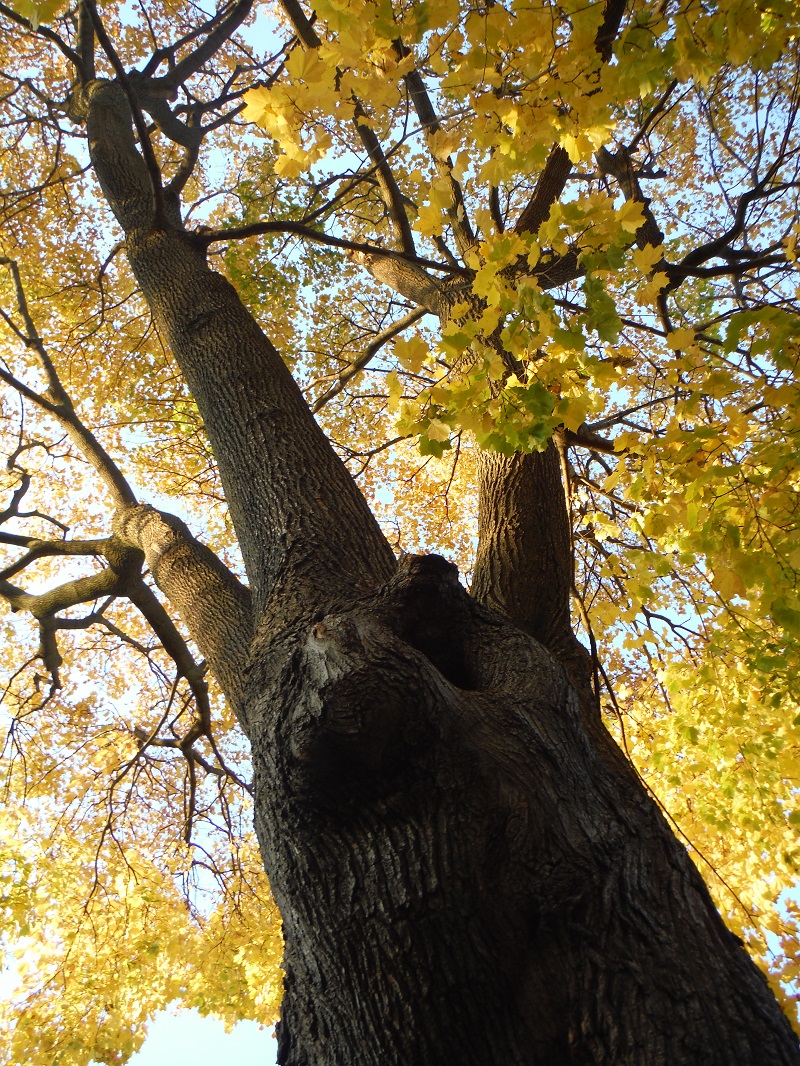
Alexander Best
El arce en mi traspatio: noviembre
.
Árbol, es tarde en el año ahora,
¿y eres el único cambiar las hojas, no?
Sí, el mayor de los arces.
Todos los otros árboles, están fueron vívidos
– pues desamparon todo.
.
Tú, mi Viejo,
cambias las hojas al final,
y nos das tu color en el momento justo antes del fin del otoño.
Estos colores – naranja y amarillo – es lo que digo.
.
Te amo,
Viejo Árbol,
como les amo a los viejos parientes que yo conocía
– aquellos ahora que son muertos y idos.
Yo tomo la sombra bajo de ti.
Fumo mi puro,
al amanecer-oscuro,
bajo de ti.
Y tomo mi café, también.
.
Te adoro, Árbol, porque me guías durante todo el año…
Y cuando yo me moriré – ¡espero que todavía Tú vivas!
. . .
Alexander Best
The Maple tree in my backyard: November
.
Tree, it’s getting late in the year now – and aren’t you the last one to turn?
Yes, the eldest of maples.
All the other trees have gone vivid – then dropped it all.
You, old one,
you’re turning last of all,
and you give us your colour just before the end of Fall
– these colours, I mean: orange and yellow!
.
I love thee, old tree,
like the old people I knew – now dead and gone.
.
I take shade beneath you.
I smoke my cigar, at dark-dawn, beneath you.
Take my coffee, too.
.
I love thee, you who are here with me – all year long.
When I die some day, I hope that You still live!
. . . . .
Alexander Best: El arce en mi traspatio / The Maple tree in my backyard
 Zócalo Poets