Nicolás Guillén: “The Bongo’s Song” / “La canción del bongó”
Posted: February 12, 2012 Filed under: English, Nicolás Guillén, Spanish, ZP Translator: Alexander Best | Tags: Black History Month poems Comments Off on Nicolás Guillén: “The Bongo’s Song” / “La canción del bongó”
ZP_The Rooster Dances to My Bongo Beat_El Gallo Baila Con Mi Bongo_painting by_pintura de_George Rodez
Nicolás Guillén
( Poeta afro-cubano, 1902-1989 )
“La canción del bongó” (1930)
.
Esta es la canción del bongó:
—Aquí el que más fino sea,
responde, si llamo yo.
Unos dicen: Ahora mismo,
otros dicen: Allá voy.
Pero mi repique bronco,
pero mi profunda voz,
convoca al negro y al blanco,
que bailan el mismo son,
cueripardos y almiprietos
más de sangre que de sol,
pues quien por fuera no es de noche,
por dentro ya oscureció.
Aquí el que más fino sea,
responde, si llamo yo.
En esta tierra, mulata
de africano y español
(Santa Bárbara de un lado,
del otro lado, Changó),
siempre falta algún abuelo,
cuando no sobra algún Don
y hay títulos de Castilla
con parientes en Bondó:
Vale más callarse, amigos,
y no menear la cuestión,
porque venimos de lejos,
y andamos de dos en dos.
Aquí el que más fino sea,
responde si llamo yo.
Habrá quién llegue a insultarme,
pero no de corazón;
habrá quién me escupa en público,
cuando a solas me besó…
A ése, le digo:
—Compadre,
ya me pedirás perdón,
ya comerás de mi ajiaco,
ya me darás la razón,
ya me golpearás el cuero,
ya bailarás a mi voz,
ya pasearemos del brazo,
ya estarás donde yo estoy:
ya vendrás de abajo arriba,
¡que aquí el más alto soy yo!
_____
Nicolás Guillén
(Cuban poet, 1902-1989)
“The Bongo’s Song” (1930)
(To Lino Dou)
.
This is the bongo’s song:
“Let the finest of you here
answer when I call you!
Some say: I’ll be right there,
others say: Just a minute.
But my harsh peal,
but my deep voice,
summons blacks and whites,
who dance to the same son,
men with brownish skins and blackish souls
caused more by blood than by the sun,
for who on the outside are not night,
have already darkened on the inside.
Let the finest of you here
answer when I call you.
.
“In this land made mulatto
by Africans and Spaniards
(Santa Bárbara on the one hand,
Changó on the other),
there is always a missing grandfather,
when there isn’t an excess of Dons.
Some have titles from Castile
and relatives in Bondó :
it is better to keep quiet, my friends,
and not stir up the matter
because we came from far away,
and we walk two by two.
Let the finest of you here
answer when I call you!
.
“There’ll be those who will insult me,
but not of their full accord;
there’ll be those who spit on me in public,
yet when we are alone they kiss me…
To them I say:
My friends,
you’ll soon be begging my pardon,
you’ll soon be eating my ajiaco,
you’ll soon be saying I’m right,
you’ll soon be beating my leather,
you’ll soon be dancing to my voice,
we’ll soon walk arm in arm,
you’ll soon be where I am:
you’ll soon be moving up,
for the highest here is me!”
.
Translation from Spanish into English
© 2003, KEITH ELLIS
* * *
Glossary:
Son – Quintessential original Cuban musical style, nascent in
the late 19th-century, flowered fully in the 20th; a hybrid of
Bantu-African percussion – bongos, maracas – with Spanish guitars
and melodies, combined with African “call-and-response”
song structure; the precursor of modern-day “Salsa” music
Mulatto – “mixed-race” i.e. African and European ancestry
Santa Bárbara – Roman-Catholic saint, syncretized into
Santería, a Caribbean religion combining West-African and
Christian beliefs; practised in Cuba.
Changó – Yoruba-African God of fire, thunder and lightning
Don – prefix of Spanish nobility
Bondó – a “typical” African town/province name, found in
Congo, Ivory Coast, Kenya, Mali, Uganda
Ajiaco – a hearty Cuban soup consisting of chicken, pork,
plaintains, sweet potatoes, taro, black pepper and lime juice
_____
Claude McKay: “The Tropics in New York”
Posted: February 8, 2012 Filed under: Claude McKay, English | Tags: Black poets Comments Off on Claude McKay: “The Tropics in New York”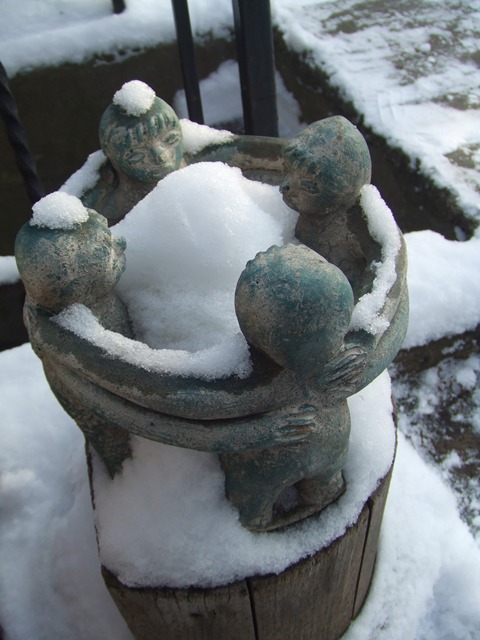
To One Coming North
At first you’ll joy to see the playful snow,
Like white moths trembling on the tropic air,
Or waters of the hills that softly flow
Gracefully falling down a shining stair.
And when the fields and streets are covered white
And the wind-worried void is chilly, raw,
Or underneath a spell of heat and light
The cheerless frozen spots begin to thaw,
Like me you’ll long for home, where birds’ glad song
Means flowering lanes and leas and spaces dry,
And tender thoughts and feelings fine and strong,
Beneath a vivid silver-flecked blue sky.
But oh! more than the changeless southern isles,
When Spring has shed upon the earth her charm,
You’ll love the Northland wreathed in golden smiles
By the miraculous sun turned glad and warm.
_____
The Tropics in New York
Bananas ripe and green, and ginger root,
Cocoa in pods and alligator pears,
And tangerines and mangoes and grape fruit,
Fit for the highest prize at parish fairs,
Set in the window, bringing memories
Of fruit-trees laden by low-singing rills,
And dewy dawns, and mystical blue skies
In benediction over nun-like hills.
My eyes grew dim, and I could no more gaze;
A wave of longing through my body swept,
And, hungry for the old, familiar ways,
I turned aside and bowed my head and wept.
_____
To Winter
Stay, season of calm love and soulful snows!
There is a subtle sweetness in the sun,
The ripples on the stream’s breast gaily run,
The wind more boisterously by me blows,
And each succeeding day now longer grows.
The birds a gladder music have begun,
The squirrel, full of mischief and of fun,
From maples’ topmost branch the brown twig throws.
I read these pregnant signs, know what they mean:
I know that thou art making ready to go.
Oh stay! I fled a land where fields are green
Always, and palms wave gently to and fro,
And winds are balmy, blue brooks ever sheen,
To ease my heart of its impassioned woe.
_____
Claude McKay (1889-1948) was born in Clarendon parish,
Jamaica. His older brother tutored him – with a bookshelf
of “classics”. In 1912 McKay published his first book of poetry,
“Songs of Jamaica”, written entirely in Jamaican Patois.
He travelled to the USA where he would become a seminal
influence on the Black cultural movement known as The Harlem
Renaissance of the 1920s. Appalled by the blunt racism he
encountered in his adopted country he articulated Black hope
and rage. He wrote also of the complex feelings of the Immigrant
experience – as evidenced by his three tender, passionate
“Winter” poems from 1922 – featured above.
_____
Bob Marley: ¡Despierten y Vivan! / Wake Up and Live!
Posted: February 6, 2012 Filed under: Bob Marley, English, Spanish, Translator's Whimsy: Song Lyrics / Extravagancia del traductor: Letras de canciones traducidas por Alexander Best, ZP Translator: Alexander Best | Tags: Black poets Comments Off on Bob Marley: ¡Despierten y Vivan! / Wake Up and Live!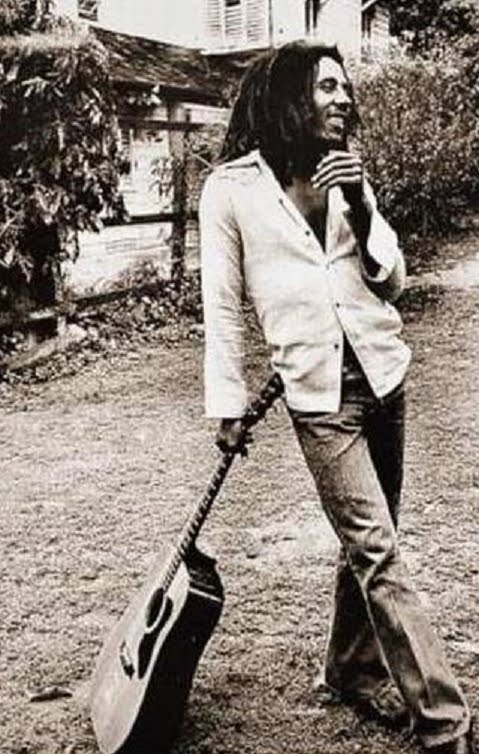
“Wake up and Live!”
Wake up and live, y’all,
Wake up and live,
Wake up and live now,
Wake up and live!
*
Me say: Life is one big road with lots of signs,
So when you riding through the ruts,
Don’t you complicate your mind.
Flee from hate, mischief and jealousy,
Don’t bury your thoughts
– put your vision to reality, yeah!
*
All together now:
Wake up and live, y’all,
Wake up and live,
Wake up and live now,
Wake up and live!
*
Rise, ye mighty people,
There’s work to be done.
So let’s do it, a little by little.
Rise from your sleepless slumber, yeah!
We’re more than sand on the seashore,
We’re more than numbers.
*
All together now:
Wake up and live, y’all,
Wake up and live,
Wake up and live now,
Wake up and live!
*
Woah, one-one cocoa full a basket,
When you use to live big today –
tomorrow you buried in a casket.
One-one cocoa full a basket, yeah,
When you use to live big today –
Tomorrow: buried in a casket!
*
All together now:
Wake up and live, y’all,
Wake up and live,
Wake up and live now,
Wake up and live!
_____
¡Despierten y Vivan!
Despierten y vivan, todos ustedes,
Despierta y vive,
Despierta y vive ahora,
Despierta y vive!
*
Digo: La vida es un camino grande con un montón de signos,
Así que cuando montas a caballo a través de los surcos,
no te complicas la mente.
Huid de odio, maldad y los celos –
No entierres los pensamientos,
ponga su visión en realidad, ¡sí!
*
Despierten y vivan, todos ustedes,
Despierta y vive,
Despierta y vive ahora,
Despierta y vive!
*
Aumenten, ustedes-los-poderosos,
Hay trabajo por hacer,
Así que vamos a hacerlo, poco a poco.
Aumente del sueño sin dormir, sí, sí,
Somos mucho más que arena en la orilla del mar,
Somos mucho más que unos números.
*
Todos juntos ahora:
Despierten y vivan, todos ustedes,
Despierta y vive,
Despierta y vive ahora,
¡Despierta y vive!
*
¿No lo ves? Una pila de cacao en una canasta,
Cuando estás viviendo “a lo grande” hoy día –
Mañana, ¡serás enterrado en un ataúd!
¿No lo ves? Una pila de cacao en una canasta,
Cuando estás viviendo “a lo grande” hoy día –
Mañana, ¡serás enterrado en un ataúd!
*
Todos juntos ahora:
Despierten y vivan, todos ustedes,
Despierta y vive,
Despierta y vive ahora,
¡Despierta y vive!
_____
Letras de una canción de 1979 – del poeta-músico
jamaicano Robert Nesta Marley a.k.a. Bob Marley
(6 febrero, 1945 – mayo 1981)
Traducción del inglés al español: Alexander Best
*
Song lyrics from 1979 by Jamaican poet and musician
Robert Nesta Marley a.k.a. Bob Marley
(February 6th, 1945 – May 1981)
Translation into Spanish: Alexander Best
_____
Juliane Okot Bitek: “Dans Sept Jours” et “À Langston Hughes”
Posted: February 1, 2012 Filed under: English, French, Juliane Okot Bitek, ZP Translator: Lan Truong, ZP Translator: Lidia García Garay | Tags: Black poets Comments Off on Juliane Okot Bitek: “Dans Sept Jours” et “À Langston Hughes”_____
“Dans Sept Jours”
Une main delicate
tient un eventail
Evoque des souvenirs de la performance d’un amoureux
*
Dis-moi
Dis-moi car je ne m’imagine pas
La chaleur qui se lève dans l’arrière de ma gorge
S’étendre dans ma poitrine
Tombe
Et se dépose
*
Je ne reviendrai pas vers toi
*
Une fleur se ferme
Se dessèche à cause de la froide étreinte
D’un vent sec et amer
*
Tout sera fini
Dans sept jours.
_____
“À Langston Hughes”
Si tu ne restes pas
Pour lire mon coeur,
Cela ne me dérange pas
*
J’ai déchiré ton livre de poésie
*
Tu as menti:
Comme je prenais le train à Harlem
Tu as déraillé.
_____
Le poète Juliane Okot Bitek est née à Kenya en 1966.
Elle a passé son enfance en Ouganda.
Et maintenant elle habite à Vancouver, Canada.
*
Traductions de l’anglais au français:
Lidia Garcia Garay, Lan Truong
_____
“Seven Days”
A delicate hand
Holds a fan
Evokes memories of a lover’s performance
Tell me
Tell me that I do not imagine
The heat that rises at the back of my throat
Spreads through my chest
Falls
And settles
I am not returning to you
A flower folds up
Shrivels from the cold embrace
Of a dry and bitter wind
In seven days
It will be over.
_____
“To Langston Hughes”
That you will not stay
To read my heart
Doesn’t matter to me
I tore your book of poetry
You lied:
While I took the Harlem train uptown
You strayed.
_____
Poet Juliane Okot Bitek was born in Kenya in 1966
and spent her childhood in Uganda.
She now lives in Vancouver, Canada.
_____
Langston Hughes: “Yo también, canto a América…”/ “I, too, sing America…”
Posted: February 1, 2012 Filed under: English, Langston Hughes, Spanish | Tags: Black poets Comments Off on Langston Hughes: “Yo también, canto a América…”/ “I, too, sing America…”_____
Langston Hughes (1 febrero 1902 – 1967)
“Yo también, canto a América”
Yo también, canto a América.
Yo soy el hermano de piel oscura.
Ellos me mandan a comer a la cocina
cuando vienen las visitas.
Pero yo me río,
Y como bien,
Y crezco fuerte.
Mañana,
Yo comeré en la mesa
Cuando las visitas lleguen.
Entonces,
Nadie se atreverá
A decirme,
“Come en la cocina,”
Además,
Ellos verán que tan bello soy
Y sentirán vergüenza-
Yo, también, soy América.
(1925)
Traducción del inglés al español:
Anónimo/Anónima (de los años sesenta)
_____
“I, too, sing America”
I, too, sing America.
I am the darker brother.
They send me to eat in the kitchen
When company comes,
But I laugh,
And eat well,
And grow strong.
Tomorrow,
I’ll be at the table
When company comes.
Nobody’ll dare
Say to me,
“Eat in the kitchen,”
Then.
Besides,
They’ll see how beautiful I am
And be ashamed–
I, too, am America.
(1925)
_____
Langston Hughes as Translator: Lorca’s “Gypsy Ballads”
Posted: February 1, 2012 Filed under: English, Federico García Lorca, Langston Hughes, Spanish | Tags: Black poets Comments Off on Langston Hughes as Translator: Lorca’s “Gypsy Ballads”_____
Brawl
Half way down the ravine,
Gay with rival blood
The knives of Albacete
Shine like fishes.
*
A light hard as playing cards
In the acid greenness
Silhouettes furious horses
And the profiles of riders.
*
On the crest of an olive tree
Two old women cry.
The bull of the dispute
Charges up the walls.
Black angels bring
Handkerchiefs and snow-water,
Angels with big wings
Made of knives from Albacete.
*
Juan Antonio of Montilla
Rolls dead down the hill,
His body full of lilies
And a pomegranate at his temples.
Now he rides a cross of fire
On the road to death.
*
The judge, with the Civil Guards,
Comes through the olive groves.
Slippery blood sings
A silent song of serpents.
Honourable Civil Guards:
The same as usual –
Four Romans dead
And five Carthaginians.
*
Crazed with hot rumours and fig trees,
The afternoon falls fainting
On the wounded limbs of the riders.
Black angels fly
Through the western air,
Angels with long braids
And hearts of oil.
_____
“Reyerta”
En la mitad del barranco
las navajas de Albacete,
bellas de sangre contraria,
relucen como los peces.
*
Una dura luz de naipe
recorta en el agrio verde
caballos enfurecidos
y perfiles de jinetes.
*
En la copa de un olivo
lloran dos viejas mujeres.
El toro de la reyerta
su sube por la paredes.
Angeles negros traían
pañuelos y agua de nieve.
Angeles con grandes alas
de navajas de Albacete.
*
Juan Antonio el de Montilla
rueda muerto la pendiente
su cuerpo lleno de lirios
y una granada en las sienes.
Ahora monta cruz de fuego,
carretera de la muerte.
*
El juez con guardia civil,
por los olivares viene.
Sangre resbalada gime
muda canción de serpiente.
Señores guardias civiles:
aquí pasó lo de siempre.
Han muerto cuatro romanos
y cinco cartagineses
*
La tarde loca de higueras
y de rumores calientes
cae desmayada en los muslos
heridos de los jinetes.
Y ángeles negros volaban
por el aire del poniente.
Angeles de largas trenzas
y corazones de aceite.
_____
The Faithless Wife
I took her to the river
Thinking she was single,
But she had a husband.
It was Saint James’ Eve,
And almost because I had to.
The street lights went out
And the crickets lit up.
At the farthest corners
I touched her sleeping breasts
And they opened for me quickly
Like bouquets of hyacinths.
The starch of her underskirts
Rustled in my ears
Like a piece of silk
Slit by ten knives.
With no silver light to crown them
The trees grew bigger,
While a horizon of dogs barked
Afar from the river.
*
Beyond the brambles,
The bulrushes, and the hawthorns,
I made her mat of hair
Hollow the muddy bank.
I took off my tie,
She took off her dress,
Me, my belt with the pistol,
She, the four parts of her bodice.
Neither lilies nor snail shells
Have such a lovely skin,
Nor do the crystals of the moon
Shine with such a light.
Half bathed in fire
And half bathed in ice,
Her thighs slipped from me
Like frightened fish.
That night I rode
Down the best of roads
On a mother-of-pearl filly
With no bridle and no stirrups.
Being a man, I can’t tell you
The things that she told me.
The light of understanding
Makes me very careful.
Soiled with kisses and sand
I led her away from the river
While the swords of the lilies
Battled with the breeze.
I acted like the thoroughbred
Gypsy that I am,
And gave her a present,
A big sewing box
Of straw-coloured satin.
But I didn’t want
To fall in love with her
For, having a husband,
She told me she was single
When I took her to the river.
_____
“La Casada Infiel”
Y que yo me la llevé al río
creyendo que era mozuela,
pero tenía marido.
Fue la noche de Santiago
y casi por compromiso.
Se apagaron los faroles
y se encendieron los grillos.
En las últimas esquinas
toqué sus pechos dormidos,
y se me abrieron de pronto
como ramos de jacintos.
El almidón de su enagua
me sonaba en el oído,
como una pieza de seda
rasgada por diez cuchillos.
Sin luz de plata en sus copas
los árboles han crecido
y un horizonte de perros
ladra muy lejos del río.
*
Pasadas las zarzamoras,
los juncos y los espinos,
bajo su mata de pelo
hice un hoyo sobre el limo.
Yo me quité la corbata.
Ella se quitó el vestido.
Yo el cinturón con revólver.
Ella sus cuatro corpiños.
Ni nardos ni caracolas
tienen el cutis tan fino,
ni los cristales con luna
relumbran con ese brillo.
Sus muslos se me escapaban
como peces sorprendidos,
la mitad llenos de lumbre,
la mitad llenos de frío.
Aquella noche corrí
el mejor de los caminos,
montado en potra de nácar
sin bridas y sin estribos.
No quiero decir, por hombre,
las cosas que ella me dijo.
La luz del entendimiento
me hace ser muy comedido.
Sucia de besos y arena
yo me la llevé del río.
Con el aire se batían
las espadas de los lirios.
*
Me porté como quién soy.
Como un gitano legítimo.
La regalé un costurero
grande, de raso pajizo,
y no quise enamorarme
porque teniendo marido
me dijo que era mozuela
cuando la llevaba al río.
_____
Langston Hughes ( February 1st 1902 – 1967)
lived in México for part of his boyhood, and,
two decades later, travelled to
Spain when he became interested in Communism.
Though he was familiar with the Spanish poetry of
Federico García Lorca (1898-1936),
the poet had already been killed by the time
Hughes got to Spain (toward the end of
The Spanish Civil War) in 1938.
*
Inspired by the Fiesta de Cante Jondo (Festival of
Deep Song) in 1922, Lorca had immersed himself
in the gypsy subculture of Andalucía, Spain. The
result was his 1928 collection of poems,
“Primer romancero gitano”. In 1951, Langston
Hughes published his translations into English
of a dozen or so of these “Gypsy Ballads”,
two of which we feature here.
_____
Mao Zedong: “New Year’s Day”
Posted: January 23, 2012 Filed under: English, Mao Zedong Comments Off on Mao Zedong: “New Year’s Day”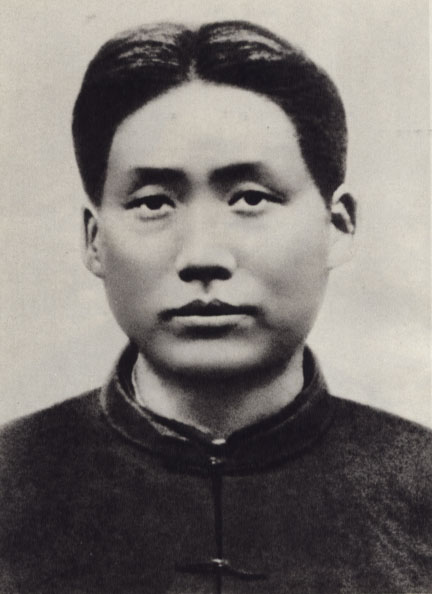
New Year’s Day (January 29th, 1930)
– to the tune of Ju Meng Ling
Ninghua, Chingliu, Kueihua–
What narrow paths, deep woods and slippery moss!
Whither are we bound today?
Straight to the foot of Wuyi Mountain.
To the mountain, the foot of the mountain,
Red flags stream in the wind in a blaze of glory.
* English translation from Mandarin Chinese *
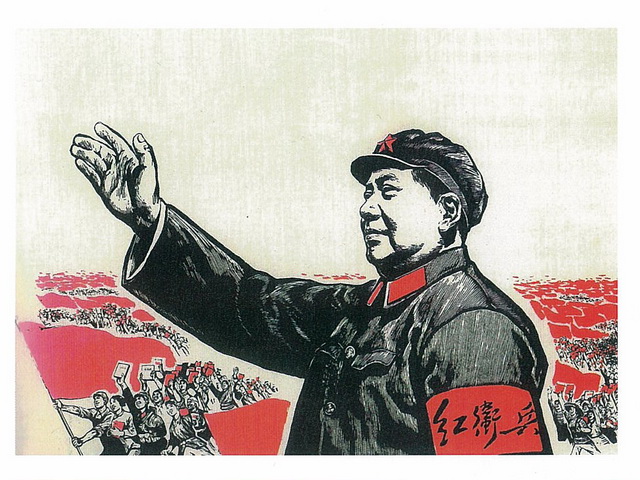
The New Year…and Crows!
Posted: January 23, 2012 Filed under: Chinese (Mandarin), English Comments Off on The New Year…and Crows!January 2
I thought I wanted to say something
I looked at the snow then went back to the desk
Or perhaps I counted money or perhaps I did laundry
Crows flew in the suburbs flew by the front door
I waited quietly
like a hotpot in winter
There won’t be any more discounted plane tickets
I waited to sacrifice myself and then it was the new year
*
January 13
The new year’s bus
shines in the sunlight the dust shines too
the crows have no eyes
iron’s leaves the hearts inside of stones
last year the year before pale blue shoulders
slide toward the next wave
_____
© Yan Jun
Translations: © 2010, 2011,
Ao Wang and Eleanor Goodman
Special Thanks to PIW
_____
Editor’s note:
Yan Jun’s “new year” in these two poems
appears to be of the Western – not the
Lunar/Chinese – Calendar. But we have
posted them this Chinese New Year’s Day
(January 23rd) so as to contrast them
with Mao Zedong’s poem “New Year’s Day”.
_____
Contemporary Chinese poets: 1
Posted: January 23, 2012 Filed under: English Comments Off on Contemporary Chinese poets: 1I demand that the whole of mankind have the right to vote for
I demand an increase in birth control, the encouragement of
I demand the revision of constitutional law, deleting
I demand a ban on mahjong and KTV, the detainment of those who
I demand the abolition of art and of changing one’s life;
I demand that salt be rubbed in wounds, that wine be poisoned, that a
I demand the erection of two amps the size of buildings and the
I demand that you and I be together, never to be separated;
I demand memories, black flowers, stars that shine above bicycles
I demand the release of imprisoned words like
I demand demands, forbidden forbiddenments, annulled annulments,
I demand loud singing at the gates of hell and sleeping on the bus;
I demand that we maintain quiet . . .
_____
Born in Lanzhou in 1973, Yan Jun is a poet who’s also
a musician, giving live “hypnotic noise” concerts.
For him, writing poetry is a political act – witness
his list of “demands” in the poem above…
_____
© 2008, Yan Jun
Translation from Chinese: © 2011, Ao Wang and Eleanor Goodman
Special Thanks to PIW
_____
Contemporary Chinese poets: 2
Posted: January 23, 2012 Filed under: Chinese (Mandarin), English Comments Off on Contemporary Chinese poets: 2_____
Zhang Zao (1962-2010)
The Chairs Sit out in the Winter . . .
The chairs sit out in the winter, all in all
three of them—coldness being muscle—
spaced out in a line,
terrified of logic. Among angels,
there are not three who could
sit themselves down in them, waiting for
the barber who skates across a river of ice, though
ahead is still a large mirror,
magpies tidying away small coins.
The wind’s weaving loom weaves the surroundings.
The Void is Lord, remote
he stands on the outskirts, exhaling warm air,
features painted heavily, counting the chairs:
without touching it, he could eliminate
that middle position,
if he were to transplant that chair on the left
all the way to the farthest right, forever—
Such an assassin at the heart of
the universe. Suddenly,
in among the three chairs, that unwarranted
fourth chair, the one and only,
also sits out in the winter. Just as it was that winter . . .
. . . I love you.
_____

Elegy
a letter opens, someone says:
the weather’s turned cold
another letter opens
it’s empty, empty
but heavier than the world
a letter opens
someone says: he sings at the tops of his lungs from the mountain
someone says: no, even if the potato died
the inertia living inside it
would still bring forth tiny hands
another letter opens
you sleep soundly as a tangerine
but someone, after peeling you of your nakedness, says:
he has touched another you
another letter opens
they’re all laughing out loud
everything around them guffaws endlessly
a letter opens
a cloud-natural, river-smooth style on the rampage outdoors
a letter opens
I chew over certain darknesses
another letter opens
a bright moon hung in the sky
after another letter opens, it shouts:
death is real.
© Estate of Zhang Zao
Translations: © 2003, Simon Patton
Special Thanks to PIW
_____
After Mao Zedong’s death in 1976 Chinese poetry began to shift away from
the oratorical and inspirational toward the private – and the obscure.
From Hunan province, Zhang Zao went in his own direction, mixing
Western and Chinese worldviews, and distributed his poems via photocopies.
He lived abroad for a number of years and taught himself several languages –
something that both widened and strengthened his Chinese-language poetry.
 Zócalo Poets