Inuo Taguchi: “For the Vegetarian”
Posted: December 8, 2011 Filed under: English, Inuo Taguchi Comments Off on Inuo Taguchi: “For the Vegetarian”_____
Inuo Taguchi
FOR THE VEGETARIAN
John Lennon died, you know.
“That must have been because of unpolished rice and
vegetarian food,”
Jesus said, sitting on a park bench.
“That’s not so,” I said. “John Lennon was assassinated . . . ”
I broke off mid-sentence,
because Jesus had an open New York Times before him
which actually carried an article to that effect.
When I got back to my apartment last night
there was a message from John on my answering machine.
He said he’d very much like me to participate
in a 4-day natural foods workshop in Atami.
If people get too gung-ho over something
do they even forget that they’re dead?
What’ll we call it? Karma? Anyway that’s a sad story.
Jesus spread out a take-out turkey sandwich on his lap
as he talked.
“When I was in Palestine I used to be really healthy,
but since coming to Manhattan everything’s gone wrong.
Is it because I’ve eaten too many French fries?
I tell them not to,
but my disciples themselves seem to frequent McDonald’’s
pretty often.
“Every time I argued with John I lost.
On those occasions my disciples were always upset.
Buddha once told me in all sincerity
that bad food was our karma.”
So John thought he would all by himself
eat up all the unpolished rice in the world.
I pictured John loading his cart with unpolished rice
in an Oriental market in Heaven
and at check-out
sticking out his tongue and mumbling,
“I don’t give a damn about good health, really. After all,
dead people are the freshest of all.”
The sky we see over Central Park is blue everywhere
and I slowly realized that under such a sky
it would be no wonder at all
if I had a call from dead John.
And sure enough when I got back to my room
there was a message from John.
Dead John said as follows:
“The opposite of eating is not not eating.
The opposite of eating is praying,
because while we’’re praying, at any rate,
we can’’t eat.”
_____
from: Armadillogic
2002
Translation from Japanese:
William I. Elliott and Kazuo Kawamura
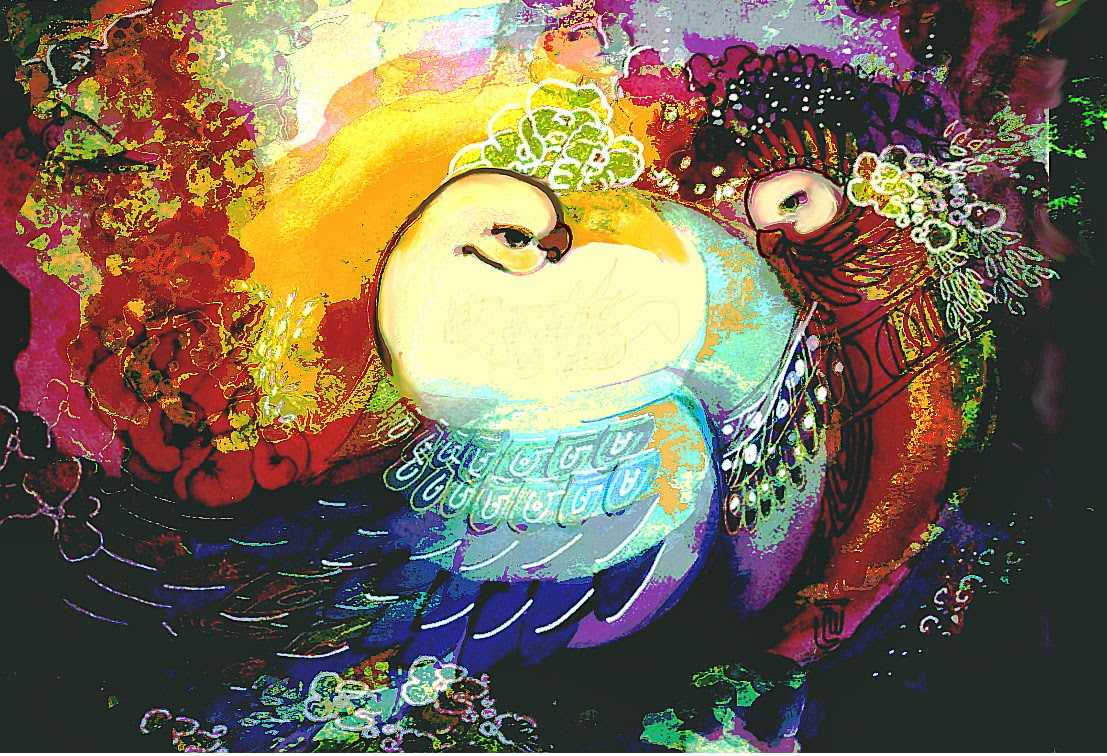
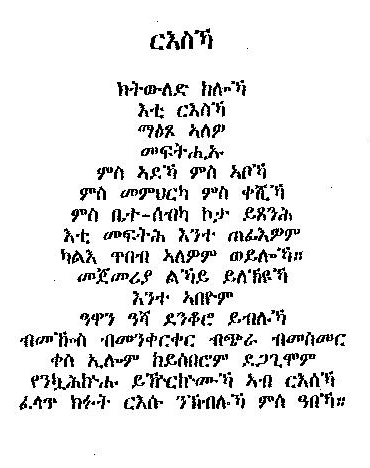
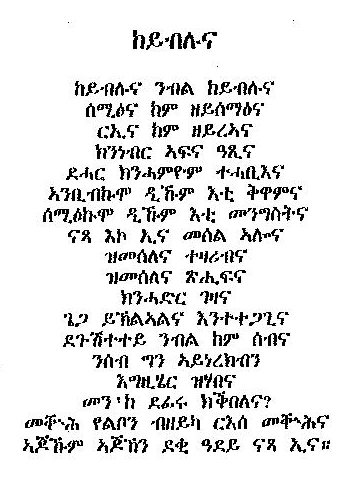
Reesom Haile: the Lively Voice of Eritrea / la Voz Vivaz de Eritrea
Posted: December 1, 2011 Filed under: English, Reesom Haile: La voz vivaz de Eritrea / the lively voice of Eritrea, Spanish, Tigrinya, ZP Translator: Alexander Best | Tags: African poetry - Eritrea, Black poets Comments Off on Reesom Haile: the Lively Voice of Eritrea / la Voz Vivaz de Eritrea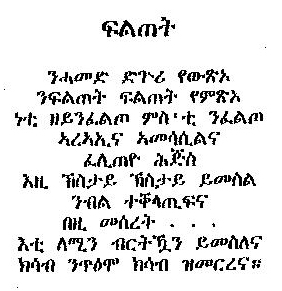


_____ * _____ * _____
KNOWLEDGE
First the earth, then the plow:
So knowledge comes out of knowledge.
We know, we don’t know.
We don’t know we know.
We know we don’t know.
We think
This looks like that –
This lemon, that orange –
Until we taste the bitter.
_____
DEVELOPMENT
Change.
Like a child, an infant.
“Let’s go ! Let’s go !”
And our household grows.
“Let’s run.”
We can slow
And sit and stretch
In the sun
Till it sets, but tomorrow
Dawned yesterday.
_____
UNDER CONSIDERATION
Consider this.
Consider that.
Excellent.
Write it
And propose it
For consideration.
Also consider
The official response,
“It’s under consideration.”
Who is considering whom?
When? Where?
How? Why?
Give up? Consider this.
_____
LEARNING FROM HISTORY
We learned from Marx and Lenin:
To be equal trim your feet
For one-size-fits-all shoes.
We made their mistakes, too.
Equally, we all make mistakes.
The evil is in not being corrected.
Aren’t we known
By what we do, undo and do again?
_____
YOUR HEAD
From birth you need
A door in your head to live.
Mother, father, teacher, preacher,
Sister, brother, relations, friends
Or others of your kind
May have the key
Or it may be lost.
But they still have other ways
To open the lock.
Rancid butter rubbed on your skull
May let the sunshine in.
The phrase, “What are you,
Stupid? Dumb?” might throw the bolt.
A flywhisk works on the less fragile.
A wooden spoon, a ruler or a good stick
Does the trick on harder nuts and…
Voilà! An open mind!
_____
SPEAK OUT
To speak out and to be spoken about,
Or to see no evil, hear no evil,
Shut up, keep it to yourself
And only complain in private?
That is not the question.
Read the constitution
Of our democratic state.
Exercise your rights
To tell it like it is,
Write as you see fit
And get a good night’s sleep.
You also have the right to take
Back what you say by mistake.
The freedom to express
Cannot be given up.
It comes from God.
Be free and brave.
Only one prison remains:
Our minds.
_____ * _____ * _____
El Saber
Al primero la tierra, pues el arado:
Tan que el saber viene del saber.
Sabemos, no sabemos.
No sabemos que sabemos.
Sabemos que no sabemos.
Pensamos que
Ésto parace como éso
– este limon, esa naranja –
hasta que degustemos el amargor.
_____
El Desarrollo
Cambio.
Como niño, como bebé.
¡Vamos! ¡Vamos!
Y crecen nuestro hogar.
¡Corramos!
Podemos aflojar el paso
Y sentarnos, estirando,
Bajo del sol,
Hasta el anochecer, pero
Ayer amaneció la mañana.
_____
Sobre la Consideración
Considera ésto.
Considera éso.
Escríbelo
Y proponlo
Por la consideración.
Considera también
La respuesta oficial:
“Éso es algo que estamos considerando.”
¿Quién está considerando a quién?
¿Cuándo? ¿Dónde?
¿Cómo – y Porqué?
¿Estás perplejo?
Considera ésto.
_____
Aprendiendo de la Historia
Aprendimos de Marx y Lenin:
A ser igual, recorta tus pies
por zapatos de unitalla.
(Cometimos sus errores también.)
Por otro lado, cometemos los errores
Todos nosotros.
Lo mal es no estar corregido.
¿ Nos conoce la gente
De lo que hacemos, deshacemos y hacemos de nuevo – no?
_____
Tu Cabeza
Del nacer te necesita
Una puerta en la cabeza para vivir.
Madre, padre, maestro, pastor.
Hermana, hermano, la familia y los amigos,
O unos otros de tu tipo
Tengan la llave
O la llave esté perdido.
Pero quedan otras maneras
Para abrir la cerradura.
La mantequilla rancia, frotada sobre el cráneo,
pueda dejar entrar la luz del sol.
La frase, “¿Eres cuál – Tonto? o Bobo?
Quizás levantará el pestillo.
Sirve bien un matamoscas sobre la gente menos delicada.
Una cuchara/regla de madera,
O un palo bueno,
Con las “cáscaras de nuez” mas duras
Logran el truco…
¡Y ya está! ¡La mente abierta!
_____
Habla – Di lo que piensas
¿Decir lo que se piensa y ser alguien discutido?
O: ¿A ver nada de mal, a oír nada de mal,
Cállate, guárdalo a tu mismo
Y quejarte en privado?
Éso no es la pregunta.
Leye la constitución
De nuestro estado democrático.
Ejerce tus derechos
A decir lo que es tu verdad,
Escribe por tu manera
Y duerme bien.
Tienes también el derecho de
Retirar lo que dijiste en error.
La libertad de expresar
no debe estar cedido.
Es algo de Dios.
Sé libre y valiente.
Solamente queda una cárcel:
Nuestra mente.
_____ * _____ * _____
Reesom Haile, who died in 2003, was a much-loved Eritrean
poet and public personality.
After working as a radio and television journalist in Ethiopia, he
studied in the USA where he completed a doctorate at New York
University. A consultant to the U.N., government and NGOs for
twenty years, he returned in 1994 to Eritrea whose thirty-year
independence struggle with Ethiopia had just drawn to a close.
(After five years of relatively peaceful relations the two
countries engaged in a border war (1998-2000)
– over Red Sea access – that claimed 100,000 lives.) The reality of
war has formed the backdrop to, and sometimes the impetus for,
Haile’s verse.
His language, Tigrinya, is spoken by half (about 3,000,000 people)
the countryfolk in a nation which includes 9 languages and a variety
of ethnic groups. Tigrinya derives from ancient Ge’ez, as do Tigre
and Amharic. And Ge’ez is related – like Arabic and Hebrew –
to Aramaic, said to be the language spoken by Jesus.
This is poetry that embraces the Eritrean people, turns an eye
both wry and loving on their history and politics, and also issues
a sincere challenge to “get cracking” !
It is verse of vitality and wit, and is rendered beautifully
into English by Professor Charles Cantalupo of Pennsylvania State
University – a poet himself and a translator who balances gravity of
theme with a lightness of touch, thereby giving us something
of the essential character of Reesom Haile.
*
The poems featured here are from Reesom Haile’s collection:
We Have Our Voice (Lawrenceville and Asmara: The Red Sea Press,
2000) – the first-ever bilingual edition (Tigrinya + English)
of Tigrinya poems. Zócalo Poets is grateful to Professor Cantalupo for
assistance in posting the Tigrinya originals.
Translations from the English into Spanish: Alexander Best
_____
Mucho amado por sus compatriotas, Reesom Haile fue un poeta y
erudito. Su país, Eritrea, está situado al noreste de África, con una
costa al borde del Mar Rojo.
Durante su vida – se murió en 2003 – escribió dos mil poemas en el
lenguaje Tigriña, un idioma antiguo de la familia lingüística semítica
(como árabe, hebreo, y arameo – “la lengua de Jesús de Nazaret”.)
Lleno de inteligencia, vitalidad y ingenio, sus poemas han estado
traducido por el profesor universitario Charles Cantalupo
(de Penn State) con tanta franqueza, con tanto encanto.
Traducción del inglés al español: Alexander Best
“In all its breadth and ceaseless treasure”: the Contemporary Gaelic Poems of Lewis MacKinnon
Posted: November 30, 2011 Filed under: English, Gaelic: Scottish, In all its breadth and ceaseless treasure: Lewis MacKinnon and the contemporary Gaelic poem, Lewis MacKinnon Comments Off on “In all its breadth and ceaseless treasure”: the Contemporary Gaelic Poems of Lewis MacKinnon
Gaelic-language poems by Lewis MacKinnon:
Your Speech
Listening to your speech today;
A bag-of-wind speech,
A speech without ceasing,
A speech without shape,
A speech without feeling,
A speech without essence,
A speech without a path,
A speech as crazy as the birds,
A speech that was not heard,
A speech no one noticed,
A speech bawling out in the cold wind,
A speech alone, forgotten,
A speech misunderstood,
A speech calling out for aid,
A beautiful, meek, melodious, open speech, without blemish;
_____
A’ Chainnt Agad
Ag éisdeachd ris a’ chainnt agad
an diugh;
Cainnt ghuthmhor
Cainnt gun stad
Cainnt gun chruth
Cainnt gun fhaireachdainn
Cainnt gun bhrìgh
Cainnt gun rathad
Cainnt cho gòrach ri eòin nan speuran
Cainnt nach deach a chluinntinn
Cainnt air nach d’ thug neach-eiginn aire
Cainnt ag éibheachd ‘san t-soirbheas fhuar
Cainnt ‘na h-aonar, air a dìochuimhneachadh
Cainnt nach deach a tuigsinn
Cainnt ag gairm oirnn airson cuideachaidh,
Cainnt bhriagha, mhacanta, bhinn, fhosgarra, gun smal
____
Institutional Thoughts
Through the looking glass of faith
and the remains of empires,
and the institutions built by these,
a person arrives at this place in time and being;
Where the creed of his belief and the learning of colonizers
influences his every deed;
Even when he is sitting in some meeting or other
and struggling in his mind against ideas and words;
That someone else is putting forward;
Struggling for no real cause whatsoever;
But the fear of the loss of control;
That lurks under the surface of the legacy,
those institutions left from long ago;
_____
Smuaintean Air Stéidhichidhean
Troimh ghloine-seallaidh a’ chreideimh agus
fuigheall nan Ìmpireachdan,
is na stéidhichidhean a chaidh a thogail leotha,
ruigidh duin’ an t-àite seo ann an àm agus bith;
Far an toir creud a’ chreideis aig’ agus ionnsachadh
a’ luchd-ionnsaidh buaidh do gach
gnìomh a nì e;
Fìu ‘s nuair a tha e ‘na shuidhe ann an coinneimh air
choireigin
a’ dèanadh strì ‘na inntinn an aghaidh bheachdan is fhaclan;
A tha cuideigin eile a’ cur air adhart;
A’ dèanadh strì gun fhìor adhbhar sam bith;
Ach eagal call a’ smachd a tha fo uachdar na dìleib,
a dh’ fhàg na stéidhichidhean seo bho chionn fhada;
_____
Facebook and Gaelic
Writing in an unknown language,
old, shaky, alone,
in order that people will have a mere knowledge of it;
I write in this loneliness,
and I often suppose that there isn’t one person
on the surface of the earth,
that is in the same situation as me;
But I paused and I thought about the whole thing;
And then, it struck me
that Facebook
is kind of like Gaelic;
And I decided
that I would offer
Facebook the Gaelic language,
to be a friend to it,
in all its breadth
and ceaseless treasure;
And instead of being afraid
of an intrusion in its personal life
I welcome
any and all scrutinizing
that can be done of it
And I’ll provide Facebook
its date of birth,
its religious persuasion,
its sexual orientation,
its life history,
its stories,
its music,
its customs,
its expressions,
its hobbies,
its hopes,
its fears,
its musical interests,
where it was raised,
and what it is up to at this very moment
_____
Làrach Nan Ceanglaichean Agus A’ Ghàidhlig
A’ sgrìobhadh ann an cànain neo-aithnichte
sean, cugallach, aonaranach,
airson ‘s gum bi beagan eòlais aig daoin’ oirre
Is mar a sgrìobhas mi ‘san aonaranachas seo
gu tric saoilidh mi nach eil aon duin’ eile
air uachdar an t-saoghail
‘san aon suidheachadh ‘s a tha mise
Ach stad mi is smaointich mi
air a’ ghnothach
Is a’ sin, bhuail orm
gu bheil Làrach nan Ceanglaichean
car coltach ris a’ Ghàidhlig;
Agus chuir mi romham
gun tairginn-sa do Làrach nan Ceanglaichean
a’ Ghàidhlig,
a bhith ‘na caraid dhi,
‘na farsaingeachd air fad
‘na stóras gun chrìch
Agus an àite a bhith fo eagal
air foirneachd a beatha phearsanta
cuiridh mi fàilte air
sgrùdadh sam bith a théid a dhèanadh oirre
Agus bheir mi
ceann-là a breith,
a creideamh gneitheach,
a gné,
eachdraidh a beatha,
a sgeulachdan,
a h-òrain,
a ceòl,
a cleachdaidhean,
a gnàthsan-chainnt,
na cur-seachadan aice,
a dòchasan,
a h-eagail,
a sùim ciùil,
far an deach a togail,
is gu dé tha i ris an dràsda-fhéin
_____
A Fart
Now drawing the last gasp
and dying;
Free, unfettered, finally;
From the beliefs of people
who think that you died,
long ago;
But surprisingly,
you are still kicking in the hidden coffin,
with very little of your ancient little-known breath remaining;
And similar to a fart that is made someplace,
that is too confining,
and the smell wafts about choking everyone that is there,
and making them uncomfortable with shame,
You keep unexpectedly appearing;
And there are still those,
that are going around,
with their hands
tightly gripped on their noses;
Afraid of these little wiffs
that disperse;
You know that attitude you get
and how it’s shouted out, “Who did that anyway?”
And despite an immeasurable lack of attention,
you continue to fall out,
just like that fart,
that comes without welcome, without warning
_____
Braoim
A-nist a’ tarraing na h-uspaig mu dheireadh
is ag eugachdainn;
Saor, gun bhannan mu dheireadh thall;
O bheachdan dhaoine
a tha ‘smaoineachadh gun do dh’ eug thu,
o chionn iomadach bliadhna;
Ach gu h-iongantach,
tha thu fhathast air crith ‘sa’ chistidh fhalaichte seo,
le glé bheag dhen anail aosda neo-aithnicht’ agad air fhàgail,
Is mar bhraoim a chaidh a dhèanadh an àiteigin
a bha tuilleadh ‘s seasgair,
is a’ fàileadh a’ flodradh mun cuairt
a’ tachdadh a h-uile duin’ ann,
is ‘gan dèanadh mì-chomhfhurtail,
fo nàire;
Tha thu an còmhnaidh gun fhios a’ nochdadh;
Agus tha feadhainn ann,
a tha ‘dol air adhart fhathast,
leis na làmhan aca,
le fìor ghréim air an sròin;
Fo eagal nan oiteagan beaga seo,
a théid an sgapadh;
Fhios agad a’ freagairt a gheobh thu,
“Có rinn sin co-dhiubh?”
Agus a dh’ aindeoin cion-aire gun mheud,
théid agad air tuiteam a-mach,
dìreach mar a thuiteas am braoim ud,
a thig gun fhàilte, gun rabhadh
_____
Limited Pieces
I would like to meet with you again
one day,
where there is nothing between us,
but the awareness of one another;
Far away from the field of memory,
where there aren’t,
Memories
Experiences
Beliefs
Judgements
Pre-meditations
Or feelings
And there we can meet again
Since I would like to give, the pieces of you,
that do not completely constitute any of those above,
that I have been keeping so close to me,
for so long,
back to you
_____
Criomagan Beaga
Bu mhath leam coinneachadh riut
là air choireigin,
far nach eil sion sam bith ann eadarainn,
ach an t-eòlas air ré an duin’ eile;
Fad air falbh o’ phàirc a’ chuimhne
far nach eil
Cuimhnichean
Féin-fhiosrachaidhean
Creideamhan
Breitheanais
Beachdan a bh’ ann roimhe
No faireachdainnean
Is a’ sin faodaidh sinn coinneachadh a-rithist
A chionn ‘s bu mhath leam na criomagan dhìot
nach dèan suas gu h-iomlan gin dhen fheadhainn gu h-àrd,
a tha mi ‘gléidheadh cho dlùth dhomh,
fad an t-saoghail,
a thoirt air ais dhut
_____
Innards
I dug you out from the shape of your human body
And I looked at you sincerely;
To see if I could find
Out what was bothering you;
You, lamenting the deeds that you committed
And all your passions
With the hope that you would have another chance
To go back
And put things right;
In order to get some relief
You permitted me to search your insides;
You never uttered a word
When I went in
At ease, peaceful
Somehow content
That you were finally
Getting some attention
For the painful burden you
Were carrying;
And in I went
And I started
And God all mighty If I am not still there
Lost in your complexity;

Mionach
Chladhaich mi thu a-mach á cruth daonna na bothaig agad
Agus choimhead mi ort gu fìrinneach
Fiach a gheobhainn a-mach
Gu dé bha ‘cur ort
Thusa ‘caoineadh nan gnìomhan a rinn thu
Is na mianntan uile agad
Leis an dòchas gum biodh seans’ eile agad
A dhol air ais
A chur rudan ceart
Gus faothachadh ‘fhaighinn
Leig thu dhomh lorg ‘nad bhroinn
Cha d’ thuirt thu guth
Nuair a chaidh mi a-staigh
Socair, ciùin,
Is leig thu dhomh do mhionach a bhuntainn
Dòigh air choireiginn
Toilichte
Gu robh thu mu dheireadh thall
A’ faighinn air’ air an uallach phianail
A bha thu air giùlain
Chaidh mi a-staigh
Is thòisich mi
Is a Dhia nan gràsan nach eil mi fhathast ann
Air chall ‘san iom-fhillteachd agad
_____*_____*_____
Lewis MacKinnon (Lodaidh Macfhionghain) was born in 1970
in Inverness, Cape Breton, Nova Scotia, Canada.
Son of a Gaelic-speaking father and a French-Acadian mother, he is
an accomplished singer/songwriter as well as a poet.
His poems featured here were composed in Gaelic – using Nova Scotian
Gaelic’s spelling and punctuation, not Scottish Gaelic’s – then translated /
interpreted into English by the author himself.
Two of the poems, “Limited Pieces” and “Innards”, are exquisite in their
subtle intensity and candour – among the best love poems by any
Canadian poet.
MacKinnon’s 2008 book of poems, Giant and other Gaelic Poems /
Famhair agus dàin Ghàidhlig eile, includes 89 poems in Gaelic
with English versions.
Pat Lowther: “Escríbeme, cariño, del otro mundo. Y envíame aceitunas.”
Posted: November 24, 2011 Filed under: English, Pat Lowther, Spanish, ZP Translator: Alexander Best Comments Off on Pat Lowther: “Escríbeme, cariño, del otro mundo. Y envíame aceitunas.”
Oscura
Te digo: cae la oscuridad
como flechas y hambre
Ato en nudos mi cabello
para recordar otros imperios
Cae a través de mi cabeza el mundo
sin óbice – como la lluvia
Tengo que decirte: no puedo
mover siempre con el decoro
Como meteores cae la oscuridad
pétalos de negro caliente
Me escapo, quemando, solamente porque
Yo soy la oscuridad.
*
Identificación
Quiero decir:
dime
quien eres,
y me das
una respuesta clara,
quien eres
pues, pienso en
la pregunta inversa
como un cuchillo
con hoja hacia mí
dime
quien eres
: soy una metedura
una boca, llorando
una figura corriendo
con las manos al ángulo derecho
de los brazos
Y pienso, después
de todo, que
no te preguntaré
quien eres.
_____
Dark
I tell you the darkness comes down
like arrows and hunger
I tie knots in my hair
to remember other empires
The world falls through my forehead
resistlessly as rain
I must tell you I can not
always move with decorum
The darkness comes down like meteors
petals of hot black
I escape burning only because
I am the darkness.
*
I.D.
i want to say
tell me
who you are,
and you give me
a clear answer,
who you are
then i think of
the question reversed
like a knife
bladed toward me
tell me
who you are
: i’m a blunder
a mouth, crying,
a figure running
with hands upright
at right angles
to the arms
and i think after all
i won’t
ask you
who you are.
_____
Carta a Pablo número 3
Honrando a los muertos
con grasa de carne
con pan bien crujiente
con miel y ajo,
Anciano lamendo el aceite
de tus pulgares – y eructando,
eres más lustroso que
las flores.
Claveles, amapolas,
caen su especia y su bravura
en un polvo de pétalos agitados;
pasas por la imagen
para honrar la barriga,
las manos las fauces y los dientes,
el incienso de la comida
el sacramento del pan.
*
Letter to Pablo 3
Honouring your dead
with fat of meat
with well-crusted bread
with honey and garlic,
Old man licking the oil
off your thumbs – and belching,
you are more lustrous than
flowers.
Carnations, poppies,
their spice and bravura
fall in a dusting of
petals shaken;
you move past the image
to honour the belly,
the hands — the jaws and teeth,
the incense of cooking
the sacrament of bread.
_____
” Escríbeme, cariño,
del otro mundo.
Y envíame aceitunas. ”
*
” Write to me, darling,
from the other world.
And send me olives. ”
_____
Pat Lowther (1935-1975) nació en Vancouver, British Columbia, Canadá.
Su inspiración – con el poema y con la política – era el maestro-poeta chileno,
Pablo Neruda.
Estes poemas vienen de la colleción póstumo, Diario de Piedra (1977).
Traducción al español: Alexander Best
*
Pat Lowther (1935-1975) was born in Vancouver, British Columbia.
She was inspired poetically / politically by Chilean master-poet
Pablo Neruda.
These poems appeared in A Stone Diary,
published posthumously in 1977.
Translation into Spanish: Alexander Best
Juan de Dios Peza: “Al pie de la imagen de Santa Cecilia”
Posted: November 22, 2011 Filed under: Juan de Dios Peza, Spanish Comments Off on Juan de Dios Peza: “Al pie de la imagen de Santa Cecilia”_____
“Al pie de la imagen de Santa Cecilia”
por Juan de Dios Peza (México, 1852-1910)
Al pie de la imagen de Santa Cecilia,
un triste bohemio comenzó a tocar,
diciendo en voz baja:
No tengo familia, ni patria, ni rumbo, ni hogar.
Vengo en busca tuya, lloroso y hambriento,
para que te apiades de mi situación.
Con que tú lo ordenes en tu pensamiento,
se abrirán las puertas de cualquier mesón.
La música aquella seduce y encanta.
De pronto, un objeto cayó al violín,
y era que la imagen moviendo su planta,
al mísero artista le dio un escarpín.
Llorando de gozo se alejó en seguida.
Uno, al ver la joya, le llamó ladrón,
y lo condenaron a que con la vida
pagara su infame y sacrílega acción.
Por más que gritaba que él era inocente,
no pudo, no pudo convencer al juez.
Ante su protesta aullaba la gente:
Si se te calumnia prueba tu honradez.
Cuando de su llanto vio la ineficacia
y se preparaba, su vida a inmolar,
pidió le dejasen como última gracia,
al pie de la imagen volver a tocar.
Tocó como nunca, con la frente erguida,
mirando a la santa con mística unción,
diciendo en voz baja: defiende mi vida,
probando a tus fieles que no soy ladrón.
Cayó de rodillas la turba siniestra
cuando el sentenciado besó su violín,
y era que la imagen dejaba en su diestra,
con sus propias manos,
el otro escarpín.
Gedenktag der heilige Cäcilia: An die Musik !
Posted: November 22, 2011 Filed under: English, German Comments Off on Gedenktag der heilige Cäcilia: An die Musik !_____
“An die Musik”
(Franz von Schober / Franz Schubert, 1817)
Du holde Kunst, in wieviel grauen Stunden,
wo mich des Lebens wilder Kreis umstrickt,
hast du mein Herz zu warmer Lieb’ entzunden,
hast mich in eine be§re Welt entrückt,
in eine be§re Welt entrückt.
Oft hat ein Seufzer deiner Harf’ entflossen,
ein sü§er heiliger Akkord von dir,
den Himmel be§rer Zeiten mir erschlossen,
du holde Kunst, ich danke dir dafür,
du holde Kunst, ich danke dir !
_____
November 22nd: Saint Cecilia’s Day
“To Music”
(Franz von Schober / Franz Schubert, 1817)
Thou lovely Art, in many a gloomy hour,
When I have bow’d before the storms of life,
Hast thou revived my heart with glowing power
In better realms, unknown to earthly strife,
in realms unknown to earthly strife.
How oft the tones thy golden harp did bear me,
The holy, sweet accords that heav’nward soar,
The heav’n of better days has open’d o’er me:
Thou lovely Art, my thanks to thee therefore,
thou lovely Art, my thanks therefore !
Poem for the Man of Light: Abdul Wahhab Al-Bayati
Posted: November 16, 2011 Filed under: Abdul Wahhab Al-Bayati, Arabic, English Comments Off on Poem for the Man of Light: Abdul Wahhab Al-Bayati_____
The man of light
Goes vagrant through my sleep at night
He stops in the abandoned corner
To extract words from my memory to write
And rewrite them aloud,
To blot lines out
He looks into the mirror
Of the house sunken deep in the darklight.
He recollects something
And slinks from my sleep.
I wake in dread
And try to recollect some thing
Of what he wrote, of what was said,
In vain. For the light
Has erased the papers and my memory
With daybreak’s deadman white.
*
We are grateful to A. Z. Foreman for his translation from the Arabic into English.
Visit his site: poemsintranslation.blogspot.com
Abdul Wahhab Al-Bayati (1926-1999) was an Iraqi poet who modernized Arabic poetry, introducing broader topics and breaking with the classical tradition of strict rhyme and metre.
The Arabic original of the poem follows:
قصيدة لرجل النور
عبد الوهاب البياتي
يتجول في نومي رجل النور
يتوقف في الركن المهجور
يُخرج من ذاكرتي كلماتٍ
يكتبها
ويعيد كتابتها في صوت مسموع
يمحو بعض سطور
ينظر في مرآة البيت الغارق بالظلمة والنور
يتذكر شيئاً
فيغادر نومي
استيقظ مذعوراً
وأحاول أن أتذكر شيئاً
مما قال ومما هو مكتوب
عبثاً ، فالنور
مسح الأوراق وذاكرتي
ببياض الفجر المقتول
Maltese Proverbs: Min jobżoq lejn is-sema jiġi f’wiċċu !
Posted: November 16, 2011 Filed under: English, Maltese Comments Off on Maltese Proverbs: Min jobżoq lejn is-sema jiġi f’wiċċu !
Old Maltese Proverbs:
La ddardarx l-għajn li trid tixrob minnha.
Don’t foul the spring from which you may want to drink.
*
Wieħed imut fis-sakra, u l-ieħor imut għal qatra.
One man dies of drunkenness, another dies for want of a drop.
*
Min jobżoq lejn is-sema jiġi f ‘wiċċu.
Whoever spits toward the sky, it comes down on his own face.
*
Aħjar ħarba minn karba.
Better to run away than to groan.
*
L-ilma fil-bir ma jaqtax għatx.
Water still in the well doesn’t quench a thirst.
*
Min igħid li jrid, ikollu jisma’ milli ma jridx.
Whoever says whatever he likes will have to hear what he doesn’t like.
*
Għajn ma tara(x) qalb ma tuġa'(x).
What the eye doesn’t see the heart doesn’t grieve over.
*
Min jiekol il-laħma jeħtieġ iġerrem l-għadma.
He who eats the meat must also gnaw the bone.
*
Il-flus jagħmlu l-flus, u d-dud jagħmel id-dud.
Money breeds money, and worms breed worms.
*
Agħtini xortija u itfagħni ‘l-baħar.
Give me my luck – and throw me in the sea.
_____
Maltese Riddles:
Il-Halq
Sala b’ħafna siġġijiet,
Pulċinell jiżfen fin-nofs.
The Mouth
A drawing-room with many chairs,
In the middle a clown dancing.
*
In-Nifs
Ħaga moħġaġa:
Ma tistax iżżommha iktar minn minuta
Għalkemm ħafifa iktar minn rixa.
The Breath
Riddle-dee-dee:
You cannot hold it more than a minute
Though it is lighter than a feather.
*
Il-Qalb
Ħaġa moħġaġa:
Imsakkra ġo fik
U jistgħu jisirquhielek.
The Heart
Riddle-dee-dee:
Locked up inside you
And yet they can steal it from you.
_____
Proverbs and riddles compiled by Arthur John Arberry
“War is like a Flower”: Aztec Songs
Posted: November 11, 2011 Filed under: English | Tags: Remembrance Day poems, War poems Comments Off on “War is like a Flower”: Aztec Songs
The following “Song-Poems” are taken from the Cantares Mexicanos,
a late 16th-century collection – transcribed by a Franciscan monk,
Bernardino de Sahagún – of Náhuatl-language (Aztec) poetry known as
“flower and song” (” xóchitl in cuícatl “): stylized, symbolic poem forms
composed and performed by nobles – including kings. These song-poems
were carriers of sacred ritual energy.
*
To the God of War: Huitzilopochtli
.
Huitzilopochtli, the Warrior,
He who acts on high
Follows his own path.
Oh marvellous dweller among clouds,
Oh dweller in the region of the frozen wings.
He causes the walls of fire to fall down
Where the feathers are gathered.
Thus he wages war
And subdues the Peoples.
Eager for war, the Flaming One descends,
He rages where the whirling dust arises.
Come to our aid !
There is War, there is burning.
Those Pipitlan are our enemies…
.
Huitzilopochtli – Aztec god of War, from the Náhuatl words for
“hummingbird of the left-side/south-side” – the hummingbird being
known for its aggression, daring, and persistence
Pipitlan – a People to the south of Tenochtitlan (capital of the
Aztec Empire, site of present-day Mexico City)
*
Heart, have no fright.
There on the battlefield
I cannot wait to die
by the blade of sharp obsidian.
Our hearts want nothing but a war death.
You who are in the struggle:
I am anxious for a death
from sharp obsidian.
Our hearts want nothing but a war death.
*
Sacred crazy flowers,
flowers of bonfires,
our only ornament,
war flowers.
*
How do they fall? How do they fall?
These hearts, ripe fruit for harvest**.
Look at them,
These fall, the hearts — oh our arrows
These fall, the hearts — oh our arrows.
.
(**These hearts, ripe fruit for harvest – a reference to the
human hearts that must be offered to Tonatiuh – the Sun god –
to ensure he will make his daily journey across the sky;
Tlaloc, the Rain god, also required human hearts – and
Waging War was the surest method to get them…)
*
Where are you going? Where are you going?
To war, to the sacred water.
There our mother, Flying Obsidian,
dyes men, on the battlefield.
The dust rises
on the pool of flame,
the heart of the god of sun is wounded.
Oh Mactlacueye, oh Macuil Malinalli!
War is like a flower.
You are going to hold it in your hands.
.
Mactlacueye – volcano north of the present-day city of Puebla;
locally known as La Malinche
Macuil Malinalli – a friend of Aztec King Nezahualpilli (1465-1515)
*
One day we must go
.
One day we must go,
one night we will descend into the region of mystery.
Only here we come to know ourselves;
only in passing are we on earth.
In peace and pleasure let us spend our lives;
come, let us enjoy ourselves.
Let not the angry do so; the earth is vast indeed.
If only one lived forever;
If only one were not to die !
. . .
Editor’s note:
The Aztec Empire was a brief one, lasting 150 years.
Like the Romans (who borrowed heavily from the Greeks),
so too the Aztecs built upon a previous culture (the Toltecs),
and – also like the Romans – the Aztecs were well-organized expansionists,
constructing a Tribute-State that taxed neighbouring peoples and
waged wars here and there to keep those peoples in check.
But Aztec Gods needed vast quantities of blood to keep the
fragile Cosmos oiled, and the Spanish, arriving in 1519, under Hernán Cortés,
were rapidly able to make alliances with peoples who had lost
much blood — thousands of lives every year — to the Aztec system.
In 1521, after a major slaughter at the temple-city of Tenochtitlan
– and the murder of King Moctezuma Xocoyotzin – the Empire fell.
But the Aztecs – they called themselves Mexicas –
have lived on…They numbered in the millions at the time of
The Conquest and they exist today in the bloodstreams of the
80% of Mexicans who are Mestizo (Spanish + Indigenous).
_____
English translations from the Náhuatl and/or from the Spanish:
John Bierhorst, Edward Kissam, Michael Schmidt
_____
Top Image: a drawing of Huitzilopochtli by Ueuehualli_2009
“My heart is the most tormented country of all / È il mio cuore Il paese più straziato” – Giuseppe Ungaretti
Posted: November 11, 2011 Filed under: English, Giuseppe Ungaretti, Italian | Tags: Remembrance Day poems, War poems Comments Off on “My heart is the most tormented country of all / È il mio cuore Il paese più straziato” – Giuseppe Ungaretti
Giuseppe Ungaretti (1888-1970, Italian poet, World War I soldier in the trenches)
.
I am a creature
Like this stone of San Michele *
as hard
as thoroughly dried
as refractory
as deprived of spirit
Like this stone
is my weeping that can’t
be seen
Living
pays for death
.
(1916)
* Saint Michael – Leader of “The Army of God”; Angel of Death
. . .
Sono una creatura
.
Come questa pietra
Del S. Michele
Così fredda
Così dura
Così prosciugata
Così refrattaria
Così totalmente
Disanimata
Come questa pietra
È il mio pianto
Che non si vede
La morte
Si sconta
Vivendo
.
(Valloncello di Cima Quattro, il 5 agosto 1916)
. . .
San Martino del Carso
.
Of these houses
nothing
but fragments of memory
Of all who
would talk with me not
one remains
But in my heart
no one’s cross is missing
My heart is
the most tormented country of all
.
(1916)
. . .
San Martino sul Carso
.
Di queste case
Non è rimasto
Che qualche
Brandello di muro
Di tanti
Che mi corrispondevano
Non è rimasto
Neppure tanto
Ma nel cuore
Nessuna croce manca
È il mio cuore
Il paese più straziato
.
(Valloncello dell’albero isolato, il 27 agosto 1916)
. . . . .
 Zócalo Poets