“Mujer” y “De la Casa de Iemanjá” por Audre Lorde / “Woman” and “From the House of Yemanjá” by Audre Lorde
Posted: July 1, 2012 Filed under: Audre Lorde, English, Spanish, ZP Translator: Lidia García Garay | Tags: Black lesbian poets Comments Off on “Mujer” y “De la Casa de Iemanjá” por Audre Lorde / “Woman” and “From the House of Yemanjá” by Audre LordeAudre Lorde
(Poeta, activista feminista, lesbiana, caribeña-americana, 1934-1992)
*
Mujer
Sueño con un lugar entre tus pechos
para construir mi casa como un refugio
donde siembro
en tu cuerpo
una cosecha infinita
donde la roca más común
es piedra de la luna y ópalo ébano
que da leche a todos mis deseos
y tu noche cae sobre mí
como una lluvia que nutre.
* * *
Audre Lorde
(1934-1992, poet, feminist activist, lesbian, Caribbean-American)
*
Woman
I dream of a place between your breasts
to build my house like a haven
where I plant crops
in your body
an endless harvest
where the commonest rock
is moonstone and ebony opal
giving milk to all of my hungers
and your night comes down upon me
like a nurturing rain.
*
*
*
Translation into Spanish: Anonymous
Traducción al español: Anónima
*
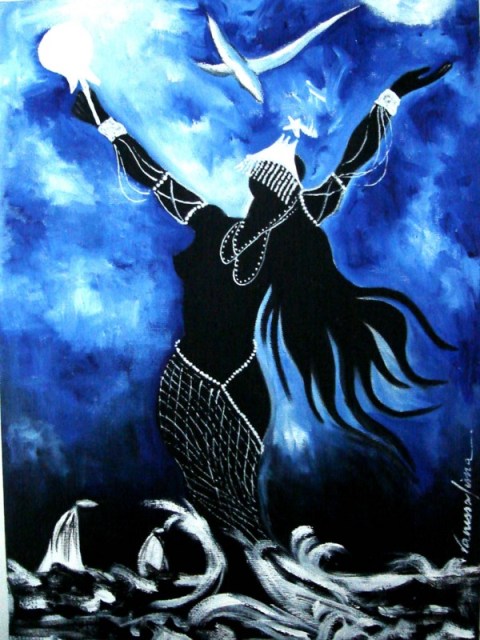
Audre Lorde
De la Casa de Iemanjá
*
Mi madre tenía dos caras y una cacerola
donde cocinó dos hijas y las
hizo hembras
antes de cocinar nuestra cena.
Mi madre tenía dos caras
y una cacerola rota
donde escondió una hija perfecta
que no era yo
yo soy el sol y la luna y por siempre
hambrienta de su mirada.
*
Yo llevo dos mujeres en mi espalda
una oscura y rica y oculta
en el marfil sedienta de la otra
madre
pálida como una bruja
pero constante y familiar
me trae pan y terror
en mi sueño
sus pechos son inmensos y fascinantes
anclas en la tormenta nocturna.
*
Todo esto ha existido
antes
en la cama de mi madre
el tiempo no tiene sentido
no tengo hermanos
y mis hermanas son crueles.
*
Madre necesito
madre necesito
madre necesito tu negritud ahora
como la tierra augusta necesita la lluvia.
*
Yo soy
el sol y la luna y por siempre hambrienta
la afilada orilla
donde el día y la noche se encuentran
y no ser
una.
*
*
Traducción del inglés al español: Lidia García Garay
* * *
Audre Lorde
From the House of Yemanjá
*
My mother had two faces and a frying pot
where she cooked up her daughters
into girls
before she fixed our dinner.
My mother had two faces
and a broken pot
where she hid out a perfect daughter
who was not me
I am the sun and moon and forever hungry
for her eyes.
*
I bear two women upon my back
one dark and rich and hidden
in the ivory hungers of the other
mother
pale as a witch
yet steady and familiar
brings me bread and terror
in my sleep
her breasts are huge exciting anchors
in the midnight storm.
*
All this has been
before
in my mother’s bed
time has no sense
I have no brothers
and my sisters are cruel.
*
Mother I need
mother I need
mother I need your blackness now
as the august earth needs rain.
I am
*
the sun and moon and forever hungry
the sharpened edge
where day and night shall meet
and not be
one.
*
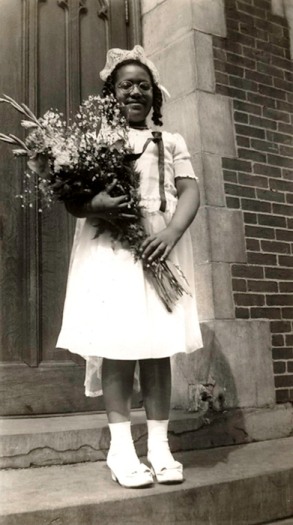
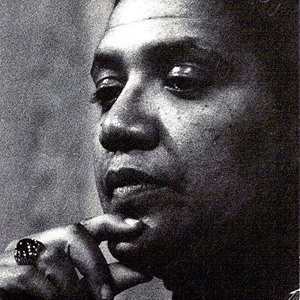
A Tenacious Light: poems by Dionne Brand
Posted: July 1, 2012 Filed under: Dionne Brand, English | Tags: Black lesbian poets Comments Off on A Tenacious Light: poems by Dionne Brand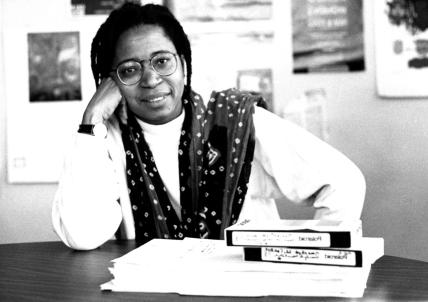
I saw this woman once in another poem, sitting,
throwing water over her head on the rind of a country
beach as she turned toward her century. Seeing her
no part of me was comfortable with itself. I envied her,
so old and set aside, a certain habit washed from her
eyes. I must have recognized her. I know I watched
her along the rim of the surf promising myself, an old
woman is free. In my nerves something there
unraveling, and she was a place to go, believe me,
against gales of masculinity but in that then, she was
masculine, old woman, old bird squinting at the
water’s wing above her head, swearing under her
breath. I had a mind that she would be graceful in me
and she might have been if I had not heard you
laughing in another tense and lifted my head from her
dry charm.
*
You ripped the world open for me. Someone said this
is your first lover you will never want to leave her. My
lips cannot say old woman darkening anymore, she
is the peace of another life that didn’t happen and
couldn’t happen in my flesh and wasn’t peace but
flight into old woman, prayer, to the saints of my
ancestry, the gourd and bucket carrying women who
stroke their breast into stone shedding offspring and
smile. I know since that an old woman, darkening,
cuts herself away limb from limb, sucks herself white,
running, skin torn and raw like a ball of bright light,
flying, into old woman. I only know now that my
longing for this old woman was longing to leave the
prisoned gaze of men.
_____
Dionne Brand was born in Trinidad in 1953
and graduated from University of Toronto in 1975.
She is Black, Lesbian, Feminist – three powerful things.
Toronto’s Poet Laureate, she is also the 2011 winner of
The Griffin Poetry Prize for her long poem Ossuaries.
The companion poems above are excerpted from
Brand’s series “Hard against the Soul”, part of
her collection No Language is Neutral.
© 1990, Dionne Brand
_____
This is a ZP post originally dated August 31st, 2011.
We re-post it today, July 1st, 2012, as part of our survey of gay and lesbian poets.
Andy Quan: “Quiet and Odd”
Posted: July 1, 2012 Filed under: Andy Quan, English Comments Off on Andy Quan: “Quiet and Odd”Andy Quan (born 1969, Vancouver, British Columbia)
Quiet and Odd
Darren Lee and I were superstars, unafraid to swing
from the highest branch of his backyard’s gnarled
apple tree, we terrorized insects, older
high-school kids, made snarky remarks about
Mrs. Kopinski in the corner house simply because
we could. We sang: Jesus Christ /
Superstar / Who in the hell do you think you are.
*
“What a shame,” adults told us. We couldn’t speak
our ancestral language. Nor could our mothers! Tell
them they’ve lost their heritage. What’s the use anyway
of those clattery loud towers of nine tones, building
blocks flung at you in too bright colours?
*
Besides, we were not Bennett Ho whose mother
banned him from sex-education class, not Adrian
Tong with his rice-bowl haircut (the fringe swinging
round his head like a carousel of animals). Brian Tom
not yet into his teens expected only bad things in life
so as never to be disappointed. Not Jacob Chiu
whose Mom shaved his skull, everyone wanted to
feel its tiny combs against their fingers. Dominic
Kong was certainly not us, he told people he didn’t
know Chinese but who could follow his broken
English? Definitely not Joseph Fong who stepped
in dog poop and didn’t care, the playground
suddenly the Titanic sinking, passengers wailed
ABANDON SHIP!
It wasn’t just that they were odd.
They were quiet boys. Not like us, nails on chalk
boards, fire drill alarms: when my voice broke
I couldn’t even whisper without getting in trouble.
We reckoned their tongues got caught on the way
out of their mouths like jackets on doorknobs
as they rushed outside, their mothers calling them
back to do their homework, mind their grandmothers,
though even they’d pretend they couldn’t hear
or understand whatever language shouted after them.
© 2007 Andy Quan
From his collection “Bowling Pin Fire”, published by Signature Editions, Winnipeg, Manitoba
_____
Andy Quan, born in Vancouver, now lives in Sydney, Australia – and lived in Toronto in 1993–94. He’s 3rd generation Chinese-Canadian and 5th generation Chinese-American with roots in the villages of Canton. He is the author of four books. Calendar Boy’s short stories included many that addressed the intersection of sexuality and race for gay asian protagonists. Six Positions: Sex Writing is a collection of gay erotic fiction. Slant and Bowling Pin Fire are Quan’s two books of poetry. His writing has been published in a wide variety of literary journals and anthologies around the world. These days, he works as an editor and a copywriter and can be visited at http://www.andyquan.com.
*
The poet reflects upon “Quiet and Odd”:
“Much of my poetry has been autobiographical story-poems. I used writing as a way to locate myself in the world, and to share those experiences with others – though received good advice along the way that a story is not enough, the language needs to be energized and engaging. Though ‘Quiet and Odd’ seems straightforward, I think it requires quite a bit from readers: an ability to understand a multicultural society, to imagine the experiences of those born in countries of different cultural backgrounds and skin colour, but then to delve deeper into the way these experiences may affect how people move and present to the world. It’s a very understandable Canadian poem, but does it work in countries with much less immigration and cultural diversity?”
Saeed Jones: Cracking all of the “names” open
Posted: July 1, 2012 Filed under: English, Saeed Jones | Tags: Black gay poets Comments Off on Saeed Jones: Cracking all of the “names” open
Saeed Jones (USA)
Sleeping Arrangement
I
I’ve decided to let you stay
under our bed, the floor –
not the space between
mattress and metal frame.
Take your hand out
from under my pillow, please.
And take your sheets too.
Drag them under. Make pretend ghosts.
I can’t have you rattling the bed springs
so keep still, keep quiet.
Mistake yourself for shadows.
Learn the lullabies of lint.
II
I will do right by you:
crumbs brushed off my sheets,
white chocolate chip, I think,
or the corners of crackers.
Count on the occasional dropped grape,
a peach pit with fine yellow hairs,
wet where my tongue has been,
a taste you might remember.
I’ve heard some men can survive
on dust mites alone for weeks at a time.
There’s a magnifying glass on the nightstand,
in case it comes to that.
. . .
Obviously, I was meant to be a gazelle
When grandpa growled at the dinner table, I wanted to leap into a sprint.
Gazelles did that sort of thing when startled. They leaped
into mid-air like sprung mousetraps, and then they were nothing
but brown blurs cutting across the plains.
Sometimes the gazelle in me would try to sprint in spite of myself,
but my bow legged and awkward bones kept me at a steady jog.
I would run back and forth across the backyard for hours.
This was Memphis. There were lions behind every oak and chain link fence.
One day, I was running around the backyard, alone as usual,
when a gun went off in the distance. The sound echoed off the house.
I stood in the middle of the yard, perfectly still,
still enough to blend into the grass. It was a rough neighborhood.
Guns seemed to be going off all the time.
When my grandma heard the shot, she rushed outside
and stopped on the porch. For a moment, she looked at me
as if I had been shot. I answered her stare by running off.
. . .
Saeed Jones grew up in Memphis, Tennessee, and now lives in New York City.
He has an MFA from Rutgers University in New Jersey.
A 2011 nominee for the Pushcart Prize, Jones comments:
“The question of whether I’m a gay poet who happens to be black or a black poet who happens to be gay, or a poet who argues that such things as “blackness” and “gayness” need not proceed my nouns is just one that I — almost literally — enjoy dancing with. It troubles my waters; it keeps me questioning my self/selves; these days all I have are my questions…Or maybe it’s just easier to debate gay/black and black/gay poems rather than to write the poems themselves. Or maybe I want to crack all of the “names” open!”
. . . . .
David Kato Kisule: “A luta continua…” / “The struggle continues…”
Posted: July 1, 2012 Filed under: English, Joseph Ross Comments Off on David Kato Kisule: “A luta continua…” / “The struggle continues…”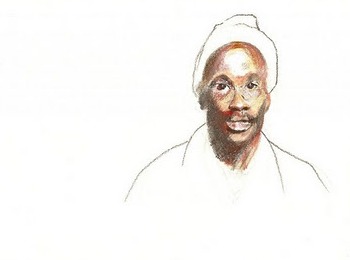
Joseph Ross
For David Kato: a Love Poem
Because my kisses are tender
against your throat.
_
Because my lips are not the steel hammer
that snaps your neck
_
in the places God has kissed.
Because my hands beg
the muscles of your back
_
pleading and massaging
what a blind man with a Bible
would shove to the floor.
_
Because your tongue slides
against mine, two wet bodies
_
inside our bodies, as close
as lips, as torn skin, as flame.
_
Because you dared to breathe
air you would later gasp against
_
my sweating chest, our bodies
lie braided in love’s water.
_
Because truth is only intimate
with other truths,
_
this love poem does not lie
on the floor of your living room
_
where you leak like a true man,
irrigating the Ugandan dirt
with blood it does not deserve.
_____
David Kato Kisule (1964 -2011) was a Ugandan teacher who became a gay and lesbian human-rights activist ten years ago. In 2010 he gave up his teaching job to focus on Rights work 100 percent. In October of the same year, “Rolling Stone”, a Ugandan tabloid newspaper, printed an inflammatory article accusing gays of “recruiting” children, and it published names, photographs and even some addresses of 100 Ugandan “Homos”, calling for their execution – “Hang them!” The Ugandan government recently had tabled The Anti-Homosexual Bill, encouraged by Ugandan Evangelical Christians and their American allies abroad. The bill is draconian and includes the death-penalty for “aggravated homosexuality” or 14 years imprisonment for “the offence of homosexuality”. Kato’s murder in January 2011 brought international media attention to the situation in Uganda for sexual minorities and passage of The Anti-Homosexual Bill has been stalled. U.S. President Barack Obama stated: “David showed tremendous courage in speaking out against hate. He was a powerful advocate for fairness and freedom.”
*
Lesbian poet Audre Lorde once wrote: “When I dare to be powerful, to use my strength in the service of my vision, then it becomes less and less important whether I am afraid.” David Kato could’ve been afraid and he might’ve left Uganda for countries where life is easier — given the danger he was under. But he stayed. He was Ugandan, he was Kuchu (Ugandan derogatory slang for Gay); he knew where he was from and to whom he belonged.
*
Joseph Ross is a Pushcart Prize-nominated poet whose poems have appeared in many anthologies, including “Collective Brightness: LGBTIQ Poets on Faith, Religion and Spirituality”. He is Director of the Writing Center at Carroll High School in Washington, D.C., USA.
Translating Poetry: a Creative Challenge / Traduciendo Poesía : Un Desafío a la Creatividad
Posted: May 30, 2012 Filed under: Elsa Burgos Alonso, Encarnación de Armas, English, Nuvia Estévez Machado, Spanish, ZP Translator: Alexander Best, ZP Translator: Lidia García Garay Comments Off on Translating Poetry: a Creative Challenge / Traduciendo Poesía : Un Desafío a la Creatividad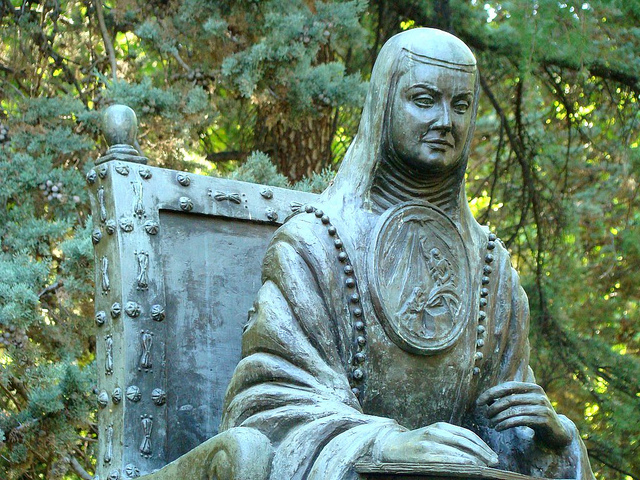
Translating Poetry: a Creative Challenge
The Décima is a Spanish poem form consisting of ten rhyming lines. It is credited to Vicente Martinez de Espinel (1550-1624), who based it on the forms of mediaeval Spanish ballads. Sometimes called The Espinela, it has been popularized in Puerto Rico with a rhyme pattern of ABBAACCDDC and each line contains 8 syllables. In Puerto Rico it was often sung by singer-poets who were jíbaros (peasants).
We have translated a selection of décimas by Cuban decimeras (women who write décimas). Some of the poems are hermetic and not as straightforward as traditional décimas – yet they somehow respect the tradition as well.
There is the skill of translation – there is also the art of translation. It is easier to achieve the former than the latter This is tough stuff! Some translators that we have noticed on the Internet do work that is enthusiastic but sloppy. But translators in heavy leather-bound books may do the same. An example is Peter H. Goldsmith, who, in 1920, translated Juana Inés de la Cruz’s famous poem: “Arguye de Inconsecuentes el Gusto y la Censura de los Hombres que en las Mujeres acusan lo que causan”. Goldsmith was true to the original’s rhythm and rhyme but he was not faithful to the poet’s meaning – even the final, intense quatrain (#17) went mysteriously missing.
There is an Italian saying: “Translator…Traitor !”. While we do not agree with such an extreme statement, still it is true that it’s difficult to get a translation 100% right. Translator Myralyn F. Allgood wrote: “It has been said – obviously by a man – that translated poetry is rather like a beautiful woman: if she’s beautiful she’s not faithful, and if she’s faithful she’s not beautiful.” Yet another provocative generalization…
But when you translate a poem and you know you’ve done your best work – you’ve been faithful to the meaning, captured the spirit, and even made it sound fresh – well, there is nothing like that good feeling!
*
Traduciendo Poesía : Un desafío a la Creatividad
La Décima es una forma de poesía en español que consiste de diez líneas que riman. La creación de la décima se le atribuye a Vicente Martinez de Espinel (1550-1624), quien la basó en la forma de baladas españolas medievales. Algunas veces llamada La Espinela, ha sido popularizada en Puerto Rico con un patrón rítmico de ABBAACCDDC y cada línea contiene ocho sílabas. En Puerto Rico era cantada comúnmente por cantantes y poetas jíbaros (campesinos).
Nosotros hemos traducido una selección de décimas de decimeras cubanas, quienes escriben décimas, de una forma más hermética y no exactamente como la forma tradicional – y aún así de alguna manera se apegan a ella.
En la Traducción hay destreza técnica– y también existe el arte de la Traducción. Es más fácil adquir la primera que la segunda. Hemos visto el trabajo de algunos traductores en la internet que se nota están hecho con mucho entusiasmo, pero malhecho. Y traductores en libros de tapa dura de cuero pueden hacer lo mismo. Un ejemplo de esto es Peter H. Goldsmith, quien en 1920 tradujó el famoso poema de Juana Inéz de la Cruz : « Arguye de Inconsecuentes el Gusto y la Censura de los Hombres que en las Mujeres Acusan lo que Causan ». La traducción de Goldsmith es fiel al texto original en ritmo y rima pero no es fiel al significado del poema—aún el final, la cuartilla #17, ha desaparecido misteriosamente.
Hay un dicho italiano que dice : « ¡Traductor – traidor !». A pesar que no estamos de acuerdo con esta declaración tan extrema, todavía es verdad que es difícil hacer la traducción de un poema 100% exacta. La traductora Myralyn F. Allgood escribió : « Ha sido dicho – obviamente por un hombre – que la poesía traducida es como una mujer bella : si ella es bella no es fiel, y si ella es fiel no es bella. » Otra generalización que nos da en que pensar…
Pero cuando se traduce un poema y usted sabe que ha hecho el mejor trabajo posible—usted ha sido fiel al significado, ha captado el espíritu del texto y aún lo ha hecho lucir flamante—bueno, entonces ¡no hay sentimiento que se compare!
__________
THREE CUBAN ” DECIMERAS ” / TRES DECIMERAS CUBANAS
Nuvia Estévez Machado (born/nace 1971)
Sometimes
I don’t understand
my thorny identity
sometimes I’m the morphine
of the “nutbars” I’m the thunder
weak lust the horrific
dirty water of the fish
wet earth reversals
I’m a mutilated dog
Lucifer in love
Sometimes
only sometimes.
_____
A veces
Yo ni me entiendo
esta indentidad de espina
a veces soy la morfina
de los locos soy estruendo
pobre lujuria lo horrendo
agua sucia de los peces
tierra mojada reveses
Soy un perro mutilado
Lucifer enamorado
Sólo a veces
sólo a veces.
_____
Tie her up
tie up the crazy woman, come,
She undresses and bites all
who mocked the twists
of her destiny Be
fair Stop
her anger her pranks
Bind tight her craziness
Knees, hips,
Legs – savage beasts –
But let her waist be free.
_____
Amarren
La loca vengan
se desnuda y muerde a todos
los que burlaron los modos
de su destino Mantengan
ecuanimidad Detengan
su rabieta su diablura
Aten fuerte su locura
las rodillas las caderas
los muslos – salvajes fieras –
Pero suelten su cintura.
_____
That one
Who was my canary
my toy my serenity
who was blind
when I taught him the alphabet
That one who was my rosary,
he counted glory
he who rolls without memory
him of the dirty shirt
he who hates by a smile
– that one will die without history.
_____
Ese
Que fue mi canario
mi juguete mi sosiego
a ese que cuando era ciego
enseñé el abecedario
Ese que fue mi rosario
donde contaba la gloria
el que rueda sin memoria
el de la sucia camisa
el del odio por sonrisa
ese fallecerá sin historia.
_____
It’s True
I’m the happy whore
the melancholic
a fearsome one, an idyllic one,
who grumbles and enjoys herself
It’s true I’m the one spits
my tongue upon your brains
drowning in excesses
she who howls
who barks at your flesh
she who tears at it
I’m the one bites your bones.
_____
Es verdad
Yo soy la puta
la feliz la melancólica
la temible la bucólica
quien se lamenta y disfruta
es verdad soy la que esputa
la lengua sobre tus sesos
la que se ahoga en excesos
quien ladra sobre tu carne
la que aúlla la que escarne
Soy la que muerde tus huesos.
_____
Requiem for the Crow
Oh death, arrive early and
bring an axe and a scythe
bring the mockery, the discord
Come my friend bring your hand
with which to break the mysterious
heart strike a wooden blow with a cross
ways of sleeping on my back
do not deceive me, come soon,
heal this orphanhood Don’t die.
_____
Réquiem por el cuervo
Oh muerte llega temprano
trae el hacha y la guadaña
trae la burla y la cizaña
ven amiga trae la mano
con que rompes el arcano
corazón Trae de maderas
un golpe de cruz maneras
de dormir sobre mi espalda
no engañes ven pronto salda
esta orfandad No te mueras.
_____
Elsa Burgos Alonso (born/nace 1945)
Homily
Split in two, borderless
An island in a high-tide of pain
I find no way of loving
These treacherous voices.
Homily of the beasts
That today vents forth in me
The dawn spins toward you
In a swift crystal I look for shoulders
Where one conceals the rubble
The bones and the dust I yield.
_____
Homilía
Desdoblada, sin fronteras
dolor de isla en pleamar
no encuentro forma de amar
a esas voces traicioneras.
Homilía de las fieras
que hoy se desfogan en mi
El alba gira hacia ti
en raudo cristal busco hombros
donde esconder los escombros
hueso y polvo que cedí.
_____
Encarnación de Armas (born/nace 1933)
Amor lejano (acróstico)
Amor, no sé si de amarte
Muero a solas cada día,
O nazco por la agonía
Repetida de esperarte.
La distancia se reparte
Entre tu adiós y mi beso
Junto a la duda que expreso
A veces, cuando te evoco,
No sé si olvidarte un poco
O soñar con tu regreso.
_____
Far-off Love (an acrostic poem)
From loving you: don’t know if that’s Love,
Alone I die each day.
Repeated agony of waiting for you –
Oh, I am born through this.
From the distance that spreads between your
Farewell and my kiss, these joined to the doubt
Left over from times when I evoke you –
Oh, I don’t know. Am I forgetting you just a
Very little bit? Or do I dream –
Even of your return?
_____
Traducciones / Translations: Lidia García Garay, Alexander Best
Alfonsina Storni y Karla Báez: Buscamos Mujeres que tengan alas para volar / We seek Women with wings who just might fly
Posted: May 25, 2012 Filed under: Alfonsina Storni, English, Karla Báez, Spanish, ZP Translator: Alexander Best Comments Off on Alfonsina Storni y Karla Báez: Buscamos Mujeres que tengan alas para volar / We seek Women with wings who just might fly
Today there takes place in Toronto a loud, serious and fun march of women – and their friends – from City Hall to Queen’s Park, the provincial legislature. The march goes by the provocative name Slut Walk. The first Slut Walk took place in April 2011 – and its destination was Toronto police headquarters – after remarks made by a police constable addressing female law students at a crime prevention forum at York University. The officer said: “Women should avoid dressing like sluts in order not to be victimized.” By ‘victimized’ he meant ‘raped’. The comment caused a furor in a city that wishes to see itself as progressive. It seemed the ‘same-old same-old’ sexist bullshit was alive and well. Feminism in Canada has often slipped under the popular radar in the past twenty five years – one generation – and advertisement images of women’s bodies – sometimes without heads – are used to sell everything. Everybody – and he’s often male – has got a hard opinion or a strict belief about what’s acceptable and what’s “asking for it” (“it” meaning rape) when it comes to what a woman ought to wear and how/when/why she’s walking down the street.
Like the Take Back the Night marches of the 1970s and 1980s – organized by women angered that police kept telling them to “stay inside at night so you’ll be safe” – the Slut Walk brings those same fundamental concerns into the 21st century. Though there is debate and reasoned opposition among women about the choice of name – Slut Walk – slut being a thorny word that can draw blood and may or may not be able to be “reclaimed” (queer, bitch, and nigger are three other examples) – there is also plenty of chutzpah and a healthy “Fuck you!” attitude in that name, too. Slut Walks have been organized in Argentina, India and South Africa, as well.
A placard seen at the first Slut Walk captures with simple intelligence one of the march’s aims:
“No means No, Yes means Yes – wherever we go, however we dress.”
*
We feature Spanish-language poems by two female poets, one from 1930s Argentina, the other from 21st-century México. The first poet, Alfonsina Storni, writes in proto-feminist fashion about the vain possessiveness of men, also about their hypocrisy (the “experienced” man wants a “pure” woman). Storni’s poem, “You want me white”, is a kind of spiritual descendant of Mexican nun Juana Inés de la Cruz’s 17-quatrain poem which begins with the phrase: “Hombres necios que acusáis a la mujer sin razón…”.
The second poet, Karla Báez, is full of passionate idealism – and energy for Change.
* * * * *
Alfonsina Storni (poetisa argentina / Argentinian poet, 1892-1938)
Hombre Pequeñito
Hombre pequeñito, hombre pequeñito,
suelta a tu canario que quiere volar.
Yo soy el canario, hombre pequeñito,
déjame saltar.
*
Estuve en tu jaula, hombre pequeñito,
hombre pequeñito que jaula me das.
Digo pequeñito porque no me entiendes,
ni me entenderás.
*
Tampoco te entiendo, pero mientras tanto,
ábreme la jaula que quiero escapar.
Hombre pequeñito, te amé media hora,
no me pidas más.
_____
Little wee man
Little wee man, little wee man,
Release your canary that wants to fly.
I’m that canary, you little wee man,
Let me jump.
*
I was in your cage, little wee man,
Little wee man who incarcerates me.
I call you “wee little” because you
don’t understand me – nor will you, ever.
*
Nor do I understand you…but in the meantime,
Open the cage – I want to escape.
Little wee man, I loved you a mere hour,
Ask of me no more.
_____
Tú me quieres blanca
Tú me quieres alba,
Me quieres de espumas,
Me quieres de nácar.
Que sea azucena
Sobre todas, casta.
De perfume tenue.
Corola cerrada
Ni un rayo de luna
Filtrado me haya.
Ni una margarita
Se diga mi hermana.
Tú me quieres nívea,
Tú me quieres blanca,
Tú me quieres alba.
*
Tú que hubiste todas
Las copas a mano,
De frutos y mieles
Los labios morados.
Tú que en el banquete
Cubierto de pámpanos
Dejaste las carnes
Festejando a Baco.
Tú que en los jardines
Negros del Engaño
Vestido de rojo
Corriste al Estrago.
Tú que el esqueleto
Conservas intacto
No sé todavía
Por cuáles Milagros.
*
Me pretendes blanca
(Dios te lo perdone),
Me pretendes casta
(Dios te lo perdone),
¡Me pretendes alba!
*
Huye hacia los bosques,
Vete a la montaña;
Límpiate la boca;
Vive en las cabañas;
Toca con las manos
La tierra mojada;
Alimenta el cuerpo
Con raíz amarga;
Bebe de las rocas;
Duerme sobre escarcha;
Renueva tejidos
Con salitre y agua;
Habla con los pájaros
Y lévate al alba.
Y cuando las carnes
Te sean tornadas,
Y cuando hayas puesto
En ellas el alma
Que por las alcobas
Se quedó enredad…
– entonces, buen hombre,
Preténdeme blanca,
Preténdeme nívea,
Preténdeme casta.
_____
You want me white
You want me to be the dawn
You want me made of seaspray
Made of mother-of-pearl
That I be a lily
Chaste above all others
Of tenuous perfume
A blossom closed
That not even a moonbeam
Might have touched me
Nor a daisy
Call herself my sister
You want me like snow
You want me white
You want me to be the dawn
*
You who had all
The cups before you
Of fruit and honey
Lips dyed purple
You who in the banquet
Covered in grapevines
Let your flesh go
Celebrating Bacchus
You who in the dark
Gardens of Deceit
Dressed in red
Ran towards Destruction
You who maintain
Your bones intact
Only by some miracle
Of which I know not
You ask that I be white
(May God forgive you)
You ask that I be chaste
(May God forgive you)
You ask that I be the dawn!
*
Flee towards the forest
Go to the mountains
Clean your mouth
Live in a hut
Touch with your hands
The damp earth
Feed yourself
On bitter roots
Drink from the rocks
Sleep on the frosty ground
Clean your clothes
With saltpeter and water
Talk with the birds
*
And set sail at dawn
And when your flesh
Has returned to you
And when you have put
Into it the soul
That via bedrooms
Became twisted and tangled…
– then, good man,
Ask that I be white
Ask that I be like snow
Ask that I be chaste.
_____
Karla Báez (nace/born 1977, México, D.F./ México City)
Llamada de Auxilio
Cruza la noche
un grito desgarrado,
…duele más el silencio,
ante la voz de la ira…
No me volverás a tocar,
ni con golpes ni palabras.
¿Duele verdad? Lo sé,
yo también fui tu víctima.
_____
A Call for Help
Crisscrossing the night,
A piercing cry.
Silence hurts more,
before the voice of rage…
You will not touch me again,
Neither with punches nor with words.
Does the truth hurt? I know it;
I too was your victim.
_____
Busco Mujeres
Busco Mujeres,
que sean sensibles ante la injusticia,
Busco Mujeres,
que luchen por sus ideales.
Busco Mujeres,
que se harten de las mentiras,
de los golpes, de la violencia.
Busco Mujeres
que no sean indiferentes
al dolor de la gente.
Busco Mujeres
que tengan alas para volar.
_____
I seek Women
I seek Women,
who can be aware of injustice,
I seek Women,
who can struggle for their ideals.
I seek Women,
who are fed up with all the lies,
the blows – the violence.
I seek Women
who cannot be indifferent
to people suffering.
I seek Women
who might have wings – women who will fly.
_____
Traducción del español al inglés / Translations from Spanish into English
(“Little wee man”, “A Cry for Help”, “I seek Women”): Alexander Best
Le pizzazz de Josephine Baker: “Si J’étais Blanche” / Josephine Baker’s pizzazz: “If I were White”
Posted: May 21, 2012 Filed under: English, French, ZP Translator: Alexander Best Comments Off on Le pizzazz de Josephine Baker: “Si J’étais Blanche” / Josephine Baker’s pizzazz: “If I were White”
Si J’étais Blanche (1932)
Je voudrais être blanche
Pour moi quel bonheur
Si mes seins et mes hanches
Changent de couleur
*
Les Parisiens à Juan-les-Pins
Se faisaient gloire
Au soleil d’exposer leurs reins
Pour être Noires
*
Moi pour être blanche
J’allais me roulant
Parmi les avalanches
En haut du Mont Blanc
*
Ce stratagème
Donne un petit rigole
J’avais l’air dans la crème
D’un petit pruneau
*
Étant petite, avec chagrin,
J’admirais dans les magasins
La teinte pâle de poupées blondes
J’aurais voulu leur ressembler
Et je disais à l’air accablé
Me croyant toute seule brune au monde
*
Moi, si j’étais Blanche
Sachez que mon bonheur
Qui près de vous s’épanche
Garderait sa couleur
*
Au soleil c’est par l’extérieur
Que l’on se dore
Moi c’est la flamme de mon cœur
Qui me colore
*
Et si ma figure
Mon corps sont brunis
C’est parce que la nature
Me voulait ainsi
*
Mais je suis franche,
Dites-moi, Messieurs:
Faut-il que je sois Blanche
Pour vous plaire mieux ?
_____
If I were White (1932)
I’d like to be White
What a joy it would be
If my breasts and my thighs
Changed colour for me
*
The Parisians at * Juan-les-Pins
Grant themselves glory,
Get sun on their backs
So they can be Blacks
*
To make myself White
I went to the Alps
And rolled in an avalanche
At the peak of ** Mont Blanc
*
My strategy
Played a joke on me
– I seemed like a prune
In a blanket of cream
*
As a little girl I looked with ‘chagrin’
At the blonde dolls in stores
With their pale skin
I’d’ve liked to look like them,
And I’d say, overwhelmed:
I believe I’m the only brown girl in the world.
*
Me, if I were White,
Know that my happiness,
Which next to you flows,
Would keep its hue
*
Others by the sun
Get their golden glow
But the flame in my heart
Is what colours me so
*
And if my shape
And my figure are “bronze”
It’s because Nature
Wanted me this way
*
But, gentleman, tell me,
I’m going to be frank:
To please you all better
– Must I be White?
* Juan-les-Pins – resort town with beaches in the south of France; during the 1920s the “place-to-be” for the brand-new “fad” of suntanning – popularized by wealthy Europeans and Americans
* * Mont Blanc (literally, White Mountain) is snow-capped, and is the highest mountain in Europe
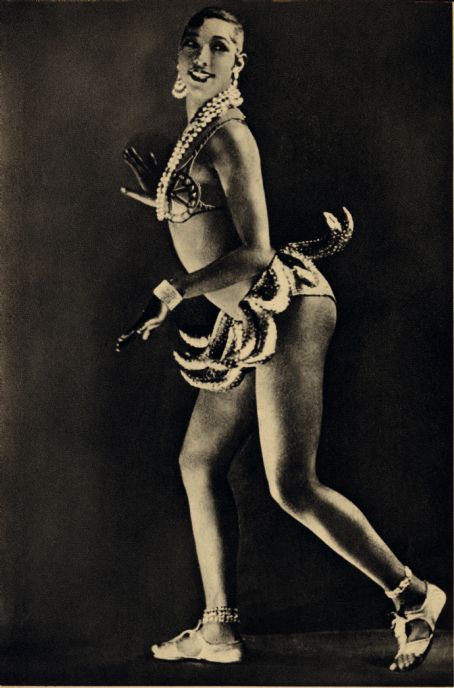
Josephine Baker (1906-1975) was born in St. Louis, Missouri, USA. She started out in near-poverty and at 12 years old she was dancing on street corners and living the life of a street child. Her birth coincided with the era of Ragtime and the evolution of Jazz – those first popular, native American musics that came out of Black-American life.
By the age of 16 – in 1921 – she’d made her way to New York City where the Harlem Renaissance was gathering steam. She worked as a dancer and chorus girl in Broadway revues. In 1925 she set out for Paris, where she became a sensation in an all-Black spectacle, La Revue Nègre. Her athletic style of dancing, her modern sexiness and humorous facial gestures were something the French had never experienced; she was a complete original.
There was a rage for all things “African” – mostly inaccurate – artifice for “exotic” effect – and impresarios tried to fit Baker into this mold. But she had so much natural joie-de-vivre, so much energy and inventiveness that she was up for all of it, and she subverted many ideas about race, gender and culture. She titillated audiences with her nudity and did the same when she wore a tuxedo and tophat with pomaded hair. Described by literary-‘macho’ Ernest Hemingway as “the most sensational woman anyone ever saw”, Baker also had love affairs with women such as Colette and Frida Kahlo. Biographer Bennetta Jules-Rosette writes: “Sidestepping the imprisonment by colonialist categories of Race through her performances, Baker transformed Race into a series of costume changes that foreshadowed the desire to be postmodern.”
She was a cheeky prankster and a clever self-promoter, using the gimmick of her pet cheetah, Chiquita – who wore a diamond collar – to enhance her “exoticism”; Baker would release the animal – an alter-ego of sorts ! – from the stage so it could go a-prowling in the orchestra pit and slinking through the theatre.
Yet the Black-American experience of her childhood – St. Louis, like many U.S. cities, was rife with segregation, Whites-Only “laws” – placed a fierceness at the core of her exuberance. Happily she became a French citizen in 1937, spied for France in Nazi-occupied Paris during World War II ( – Hitler’s belief in his “Master Race” included the exclusion of Blacks as well as Jews, and Baker’s husband during the 1940s was Jewish – ), receiving the Croix de Guerre, France’s highest honour. She adopted 12 children of different races and birth-nationalities, calling them “my Rainbow Tribe”, and raised them in a fantasy-château, realizing – in France, of all places – an oh-so-American Dream of wealth and celebrity.
Baker became fluent in her adopted country’s language, but sang also in English. We feature here one of her French “chansons” – “Si J’étais Blanche” (If I were White), from 1932 – which Baker performed in “white face”, wearing a blonde wig – an act of sophisticated minstrelsy that held up a double-mirror to the audience.
*
French-to-English translation: Alexander Best
“A cool, dark place? And dry not too dry?”: “Childhood” by Alexander Best
Posted: May 16, 2012 Filed under: Alexander Best, English Comments Off on “A cool, dark place? And dry not too dry?”: “Childhood” by Alexander Best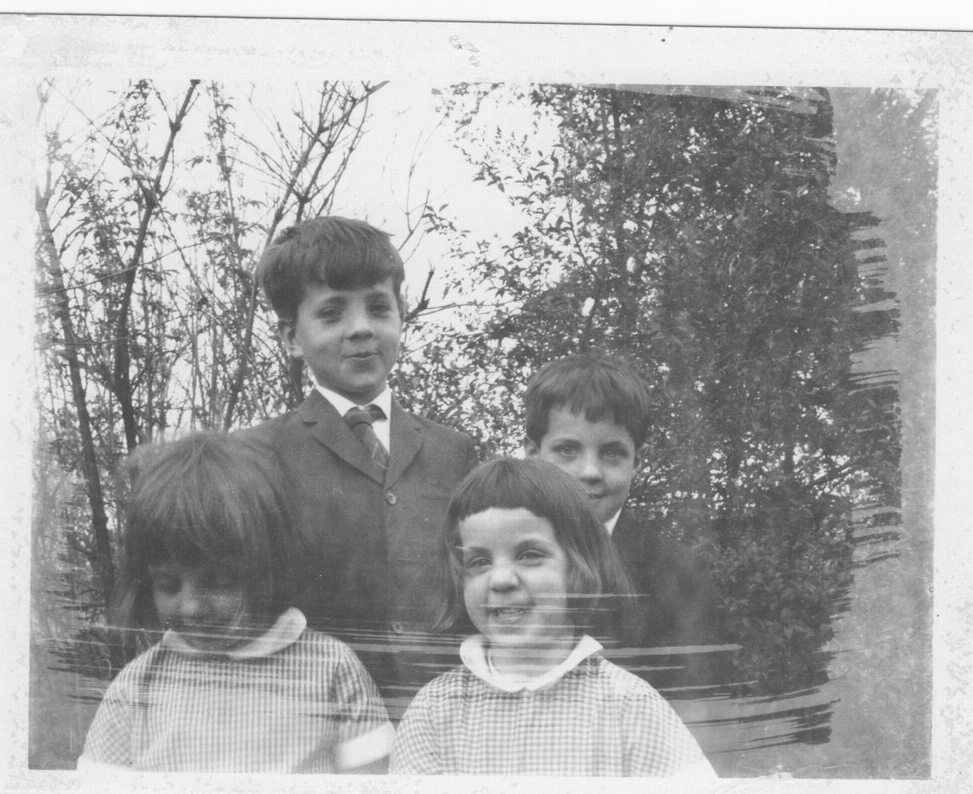
Alexander Best
CHILDHOOD
I
The rootcellar lay below my room; I’m behind that door
Where steps reached down. Dark darkened there; cool was cooler.
Second door, kitchen’s; always open, and I
Made hillocks on a saucer, of milk powder poured from a
Very large box; I licked my hand and dipped it.
Third door faced foot of the bed. It led out to
Great skies and fields with feeling-of-cliffs for corners.
The ‘dump’ that burned once also was there; the
Hawk; and the weasel, who stole under the mattress.
*
Were walls of loose stones: a ruined enclosure.
Gasoline drums; weird liquid spilling over many surfaces.
A giant bush / hands-and-knees tunnel;
Amidst everything, hidden — the centre.
*
Edible pebbles, pepperdirt pies, green blades. Poison.
Black-silk dog, growing glow-bulb mushrooms;
Stiffening; “Lady”, caught in her
Leap through shed window slamming.
And wild onions blooming…at
Brink of the forest, the tumbling path, and
Quiet and busy, the river.
II
Time’s grit-polished the bone of it; and
Time’s encrusted its core, like a little ‘geode’ cave.
Skeletalphabet. Hidden stratagem. Both
Are the poem. And it? What’s it?
Memory.
*
I am grateful now, not anxious about you, Time.
Not only sad, your passing.
III
The house (long, narrow, one-storey’d) was like segments of a warped
Hickory train, boxcars off the rails, though
Solid in some permanent aftermath.
Caboose was “the wreck room”. We kids inscribed that name
On its door: the
End of the dim corridor, where light startled.
Room’s air was bright; on warm
Days, an excellent afternoon place; magnetic / ignored.
An atmosphere also of
Cold storage there; of business interrupted, left at that.
Mechanical typewriter
( black-and-red ribbon spooled off, on, in raggéd use);
Onionskin-carbonsheets, dwindled paper; brittle pencil leads. And
Me up on the shelves: files, farm / trade journals, and a
heedless-someone’s bulletins.
Upright piano, painted bandage colour, stood somewhere…
Did we carve the entire alphabet on its
Ivory-like-an-old-man’s-toe keys?
We did.
And we lifted “the lid”, strummed harp wires with
Knives, and a rusty letter opener got
Brandished.
*
“The wreck room” had an outside door; its stone stoop
Jumping-off point for hundred-acre adventures in world-wide
Solitude. Society was: voices in our heads.
My sisters, mute; my brother, whereabouts uncertain; my father?
A Christmas tree that refused to stand / the telephone high
Upon the wall I couldn’t grasp in time; my mother?
*
“The wreck room” contained a ‘picture window’…
Picture was jumble of trees obscurrying on a drop-off
Edge of the land. Once, an owl (size of a man’s fist but fluffier)
Flew into the frame, stunning itself on the glass.
And then…sunned itself on the grass. Even that night.
IV
Despairenthood…fairly-young, fresh-gone
Flowers in a whollywaterless vase.
Highborn, persistent, the sun performs its task.
Two flies frustrate themselves (sun’s a trap, between the storms);
Resolve to keep still.
Vase / its clutches of straw, scuncheoned there.
Dry-dry vase: slipped the mind’s ledge.
Boy: crept from his bed.
V ( April 1968 )
A television set has four feet, like “cattles” do; also,
Horns on it — sticks standing straight and bendy.
A television set is a radio you can see;
Sounds-box with a ‘picture window’.
Picture is jumble: something obscurrying — and no colours. A
’merican minister got murdered by a gun because he was
King of Memphis.
( Egypt is where we began, even God, and all the children
Lived under triangles. Facts are in giant books Dad left
That time he came to visit. )
Something happened with no colours: the lady crying, the
Man very tired and wet; black water came out of his body, like the
Buried spring that growed in the woods. Other
People were running, in every direction.
Department-store mannequin had no arms, no legs. It was
Tied with ropes, to the lamp-post; at the top was
No lamp.
VI
I carried a small metal box: my “lunchpail”.
Sugar-butter sandwich, and in my sister’s,
Spiders.
By the wide gravel road
Yellow schoolbus noised over to us.
Cedar swamps: a
Fairyland we passed through, where the
Strangled girl was stored, with the chipmunks;
On our way to Grade One.
Winter, the snowplough made big banks;
I stood upon them, waiting; I was
Tall.
VII
‘Acajou’ and ‘Architek’ were “cattles”; had
Their own square of earth by the shed where
Heavy bags of nugget-dogfood were kept.
Bulls were big-boned, had more
Grit than polish. And they were important;
Their liquid-gem stash was to
Purchase a future — Dad’s idea — and
The fence around them fell apart when I played on it
— ‘Acajou’ and ‘Architek’ were not pets.
Mum and Us were Dad’s chattels, but he threw himself out,
Left us lying around all over his property.
VIII
In meatier days there’d been livestock on the farm,
hogs and piglets everywhichway.
And field-armies of lilies, staked-alive, for export.
Bulb Lilies, ancientest of flowers, are
Really something when their blooms open. And for
Awhile after, too. The best part is: when they die,
They still come back, if you care for their odd-
Potato-radish ‘bodies’; let them have their quiet in
A cool, dry, dark place.
*
Soup bones get jelly, when you put them in the fridge.
Bones strike awe, after several seasons out on the ground.
My mother had a ring, in the drawer. A precious cold-gem.
She drove a great distance in a car — to the City. And
Sold the ring to the shopkeeper with his telescope eye.
I knew as well as he what things look like up close.
IX
The rootcellar lies below my room;
It’s been there since God came, ideas / shovel in tow.
Our definitions of human
Hold together, strengthen, the more He plays on us. Someday, I will
Reach down the steps. Is it
A cool, dark place? And dry not too dry? I
Believe so. Definitely, there is
No lamp. One can live in many places;
Here, too.
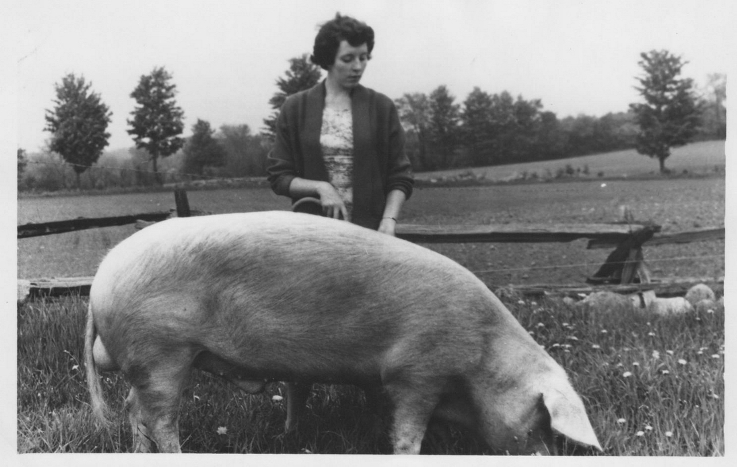
Editor’s note:
I wrote these poems when I was in my 40s, after several days of casting my mind back over my childhood, that is – my childhood up till the age of 8 – the year 1968, which was when the farm property was sold and we moved from the country (Esquesing Township, Halton County) to the city (Toronto). As children, our isolated world was both perfect and lonely; we were surrounded by “the great outdoors” yet as an un-socialized child I required much mental strength. In Toronto there began a new life for us – which included a formal end to my parents’ invisible marriage – and I had to overcome my introverted nature so as to make my first friends ever, those being kids from the rough-and-tumble world of the city.
Poem V (April 1968)
refers to the arrival of our first television set – black and white, of course – and to my first television memory – that of seeing newsreel footage of rioting in U.S. cities after the assassination of the Rev. Martin Luther King, Jr., in Memphis, Tennessee. That mannequin “lynched” to a utility pole is my first T.V. image. Others, more light-hearted, would follow – “Felix, the Wonderful Cat”, “Rocky and Bullwinkle”, etc…
Poem VII
“Their liquid-gem stash” is semen from two Charolais bulls, Acajou and Architek. Dad wished to begin an artificial insemination business since so many cows on farms were injured even crippled when bulls mounted them ‘au naturel’.
. . .
The farm was a standard 100-acre Southern Ontario farm and was located on Number 15 SideRoad, between 8th and 9th Lines, in Esquesing Township. A branch of the Credit River flowed at the north boundary of the property. Nearby Georgetown has expanded in the past 50 years, its population growing from about 10,000 people in the early 1960s to just over 40,000 people today. Consequently, the farm has vanished – the whole of it was developed as a residential subdivision during the 1990s.
. . . . .
Peter Blue Cloud: Tales and Poems of Coyote
Posted: May 15, 2012 Filed under: English, Peter Blue Cloud: Tales and Poems of Coyote Comments Off on Peter Blue Cloud: Tales and Poems of Coyote
Peter Blue Cloud
Coyote makes the First People
Coyote stopped to drink at a big lake and saw his reflection. “Now there’s a really good-looking coyote,” he said, leaning farther over.
And of course he fell in. And of course you will think this is a take-off on an old theme.
But what happened was, he drank up the whole lake to keep from drowning. And because he didn’t really like the taste of certain fish, he spat them out. And because he felt sorry when he saw them flopping around, he sang a song to give them legs.
“Maybe they’ll become the first people,” Coyote mused aloud.
“Oh no you don’t,” said the headman of that tribe of fish, “if it’s all the same with you, could you just put us back where we were? And could you please take away these stupid legs?”
So Coyote regurgitated the lake and put everything back the way it was.
Again he saw his reflection and said, “Okay, you’re pretty good-looking, but are you smart? I’ve been trying to make the first people for a long time now, but nothing wants to be people. So, what do I do – huh – can you tell me?”
His reflection studied him for a long time, then it squatted and dropped a big turd.
“Okay,” said Coyote, “I guess that’s as good an answer as any.”
Then he himself squatted and began to fashion the first people…
_____
An Arrangement
Three dried stems of grass. A horizontally branching twig of bittersweet. A single, tiny, hand-like bit of cedar bough found upon the ground.
How to place their stems within the narrow neck of a delicate, ceramic vessel?
Ah, good…But no, perhaps I should break one of the grass stems, to give a sharp downward angle, to balance the bittersweet.
But that’s manipulation, isn’t it? Well – so’s picking them in the first place.
“We’re out of kindling,” Coyote Woman said.
Hm, cedar kindling sure makes a nice, smooth, splintering, creaking, tearing-like-jerky noise as the axe penetrates. If I close my eyes I can daydream the sound into scenes and sensations and imagine all kinds of… …
Yes, Coyote is even like this, sometimes.
_____

Coyote, Coyote, Please Tell Me
– What is a shaman?
A shaman I don’t know
anything about.
I’m a doctor, myself.
When I use medicine,
it’s between me,
my patient,
and the Creation.
*
Coyote, Coyote, please tell me – what is power?
It is said that power
is the ability to start
your chainsaw
with one pull.
*
Coyote, Coyote, please tell me – what is magic?
Magic is the first taste
of ripe strawberries, and
magic is a child dancing
in a summer’s rain.
*
Coyote, Coyote, please tell me – why is Creation?
Creation is because I
went to sleep last night
with a full stomach,
and when I woke up
this morning,
everything was here.
*
Coyote, Coyote, please tell me who you belong to?
According to the latest
survey, there are certain
persons who, in poetic
or scholarly guise,
have claimed me like
a conqueror’s prize.
Let me just say
once and for all,
just to be done:
Coyote, he belongs to none.
_____
Elderberry Flute Song
He was sitting there on a stone
at world’s end,
all was calm and Creation was
very beautiful.
There was a harmony and a wholeness
in dreaming,
and peace was a warming breeze
given by the sun.
*
The sea rose and fell
in the rhythm of his mind,
and stars were points of thought
which led to reason.
The universe turned in the vastness
of space like a dream,
a dream given once and carried
forever as memory.
*
He raised the flute to lips
sweetened by springtime
and slowly played a note
which hung for many seasons
above Creation.
And Creation was content
in the knowledge of music.
*
The singular note drifted
far and away
in the mind of Creation,
to become a tiny roundness.
And this roundness stirred
to open new born eyes
and gazed with wonder
at its own birth.
Then note followed note
in a melody which wove
the fabric of first life.
The sun gave warmth
to waiting seedlings,
and thus were born
the vast multitudes
from the song
of a flute.

Editor’s note:
The Coyote (“Canis latrans”) is related to the domestic dog, the wolf, and the fox – and based upon its proven adaptability to human settlement is one of the most reviled – and admired – North American animals of the last century-and-a-half.
*
And then there is Coyote…
Coyote can be Trickster, Fool, Clown – and even The Creator – in Native mythologies of North America.
Often anthropomorphic, he is energetic, slyly resourceful, full of himself, goofy, embarrassing, a total liar and completely honest.
Coyote has been compared to Prometheus in Greek mythology and Anansi in the Ashanti mythology of Ghana.
But how about the Irish Leprechaun — or Bugs Bunny ? They share a lot in common with Coyote, too.
Encounters with Coyote are often spiritually transformative for Human Beings – and he himself is neither dog nor wolf nor fox but a synthesis-in-progress, with Us thrown in just to keep it weird. Life Lessons plus earthy humour – these are Coyote’s “story”.
*
Peter Blue Cloud (Aroniawenrate) (1935 – 2011)
was a Mohawk poet and short-story-teller – of the Turtle Clan – born in Kahnawake, Mohawk Territory, (Québec, Canada).
He travelled to the west coast of the USA where he spent years as an iron-worker, logger and ranch-hand.
He participated in the craziness of Beat and Hippy cultures in the California of the early 1960s through the mid- ‘70s – learning from those amorphous “movements” yet distancing himself from their excessive self-absorption. Spending time with Maidu Elders in California, he was strengthened by their wisdom and their stories.
In 1972 his history of the 1969 Native “Occupation” of the former Alcatraz Prison/Island – “Alcatraz is not an Island” – was published. In 1975-76 – and again from 1983-85 – he wrote for and edited Akwesasne Notes, a Native journal published out of Akwesasne, New York.
He was a recipient of the American Book Award in 1981 – chosen by other writers.
 Zócalo Poets