Inspired by Yeats: contemporary poets weigh in
Posted: March 17, 2016 Filed under: English, William Butler Yeats | Tags: Poems for Saint Patrick's Day Comments Off on Inspired by Yeats: contemporary poets weigh in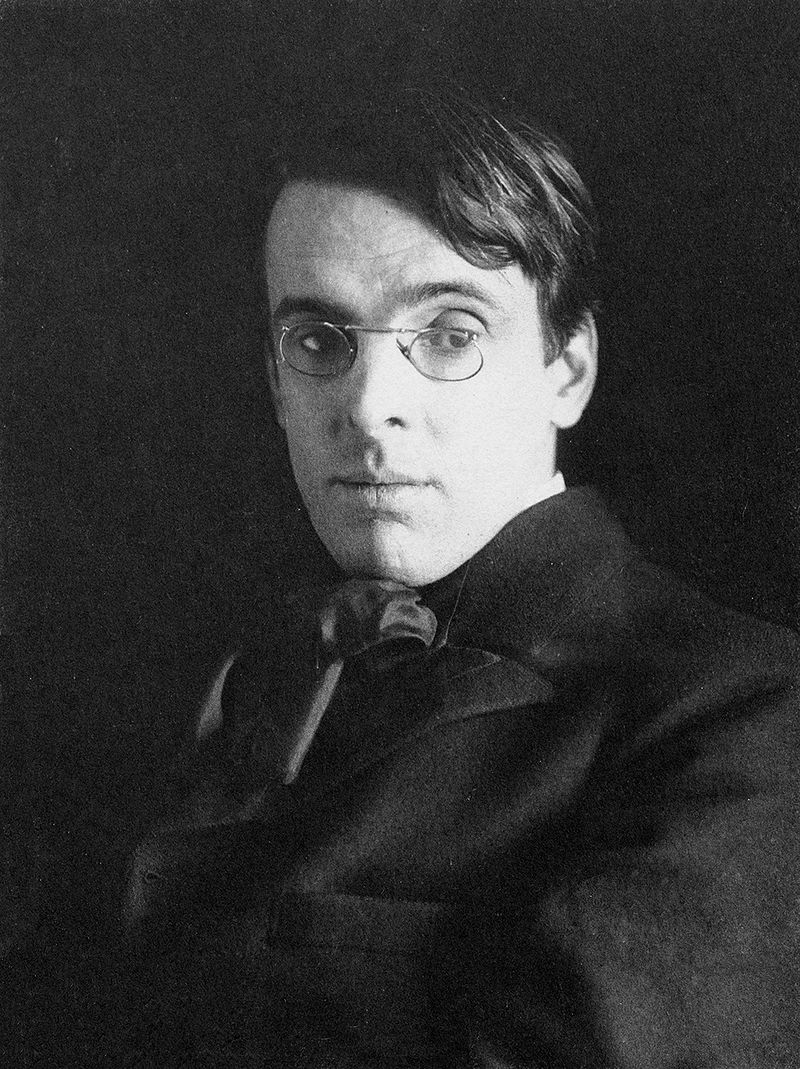
William Butler Yeats, age 38_December 1903_portrait by Alice Broughton
.
William Butler Yeats (1865-1939)
Hound Voice
.
Because we love bare hills and stunted trees
And were the last to choose the settled ground,
Its boredom of the desk or of the spade, because
So many years companioned by a hound,
Our voices carry; and though slumber-bound,
Some few half wake and half renew their choice,
Give tongue, proclaim their hidden name: ‘Hound Voice.’
.
The women that I picked spoke sweet and low
And yet gave tongue. ‘Hound Voices’ were they all.
We picked each other from afar and knew
What hour of terror comes to test the soul,
And in that terror’s name obeyed the call,
And understood, what none have understood,
Those images that waken in the blood.
Some day we shall get up before the dawn
And find our ancient hounds before the door,
And wide awake know that the hunt is on;
Stumbling upon the blood-dark track once more,
Then stumbling to the kill beside the shore;
Then cleaning out and bandaging of wounds,
And chants of victory amid the encircling hounds.
. . .
Margaret Atwood (born 1939)
Because We Love Bare Hills and Stunted Trees
.
Because we love bare hills and stunted trees
we head north when we can,
past taiga, tundra, rocky shoreline, ice.
.
Where does it come from, this sparse taste
of ours? How long
did we roam this hardscape, learning by heart
all that we used to know:
turn skin fur side in,
partner with wolves, eat fat, hate waste,
carve spirit, respect the snow,
build and guard flame?
.
Everything once had a soul,
even this clam, this pebble.
Each had a secret name.
Everything listened.
Everything was real,
but didn’t always love you.
You needed to take care.
.
We long to go back there,
or so we like to feel
when it’s not too cold.
We long to pay that much attention.
But we’ve lost the knack;
also there’s other music.
All we hear in the wind’s plainsong
is the wind.
. . .
William Butler Yeats
Vacillation
.
I
Between extremities
Man runs his course;
A brand, or flaming breath.
Comes to destroy
All those antinomies
Of day and night;
The body calls it death,
The heart remorse.
But if these be right
What is joy?
II
A tree there is that from its topmost bough
Is half all glittering flame and half all green
Abounding foliage moistened with the dew;
And half is half and yet is all the scene;
And half and half consume what they renew,
And he that Attis’ image hangs between
That staring fury and the blind lush leaf
May know not what he knows, but knows not grief.
III
Get all the gold and silver that you can,
Satisfy ambition, animate
The trivial days and ram them with the sun,
And yet upon these maxims meditate:
All women dote upon an idle man
Although their children need a rich estate;
No man has ever lived that had enough
Of children’s gratitude or woman’s love.
.
No longer in Lethean foliage caught
Begin the preparation for your death
And from the fortieth winter by that thought
Test every work of intellect or faith,
And everything that your own hands have wrought
And call those works extravagance of breath
That are not suited for such men as come
proud, open-eyed and laughing to the tomb.
IV
My fiftieth year had come and gone,
I sat, a solitary man,
In a crowded London shop,
An open book and empty cup
On the marble table-top.
While on the shop and street I gazed
My body of a sudden blazed;
And twenty minutes more or less
It seemed, so great my happiness,
That I was blessed and could bless.
V
Although the summer Sunlight gild
Cloudy leafage of the sky,
Or wintry moonlight sink the field
In storm-scattered intricacy,
I cannot look thereon,
Responsibility so weighs me down.
.
Things said or done long years ago,
Or things I did not do or say
But thought that I might say or do,
Weigh me down, and not a day
But something is recalled,
My conscience or my vanity appalled.
VI
A rivery field spread out below,
An odour of the new-mown hay
In his nostrils, the great lord of Chou
Cried, casting off the mountain snow,
‘Let all things pass away.’
.
Wheels by milk-white asses drawn
Where Babylon or Nineveh
Rose; some conquer drew rein
And cried to battle-weary men,
‘Let all things pass away.’
.
From man’s blood-sodden heart are sprung
Those branches of the night and day
Where the gaudy moon is hung.
What’s the meaning of all song?
‘Let all things pass away.’
VII
The Soul. Seek out reality, leave things that seem.
The Heart. What, be a singer born and lack a theme?
The Soul. Isaiah’s coal, what more can man desire?
The Heart. Struck dumb in the simplicity of fire!
The Soul. Look on that fire, salvation walks within.
The Heart. What theme had Homer but original sin?
VIII
Must we part, Von Hugel, though much alike, for we
Accept the miracles of the saints and honour sanctity?
The body of Saint Teresa lies undecayed in tomb,
Bathed in miraculous oil, sweet odours from it come,
Healing from its lettered slab. Those self-same hands perchance
Eternalised the body of a modern saint that once
Had scooped out pharaoh’s mummy. I – though heart might find relief
Did I become a Christian man and choose for my belief
What seems most welcome in the tomb – play a pre-destined part.
Homer is my example and his unchristened heart.
The lion and the honeycomb, what has Scripture said?
So get you gone, Von Hugel, though with blessings on your head.
. . .
Harry Clifton (born 1952)
Chez Jeanette
.
My fiftieth year had come and gone.
I sat, a solitary man,
In a crowded London shop…
– W.B. Yeats
.
And so do I, past fifty now,
In the gilt and mirror-glass
Of Chez Jeanette’s immigrant bar.
Wine, cassis, an overflow
Spilt on the table – marble
Like Yeats’ but more of a mess.
.
Behind the bottles on the shelf
A real, a transcendental self
Is hiding. Great Master,
Tell me, as you sat with your cup,
And grace came down like interruption,
Did these flakes of ceiling plaster
.
Also drown in your dregs?
The fallen angels, broken spirits
Told like tea-leaves, disinherited,
Sold into Egypt? Child-wives, pregnant,
Hide the future, keep it dark.
Splinter-groups of young Turks
.
Stand at the counter, arguing.
And the saucers of small change
Accumulate. The minutes, the hours,
If grace or visitation
Ever enter . . . A prostitute,
Bottom of the range,
.
Her hangdog client, middle-aged,
Go next door, to the short-time hotel.
In the hour that God alone sees,
We are all anonymities,
No-one finds us, we cannot be paged
In Dante’s Heaven, Swedenborg’s Hell
.
Or the visions of William Yeats.
And whether the hour is early or late
Or out of time, I do not know.
But for now, it comes down to this –
The marble top, the wine, cassis,
And the finite afterglow.
. . .
William Butler Yeats
The Folly of Being Comforted
.
One that is ever kind said yesterday:
“Your well-belovéd’s hair has threads of grey,
And little shadows come about her eyes;
Time can but make it easier to be wise
Though now it seems impossible, and so
All that you need is patience.”
Heart cries, “No,
I have not a crumb of comfort, not a grain.
Time can but make her beauty over again:
Because of that great nobleness of hers
The fire that stirs about her, when she stirs,
Burns but more clearly. O she had not these ways
When all the wild Summer was in her gaze.”
Heart! O heart! if she’d but turn her head,
You’d know the folly of being comforted.
. . .
Rita Ann Higgins (born 1955)
The Bottom Lash
.
One that is ever kind said yesterday:
My dearest dear,
your temples are starting to resemble
the contents of our ash bucket
on a wet day.
.
What’s with your eyelashes?
They grow more sparse by the tic tock.
Are you biting them off
or having them bitten off,
like the lovers do during intimacy
in the Trobriand islands?
.
You have no bottom lashes at all.
Personally, I wouldn’t be seen out
without my bottom lash.
A bare bottom lash is tantamount
to social annihilation.
.
A word to the wise, my dearest dear,
the next time you lamp the hedger
you might ask him to clip clop
your inner and outer nostril hairs.
It’s not a good look for a woman.
.
By the by, doteling,
I’ve noticed the veins on your neck
are bulging like billio
when a male of the species
walks into the room.
Is that a natural phenomenon
or is it a practised technique?
Up or down you’ll get no accolades for it,
nor for the black pillows
under your balding eyes.
Apart from that, my dearest dear,
your beauty is second to none.
. . .
The above poems by Atwood, Clifton and Higgins, first appeared in The Irish Times (September 2015).
For other poems by W.B. Yeats (including translations into Spanish) click on the link:
https://zocalopoets.com/2012/03/17/poems-for-saint-patricks-day-love-and-the-poet-poemas-para-el-dia-de-san-patricio-amor-y-el-poeta/
. . . . .
Cinco poetas irlandeses: Cannon, Sheehan, Níc Aodha, Ní Chonchúir, Bergin
Posted: March 17, 2016 Filed under: A FEW FAVOURITES / UNA MUESTRA DE FAVORITOS, Cinco poetas irlandeses, English, Spanish, ZP Translator: Alexander Best | Tags: Poetisas irlandesas Comments Off on Cinco poetas irlandeses: Cannon, Sheehan, Níc Aodha, Ní Chonchúir, Bergin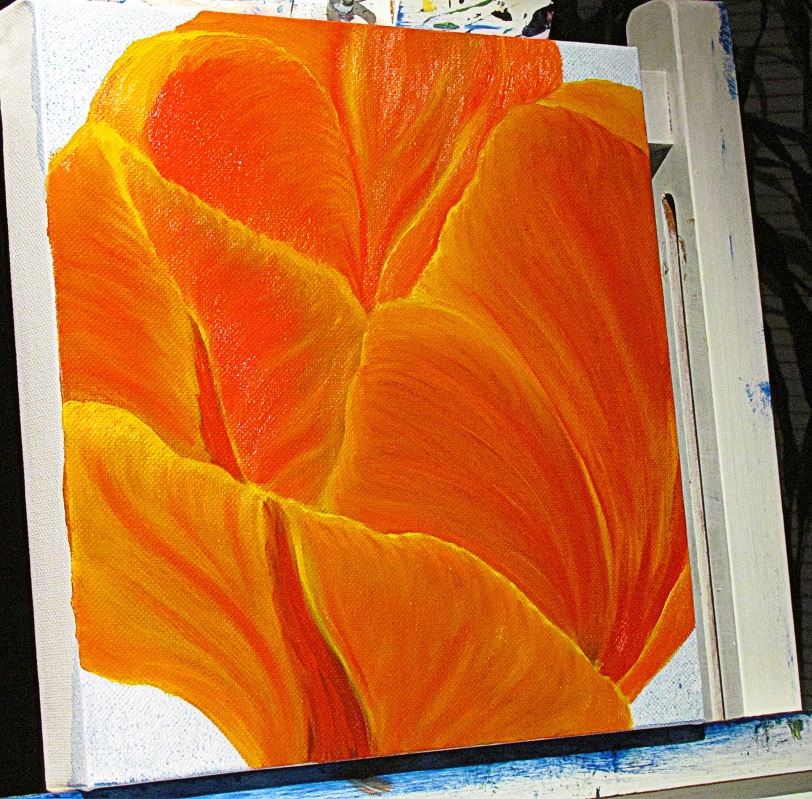
Moya Cannon (nac. 1956, Dunfanaghy, Condado de Donegal)
Olvidar los tulipanes
.
Hoy en la terraza
él está señalando con el bastón,
está preguntando:
¿Cuál es el nombre de esas flores?
Vacacionando en Dublín en los sesenta
ha comprado los cinco bulbos originales por una libra.
Los ha plantado, los ha fertilizado durante treinta y cinco años.
Los dividió, los almacenaba en el cobertizo sobre alambrada,
listos para plantar en hileras rectas
con sus corolas intensas de rojo y amarillo.
.
Tesoros transportados en galeones, tres siglos antes,
desde Turquía hasta Amsterdam.
Ahora es abril y ellos se balancean con el viento del condado Donegal,
encima de las hojas esbeltas de los claveles que todavía duermen.
.
Fue un hombre que cavaba surcos correctos y que recogió grosellas negras;
que enseñó a hileras de niños las partes de la oración, tiempos y declinaciones
debajo de un mapamundi de tela agrietada.
Y le encantaba enseñar el cuento de Marco Polo y de sus tíos que,
zarrapastrosos después de diez años de viaje,
volvían a casa pues rajaron el forro de sus chamarras
y se desparramaron los rubies de Catay.
.
Ahora, perdiendo primero los nombres,
él está de pie junto a su lecho de flores, preguntando:
¿Tú, cómo llamas a esas flores?
. . .
Moya Cannon (born 1956, Dunfanaghy, Co. Donegal)
Forgetting Tulips
.
Today, on the terrace, he points with his walking-stick and asks:
What do you call those flowers?
On holiday in Dublin in the sixties
he bought the original five bulbs for one pound.
He planted and manured them for thirty-five years.
He lifted them, divided them,
stored them on chicken wire in the shed,
ready for planting in a straight row,
high red and yellow cups–
.
treasure transported in galleons
from Turkey to Amsterdam, three centuries earlier.
In April they sway now, in a Donegal wind,
above the slim leaves of sleeping carnations.
.
A man who dug straight drills and picked blackcurrants;
who taught rows of children parts of speech,
tenses and declensions
under a cracked canvas map of the world–
who loved to teach the story
of Marco Polo and his uncles arriving home,
bedraggled after ten years journeying,
then slashing the linings of their coats
to spill out rubies from Cathay–
.
today, losing the nouns first,
he stands by his flower bed and asks:
What do you call those flowers?
. . .
Eileen Sheehan (nac. 1963, Scartaglin, Condado de Kerry)
Donde tú estás
.
Tú te tumbas en cualquiera cama,
te tumbas en el fondo, y el cojín acepta
el peso de tu cabeza,
el colchón recibiendo tu cuerpo como el invitado anhelado.
Te mueves durante el reposo
y las sábanas responden a tu giro;
las cobijas se adaptan y se amoldan a tu contorno.
El aire de la habitación toma el tiempo con tu respiración,
aceptando un desplazamiento mientras
yo rodeo las paredes de la ciudad que estás ‘soñando’.
.
Mis papeles
– están raídos y deshilachados al borde;
esa pintura que tengo de yo mismo – está nublándose,
manchada por la lluvia: mi cara está disolviendo enfrente de mí.
La noche te agarra en el sueño y estás aplacado por sus comodidades,
como las telas absorbiendo el sudor que despides.
Mis llantos van ignorados mientras estoy de pie por la verja,
implorando un acceso.
No hay nadie pedir ayuda mientras
te mudas una capa como te extiendes allí – roque;
mi solo testigo fiable.
.
(2009)
. . .
Eileen Sheehan (born 1963, Scartaglin, Co. Kerry)
Where you are
.
You lie down in whatever bed
you lie down in, the pillow accepting
the weight of your head, the mattress
receiving your body like a longed-for guest.
You move in your sleep and the sheets
react to your turnings, the blankets adjust,
shaping themselves to your outline.
The air
in the room keeps time with your breathing,
accepts being displaced while I circle the walls
of the city you dream.
My papers
are worn, frayed at the edges; that picture
I have of myself, clouding-over and spotted
with rain: my face is dissolving before me. The night
holds you in sleep, you are stilled by its comforts;
by the fabrics absorbing the sweat you expel.
My cries go unheeded as I stand at the gate,
pleading admittance. There is no one to turn to
as you shed a layer of your skin while you lie there,
dead to the world; my one reliable witness.
. . .
© 2009, Eileen Sheehan
. . .
Colette Níc Aodha (nac. 1967, Shrule, Condado de Mayo)
Ruinas
.
Buscando en los annales
por los acontecimientos que sucedieron
durante una época diferente;
recreando el Tiempo en las ruinas antiguas,
tocando la música de los ancianos,
pasos de baile de los ascendientes.
.
Anoche yo visité al lugar de mi padre
pero encontré la derrota de
una casa confeccionada de piel
mientras una otra ha estado dado forma
de abajo por sus huesos.
. . .
Colette Níc Aodha (born 1967, Shrule, Co. Mayo)
Ruins
.
Searching the annals
for events which took place
in a different era
Recreating time in old ruins
Playing ancient music
Dancing steps of our ancestors
Last night I visited my father’s place
but found a ruin of a house
crafted from skin
as another was shaped
below from his bone.
. . .
Nuala Ní Chonchúir (nac. 1970, Dublin)
Enojo
.
La luna está magullada esta noche.
Moreteada y hinchada está – pero
fanfarronea sobre nosotros
y jala júbilo a la rasca.
.
Luna de sebo, luna electrizante,
ella carga el cielo, y
es un foco descarado por encima de los árboles sazonados de escarcha.
.
Y aquí abajo, donde añoran nuestros ojos,
nos arrastramos a la iglesia en la plaza, y
hacemos las paces uno al otro – en el canto.
.
(2011)
. . .
Nuala Ní Chonchúir (born 1970, Dublin)
Anger
.
The moon is battered tonight, bruised and swollen,
but she swanks above us, bringing joy to the chill.
.
Tallow-moon, electric-moon, she shoulders the sky,
a brazen spotlight over trees salted with frost.
.
And down here, eyes aching, we creep to the church
on the square, make peace with each other in song.
. . .
from: The Juno Charm (2011)
. . .
Tara Bergin (nac. 1975, Dublin)
Bandera roja
.
Una vez uno de ellos me mostró cómo:
Giras esta mano (la derecha) para agarrar la culata.
Giras esta mano (la izquierda) para agarrar el cañon.
Tocó mi rodilla,
y oculté mi sorpresa;
pero ahora ha cambiado su canción.
.
36,37,38.9
.
Tengo fiebre, golondrina, estoy enferma.
Su bandera ondula roja,
la puedo oír desde mi ventana,
la escucho raída como un trapo rojo rasgado.
Ve por él, pajarito,
ve y diles ¡peligro! ¡peligro!
.
Lo llevaré como Vestido Dominical.
Lo llevaré cruzando el páramo
donde practican con sus pistolas.
.
38.9,37,36
.
Qué avergonzados estarán
de lastimar a una muchacha
joven y bonita como yo.
. . .
Tara Bergin (born 1975, Dublin)
Red Flag
.
Once one of them showed me how to:
You turn this (the right) hand to grasp the stock.
You turn this (the left) hand to grasp the barrel.
He touched my knee,
and I hid my surprise –
but now he’s changed his tune.
.
36,37,38.9
.
I’ve a fever, little sparrow, I am sick.
Their flag is flying red,
I can hear it from my window,
I hear it tattered like a torn red rag.
Go and get it, little bird,
go and tell them danger! danger!
.
I will wear it as my Sunday Dress.
I’ll wear it walking on the moor
where they practise with their guns.
.
38.9,37,36
.
How ashamed they’ll be
to hurt a young and pretty
girl like me.
. . .
Versiones en español del inglés por Alexander Best, excepto Bandera Rojo de Tara Bergin: traducido por Juana Adcock (nac. 1982, Monterrey, Mx.)
. . . . .
El Día Internacional de la Mujer: Poemas / International Women’s Day: Poems
Posted: March 5, 2016 Filed under: English, Fehmida Riaz, Halima Xudoyberdiyeva, Marge Piercy, Mina Loy, Qiu Jin, Spanish, Uzbek, ZP Translator: Alexander Best Comments Off on El Día Internacional de la Mujer: Poemas / International Women’s Day: Poems
. . .
Qiu Jin ( 秋瑾 1875-1907, Chinese revolutionary and poet)
Capping Rhymes With Sir Shih Ching From Sun’s Root Land
.
Don’t tell me women
are not the stuff of heroes –
I alone rode over the East Sea’s
winds for ten thousand leagues.
My poetic thoughts ever expand,
like a sail between ocean and heaven.
I dreamed of your three islands,
all gems, all dazzling with moonlight.
I grieve to think of the bronze camels,
guardians of China, lost in thorns.
Ashamed, I have done nothing;
not one victory to my name.
I simply make my war horse sweat.
Grieving over my native land
hurts my heart. So tell me:
how can I spend these days here?
A guest enjoying your spring winds?
. . .
Qiu Jin
Crimson Flooding into the River
(Translation from Mandarin: Michael A. Mikita III)
.
Just a short stay at the Capital
But it is already the mid-autumn festival
Chrysanthemums infect the landscape
Fall is making its mark
The infernal isolation has become unbearable here
All eight years of it make me long for my home
It is the bitter guile of them forcing us women into femininity
–We cannot win!
Despite our ability, men hold the highest rank
But while our hearts are pure, those of men are rank
My insides are afire in anger at such an outrage
How could vile men claim to know who I am?
Heroism is borne out of this kind of torment
To think that so putrid a society can provide no camaraderie
Brings me to tears!
. . .
Mina Loy (1882-1966, Anglo-American modernist poet)
Religious Instruction
.
This misalliance
follows the custom
for female children
to adhere to maternal practices
.
while the atheist father presides over
the prattle of the churchgoer
with ironical commentary from his arm-chair.
.
But by whichever
religious route
to brute
reality
our forebears speed us
.
there is often a pair
of idle adult
accomplices in duplicity
to impose upon their brood
.
an assumed acceptance
of the grace of God
defamed as human megalomania
.
seeding the Testament
with inconceivable chastisement,
.
and of Christ
who
come with his light
of toilless lilies
To say “fear
not, it is I”
wanting us to be fearful;
.
He who bowed the ocean tossed
with holy feet
which supposedly dead
.
are suspended over head
neatly crossed in anguish
wounded with red
varnish.
.
From these
slow-drying bloods of mysticism
mysteriously
the something-soul emerges
miserably,
.
and instinct (of economy)
in every race
for reconstructing débris
has planted an avenging face
in outer darkness.
…..
The lonely peering eye
of humanity
looked into the Néant
and turned away.
…..
Ova’s consciousness
impulsive to commit itself to justice
—to arise and walk
its innate straight way
out of the
accident of circumstance—
.
collects the levitate chattels
of its will and makes for the
magnetic horizon of liberty
with the soul’s foreverlasting
opposition
to disintegration.
.
So this child of Exodus
with her heritage of emigration
often
“sets out to seek her fortune”
in her turn
trusting to terms of literature
dodging the breeders’ determination
not to return “entities sent on consignment”
by their maker Nature
except in a condition
of moral
effacement;
Lest Paul and Peter
never
notice the creatures
ever had had Fathers
and Mothers.
.
They were disgraced in their duty
should such spirits
take an express passage
through the family bodies
to arrive at Eternity
as lovely as they originally
promised.
.
So on whatever days
she chose to “run away”
the very
street corners of Kilburn
close in upon Ova
to deliver her
into the hands of her procreators.
.
Oracle of civilization:
‘Thou shalt not live by dreams alone
but by every discomfort
that proceedeth out of
legislation’.
. . .
Mina Loy’s “Religious Instruction” from Lunar Baedeker and Times-Tables copyright The Jargon Society, 1958.
. . .
Mina Loy
No hay Vida o Muerte
.
No hay vida ni muerte,
sólo actividad.
Y en lo absoluto
no hay declive.
No hay amor ni deseo,
sólo la tendencia.
Quien quiera poseer
es una no entidad.
No hay primero ni último,
sólo igualdad.
Y quien quiera dominar
es uno más en la totalidad.
No hay espacio ni tiempo,
sólo intesidad.
Y las cosas dóciles
no tienen inmensidad.
.
Traducción del inglés: Michelle (de MujerPalabra)
. . .
Mina Loy
There is no Life or Death
.
There is no Life or Death
Only activity
And in the absolute
Is no declivity.
There is no Love or Lust
Only propensity
Who would possess
Is a nonentity.
There is no First or Last
Only equality
And who would rule
Joins the majority.
There is no Space or Time
Only intensity,
And tame things
Have no immensity.
. . .
Marge Piercy (nac.1936, EE.UU. / poeta, novelista, activista social)
Ser útil
.
Aquellos que yo amo mejor
se meten de cabeza en su trabajo
sin demorar en el bajío;
y nadan ahí fuera con brazadas seguras,
casi fuera de la vista.
Parecen ser nativos de eso elemento,
las cabezas negras lisas de focas
que rebotan como balones semi-sumergidos.
.
Me gustan los que se enjaezan: bueyes a una carreta pesada;
búfalos de agua que jalan con un temple masivo,
que tensan en el barro y la ciénaga para avanzar las cosas;
quienes que hacen lo que debe hacer, una y otra vez.
.
Quiero estar con la gente que se sumergir en la tarea;
que va en los sembríos para cosechar;
que trabaja en línea y que difunde los costales;
hombres y mujeres que no son generales del salón y desertores del deber
sino mueven en un ritmo común
cuando tiene que traer el alimento o necesita apagar el fuego.
.
La tarea del mundo es algo común, generalizado, como el barro.
Si hacemos una chapuza, embadurna las manos y se desmigaja al polvo.
Pero la cosa bien hecha
tiene la forma que complace, algo limpio, sencillo, evidente.
Ánforas griegos por el vino o el aceite,
y jarrones por el maíz del pueblo hopi,
están colocados en museos
– pero sabes que eran cosas hechas para utilizar.
El jarro llora por el agua a llevar
y la persona por el trabajo que es auténtico.
. . .
Del poemario Circles on the Water © 1982 / Traducción del inglés: Alexander Best
. . .
Marge Piercy (born 1936, American poet, novelist, social activist)
To be of use
.
The people I love the best
jump into work head first
without dallying in the shallows
and swim off with sure strokes almost out of sight.
They seem to become natives of that element,
the black sleek heads of seals
bouncing like half-submerged balls.
.
I love people who harness themselves, an ox to a heavy cart,
who pull like water buffalo, with massive patience,
who strain in the mud and the muck to move things forward,
who do what has to be done, again and again.
.
I want to be with people who submerge
in the task, who go into the fields to harvest
and work in a row and pass the bags along,
who are not parlour generals and field deserters
but move in a common rhythm
when the food must come in or the fire be put out.
.
The work of the world is common as mud.
Botched, it smears the hands, crumbles to dust.
But the thing worth doing well done
has a shape that satisfies, clean and evident.
Greek amphoras for wine or oil,
Hopi vases that held corn, are put in museums
but you know they were made to be used.
The pitcher cries for water to carry
and a person for work that is real.
. . .
Marge Piercy
Para las mujeres fuertes
.
Una mujer fuerte es una mujer esforzada.
Una mujer fuerte es una mujer que se sostiene de puntillas
y levanta unas pesas mientras intenta cantar Boris Godunov…
Una mujer fuerte es una mujer “manos a la obra”
limpiando el pozo negro de la historia.
Y mientras saca la porquería con la pala
habla de que no le importa llorar,
porque abre los conductos de los ojos…
Ni vomitar, porque estimula los músculos del estómago…
Y sigue dando paladas, con lágrimas en la nariz.
Una mujer fuerte es una mujer con una voz en la cabeza,
que le repite: “Te lo dije: sos fea, sos mala, sos tonta…
nadie más te va a querer nunca”.
“¿Por qué no eres femenina,
por qué no eres suave y discreta…
por qué no estás muerta…?“
Una mujer fuerte es una mujer empeñada
en hacer algo que los demás están empeñados en que no se haga.
Está empujando la tapa de plomo de un ataúd desde adentro.
Está intentando levantar con la cabeza la tapa de una alcantarilla.
Está intentando romper una pared de acero a cabezazos…
Le duele la cabeza.
La gente que espera a que haga el agujero,
le dice:”date prisa…¡eres tan fuerte…!”
Una mujer fuerte es una mujer que sangra por dentro.
Una mujer fuerte es una mujer que se hace a sí misma.
Fuerte cada mañana mientras se le sueltan los dientes
y la espalda la destroza.
“Cada niño, un diente…”, solían decir antes.
Y ahora “por cada batalla… una cicatriz”.
Una mujer fuerte es una masa de cicatrices
que duelen cuando llueve.
Y de heridas que sangran cuando se las golpea.
Y de recuerdos que se levantan por la noche
y recorren la casa de un lado a otro, calzando botas…
Una mujer fuerte es una mujer que ansía el amor
como si fuera oxígeno, para no ahogarse…
Una mujer fuerte es una mujer que ama con fuerza
y llora con fuerza…
Y se aterra con fuerza y tiene necesidades fuertes…
Una mujer fuerte es fuerte en palabras, en actos,
en conexión, en sentimientos…
No es fuerte como la piedra
sino como la loba amamantando a sus cachorros.
La fuerza no está en ella,
pero la representa como el viento llena una vela.
Lo que la conforta es que los demás la amen,
tanto por su fuerza como por la debilidad de la que ésta emana,
como el relámpago de la nube.
El relámpago deslumbra, llueve, las nubes se dispersan
Sólo permanece el agua de la conexión, fluyendo con nosotras.
Fuerte es lo que nos hacemos unas a otras.
Hasta que no seamos fuertes juntas
una mujer fuerte es una mujer fuertemente asustada…
. . .
Traducción del inglés: Desconocida/o
. . .
Marge Piercy
For strong women
.
A strong woman is a woman who is straining.
A strong woman is a woman standing
on tiptoe and lifting a barbell
while trying to sing Boris Godunov.
A strong woman is a woman at work
cleaning out the cesspool of the ages,
and while she shovels, she talks about
how she doesn’t mind crying, it opens
the ducts of the eyes, and throwing up
develops the stomach muscles, and
she goes on shoveling with tears
in her nose.
.
A strong woman is a woman in whose head
a voice is repeating: I told you so,
ugly, bad girl, bitch, nag, shrill, witch,
ballbuster, nobody will ever love you back,
why aren’t you feminine, why aren’t
you soft, why aren’t you quiet, why
aren’t you dead?
.
A strong woman is a woman determined
to do something others are determined
not be done. She is pushing up on the bottom
of a lead coffin lid. She is trying to raise
a manhole cover with her head, she is trying
to butt her way through a steel wall.
Her head hurts. People waiting for the hole
to be made say: hurry, you’re so strong.
.
A strong woman is a woman bleeding
inside. A strong woman is a woman making
herself strong every morning while her teeth
loosen and her back throbs. Every baby,
a tooth, midwives used to say, and now
every battle a scar. A strong woman
is a mass of scar tissue that aches
when it rains and wounds that bleed
when you bump them and memories that get up
in the night and pace in boots to and fro.
.
A strong woman is a woman who craves love
like oxygen or she turns blue choking.
A strong woman is a woman who loves
strongly and weeps strongly and is strongly
terrified and has strong needs. A strong woman is strong
in words, in action, in connection, in feeling;
she is not strong as a stone but as a wolf
suckling her young. Strength is not in her, but she
enacts it as the wind fills a sail.
.
What comforts her is others loving
her equally for the strength and for the weakness
from which it issues, lightning from a cloud.
Lightning stuns. In rain, the clouds disperse.
Only water of connection remains,
flowing through us. Strong is what we make
each other. Until we are all strong together,
a strong woman is a woman strongly afraid.
. . .
Fehmida Riaz (Pakistani poet who writes in Urdu / born 1946, Uttar Pradesh, India)
Come, Let us create a New Lexicon
.
Come let us create a new lexicon
Wherein is inserted before each word
Its meaning that we do not like
And let us swallow like bitter potion
The truth of a reality that is not ours
The water of life bursting forth from this stone
Takes a course not determined by us alone
We who are the dying light of a derelict garden
We who are filled with the wounded pride of self-delusion
We who have crossed the limits of self-praise
We who lick each of our wounds incessantly
We who spread the poisoned chalice all around
Carrying only hate for the other
On our dry lips only words of disdain for the other
We do not fill the abyss within ourselves
We do not see that which is true before our own eyes
We have not redeemed ourselves yesterday or today
For the sickness is so dear that we do not seek to be cured
But why should the many-hued new horizon
Remain to us distant and unattainable?
So why not make a new lexicon
If we emerge from this bleak abyss?
Only the first few footsteps are hard
The limitless expanses beckon us
To the dawning of a new day
We will breathe in the fresh air
Of the abundant valley that surrounds us
We will cleanse the grime of self-loathing from our faces.
To rise and fall is the game time plays
But the image reflected in the mirror of time
Includes our glory and our accomplishments
So let us raise our sight to friendship
And thus glimpse the beauty in every face
Of every visitor to this flower-filled garden
We will encounter ‘potentials’
A word in which you and me are equal
Before which we and they are the same
So come let us create a new lexicon!
. . .
Fehmida Riaz (Poetisa paquistaní, nac. 1946, Uttar Pradesh, India)
¡Ven, creemos un nuevo léxico!
.
¡Ven, creemos un nuevo léxico!
Uno donde el sentido de cada palabra
(que no nos gusta)
está insertado antes.
Y traguemos, como un veneno amargo,
la verdad de una realidad que no es nuestra.
El agua de vida que estalla de esta piedra
conduce un rumbo que nosotros solos no determinamos.
Nosotros – que son la luz murienda de un jardín decrépito;
nosotros – llenos del orgullo herido de nuestras ilusiones;
nosotros – que han superado los límites del autobombo;
nosotros – que lamen cada herida nuestra sin cesar;
nosotros – que hacen circular el cáliz envenenado,
nosotros – que llevan del uno al otro solo el odio,
y, sobre nuestras labias secas, nada más que palabras del desdén.
No llenamos el abismo en el interior;
no vemos con nuestros propios ojos lo que es auténtico en frente de nosotros;
no nos hemos redimido ayer o hoy;
porque nuestra enfermedad es tan preciada que no buscamos un tratamiento.
¿Pero por qué el horizonte de muchos tonos debe permanecernos como
remoto y inalcanzable?
.
Entonces, ¿Por qué no creamos un nuevo léxico?
Si resurgimos de este abismo austero,
solamente las primeras pisadas serán duras.
Las extensiones ilimitadas nos atraen al amanecer de un nuevo día.
Inhalaremos el aire fresco
del valle abundante que nos rodea.
Purificaremos de nuestras caras la mugre de aversión de uno mismo.
El vaivén, el auge y caída – son estos el juego que juega el Tiempo.
Pero la imagen que vemos en el espejo del Tiempo
incluye nuestra gloria también nuestros logros
– pues alcemos la mirada hasta la amistad,
por lo tanto entrever la belleza en cada rostro
de cada visitante en este jardín de muchas flores.
Nos encontraremos con ‘potenciales’,
una palabra en que tú y yo son equitativos;
una palabra en que nosotros y ellos son iguales.
Entonces,
¡Ven, creemos un nuevo léxico!
. . .
Traducción del inglés: Alexander Best
. . .
Fehmida Riaz
Chador and Char-Diwari
.
Sire! What use is this black chador to me?
A thousand mercies, why do you reward me with this?
.
I am not in mourning that I should wear this
To flag my grief to the world
I am not a disease that needs to be drowned in secret darkness
.
I am not a sinner nor a criminal
That I should stamp my forehead with its darkness
If you will not consider me too impudent
If you promise that you will spare my life
I beg to submit in all humility,
O Master of men!
In your highness’ fragrant chambers
lies a dead body—
Who knows how long it has been rotting?
It seeks pity from you
.
Sire, do be so kind
Do not give me this black chador—
With this black chador cover the shroudless body
lying in your chamber
.
For the stench that emanates from this body
Walks buffed and breathless in every alleyway
Bangs her head on every doorframe
Covering her nakedness
.
Listen to her heart-rending screams
Which raise strange spectres
That remain naked in spite of their chador.
Who are they ? You must know them, Sire.
.
Your highness must recognize them
These are the hand-maidens,
The hostages who are halal for the night.
With the breath of morning they become homeless
They are the slaves who are above
The half-share of inheritance for your
Highness’s off-spring.
.
These are the Bibis
Who wait to fulfill their vows of marriage
In turn, as they stand, row upon row
They are the maidens
On whose heads, when your highness laid a hand
of paternal affection,
The blood of their innocent youth stained the
whiteness of your beard with red.
In your fragrant chamber, tears of blood
life itself has shed
Where this carcass has lain
For long centuries, this body—
spectacle of the murder
of humanity.
.
Bring this show to an end now.
Sire, cover it up now—
Not I, but you need this chador now.
.
For my person is not merely a symbol of your lust:
Across the highways of life, sparkles my intelligence;
If a bead of sweat sparkles on the earth’s brow it is
my diligence.
.
These four walls, this chador I wish upon the
rotting carcass.
In the open air, her sails flapping, races ahead
my ship.
I am the companion of the New Adam
Who has earned my self-assured love.
. . .
Translation form Urdu: Rukhsana Ahmed
. . .
Halima Xudoyberdiyeva (born 1947, Boyovut, Uzbekistan)
Sacred Woman
(Translation from Uzbek: Johanna-Hypatia Cybeleia)
.
Your lovers have thrown flowers at your feet,
In solitude they have tasted honey from your lips,
And they have sold it to anyone at all,
You are sacred anyway, sacred woman.
.
First they came to fill your embrace, and told you to shine
You did not consent, woman, though people said the opposite
Unable to reach you, they turned their faces and called you bitter
You are sacred anyway, sacred woman.
.
You flutter your wings slowly and you lay your head down,
It’s been thousands of years, your eyes sparkle with tears,
A thousand and one criminals will hurt you with stones,
You are sacred anyway, sacred woman.
.
Though you come silently when summoned, though you come uselessly,
Though you come humbly to the drunken circle, though you come pleading to scoundrels,
Though you come oppressed to the scoundrels, though you come humbly,
You are sacred anyway, sacred woman.
.
In fact you’ll have amusements where you go,
Good and bad stories where you go,
You’ll have men like wild horses where you go,
You are sacred anyway, sacred woman.
.
Your silk-perfume body has the marks of stones,
Your bosom has the traces of heads that have leaned there,
You have the remnants of suns whose sun-fire has burned out,
You are sacred anyway, sacred woman.
. . .
Halima Xudoyberdiyeva
Water Flowing in Front of Me
.
To live in ease, to live in torment,
Not uselessly inclined away from you another sky,
My lifetime of hunting for hearts is over with,
There’s not even any thought of you going away.
.
Water flowing in front of me, my unappreciated water,
Enjoying myself for once in my life, I don’t feel relieved.
Ongoing sympathy, my secret water;
Until it dried up, I was not noticed.
.
I tell others don’t go away from me,
I go to find them in the dawn and evening time;
I offend others, telling them don’t show up;
I don’t even think anything about your going away.
.
I ran to others in cities, in towns,
You didn’t turn back or get sarcastic once.
Here I am, I’m the prey; here I am, I’ll go away,
Saying why didn’t you remind me once?
My mother, O my mother?!
. . .
Water Flowing in Front of Me in the original Uzbek:
.
Oldimdan Oqqan Suv
.
Yashamoq farog’at, yashamoq azob,
Bekorga egilmas Sizdan boshqa ko’k,
Ko’ngillarni ovlab umrim bo’pti sob,
Sizning ketishingiz xayolda ham yo’q.
.
Oldimdan oqqan suv, beqadr suvim,
Umrida bir yayrab, yozilmaganim.
Bor turishi shafqat, bori sir suvim,
To qurib qolguncha sezilmaganim.
.
Boshqalar yonimdan ketmasin debman,
Vaqt topib ularga boribman tong-kech,
Boshqalarga ozor yetmasin debman,
Sizga ham yetishin o’ylamabman hech.
.
Boshqalarga chopdim shahar, kentda man,
Bir qaytarib yo bir kesatmadingiz,
Manam g’animatman, manam ketaman,
Deb nechun bir bora eslatmadingiz?
Onam, onam-a?!
. . . . .
“A la Vida” / “Here’s to Life”: canción distintiva de Shirley Horn
Posted: February 29, 2016 Filed under: English, Spanish, Translator's Whimsy: Song Lyrics / Extravagancia del traductor: Letras de canciones traducidas por Alexander Best Comments Off on “A la Vida” / “Here’s to Life”: canción distintiva de Shirley Horn
A la Vida (letras: Phyllis Molinary / música: Artie Butler)
[canción distintiva de Shirley Horn (1934-2005)]
.
No tengo quejas ni arrepentimientos.
Aún creo en perseguir los sueños y hacer las apuestas.
Pero yo he aprendido ésto:
lo que tú das es todo que recibirás
– entonces dála una mejor vuelta en esta vida.
.
He tenido mi porción y he bebido más que bastante.
Y aunque estoy satisfecha, aún así tengo hambre de
ver lo que hay más adelante, más allá de la cresta de la colina
y hacerlo todo – de nuevo.
.
Pues, ¡a la Vida! y a todo el júbilo que nos jala.
Pues, ¡a la Vida! –– por los visionarios y sus sueños.
.
Raro es como vuela el Tiempo,
como el amor cambiará de hola acogedora hacia adiós triste;
como el amor te deja con los recuerdos que ya has memorizado
– para mantenerte caliente durante esos inviernos.
.
Mira, no hay “sí” en “ayer”,
¿Y quién comprende lo que lleve la mañana
– o lo que la mañana requise?
Pero siempre y cuando yo sea parte del juego pues quiero jugarlo
– por las risas, por la vida, y por el amor.
.
Entonces…¡a la Vida! y a todo el gozo que nos jala.
Sí, ¡a la Vida! –– por los soñadores y sus visiones.
Que soportares las tormentas, y
que mejorare todo lo que ya es bueno.
A la Vida… al Amor…
y…¡a ti!
. . .
Here’s to Life (lyrics by Phyllis Molinary / music by Artie Butler)
[as sung by Shirley Horn (1934-2005)]
.
No complaints and no regrets,
I still believe in chasing dreams and placing bets.
But I have learned that all you give is all you get;
So give it all you got.
.
I had my share, I drank my fill; and even though
I’m satisfied––I’m hungry still
To see what’s down another road, beyond the hill––
And do it all again.
.
So here’s to Life and all the joy it brings.
Here’s to Life––for dreamers and their dreams.
.
Funny how the time just flies,
How love can go from warm hellos to sad goodbyes,
And leave you with the memories you’ve memorized
To keep your winters warm.
For there’s no ‘yes’ in yesterday; and who knows what tomorrow brings or takes away? As long as I’m still in the game I want to play
For laughs, for life, for love.
.
So here’s to Life and every joy it brings.
Here’s to Life––for dreamers and their dreams.
.
May all your storms be weathered,
And may all that’s good get better.
Here’s to life, here’s to love, here’s to you.
.
May all your storms be weathered,
And may all that’s good get better.
Here’s to life, here’s to love, here’s to you!
. . .
Interpretación por Shirley Horn:
https://youtu.be/UTv3TONfTTQ
. . . . .
“As dearly as possible”: the Life of Ida B. Wells + poems by Lucille Clifton and Sterling A. Brown
Posted: February 29, 2016 Filed under: English, Lucille Clifton, Sterling A. Brown | Tags: Black History Month poems Comments Off on “As dearly as possible”: the Life of Ida B. Wells + poems by Lucille Clifton and Sterling A. Brown. . .
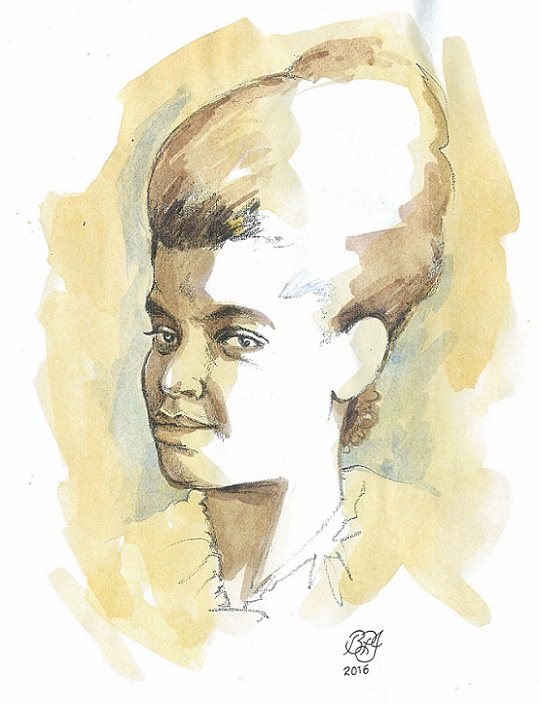
Ida B. Wells portrait by Bruce Patrick Jones_graphite and watercolour
. . .
IDA B. WELLS (African-American journalist / civil-rights activist, 1862-1931)
.
Born to slave parents in Holly Springs, Mississippi in 1862, Ida Bell Wells grew up to become a gutsy journalist and a pioneer civil-rights activist who launched a virtual one-woman crusade against the vicious practice of Lynching (a murderous mob action taken by Whites in the decades following Emancipation as a form of intimidation and social control mainly of newly-free Blacks). In her early 20s, after asserting her place in but being forcibly removed from a railway car, Wells went on to co-own and write for a Memphis newspaper, The Free Speech, and to write passionate editorials which resulted in both death threats made upon her plus an act of arson that destroyed the business.
.
In school the young Ida favoured reading Shakespeare and The Bible, but at the age of 16 both of her parents died during a yellow-fever epidemic, leaving Ida to care for her six younger siblings. She obtained a teaching position at a rural school which paid her $25 per month. Later on, while her brothers remained in Holly Springs to train as carpenter’s apprentices, she moved with her sisters to her aunt’s home near Memphis, Tennessee. She began to teach in Shelby County, and also to attend Fisk University to broaden her teaching skills. It was in May of 1884 that the discriminatory railway-car incident occurred, and some time after that the name “Iola” began to appear in print in black publications as the author of articles about race and politics in the South. Miss Wells had been using the pseudonym for less than a year when, in 1887, she attended the National Afro-American Press Convention and was named the most prominent correspondent for the American black press.
.
Miss Wells did not shy away from controversy when she wrote for Free Speech. An anonymous article she penned was critical of Memphis’s separate but not-so-equal schools. She described rundown buildings and teachers who had received little more education than their students. Such revelations irked members of the local Board of Education. They also took issue with her claim that a member of the all-white board was having an affair with a black teacher. The ensuing uproar cost Wells her teaching job.
.
Yet she was now prepared to focus more fully on the newspaper and what its very name – Free Speech – entailed. She gradually earned enough to purchase a half-share of Free Speech, and while her partner, J.L. Fleming, handled business matters, Miss Wells handled the editorial and subscription departments, and under her leadership circulation increased from 1,500 to 4,000. Readers continued to rely on Free Speech to tackle controversial subjects, even when that meant speaking out against blacks as well as whites — even when it meant challenging the widely-accepted practice of Lynching.
.
When word reached Miss Wells that her friend Tom Moss, the father of her goddaughter, had been lynched, she learned a great deal more about the horrific practice than she could’ve imagined. Until that time, Wells, like most other people, knew that there were usually two reasons why a black man was lynched: he was accused of raping a white woman, or he was accused of killing a white man. Yet Moss’s “crime” was that he successfully competed with a white grocer, and for this reason he and his partners were murdered. Wells now understood that lynchings were not being used to weed out criminals but to enforce the ugly values of White Supremacy. So, in a series of scathing editorials in Free Speech, she urged Memphis’ black populace to boycott the city’s new streetcar line and to pack up their belongings and move out West if they could manage it.
.
African Americans heeded Wells’ pleas and began leaving Memphis by the hundreds. Two pastors of large black churches took their entire congregations to Oklahoma, and others soon followed. Those who stayed behind boycotted white businesses, creating financial hardships for commercial establishments as well as for the public transportation system. The city’s papers attempted to dissuade blacks from leaving by reporting on the hostile American Indians and dangerous diseases awaiting them out West. To counter their claims, Wells spent three weeks traveling in Oklahoma and published a firsthand account of the actual conditions. She was fast becoming a target for angry white men and women, so she was advised by her friends to ease up on her editorials. Instead, though, she decided to carry a pistol. In later years she was to recall: “[I had] already determined to sell my life as dearly as possible if attacked. I felt if I could take one lyncher with me, that might even up the score a little bit.”
.
After the murders of Moss and his partners, Wells spent some months investigating other lynchings across the South. Traveling from Texas to Virginia, she interviewed both whites and blacks in order to discern truth from rumour. Margaret Truman has written in her book Women of Courage: “To call this dangerous work is an understatement. Imagine a lone black woman in a small town in Alabama or Mississippi, asking questions that no one wanted to answer about a crime that half the whites in the town might’ve committed.” Miss Wells was to learn that rape was far from being the only crime lodged against victims of lynch mobs. Indeed, men had been lynched for “being saucy.”
.
In May of 1892, an article appeared in Free Speech stating that “nobody in this section believes the old thread-bare lie that Negro men assault white women. If Southern white men are not careful they will over-reach themselves and a conclusion will be reached which will be very damaging to the moral reputation of their women.” Many white citizens of Memphis did not appreciate the implication that some of their women might prefer the company of black men, and the editor of one Memphis newspaper declared that the “black wretch who had written that foul lie should be tied to a stake at the corner of Main and Madison Streets, a pair of tailor’s shears used on him, and he should then be burned at the stake.”
.
Wells, en route to New York City and unaware of the impact of her latest anonymous editorial, did not discover its fallout until reaching her destination. Fellow journalist T. Thomas Fortune, editor of the New York Age, informed her that a mob of white men had marched into the Free Speech offices, demolished the printing press, and set fire to the building. Fleming, Wells’s partner, had escaped just before the attack and was in hiding. The angry group had promised that both editors would be lynched if they ever again set foot again in Memphis. Wells received telegrams and letters from friends begging her not to return. They told her that there were instructions to kill her on sight.
.
And so, Miss Wells remained in New York and accepted a job from Fortune at the New York Age. Among the first stories she wrote for the newspaper was a front-page spread detailing names, dates, and locations of several dozen lynchings. In some cases, the lynchers were prominent members of society who could have easily gone through proper legal channels had there been actual evidence of their victims’ guilt.
.
That particular issue of the Age sold 10,000 copies, yet it reached a predominantly black audience — not the northern white progressives Wells knew she needed to move to action if she wanted to stop the brutalities of Lynching. In 1893, therefore, she embarked upon a speaking tour of the British Isles and Europe, and it was in those overseas nations that she found white people who were more receptive to her activist concerns. Via this circuitous route, Miss Wells’ message – with the help of various newspaper editors and organizations such as the London-based Anti-Lynching Committee and the Society of Brotherhood of Man – made its way back to the United States. Some American newspaper editorials continued to attack Wells, referring to her as “the slanderous and nasty-minded mulattress.” And she faced the opposition of both conservative whites and upper-class blacks who feared any threat to the security of their positions.
.
“Home” after her overseas speaking tour, Wells moved to Chicago in 1893 or 1894, and began working for The Conservator, a black newspaper founded and edited by a lawyer named Ferdinand Barnett. When blacks were excluded from participating in the 1893 World’s Columbian Exposition (held in Chicago), she teamed up with Barnett and Frederick Douglass to compile a booklet entitled “The Reason Why the Colored American Is Not Represented in the World’s Columbian Exposition.” Thousands of copies of it were distributed during the fair. Miss Wells also published A Red Record, which recounted three years’ worth of American lynchings, and in order to avoid any charges of bias, she gathered all of her data from white-published sources, primarily the Chicago Tribune.
.
In 1895, at the age of 33, Miss Wells married Barnett, who shared her passion for civil rights. They remained in Chicago, and Mrs. Wells-Barnett divided her time between raising four children and working on various causes: the anti-lynching crusade; establishing kindergartens in the black district of Chicago; and – with reformer Jane Addams – protesting successfully against a plan to segregate the city’s schools.
.
Ida Wells-Barnett – now a wife and mother – kept on speaking out against discrimination…
She denounced the restriction of blacks to the backs of buses and theatre balconies, plus their exclusion from organizations such as the Women’s Christian Temperance Union and the Young Men’s Christian Association (YMCA). In 1909, Wells-Barnett attended the conference of “radical” activists that led to the founding of the National Association for the Advancement of Colored People (NAACP). Perhaps not surprisingly – given her feisty and energetic character – she resigned not long afterwards, frustrated that the organization was not committed enough to militant action. Some years earlier, she had quit the Afro-American Council in protest against Booker T. Washington and his policy of “accommodation”.
.
In the last decades of her passionate life, Wells-Barnett devoted most of her time and energy to various civic and political activities in Chicago. From 1913 until 1916, for instance, she worked as an adult probation officer. She also remained busy with club work and founded the first African-American women’s suffrage organization. She even ran for state senator in the 1930 elections, though she was easily defeated.
.
Imagine if Ida Wells-Barnett had been able to see into the future?
She might then have seen how much she influenced the civil-rights movement of the 1960s – and a new era in race relations – with her own battles against discrimination all those decades earlier. Ida Wells-Barnett died of kidney disease in 1931 at the age of sixty-nine. But she is remembered here and now in the 21st century as a courageous pioneer for truth and justice – and as an African-American woman of whom we should all be proud.
. . .
The above biographical essay and commentary has been edited for length. It first appeared in Americans Who Tell The Truth: Models of Courageous Citizenship © The Gale Group
. . .
Lynching as a subject for poetry: two examples from poets Lucille Clifton and Sterling Allen Brown:
.
. . .
Lucille Clifton (1936-2010)
The Photograph: A Lynching
.
Is it the cut glass
of their eyes
looking up toward
the new gnarled branch
of the black man
hanging from a tree?
.
Is it the white milk pleated
collar of the woman
smiling toward the camera,
her fingers loose around
a christian cross drooping
against her breast?
.
Is it all of us
captured by history into an
accurate album? Will we be
required to view it together
under a gathering sky?
. . .
Sterling A. Brown (1901-1989)
Let Us Suppose
.
Let us suppose him differently placed
In wider fields than these bounded by bayous
And the fringes of moss-hung trees
Over which, in lazy spirals, the carancros [carrion crows] soar and dip.
.
Let us suppose these horizons pushed farther,
So that his eager mind,
His restless senses, his swift eyes,
Could glean more than the sheaves he stored
Time and time again:
Let us suppose him far away from here.
.
Or let us, keeping him here, suppose him
More submissive, less ready for the torrent of hot Cajan speech,
The clenched fist, the flushed face,
The proud scorn and the spurting anger;
Let us suppose him with his hat crumpled in his hand,
The proper slant to his neck, the eyes abashed,
Let us suppose his tender respect for his honour
Calloused, his debt to himself outlawed.
.
Let us suppose him what he could never be.
.
Let us suppose him less thrifty
Less the hustler from early morning until first dark,
Let us suppose his corn weedy,
His cotton rusty, scantily fruited, and his fat mules poor.
His cane a sickly yellow
Like his white neighbour’s.
.
Let us suppose his burnt brick colour,
His shining hair thrown back from his forehead,
His stalwart shoulders, his lean hips,
His gently fused patois of Cajan, Indian, African,
Let us suppose these less the dragnet
To her, who might have been less lonesome
Less driven by Louisiana heat, by lone flat days,
And less hungry.
.
Let us suppose his full-throated laugh
Less repulsive to the crabbed husband,
Let us suppose his swinging strides
Less of an insult to the half-alive scarecrow
Of the neighbouring fields:
Let us suppose him less fermenting to hate.
.
Let us suppose that there had been
In this tiny forgotten parish, among these lost bayous,
No imperative need
Of preserving unsullied,
Anglo-Saxon mastery.
.
Let us suppose –
Oh, let us suppose him alive.
. . .
“Let Us Suppose” was first published in the September 1935 issue of Opportunity: Journal of Negro Life.
. . . . .
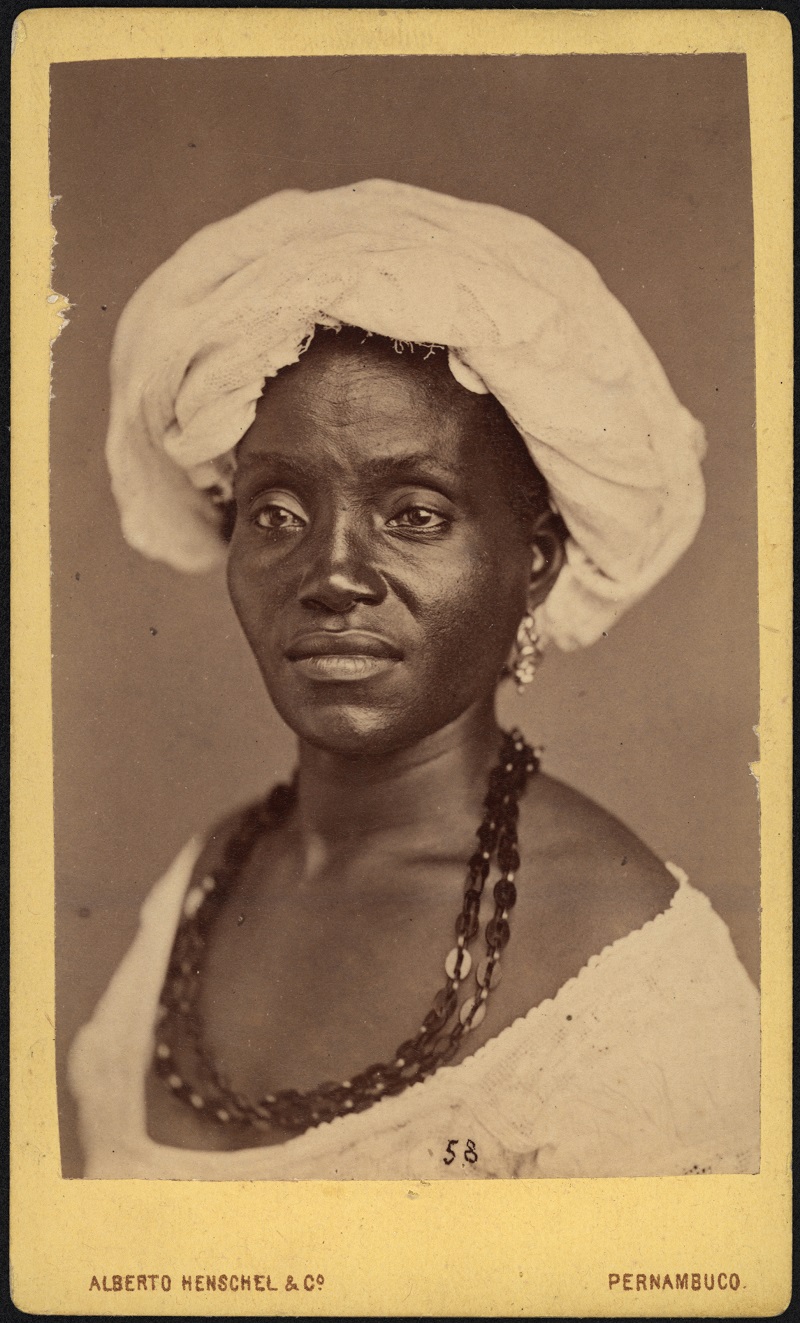
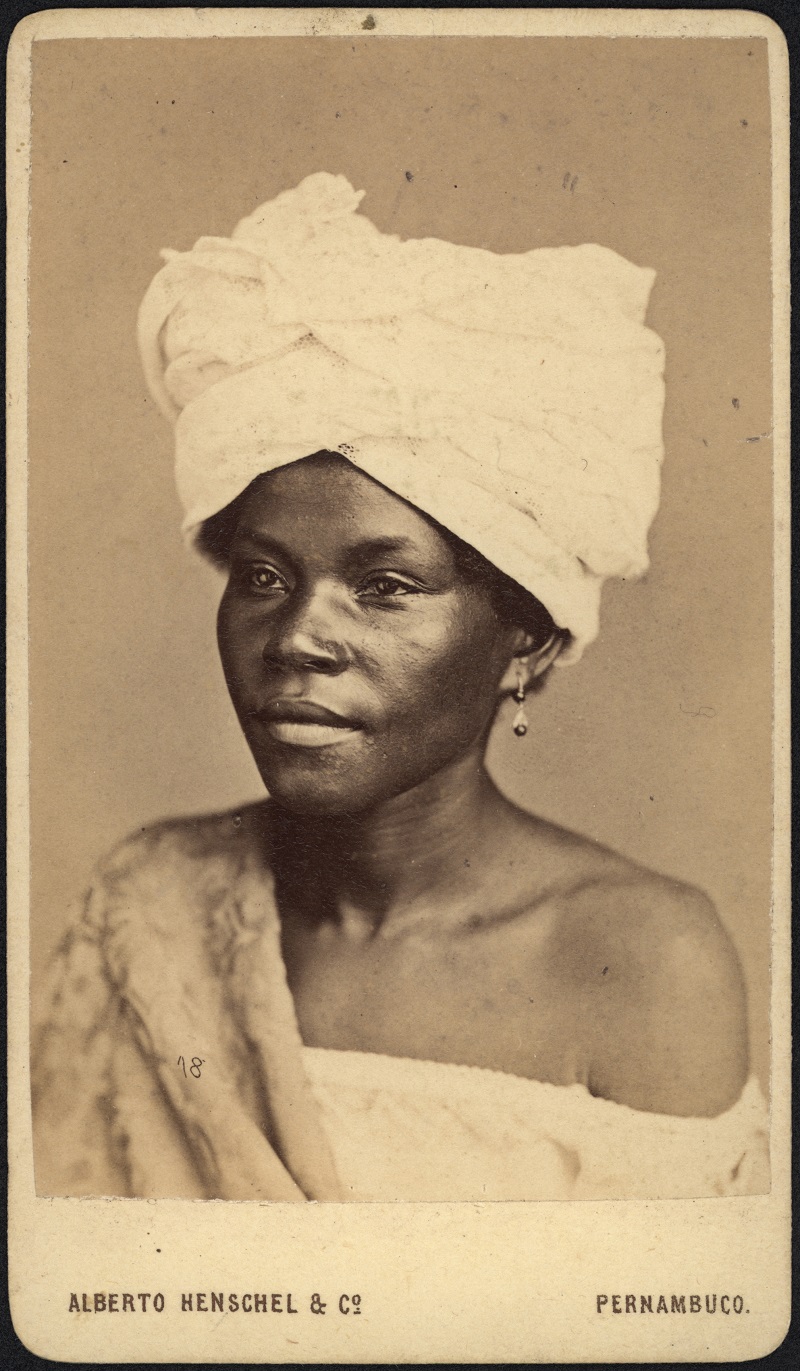
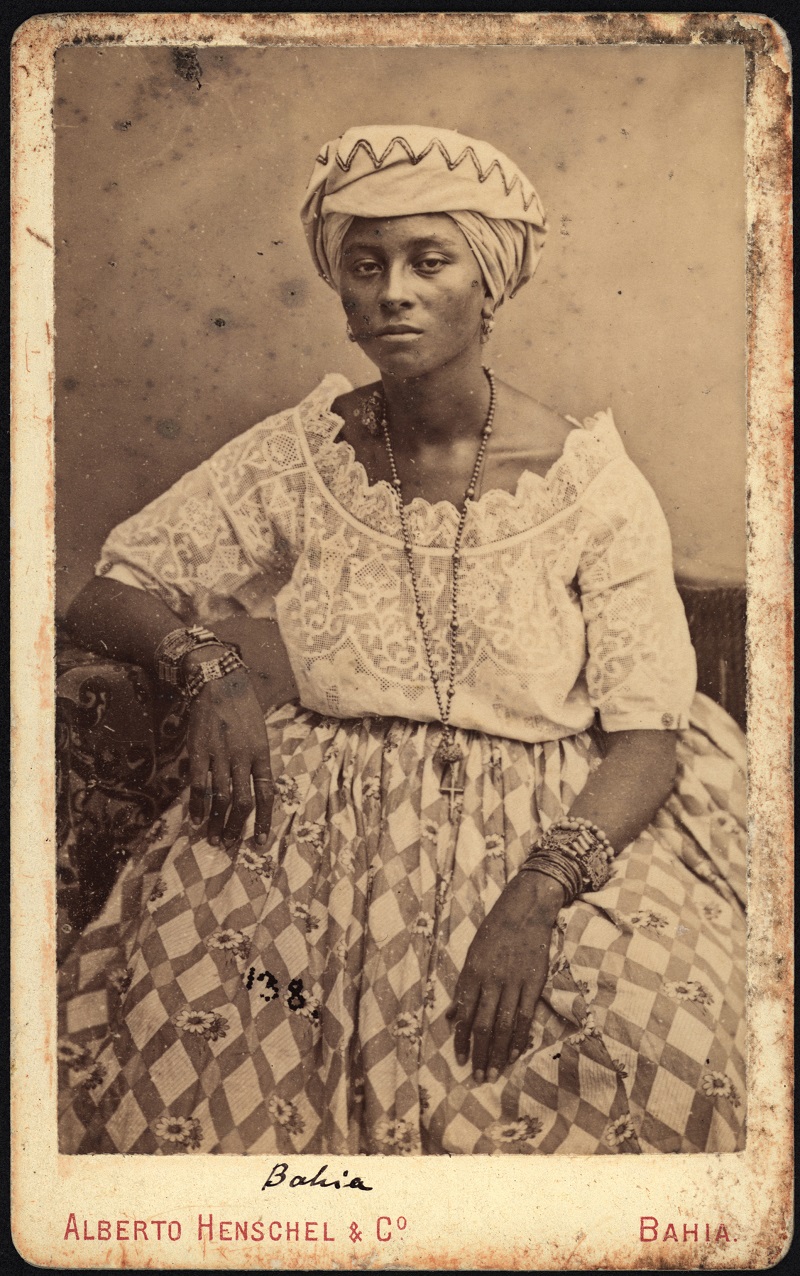
Alberto Henschel: 19th-century Brazilian photographer: Tipos negros / Black Types
Posted: February 25, 2016 Filed under: English, IMAGES, Portuguese | Tags: Black History Month photographs Comments Off on Alberto Henschel: 19th-century Brazilian photographer: Tipos negros / Black Types
Alberto Henschel_from his series Tipos negros or Black Types_Recife, Pernambuco_around 1869
Alberto Henschel (1827-1882) was a German-born Brazilian photographer from Berlin. An energetic, enterprising businessman, he established photography studios in the cities of Pernambuco, Bahia, Rio de Janeiro and São Paulo. While known as both a landscape photographer and, for some time Photographo da Casa Imperial (Photographer of the Royal House) during the reign of Pedro II, his main legacy has been his visual record of the social classes of Brazil. His portraits were often produced in the ‘carte de visite’ format, and included the nobility, wealthy tradesmen, the middle class and, most interestingly, Brazil’s black people – whether slaves or freemen/women. These portraits were taken during the decades before the Lei Áurea, the slavery-abolition law of 1888.
.
Alberto Henschel (Berlim, 1827 – Rio de Janeiro, 1882) foi um fotógrafo teuto-brasileiro, considerado o mais diligente empresário da fotografia no Brasil do século XIX. Sua principal contribuição à história
da fotografia no Brasil foi o registro fotográfico de todos os extratos sociais do Brasil oitocentista: retratos, geralmente no padrão carte-de-visite, foram tirados da nobreza, dos ricos comerciantes, da classe média e, mas certamente, dos negros – tantos livres como escravos (em um período ainda anterior à Lei Áurea.
.

Alberto Henschel_ portrait from his Black Types series_Bahia, Brazil_around 1869
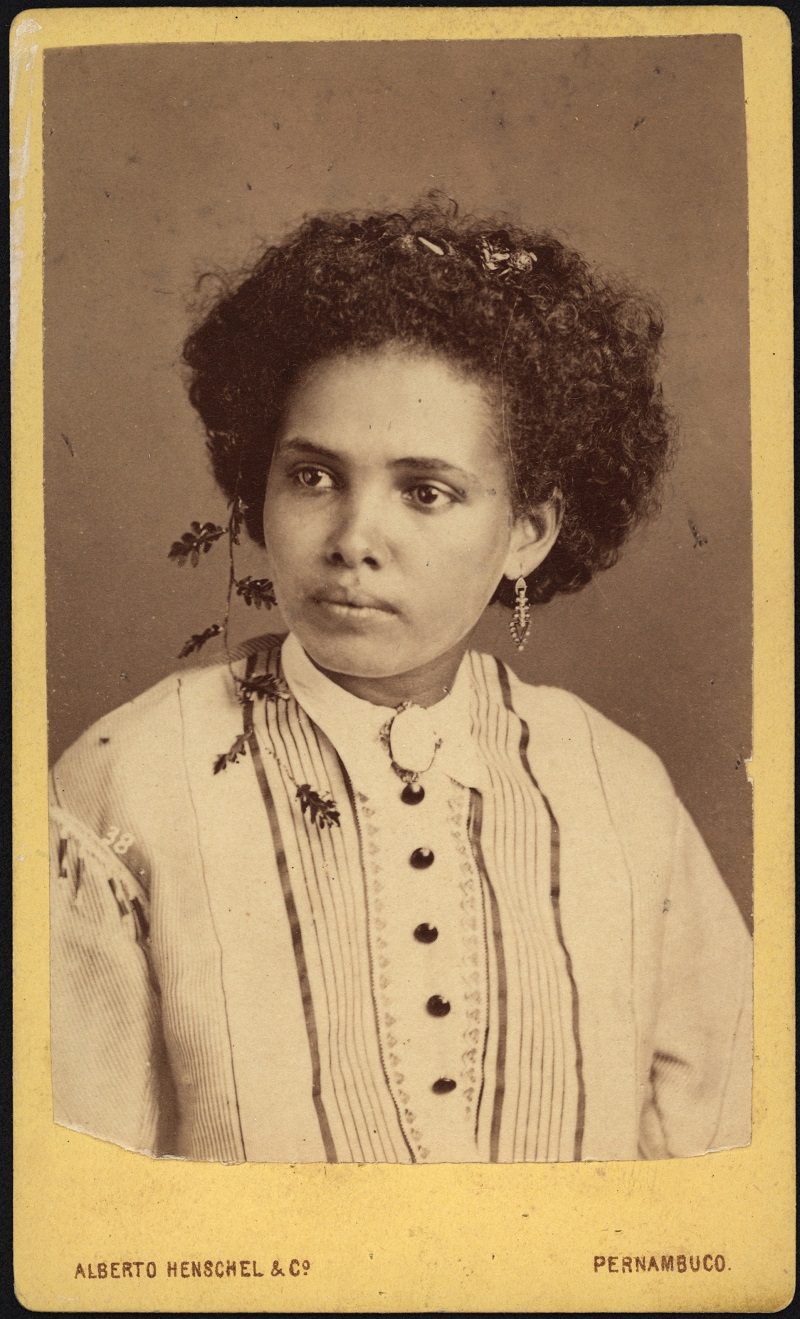
Alberto Henschel_Moça cafusa (Girl of mixed Negro and Indian blood)_Pernambuco_1869
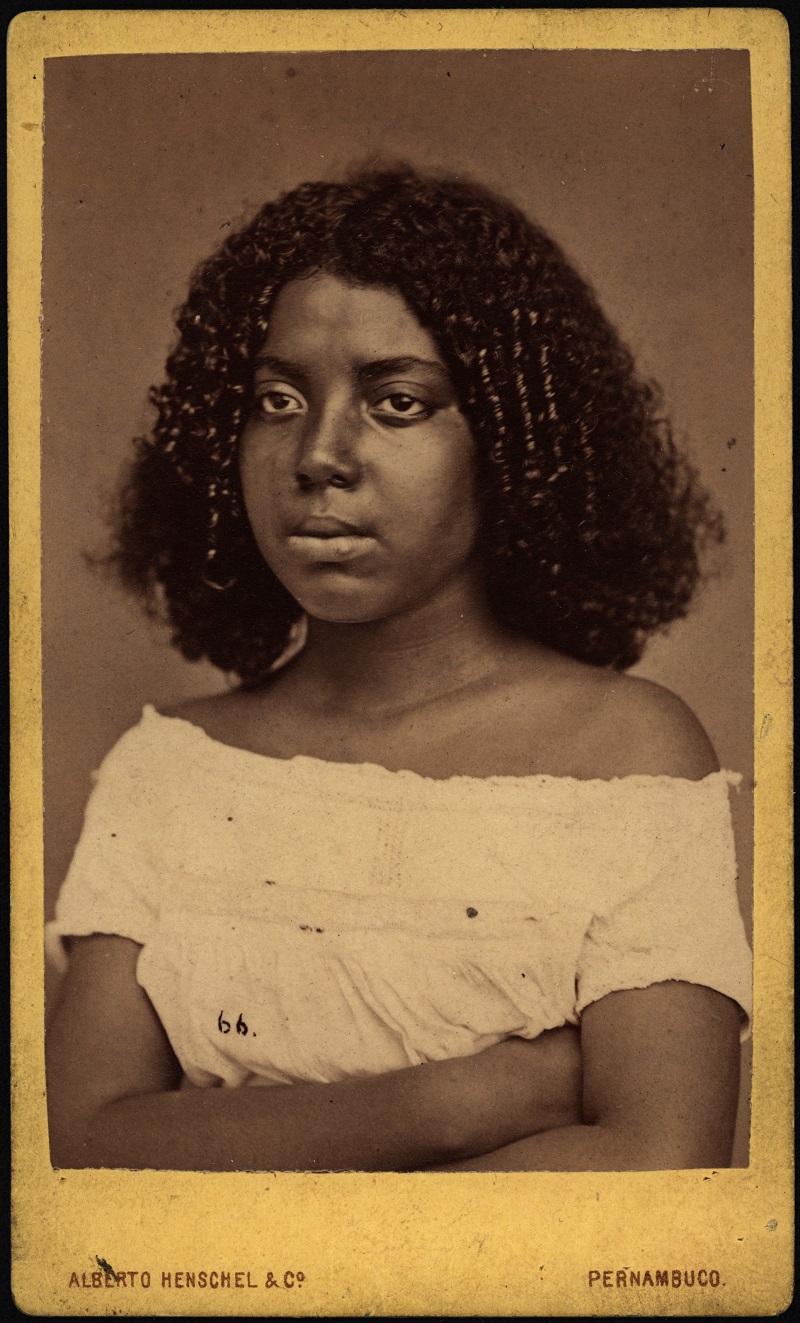
Alberto Henschel_Retrato cafusa_1869
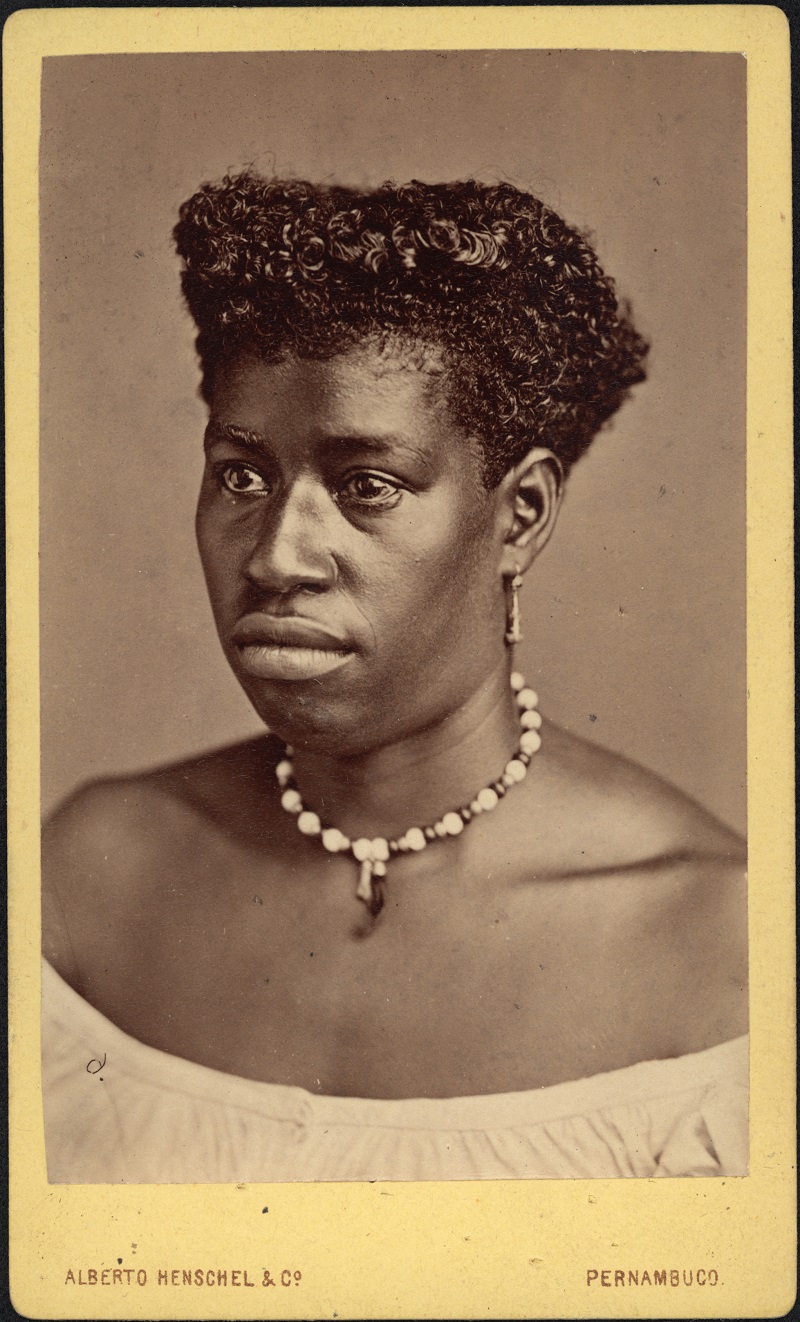
Alberto Henschel_retrato da negra de Pernambuco_1869
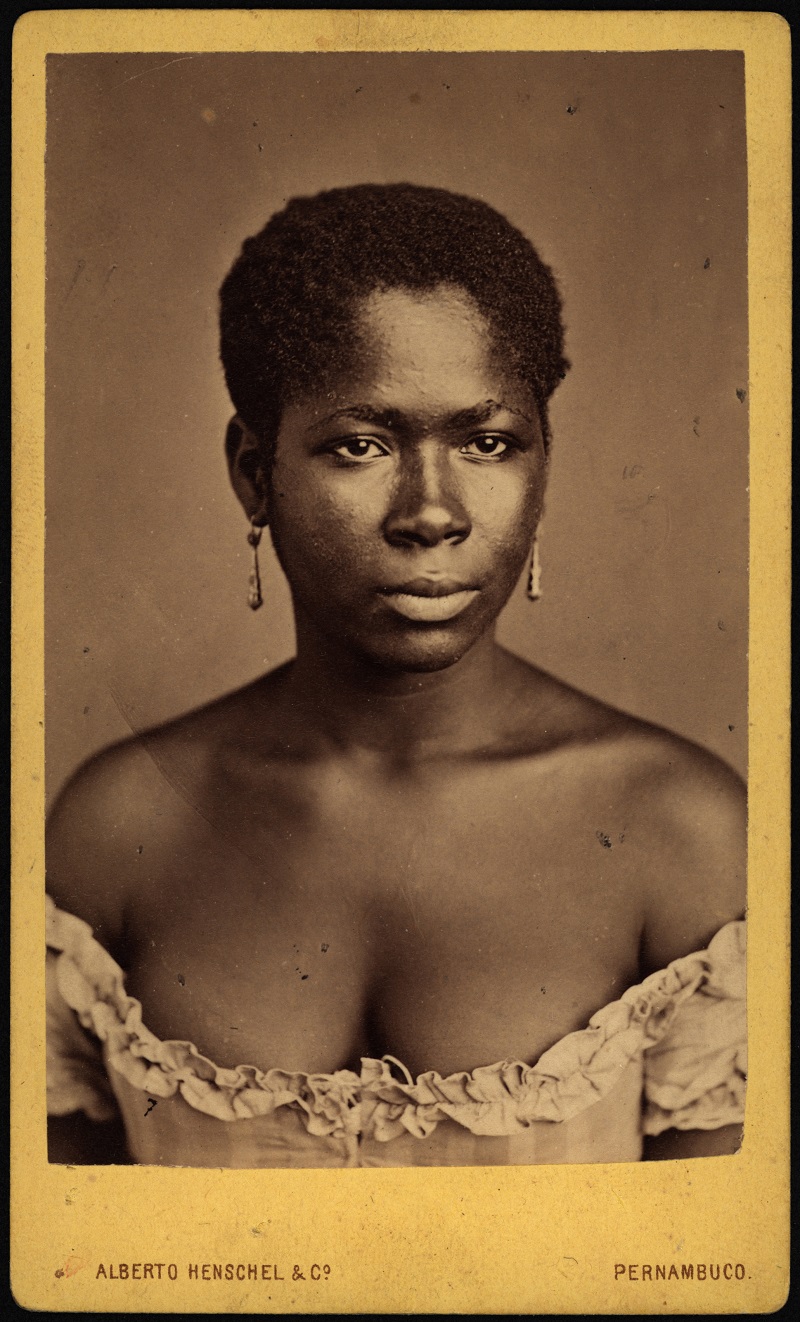
Alberto Henschel_uma negra de Pernambuco_1869
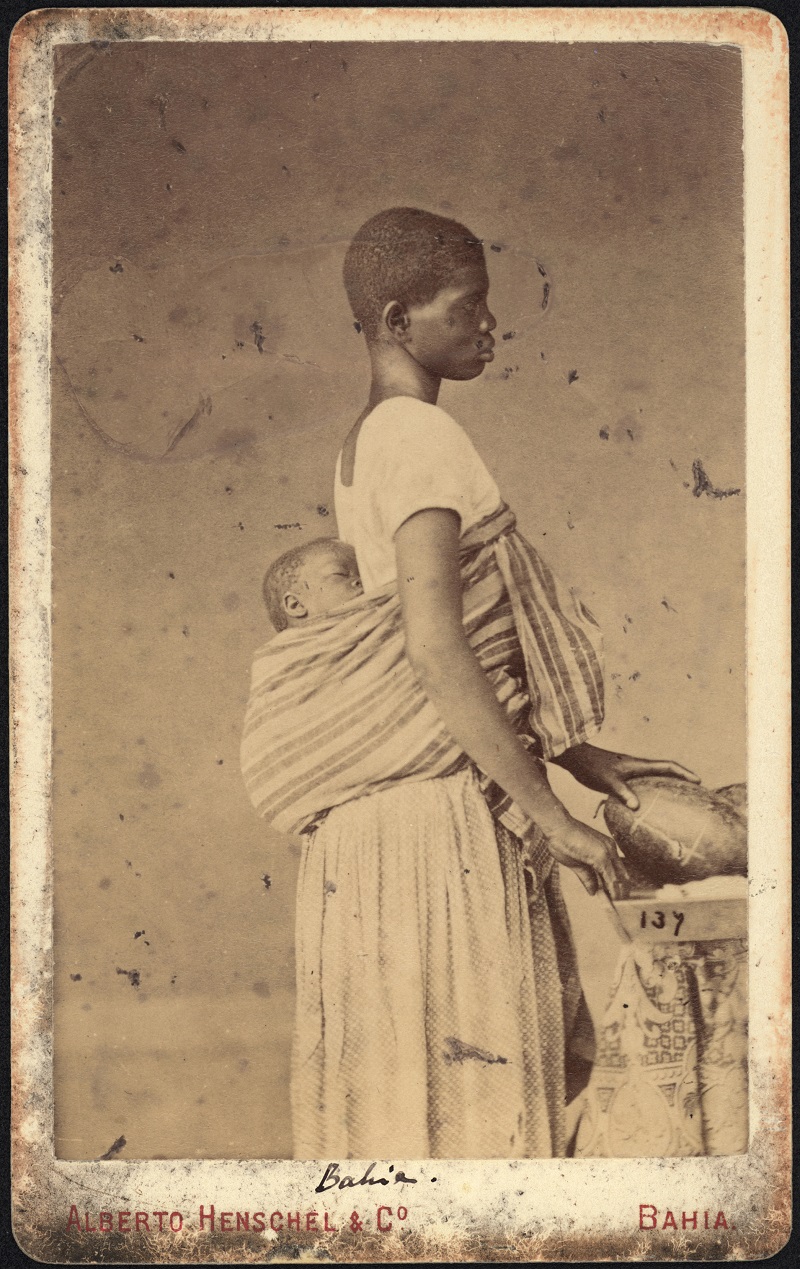
Alberto Henschel_Negra com criança na Bahia_c. 1869_Salvador, Bahia
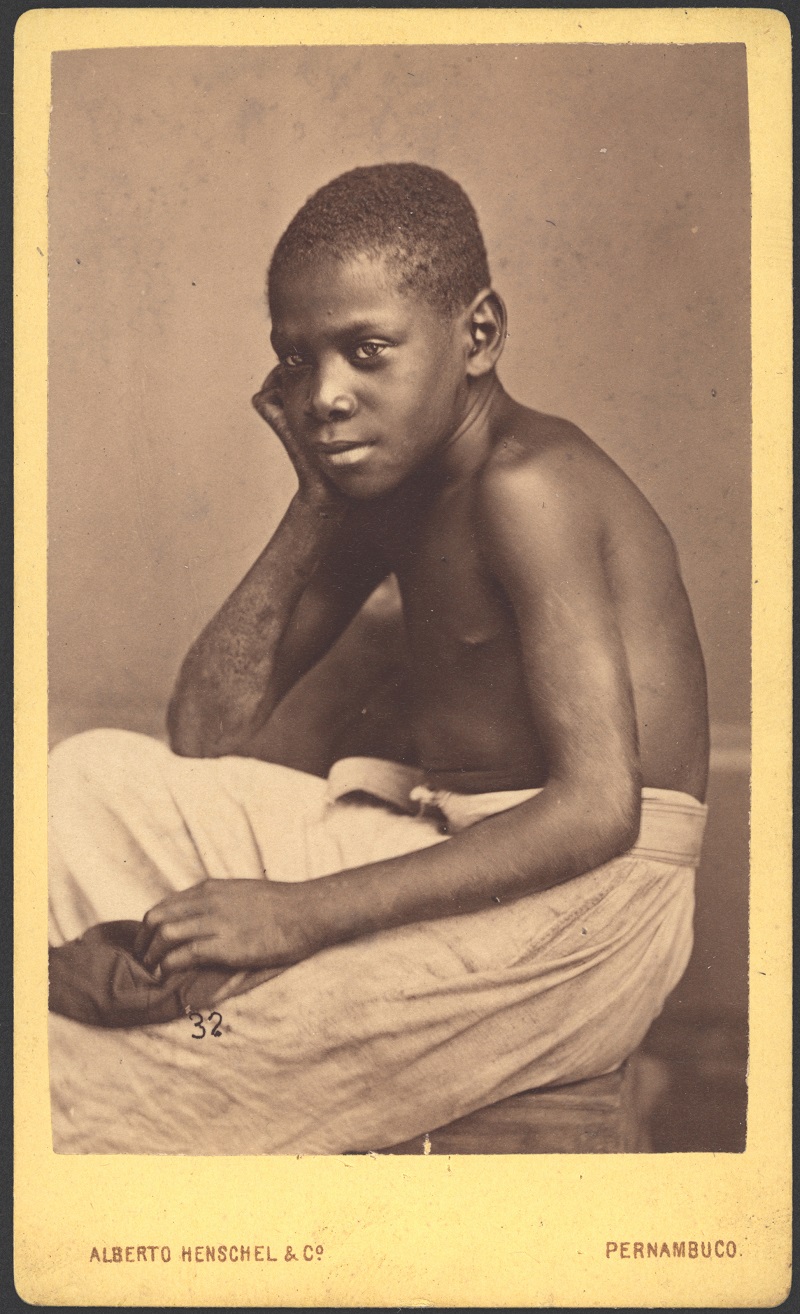
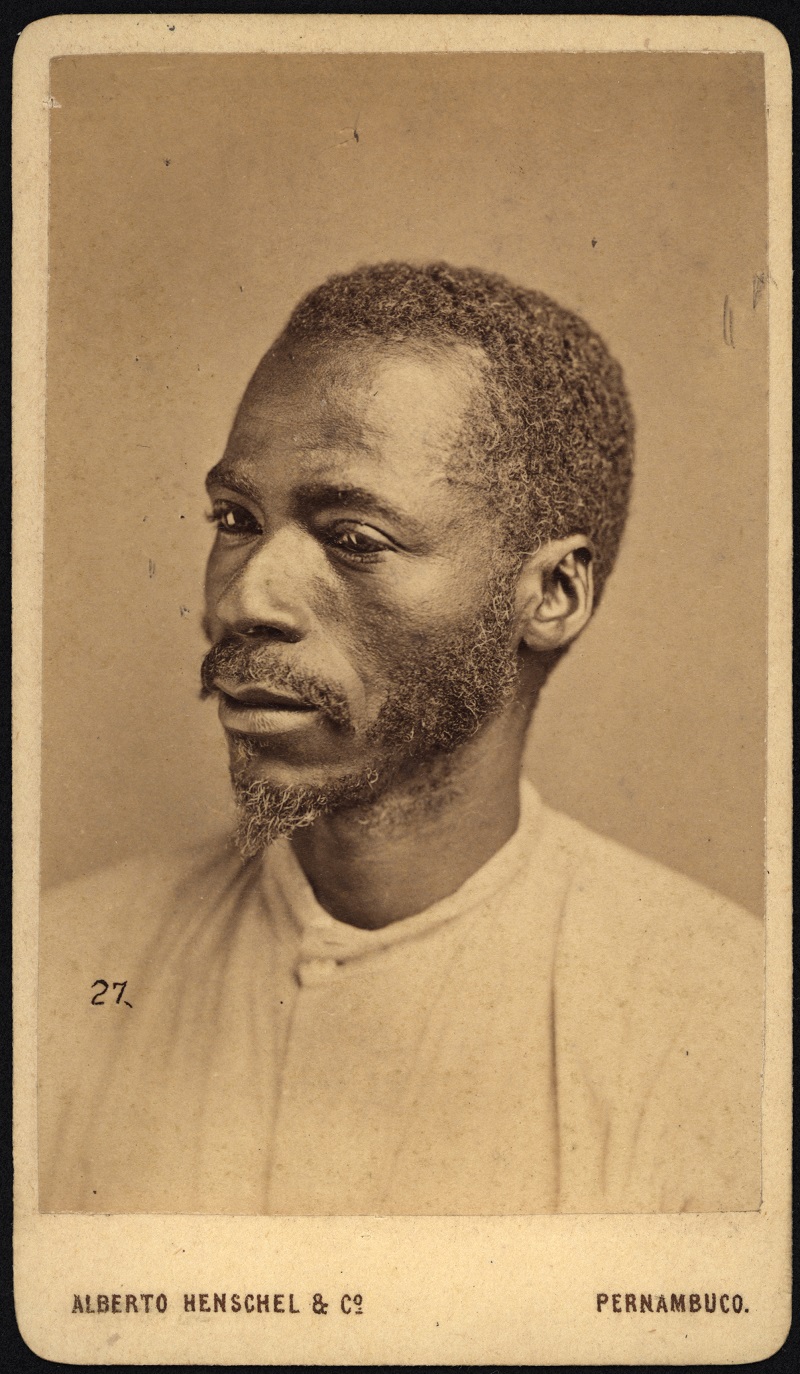
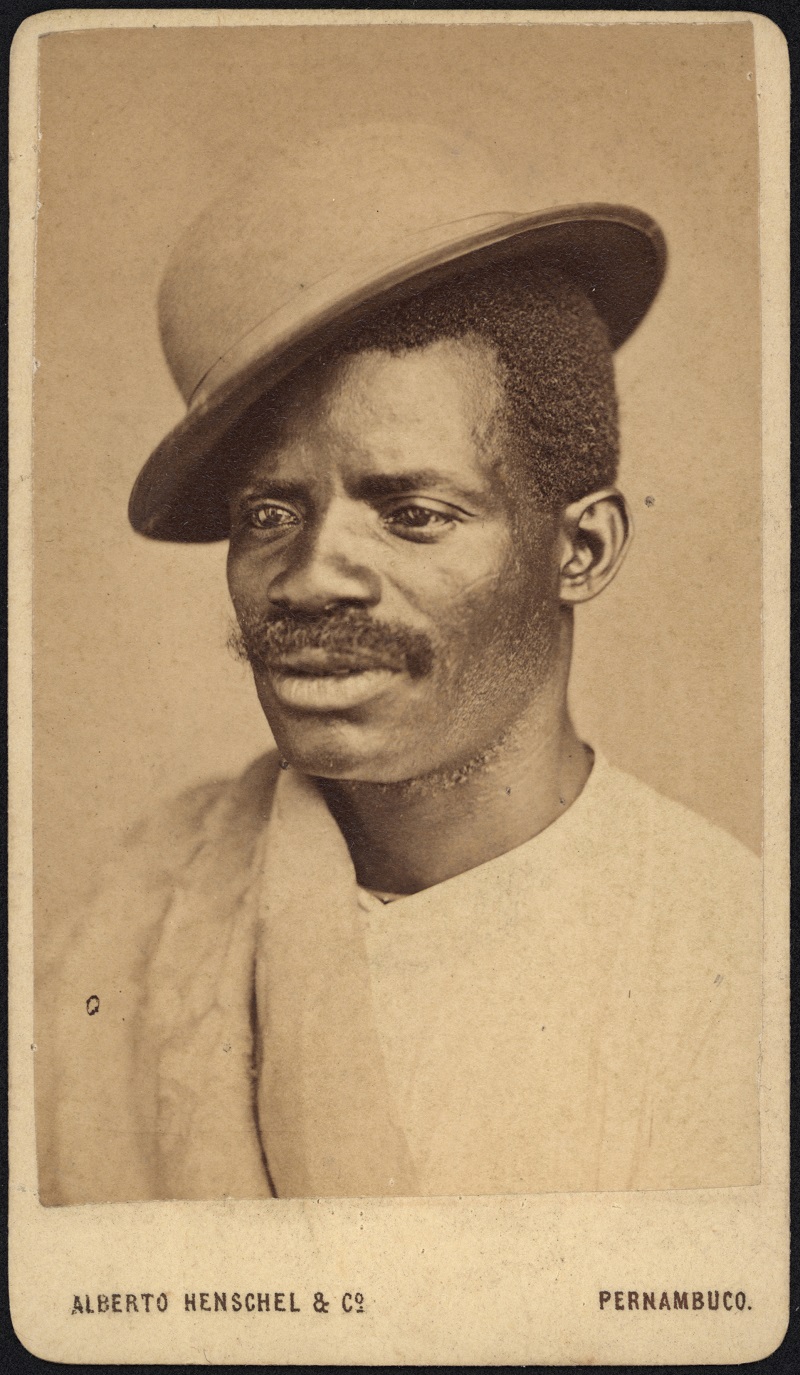

Alberto Henschel_portrait of a middle-aged man with hat_from the series Tipos negros_around 1869

. . . . .
Brazilian Women Poets (Cadernos Negros / “Black Notebooks”, 1997): new translations from the Portuguese: Rufino, da Silva, Evaristo, Ribeiro, Vieira, Alves, Fátima, Tadeu
Posted: February 25, 2016 Filed under: A FEW FAVOURITES / UNA MUESTRA DE FAVORITOS, Brazilian women poets: new translations, English, Portuguese | Tags: Black History Month poems, Brazilian women poets Comments Off on Brazilian Women Poets (Cadernos Negros / “Black Notebooks”, 1997): new translations from the Portuguese: Rufino, da Silva, Evaristo, Ribeiro, Vieira, Alves, Fátima, Tadeu
Steadfast and Strong_collage by Brazilian artist Ananda Nahu
.
Alzira Rufino (born 1949, Santos, São Paulo state)
POLICE REPORT
.
The black woman is not stopped
by this brutish thing
by this lukewarm discrimination
your strength is a secret
show your speech through your pores
your scream will echo in the city
they weed your dignity
as poisonous weeds
they hurt you with arrows commended
they experiment on you
your négritude – Blackness –
disturbs,
your whirlpool of forces drowns all around it
they don’t want your presence
they cross your name with absence
come, black woman,
be, black woman,
see, black woman –
after the storm
. . .
BOLETIM DE OCORRÊNCIAS
.
Mulher negra não para
por essa coisa bruta
por essa discriminação morna
tua força ainda é segredo
mostra tua fala nos poros
o grito ecoará na cidade
capinam como mato venenoso
a tua dignidade
ferem-te com flechas encomendadas
te fazem alvo de experiências
tua negritude
incomoda
teu redemoinho de forças afoga
não querem a tua presença
riscam teu nome com ausência
mulher negra, chega,
mulher negra, seja,
mulher negra, veja,
depois do temporal
. . .
Ana Célia da Silva (born in Salvador da Bahia)
JOE
(To my father)
.
Down the street
there goes Joe,
sad and tired
Joe’s the people
Joe is Joe
An urn-less fakir
A stage-less actor
A nameless acrobat
There goes Joe
No present
No future
And any past he gets
he tries to forget
At times he cries
He rarely laughs
He always thinks
he’ll leave
as a sad inheritance
for the future
the tightrope
the shack
the empty casserole
and a bread-less family
. . .
ZÉ
(Para meu pai)
.
Descendo a rua
lá vai o Zé,
triste e cansado
ele é o povo
ele é o Zé.
Faquir sem urna,
ator sem palco,
acrobata anônimo,
lá vai o Zé.
Não tem presente,
Não tem futuro,
se tem passado
tenta esquecer.
Às vezes chora,
bem pouco ri,
vive pensando
que vai deixar
de triste herança
para o futuro,
a corda bamba,
o barracão
marmita vazia
e família sem pão.
. . .
Conceição Evaristo (born 1946, Belo Horizonte)
IN WRITING…
.
In writing hunger
With empty-palmed hands
when the hole-stomach
expels famished desires
there is, in this demented movement
the dream-hoping
for any leftovers.
.
In writing cold
with the tip of my bones
caring in my body the tremor
of pain and shelterless-ness
there is, in this tense movement
the warmth-hoping
for any miserable little vest.
.
In writing pain,
alone,
searching for the resonance
of another in me
there is in this constant movement
the illusion-hoping
for our doubled consonance.
.
In writing life
fading and swimming
on departure’s test tube
there is, in this useless movement
the treacherous-hoping
for catching Time
and caressing eternity.
. . .
AO ESCREVER…
.
Ao escrever a fome
com as palmas das mão vazias
quando o buraco-estômago
expele famélicos desejos
há neste demente movimento
o sonho-esperança
de alguma migalha alimento.
.
Ao escrever o frio
com a ponta de meus ossos
e tendo no corpo o tremor
da dor e do desabrigo,
há neste tenso movimento
o calor-esperança
de alguma mísera veste.
.
Ao escrever a dor,
sozinha,
buscando a ressonância
de outro em mim
há neste constante movimento
a ilusão-esperaça
da dupla sonância nossa.
.
Ao escrever a vida
no tubo de ensaio da partida
esmaecida nadando,
há neste inútil movimento
a enganosa-esperança
de laçar o tempo
e afagar o eterno.
. . .
Esmeralda Ribeiro (born 1958, São Paulo)
LOVE’S ENIGMA
.
There is an island
There is ivory
There is an archipelago in me
.
I’m the same actress rehearsing
every day
the same love case
lived by a whisker.
.
Inside me
solitude dressed as a Harlequin
.
I’m that one that although full of bruises
makes her body like cinnamon
perfumed grass
for her negro to sleep
.
Inside me
Illusions drawn with Indian ink
.
I am that woman
trying to wake up sleeping beauties
but, inside, I am a princess
in profound lethargy.
.
Inside me
a warrior’s strength dressed in satin.
.
I am that one who at night
hides as a chameleon
eye’s pearly drops
in warm passion.
.
Inside me
lives at last the enigma of love.
.
I am that one which no verb translates
before the loneliness and the pain,
that one with insane behaviours
That’s me – the eternal
Mary Joanne.
. . .
ENIGMA DO AMOR
.
Há uma ilha
há marfim
há tristes arquipélagos em mim.
.
Sou a mesma atriz que ensaia
todos os dias
o mesmo caso de amor
vivido por um triz.
.
Dentro de mim
solidão vestida de Arlequim.
.
Sou aquela cheia de hematomas,
mas que faz do corpo relva
com aroma de canela
pro seu negro dormir.
.
Dentro de mim
ilusões traçadas à nanquim.
.
Sou aquela mulher
tentando despertar belas adormecidas
mas, no íntimo, sou a princesa
em profunda letargia.
.
Dentro de mim
força guerreira vestida de cetim.
Sou aquela que à noite
esconde como camaleão
gotas de pérolas d’olho
na cálida paixão.
.
Dentro de mim
enfim mora o enigma do amor.
.
Sou aquela que nenhum verbo traduz
diante da solidão e da dor
aquela que tem atitudes insanas
Esta sou eu, a eterna
Maria Joana.
.

Ananda Nahu_Queen
Lia Vieira (born 1958, Rio de Janeiro)
EAGERNESS
.
In the memory blinks
images of remote times
and recent things
The air is heavy
always has been
There’s hunger in the world outside
There’s no eating.
There’s tiredness in the world here inside
There is big fear
something frightful
As if nothing might
ever sprout again.
There’s something deformed here inside
Madness that explodes
about to crash / soul made of glass
Maybe is the answer I’m waiting for
Maybe is my ego
egocentric, egotistic, which
– throbbing –
is eager for love.
. . .
ÂNSIA
.
Pisca a memória
imagens de tempos remotos
e também de coisas recentes.
O ar está pesado
tem estado
No mundo lá for a há fome.
Não se come.
No mundo cá dentro há cansaço.
Há um medo grande
uma coisa de susto.
Como se fosse acontecer
não brotar nunca mais.
Há algo disforme cá dentro.
Loucura que explode
prestes a estilhaçar / alma de vidro.
Talvez seja a resposta que espero…
Talvez seja apenas meu ego,
egocêntrico, egoísta, que,
latejante …
deseja amor.
. . .
Miriam Alves (born 1952, São Paulo)
INNER LANDSCAPE
.
The night breeds chords
the joyful star turns into a moon
a dream’s sonata rolls along the asphalt
.
A sleeping sky confuses itself
the sun shines over it with
a middle-of-the-night smile
dew splashes on the roofs
.
The sky’s face muddles
half nights, half days
a dawn rises
a playful child is born
wrapped in dawn’s early hours
.
Wake up, day!
There’s eagerness for hope!
. . .
PAISAGEM INTERIOR
.
A madrugada respira acordes
estrela brincalhona enluará
sonata dum sonho rola asfalto
.
O céu todo em sono confunde-se
o sol ilumina-o com
um sorriso madrugada
respinga orvalho nos telhados
.
A face do céu confunde-se
meio em noites, meio em dias
desponta uma autora
nasce uma criança brincalhona
toda envolta em madrugada.
.
Acorda dia!
há fome de esperança!
. . .
Sônia Fátima (born 1951, Araraquara, São Paulo state)
THE IT
.
The night brought me it:
I don’t know if I call it
I don’t know if I contradict it
or if I just don’t care about
the Benedict
. . .
O DITO
.
A noite trouxe-me isto:
não sei se ligo para o dito
não sei se desdigo o dito
ou simplesmente não ligo
para o Benê-dito
. . .
Teresinha Tadeu (born in São Paulo)
STILTS
.
The dirty water grabs you
quietly, falsely, and you don’t even scream
You mix your innocence
with crab feces and mud
.
And you sleep precociously
holding your toy.
Gliding over the water
under the stilts.
.
The sun comes and goes
and doesn’t dry you out
in its foamy sheets
You’re one less to share the bread!
. . .
PALAFITAS
.
A água insalubre te recolhe
quieta, falsa, e tu nem gritas.
Misturas tua alvura
com fezes caranguejo e lama.
.
E dormes precocemente
segurando teu brinquedo.
Deslizando sob as águas
debaixo das palafitas.
.
O sol se vem e se vai
e não te enxuga
no lençol de espumas.
És menos um, na partilha do pão!
. . .
Other Black Brazilian poets featured in Cadernos Negros…
https://zocalopoets.com/2014/06/
. . . . .
“The Road Before Us”: Gay Black Poets from a generation ago
Posted: February 23, 2016 Filed under: English, The Road Before Us: Gay Black Poets from a generation ago | Tags: Assotto Saint, Black History Month poems Comments Off on “The Road Before Us”: Gay Black Poets from a generation ago
Preface to The Road Before Us: 100 Gay Black Poets (1991)
.
The Road Before Us could have taken a far different path. As its editor and co-publisher, what I wanted foremost was a collection that would provide one more stepping-stone on the road to gay black poetical empowerment. Too often this has been the road not taken.
.
Each poet in this volume is represented by one poem…..
I relish this mixture of styles, which are as wide-ranging as our concerns. The myths, metaphors, and mundaneness of our gay black community, like those of any other community, broaden and deepen everyone’s knowledge of what it is to be human.
.
Most of the poets in this anthology have never appeared in a book before…..
It is my dream that all these fine young writers will keep penning poetry, polishing their craft, and juicing up a literally dying art.
.
The title The Road Before Us is borrowed from a line in the poem “Hejira” that the late Redvers JeanMarie wrote about our friendship. He dedicated it to me. I cherish it. It is anthologized here. The choice of “gay black poets” rather than “black gay poets” was a personal one. I originally used the working subtitle Gay African-American Poets – to which some contributors strongly objected because they were not born in the United States and, moreover, have not chosen to naturalize as American citizens (as I have).
.
Afrocentrists in our community have chosen the term “black gay” to identify themselves. As they insist, black comes first. Interracialists in our community have chosen the term “gay black” to identify themselves. As they insist, gay comes first. Both groups’ self-descriptions are ironically erroneous. It’s not which word comes first that matters, but rather the grammatical context in which those words are used – either as an adjective or as a noun. An adjective is a modifier of a noun. The former is dependent upon the latter.
.
I have never labeled myself either Afrocentrist or interracialist. From reading or seeing my theatre pieces, many might characterize me as an Afrocentrist; but others might immediately characterize me as an interracialist because I have loved and lived with a white man for the past eleven years.
.
Although I make no excuses or apologies for the racially bold statements in my writings, I also owe no one any justification of my “till-death-do-us-part” interracialist relationship. While the black gay vs. gay black debate rages on, in much-needed constructive dialogue, we’d best ponder, as L. Lloyd Jordan did at the conclusion of his essay “Black Gay vs. Gay Black”(BLK, June 1990): “Who are gay blacks and black gays? Halves of a whole. Brothers.”
.
Furthermore, I consider my sexuality a preference. Most of us have an inclination to bisexuality that we don’t acknowledge or act upon. I am very proud of my gayness – which is not to be confused with homosexuality.
.
In the preface to his book Gay Spirit, Mark Thompson explains this distinction clearly: “Gay implies a social identity and consciousness actively chosen, while homosexual refers to a specific form of sexuality. A person may be homosexual, but that does not necessarily imply that he or she would be gay.”
I declare that a person may be gay – but not necessarily homosexual.
.
Colour – and it is much more than skin pigmentation – is not a preference. The same has not to this day been scientifically demonstrated regarding our gayness, which is so much more than sexual orientation. It’s hard to imagine that any writer in this anthology would ever want to change either his colour or his gayness, given a choice.
.
I realize that these views add fuel to the “fire and brimstone” pronouncements of those in far-right politics who argue that we lesbians and gays could change to “normal” if we wanted to.
.
While I agree with our lesbian and gay community’s tenet that some of us can’t change, I would stand up anytime to Jesse Helms and his ilk, and declare loudly that, whatever the case may be, I refuse to change. Far too many of us continuously let church and state dictate our fate, by submitting to their painful spiritual and political butt-fuck.
.
What does all this politics have to do with poetry?
As Judy Grahn said in a keynote address at OutWrite ’90: “Poetry predicts us, tells us where we are going next.”
.
Shouldn’t we, the poets in this anthology, dispatch to Helms our gay black poems each time he gets up in front of the Senate and spews forth yet another homophobic or racist harangue without fairness of debate and real challenge? Couldn’t fifty of us (one representing each state of siege that he wants to turn our USA into) also fax him full-size etchings of our dicks to be inserted in The Congressional Record. Then ours would not be the dicks of death – as popularly characterized – but truly the dicks of everlasting political life.
. . .
Some months ago I urged all the contributors who are HIV-positive or have AIDS to come out. I felt than, and I still feel, that there is nothing that those of us in this predicament could reveal in our bios that is more urgent and deserving of mention than our sero-positivity or diagnosis.
.
A number of contributors agreed. I applaud their trust and thrust. Others who have previously come out publicly chose not to do so in this instance. A few who I know to be in the last stages of HIV illness cited confidentiality and their right of privacy.
.
While sympathetic to the right of privacy issue, I also find it part of the overall problem. It fosters anonymity rather than visibility. And when we don’t show en masse the lives, the faces, and the hearts of AIDS – ours included – we are accepting all the connotations of shame, all the mystification of sin and repentance that those who are plainly simple-minded place on a virus.
.
AIDS is a Pandora’s Box.
There is real jeopardy in revealing sero-positivity, publicly or privately. In gay black poetry the issue has been primarily dealt with from a third-person narrative rather than a first-person focus.
.
Meanwhile, in highly disproportionate numbers compared to our percentage in the American population, and adding to the lowering of our expected paltry sixty-year-or-so lifespan as black men, there are many gay disappearing acts among us, too often played solo, or for a small – and not so captive – audience. As the late Joseph Beam, editor of In The Life, anticipated and stated: “These days the nights are cold-blooded and the silence echoes with complicity.”
.
Back in April 1988 Joe [Joseph Beam] stayed overnight at my apartment, as he always did when he visited New York City. I detected the [AIDS] syndrome beneath the moodiness, innuendoes, and fungus of the fingers. I did not disclose to him my own sero-positivity, although – thinking of it now – I believe that he detected more than just a holocaust obsession in the poems I shared with him.
.
What kind of “deadly guessing game” were Joe and I – two of the better-known gay black writers – supposedly leaders – and most importantly, friends – playing with each other? What kind of label do I attach to my name, after leaving unreturned messages on his answering maching, for not marching down to Philadelphia and knocking on / down his door?
.
Yes, I am sick of the destructive threats that HIV constantly poses to my life-partner, my lovers, my friends, my communities, and me. On my desk, pictures of Redvers [JeanMarie], David [Frechette], and Ortez [Alderson] – to whose memory this anthology is dedicated – are framed like icons.
.
Each time I write I hear their voices, backed by a chorus of others I loved (“One AIDS death every eight minutes; it ain’t enough to write, you gotta demonstrate!”) pound in my head, like those sanctifying drums, especially tambou assôto, I used to hear in my childhood in Haiti in the hours of darkness.
. . .
May the rhythm of our gay black hearts be as uplifting in our daily lives as it is in our essays, anthologies, films, rallies, one-night-stands – and poems.
.
May the rhetoric never rage like the grandstand of many pedantics in the gay white community, which we so often hasten to castigate for claiming to speak on behalf of our “rainbow” community.
.
And most of all, may we come to believe in each other – heroes, first, to ourselves – unafraid to “strike a pose” and take a stand.
.
Ours is a country where omens abound out of control. Ours is a country tempted by fascism. Ours is a country in a demythologized age, perhaps void of salvation. Yet I don’t believe in the destruction of America, but in a reconstitution that recognizes our fully participating gay black voices.
Silence = Death.
Writing = Life.
Publishing = Survival.
.
With sixty T-cells left, I live on borrowed time. However, self-pity and sympathy are not part of my survival kit – another factor why making this book a reality became a first priority.
.
But when I do die, killed like hundreds of thousands in this AIDS war, may it transpire that every Memorial Day – until the circus of media, clown masks of stigma, and jeers of hysteria stop in our country; and certainly until a cure is found, or at least until a do-or-die governmental, scientific, and societal commitment to discover one finally gets underway – my life-partner, mother, lovers, friends, fellow poets, somebody, anybody…burn the Stars and Stripes then toss the ashes over my grave.
.
And please don’t sing “The Star-Spangled Banner” – but, furiously, read back every poem in the following pages.
.
Assotto Saint, nom de guerre
Summer 1991, New York City
Poems from The Road Before Us: 100 Gay Black Poets, edited by Assotto Saint, published 1991
. . .
Blackberri
Love Song
.
1.
you move me to poetry
to song
you’re often in my thoughts
are my thoughts
moving me to poetry
to song
then to poetry
2.
even your silence
tells me things
your heart can’t
and when you are near
you can no more
maintain than i
3.
in a dream
i loved you long
and deep
you let go
i let go
without a touch
i awoke wet
surprised
4.
you move me to poetry
to song
you’re in my fantasies
are my fantasies
realized
realize
you are moving me to poetry
to song
then to poetry
again
. . .
Eric Stephen Booth
An Exercise in Misogyny
.
So I lied and told her that I loved her
Starved, she took me seriously
My heart couldn’t make a U-turn
Out of pity I married her
.
I hit her when I was wrong, then gave her
Roses with thorns to reconfirm our vows
Out of fear of being exposed
Growing up just like dad
.
Through journeys of weekend violence
It dawned on me after our fourth child
That my heart wasn’t steering
And my brain was on automatic drive
.
She damned me to hell
My mother couldn’t believe her ears
After a lifetime of masculine strife
I came face to face with my fears
. . .’
Rory Buchanan
Barbecues
.
I was taught
men marry women
have two point five kids
ranch homes in suburbs
with impossibly green lawns
surrounded by
pristine white picket fences
shop at pathmark and k-mart
buy tools from sears
go to church every sunday
pray for salvation
find mistresses when bored
.
I was told
it was wrong to
love another man
touch the way I do
mingle spirits and fluids
feel okay about who I am
listen to my heart
expose the real me
admit to being gay
.
I was warned
that if I followed my
unconventional desires
slept with a man
satisfied wants
fulfilled needs
I would burn in hell
fry forever
.
So
I tell them
“Start the barbecue”.
. . .
John E. Bush
Remember Me
.
Remember me for the love I gave
and tried to give
for the companionship we shared
held dear
– remember me.
.
Although I would have liked
our time together to have been longer
so much I wanted to do
so much you expected of me
it was not to be
– still remember me.
.
Think about those good times
when we laughed and dined
at the table of fellowship
good times now gone
yet preserved forever in your memory
– remember me.
.
Know that my love for you
was not one that was duty-bound
but it emerged sincerely
from some unknown place
a love once mine
now left to you to hold
and pass on to others
when it is your turn to leave
– so remember me.
Not in a sorrow of despair
but triumphantly
remember me.
. . .
Rickey Butler
After the Fuck
.
when the sheets are up
the curtains drawn
and your eyes get all fuzzy
because of the sun,
don’t disappear
. . .
Don Charles
Pony Boy
.
White man
Wealthy man
Bed is cold
Body old
Black man
Healthy man
Firm and young
Heavy hung
.
Silver man
Pays to score
Horny guy
Out to buy
Mocha man
Plays the whore
Life is hell
Got to sell
.
Business man
Undercover
Hotel suite
So discreet
Hustler man
Hired lover
Money’s right
Spends the night
.
Respected man
Life of leisure
Owns the town
Sneaks around
Survivor man
Selling pleasure
Rich man’s toy
Pony boy
. . .
J. Coleman
When I write to Godmother
.
I’m careful with
Language
Slang takes a holiday
.
careful not to twist
my tongue
She must not hear the
loose metaphor nights
.
nor smell the necks I’ve licked –
.
I don’t smack my lips
She must not see
the boys I’ve kissed
nor hear the whispers –
.
She must not examine my prose
for nuance
nor read between
too many lines –
.
But if asked
I won’t deny perdition –
What price
a letter!
.
I feel pen pricks
in my soul.
.
With a clean sheet of paper in hand
and newly brushed teeth
I ask
.
“How are you?”
. . .
Carl Cook
Love Letter #25
.
September has
the clearest air
the coolest nights
the brightest moons lie still
like autumn leaves
I am renewed
by thoughts of you
.
Tomorrow
my love
I may need to wear a raincoat
galoshes made of manufactured latex
an umbrella wide enough
to keep us dry
in a sudden storm
.
But I am
of the faith
that storms will pass
the rains will dry
and love as cool and clear
as September air
will still be ours
. . .
Rodney G. Dildy
Heroes
.
The heroes have died
Died twisting to blind
leadened boogies
Died broken blue midst indigo
moods, sworded bone
unsheathed ivory
blood-burned biceps
Died cold-dredged
worm-swollen
thru mute catfish alleys
My heroes
they have all died
over or underqualified
neglected or exposed
from genius and gross
stupidities
Died dirty-nailed
greasy-necked
Died gem-cysted
diamond-eyed

Sean Drakes
Love Lesson #1
(To Richard Cousar, whose death to AIDS encourages safer-sex behaviour, drives knowledge-sharing, stimulates my artistic responses to the epidemic, and has taught me what love feels like.)
.
I
.
A summer Sunday on Christopher Street
brought us together:
Two black gay men
yearning for love.
Quicker than instantly,
we shared secrets, passion,
weekends and underwear.
Suddenly, my six months exhausted,
I had to package
then file
this ideal come true.
I was twenty-one,
he, forty-three,
and rekindling
a thirteen-year romance
as I coped with foreign feelings.
.
II
.
The bright winter moon
guided me –
a messenger of good will
and faith
in a plastic pouch –
to and from his hospital
bedside.
Day by day,
kisses,
hugs
and offerings failed
to salvage my friend,
till after I hung up the phone,
a restless night
became
endless.
. . .
Roy Gonsalves
Black Summer
.
I know what it’s like to pick peppermint
from my garden
to make tea to calm my shattered nerves
wishing for magic to render sanity.
.
I’ve torn memories in my photos
ripped decorations by ex-lovers
snipped petunias for fun
burned hate letters in the fire of the grill.
I know what it’s like to recite
eighteen psalms in one night
to pray not to become one of Satan’s disciples
and cast a deadly spell.
.
I’ve heard whispers from my lover’s lips
telling me he’s sleeping with my so-called friend
I’ve lived harlequin romances
and watched them turn into bloody nightmares
where I became the murderer.
.
I know what it’s like to plot murder
to shoot a friend in the face
and watch his smile fall blank
to beat bloody my belovéd
with a hammer
and leave him in the cellar.
.
I know what it’s like to choke on hatred
despise the image in the mirror
and every living thing that moves.
I know the terror of being alone
for fear I might kill myself.
I’ve seen impatiens in my garden
shrivel up and die before my eyes.
I know what it’s like to be dead.
.
I’ve been to a funeral
in my own home
heard the ancestors scream:
“It’s not your time…”
I’ve watched summer turn black.
I know what it’s like to have your heart
turn into hot ice
waiting to burn.
. . .
L.D. Hartfield-Coe
Drifting
.
You have been wasting a life /
with struggle and strife /
still you wonder /
late at night /
will the dawn ever come /
the rain stop /
so you can /
reach out for the light /
and make amends /
raining again /
will the sun ever shine /
a rainbow will be his sign /

. . .
F. Spencer Irvin
Black Culture in the Park
.
There’s a lot of culture in the park.
From the handsomest B-boys
To the sassiest Divas;
The Black Bourgeosie
To Homeless America.
There’s a lot of culture in the park.
A large wooded area:
A place with fountains and ponds,
Hills and rocks, grass and trees
Where “boys” walk, look, searing,
And men grope, seek, searching
For orgasms.
Do you practise “safe sex”?
Neither did they.
There’s a lot of culture in the park.
A youngman of twenty-eight or so:
A beautiful man, but a man of the streets –
Survivor – he asked me to pay him
Three bucks, and he’d take care of me.
There’s a lot of Black culture in the park.
. . .
G. Winston James
To Be Brave
.
Can you hear my footsteps as I approach the waiting grave?
Can you see my despair as I descend into death’s cave?
Do you recall the day when I imbibed that savage blood?
Do you know of shattered dreams, crushing of frozen rosebud?
How can I look ’round at my prints buried in the deep snow?
How can I bear that as it melts all trace of me will go?
Can you hear my footsteps as I approach the waiting grave?
If so, will you be there with me to help me to be brave?
. . .
Redvers JeanMarie
Hejira
(for Yves Lubin)*
.
There were no colours
A night without azure
And a cloud-covered moon misted
Our skins
Such yearning could not be pinned
A rustle of trees gave no answers
Nor the ambient air
A sense of plenitude
The road before us with no symbols
A restrictive sense of nothingness
Wrapped us firm
I’ve a natural strength
And can follow with you
I heard myself
Whisper
Questions long forgotten
What we’ve become
Has no name
. . .
* Yves Lubin = Assotto Saint
. . .
Sidney Curtis Johnson
Sunday, November 6, 1987
.
He came
like
the day
awakening
colour
without
ever
straining
its reason.
.
I stared
like
a child
at the circus
awed
with
dim hope
answering
his call.
. . .
Anthony B. Knight-Dewey
Loneliness
.
Loneliness is an abandoned house.
It creaks with stillness and rests
on the blackness of its foundation.
It sits alone in the backyard of our minds,
yet stands out and demands recognition.
It hides elusively behind the rubbish of life,
yet shines a light most radian from its highest loft.
It is weather-beaten from years of torment and anguish,
but still retains its shape and strength.
.
Loneliness gives no clues or suggestions.
Secrets are hidden and locked away in the attic of darkness.
Groans and cries race through the pitted corridor
down the infested stairwell
to the moldy basement.
.
Loneliness gathers dust in the dungeon of time.
The windows of hope and aspiration are boarded up
with the greyness of despair.
.
Yet, only in loneliness does one experience
all those dimensions that are one,
those distant faraway lands of beingness –
the spirit supreme,
the temple eternal.
. . .
Steve Langley
Butch
.
My name Butch
I work at the hardware store
I got this l’il gal I be messin wif
Fine as shit
She wanna move in wif me
But I don’t need no bitch up under me
Wantin this and that
I be hangin out at this punk club
Somethin to do
I may get a drink, get high
But I don’t talk to nobody
If I do hook wif somebody
I go to they place
I may let em suck my dick
I may fuck em
But I don’t be kissin em
And they bet not try to kiss me
I’ll beat the shit out of em
I don’t give em my name or my number
Not my real one
Once I git off
I’m gone
. . .
Harvey J. Lucas
Too Late to Say I Love You
(for David)
.
Often he was parental,
But the rebellious pride masked
His contentment with concern.
.
Often he was great,
Generic in dress – forceful passion –
And a dynamic friend.
.
Often he was risqué,
Public kisses – arrogant smirks –
Not afraid to say anything.
.
Now, I often remember him:
Consumed by that inscrutable entity
Of eternal silence.
. . .
Jerome Mack
Flaw
.
Sometimes
i wish i could
rid myself
of this skin
that covers me
subdue carnality
pick fights
with truth
pull husk
over conscience
i would…
there’s just no
hiding place
.

Scott Mackey
I Couldn’t Speak His Language
(for Romuald Du Clos de Saint André)
.
when i first me him
he was only a boy,
but not really.
.
he allowed me to believe
i was in control – the man,
old, wise and mature.
.
reality obscured the dream
because
i couldn’t speak his language.
.
he knew
but needed to hear
what i couldn’t say.
.
a part of me burns
as i become
desperately aware of my mortality.
.
i didn’t realize
.
how important
words could be.
. . .
Vernon Maulsby
Gender Bender
(To Richard)
.
Is it safe for me
to let my hair down
and speak freely with you?
Will this woman’s heart
speaking through a deep throat
make you dismiss me
as just another gender bender,
incomplete in your eyes?
Can I share the men I’ve loved,
the women I’ve liked, the fears
of death that sired my children?
Would you understand,
or should I just sit here,
and make lewd jokes, as we
talk of sports I never watch?
. . .
Rodney McCoy, Jr.
Pop
.
I used to dream
of a ghost in
silk
satin
lace
.
Dreaming of
gold
tightening around
my finger
like a blessing
or was it a noose
.
These dreams
were my mother’s smile
handed down
to my sister
and me
thinking it was
our birthright
our duty
our gift to her
.
But the day I kissed
your mustached lips
silk
satin
lace
to me
.
Those dreams
and my mother’s smile
popped loud
painful
absent forever
. . .
Jim Murrell
Bermuda
.
Fine.
Hot.
Luminous.
Infinite carapace of day ingathers hard, riding noon fire
On molten hillocks beyond the coral.
Sun-drovered come
Sarabands of iodine, nomad across the sea grape.
Pupils burn to pinpoint smoke: rolling glitter of
Water’s desert.
Our boat burns in rise and slap
And indigo swells from the east:
My father, the friends of his youth, myself.
.
And I am thirteen, struggling to man manliness.
Head, heart, stomach…vortex.
Resolve eddies on fuming wash of clubbed fish blood.
Betrayal of inner ear for which gravity is not enough.
And the rum talk: pompous, monotonous.
Men and ritual braiding the deep world into submission –
Pattern of a weaving,
A harnessing I cannot learn.
. . .
L. Phillip Richardson
The Book of Lists
.
so fickle ink on first acquaintance
i penciled them in
the urban gods
the fleeting sparkles
the would-be stars
were the heavens kinder those days
.
by name i now browse the list
the ABCs of ruthless order
unordered by homeless strays
the innumerable nicknames
attached to numbers
on unattached slips of paper
at home in my book
like family
.
i remember the first call
in my ear the first word
high on “hi”
the voice vibrating man vibes
then the jittery jive
of jigsaw sympathies
the flirts
the dirts
the jerks
the hurts
still hurting
.
suddenly i see
the old book older
its frayed memories losing the fray
as some fall free
come loose without restraint
no spine
no rubber binds them
holds them close
.
i chill
with each name i can’t erase
how graceless and cheap faint recall
leaving dead men in leaded glory
in the book of lists
i keep
. . .
Bryan Scott
Roller Coaster
.
You’ve called but haven’t spoken.
You’ve expressed but haven’t clearly stated.
You’ve suggested but haven’t taken action.
You’ve reached out but haven’t connected.
You’ve touched but haven’t felt.
You’ve been here yet you seemed elsewhere.
You’ve mentioned “love” but implied “like”.
Before I get on this emotional rollercoaster
I’d better listen to the silence…
. . .
Jamez L. Smith
Dreaded Visitation
(for my Grandmother)
.
The knock on the door
on the lazy Saturday afternoon
comes
like the toll of Donne’s bell.
Someone runs
and turns the television off.
The air becomes as still
as a dead fish.
Slowly, carefully,
Grandmama tips toward the window.
Another knock breaks
the silence,
and Grandmama freezes
like a doe suddenly aware
of the hunters stalking her.
Finally,
Grandmama reaches the window
and, recognizing the form outside,
breathes a sigh of relief.
She opens the door.
“What took you so long?”
the visitor asks.
Grandmama replies:
“We thought you was a Jehovah’s Witness.”
. . .
Marvin K. White
Last Rights
.
When I learned of Gregory’s death
I cried silently
But at the funeral
Giiiiirl I’m telling you
I rocked Miss Church
Hell I fell to my knees twice
before I reached my seat
Three people had to carry me
To my pew
I swayed and swooned
Blew my nose
On any and every available sleeve
The snot was flying everywhere
Then when I finally saw his body
My body jerked itself
Right inside that casket
And when I placed my lips on his
Honey the place was shaking
I returned to my seat
But not before passing by his mother
Who I’m sure at this point
Was through with me
I threw myself on her knees
Shouting “Help me
Help me Jesus”
When someone in the choir
Sang out “Work it girl
Wooooork it”
All hell broke loose
I was carried out
Kicking and screaming
Ushered into the waiting limo
Which sped me to his family’s house
Where I feasted
On fried chicken
Hot water corn bread
Macaroni and cheese
Johnny Walker Black
Finally in my rightful place
. . .

Andre De Shields
His (Blues) Story
.
Verse I
.
Before there was Desdemona,
Iago would warm Othello’s bed.
Before there was Desdemona,
Iago would warm Othello’s bed.
He would sharpen his sword,
Fill his lamp with oil,
And rub his woolly head.
.
Verse II
.
Before Caesar knew Cleopatra,
He would hold Mark Antony to his chest.
Before Caesar knew Cleopatra,
He would hold Mark Antony to his chest.
And that’s why the Queen of the Nile
Invited a serpent to make a home in her breast.
.
Stop Time
.
Now Achilles destroyed the Trojans
Because of a boy in his tent.
And if it hadn’t been for Jimmy Baldwin,
Young Giovanni would’ve had no rent.
When Alexander marched out of Egypt,
He was fierce; he was festive; he was grand.
And when Jesus chose his disciples,
He made everyone a man.
.
Verse III
.
So,
when you study your history,
You’d better learn it like you should.
‘Cause after God created the Heavens and the Earth,
And separated the light from the darkness,
And divided the water from the waters,
And gathered the dry land from the seas,
And produced vegetation according to its kind,
And hung the moon, and sun, and stars in the sky,
And threw birds in the air and fish in the ocean,
And placed wild creatures in the forest,
God said:
“I’m lonely. I think I’ll make Me a man in My image.”
And, so, He did.
Then, God looked around at all He had done and shouted:
“This is good.”
. . .
Assotto Saint (born Yves François Lubin) was a Haitian-American poet, performance artist, musician and editor. He increased the visibility of black queer authors and themes during the 1980s and early 1990s. In addition, Saint was both one of the first black activists to disclose his HIV-positive status and one of the first poets to respond to the AIDS crisis in his work.

Assotto Saint photographed by Robert Giard in 1987
. . . . .
Countee Cullen: poems from “The Black Christ” (1929) and “Color” (1925)
Posted: February 22, 2016 Filed under: Countee Cullen, English | Tags: Black History Month poems, Harlem Renaissance poets Comments Off on Countee Cullen: poems from “The Black Christ” (1929) and “Color” (1925)
Poems from The Black Christ and Other Poems (1929) by Countee Cullen (1903-1946)
. . .
Little Sonnet to Little Friends
.
Let me not the proud of heart condemn
Me that I mould my ways to hers,
Groping for healing in a hem
No wind of passion ever stirs;
Nor let them sweetly pity me
When I am out of sound and sight;
They waste their time and energy;
No mares encumber me at night.
.
Always a trifle fond and strange,
And some have said a bit bizarre,
Say, “Here’s the sun,” I would not change
It for my dead and burnt-out star.
Shine as it will, I have no doubt
Some day the sun, too, may go out.
. . .
Mood
.
I think an impulse stronger than my mind
May some day grasp a knife, unloose a vial,
Or with a little leaden ball unbind
The cords that tie me to the rank and file.
My hands grow quarrelsome with bitterness,
And darkly bent upon the final fray;
Night with its stars upon a grave seems less
Indecent than the too complacent day.
.
God knows I would be kind, let live, speak fair,
Requite an honest debt with more than just,
And love for Christ’s dear sake these shapes that wear
A pride that had its genesis in dust,–
The meek are promised much in a book I know
But one grows weary turning cheek to blow.
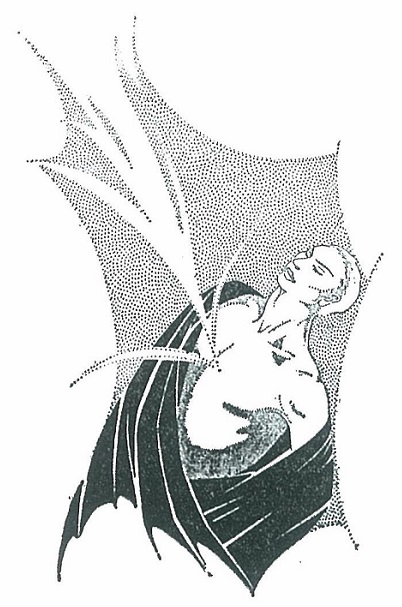
Minutely Hurt
.
Since I was minutely hurt,
Giant griefs and woes
Only find me staunchly girt
Against all other blows.
.
Once an atom cracks the heart
All is done and said;
Poison, steel, and fiery dart
May then be buffeted.
. . .
Revelation
.
Pity me, I said;
But you cried, Pity you;
And suddenly I saw
Higher than my own grief grew.
I saw a tree of woe so tall,
So deeply boughed with grief,
That matched with it my bitter plant
Was dwarfed into a leaf.
. . .
Song in Spite of Myself
.
Never love with all your heart,
It only ends in aching;
And bit by bit to the smallest part
That organ will be breaking.
.
Never love with all your mind,
It only ends in fretting;
In musing on sweet joys behind,
Too poignant for forgetting.
.
Never love with all your soul,
For such there is no ending,
Though a mind that frets may find control,
And a shattered heart find mending.
.
Give but a grain of the heart’s rich seed,
Confine some under cover,
And when love goes, bid him God-speed.
And find another lover.
. . .
One Day I Told My Love
.
One day I told my love my heart,
Disclosed it out and in;
I let her read the ill-writ chart
Small with virtue, big with sin.
.
I took it from the hidden socket
Where it was wont to grieve;
“I’ll turn it,” I said, “into a locket,
Or a bright band for your sleeve.”
.
I let her hold the naked thing
No one had seen before;
And had she willed, her hand might wring
It dry and drop it to the floor.
.
It was a gentle thing she did,
The wisest and the best;
“The proper place for a heart,” she said
“Is back in the sheltering breast.”
. . .
Black Majesty
(After reading John W. Vandercook’s chronicle of sable glory)
.
These men were kings, albeit they were black,
Christophe and Dessalines and L’Ouverture;
Their majesty has made me turn my back
Upon a plaint I once shaped to endure.
These men were black, I say, but they were crowned
And purple-clad, however brief their time.
Stifle your agony; let grief be drowned;
We know joy had a day once and a clime.
.
Dark gutter-snipe, black sprawler-in-the-mud,
A thing men did a man may do again.
What answer filters through your sluggish blood
To these dark ghosts who knew so bright a reign?
“Lo, I am dark, but comely,” Sheba sings.
“And we were black,” three shades reply, “but kings.”

Song of Praise
.
Who lies with his milk-white maiden,
Bound in the length of her pale gold hair,
Cooled by her lips with the cold kiss laden,
He lies, but he loves not there.
.
Who lies with his nut-brown maiden,
Bruised to the bone by her sin-black hair,
Warmed with the wine that her full lips trade in,
He lies, and his love lies there.

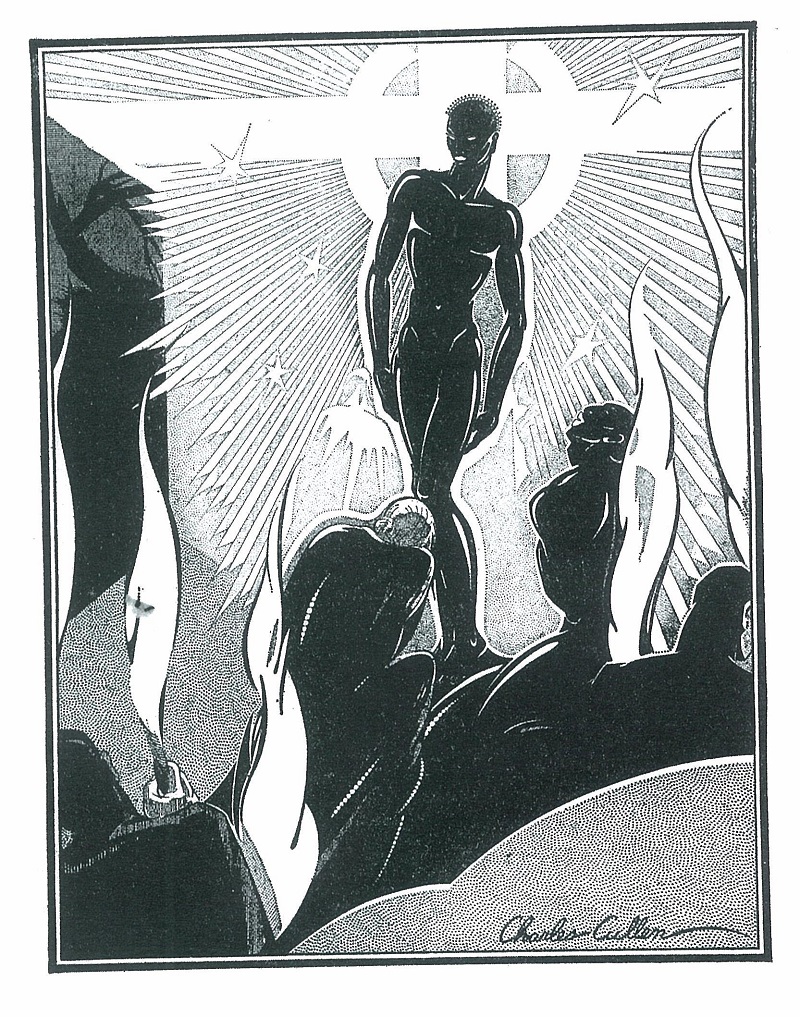
Illustration by Charles Cullen for the epic poem “The Black Christ” by Countee Cullen

 . . .
. . .
Four poems from Countee Cullen’s Color (1925)
.
Caprice
.
“I’ll tell him, when he comes,” she said,
“Body and baggage, to go,
Though the night be darker than my hair,
And the ground be hard with snow.”
.
But when he came with his gay black head
Thrown back, and his lips apart,
She flipped a light hair from his coat,
And sobbed against his heart.
. . .
Sacrament
.
She gave her body for my meat,
Her soul to be my wine,
And prayed that I be made complete
In sunlight and starshine.
.
With such abandoned grace she gave
Of all that passion taught her,
She never knew her tidal wave
Cast bread on stagnant water.
. . .
Bread and Wine
.
From death of star to new star’s birth,
This ache of limb, this throb of head,
This sweaty shop, this smell of earth,
For this we pray, “Give daily bread.”
.
Then tenuous with dreams the night,
The feel of soft brown hands in mine,
Strength from your lips for one more fight:
Bread’s not so dry when dipped in wine.
. . .
Gods
.
I fast and pray and go to church,
And put my penny in,
But God’s not fooled by such slight tricks,
And I’m not saved from sin.
.
I cannot hide from Him the gods
That revel in my heart,
Nor can I find an easy word
To tell them to depart:
.
God’s alabaster turrets gleam
Too high for me to win,
Unless He turns His face and lets
Me bring my own gods in.
. . . . .
Black History Month: Vintage Black Paper Dolls
Posted: February 20, 2016 Filed under: English, IMAGES Comments Off on Black History Month: Vintage Black Paper Dolls
“Aunt Dinah, the Colored Cook, comes to join the Paper Doll Family”_McCall’s Magazine, April 1911_Aunt Dinah is presented in a realistic, straightforward manner, as all the dolls in this McCall’s series were.
. . .
In the early twentieth century, paper dolls were a popular plaything for children. Cheap and easy to make, these cut-out paper figures could be dressed with paper clothes attached by tabs. The figures were often of idealistic characters: beautiful children, perfect families, fashionable ladies representing the power élite of the day. Boxed sets and books could be readily bought in stores, but many were available in magazines and newspaper comic strips as a special treat for the kids.
.
From the late 1800s to the mid 1950s, black paper dolls were rare and stereotypical in white-owned North-American media. Black adult females were shown as maids or ‘mammies’, caregivers to young white children. Black children as paper dolls always had at least one garment that was tattered and patched, and black adult males were almost never shown.
.
The outstanding exception to the above stereotypes was the creation of Torchy Brown by a black woman cartoonist named Jackie Ormes. The Torchy Brown comic strips and accompanying paper dolls appeared in black newspapers such as the Pittsburgh Courier and Chicago Defender in the early 1950s. Torchy herself, created by Ormes in the 1930s, was a strong and glamorous woman-of-colour who certainly did not wear rags. With the advent of desegregation and the Black Power movement in the United States, more and more positive images of black paper dolls finally appeared.
.
The images shown here cover the early stereotypes. Yet one can understand that, at the time, many blacks may have been pleased to see any representations of themselves in prestigious magazines such as McCall’s and Woman’s Home Companion. It was also during this period – in 1939, to be exact – that Hattie McDaniel won an Oscar for portraying a ‘mammy’ in the film “Gone With The Wind”; McDaniel was also featured in a paper doll book of the film.
Bruce Patrick Jones
. . .

Rastus_Little Louise’s Friend_Vintage Black paper doll_from Good Housekeeping, November 1909
Charming Rastus, gently stereotyped with patches and watermelon, was positioned as a friend of Little Louise, a blond, blue-eyed girl.

Farina (little girl in the middle)_from the Our Gang series in_Woman’s Home Companion, October 1925
Patches and rags define pretty Farina, though Fattie’s costume is tattered too. This exquisite illustration was by Frances Tipton Hunter.
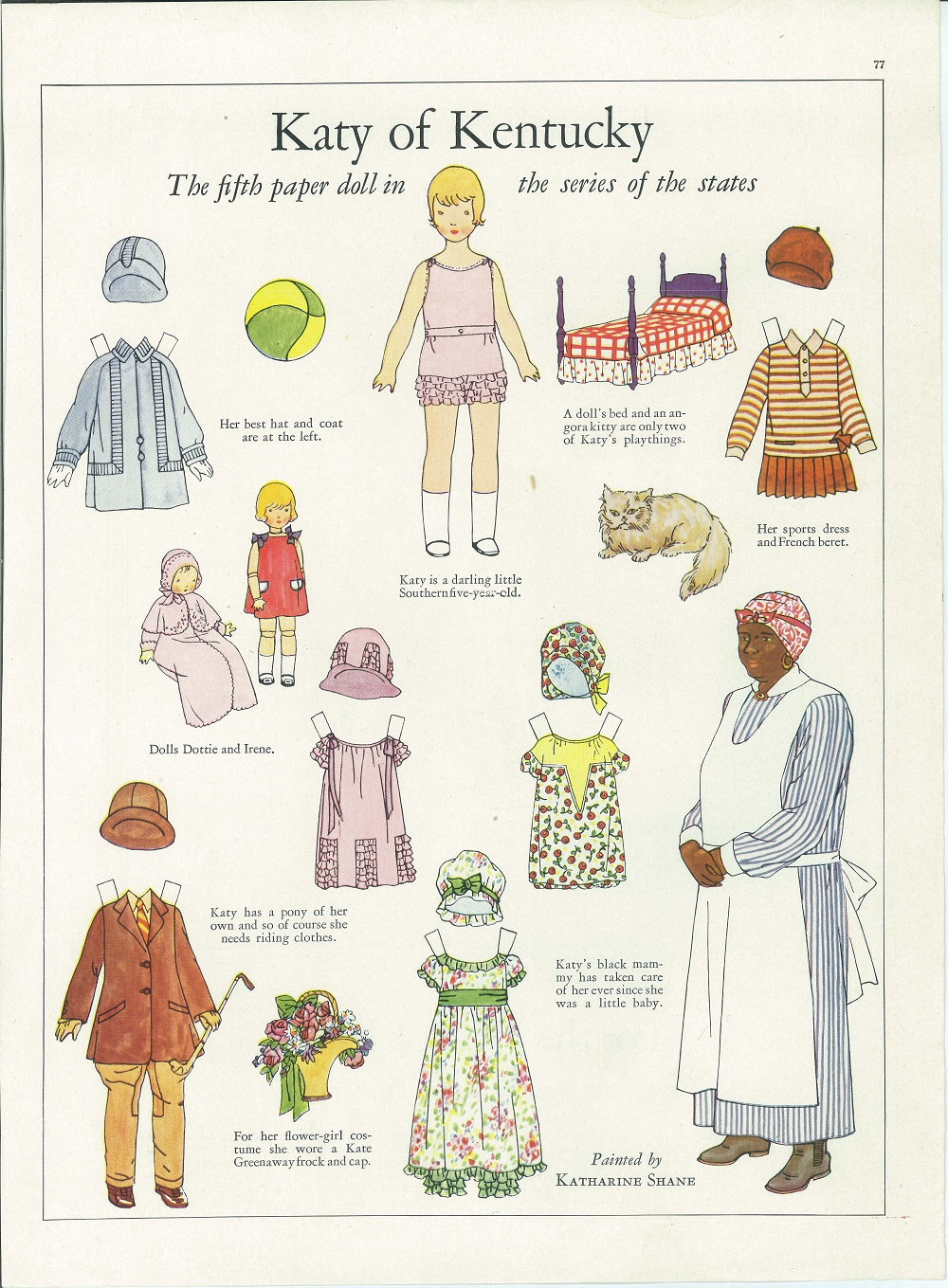
Katy’s black mammy has taken care of her ever since she was a little baby_painted by Katharine Shane_from Woman’s Home Companion, June 1927
What well-to-do little girl from The South wouldn’t have had her very own ‘mammy’ in 1927?
Mandy by Lydia Fraser_Canadian Home Journal, September 1932
Mandy, a warm and loving creation by Canada’s Lydia Fraser.
Topsy by Lydia Fraser_Canadian Home Journal, October 1932
Topsy’s ‘kitchen dress’ suggests she’ll follow mommy Mandy’s line of work.
Topsy’s Brother Sam by Lydia Fraser_Canadian Home Journal, July 1933
Sam’s wardrobe defines a hard workin’ little guy: bellboy and newspaper seller. As well – the ubiquitous patches on his overalls.

Sunny Sammy’s Nurse Diana_drawn by Corinne Pauli Waterall_from Pictorial Review, March 1934
Sunny Sammy’s cherub-cheeked nurse pre-dates Hattie McDaniels in “Gone With The Wind”.

Svarta Nelly_Elefantbabyn_Krokodilungen_Tre påklädningsdockor från Negerlandet_Vintage Black paper doll from a 1935 Swedish newspaper called Allers
Black Nelly was a Swedish take on a little African girl, shown here with a totally European set of clothes.
Little Black Sambo by Martin_from an Oklahoma City newspaper_June 1937
Sweet Little Sambo seems almost to be a cartoon version of Rastus (second from top).
Effie Slivers_appeared in Lena Pry and Jane Arden comic strips_by Monte Barrett and Jack W. McGuire_Vintage Black paper doll from 1938
Effie Slivers was Lena Pry’s (mouthy) maid in this 1930s strip. Lucky Effie gets a dressy outfit, too.

Opal_from Girls: Boots and her Buddies by Martin_from The Detroit News, Sunday December 11th, 1938
Opal was a stark contrast to slim, blonde Boots, star of the comic strip in which Opal appeared. Still, artist Martin did give her a rich wardrobe.
. . .
Zócalo Poets feature about Jackie Ormes: https://zocalopoets.com/2015/02/28/jackie-ormes-torchy-candy-patty-jo-ginger/
. . .
Opening today (February 20th):
Stereotypes to Civil Rights: Black Paper Dolls in America
featuring the private collection of author, lecturer, and collector Arabella Grayson, and exploring the 150-year evolution of cultural images of African-Americans in paper dolls—from Little Black Sambo and Aunt Jemima to Jackie Robinson and Missy Elliott.
Till August 21st, 2016,
at The National Museum of Toys and Miniatures,
Kansas City, Missouri, U.S.A.
http://www.toyandminiaturemuseum.org
 Zócalo Poets