El Salvador: poetry from the Civil War years: translations from Spanish by Keith Ellis
Posted: September 15, 2015 Filed under: Alfonso Hernández, Carlos Aragón, Civil War poetry from El Salvador, translated by Keith Ellis, Claribel Alegría, English, José Luis Valle, José María Cuéllar, Mercedes Durand, Nelson Brizuela, Roberto Quesada, Sonia Civallero | Tags: Keith Ellis: translator Comments Off on El Salvador: poetry from the Civil War years: translations from Spanish by Keith Ellis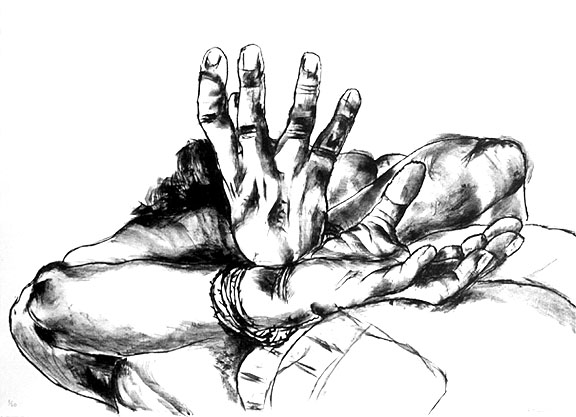
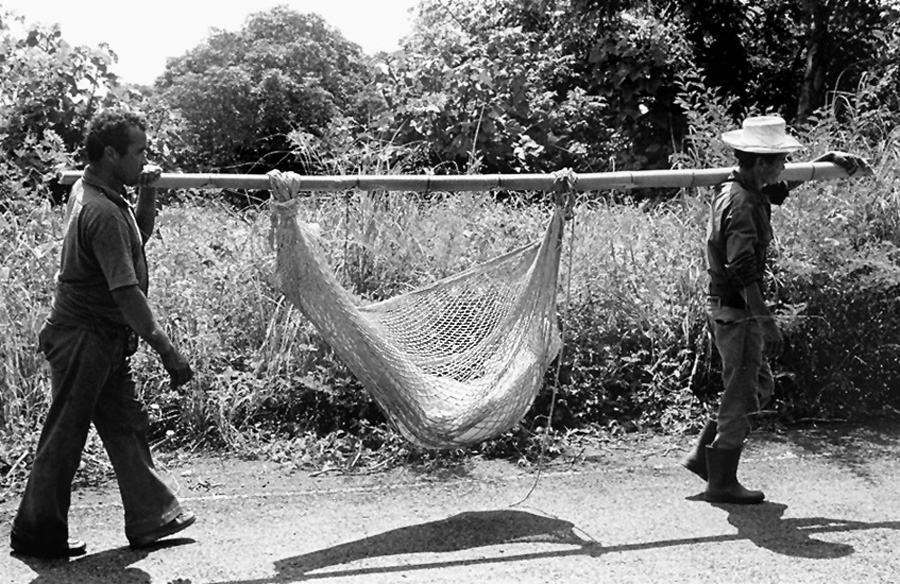
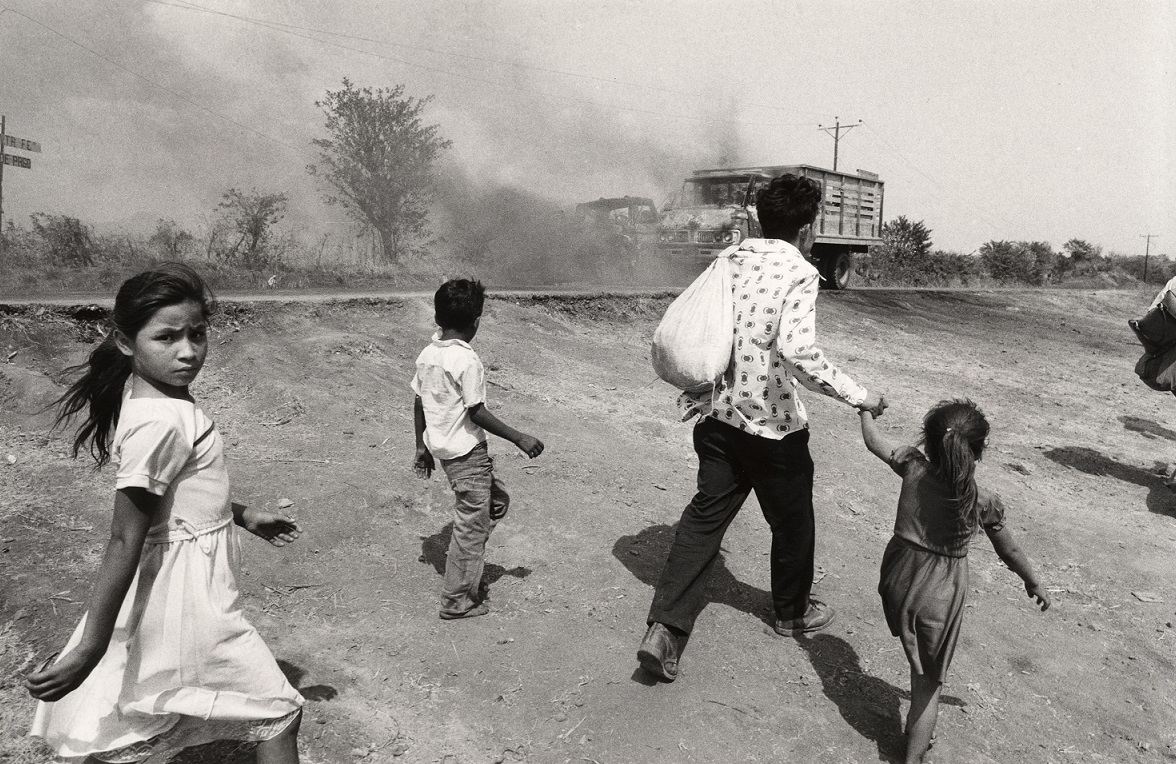
- Roberto Huezo_from his series Let Me Be a Witness depicting images of suffering and death from the revolution and civil war in El Salvador (1979-1992)
Roberto Quesada, born 1956
The Battle of Acaxual
.
ACAXUAL,
City washed by waves,
8 June, 1524
(well into the sixteenth century)
.
Pedro de Alvarado *
(alias TONATIUH)
almost lost his breeches
when he saw he had only
a hundred cavalrymen
and a hundred and two horses,
a hundred and fifty white infantry men
and more or less
six thousand Indian auxiliaries.
.
Against a plain
teeming with natives,
thousands
with slingshots and clumps of earth in their hands,
ALSO SPEARS
.
And you, what did you say?
that with clumps of earth in our hands
they were going to seize us?
.
Tonatiuh
studied the situation
and ordered his men
to withdraw quietly and slowly.
.
The Acaxualian comrades,
lacking military training in their schools,
trailed stupidly behind them,
waiting for the enemy to stop.
But the man in command (Tonatiuh)
didn’t raise his hand to signal “Stop”,
then the whole flock of Acaxualians
said to themselves that Tonatiuh
was a sissy.
.
Tonatiuh got angry
and told his men
“about turn”
or
to turn around and fight.
.
For he knew that the Indians
(big-nosed and cross-eyed)
were already far from the mountain
close by Acaxual.
.
And they turned around!
The bastards
began to strike out in all directions with
spear thrusts,
stones,
kicks,
bites,
insults,
etc.,
etc.
IT WAS ONE BIG MESS.
.
The Indians also
made a mess…
the brawl was such
that when it ended
not a single Acaxualian
was left alive…
.
But they clobbered
quite a few on the other side,
there were many
maimed and broken,
and among the multitude with arrow wounds
was Tonatiuh.
.
How gallant, how gallant!
The dying were saying:
die,
die,
virgin of the cave.
.
People say
that the comrade who cured Tonatiuh
was a very good person
because she did no end of things to him
so he would limp for the rest of his life.
.
And that is how it was,
his left foot
(the one for scoring goals)
became quite lame,
on the lucky limb
he had to use
a sole ten layers thick.
.
But up until around February
of the following year,
Tonatiuh was
almost pushing up rubber trees,
confined to his sleeping mat,
between his bed and his grave.
.
I CONGRATULATE
ATONAL
(R.I.P., alias WATER SUN)
PERSONALLY
AND
MOST PARTICULARLY
for his hot blood,
but I advise him
next time
TO AIM FOR THE MIDDLE OF THE CHEST.
. . .
- Pedro de Alvarado (1485-1541) was a Spanish soldier and “conquistador”. He accompanied Hernán Cortés to México but also explored/conquered Central America, eventually becoming governor of Guatemala. It was he who gave the country of El Salvador its name: “The Saviour”, as in Jesus Christ. Tonatiuh was the name he was given in the Náhuatl (Aztec) language. It meant “Sun”.
. . .
Mercedes Durand, born 1933
from: Anecdotes, Chronology, and Obituary of Boots
.
He sat down in his chair
after watching
thirty thousand peasants die.
That night he had for supper
herbal soup
boiled pumpkin blossoms
and lemon juice…
He was a theosophist
vegetarian
orientalist
and knew the fine points of witchcraft.
He put water
to settle in the sun
in pretty painted bottles
and wouldn’t stand for
the killing
of an ant
a mosquito
or a spider.
He never looked anyone in the eye.
He worshipped Hitler and Mussolini.
. . .
Alfonso Hernández, born 1948
The Republic of Power
.
Every year the dictator makes a speech to the multitudes
from his pragmatic throne – Peace Love Justice –
(as if history were an expedient of his base passions).
The dictator makes his speech,
the promise of new schools; a plan for putting an end to
hunger, illiteracy, and many other things;
and also an agrarian reform for those who have
rosy dreams, who view
life as benign.
Every year, as I have said,
with high honours he raises his funeareal hand to make
the sign of the cross
over hundreds of sickening corpses…
. . .
José María Cuéllar (1942-1981)
from: Childhood Stories
.
I was born in 1942 if for some reason my mother
has not lost her memory.
At age five I learned that thirty thousand peasants died because they were hungry.
It was then that I realized that
in my country to be hungry is a crime.
.
The village where I was born has a bad history.
They say that around 1798
an administrator from the Central Province
had these lands peopled by Spaniards
who, vaunting their lineage,
mounted Indian women and more Indian women
as if going through an endless train.
One of these descendants of the Cid
surprised one of my great-great-grandmothers bathing in the Copinolapa River,
and, with the brusqueness of a centaur,
made her the cornerstone of my family.
. . .
Claudia Lars (1899-1974)
from: Masked Men
.
I saw the masked men
throwing truth into a well.
When I began to weep for it
I found it everywhere.
. . .
Wounded by machine-guns
the innocent one lay forgetting his fright
in his modest coffin.
Contemplating him,
I lost forever my seventy-year-old infancy.
. . .
Carlos Aragón (195?-1981)
My Friends
(in semi-syncopated flow)
.
Where are they? Where are they?
Where are my old friends?
Those from our little school
and those from the university…
.
Juan studied medicine
he enjoyed conversation
now he is somewhere in Europe
he fled from the social year…
.
Cecilia studied law
intent on changing things
now she has her lawyer’s office
and likes champagne…
.
Where are they? Where are they?
Where are my old friends?
Those from our little school
and those from the university…
.
Pedro is an economist
he has given up music
he has sold his piano
and now only knows how to add…
.
Antonio was a humanist
he used to like to draw
now he is a publicist
who is very quick to collect…
.
Where are they? Where are they?
Where are my old friends?
Those from our little school
and those from the university…
.
There was one we didn’t know
who liked the sea
– his name was Felipe –
he had clear and tranquil eyes
and his walk was serene…
.
Today the guns roared,
the sea has started to cry,
they killed the one we didn’t know,
the struggle has now begun…
.
Where are they? Where are they?
Where are my old friends?
Those from our little school
and those from the university…
Sonia Civallero, born 195?
In Memory of Comrade Juan Castro
.
The flower of San Andrés bursts open
while you,
Mario González,
Alexander López,
Juan Castro,
founder of the inn “La Bolsa”
coffee picker in Cantarrana
conductor on route 7
or seller of saints,
left your hunger hanging behind the door,
embraced the rosary of grenades,
greased your weapon
put on firmly the cap woven by your grandmother,
tied on your handkerchief to cover your face,
from your cheekbone to the tip of your chin,
and in a frenetic attack you tore up the stars
you ignited the minute of fury
you knew of unnoticed noises
you savoured the delights of battle.
And,
finally,
your nineteen Januarys
died in the middle of a street…
. . .
Alfonso Hernández, born 1948
Testimony
.
We were together at the federation,
we were ten young people, and
each one was talking about his experiences…
nobody was thinking about death,
death of a thousand faces.
But the fateful hour came,
and tens of policemen from the “Death Squad”
burst into the room.
Shots rang out immediately,
two comrades fell murdered.
We were unarmed, we had only a notebook.
We were bound, face down, and put into a Ford.
.
“So you are the ones who are going around saying ‘Fatherland or Death!’…Well, start praying because you have come up with death!”
.
We were eight.
On the way to Los Naranjos they made six get out,
and, tying them by the ankles, they bound them with strong ropes to a tree trunk;
their hands were tied to the bumper of the truck,
then they moved the truck off suddenly
and we heard the screams.
.
The six pairs of hands, bloodied,
hung from the bumper of the truck,
and the policemen were enjoying themselves.
Then they finished them off.
.
Only Raúl and I were left…
After a few kilometres they made us get out
with our hands still tied.
Raúl whispered:
“We are facing death and we must run any risk to escape…”
.
Those were his last words, and rapidly we dashed toward a precipice,
but Raúl slipped and was riddled with bullets;
he fell from branch to branch to the bottom.
I managed to steal away through the bushes…
. . .
Gabriela Yanes, born 1959
The Highways that Led South
.
The highways that led south
are now filled with corpses
the coffee plantations radiate a strange freshness
at night the dead
are absorbed through the pores of the earth
eventually they bloom as red coffee trees
(a cynical blackbird eats up the ripe guavas)
the earth is slowly tiring
of children sweet as figs.
. . .
José Luis Valle, born 1943
Reasons for Surprise
.
Threats. Blows upon blows.
Shadows and fears. Instabilities.
Repression and exile. One dictator after another.
From each dark spot: two stones.
At each street corner: three or more opportunists.
In each cafeteria: four or more informers.
I am still surviving. And that surprises me.
. . .
Ricardo Castrorrivas, born 1938
Theory for Dying in Silence
(to Francisco Gavidia)
.
[ hypocritical office rats cork men always afloat even
though the successive governments sink always looking
for a chance to have your photograph come out in the
newspapers and show it proudly in the neighbourhood
look at my eyes and see that I despise you for being
servile mediocre ignorant you who never learned to say no
why don’t you go away and leave me in peace take your
slobber and your flattery where they are well paid I want
nothing from you multiple men in the fraudulent elections
paid hacks when it comes to justifying a coup d’état
potential deviates lying racketeers get lost understand
the look in my eyes I want nothing why do you come contrite
today putting on airs saying that the supreme government
recognizes the meritorious work of a great man
and bring medicines medical books the keys to an
Institute of Housing house and also the reporters the
photographers the ladies of the Good Heart and I want nothing
look into my eyes look at me you think I am happy yes I
hear you that vicious old lady says she discerns in my
face gratitude and it is not true what I really want is for
you to go away study my eyes carefully I want nothing
why should I what I want is tranquillity to hell with the
glory the medals the esteem the parchments the prizes
the publication of my complete works the posthumous
homages the lifetime pension for my children to hell with
all that I tell you everything with these eyes that weep
from pure rage and you are saying that I weep from gratitude
you swine what I would really be grateful for is for
you all to go away leave me silence leave me silence ]
. . .
Nelson Brizuela, born 1955
from: Now that you are naked
.
These times have scarred poetry,
have stricken it with death,
and it can no longer be an act of peace
emerging from a common perspective.
Today it is written with
the need to bring to light
this way of looking at the world with wide open eyes,
this passing of the tongue over people’s wounds,
this wanting to stop the blood that runs and runs
like an eternally open tap.
Claribel Alegría, born 1924
Because I Want Peace
.
Because I want peace
and not war
because I don’t want to see
hungry children
or emaciated women
or men with silenced tongues
I must keep on fighting.
.
Because there are
clandestine
cemeteries
Death Squads
and White Hand
that torture
that maim
that murder
I want to keep on fighting.
.
Because on the mountain range
of Guazapa
from their hideouts
my brothers lie in wait for
three battalions
trained in Carolina and Georgia
I must keep on fighting.
.
Because from armed Huey
helicopters
expert pilots
wipe out villages
with napalm
poison the water
and burn the crops
that feed the people
I want to keep on fighting.
.
Because there are territories
now liberated
where those who don’t know how to
are learning to read
and the sick are treated
and the produce of the land
belongs to everybody
I must keep on fighting.
Because I want peace and not war.
. . .
Miguel Huezo Mixco, born 1954
The Day
.
The sun has already arrived
armed
like a combatant.
.
Enthused I jump
from sleep
naked
like a sword.
. . .
Translations from the Spanish were the work of Professor Keith Ellis of the University of Toronto Department of Spanish and Portuguese Studies. Dr. Ellis has published several books on Spanish- American poetry, including the prize-winning Cuba’s Nicolás Guillén: Poetry and Idealogy.
We would also like to thank Between The Lines Books in Toronto, which brought out these poems, and others, in a collection titled Mirrors of War, published while El Salvador was still in the throes of its revolution and civil war (1985).
The original Spanish versions of the above poems were compiled in México in 1982, edited by Gabriela Yanes, Manuel Sorto, Horacio Castellanos Moya and Lyn Sorto, and published as Fragmentos de la actual literatura salvadoreña (Universidad Nacional de Querétaro, México, 1983).
More poems about El Salvador’s civil war:
. . . . .
Lorine Niedecker: “Trabajo del Poeta”
Posted: September 7, 2015 Filed under: English, Lorine Niedecker, Spanish, ZP Translator: Alexander Best | Tags: A poem for Labour Day, Poema para El Día del Trabajo (primer lunes de septiembre) Comments Off on Lorine Niedecker: “Trabajo del Poeta”
Lorine Niedecker (Wisconsin, EE.UU., 1903-1970)
Trabajo del Poeta
.
El abuelo me aconsejó:
Aprende una destreza técnica – algo práctico.
.
Pues aprendí como sentarme detrás de un escritorio
– para resumir la vida.
.
¡No hay despido de esta fábrica de reseña y síntesis!
. . .
Lorine Niedecker (1903-1970)
Poet’s Work
.
Grandfather
advised me:
Learn a trade.
I learned
to sit at a desk
and condense.
No layoff
from this
condensery.
. . . . .
Susana Reyes: poetisa salvadoreña
Posted: September 7, 2015 Filed under: English, Spanish, Susana Reyes, ZP Translator: Alexander Best Comments Off on Susana Reyes: poetisa salvadoreña
Susana Reyes
(born 1971, El Salvador)
History of Mirrors (Excerpt)
.
Keep Ithaca always in your mind.
Arriving there is what you are destined for.
But do not hurry the journey at all.
Constantine Cavafy
.
For Doña Martha Sutter de Selva
.
I
.
I waited for Ulysses every afternoon
alert, faithful, with my resolute birds.
I sat on the old doorstep
to pluck the horizon.
Softened by tears, the knitting
would come undone on its own
in a happy, uncertain routine.
I don’t know if he knew of abysses
of darkness or silence,
but my heart guided me
every night toward his steps.
I drowned with him
and a thousand times the wind swept me
in the desert.
I earned hunger and fever,
the knot in my throat
to which he tied himself every night
to avoid jumping into the void.
And I walked with him
but never knew that his steps
fled my Ithaca,
that he burned his ships
at the first port,
that he hid in mirrors…
But he won’t know of the dimensions,
that I walk with him,
that I see him leave and return every night
in this mirror.
I keep knitting.
.
II
.
The knitting fell slowly
and its mute, damp threads
broke.
There was inexplicable pain
A simple insufficient forgiveness:
a mirror portraying the sun that was my face
and the face of all those women
who nursed the days in vain.
. . .
From: Historia de los espejos (Colección Nueva Palabra, San Salvador, 2004)
. . .
Susana Reyes
(n. 1971, El Salvador)
Historia de los espejos (Extracto)
.
Ten siempre a Itaca en tu pensamiento.
Tu llegada ahí es tu destino,
más no apresures nunca el viaje.
Constantine Cavafy
Para Doña Martha Sutter de Selva
.
I
.
Esperé a Ulises cada tarde
alerta, fiel, con mis aves resueltas.
Me senté en el viejo umbral
a deshojar el horizonte.
Los tejidos ablandados por las lágrimas
se desanudaban solos
en una rutina feliz e incierta
No sé si él supo de abismos,
de oscuridades o silencios,
pero el corazón me guió
cada noche hasta sus pasos.
Me ahogué con él
y mil veces me arrastró el viento
en los desiertos.
Gané el hambre y las fiebres
el nudo en la garganta
al que se ató cada noche
para no saltar al vacío.
Y caminé con él
mas nunca supe que sus pasos
huían de mi Itaca,
que quemó sus naves
en el primer puerto,
que se escondió en los espejos…
Pero él no sabrá de las dimensiones,
que camino con él
que lo veo irse y volver cada noche
en este espejo
que sigo tejiendo.
.
II
.
Cayó despacio el tejido
y sus hilos mudos y húmedos
se quebraron.
Hubo dolor inexplicable
Un perdón simple insuficiente
un espejo retratando al sol que era mi cara
y la cara de todas aquellas
que en balde amamantaron los días.
. . .
De: Historia de los espejos (Colección Nueva Palabra, San Salvador, 2004)
. . .
Traducción en inglés © Judith Filc / Mythweavers
Translation from Spanish into English © Judith Filc / Mythweavers
. . .
The New City
.
I have two month’s worth of poems,
waiting for you on the table here,
and a gush of dreams upon my pillow:
a bigger loneliness;
one can feel this house, empty without you.
.
The latest news, as well – I have that:
the clock with its exact time;
the sagging bed
– evoking for me your form,
the geography of your body –
that favourite wharf where ran aground your ship.
. . .
La Nueva Ciudad
.
Tengo dos meses de poemas
esperándote en la mesa,
un chorro de sueños pendientes en mi almohada
la soledad más grande
que pudo sentir la casa sin vos.
.
Tengo también
las últimas noticias,
el reloj con la hora afilada,
la cama que se encorva
para evocarme tu silueta,
la geografía de mi cuerpo,
tu muelle favorito
para encallar tu barco.
. . .
I have a dormant dream
.
I have a dormant dream,
on my back;
an illusion whose
wings beat
within my gut.
I’ve seven letters
tattooed on my hands
in order to
inscribe to you
on a blank sheet of paper
that smile of yours
– and a balcony off my calendar
to let your swallows fly in…
. . .
Tengo un sueño dormido
.
Tengo un sueño dormido
en la espalda
una ilusión
que bate alas
en mi vientre.
Tengo siete letras
tatuadas en mis manos
para escribirle
a un papel en blanco
tu sonrisa
y un balcón en mi calendario
para dejar entrar tus golondrinas.
. . .
At last, I’m able to…
.
At last, I’m able to escape the silence…
if by chance you allow me to
prowl around the gaps in this…this mirage.
My hand, my voice, they’re tired from
portraying – in vain – these
suicide leaps that reach me
off the railings of your eyes.
I read your words with a faint, unknowable echo;
I imagine that voice of your skin,
an infinite craving
sheltering me in your adolescent pores.
This room cries,
and outside, shamelessly, the sun melts all…
. . .
Podré por fin
.
Podré por fin escapar del silencio
si acaso me permites merodear
los huecos en el espejismo.
Mi mano y mi voz están cansadas
de dibujar en vano los espacios
de saltar suicida las barandas
que me llevan más allá de tus ojos.
Leo tus palabras con un eco desconocido
imagino la voz de tu piel
como un antojo infinito
de abrigarme en tus poros adolescentes.
La habitación llora,
y el sol afuera se derrite impúdico.
. . .
Traducciones en inglés: Alexander Best / Translations from Spanish into English: Alexander Best
. . .
Susana Reyes (n. 1971, San Salvador) posee una entrega por la poesía – su pasión desde jovencita.
Reyes se recibió en la carrera de Licenciatura en Letras, en la Universidad de la UCA y actualmente dicta clases de Lengua y Literatura en diversas instituciones.
En 1994, fue galardonada con el Premio Joven Talento que otorga cada año la Galería 91 y Concultura, pertenecientes a su ciudad.
. . . . .
Blanca Varela: Peruvian poetess
Posted: September 3, 2015 Filed under: Blanca Varela, English, Spanish Comments Off on Blanca Varela: Peruvian poetess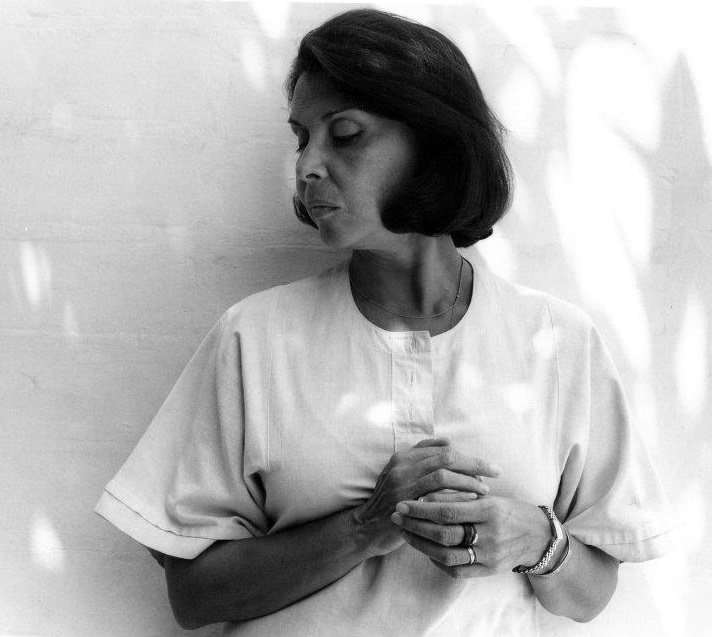
Blanca Varela
(Peru, 1926-2009)
That Cold Light of Memory…
It’s cold this light of memory
slight glimpses insistently
shine
turn
searching for the empty bottle or
the rain puddle
behind any opening door
lies the moon
as large and flat
as out of place as a
painting
oils on paper hardened by
time
thus fell in the mind
forms and colours
coincidences
chance knotting shadows
things thrown into the black pot
where joy and fright
wildly boil
the plaster grows in a sky that was
hurt a thousand times
bleached a thousand times
the world is erased and
rewritten
to the last breath
just this:
apparent eternity
dismal splinter of light in
the entrails of the
beast that
scarcely was
.
A Rose is a Rose *
motionless it devours light
obscenely red it opens
loathsome perfection of
fleetingness
it infests poetry
with its archaic scent
. . .
Translations from the Spanish © Judith Filc / Mythweavers
. . .
Blanca Varela
(Poetisa peruana, 1926-2009)
.
Esa fría luz de la memoria…
Es fría la luz de la memoria / lo apenas entrevisto brilla / con insistencia /
gira buscando el casco de botella / o el charco de lluvia // tras cualquier puerta que se abre / está la luna / tan grande y plana / tan fuera de lugar / como si de un cuadro se tratara / óleo sobre papel / endurecido por el tiempo // así cayeron en la mente /
formas y colores / casualidades / azar que anuda sombras / vuelcos en la negra marmita /
donde a borbotones / se cuecen gozo y espanto // crece el yeso de un cielo / mil veces lastimado / mil veces blanqueado / se borra el mundo y se vuelve / a escribir /
hasta el último aliento // sólo esto / eternidad aparente / mísera astilla de luz en /
la entraña / del animal /que apenas estuvo
. . .
A rose is a rose *
inmóvil devora luz / se abre obscenamente roja / es la detestable perfección / de lo efímero / infesta la poesía / con su arcaico perfume
. . .
* En inglés en el poema original
* This poem’s title was in English in the poem’s original Spanish version.
. . .
Blanca Varela was born in Lima, Perú. She studied at the National University of San Marcos where she met her future husband, artist and sculptor Fernando de Szyszlo, with whom she raised two children. They travelled to Paris in 1949, where they met Mexican writer and poet Octavio Paz, who would become a key figure in Varela’s life. It was Paz who persuaded her to publish her poetry, and her first volume, Ese puerto existe, came out in 1959. During her lifetime she received important literary awards: the Medalla de Honor from the Peruvian government; the Octavio Paz Prize for Poetry and Essays; and the City of Granada “Federico García Lorca” International Poetry Prize. The latter she was chosen for in 2006 – the first woman ever.
. . . . .
“Luto” / “Grief”
Posted: September 2, 2015 Filed under: Alexander Best, English, Spanish Comments Off on “Luto” / “Grief”
Luto
.
“Consumado es.” (Juan 19: 30)
.
No había tiempo para ti,
pero debo crearlo
ahora.
Luto,
¿porqué me emboscas por esta manera?
Por fin
te desarrollas
con un chaparrón caliente y punzante.
.
Mi cuate,
no había tiempo para nosotros;
acontecieron tantas crises, sin pausa.
Amante, Infiel,
Vagabundo, Oficial,
Padre…
– Mierda,
yo representaba todos los papeles.
.
No había tiempo para nosotros,
mi mariposa escurridiza,
mi alma antigua.
Y no había tiempo para mí;
entonces, tuve que terminar “nosotros” – o
“nosotros” me terminaría.
.
¿Qué es, esta caña violenta
que empuja de mi garganta?
Luto,
no había tiempo para ti.
Pero hoy
soy la precisa flor de daño:
mi cuerpo el tallo,
mi rostro la rosa fea.
.
Ácido, empalagoso…
Luto.
Por favor:
¡Brota y acábate!
. . .
Grief
.
“It is finished.” (John 19: 30)
.
There was no time for you,
but I must make time
Now.
Grief,
why do you ambush me in this way?
At last
you blossom,
with a hot, stinging rain.
.
Bud,
there was no time for us;
it was one crisis after another.
Lover, Cheater,
Vagabond, Cop,
Priest…– Fuck,
I played all the roles.
.
There was no time for us
– elusive butterfly, old soul –
and there was no time for
me –
I had to end it,
else it would end me.
.
What is this
violent stalk that
thrusts from my throat?
There was no time for you,
Grief.
So today I am
the very flower of pain:
my body its stem,
my face
the ugly rose.
.
Acid, sickly-sweet
Grief:
bloom and
be done!
. . . . .
Alicia Maveroff: “A Visitor” and “Via Titanio: Ciao”
Posted: August 31, 2015 Filed under: Alicia Claudia González Maveroff, English, Spanish, ZP Translator: Alexander Best Comments Off on Alicia Maveroff: “A Visitor” and “Via Titanio: Ciao”
A Visitor
.
There are times when Fantasy comes to mind,
she climbs up into and all throughout my head – and won’t let go;
I can’t think like I used to…
.
So this is when she arrives – for me –
and there and then – full of letters, words –
in an instant, are: my thoughts.
.
She dovetails with me, meanwhile,
and quickly I get it all down…
.
Today
Imagination came to me,
I’m noting this,
I write, and as soon as I say it,
that which before was unknown
is now hurried forth: my friend has inspired me,
and, even though it’s weird, I know I have to just go with it!
Because she’s told me so many things I never knew…
.
And there’s more arrives: she’s with me for a while,
looks at me, salutes me, talks to me and, later,
all of a sudden, quick as can be,
she takes off – fast – towards the next day.
. . .
Visita
.
A veces, llega a mí la fantasía,
se trepa en mi cabeza y no me deja,
pensar como solía…
Entonces es cuando llega hasta mi ella,
y llena de letras y palabras,
en un instante mi pensamiento.
Ellas se conbinan mientras,
yo rápido lo escribo…
Hoy llega hasta mi la fantasía,
anoto, escribo y pronto lo que dice,
lo que antes no sabía,
me apuro, es mi amiga que me inspira,
y aunque es raro, yo se que debo hacerlo.
Porque ella a mí me cuenta
muchas cosas que yo desconocía…
Más llega, está conmigo un rato,
me mira, me saluda, me habla y luego,
de repente, rauda, en un momento,
me abandona y se va, veloz, hasta otro día…
.
05/02/2012
. . .
Via Titanio, Monte Sacro, Roma…
Titan Street, Holy Mount, Rome…
From an old building,
on a third-floor wall,
beneath a window
of this house situated at number 2A,
somebody some time ago wrote:
Ciao…
somebody who’s no longer here because I imagine he’s left.
.
Neither sun nor rain’s been able to
erase the odd farewell that
one still can see on this yellowed wall.
Where did he go?
To whom did he bid adieu?
Who wrote it that day, who never thought I’d be
reading his letters, finding them, noticing them?
Neither did I imagine I’d descend one by one
these well-worn steps on a stairway in the Via Titanio,
and so come across his message.
Why did he make his goodbye in this manner?
Did he know he wouldn’t be the only one to leave?
Did he think about all of us who one day must say
Adiós?
. . .
Vía Titanio, Monte Sacro, Roma…
Desde un viejo edificio,
en la pared del tercer piso,
bajo una ventana
de esa casa ubicada en el numero 2a,
Alguien hace tiempo escribió
“Ciao“..
Alguien, que ya no está, porque presumo que ha partido
Ni el sol ni la lluvia han podido
borrar la extraña despedida, que
aún se lee en la pared amarilla.
¿Cuándo se fue?
¿De quién se despedía?
¿Quién lo escribió ese día, jamás pensó en que yo lo leería,
que encontraría sus letras y en ellas repararía?
Tampoco imagino que yo descendería uno a uno los gastados escalones
de la escalinata de la Vía Titanio y encontraría su mensaje.
¿Por qué se despidió de esa manera?
¿Sabía que no será el único en partir?
¿Pensó que todos algún día tendremos que decir adiós?
.
05/04/2014
. . . . .
Ghalib, Iqbal, Hafiz: new translations from Persian by A.Z. Foreman
Posted: August 24, 2015 Filed under: English, Farsi / Persian Comments Off on Ghalib, Iqbal, Hafiz: new translations from Persian by A.Z. Foreman
A.Z. Foreman continues his exploration of world literature with these new (June 2015) translations from Persian…
The poet Mīrzā Asadullāh Khān Ghālib was born in Agra in 1796, and spent his life in Delhi, attached to Bahādur Shāh II, the last of the Mughal emperors. He is today more famous for his Urdu poetry, though he himself was much prouder of his Persian compositions. Much ink has been spilled regarding the relative merit of his Urdu and his Persian work. I am not qualified to pass judgement on the matter, and can only say that those Urdu poems of his which I have managed to make my way through seem considerably different in temperament from his Persian work.
This particular poem has languished, beloved and half-understood, in my queue for years. Today I finally, and quite suddenly, feel I have a handle on it enough to translate it with at least some semblance of artistic fidelity.
. . .
Mirza Ghalib (1796-1869)
I Daresay I Dare Not Say
Translated by A.Z. Foreman
.
I dare not say my heart is hers though she stole it from me.
I cannot call her tyrant though I see her cruelty.
Hers is the battleground where men bear neither blade nor bow
Hers is the banquet-hall with neither wine nor revelry.
Your courage will not help you here, the lightning flame bolts fast.
Die as the moth. No living salamander can you be.
We journey in love’s heat and seek not water nor the shade
So do not speak of Kausar’s running stream nor Tuba’s tree.
Life’s tribulation ends, so why complain of tyranny?
You suffer, and it is God’s will. Let pain that will be, be.
The word held secret in my breast cannot be preached. I’ll speak it
Not from the pulpit but from high upon the gallows-tree.
O strange it feels to deal with one so singularly mad.
For Ghalib’s love is not Islam, nor infidelity.
. . .
The Original:
دل برد و حق آنست كه دلبر نتوان گفت بيداد توان ديد و ستمگر نتوان گفت
در رزمگهش ناچخ و خنجر نتوان برد در بزمگهش باده و ساغر نتوان گفت
از حوصله يارى مطلب صاعقه تيز است پروانه شو اين جا ز سمندر نتوان گفت
هنگامه سرآمد، چه زنى لاف تظلم؟ گر خود ستمى رفت، بمحشر نتوان گفت
در گرم روى سايه و سرچشمه نجوييم با ما سخن از طوبى و كوثر نتوان گفت
آن راز كه در سينه نهانست و نه وعظست بر دار توان گفت و بمنبر نتوان گفت.
كارى عجب افتاد بدين شيفته مارا
مؤمن نبود غالب و كافر نتوان گفت.
. . .
Romanization:
Dil burd o haq ānast ki dilbar natawān guft
Bēdād tawān dīd o sitamgar natawān guft
Dar razmgahaš nāčax o xanjar natawān burd
Dar bazmgahaš bāda o sāɣar natawān guft
Az hawsala yārī matalab sā’iqa tēzast
Parwāna šaw īnjā zi samandar natawān guft
Hangāma sarāmad či zanī lāf-i tazallum
Gar xwad sitamī raft ba mahšar natawān guft
Dar garm-i rūy-i sāyah o sarčašma najōyēm
Bā mā suxan az tūbā o kawsar natawān guft
Ān rāz ki dar sīna nahānast o na wa’zast
Bar dār tawān guft o ba minbar natawān guft
Kārē ajab uftād badīn šēfta mārā
Mu’min nabuwad ɣālib o kāfar natawān guft.
. . .
This singular poem by Muhammad Iqbal, the last of the Indo-Persian poets, written presumably in the early 1920s, is from the Payām-i Mašriq, a collection of Persian poems in which the poet addressed himself to the West, in response to Goethe’s West-Östlicher Divan. Though Iqbal loathed Hāfiz (as Plato loathed all poets) for being too distractingly beautiful, much of the final half of this poem is a skillful and interesting muˁāraḍa or contrafactum riffing off (and responding to) one of Hāfiz’ most famous ghazals.
. . .
Muhammad Iqbāl (1877-1938)
Song of the Hireling Worker
Translated by A.Z. Foreman
.
The worker, clad in cotton, toils to make
the silken robe the idle rich man wears.
Gems in my master’s ring are my brow’s sweat.
The rubies of his reins are my child’s tears.
The Church is fat from leeching on my blood.
My arm is the muscle of a kingdom’s heirs.
My tears bid deserts bloom as dawn wind blows
and my heart’s blood is glistening in the rose.
.
Come, for the harp of time is tense with song!
Pour a wine strong enough to melt the glass.
Let’s give new order to the tavern-masters
and burn the olden tavern down at last.
Avenge the flower on all who razed the garden,
and seek for rose and bud a better cast.
How long shall we be moths that fall for flame?
How long shall we forget ourselves in shame?
. . .
The Original:
نوای مزدور
محمد اقبال
ز مزد بندۂ کرپاس پوش محنت کش نصیب خواجۂ ناکردہ کار رخت حریر
ز خوی فشانی من لعل خاتم والی ز اشک کودک من گوہر ستام امیر
ز خون من چو زلو فربہی کلیسا را بزور بازوی من دست سلطنت ہمہ گیر
خرابہ رشک گلستان ز گریۂ سحرم
شباب لالہ و گل از طراوت جگرم
بیا کہ تازہ نوا می تراود از رگ ساز مئی کہ شیشہ گدازد بہ ساغر اندازیم
مغان و دیر مغان را نظام تازہ دہیم بنای میکدہ ہای کہن بر اندازیم
ز رہزنان چمن انتقام لالہ کشیم بہ بزم غنچہ و گل طرح دیگر اندازیم
بہ طوف شمع چو پروانہ زیستن تا کی؟
ز خویش اینہمہ بیگانہ زیستن تا کی؟
. . .
Romanization:
Zi muzd-i banda-i kirpāspōš-i mihnatkaš
Nasīb-i xwāja-i nākardakār raxt-i harīr
Zi xōy-i fašānī-i man la’l-i xātim-i wālī
Zi ašk-i kōdak-i man gawhar-i sitām-i amīr
Zi xūn-i man ču zalū farbihī Kalīsārā
Bizōr-i bāzō-i man dast-i saltanat hamagīr
Xarāba rašk-i gulistān zi girya-i saharam
Šabāb-i lāla o gul az tarāwat-i jigaram
Biyā ki tāza nawā mētarāwad az rag-i sāz
Maī ki šīša gudāzad ba sāɣar andāzēm
Muɣān o dēr-i muɣānrā nizām-i tāza dahēm
Banāy-i maykadahā-i kuhan bar andāzēm
Zi rahzanān-i čaman intiqām-i lāla kašēm
Ba bazm-i ɣunča o gul tarh-i dīgar andāzēm
Ba tawf-i šam’ ču parwāna zīstan tā kay?
Zi xwēš īnhama bēgāna zīstan tā kay?
. . .
Hāfiz (1325-1389, Shiraz, Persia [now Iran])
Ghazal 220: “Aspirations”
Translated by A.Z. Foreman
.
Although our preacher will not like
to hear such honesty,
He’ll never be a Muslim while
he’s such a pharisee.
Learn to get drunk, be a gentleman
not some dumb animal
That cannot drink a drop of wine
or be a man at all.
The essence must be unalloyed
to make His grace our own,
Or from our clay no pearls will come
nor coral come from stone.
The Almighty shall fulfill His will.
rejoice, my heart! No con
Or devilry can turn a demon
into a Solomon.
Mine is the noble art of love.
I hope against belief
It won’t bring me, as others have,
despondency and grief.
Last night he said “Tomorrow I
will grant your heart’s desire”
God let him have no change of heart
nor let him be a liar.
May God add a good heart to all
your physical attraction
So you’ll no longer torment me
with harrowing distraction.
Hafiz! Unless a mote of dust
aspires to lofty height,
It is not drawn to the true fount
from which the sun draws light.
. . .
Prose paraphrase:
(1) Though the city preacher won’t find it easy to hear these words, as long as he practices sophistry and hypocrisy, he’ll never be a real Muslim. (2) Train yourself in dissolute drunkenness, and be a gentleman to others. For not so artful is the beast that does not drink wine, or become human. (3) There must be a pure-gemmed essence in order to be a vessel for holy grace, for without it stone and clay will not become pearl and coral. (4) He of the Greatest Name does his work – be glad O heart, for by no trick or fraud can a devil ever become Solomon. (5) I practice love, and hope that this noble art will not, as other arts have done, cause me chagrin. (6) Last night he was saying “Tomorrow I will give you your heart’s desire.” Oh God, contrive to keep him from having compunction about doing so! (7) For my own sake I pray God include in your beauty a good disposition, so that my mind is no longer distraught and discombobulated. (8) So long as the dustmote lacks lofty aspiration and drive, Hafiz, it is not in quest for the source that is the resplendent sun’s own dayspring.
. . .
The Original:
گر چه بر واعظ شهر این سخن آسان نشود تا ریا ورزد و سالوس مسلمان نشود
رندی آموز و کرم کن که نه چندان هنر است حیوانی که ننوشد می و انسان نشود
گوهر پاک بباید که شود قابل فیض ور نه هر سنگ و گلی لوءلوء و مرجان نشود
اسم اعظم بکند کار خود ای دل خوش باش که به تلبیس و حیل دیو سليمان نشود
عشق میورزم و امید که این فن شریف چون هنرهای دگر موجب حرمان نشود
دوش میگفت که فردا بدهم کام دلت سببی ساز خدایا که پشیمان نشود
حسن خلقی ز خدا میطلبم حسن ترا تا دگر خاطر ما از تو پریشان نشود
ذره را تا نبود همت عالی حافظ
طالب چشمه خورشید درخشان نشود
. . .
Romanization:
Gar či bar wā’iz-i šahr īn suxan āsān našawad
Tā riyā warzad o sālūs musalmān našawad
Rindī āmōz o karam kun ki na čandān hunarast
Hayawānē ki nanōšad may o insān našawad
Gawhar-i pāk bibāyad, ki šawad qābil-i fayz,
War na har sang o gilē lu’lu’ o marjān našawad.
Ism-i a’zam bukunad kār-i xwad ay dil, xwaš bāš
Ki ba talbīs o hayal dēw Sulaymān našawad
Išq mēwarzam o ummēd ki īn fan-i šarīf
Čūn hunarhā-i digar mawjib-i hirmān našawad
Dōš mēguft ki fardā bidiham kām-i dilat
Sababē sāz Xudāyā ki pišīmān našawad
Husn-i xulqē zi Xudā mētalabam husn-i turā
Tā digar xātar-i mā az to parēšān našawad
Zurrarā tā nabuwad himmat-i ‘ālī hāfiz
Tālib-i čašma-i xwaršēd-i duruxšān našawad.
. . .
Visit A.Z. Foreman’s poetry translation site:
http://poemsintranslation.blogspot.ca/
. . . . .
Kofi Awoonor: “Poema encontrado” / “Found Poem”
Posted: August 17, 2015 Filed under: English, Kofi Awoonor, Spanish, ZP Translator: Alexander Best | Tags: African poetry - Ghana, Poetas africanos Comments Off on Kofi Awoonor: “Poema encontrado” / “Found Poem”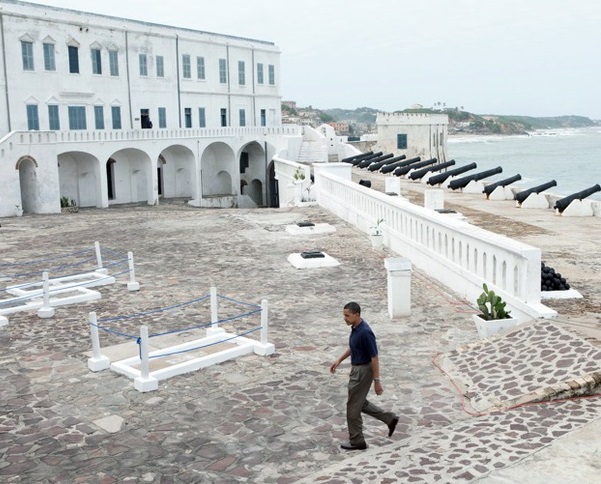
Barack Obama at the Cape Coast Castle in Accra, Ghana, 2009. Photo by Pete Souza. Barack Obama durante su visita a la Fortaleza de la Costa del Cabo en Accra, Ghana, 2009. Foto de Peter Souza.
Kofi Awoonor (Poeta de Ghana, 1935-2013)
Poema encontrado (1976)
.
En el este el día llega…
No digas que hemos empezado demasiado tempranito,
porque cruzaremos muchas cuestas
antes de envejecer.
Aquí la tierra es de una belleza sin par.
(Mao Tse Tung, 1934)
.
Miro hacia afuera de las barras de la Fortaleza,
la capa-corteza, la hilera embarrada de la edad;
en el rincón hay mi araña amigable
y se agacha por los jejenes incautos de mis días.
.
Hay tanto que debemos expiar.
Agujas de certeza
en las pinzas invisibles de arañas,
en el vuelo y curva de gaviotas.
Ellos conocen – yo juro –
los contornos de las Saharas onduladas,
y los océanos indigentes de nuestra historia.
Nos sentamos, y debatimos la caridad de nuestros captores.
.
Las luces están prendiendos,
la ribera se dobla en una bahía amplia
cerca de la Fortaleza; el mar es gris.
Ayer llovía en la víspera de mi año cuarenta y uno
– y esto dejó intactas todas mis derrotas.
.
Permíteme guiarte al campo.
Solo es como un semi-miembro del clan
de la cabra ritual
que puedo jalar al sitio del sacrificio mi canto.
Aquí en las canchas de dolor,
con el alquitrán y el humo de un gran fogón,
dirijo.
Mi riata es corta
pero pronto llegaré bajo del árbol.
.
Yo montaré ciento luchas para honrar a nuestros dioses
– y a nuestro líder amado.
En este lugar, no podrían resultarme más indiferentes
la masa esforzanda de la gente.
Aquí, en este lugar, me retiré antes de la Cuaresma,
hasta mi proprio trecho del frente de mar
– no puedo ver el maldito mar a causa de las paredes embarradas
construidas por los holandeses –
pero el litoral se cae en un golfo profundo;
no hay precipios.
.
Hallaron un bebé
– muerto de una semana –
enterrado en una tumba superficial
en el césped de la Fortaleza.
Pero yo quiero que mi tumba sea más honda.
.
Están serrando a través de nuestra leña.
Hoy es es día de la yuca;
el flautista queda silencioso;
quizás su tropa ha llegado en Georgia.
.
A no llegar me descompone,
pero, por el camino que yo he pisado,
no tengo ningunos arrepentimientos.
. . .
Del poemario La Promesa de Esperanza (The Promise of Hope): New and Selected Poems, 1964-2013,
© University of Nebraska Press, 2014.
. . .
Traducción del inglés al español: Alexander Best
. . .
Kofi Awoonor (Ghanaian poet, 1935-2013)
Found Poem (1976)
.
In the east, the day breaks; do not
say we have started too early;
For we shall cross many hills yet
Before we grow old; here
the land is surpassing in beauty.
(Mao Tse Tung, 1934)
.
I look out the bars upon the Castle
the crust, caked row of age;
in a corner my friendly spider
crouches for the unwary gnats
of my days.
.
So much there is we must atone.
There are spires of faith
in the invisible claws of spiders,
in the flight and curve of gulls.
These know, I swear,
the contours of the rolling Saharas
and the destitute oceans of our history.
We sit, debating the charity of our captors.
At night lights come on,
the shoreline bends into a broad bay
near the Castle;
the sea is grey.
Yesterday it rained on the eve
of my forty-first year
and left all my defeats intact.
.
Let me lead you into the country.
It is only as half clansman
of the ritual goat
that I bring my song to the place of sacrifice;
here in the pain fields,
asphalt and smoke of a large hearth,
I lead.
My rope is short.
I shall soon arrive under the tree.
.
I will stage a hundred fights in honour of our Gods
and our beloved leader.
Here, I could care less for the toiling masses.
I retreated here before Lent,
to my own stretch of sea front.
(I cannot see the damned sea
because of old caked walls
built by Dutchmen).
But the shore falls into a deep gulf;
there are no cliffs.
.
They found a week-old baby
buried in a shallow grave
on the front lawn of the fort.
I want my grave to be deeper.
.
They are sawing through our firewood.
Today is cassava day.
The flutist is silent;
perhaps his troops have arrived in Georgia.
.
Not to arrive upsets me,
And for the path that I have trod
I have no regrets.
. . . . .
Kofi Awoonor: “America” y “A los viejos poetas”
Posted: August 16, 2015 Filed under: English, Kofi Awoonor, Spanish | Tags: African poetry - Ghana Comments Off on Kofi Awoonor: “America” y “A los viejos poetas”
. . .
Kofi Awoonor (Ghanaian poet, 1935-2013)
America
.
A name only once
crammed into the child’s fitful memory
in malnourished villages,
vast deliriums like the galloping foothills of the Colorado:
of Mohawks and the Chippewa,
horsey penny-movies
brought cheap at the tail of the war
to Africa. Where indeed is the Mississippi panorama
and the girl that played the piano and
kept her hand on her heart
as Flanagan drank a quart of moonshine
before the eyes of the town’s gentlemen?
What happened to your locomotive in Winter, Walt,
and my ride across the prairies in the trail
of the stage-coach, the gold-rush and the Swanee River?
Where did they bury Geronimo,
heroic chieftain, lonely horseman of this apocalypse
who led his tribesmen across deserts of cholla
and emerald hills
in pursuit of despoilers,
half-starved immigrants
from a despoiled Europe?
What happened to Archibald’s
soul’s harvest on this raw earth
of raw hates?
To those that have none,
a festival is preparing at graves’ ends
where the mockingbird’s hymn
closes evening of prayers
and supplication, as
new winds blow from graves
flowered in multi-coloured cemeteries,
even where they say the races are intact.
.
From: The Promise of Hope: New and Selected Poems, 1964-2013 (University of Nebraska Press, 2014)
. . .
Kofi Awoonor (1935-2013) was born George Awoonor-Williams in Wheta, Ghana, to ethnic Ewe parents. He was a poet, literary critic, and professor of comparative literature; he served as a kind of “ambassador” for Ghana. Awoonor earned a BA from University College of Ghana, an MA from University College, London, and a PhD in comparative literature from SUNY at Stony Brook, New York state, U.S.A.. He wrote novels, plays, political essays, literary criticism, and several volumes of poetry, including Rediscovery and Other Poems (1964), Night of My Blood (1971), Ride Me, Memory (1973), The House by the Sea (1978), The Latin American and Caribbean Notebook (1992), and a volume of collected poems, Until the Morning After (1987).
.
Awoonor’s grandmother was an Ewe dirge singer, and the form of his early poetry draws from the Ewe oral tradition. He translated Ewe poetry in his critical study Guardians of the Sacred Word and Ewe Poetry (1974). Other works of literary criticism include: The Breast of the Earth: A Survey of the History, Culture, and Literature of Africa South of the Sahara (1975).
.
In the early 1970s, Awoonor served as chairman of the Department of Comparative Literature at SUNY Stony Book. He returned to Ghana in 1975 to teach at University College of Cape Coast. In Ghana, he was arrested and tried for suspected involvement in a coup d’état. He was imprisoned without trial and was later released; he wrote about his time in jail in The House by the Sea. Awoonor resumed teaching after his prison sentence. In the 1980s he was the Ghanaian ambassador to Brazil and Cuba and served as ambassador to the United Nations from 1990 to 1994; in 1990 he published Ghana: A Political History from Pre-European to Modern Times.
.
Awoonor is author of the novels This Earth, My Brother (1971) and Comes the Voyager at Last: A Tale of Return to Africa (1992). He died randomly with other innocents in the Westgate shopping-mall attack in Nairobi, Kenya in September of 2013.
. . .
“A los viejos poetas” por Kofi Awoonor de Ghana – su poema traducido en español durante El Festival de la Poesía Internacional de Medellín (Colombia), 2007:
Poets from Ghana: New Voices in 2015: Adwini-Poku, Dadson, Atsu, Nartey, Kyeraah
Posted: August 12, 2015 Filed under: English | Tags: African poetry - Ghana Comments Off on Poets from Ghana: New Voices in 2015: Adwini-Poku, Dadson, Atsu, Nartey, Kyeraah
Lambert Adwini-Poku
“But Sometimes, When We Touch –”
.
But sometimes when we touch,
the tears of yesterday when eyes turned rain
and the heart felt alone in the crowd
that was when your voice set it free.
.
But sometimes when we touch,
the shadows of psychology and emotions
and the fullness of the mind with no data
that was when your face melted away loneliness.
.
But sometimes when we touch,
the warmth of anger and of its illness
and when no distinction was made
that was when your embrace smiled at me.
.
But sometimes when we touch,
the deafening of the sense organs
and when eyes, nose, and ears were meaningless
that was when your note in my hand breathed on me.
.
But sometimes when we touch,
the concept of reality and destiny
and of may and/or may not
that is when our lives are determined.
.
But sometimes when we touch,
we touch love and friendship.
. . .
Kay Dadson
“Paper Planes”
.
Sometimes, we fly like paper planes
Gliding in the air, silent, with no roar of a jet.
Sometimes proud, putting on the mane like we’re never gonna hit the dirt.
Changing our lanes every time we get hurt.
With the least turbulence and bad weather
We turn around or pummel to the ground when we experience danger.
Fly like a jumbo;
Not depending solely on the flow.
Fly majestically. Ride the wild winds.
Break through the ice in the clouds.
Even if you begin to fall,
Do not enter the state of dismay, whether in a stall.
This ain’t no mayday, do not make that call.
You may have struck ice,
but believe in yourself.
You ain’t no titanic.
This day isn’t that different. Enjoy it.
It’s a can-day.
Fire the engines once again. Make that ascent.
Be a jetfighter. Let the stars cream.
Like a transformer, make some changes.
As the typhoon, ride the winds. Take the journey across.
Your weakness may be air-to-ground but I think we all agree:
that isn’t your purpose.
Be a sidewinder missile. Seek your target,
Don’t give up. Do not explode. No. Not just yet.
Like the shuttle, launch into space, out of this domain.
Not even the sky is your limit.
Time to close this piece. Returning to base.
Continue to be who you are. Be different.
. . .
Patrick K. Atsu
“The Bleeding Heart”
.
Serenity blushes the shadows mild
And blow soft wind like “pepi”
As your dent romances me with pains
That worm over my body like death.
.
Erecting my emotions like breath
As disappointments walk me through this journey of solitary
With my prints clapping in the sands
Hiding my fears in clouds of tears.
.
As if there were no you tomorrow
Here the scorching sun shivers
Sharing her cries over my head
To console this bereft heart
.
That bleeds in tons of memories
With skips of pages one after the other
To silent the sweet tastes
That last but for a while.
.
It is this bleeding heart.
. . .
Jonathan Nartey
“How did Death find Me?”
.
How did Death find me?
I thought I was just dreaming.
O, like seriously:
I slapped death.
I know you can’t!
But I just did.
.
Look!
This is how I reprobated his blue.
I fetched the sky for him to sip
Since his throat was dusty
Like the harmattan.
Yet still a smile did not dance on his face.
.
Again!
The waft of the volcano slapped him up
So he was dripping here like a crying bottle
Filled with unflustered water.
Poor you!
O poor you!
.
Look!
I pleaded with the heavens
For the seed of air
Since Mr. Death was dripping here
Like nobody’s business.
.
Hm, hm, hm.
I can’t believe this.
Mr. Death is indeed a Judas.
Upon all the things I did for you, Mr. Death,
You made me devour the knife.
.
O Mr. Death,
So can you crunch the moon?
.
O Mr. Death,
O Mr. Death,
Did you know deep within that
I’m more than a Victor?
No, you don’t!
Yes! I know very well you don’t!
. . .
Dorothy Kyeraah
“I’m Pressing On Still”
.
On rocky ground I did fall
But up I got and still am pressing on
Tears did soak my pillow all day
But my heart be not weary
Oh I am pressing on
My eyes still on the prize
Though my feet hurt
I shall not rest
‘Cos am still holding onto the prize
With sore feet and trembling hands
I will crawl to the throne
To receive my own crown
Even with tattered clothes
I will retire not till I get hold of the gold.
. . .
Dorothy Kyeraah
“Gazing at the Sun”
.
Gazing at the sun in the late of the day
I am lost in thought of life so infinite
What tomorrow brings so bleak my mind goes wandering
Yet in this element lies the seed of life
Going down it casts its beautiful bright light
A sight so spectacular it blows my mind
It gets me to wonder at the power of the creator
And the awesome beauty it beholds
Colours so bright you just name them
As the day closes and this beauty fades away
It is almost as if all hope is lost
Yet early next morning there it is
Mighty Sun from the east does appear
Vibrant and majestic it shines in all glamour
And powers the whole earth.
. . . . .
 Zócalo Poets