Cicatrizes da Vida: poemas brasileiros em inglês / Scars of Life: Brazilian poems in English
Posted: October 27, 2012 Filed under: English, Portuguese, Valdeck Almeida de Jesus, ZP Translator: Alexander Best | Tags: Poemas brasileiros em inglês Comments Off on Cicatrizes da Vida: poemas brasileiros em inglês / Scars of Life: Brazilian poems in EnglishValdeck Almeida de Jesus
“Aqui e agora”
.
Aqui e agora
Eu sou,
Sou tudo:
O mundo, o sol, o mar
O mar distante
O sol presente
O mundo invisível.
Sou nada:
O mar, o sol, o mundo
O mundo real
O sol no infinito
O mar da melancolia
Melancolia e saudade
Daquilo que não vivi.
. . .
“Here and Now”
.
Here and now
I am – I am
Everything:
The world, the sun and sea
– the distant sea,
The sun this very moment,
The invisible world.
.
I am nothing:
The sea, the sun, the world,
The real world,
The sun in its infinity,
And a sea of melancholy –
Melancholy and longing, yearning
– for that which I did not live.
. . .
“Cicatrizes”
.
A vida é uma sucessão,
Successão de cicatrizes…
Cicatrizes do amor
Cicatrizes da alegria
Cicatrizes da dor
Cicatrizes da euphoria.
Não quero viver
Sem cicatrizes
– alegres os tristes,
Quase felizes
Meus dias terão
Várias cicatrizes.
. . .
“Scars”
.
Life is a kind of succession…
– a succession of scars –
Love’s scars,
Scars of happiness,
Of grief, of euphoria.
I don’t wish to live
Without those scars
– scars joyful, scars sad,
Almost happy, my days…
And they’ll have numerous scars.
. . .
“Vida”
.
Viver en tento,
Morrer não quero,
Sorrir desejo,
Mas não consigo;
Me ver em ti,
Procuro sempre;
Amar com garra
E com segurança,
Estou tentando
Desde sempre.
Se não consigo
Ser mais autêntico,
É porque sou humano
E por tal, falho.
. . .
“Life”
.
To live with care,
And not want to die,
I wish to smile,
But maybe not with you…
.
To see myself in you
– always I seek that –
And to love with gusto, with sureness
(I’ve been trying to do that since forever!)
.
But if not with you…
Well, to be more real,
And it’s all because I’m human and,
For that reason,
Flawed.
.
“Aqui e agora”, “Cicatrizes”, “Vida”: © Valdeck Almeida de Jesus
. . .
Valdeck Almeida de Jesus é jornalista, escritor e poeta. Nasceu em 1966 em Jequié, Bahia, Brasil.
A journalist, writer and poet, Valdeck Almeida de Jesus was born in 1966.
He hails from Jequié, Bahia State, Brazil.
.
Tradução de português para inglês / Translations from Portuguese into English:
Alexander Best
Frida + Diego: poems, pictures / pinturas, poemas
Posted: October 20, 2012 Filed under: Eduardo Urueta, English, Frida + Diego: poems + pictures / pinturas + poemas, Hellen Chinchilla, José Pablo Sibaja Campos, Spanish, ZP Translator: Alexander Best Comments Off on Frida + Diego: poems, pictures / pinturas, poemas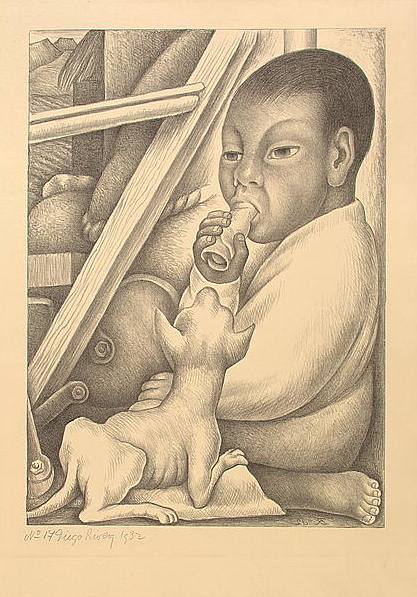
Today in Toronto, at the Art Gallery of Ontario, a first-time-ever exhibition in Canada opens: “Frida and Diego: Passion, Politics and Painting”. Combining the divergent artworks of México’s famous bohemian ‘power couple” of the twentieth century, Frida Kahlo and Diego Rivera – an odd yet charismatic pair of artists/soul-mates.
.
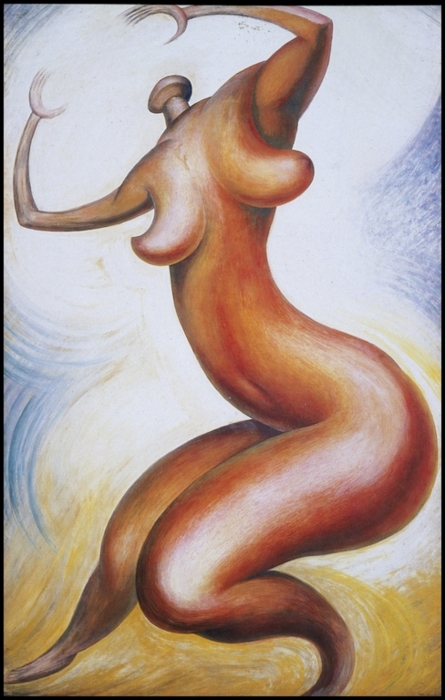
Diego Rivera (1886-1957) put México on the map internationally for his enormous public murals depicting Mexican history with a distinct Marxist perspective – and by placing Indigenous people front-and-centre in his work. Arguably, fellow muralists José Orozco and David Siqueiros were superior artists but Rivera’s vast energy and robust national/historical vision place him at the forefront. Though in his smaller painted canvases (some of which may be seen at the A.G.O. show) Rivera is wildly uneven as to technique and intellectual perspective – he can be cloying and mediocre – still, he is an exceptional figure for his vitality alone.
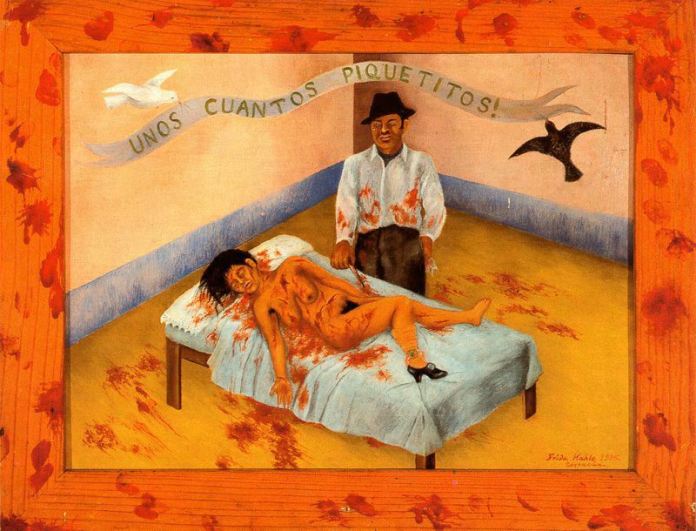
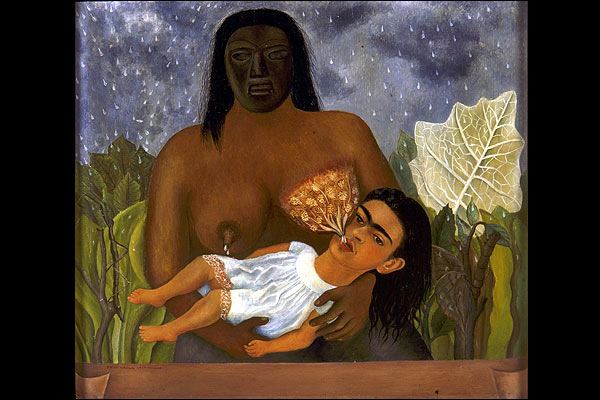
A maverick originality defines Frida Kahlo (1907-1954). In her short gutsy life she altered people’s perception of what it meant to be a woman painter. Though her small-size – and they are almost always small – canvases lack painterly finesse , nonetheless they are deeply affecting for their self-absorbed even disturbingly raw subject matter/point of view. Here was something new in a female painter – and Kahlo has been embraced by Surrealists, Feminists, champions of “Mestizaje”, Disabled and Chronic-Pain Activists, Body Self-Modifiers, and dedicated Non-Conformists. All have found what they needed in the work and life of this complex artist and woman – one who continues to fascinate a new generation now discovering her.
.
We present three poems in translation from Spanish by young poets who have meditated upon the “meaning of” Diego and of Frida…
. . .
Hoy en Toronto, el 20 de octubre, se inaugurará en La Galería de Arte de Ontario una exposición centrada en obras de los artistas Frida Kahlo y Diego Rivera – y titulada: Frida y Diego: Pasión, Política y Pintura. Es la primera vez que están en Canadá las pinturas de estos “compañeros” lo más famosos del arte mexicano del siglo XX.
Y para celebrar este hecho – las reflexiones de tres poetas…
. . .
Eduardo Urueta (pseudonym)
“Poem for Diego Rivera” (December 2011)
.
México:
The wet-nurse that breastfed you,
Who gave you your icy tone in love,
And who drew you, with his plump hands, as
Black women, soldiers on fire, Communists, kids;
México misses you –
this place is a fountain of the dismal…
.
So pronounced is your brow – like your temper.
So easygoing – so bearable – these mummy-like buildings.
The México of your tree-of-awareness is – like you – dead.
They’ve got skeletons – ‘at par’ now.
We are grey dust – smog – save for
Guanajuato which keeps on with its brightly-coloured houses in the hills and its
Streets smelling of oil paints – almost kissing us.
.
The buckets which by you got filled in two days
And by the third became big round chests or trunks-ful,
Were:
1. a nude portrait of (audacious poetess) Guadalupe Amor
2. a transvestite you never wanted and who ‘rouged’ you with his bearded cheeks,
And
3. your dead son by your first wife, Angelina Beloff.
.
So much matrimony to satisfy your hefty body,
So much travel to make ‘bug out’ those toad-eyes of yours,
So many kilometres of walls
To fill this country UP with History.
.
You are in debt.
You await – you hope for – a novice urbanization.
You have to hope – always – that the
Wall of memory (painted by you)
Bears the weight of – can hold up – the sky for you.
People will continue to love
The “Bellas Artes” fresco,
and that staircase mural decorated by your hands
– until the thing collapses and falls down…
. . .
Eduardo Urueta (Seudónimo)
“Poema para Diego Rivera” (diciembre 2011)
.
México:
la nodriza que te amamantó,
quien te dio tu gélido acento de amor,
y quien te dibujó, en las manos llenas,
mujeres morenas, soldados en combustión, comunistas, niños;
te extraña
– es una fuente sombría.
.
Tan pronunciada tu frente, como tu genio
Tan llevadera la momia de los edificios.
El México de tu árbol-conciencia,
como tú, está muerto.
Se hicieron a la par esqueletos.
Somos polvo gris,
excepto Guanajuato que sigue con casas de color en sus cerros
y sus calles huelen a aceite de pintura, a besos.
.
Los cubos que en ti cupieron dos días
y al tercero se volvieron un baúl redondo,
fueron
Un retrato desnudo de Guadalupe Amor,
Un hombre travesti que nunca quisiste y que ruborizaste de rosa
sus mejillas de hombre barbón,
y tu hijo muerto de Angelina Beloff.
.
Tanto matrimonio para llenar tu cuerpo gordo
tanto viaje
para llenar tus ojos de sapo
tanto kilómetro de muros
para llenar de historia al país
.
En deuda estás.
Te espera el blanco de la novicia urbanización
Te ha de esperar, siempre
el muro de la memoria
te ha de sufrir el cielo
por sujetarte el peso.
Te seguirá amando Bellas Artes
su escalera adornada de tus manos
hasta que se derrumbe…
José Pablo Sibaja Campos
“To Frida”
.
Today, when inexorable Time has shown us
How many calendars have gone up in smoke;
Now that the leaves have begun to fall from the trees;
Only just today when the sky seems to be transforming itself into a violent sea;
I – pausing before your face and its glance – have got to say:
Frida Camarada Kahlo,
That which you painted at one time or another as if wanting to speak to me;
The same fixed glance with which you have turned yourself into a nereid, a sea-nymph,
from that murky sea many people wanted to conquer but which few have achieved.
.
To be sure, Frida, there are those who look for you under the shade of some Rivera painting;
Others, naïve ones, find you within the shuttered corridors of a dream
– Poor them! – sad…blind.
They don’t notice that you live in your paintings, your paintings live in you.
Come, Frida, rise up and walk, as if you were the biblical Lazarus.
Show yourself again and let us once more call you:
Woman, Artist, Revolutionary.
. . .
José Pablo Sibaja Campos
“A Frida”
.
Hoy que el inexorable tiempo nos ha enseñado
Cuantos calendarios ha quemado ya.
Ahora que las hojas han empezado a caer de los árboles,
Justo hoy que el cielo parece convertirse en un mar violento,
Tengo que decirlo, me detuve ante tu mirada
Frida Camarada Kahlo
Esa que pintaste una y otra vez como queriendo hablarme,
La misma mirada con la que te has convertido en la nereida
Del turbio mar que muchos quisieron conquistar
Pero que pocos han logrado.
.
Es cierto Frida algunos te buscan balo la sombra de un tal Rivera,
Otros ingenuos,
Te hallan en los postigos pasillos del sueño
Pobre de ellos, tristes…ciegos.
No se dan cuenta que vives en tu obra y tu obra en ti.
Ven Frida levántate y anda, cual si fueras el Lázaro bíblico
Muéstrate de nuevo y déjanos llamarte una vez más;
Mujer, Artista, Revolucionaria.
. . .
Hellen Chinchilla
“Between transgression and normalcy”
.
Why?
Why do you have to be along that line where there are no lines – no horizons?
Why are you not the same as all the others?
Why must you be seen as transgressive and not as normal?
Where is that fine line that keeps you apart?
Apart to be what you must be!
Forced by life, by decision, and by pain to be in that line off to one side,
where the others, even though they wanted not to be there,
are leaving behind the boundaries of the hetero…
Oh, you knew how to love…
You – different Woman,
Woman-transgressor,
Normal Woman – and then some.
Woman.
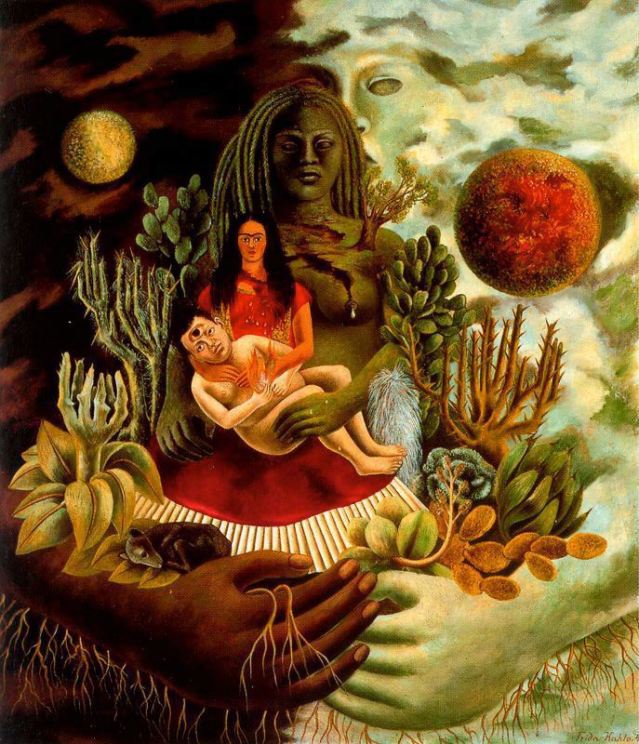
Hellen Chinchilla
“Entre la transgresión y la normalidad”
.
¿Por qué?
¿Por qué debes estar en la línea dónde no hay líneas?
¿Por qué no eres de las mismas?
¿Por qué tienes que ser vista como transgresora y no como normal?
¿Dónde está esa delgada línea que te mantiene al margen,
Al margen de ser lo que debes ser?
Obligada por vida, decisión y dolor a estar en la línea de al lado
En donde las otras, aunque quieran no pueden estar
Dejando atrás la frontera de lo hetero…
– Supiste amar…
Mujer diferente,
Mujer transgresora,
Mujer normal – o una más…
Mujer.
. . . . .
Traducciones del español al inglés / Translations from Spanish into English: Alexander Best
“A Frida” y “Entre la transgresión y la normalidad” y “Poema para Diego Rivera”
© José Pablo Sibaja Campos, Hellen Chinchilla, Eduardo Urueta
. . . . .
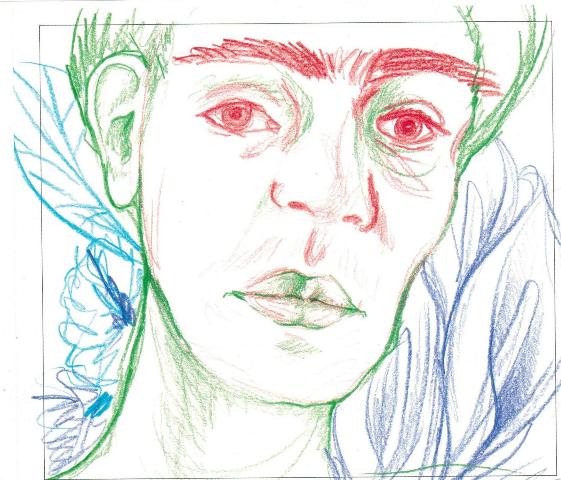
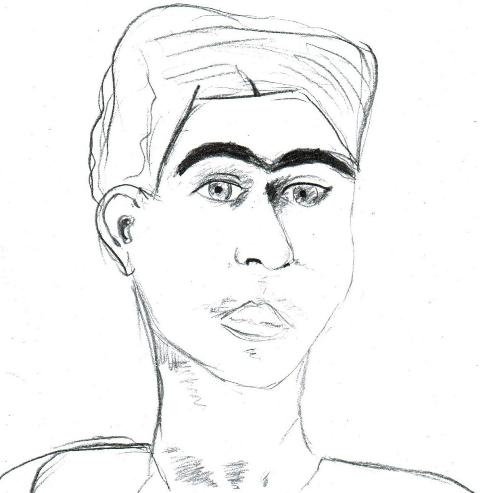
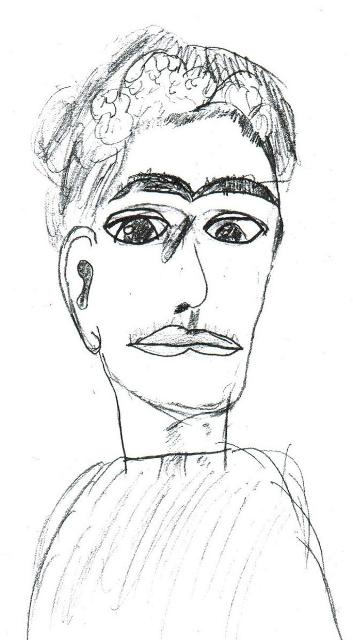
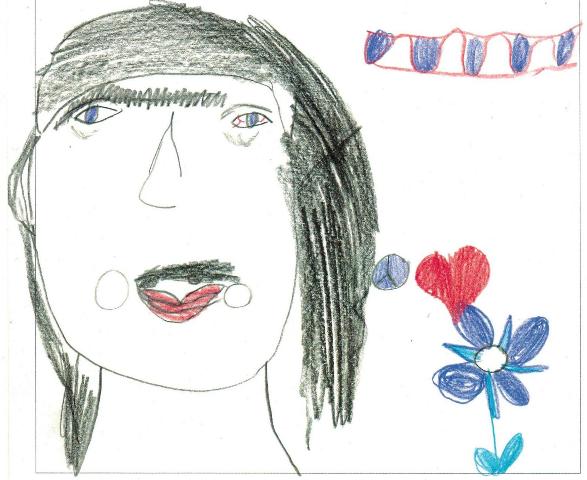
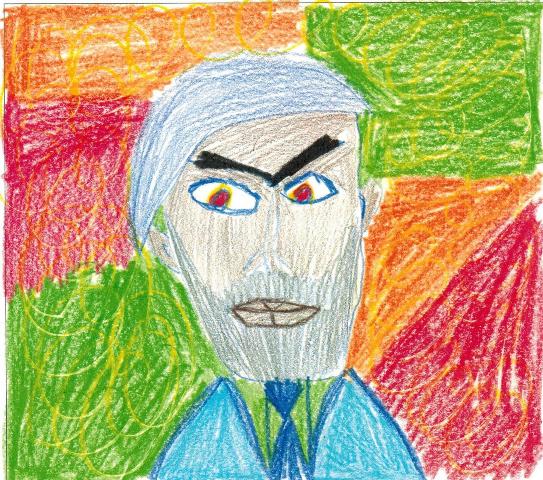
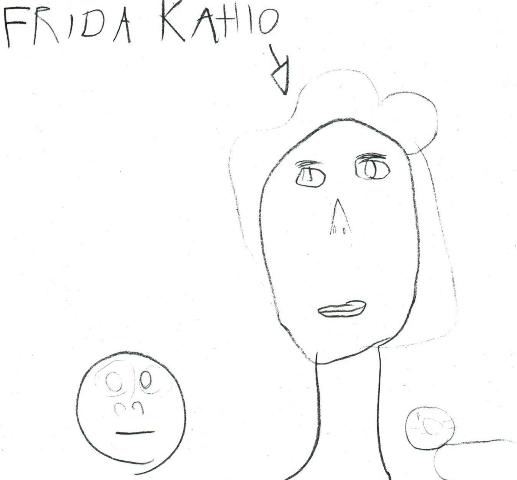
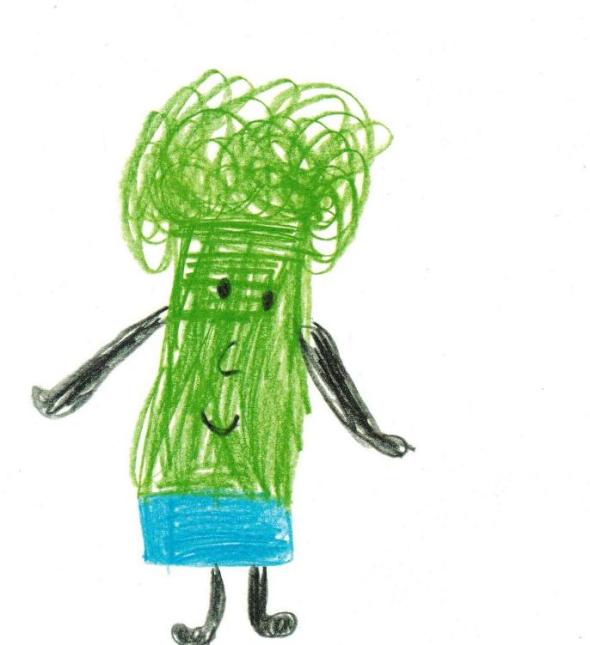
Retratos de Frida Kahlo: dibujos hechos por unos adolescentes y niños en Toronto, Canadá, otoño de 2012:
Lupicínio Rodrigues: “Volta” / “Come back to me”
Posted: October 13, 2012 Filed under: English, Lupicínio Rodrigues, Portuguese, Translator's Whimsy: Song Lyrics / Extravagancia del traductor: Letras de canciones traducidas por Alexander Best, ZP Translator: Alexander Best Comments Off on Lupicínio Rodrigues: “Volta” / “Come back to me”
“Volta”
(Letras/música: Lupicínio Rodrigues, compositor brasileiro, 1914-1974:
canção cantada por Gal Costa, 1973)
.
Quantas noites não durmo
A rolar-me na cama
A sentir tantas coisas
Que a gente não pode explicar – quando ama.
.
O calor das cobertas
Não me aquece direito
Não há nada no mundo
Que possa afastar esse frio do meu peito.
.
Volta,
Vem viver outra vez ao meu lado
Não consigo dormir sem teu braço
Pois meu corpo está acostumado.
.
Volta,
Vem viver outra vez ao meu lado
Não consigo dormir sem teu braço
Porque meu coração está acostumado…
. . .
“Come back”
(words and music by Lupicínio Rodrigues, Brazilian composer, 1914-1974:
as sung by Brazilian singer Gal Costa, 1973)
.
How often I can’t sleep!
– tossing and turning in bed –
Feeling so many things
That people – who are in love – cannot explain.
.
The heat of the blankets
Doesn’t warm me well
And there’s no-one in this world
Can keep this chill from my breast.
.
Return to me,
Come live again at my side
I can’t keep sleeping without your arms around me
– well, my body’s grown used to you!
.
Come back,
And live once more by my side
I can’t go on sleeping without your embrace
– and my heart’s accustomed to you now…
.
Translation/interpretation from the Portuguese: Alexander Best
Poèmes de l’Angola et du Mozambique: Neto, Nogar, Rocha, Tavares et White
Posted: October 5, 2012 Filed under: Agostinho Neto, Eduardo White, French, Jofre Rocha, Paula Tavares, Rui Nogar | Tags: Poètes africains Comments Off on Poèmes de l’Angola et du Mozambique: Neto, Nogar, Rocha, Tavares et White
Agostinho Neto
(1922-1979, Angola)
.
Nuit
.
Je vis
dans les quartiers sombres du monde
sans lumière et sans vie.
.
Je marche dans les rues
à tâtons
appuyé sur mes rêves vagues
trébuchant sur l’esclavage
dans mon désir d’être.
.
Ce sont des quartiers d’esclaves
des mondes de misère
des quartiers sombres.
.
Où les volontés se sont diluées
et où les hommes se sont confondus
avec les choses.
.
Je marche en tâtonnant
dans les rues sans lumière
inconnues
encombrées de mystique et de terreur
bras dessus bras dessous avec les fantômes.
.
La nuit aussi est sombre.
.
Traduit du portugais par Jean-Michel Massa
. . . . .
Rui Nogar
(1935-1993, Mozambique)
.
Altruisme (au nom de Lavoisier)
.
Je veux mourir
en temps voulu
.
avec un cercueil de plomb
des larmes familiales
et un cadavre symétrique
.
mais un prêtre non mère
prends patience
le ciel que tu me destinais
sera le sol qui m’accueillera
.
et quand personne
ne fera attention
et que le plomb se fatiguera de la géométrie
et que tous me trouveront inutile
.
je retournerai à la terre en douceur
et de plein gré
de plein gré je vous le jure
.
Je rassasierai
des milliers de parasites
.
ceci pour qu’on ne dise pas
que je n’ai servi à rien.
.
Traduit du portugais par Marie-Claire Vromans
. . . . .
Jofre Rocha
(né en 1941, Angola)
.
Poème du Retour
.
Quand je rentrerai du pays de l’exil et du silence,
ne m’apportez pas de fleurs.
.
Apportez-moi plutôt toutes les rosées,
larmes d’aurores qui ont accompagné les drames.
Apportez-moi l’immense faim d’amour
et la plainte des sexes turgescents dans la nuit constellée.
Apportez-moi la longue nuit d’insomnie
des mères pleurant leurs bras vides d’enfants.
.
Quand je rentrerai du pays de l’exil et du silence,
non, ne m’apportez pas de fleurs…
.
Apportez-mois seulement, oh oui,
l’ultime désir des héros tombés à l’aube
une pierre sans ailes dans la main
et un filet de colère s’échappant de leurs yeux.
.
Traduit du portugais par Michel Laban
. . . . .
Paula Tavares
(neé en 1952, Angola)
.
“Les choses délicates se traitent avec soin.”
(Philosophie de Cabinda)
.
Tu m’as désossée…
.
Tu m’as désossée
soigneusement
m’inscrivant
dans ton univers
comme une blessure
une prothèse parfaite
maudite nécessaire
tu as détourné mes veines
pour qu’elles se vident
dans les tiennes
irrémédiablement
en toi un demi-poumon respire
l’autre, que je sache
existe à peine
.
Aujourd’hui je me suis levée tôt
j’ai enduit de “tacula” * et d’eau froide
mon corps enflammé
je ne battrai pas le beurre
je ne mettrai pas la ceinture
J’IRAI
vers le sud sauter l’enclos.
.
“tacula” * – poudre rouge utilisée comme cosmétique
.
Traduit du portugais par Michel Labon
. . . . .
Eduardo White
(né en 1963, Mozambique)
.
Nous sommes vieux.
Je suis vieux, émasculé.
Mais peut-être l’enthousiasme par lequel cet amour
a commencé
n’a-t-il maintenant plus d’importance,
pas plus peut-être que
l’office des corps,
le feu, l’eau, la vigueur;
et l’amour, mis en retraite
de tout cela,
vit maintenant de l’amitié
de ces deux vieux animaux
que nous sommes
si avertis.
.
Ce n’est pas de chanter qu’il vivra,
ni de se donner,
ni d’exister,
mais d’avoir fait
tout cela.
.
Traduit du portugais par Michel Laban
*
Poèmes d’une anthologie de l’éditeur Bernard Magnier
© les poètes eux-mêmes – ou leurs ayants droit
” Cette liberté d’écrire est une force étrange! ” : Six poètes du Nigeria
Posted: September 27, 2012 Filed under: Dan Anace, Ewi Adebayo Faleti, French, John Pepper Bekederemo Clark, Onookme Okome, Onuora Ossie Enekwe, Regina Eziagulu Obakhena | Tags: Poètes nigériens Comments Off on ” Cette liberté d’écrire est une force étrange! ” : Six poètes du Nigeria
John Pepper Bekederemo Clark
(né en 1935)
Abiku*
*(Selon une croyance Yoruba, l’Abiku est
l’enfant qui ne cesse de mourir et renaître.)
.
Tu vas tu viens depuis tant de saisons
Reste donc dehors sur le baobab
Suis où tu veux tes esprits familiers
Si la maison ne peut pas tu suffire.
C’est vrai, elle fuit, le chaume
Laisse passer le flot lorsqu’il déborde
Et les chauves-souris, les chouettes
Souvent la nuit s’engouffrent sous le toit.
Et quand vient l’harmattan les parois de bambou
Sont toutes prêtes pour le feu
Qui sèche le poisson sur les claies.
Elle a été pourtant la réserve salubre
De bien des doigts, et tant d’autres viendront
Tendus vers le soleil.
Cesse donc enfin d’enjamber notre seuil
Entre et demeure pour de bon.
Nous le savons, les cicatrices
Qui te strient le ventre et le dos
Comme par le bec de l’espadon
Et tes deux oreilles marquées
Comme d’un esclave domestique
Sont les traces de tes premiers passages.
Alors entre, entre pour de bon
Car ta mère a le corps fatigué
Fatigué, et le lait a surgi
Où tant de bouches réjouissent le coeur.
.
Traduit de l’anglais par Etienne Galle
*
Ewi Adebayo Faleti
(né en 1935)
Le Silence du Poète
.
Le jour où vous voyez un poète qui se tait
Ne soyez pas fâchés, il parle en son coeur.
Le jour où vous rencontrez un poète qui ne parle pas,
Ne soyez pas fâchés, il parle en son coeur.
Mais qui connaît les pensées du poète?
Qui peut connaître les pensées dans le coeur du sage?
Qui peut connaître le chant au bord des lèvres du chanteur?
L’eau qui n’impressionne pas le fermier,
Peut atteindre le coeur du poète, devenir océan,
Elle peut atteindre le coeur du poète, devenir lagune.
El la tempête qui connaît l’océan et la lagune,
Peut atteindre le coeur du poète
Et devenir brise.
Le coeur du poète accepte la lie,
Et il accepte le limon
Et l’eau claire de la source.
Mais si vous rencontrez un poète
Qui a la tête a l’envers et se tait
Ne soyez pas fâchés, ne dites pas de mal de lui.
En son coeur, le poete parle.
.
Traduit de Yoruba par Michka Sachnine
*
Onuora Ossie Enekwe
(1942 – 2010)
Avant la Guerre
.
Bêtes de la jungle
aux ongles de feu
surgissant bondissant
morsure et mare de sang
Dans la cité
langues d’acide
visages de flamme
regards de braise
Le poison pullule
au coeur de la nuit
les sorcières et les vautours copulent.
. . .
Après la Guerre
.
Dans la sombre cité des morts
par les rues solitaires
les chiens aboient sur les ombres rampantes
Par-dessus la rivière des murmures
le vent hurle ses saluts
Sous un lit
du village désert
un cadavre criblé de balles
mûrit ses os.
.
Traduit de l’anglais par Etienne Galle
. . . . .
Dan Anace
Shago
.
Le monde est un lieu où on laisse les autres
le monde est la danse des filles
celui qui est devant s’en va derrière
à l’heure du champion il n’y a qu’un champion
à l’heure des uns il n’y en a pas d’autres
un jour, par Allah, un autre jour
ce sera les autres, ce ne sera plus nous
et même si nous sommes là, ce sera sans force
et nous serons assis à côté de l’arène
et nous nous contenterons de crier
ce monde m’est doux aujourd’hui
ce monde un autre jour me sera amer
alors je serai mort ou vieillissant
un jour tu me verras incapable de jouer
les jours passent
Allah mène le jeu
par Allah, un jour, un autre jour
les jours passent, un homme s’en est allé
d’autres jours passent, un homme s’en est allé
et tu entends les proches qui pleurent
et c’est le jour où l’on partage ses biens.
.
Traduit du Haoussa par Etienne Galle
*
Regina Eziagulu Obakhena
Calamité
.
Tout comme la rosée sur la montagne
Tout comme l’écume sur la lessive
Tout comme l’inondation
Tout comme la tornade
Tout comme les pluies torrentielles
La Véracité s’en est allée
Les humains sont devenus des bêtes dans l’énorme forêt.
. . .
Le Bon Roi
.
Le roi te demande de parler
De dire ce qui est bon pour l’oie et pour le jars
La joie du peuple est la probité du roi
Notre roi l’a promis:
“La buse se perchera,
L’aigle se perchera”.
Le village qui aime le roi aime Dieu
Le village qui combat pour le roi combat pour Dieu
Le roi qui aime ses sujets pleure la mort du plébéian.
.
Traduit d’après une traduction anglaise de l’auteur
par Etienne Galle
*
Onookme Okome
(né en 1960)
Mon coeur a dit des choses
.
Cette liberté d’écrire est une étrange force!
Soudain sur une étrange idée suppliant
j’entends s’ouvrir un coeur,
puis choir prudentes les pages réprimées
du coeur,
je vois un peuple perdu dans la contrainte des choses
sans espoir, et je sais:
.
le silence en mon coeur a dit des choses
que je n’ai pas notées au registre sénatorial:
Je me rappelle la dernière saison, nous récoltions
les rires déchaînés dans les granges, maintenant
les poutres sont désertes; remplies de visages abattus.
.
Cette liberté d’écrire est une force étrange!
La légèreté de l’être m’entraîne
en cette folie
qui me laisse libre d’écrire.
.
Traduit de l’anglais par Etienne Galle
. . . . .
Tous les poèmes: d’une anthologie par Bernard Magnier
© : les auteurs des poèmes – ou leurs ayants droit
Dos poemas para Yom Kipur / Two poems for Yom Kippur: Jane Kenyon, Mary Oliver + תשובה
Posted: September 25, 2012 Filed under: English, Jane Kenyon, Mary Oliver, Spanish Comments Off on Dos poemas para Yom Kipur / Two poems for Yom Kippur: Jane Kenyon, Mary Oliver + תשובהEste año, Yom Kipur – la conmemoración del Día de la Expiación y del Perdón – cae en el 25 y 26 de septiembre. Estos dos poemas, eligidos por la Rabina Rachel Barenblat, se tratan – elipticamente, oblicuamente – del sujeto de Teshuvá. Teshuvá (en hebreo תשובה) es la práctica de volver a las raíces de la fe. Incluye el esfuerzo del individuo hacia un sentido de arrepentirse de los pecados propios de una forma significativa y sincera…
*
This year Yom Kippur – the Day of Atonement and Forgiveness – begins at sunset on September 25th and continues through the 26th. The two poems featured here – chosen by Rabbi Rachel Barenblat – are about Teshuvah, although indirectly, elliptically so. Teshuvah involves a “return” to the roots of the faith, and includes each individual’s effort to feel repentant, genuinely sorry for, the wrongs he or she has done to another. When there is deep, meaningful sincerity to this spiritual process it is often reciprocated through forgiveness by the one who was wronged…
.
Jane Kenyon (1947-1995)
“Sola por una semana”
.
Hice una lavada de ropa
y la colgué para secar.
Subí al pueblo después fui al centro
y me entretuve todo el día.
La manga de tu camisa más fina
ascendió solemnemente
cuando llegaba en el carro
nuestras ropas de dormir
se enlazaron y desenlazaron
en una pequeña ráfaga de viento.
Para mí se estuvo haciendo tarde; estaba
para ti, donde estabas – no.
La luna de otoño estaba llena
pero las nubes escasas hacían su luz
no exactamente fidedigna.
La cama en tu lado parecía
ancha y llana como Kansas;
tu almohada estaba rellena, fresca, alegórica…
*
Jane Kenyon (1947-1995)
“Alone for a week”
.
I washed a load of clothes
and hung them out to dry.
Then I went up to town
and busied myself all day.
The sleeve of your best shirt
rose ceremonious
when I drove in; our night-
clothes twined and untwined in
a little gust of wind.
For me it was getting late;
for you, where you were, not.
The harvest moon was full
but sparse clouds made its light
not quite reliable.
The bed on your side seemed
as wide and flat as Kansas;
your pillow plump, cool,
and allegorical…
_____
Mary Oliver (nace 1935)
“El Viaje”
.
Por fin un día supiste
lo que tenías que hacer, y empezaste,
aunque las voces alrededor de ti
siguieron gritando
su mal consejo – aunque toda la casa
comenzó a temblar
y sentiste el jalón familiar
a tus tobillos.
“¡Arregla mi vida!”
gritó cada voz.
Pero no te detuvistes.
Supiste lo que tenías que hacer
aunque los dedos rígidos del viento
curiosearon aún en los fundamentos
aunque era terrible su melancolía.
Ya estaba bastante tarde
y una noche furiosa,
y el camino lleno de ramas y piedras caídas.
Pero, poco a poco,
como dejaste atrás sus voces,
las estrellas comenzaron a quemar
por las capas de nubes,
y había una fresca voz
que reconociste lentamente,
que te acompañaba
mientras que cruzaste a grandes zancadas
más y más en lo más hondo del mundo,
estando decidido a
hacer la sola cosa que podías hacer –
estando empeñado a salvar
la única vida que podías salvar.
*
Mary Oliver (born 1935)
“The Journey”
.
One day you finally knew
what you had to do, and began
though the voices around you
kept shouting
their bad advice—
though the whole house
began to tremble
and you felt the old tug
at your ankles.
“Mend my life!”
each voice cried.
But you didn’t stop.
You knew what you had to do,
though the wind pried
with its stiff fingers
at the very foundations,
though their melancholy
was terrible.
It was already late
enough, and a wild night,
and the road full of fallen
branches and stones.
But little by little,
as you left their voices behind,
the stars began to burn
through the sheets of clouds,
and there was a new voice
which you slowly
recognized as your own,
that kept you company
as you strode deeper and deeper
into the world,
determined to do
the only thing you could do—
determined to save
the only life you could save…
. . . . .
Traducción del inglés al español / Translation from English into Spanish:
Alexander Best, Lidia García Garay
“Yancuic Xochicuicatl”: Poemas náhuatl para celebrar el Día de la Independencia – ¡Vivan las lenguas indígenas mexicanas, hoy y siempre! / Poems to celebrate México on Independence Day – Long live Her Indigenous Languages, Today and Always!
Posted: September 15, 2012 Filed under: English, Natalio Hernández, Náhuatl, Spanish, ZP Translator: Alexander Best | Tags: Poemas para el Día de la Independencia de México Comments Off on “Yancuic Xochicuicatl”: Poemas náhuatl para celebrar el Día de la Independencia – ¡Vivan las lenguas indígenas mexicanas, hoy y siempre! / Poems to celebrate México on Independence Day – Long live Her Indigenous Languages, Today and Always!
Natalio Hernández (nace 1947, Naranjo Dulce, Veracruz)
Selecciones del poemario Semanca Huitzlin
/ Colibrí de la Harmonía
/ Hummingbird of Harmony (2005)
.
“Yancuic Xochicuicatl”
Huetzis atl
huetzis atl
tiyolpaqui
huetzis atl,
tiyolpaqui
huetzis atl.
.
Huala atl
huala atl
tepetzala
huala atl,
tepetzala
huala atl.
.
Cuali atl
cuali atl
yatihnequi
cuali atl,
yatihnequi
cuali atl
.
Xochi atl
xochi atl
huetztihuala
.
xochi atl,
huetztihuala
xochi atl.
.
Huetzis atl
huetzis atl
tiyolpaqui
huetzis atl,
tiyolpaqui
huetzis atl.
.
“Yancuic Xochicuicatl”: Traducción en inglés / translation into English: Donald Frischmann
.
“New Flowers, New Songs”
It will rain
It will rain
we are happy
it will rain
we are happy
it will rain.
.
Rain is coming
rain is coming
o’er the hills
rain is coming
o’er the hills
rain is coming.
.
Good pure water
good pure water
we now wish for
good pure water
we now wish for
good pure water.
.
Flowered water
flowered water
is now falling
flowered water
is now falling
flowered water.
.
It will rain
it will rain
we are happy
it will rain
we are happy
it will rain.
Note: the words Flower + Song together in Náhuatl mean “Poetry”.
The phrase in Náhuatl is: ” in xochitl in cuicatl “
.
“Yancuic icuic Monteso Xocoyotzin”
Ximosehui tetahtzin
ximoyolsehui
xihcahua cuesoli
amo ximotequipacho;
nican tlachixtoque:
moconehua
mopilhuan
motlacamecayo,
ipan Mexihco totlalnantzin
nican titlachixtoque.
.
Xihuicahuitl panoc
panoc xopanatl;
ehecatl quihuicac cuesoli
quisehui choquilistli
quipahti totlacayo
quitlalochti mahmahtli.
Yancuic tonati
tech tlahuiltihuala.
.
Ximosehui tetahtzin
ximoyoltlali
amo nempolihuis in altepetl
chamanis totlahtol.
Nochipa manis in ixtli,
in yolohtli
in tlacamecayotl,
in xicnelhuayotl.
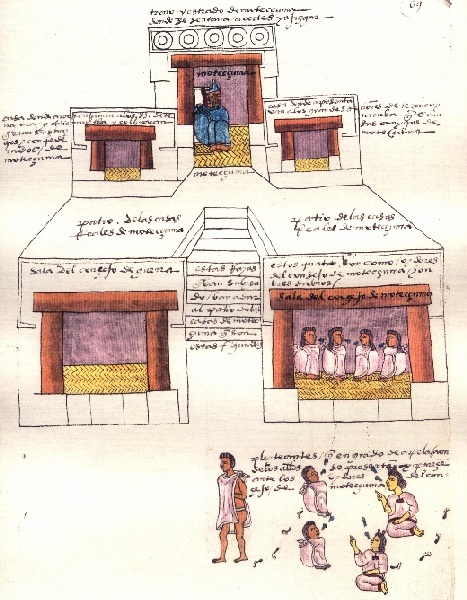
“Canto Nuevo a Moctezuma Xocoyotzin”
Reposa venerable viejo
apacigua tu corazón
abandona la tristeza
ya no te aflijas;
aquí permanecemos:
tus hijos
tus príncipes
tu linaje,
en la nación mexicana
aquí permanecemos.
.
Han pasado los años
la tempestad ya pasó;
El viento recogió nuestra tristeza
secó nuestras lágrimas
restauró nuestras heridas
ahuyentó el miedo.
Un nuevo sol
ya nos alumbra.
.
Reposa venerable viejo
tranquiliza tu corazón;
permanecerá el pueblo
renacerá la palabra.
No perecerá el rostro,
el corazón,
el linaje,
la raíz antigua.
. . . . .
“El Ritmo del Tiempo”
Todo a su debido tiempo…ni antes ni después.
Al año reverdece el campo.
El sol brota en el horizonte cuando la noche recoge su manto.
El hombre madura cuando el otoño llega y los árboles pierden sus hojas…
ni antes ni después.
El colibrí / huitzilin, inverna seis meses al año
y despierta cuando llega Xopantla / la primavera.
Ocurre lo mismo con el amor: llega con el tiempo…ni antes ni después.
.
“The Rhythm of Time”
In due course everything has its time…not before, not after.
The countryside greens up during the passage of the year.
The sun sprouts from the horizon when night gathers up its cloak.
Man matures when autumn comes and the trees lose their leaves
…not any sooner than that, not any later.
Hummingbird / Huitzilin* winters away for half the year
and awakes when Xopantla** / Spring arrives.
The same occurs with Love:
It comes with time…neither too soon, nor too late.
.
*Huitzilin – Náhuatl word for hummingbird
**Xopantla – Náhuatl word for spring
.
“El Ritmo del Tiempo”: Traducción del español al inglés: Alexander Best
“The Rhythm of Time”: Translation from Spanish into English: Alexander Best
Poemas náhuatl para celebrar el Día de la Independencia mexicana: “dos flores” de Juan Hernández Ramírez
Posted: September 15, 2012 Filed under: Juan Hernández Ramírez, Náhuatl, Spanish, ZP Translator: Lidia García Garay | Tags: Poemas para el Día de la Independencia de México Comments Off on Poemas náhuatl para celebrar el Día de la Independencia mexicana: “dos flores” de Juan Hernández Ramírez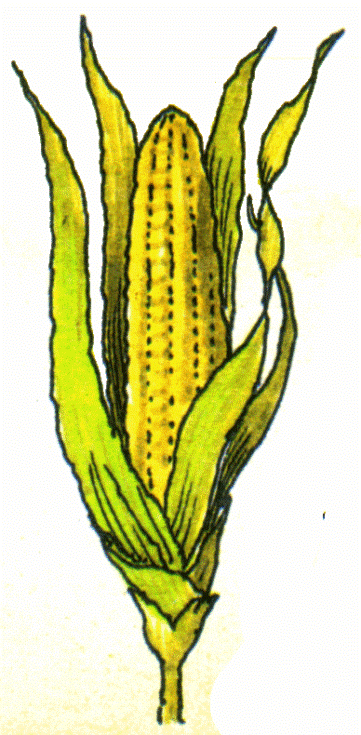
Juan Hernández Ramírez
(nace 1951, Colatlán, Veracruz)
Dos poemas del poemario Chikome xochitl / Siete-flor
“Miauaxochitl”
I
Ipan ueyatl axiuitik sintli
Makuilxochitl kipatlaua imamal.
Kueponi miauatl.
Xali xochitl tiokuitlatik.
In ajuechkali
moxochitlakentijtok.
San eltok kuikatl tlatsotsontli.
II
Tlilelemeka tonatij itsonkal
ipan sintli itlakayo.
Moxochiotlaltok Xilonen.
Pankistok siltik tlilelemektli.
Tlixochitl
toselik nakayo.
Ketsalxochimej kali.
III
Chichiltik, yayauik, chipauak, kostik
ikuetlaxo itlapoyauilis.
Tien sintli tlayoli.
Ika xochitl mokuachijchijtok Senteotl.
Kuika miauatototl.
In chalchiuitl uitsitsilij,
ika xochitl moiuintia.
IV
Kostik xochitl tlaixpaj.
Kantelaj tlauili. Kopalij ipokyo.
Tokistli tiochiualistli.
Tlali, se uinoj tlatsikuintli,
inik tlakatl seyok.
Xochimej, inik matlaeli.
Tlapojtok tlali, tlaoli kiselia.
V
Ipan youali tlakoyoyan kochki,
ajuechtli kiauitl issa.
Sintoktli.
Ipan kalejekatl yoltok.
Ipan tlauiltlalpan moskaltia,
xochiketsal ikuaxanko.
Xoxoktik xiuitl papalotl.
VI
Ketsaltototl kitlalana ipatlanil,
uiuipika sintli ixouiyo.
Ipan xoxouik xopantla tlali
tlen tlauili kuauitl moskaltia.
Kuikaya Xochitototl.
Tlapouij xiuimej
ipan yolistli.
VII
Ipan tonatij ichaj yoltok.
Tlen yolistli tiokuitlatl yoltok,
kostik sintlayoli.
Xoxoktik mestli xiuimej
itsajla tiotlatik tlauili uiuipikaj.
Tsaktok xochikoskatl.
Patlantok uitsitsilij.
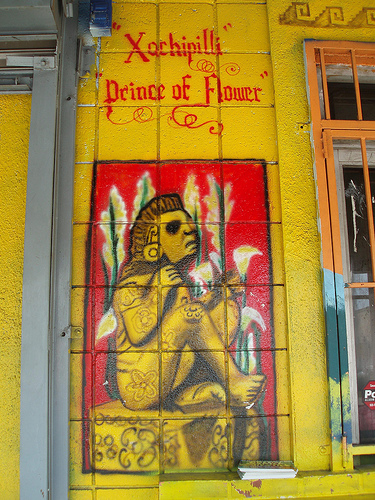
“Espiga de maíz”
I
Sobre el verde mar del maíz
Su manto extiende Macuilxóchitl.
Brota la espiga.
Dorada flor de arena.
La casa del rocío
está vestida de flores.
Prevalece la música y el canto.
II
Arde la cabellera del sol
sobre el cuerpo del maíz.
Xilonen ha florecido.
La fina llama ha brotado.
Flor de fuego
nuestra tierna carne.
Casa de preciosas flores.
III
Amarillo, blanco, negro, rojo,
los matices de su piel.
El grano de maíz.
Centeotl, de flores está adornado.
Canta el pájaro espiga.
El colibrí de jade
se embriaga con las flores.
IV
Altar de flores amarillas.
Luz de velas. Humo de copal.
Rito de la siembra.
Un trago de aguardiente a la tierra,
otro para el hombre.
Para la abundancia, flores.
La tierra abierta, recibe la semilla.
V
Ha dormido en el lugar de la noche,
despierta bajo la lluvia del rocío.
La mata de maíz.
Vive en la casa de los vientos.
Crece en la tierra de luz,
regazo de Xochiquetzal.
Mariposa de hojas verdes.
VI
Alza su vuelo el quetzal,
La hoja del maíz se estremece.
En la tierra verde-primavera
Crece el árbol de la luz.
Ya canta el pájaro flor.
Las hojas se abren
A la vida.
VII
Vive en la casa del sol.
El oro vivo de la vida,
dorada semilla de maíz.
Las hojas verde-luna
tiemblan bajo la luz atardecida.
Se ha cerrado el collar de flores.
El colibrí ha volado.
. . . . .
“Sempoalxochitl”
I
Kokitl itlauil
ipan yayauik ejekatl.
In kostik xochitl.
Ipan ejekatl tiokuitlaxochipetlatl
tlen tlali iijtiko pamitl.
Tlauili iuan tsintlayouali,
Sempoalxochitl.
II
Ika kostik xochitl
kisusua kauitl Xiutekojtli.
Tlixochimej.
Sesentsitsij xochimej moilpiaj
ketsalijuitl kiijitiyouij
kalmiktlampa inik ojtli.
Xochikoskatl.
III
Ipan kostik tlailpili
Tlen ikuaixuak tlajtsoyoj,
Moketstok kauitl.
In mijkatsij xochimej,
tiopantlauili kitemouaj
ipan youalkali.
In tlanestli sitlalij, inik tonali.
IV
Tiitstokeya nikanij,
¿Kanji tonejnemil techuikas?
¿ueslis ipan tonatij iojui?
Tiitstokeya nikanij.
Kostik xochimej tijtlachiliaj
iijuiyo tonatitototl tikitaj.
¿Temiktli in yolistli?
V
Nejnemi Tlitekojtli
ika miktokej yaotlakamej
ika siuamej miktokej ipan mixiuili.
Sempoalxochitl xochimej
tlapalmej totomej,
konemej, siuamej iuan tlakamej.
Tonatij iixpaj iichaj.
VI
Ika totomej ejekatl iniuaya
kuikatl iuan ajuechtli kimoyauaj.
Atl ikechkuayo.
Ipan yeuatsinko kuikaj texiuitik totomej,
tlen youaltotomej in tiotlak.
Tlauili iuan tsintlayouali.
Mikilistli iuan yolistli.
VII
Tiitstokejya nikanij
ika chichiltik xochitl titlakajtokej
ika kostik xochitl tikisteuasej.
In xiutototl techtlauilia
tlen mitlampa ojtli.
Ipan ojtli eltlapaltipaj tiyajtiasej
ika xochimej paxalouanij.
.
“Flor de Muerto”
I
Luz de luciérnaga
en el viento negro.
La flor amarilla.
Pétalos de oro al viento
dentro del surco de la tierra.
Oscuridad y luz,
Sepoalxóchitl.
II
Con flores amarillas
Xiutecojtli engarza el tiempo.
Flores de fuego.
Una a una se anudan las flores
tejiendo el fino plumaje
para el camino a casa de la muerte.
Collar de flores.
III
En el nudo amarillo
bordado en la frente,
se ha detenido el tiempo.
Las flores de la muerte,
buscan el temple de la luz
en la casa de la noche.
Para el espíritu, la estrella del alba.
IV
Ya estamos aquí,
¿dónde nuestros pasos nos llevarán?
¿acaso por los caminos del sol?
Ya estamos aquí.
Contemplamos las flores amarillas,
miramos el plumaje del pájaro sol.
¿Es la vida sueño?
V
El Señor del fuego camina
con los guerreros muertos,
con las mujeres el el parto muertas.
Son flores de cempoalxóchitl
las aves de colores,
los niños, mujeres y hombres.
Su hogar de cara al sol.
VI
El viento aliado con los pájaros,
esparcen el canto y el rocío.
La garganta es de agua.
Cantan pájaros azules en la aurora,
la tarde es de las nocturnas aves.
Luz y oscuridad.
Muerte y vida.
VII
Ya estamos aquí
con flores rojas hemos nacido,
con flores amarillas hemos de partir.
El pájaro solar “xiutototl” nos alumbra
camino a la morada de los muertos.
Nos hemos de ir en alas por la senda,
con las viajeras flores.
. . . . .
“Chikome xochitl” / Siete-flor, alude al maíz que, junto con semillas del chile-tomate-algodón-amaranto-ajonjolí
— y de la calabaza — constituyen el símbolo náhuatl de las siete flores.
. . . . .
“Ear of Corn”
I
On the green sea of corn
Macuixóchitl extends his mantle.
The ear of corn ear comes out.
Golden flower of sand
The dew’s home
is dressed with flowers.
Music and song abound.
II
The sun’s radiance
on the corn’s body.
Xilonen has blossomed.
The fine flame has sprouted
Fire flower
our tender flesh.
House of precious flowers.
III
Yellow, white, black, red.
nuances of the skin.
The corn grains.
Centeotl, adorned with flowers.
The corn-ear bird sings.
the jade hummingbird
gets drunk with the flowers.
IV
Altar of yellow flowers.
Candlelight. Smoke of “copal”.
Sowing rites.
A drink of liquor for the land,
another one for man.
For abundance, flowers.
The open earth receives the seed.
V
It has slept in the night’s home,
wakes up under the dew’s rain
– the corn plant.
Lives in the house of winds.
Grows in the land of light,
Xochiquetzal’s lap.
Green-leafed butterfly.
VI
The “quetzal” takes flight
the maize leaf trembles.
In the land of green-spring.
The tree of light grows.
The flower-bird sings.
The leaves open up.
To Life.
VII
Lives in the house of the sun.
The living gold of life
– golden seed of corn.
With green-moon leaves
a-hiver under the evening light.
The flower necklace is closed.
The hummingbird has flown….
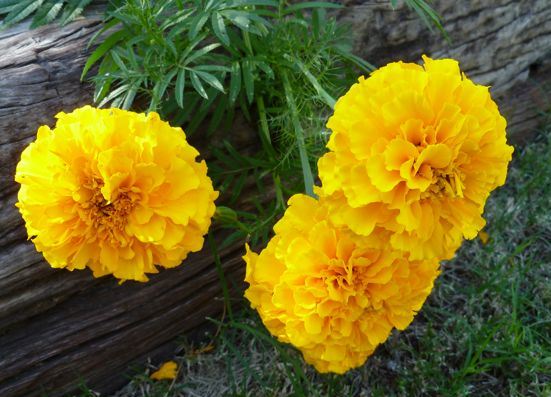
“The Flower of The Dead”
I
Glow-worm light
in the black wind.
Yellow flower.
Free-standing petals of gold.
Inside the ground’s furrow.
Darkness and light,
Sempoalxóchitl.
II
With yellow flowers
Xiutecojtli catches time.
Flowers of fire.
The flowers come together, one by one
knitting fine plumage
on the road to the house of death.
Flower necklace.
III
In the yellow knot
embroidered on the forehead,
time has stopped.
The flowers of death.
Seeking the temple of light
in the house of night.
For the spirit, the star of dawn.
IV
We’re here,
Where will our steps lead us?
Maybe to the paths of the sun?
We’re here.
Gazing at the yellow flowers,
Looking at the sun-bird’s plumage.
Is Life a dream?
V
The Lord of fire walks
with the dead warriors,
with the women who died in labour.
The “cempoalxóchitl” flowers
are birds in all colours.
Children, women and men.
Their home facing the sun.
VI
The wind and the birds together,
scatter song and dew.
Their throats – made of water.
The blue birds sing at daybreak,
and evening belongs to the night birds.
Light – Darkness,
Death and Life.
VII
We’re here
we were born with red flowers,
with yellow flowers we will leave.
The solar bird “xiutototl” shines on us.
On the way to the home of the dead.
And we must fly on that path
– with the travelling flowers.
.
Traducción del español al inglés / Translation from Spanish into English:
Lidia García Garay
Poemas para el Día de la Independencia: perspectivas frescas sobre Malinalli / Doña Marina / Malintzin / La Malinche – de los poetas Rosario Castellanos y Claribel Alegría
Posted: September 15, 2012 Filed under: Claribel Alegría, English, Rosario Castellanos, Spanish, ZP Translator: Alexander Best | Tags: Poemas para el Día de la Independencia de México Comments Off on Poemas para el Día de la Independencia: perspectivas frescas sobre Malinalli / Doña Marina / Malintzin / La Malinche – de los poetas Rosario Castellanos y Claribel Alegría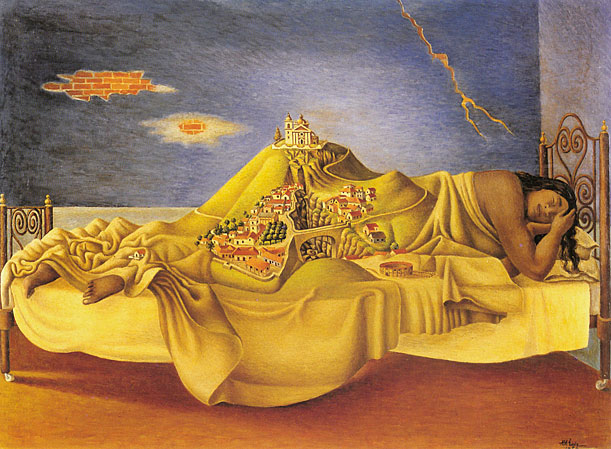
Rosario Castellanos (1925-1974, México)
“La Malinche”
Desde el sillón del mando mi madre dijo: “Ha muerto”.
.
Ya se dejó caer, como abatida,
en los brazos del otro, usurpador, padrastro
que la sostuvo no con el respeto
que el siervo da a la majestad de reina
sino con ese abajamiento mutuo
en que se humillan ambos, los amantes, los cómplices.
.
Desde la Plaza de los Intercambios
mi madre anunció: “Ha muerto”.
.
La balanza
se sostuvo un instante sin moverse
y el grano de cacao quedó quieto en el arca
y el sol permanecía en la mitad del cielo
como aguardando un signo
que fue, cuando partió como una flecha,
el ay agudo de las plañideras.
.
“Se deshojó la flor de muchos pétalos,
se evaporó el perfume,
se consumió la llama de la antorcha.
.
Una niña regresa, escarbando, al lugar
en el que la partera depositó su ombligo.
.
Regresa al Sitio de los que Vivieron.
.
Reconoce a su padre asesinado,
ay, ay, ay, con veneno, con puñal,
con trampa ante sus pies, con lazo de horca.
.
Se toman de la mano y caminan, caminan
perdiéndose en la niebla.”
.
Tal era el llanto y las lamentaciones
sobre algún cuerpo anónimo; un cadáver
que no era el mío porque yo, vendida
a mercaderes, iba como esclava,
como nadie, al destierro.
.
Arrojada, expulsada
del reino, del palacio y de la entraña tibia
de la que me dio a luz en tálamo legítimo
y que me aborreció porque yo era su igual
en figura y rango
y se contempló en mí y odió su imagen
y destrozó el espejo contra el suelo.
.
Yo avanzo hacia el destino entre cadenas
y dejo atrás lo que todavía escucho:
los fúnebres rumores con los que se me entierra.
.
Y la voz de mi madre con lágrimas ¡con lágrimas!
que decreta mi muerte.
. . .
El poema “La Malinche” – del poemario Poesía no eres tú (1972) – es uno de varios textos de Castellanos que revisa y reinterpreta figuras famosas femeninas.
. . .
Rosario Castellanos (1925-1974, México)
“La Malinche”
From her royal throne my mother announced: “She is dead”.
.
And then she collapsed, humbled,
in the arms of the other, the usurper, my stepfather
who sustained her not with the respect
a servant owes to the majesty of a queen
but with the mutual submissiveness
with which lovers, accomplices, abase themselves.
.
From the Plaza de los Intercambios
my mother announced: “She is dead.”
.
The scale
remained immobile for an instant
the cacao bean reposed quietly in its chest
the sun stood still in the sky’s zenith
as if awaiting a sign
which was, when it shot out like an arrow,
the penetrating cry of the mourners.
.
“The many-petaled flower has withered
the perfume has evaporated
the torch’s flame extinguished.
.
A girl returns, scratching at
the spot where the midwife left her navel.
.
She returns to the Place of Those who have Lived.
.
She beholds her father, murdered,
ay, ay, ay, with poison, with a dagger,
with a trap set before his feet, with a hangman’s noose.
.
Taken by the hand, she and they walk, they walk,
losing themselves in the fog.”
.
Such was the weeping and lamentation
over an anonymous corpse; a cadaver
that was not mine, because I, sold to
the merchants, went forth to exile like a slave,
a pariah.
.
Expelled, cast out from
the kingdom, from the palace and warmth
of her who gave honest birth to me
and who despised me because I was her equal
in figure and rank
she who saw herself in me and hated her image
and dashed the mirror to the ground.
.
I go, in chains, toward my destiny
and am followed still by the sounds
of the mournful chants with which they bury me.
.
And the voice of my mother in tears – in tears! –
that decries my death.
Translation from Spanish into English: © Julian Palley, 1988
_____
Claribel Alegría (nace 1924, Nicaragua/El Salvador)
“La Malinche”
Estoy aquí
en el banquillo de los acusados
dicen que soy traidora
¿a quién he traicionado?
era una niña aún
cuando mi padre
es decir
mi padrastro
temiendo que su hijo
no heredara las tierras
que a mí correspondían
me condujo hacia el sur
y me entregó a extraños
que no hablaban mi lengua.
Terminé de crecer en esa tribu
les servía de esclava
y llegaron los blancos
y me entregaron a los blancos.
¿Qué significa para ustedes
la palabra traición?
¿Acaso no fui yo la traicionada?
¿Quién de los míos vino a mi defensa
cuando el primer blanco me violó
cuando fui obligada
a besar su falo
de rodillas
cuando sentí mi cuerpo desgarrarse
y junto a él mi alma?
Fidelidad me exigen
ni siquiera conmigo
he podido ser fiel.
Antes de florecer
se me secó el amor
es un niño en mi vientre
que nunca vio la luz
¿Qué traicioné a mi patria?
Mi patria son los míos
y me entregaron ellos.
¿A quién rendirle cuentas?
¿A quién?
decidme
¿a quién?
.
Claribel Alegría (born 1924, Nicaragua/El Salvador)
“La Malinche”
Here I am
In “the dock”…
They say I’m a traitor,
Who have I betrayed?
I was just a little girl
When my father
(that is, my stepfather)
Fearing that his son
Would not inherit his lands
– lands to which I was entitled –
led me away to the south
And handed me over to strangers
Who didn’t speak my language.
I stopped growing in that tribe,
I served as slave.
And white people arrived
And I was handed over to them.
What does the word betrayal mean to all of you?
Wasn’t I the betrayed one?
Who of my people came to my defence
When the first white man violated me,
When I was made to kiss his phallus,
Down on my knees,
When I felt my body torn
And my soul right next to him?
Loyalty you demand of me
When I have not even been able to be true to myself.
Before blooming
I was already dessicated by Love.
There’s a child in my womb
who never saw the light.
In what way did I betray my homeland?
My country is my people
– and they abandoned me.
Who will account for that?
Who?
All of you, tell me – who?
Alegría translation from Spanish into English: Alexander Best
_____
La Malinche – born Malinalli, of Nahua parentage, in 1496 – was sold as a teenager by her mother and step-father to slave-traders – from whom she learned the Mayan language. She ended up as one of many “gifts” to recently-arrived “conquistador” Hernán Cortés, in 1519. She proved invaluable to him; her knowledge of both Náhuatl (the language of the Aztecs’ Empire) and of the neighbouring Maya meant that she could interpret for Cortés in his dealings with officials of both Peoples, thereby gaining the upper hand for Spain. Her fluency in Spanish soon followed, and in 1522, Doña Marina (her Christian baptism name, with the word “Lady” (Doña) before it) or Malintzin (as she was called respectfully by the Nahuas) bore a son by Cortés. His name was Martín, and he is said to symbolize the first true Mexican, being “mestizo” (“mixed race” of white/amerindian). Historians are in disagreement over the date of Malintzin’s death – 1529 or 1551. At any rate, Cortés was an ambitious and greedy man-in-a-hurry and he did not remain with Malintzin; yet she had been supremely useful to him – and to “el Imperio español”/The Spanish Empire, which was then in its initial surges of power.
Like The Virgin of Guadalupe La Malinche is a cultural icon in México – but unlike “Our Lady” she is also viewed negatively.
While she is seen as the “womb” of Mestizaje – the on-going union of different races and cultures – she is also, unfairly many contemporary scholars believe – a symbol of the “betrayal” of Indigenous Peoples – the Mexicas, the Tlaxcalans, the Totonacs, the Chichimecas – the lot.
The flashpoint is her multilinguality: ¡Traductora, traidora! Translator — Traitor!
This is a great deal for one woman to bear. And poets Rosario Castellanos and Claribel Alegría understand such a fact – so they have allowed Malintzin to “speak” in our era instead of only “interpreting” for others in centuries past…
Poemas de América Central de las décadas de los 70 y 80, poemas para ayudarnos a recordar, poemas que nos hagan pensar… / Poems for the sake of El Salvador, Guatemala, Honduras, Nicaragua – poems to help us remember – poems to make us think…
Posted: September 15, 2012 Filed under: Daisy Zamora, English, José Luis Villatoro, Lil Milagro Ramírez, Roberto Sosa, Spanish Comments Off on Poemas de América Central de las décadas de los 70 y 80, poemas para ayudarnos a recordar, poemas que nos hagan pensar… / Poems for the sake of El Salvador, Guatemala, Honduras, Nicaragua – poems to help us remember – poems to make us think…
En este día – el 15 de septiembre…Poemas de América Central de las décadas de los 70 y 80 – tiempos de guerra civil, de lucha popular, de revolución…
Poems we post this 15th of September 2012 for the sake of Independence Days in El Salvador, Guatemala, Honduras, Nicaragua – poems from the 1970s and 1980s, decades of civil war, The People’s struggle, revolution…
.
Lil Milagro Ramírez (El Salvador)
“Despertar”
Yo era mansa y pacífica
Era una flor,
Pero la mansedumbre no es un muro
Que cubre la miseria.
Y vi las injusticias
Y ante los ojos asombrados,
Estallaron las huelgas y las rebeldías
Del hombre proletario.
.
Y en vez de absurdas lástimas,
De hipocresías compasivas,
Brotó mi indignación
Y me sentí fraternalmente unida a mis hermanos,
Y toda huelga me dolía,
Y cada grito me golpeaba
No sólo en la cabeza o los oídos
Sino en el corazón.
Cayó mi blanca mansedumbre,
Muerta a los pies del hambre,
Me desnude llorando de sus velas
Y un nuevo traje me ciñó las carnes.
Primavera de lucha son ahora mis brazos,
Mi enrojecida sangre es de protesta,
Mi cuerpo es verde olivo
Y un incendiario fuego me consume
…y sin embargo,
Sigo siendo como antes,
Amante de la paz,
Quiero luchar por ella desesperadamente,
Porque desde el principio
Yo soñé con la paz.
.
“Awakening”
I was gentle and peaceful,
A flower.
But gentleness isn’t a wall
That hides misery –
And I saw injustice,
And strikes and rebellions
By ordinary people
Exploded before my astonished eyes.
.
And instead of absurd pity
And sympathetic hypocrisy
My indignation burst forth
And I felt myself united with my sisters and brothers,
And every strike hurt me,
And every cry struck me
Not only in my head or ears
But in my heart.
My white gentleness fell,
Dead at the feet of hunger,
I undressed myself, weeping at its veils
And new clothing clung to my flesh.
My arms now in the springtime of struggle,
My red-hot blood protesting,
My body olive-green,
An incendiary passion consumes me
… and nevertheless
I keep feeling as before,
A lover of Peace,
I want to fight for it – desperately –
Because from the beginning
I have dreamt of Peace.
.
José Luis Villatoro (Guatemala)
“Elegía por el Joven Cadáver”
¿De quién es este joven
Cadáver que nos mira?
.
La calle tuvo antenas asesinas.
.
Sobre limpias baldosas
Su nombre perforaron,
Agujerearon su risa sospechosa.
.
Alguien anduvo cerca de sus labios
Y le hizo pedazos de sangre la palabra.
.
Amor, ¿como explicarte éste cadáver
Sin lastimar el fruto de tu vientre?
Será llegar sin cauce hasta el océano
Y llorar en la isla que le duele.
.
Hay un cadáver nuevo y vehemente
Con los ojos abiertos para siempre.
.
Amor, ¿como explicarte la mañana
Si apenas la tocamos con los dedos?
.
“Elegy for the Young Corpse”
Who is this young corpse
That looks at us?
.
The street had murderous antennae.
.
On clean cobblestones
They perforated his name,
They pierced his suspicious laugh.
.
Someone went near his lips
And turned his word into bloody pieces.
.
My love, how do I explain this corpse to you
Without wounding the fruit of your womb?
It will arrive at the ocean, rampant,
And weep on the island of its pain.
.
It’s a new and passionate corpse
With its eyes open forever.
.
My love, how do I explain the morning to you,
If we barely touch it with our fingers?
.
Roberto Sosa (Honduras)
“Dibujo a pulso”
A como dé lugar pudren al hombre en vida,
Le dibujan a pulso
Las amplias palideces de los asesinados
Y le encierran en el infinito.
.
Por eso
He decidido dulcemente
Mortalmente
Construir
Con todas mis canciones
Un puente interminable hacia la dignidad,
para que pasen,
Uno por uno,
Los hombres himillados de la Tierra.
.
“Freehand Sketch”
They use everything they’ve got to putrify a man alive,
Sketch in a flash
The ample pallor of the murdered
And lock him up in infinity.
.
And so,
Sweetly
Fatally
I have decided to construct
With all my songs
An endless bridge to dignity
So that,
One by one,
The humiliated of the Earth may pass.
.
Daisy Zamora (Nicaragua)
“Cuando regresemos”
Cuando regresemos a nuestra antigua tierra
Que nunca conocimos
Y platiquemos de todas esas cosas
Que nunca han sucedido
.
Caminaremos llevando de la mano niños
Que nunca han existido
.
Escucharemos sus voces y viviremos
Esa vida de la que tanto hablamos
Y nunca hemos vivido.
.
“When we return”
When we return to our ancient land
That we never knew
And we talk of all those things
That never happened
.
We will walk holding children by the hand
Who have never existed
.
We’ll listen to their voices and
Live that life we spoke of so often
And have never lived.
. . . . .
Traducciones del español al inglés / Translations from Spanish into English:
Barbara Paschke, Tony Ryan, David Volpendesta, Magaly Fernández
 Zócalo Poets