Perfect Poems: the Mediaeval Rubáiyát of Omar Khayyám / عمر خیام
Posted: March 28, 2012 Filed under: English, Farsi / Persian, Omar Khayyám Comments Off on Perfect Poems: the Mediaeval Rubáiyát of Omar Khayyám / عمر خیام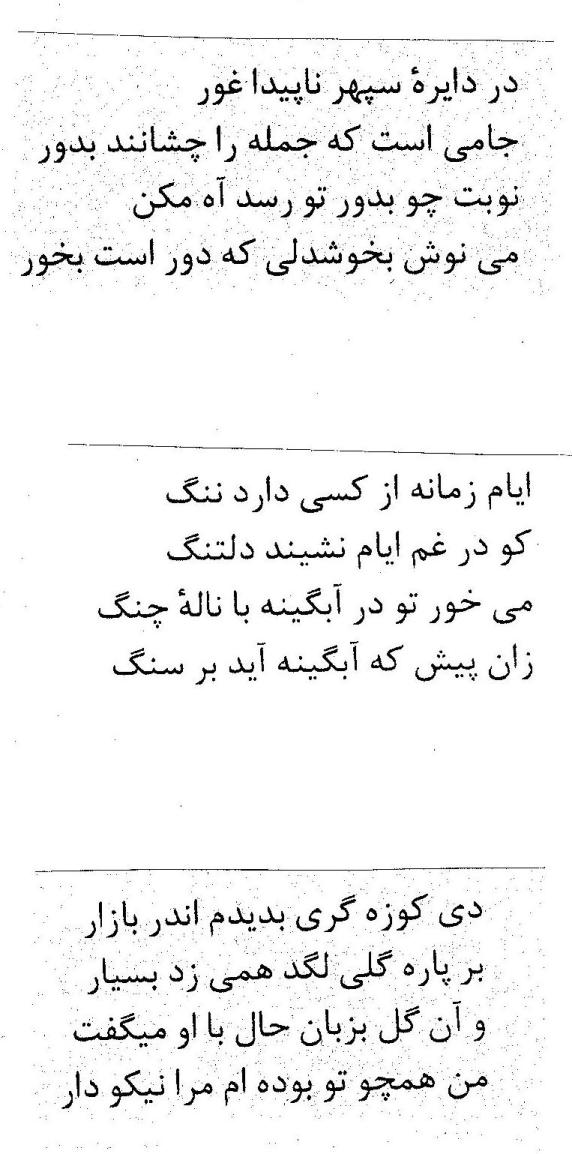
In the sphere of the sky, whose depth is invisible,
There is a cup from which everyone must drink in turn.
When your turn comes, do not sigh.
Drink it happily, for it is your turn to drink.
*
Time is ashamed of that person
Who sits lonely and grieves over days now past.
Drink wine from a glass to the sound of a harp
Before the glass smashes into a rock.
*
Yesterday I saw a jug-maker in the bazaar,
Who was treading a lump of clay, repeatedly,
While that clay told him in its own language:
“I used to be like you. Treat me kindly!”
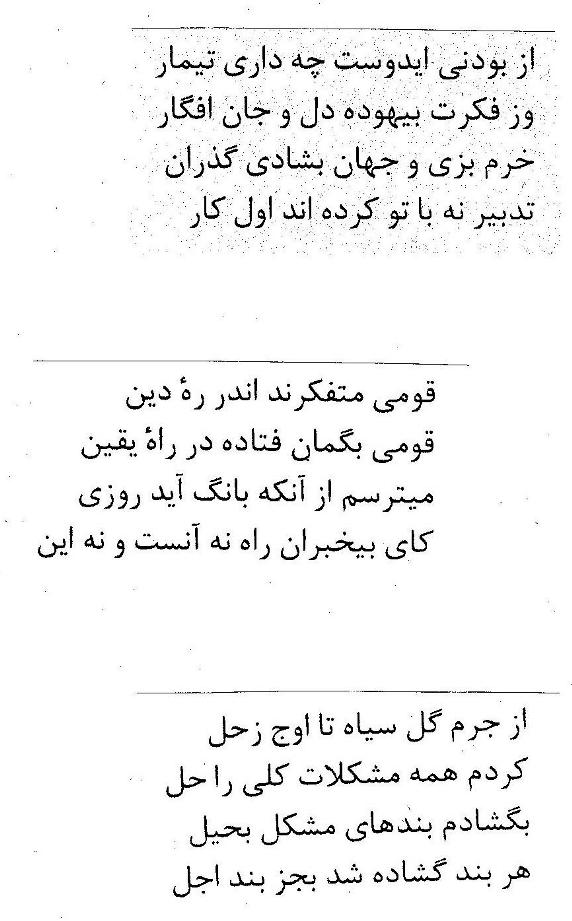
Why do you grieve over existence, my friend?
Why do you afflict your heart and soul with futile thoughts?
Live joyfully and spend your life happily in the world.
They did not consult you in the beginning anyway.
*
Some people are thoughtful about religion.
Others are suspicious of any conviction.
I am afraid one day a voice may call out:
” Oh ignorant ones, the way is neither this nor that. “
*
From the nadir of the black mud to the zenith of Saturn,
I have solved all the major problems of being.
I untied many difficult knots, using many tricks.
Every knot I’ve opened, except the knot of death.
_____
Omar Khayyám (1048-1131) was born in Nishapur, Persia (contemporary Iran),
and is considered to be among the greatest of all the world’s poets.
He composed a thousand rubáiyát (Persian-language quatrains) – brief poems in
four lines that touch upon Life’s big themes: the love for the Belovéd (be it human and
amorous, or be it the love of God (Allah); the meaning of Life; Spirituality;
the mystery of Death.
Khayyám was a profoundly mystical thinker – Sufi and Muslim –
an astronomer and mathemetician who was also a poet. People have interpreted
and mis-interpreted the meanings of his quatrains – 19th-century translator
Edmund FitzGerald most famously (yet beautifully) – but Khayyám’s voice – intelligent,
warm, vigorous, direct – speaks to all our human wonderings even now, 900 years
“down the road”. The contemporary translations here, from Persian(Farsi) into English,
have been done with a simple, pleasing clarity by Reza Saberi.
“An Acrostic to Benito Juárez” by Rubi / “Acróstico a Benito Juárez” por Rubi
Posted: March 21, 2012 Filed under: English, Spanish, ZP Translator: Alexander Best | Tags: Poema a Benito Juárez Comments Off on “An Acrostic to Benito Juárez” by Rubi / “Acróstico a Benito Juárez” por Rubi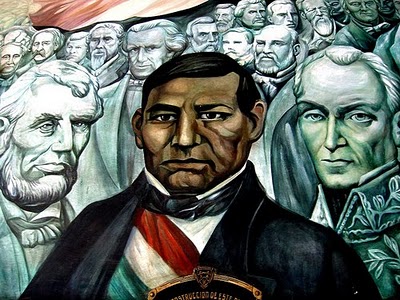
“Acróstico a Benito Juárez” por Rubi / “An Acrostic to Benito Juárez” by Rubi
B enito Juárez B enito Juárez:
E ra mexicano. E specially Mexican was he.
N acido en Oaxaca, N atal place? Oaxaca, and he was
I ndígeno – ¡seguro! I ndigenous – for sure!
T oda su infancia T ending sheep was the task
O vejas cuidaba. O f his childhood.
* *
J uárez político J uárez the Politician
U nió a los pobres, U nited with the poor, en-
A mó la justicia, A moured of justice,
R echazó a los franceses. R epelled the French.
E n conclusión él fue Ever known shall he be, the
Z apoteco valiente. Z apotec most brave.
_____
Hoy día – el 21 marzo – se celebra el natalicio del prócer mexicano – Benito Juárez .
Rubi…¡te agradecemos!
Benito Juárez (1806-1872) was President of México, serving five terms between 1858 and 1872.
Illiterate till the age of 12, by 1834 he was a lawyer, and by 1847 – governor of the state of Oaxaca.
As President he began nation-wide reforms, including the promotion of a civil society
– this included the curtailment of the powers of the dominant Catholic Church. He brought an end to
the Franco-Mexican War (“The Maximilian Affair”) of the 1860s, and his political movement,
La Reforma, though interrupted by the sometimes-regressive presidency of Porfirio Díaz, is
clearly viewed as the first push toward modernization of Mexico’s economy, politics, and society.
Today, March 21st, is Benito Juárez’ birth date.
Interpretación del poema en inglés / Poem interpretation into English from Spanish:
Alexander Best
Happy Persian New Year! / !سال نو مبارک
Posted: March 20, 2012 Filed under: Abbas Kiarostami, English, Farsi / Persian, Ishrat Qahramân Comments Off on Happy Persian New Year! / !سال نو مبارک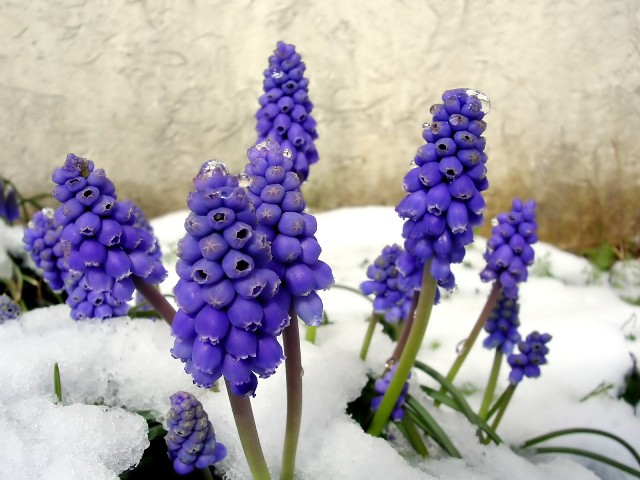
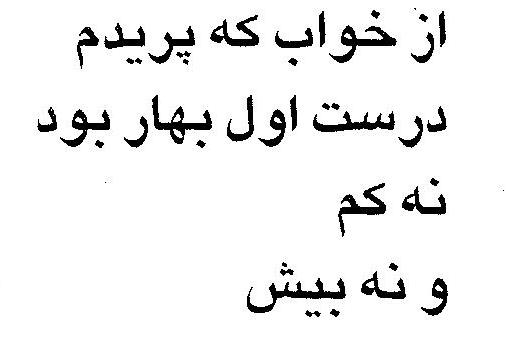
When I started up out of sleep
it was just the beginning of spring
– no more,
no less.
The stray dog
washes its body
in spring rain.

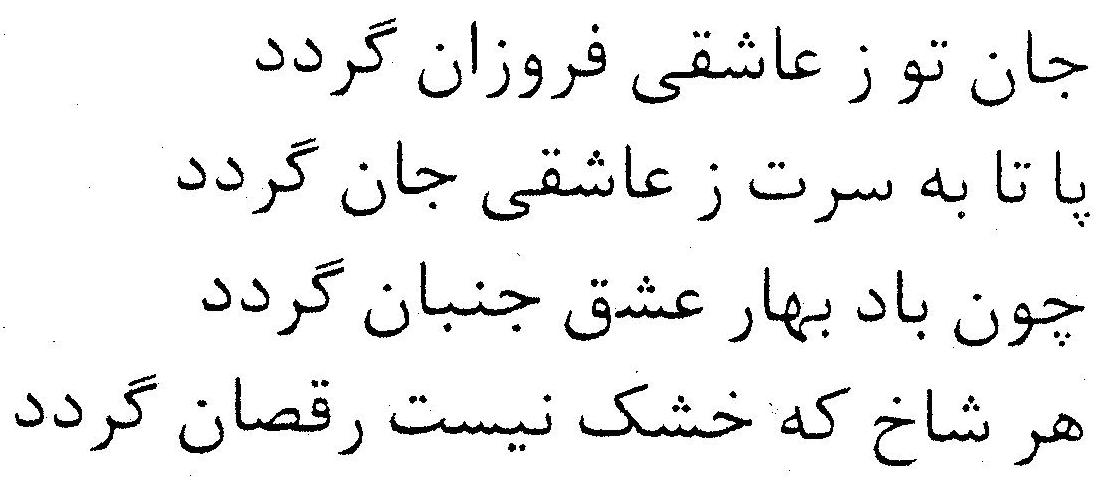
Your life will become radiant through love.
You will become spirit from head to toe through love.
When the spring wind of love comes into motion,
Any branch which is not dry – starts dancing !
Толстой, Майков, Фет, Пушкин, Дельвиг: Весна Pycckar! / Russian Spring!
Posted: March 20, 2012 Filed under: English, Russian Comments Off on Толстой, Майков, Фет, Пушкин, Дельвиг: Весна Pycckar! / Russian Spring!
Алексей Толстой / Count Aleksey Tolstoy (1817-1875)
Early-early Spring
The early-early spring it was,
new blades of grass peered forth,
rivulets ran, the air was warmly soft,
and the woods were of transparent green.
The shepherd’s horn at break of day
was yet unheard in the village;
the forest ferns still kept their fronds
in spikes of laces furléd.
*
Early-early spring it was –
white gleamed from the silver birch-trees –
– and then I beheld thine eyes to smile
from under lowered eyelids…
Was it in answer to my love
thine eyelashes did tremble – ?
O Life – woods – sunshine clear!
O Youth, O hopes high soaring!
And tears came to my eyes
As I adored thy features…
*
It was in early-early spring –
the silver birches gleamed –
in this morning of our life,
O happiness – and tears!
O Life – woods – and sunshine clear!
Fresh breath of silver birches!
_____
Аполлон Майков / Apollon Maykov (1821-1897)
Весна / Spring
Посвящается Коле Трескину
Уходи, зима седая!
Уж красавицы Весны
Колесница золотая
Мчится с горней вышины!
Старой спорить ли, тщедушной,
С ней – царицею цветов,
С целой армией воздушной
Благовонных ветерков!
А что шума, что гуденья,
Теплых ливней и лучей,
И чиликанья, и пенья!..
Уходи себе скорей!
У нее не лук, не стрелы,
Улыбнулась лишь – и ты,
Подобрав свой саван белый,
Поползла в овраг, в кусты!..
Да найдут и по оврагам!
Вон – уж пчел рои шумят,
И летит победным флагом
Пестрых бабочек отряд!
(1880)
_____
Афанaсий Фет / Afanasy Fet (1820-1892)
Vesna na dvore / Spring Has Come
What fresh, invigorating air!
No words can do it justice—none!
How loud, at noontide, runnels in the gulley
Spin their silvery skeins against the stones!
Birdsong trembles in the ether, fades;
Rye is greenly sprouting in the field—
And soft a gentle voice is singing:
“Another spring, and you alive to greet it!”
(1856)
_____
Александр Пушкин (1799-1837)
Ты и вы
Пустое вы сердечным ты
Она обмолвясь заменила,
И все счастливые мечты
В душе влюбленной возбудила.
Пред ней задумчиво стою,
Свести очей с нее нет силы;
И говорю ей: как вы милы!
И мыслю: как тебя люблю!
(1828)
Alexander Pushkin (1799-1837)
You and Thou
She used the hearty thou, by chance,
Instead of you, so stiff and formal,
Arousing happy dreams at once
Inside my loving heart and soul.
I’m standing speechless in a glow
Admiring her sincerely;
I tell her: you are charming, really!
I think inside: I love thee so!
(1828)
_____
Антон Дельвиг (1798-1831)
Романс
Прекрасный день, счастливый день:
И солнце, и любовь!
С нагих полей сбежала тень –
Светлеет сердце вновь.
Проснитесь, рощи и поля;
Пусть жизнью все кипит:
Она моя, она моя!
Мне сердце говорит.
Что, вьешься, ласточка, к окну,
Что, вольная, поешь?
Иль ты щебечешь про весну
И с ней любовь зовешь?
Но не ко мне,- и без тебя
В певце любовь горит:
Она моя, она моя!
Мне сердце говорит.
(1823)
Anton Delvig (1798-1831)
Romance
Oh what a lovely, happy day!
There’s love, the sun, the plain!
The shadows all have gone away
My heart is light again.
Wake up, you groves and fields, and see
That all is filled with life!
She’s mine! – my heart is telling me,
She’s mine, and all is live.
Why do you, little swallow cling
Onto to my windowpane?
Perchance, you sing about the spring
Inviting love again?
It’s not for me, as I can see,
The singer’s love, divine.
It is my heart who’s telling me:
She’s mine, oh yes she’s mine!
(1823)
Translations from Russian: Alec Vagapov
_____
Mohammad-Taqí Bahār: “Rid the heart of darkness” – a poem for Nowruz
Posted: March 19, 2012 Filed under: English Comments Off on Mohammad-Taqí Bahār: “Rid the heart of darkness” – a poem for Nowruz
Mohammad-Taqí Bahār (Iranian poet, 1884-1951)
Spring now, flowers are coming, there’s happiness in the green vine,
Blossoms are blooming – all except mine.
Free spirit, don’t lose heart, on New Year’s Day *,
I heard from the lips of a lily today:
Do not sing the seven illusions this New Year’s Eve **, I beg thee:
Complaint, curse, corruption, cacophony, clumsiness, chaos and cruelty.
The seven symbols make: of serene “sabzeh”, of scented “sonbol” and sweet “seeb”;
Of “senjed”, “samanu”, “seer” and “somaq”.
Send the seven symbols to the table of a lover.
Toss the seven illusions toward the door of an ill-wisher.
It’s New Year’s Eve – rid the heart of darkness.
Eventually this shadow-night will turn to brightness.
Carry out the New Year traditions and, God willing,
Bring back that feeling of excellent beginnings !
_____
Glossary:
“sabzeh” – a flowerpotful of newly-sprouted wheat
“sonbol” – the Hyacinth flower – native to Iran, early Spring bloomer
“seeb” – apple
“senjed” – fruit of the mountain-ash tree, or red date, a.k.a. jujube
“samanu” – a creamy wheat germ pudding
“seer” – garlic
“somaq” – red berries of the Sumac tree
Editor’s note: Also “serkeh” – vinegar – representing old age and patience…
_____
* The Persian/Iranian New Year is always the same day as the
First Day of Spring – March 20th this year. It is known as
Nowruz – “New Day”. Nowruz is pre-Islamic in origin, and is
celebrated by the Kurdish people as well.
** March 19th this year
Ailbhe Ní Ghearbhuigh: Habla la “Voz” irlandesa / The Irish “Voice” Speaks
Posted: March 17, 2012 Filed under: Ailbhe Ní Ghearbhuigh, English, Irish, Spanish | Tags: Saint Patrick's Day Poems Comments Off on Ailbhe Ní Ghearbhuigh: Habla la “Voz” irlandesa / The Irish “Voice” Speaks
.
Ailbhe Ní Ghearbhuigh
(nace 1984, Tralee, condado de Kerry, Irlanda
/ born 1984, Tralee, County Kerry, Ireland)
“Cuando Uno Se Desespera”
.
Hay algunos días cuando
– admitámoslo –
me canso de
unirme por su defensa
Me agoto de estar arraigado
aquí junto a su cabecera
Esta lengua
que ha sido violada,
estoy esperando que se recupere,
cuidando de ella, diligentemente,
deseándole que la Vida entre en ella de nuevo
Y cuando veo
sus huesos pudriéndose
calcificándose
Sé que
algún día
no quedará nada
sólo el polvo, mudo…
como yo – si pensamos en esto.
_____
“Laethanta Lagmhisnigh”
.
Admhaím corrlá
bím traochta
dá cosaint os comhair an tsaoil
Bím bréan de bheith fréamhaithe
cois leapan
na teangan éignithe
seo
ag guí biseach uirthi
á faire go cúramach
ag impí beatha inti arís
Is nuair a chím
a cnámha lofa
ag cailciú
tuigim
ná beidh fágtha
lá éigin
ach smúit bhalbh . . .
ach an oiread liom féin.
_____
“When One Despairs”
.
Some days, let’s admit it,
I tire
of rallying to her defence
I weary of being rooted
here by her bedside
this language
that has been violated
hoping she’ll come around
watching her assiduously
wishing the life back into her again
And when I see
her rotting bones
calcifying
I know that
one day
there will be nothing left
nothing but dust, mute . . .
like myself, come to think of it.
_____
“Un Tema de Cierto Pesar”
.
No, no estoy tan deprimido que
me quedo
debajo del edredón
todo el día
– eso sería una exageración.
Sólo es que
mi ojo
me hizo feliz verle a usted,
Desconocido,
a quien dejé ahí
anoche.
Y esta mañana
en mi boca
hay un sabor de cerveza negra
– y el pesar.
_____
“Áiféilín”
.
Nílim chomh duairc
go bhfanfainn
fén duvet
ar feadh an lae
sin áibhéil.
Níl ann ach gur
thug mo shúil
taithneamh éigin duit,
a stróinséir
is gur fhágas
im dhiaidh tú
oíche aréir
agus go bhfuil
blas pórtair
is áiféala
im’ bhéal
ar maidin.
_____
“A Matter of Some Regret”
.
No, I’m not so depressed
as to stay
under the duvet
all day
That would be an exaggeration.
It’s just that
my eye
gladdened at the sight of you,
Stranger,
left behind
last night.
And this morning
there’s a taste of stout
and regret
in my mouth.
.
.
© Ailbhe Ní Ghearbhuigh
Translation from Irish into English:
© Gabriel Rosenstock
_____
“Barrio Chino”
.
Barrio chino
bullicio sin final
un sonido resaltó
entre los enredados sonidos
jalándome hacia
su súplica…
era un pescado
en una vasija poco profunda
pataleando
con mucha urgencia.
Una mujer que lo miraba
con ojos saltados
como los ojos del pescado,
alcanzando la orilla
sin esperanzas.
_____
“Herida”
.
El Corrib* se desbordó
anoche
una poza debajo del Arco
el cielo amenaza esta mañana
y a mi casi me aplastan
en la luz roja del semáforo
un hombre de nariz aguileña
sentado en un pequeño muro,
dolor en sus ojos.
un cisne en sus brazos,
una bolsa negra la cobijaba,
una herida brillante es su blanco cuello.
.
.
*Corrib – un río en el condado de Galway, Irlanda
_____
“Chinatown”
.
rírá síoraí Chinatown
éiríonn torann amháin
os cionn an chlampair
is meallann mé chuige
lena impí…
iasc a bhí ann
in árthach íseal
ag slup slaparnach
le hoiread práinne.
Bean á fhaire
a súile ar bolgadh
amhail súil an éisc
ag cur thar maoil
le neart gan feidhm.
_____
“Cneá”
.
bhris an Choirib a bruacha
aréir
bhí tuile fén bPóirse
bhagair an spéir ar maidin,
is ba dhóbair gur deineadh leircín díom
ag solas tráchta dearg
bhí fear cromógach suite
ar bhalla íseal,
goin ina shúile.
ina bhaclainn, bhí eala,
sac dubh uimpi
is cneá dearg ar a muineál bán.
_____
“Chinatown”
.
Chinatown
the racket’s neverending
one sound rose
above the jingle jangle
drawing me towards
its plea…
it was a fish
in a shallow vessel
slup-slopping about
with much urgency.
A woman watching it
her eyes bulging
like the eyes of the fish
bulging to the brim
helplessly.
.
.
Translation from the Irish: Gabriel Rosenstock
_____
“Wound”
.
the Corrib* broke its banks
last night
a pool under the Arch
the sky threatened this morning
and I was almost flattened
at a red traffic light
a hook-nosed man sat
on a low wall,
hurt in his eyes.
in his arms was a swan,
a black sack around her,
a bright red wound on her white neck.
.
.
*Corrib – a river in County Galway, Ireland
Translation from the Irish: by the poet herself.
_____
About the Poet:
Ailbhe Ní Ghearbhuigh’s first collection of poetry, Péacadh, was published in 2008. She has read poetry in Montréal, New York, Paris and Baile an Fheirtéaraigh. She was raised speaking Irish and English, but writes in Irish only as she thinks it’s a more exciting language.
_____
Traducciones del inglés en español /
Translations from English into Spanish:
Alexander Best (“Cuando Uno se Desespera” y “Un Tema de Cierto Pesar”)
Lidia García Garay (“Barrio Chino” y “Herida”/ “Chinatown” and “Wound”)
_____
Caitríona Ní Chléirchín: La nueva poetisa lírica irlandesa / The new love lyricist of Irish poetry
Posted: March 17, 2012 Filed under: Caitríona Ní Chléirchín, English, Irish, Spanish, ZP Translator: Alexander Best, ZP Translator: Lidia García Garay | Tags: Saint Patrick's Day Poems Comments Off on Caitríona Ní Chléirchín: La nueva poetisa lírica irlandesa / The new love lyricist of Irish poetry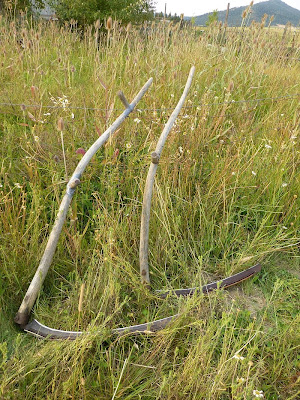 .
.
Caitríona Ní Chléirchín
(nace/born 1978, Gortmoney, Emyvale,
condado de Monaghan, Irlanda/Ireland)
“Segando con Guadaña”
.
Érase una vez, la guadaña
era afilada
con la piedra de guadaña
ocultada
debajo del tocador
por miedo de que
un niño hiciera pedazos de ella.
.
Hoy día, no quedan ni guadaña ni piedra de guadaña
sólo los pedazos de recuerdo.
_____
“Spealadóireacht”
.
Tráth, cuireadh
faobhar ar speal
le cloch faobhair
a cuireadh faoi cheilt
faoin drisiúr
ar eagla go ndéanfadh
leanbh conamar de.
.
Inniu, níl speal, ná cloch faobhair,
ná drisiúr a thuilleadh,
níl ach conamar na gcuimhní againn.
_____
“Scything”
.
Once, a scythe
would be sharpened
with the scything stone
hidden
under the dresser
for fear
a child would make fragments of it.
.
Today, no scythe or scything stone remains
only the fragments of memory.
_____
“Abeja”
.
Como una abeja casi en mi corazón,
apareciste floreando por mis pechos,
y todos tus besos eran las picaduras más dulces,
atrayéndome con besos-picaduras.
Hiciste la miel en mi ombligo,
pero la picadura la más grande fue entre mis piernas.
Me pinchaste
con palabras tan suaves.
Revoloteó el corazón
y debajo de ti
como un azahar o un tallo, me doblé.
Me abriste como una puerta de miel
y todo mi dulzura bebiste.
Está moteado ahora el cuerpo con picaduras azules-rojas,
con salpicadura de gema morada,
y pintada por todo con mordiscos de amor y odio.
Clavaste en mí tu aguijón,
y llena mi cabeza tu zángano.
Una abeja salvaje, un abejorro zumbando
dentro de mí para siempre,
nunca mostrándome ninguna clemencia.
_____
“Beach”
.
Ba gheall le beach i mo chroí thú.
Tháinig tú amach ag bláthú trí mo chíocha
is ba chealg mhilis iad na póga
cealgphógadh do mo chealgadh.
Rinne tú mil i m’imleacán,
ach chuaigh an chealg ba mhó idir an dá chos.
Phrioc tú mé
le briathra míne.
Tháinig eitilt ar mo chroí
is lúb mé fút mar bhláth, mar ghas.
D’oscail tú mé mar dhoras meala
is d’ól tú uaim
achan mhilseacht.
Anois tá mo cholainn breactha le cealga gormdhearga,
buailte le seodchealga corcra
clúdaithe le baill seirce is fuatha ó bhun go barr.
Sháigh tú ionam do chealg bheiche
is níor stad do dhordán riamh i m’inchinn.
Beach fhiáin ab ea thú, bumbóg ag crónán go síoraí ionam
is ní raibh trócaire ar bith agat dom.
_____
“Bee”
.
Like a bee almost in my heart,
you emerged flowering though my breasts,
and your every kiss was the sweetest sting,
enticing me with sting-kissing.
You made honey in my navel,
but the greatest sting went between my legs.
You pricked me
with words so gentle.
My heart fluttered
and beneath you
like a blossom or a stem, I bent.
You opened me like a honey door
and all my sweetness you drank.
My body is speckled now with blue-red stings,
with purple gem-sting stippling,
and dappled all over with love and hate bites.
You thrust your bee-sting into me,
and your drone still fills my brain.
A wild bee, a bumbling humming bee
forever inside me,
never showing any mercy.
_____
The poet tells us:
“The ‘musics’ of Irish and English are different…In Irish you can hear the sea, the mountains,you can hear echoes of loss. I’m not saying you can’t hear these in English – just that Irish is more musical, less clinical. English has been described by some Irish speakers as the language to sell pigs in – I think that’s too harsh. I think in the way we speak English in Ireland you can hear the longing for Irish. Irish is more elemental, earthy, more natural in a way – a language greatly wounded and for that reason maybe closer to the body and emotion – for me as a poet.”
_____
© Caitríona Ní Chléirchín
Translations from Irish to English:
by the poet herself.
.
Translations from English into Spanish /
Traducciones del inglés al español:
Alexander Best (“Bee”)
Lidia García Garay (“Scything”)
_____
Moyra Donaldson: “I will grow a new tongue…”
Posted: March 17, 2012 Filed under: English, Moyra Donaldson | Tags: Saint Patrick's Day Poems Comments Off on Moyra Donaldson: “I will grow a new tongue…”
Moyra Donaldson
(born 1956, Newtownards, Northern Ireland)
“Exile”
What ground is mine
if I would govern myself?
Where is my country
if neither bogs nor gantries
speak of me?
Where can I stand
if I am not one thing,
or the other?
*
My grandfather knew where he stood.
Ancestors planted his feet
in fertile soil, green futures were
named in his name, possessed.
He preached their flinty faith
in mission tents, visions of eternal life
on soft Ulster evenings,
*
But there was no redemption.
Not in the land, or through the Blood.
Not in the hard lessons of duty, obedience,
with which he marked his children.
*
He is stripped of virtue,
his legacy a stone
of no magic, no transcendence.
No children ever turned to swans,
wafer remains wafer on the tongue,
and flesh is always flesh.
*
My two white birds will bring me
water from the mountains,
beakfuls of sweet sips.
I will grow a new tongue,
paint my body with circles
and symbols of strength, mark myself
as one who belongs in the desert.
_____
“I Do Not”
I do not confess to anything – so when I speak
of the small dark spidery creature
skittling across the periphery of my vision –
it proves nothing.
Meaning is just an accident,
soon mopped up – those letters
were written by somebody else,
and that suitcase under the bed
does not contain my heart.
*
I do not regret anything – so when the black dog
digs up the bones I have buried
beneath the brambles, deep in the wild woods –
I am not worried.
I have allowed no prophets
to enter my house, so bones can not
stand up, grow flesh and walk.
They cast no shadows
and I have nothing to look in the face.
*
I do not promise anything – so when I lie
down with you, close as a child,
intimate as a lover, tender as a mother –
it means nothing.
Love is just a trick of the light,
a misunderstanding.
No matter who you think I am,
when it matters most,
I will not be who you want.
_____
First published in 2006 in the anthology
“Magnetic North” (edited by John Brown),
Moyra Donaldson’s poems
are here reprinted by permission of
The Lagan Press, Belfast, Northern Ireland.
Serious Humour north of 54 degrees latitude: Dan Eggs
Posted: March 17, 2012 Filed under: Dan Eggs, English | Tags: Saint Patrick's Day Poems Comments Off on Serious Humour north of 54 degrees latitude: Dan Eggs_____
“Spin Dryer and Washing Machine”
The spin dryer’s moved in with the washing machine,
they’re living together, you know what I mean, I believe the spin dryer’s
the clothes bin’s mum, he came out of her rotating aerated drum,
she takes the day off when the weather’s fine, then he does a line
with the clothes line, they live in an outhouse without any fuss, are
these household appliances quite like us? (The washing machine once
spilt his load because he was in fast coloureds mode).
_____
“Sunday Morning”
The cow in the field chews the grass, she never thinks about going to
Mass, the little bird sitting high on the birch, he and his friends don’t
think about church, the wasps in the dustbin devouring the apple, what
do they know about going to chapel, the elderly lady sits in her pew,
while her young son watches Kung Fu.
_____
Dan Eggs’ poems first appeared in the
2006 anthology, “Magnetic North” (edited by John Brown).
There are reprinted here by permission of
The Lagan Press, Belfast, Northern Ireland.
Poems for Saint Patrick’s Day: Love and The Poet / Poemas para el Día de San Patricio: Amor y El Poeta
Posted: March 17, 2012 Filed under: English, Poemas para el Día de San Patricio: Amor y el Poeta, Spanish, William Butler Yeats, ZP Translator: Alexander Best | Tags: Saint Patrick's Day Poems Comments Off on Poems for Saint Patrick’s Day: Love and The Poet / Poemas para el Día de San Patricio: Amor y El Poeta
William Butler Yeats (1865-1939)
“Memoria” (1919)
Una tenía la cara linda,
Y dos o tres eran encantadoras,
Pero cara y encanto fueron en vano
Porque la hierba de la sierra
Siempre conserva la forma
Donde se ha tendido la liebre del monte.
_____
“Canción de Muchacha” (1933)
Salí sola
Para cantar una canción o dos,
Se me antoja un hombre
Y usted sabe quien es.
*
Otro se apareció
que dependía de un bastón
Para estar de pié;
Me senté y lloré.
*
Y ésta fue toda mi canción
– cuando todo ha sido dicho
¿Vi a un anciano joven,
O a un joven anciano?
_____
“Canción para beber” (1910)
El vino entra vía la boca
Y el amor entra vía el ojo;
Es toda la verdad que sabremos
Antes de envejecer y morir.
Levanto el vaso a mi boca,
Te miro, y suspiro.
_____
“La Espuela” (1936)
Tu piensas que es horrible que lujuria y furia
Me adoran en la vejez…
No eran una peste cuando yo era joven;
¿Tengo algo más para espolearme cantar?
_____
“Un Voto Jurado en lo Más Profundo” (1919)
Habían otros – porque no cumpliste
Ese voto jurado en lo más profundo – que han sido amigos míos;
Pero siempre cuando miro a la muerte en la cara,
Cuando trepo a las cumbres de sueño,
O cuando me estremezco con el vino,
De súbito me encuentro con tu cara.
__________
William Butler Yeats (1865-1939)
“Memory” (1919)
One had a lovely face,
And two or three had charm,
But charm and face were in vain
Because the mountain grass
Cannot but keep the form
Where the mountain hare has lain.
_____
“Girl’s Song” (1933)
I went out alone
To sing a song or two,
My fancy on a man,
And you know who.
*
Another came in sight
That on a stick relied
To hold himself upright;
I sat and cried.
*
And that was all my song
– when everything is told,
Saw I an old man young
Or young man old?
_____
“Drinking Song” (1910)
Wine comes in at the mouth
And love comes in at the eye;
That’s all we shall know for truth
Before we grow old and die.
I lift the glass to my mouth,
I look at you, and I sigh.
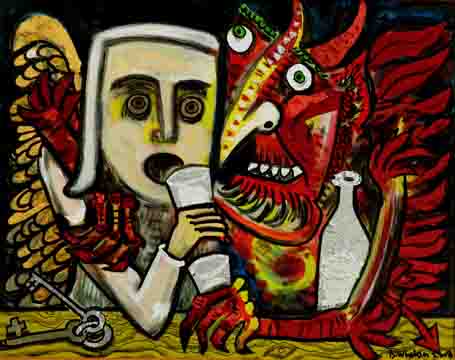
Poteen Drinkers by Brian Whelan_2011
“The Spur” (1936)
You think it horrible that lust and rage
Should dance attention upon my old age;
They were not such a plague when I was young;
What else have I to spur me into song?
_____
“A deep-sworn vow” (1919)
Others because you did not keep
That deep-sworn vow have been friends of mine;
Yet always when I look death in the face,
When I clamber to the heights of sleep,
Or when I grow excited with wine,
Suddenly I meet your face.
_____
Translation into Spanish /
Traducción en español: Alexander Best
 Zócalo Poets