Rita Bouvier: Nakamowin’sa kahkiyaw ay’sînôwak kici / Wordsongs for all human beings
Posted: June 1, 2013 Filed under: Cree, English, Rita Bouvier Comments Off on Rita Bouvier: Nakamowin’sa kahkiyaw ay’sînôwak kici / Wordsongs for all human beings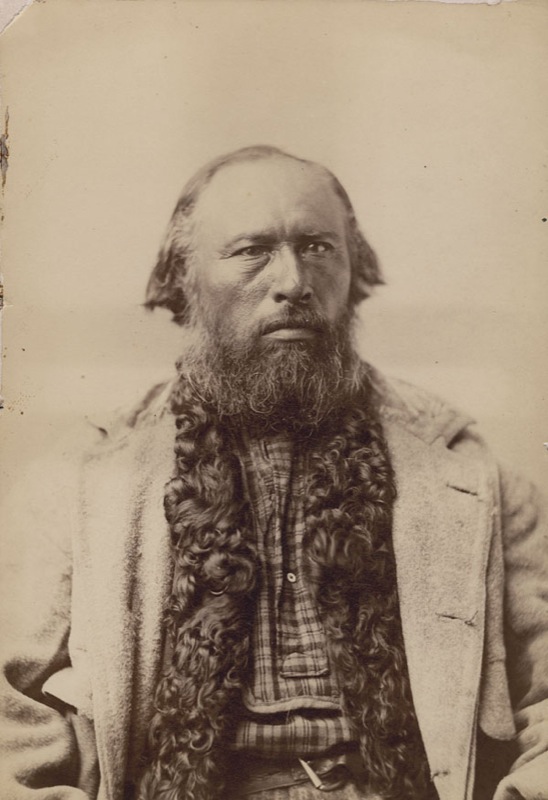 Gabriel Dumont, Métis Leader, photographed by Orlando Scott Goff, around 1886-1888
.
Rita Bouvier ( Île-à-la-Crosse (Sakittawak), Saskatchewan )
that was a long time ago, and here we are today
.
that was a long time ago
and here we are today
.
listen, listen
the heart of the land beats
.
our children curious
as all children are
will ask the right questions
.
why does a nation take up arms
in a battle knowing it will lose?
knowing it will lose
.
listen, listen
the heart of the land beats
.
when the long night turns to day
remember, hope is the morning
a songbird’s prayer
. . .
I am created
(for my father, Emile)
.
I am created by a natural bond
between a man and a woman,
but this one, is forever two.
one is white, the Other, red.
a polarity of being, absorbed
as one. I am nature with clarity.
.
against my body, white rejects red
and red rejects white. instinctively,
I have learned to love – I have learned to live
though the politics of polarity
is never far away. still, I am
waiting, waiting.
. . .
a spider tale
.
behind the shed
in the tall yellow grass
a cardboard box
is my make-believe home
no one can see me
but I can see
all
their comings
and goings
my auntie Albertine
is washing clothes today
and needs the power
of my long arms
and lanky legs
to haul pails and pails
of water from the lake
.
I watch
as she searches for me
mumbles something about
kihtimigan – that lazy one
walks back inside the house
and out again
calling my name
.
when I appear
out of nowhere
she looks relieved to see me
“nitânis, tânitê oma î kîtotîyin?”
“my daughter, where in the world have you been?”
I tell her –
I was here all along
.
what I don’t tell her is
that I have been spinning tales
trying to understand
the possibility of…
myself as a spider
all legs
travelling here and there
with disturbing speed
my preoccupation with food
my home a web
so intricate and fragile
yet strong as sinew
.
today I remembered
not as sure footed
as I would like to be
someone calling my name
I lost my footing
falling, falling
. . .
we say we want it all
.
we fight amongst ourselves
jealous, one of us is standing.
.
there are no celebrations
for brave deeds among the chaos, instead
.
we joing the banner call for rights
forgetting an idea from the past –
.
responsibility. we join the march
for freedom, forgetting an idea
.
from the past – peace keeping.
we say we want, want it all
.
a piece of the action we know destroys
our home – our relations with each other
.
we are mired so deep, drowning
in our own thinking, thinking
.
we too could have it all, if only…
if only we could see ourselves
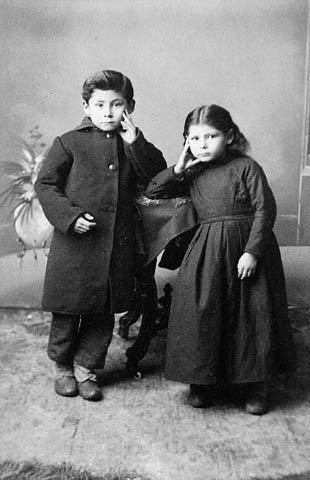 Louis Riel’s two children, Jean-Louis and Angélique, ages 6 and 5, photographed at Steele and Wings studio in Winnipeg, 1888
.
Riel is dead, and I am alive
.
I listen passively while strangers
claim monopoly of the truth.
one claims Riel is hero
while the other insists Riel was mad.
.
I can feel a tension rising, a sterile talk
presenting the life of a living people,
sometime in eighteen eighty five.
now, some time in nineteen ninety five
.
a celebration of some odd sort.
I want to scream. listen you idiots,
Riel is dead! and I am alive!
instead, I sit there mute and voiceless.
.
the truth unravelling, as academics
parade their lines, and cultural imperialists
wave their flags. this time the gatling gun
is academic discourse, followed
.
by a weak response of political rhetoric.
all mumbo-jumbo for a past that is
irreconcilable. this much I know
when I remember – I remember
.
my mother – her hands tender, to touch
my grandmother – her eyes, blue, the sky
my great grandmother – a story, a star gazer
who could read plants, animals and the sky.
. . .
that’s three for you
.
a young man came to me one day wanting
to understand me – the distance between
separate worlds, his and mine, his and mine.
surely, he begged, we could forsake the past
for the future, yours and mine, yours and mine.
.
I listened intently trying to find
the right words to say, to reassure him
my intentions, telling my story – the same.
I told him perhaps the past remembered
holds our future, yours and mine, yours and mine.
.
I wish it was easy to forget
as it is writing this poem for you.
I wish I could believe, I wish we could
break this damn cycle of separate worlds.
I wish I wish I wish. that’s three for you.
. . .
last night at Lydia’s
.
Celtic toe-tapping fiddle
Red River jigging rhythm
runs in my veins
a surge like lightning
.
that testosterone
in the mix tonight.
ohhhh, it feels good
to be alive
.
plaid shirted, tight blue jeans
good-looking, knows it kind-a-man
you hurt my eyes
.
pony-tailed, dark skinned
women in arm kind-a-man
your hurt my eyes
.
rugged, canoe-paddling
handsome kind-a-man
you hurt my eyes
.
muscle busting, v-necked
silver buckled kind-a-man
you hurt my eyes
.
cool leathered, scotch-sipping
drinking kind-a-man
you hurt my eyes
.
quiet wire-rimmed
spectacled kind-a-man
you hurt my eyes
.
you – you – you –
holding my hand kind-a-man
ohhhh, you hurt my eyes
 Shane Yellowbird_Cree country-music singer from Alberta
.
hand on hand
.
we made a pact but you were only three.
I was so much older I should have known
better. I promised then to take care of you
as long as my hands were bigger than yours.
.
in return, you promised to take care of
me, when your hands would grow bigger than mine.
today, you came to me wanting to measure
your hand against mine; I said, go away
.
your hands growing way, way too fast for me.
just then, a thick fog descended across
the street. you ran into it curious
unafraid, unaware you were disappearing
.
with every step you took. I ran after you
trying as best as I could to hold on
with you in sight, letting go at each step.
hand on hand we made a pact, you were three.
. . .
wordsongs of a warrior
.
what is poetry? how do I explain
this affliction to my mother
in the language she understands,
words strung together, woven
pieces of memory, naming
and telling the truth in a way
that dances, swings and sways
.
why the subject of my poetry
is sometimes difficult to deliver
why my subjects are terrorized
even controversial, why
the subjects are the essence
of my own being – close to the bone.
.
nakamowin’sa wordsongs
kahkiyaw ay’sînôwak kici for all human beings
ta sohkihtama kipimâsonaw to give strength on this journey
kitahtawî ayis êkwa one of these days, for sure now
kam’skâtonanaw we will find each other
. . .
when the silence breaks
.
I am a reluctant speaker
violence not just a physical thing.
.
words are one thing
I can hold them in my hand
later embroider them
like you do fine silk
on white deer hide
if I want.
but dead silence
that’s another matter
there is nothing to hold on to
like the falling
before you awaken.
.
I imagine it this way, simply
kitahtawî êkwa
one of these days now
when the silence breaks
the deer will stop in their tracks
pausing eyes wide
the wolverine will roll over and over
on the hillside, and
you will hear my voice
as if for the first time
distant and then melodic
and you will recognize it
as your very own.
kitahtawî êkwa
. . .
a ritual for goodbye
(in memory of Albertine)
.
walking the shoreline
this crisp spring morning
in our matching
red-line rubber boots
my cousin and I
are reminiscing
the days gone by
.
I remember first
one early spring
the water so low
we could get
from one island
to the next
our clothes piled high
over our heads
.
she remembers then
no human debris
like there is now
just the odd
piece of driftwood
she reminded me
we wondered then
where it came from
a guessing game
.
walking the shoreline
this crisp spring morning
our walk is certain
clinging close
to what we know best
this shoreline, this bond,
we don’t speak of the fact
that our aunt is dying
. . .
earthly matters
.
when I came to your grave site
late last fall, a chill in the air,
I was feeling sorry for myself.
I came looking for a sign
one might say it was –
guidance on earthly matters.
.
lifting my face skyward
I found nothing but blue sky.
I searched the horizon,
it was then I discovered
a la Bouleau in the distance.
I smiled, recalling
that walk we took
through the new cemetery
on a break from city life.
you didn’t want to be buried
near the saints anyway,
roped in, in a chain-link fence.
you were pointing out,
as if it were a daily business
family plots here and there.
best of all, you claimed
you had selected the ideal plot
for yourself and your family,
a la Bouleau in the distance.
. . .
All poems © Rita Bouvier – from her Thistledown Press collection entitled Papîyâhtak. In the Cree language Papîyâhtak means: to act in a thoughtful way, a respectful way, a joyful way, a balanced way.
.
Rita Bouvier is a journeyer who searches along the way. Her poems are unafraid to take chances; they are complex in emotion, unsparing in intellect. Papîyâhtak includes a number of poems written for actors in The Batoche Musical which was conceived and developed by a theatre and writers’ collective and performed at Back to Batoche Days in Batoche, Saskatchewan. The poem That was a long time ago, and we are here today was inspired by an essay written by South African anti-apartheid activist Steve Biko.
. . .
Gabriel Dumont (1837 – 1906) was a leader of the Métis people in what is now the province of Saskatchewan. It was Dumont who brought the exiled Louis Riel (1844 – 1885) back to Canada to pressure Canadian authorities to recognize the Métis as a Nation. Sharpshooter with a rifle, Dumont was Riel’s chief right-hand man and he led the Métis forces in the North-West Resistance (or Rebellion – as Ottawa-centric history books described it) of 1885.
Louis Riel was one of the towering Hero figures of Canadian history. For more on Riel – and a letter/poem he wrote to Sir John A. Macdonald, his ideological opposite – (along with a letter/poem addressed to Macdonald by contemporary Métis poet Marilyn Dumont) – click the following ZP link for January 11th, 2012:
https://zocalopoets.com/category/poets-poetas/marilyn-dumont/
. . . . .
Hydro-Electricity and Eeyou Istchee (The People’s Land): a Cree poet’s perspective
Posted: June 1, 2013 Filed under: English, Margaret Sam-Cromarty Comments Off on Hydro-Electricity and Eeyou Istchee (The People’s Land): a Cree poet’s perspective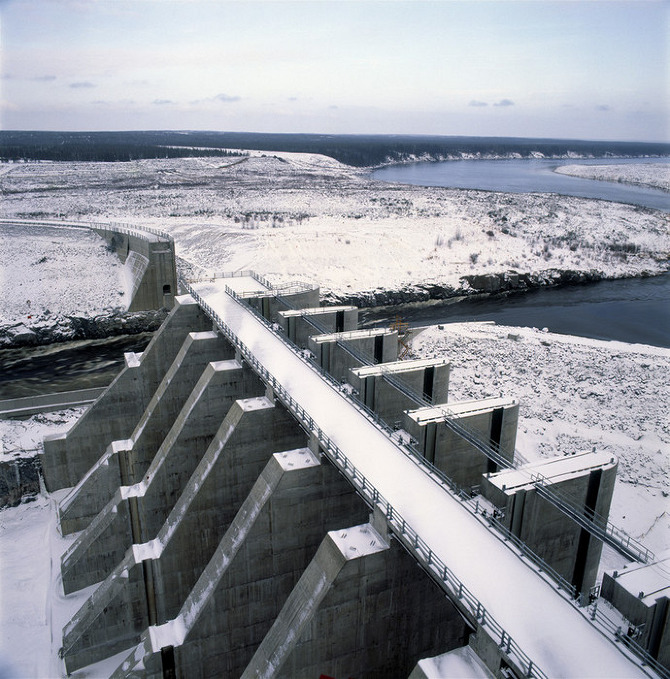 A segment of the massive James Bay hydroelectric project in Québec_ photograph © David Maisel
.
Margaret Sam-Cromarty (born 1936, Fort George Island, James Bay, Québec)
“Rivers”
.
Tears are like rivers;
they never stop flowing.
Rivers are like tears;
they become dry.
. . .
“Sphagnum Moss (Baby Moss)”
.
By my door she stood,
an old bag in her hand.
The bag she held
was full of moss from the land.
.
She asked me: Do you need
fresh moss for baby?
Yes, I said,
it keeps the baby dry.
.
She smiled, If you want
I will get more for you.
Knowing her skill,
I nod my head.
.
She goes early to the wet swamps
to find and pick moss
for a little baby.
.
She never wears gloves,
her hands red from cold.
She loves
gathering the soft moss.
.
She chooses a spot
where the sun shines a lot.
The wet cold moss has to dry
before she brings some to me.
.
Over the years I never used
anything so soft and fine
for a baby’s behind
as the moss she brought with a smile.
. . .
“A Cree Child”
.
On the east coast of James Bay
both governments didn’t care.
Other matters were more important
than a Cree child
who sometimes had little to eat.
.
There was no dancing,
no feasting,
in this, the height of the Depression.
The Indians had a passion –
hunting and following
the fur-bearing animals.
.
But the price of furs
was at its lowest.
The Crees did their best
to feed and clothe themselves.
.
In the early days
Crees’ lives
meant the Hudson Bay Company
traders who sometimes denied
Indians credit.
.
The church played a part,
an important role,
saw the suicidal conditions,
decided it best to save souls.
.
I recall small steps
in the cold Northern snow,
a sweet life taken,
a little boy with no shoes.
.
Deeply moved, I weep.
He was my brother.
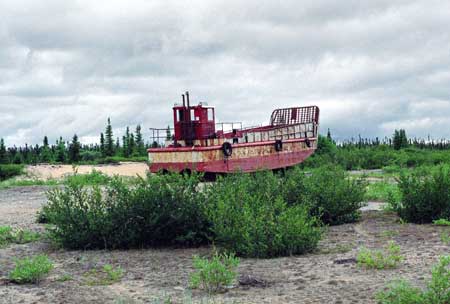 The now-derelict ferry to Fort George Island just off the Chisasibi Road_near James Bay in Québec
.
“Memories of Fort George
and of Alice who lived there until her death”
.
My memories of Fort George
are warm and sad.
Down by the river banks
cooled by gentle breezes
from the open bay
the elders sit on the tall grass
playing checkers all day.
.
Someone shouts, “I see the ship”.
Mr. Duncan, the storekeeper,
is down by the Hudson Bay dock.
Game forgotten, they watch
as John the Native navigator
safely guides the supply ship.
.
Navigation by John and other Crees
was needed by captains.
There were no light beacons
to mark the dangerous
sandbars and rock.
Fort George Island never
joined the mainland.
.
The excitement reached the teepees
surrounding the grounds
of the Hudson Bay store.
Women and children rush to the river,
the smell of smoke in their clothing,
to welcome the supply ship.
.
Another big event –
the long midsummer’s eve service.
The Native catechists
in white robes against the crimson sunset,
the women in bright shawls,
the men in their best clothes,
babies with happy smiles.
.
My memories of a hunt
of the coastal people:
a big seal, a white whale.
Someone shouted, “We share –
bring your pots and pans.”
No money changes hands.
The same sharing if someone
kills a black bear
among the inland people.
.
My fondest memory
is of a lovely lady.
Her baked bannock – so good.
I see her sitting in her smoke teepee,
around her the sweet smell
of many spruce boughs.
. . .
“James Bay”
.
James Bay, my home,
is closer than the moon,
its regions so bare,
aloof and remote.
.
Hudson Bay flows
to James Bay,
both beautiful,
wild and free.
.
The rugged coasts
of James Bay and Hudson Bay,
their charm
meets my eyes.
.
The sights and sounds
of James Bay.
They wrap around me,
giving me peace.
. . .
“Black Island”
.
I love your high cliffs,
your rocky shores,
the sounds of surf
and the shadows of a midsummer’s eve.
.
I love your coves,
the strong winds
causing high tides
and heavy fog.
.
I love the smell of seaweed
on your beaches, and driftwood,
the hot breezes from the south
causing low tides, bringing sinking mud.
.
I love the rumble of thunder
far away,
lightning zig-zags across the sky,
creatures seeking shelter.
.
I love to hear the wild ducks
feeding in the marshes,
the white gulls hovering,
the heat wave shimmering.
.
I love the islands
in James Bay:
Governor’s Island, Fort George Island,
Grassy Island and Ship Island.
. . .
“Steel Towers”
.
One cold day
I stood on the shores of James Bay.
The sun shone bright, the sky blue.
I wanted to find a clue.
.
Why, among the spruce and pine
rows of steel towers stood in line.
They were out of place,
near and Indian camp.
.
Looking for white birds’ tracks,
instead as I turn my back
Tracks of bulldozers meet my sight –
Ruining the landscape in the fading light.
.
Against the sky and beyond
stand stark steel towers.
In this harsh land of ice and snow
these steel towers are colder than forty below.
.
We Cree live in harmony
on this beautiful land.
In a land where no man had trod,
in the fresh snow I read
.
Signs of upheaval of black earth.
Bulldozers making roads
and steel towers standing tall.
. . .
“Promises”
(for the many who committed suicide in Chisasibi)
.
I am alone.
I feel so lost.
I am not in need
of material things.
.
I am confused.
Looking at myself
I abuse
love and understanding.
.
Stay with me, for my sake.
Despair I have.
No one hears
my pleas.
.
We lived in fancy houses –
no more outhouses.
The leaders of my people
made promises and promises.
.
I love to learn,
to assure myself
I have a reason
to save my soul.
.
In shame I suffer.
Nobody to ease my hurt.
I found myself afraid,
the problems too great.
. . .
“Life”
.
In this time
of steel
and of speed,
we need
poetry.
Like a friend
warm and true
shedding a tear.
See it hang,
roll down,
feel things unseen.
Drawn
to things we see,
like the setting sun
of breathtaking colours.
A new dawn:
in its blue-shadow world
things move so fast.
.
Now moving faster and faster.
. . .
Margaret Sam-Cromarty, Cree mother, grandmother, and poet, was among about 5,000 Native people whose villages and hunting lands were flooded as part of the province of Québec’s huge hydro-electricity projects involving many rivers which drain into James Bay (the lower portion of Hudson Bay). Damming, river diversion, the creation of huge reservoirs – all of this has reconfigured the surrounding landscape – submerging vast tracts of Boreal forest (black spruce and bogs, mainly) under water, and making mercury contamination a health issue (fish and drinking water). Caribou migration, waterfowl habitat, salmon spawning – all have been affected adversely. The massive water-energy-harnessing infrastructure building-boom began in 1971 (with the construction of the first permanent road into the “taiga” landscape, the James Bay Road) and continues into 2013. It has included the La Grande Project (which saw the elimination of Sam-Cromarty’s birthplace-island, Fort George Island, as a habitable place – and the relocation of Cree villagers from FGI and neighbouring settlements to the government-planned town of Chisasibi in 1981); and the Great Whale Project – a lightning rod for environmental political activism in the early 1990s – which saw Cree Grand Chief Matthew Coon Come garner favourable publicity as he “canoed” to New York City – from Hudson Bay to the Hudson River – and New York State (the #1 hydroelectric energy client of Hydro-Québec) decided not to sign yet another energy agreement with the province. But North America’s appetite for Energy does not lessen; the Eastmain and Sarcelle generating stations have since been built, and 70% of the Rupert River was diverted in 2009-2010. In this latest phase Québec has signed a cooperation agreement over environmental regulations and impact with the Grand Council of the Crees representing 18,000 Crees living on or near present – and future – Hydro Project lands. One thing is for sure by now, and the poet knows it: You cannot go Home again – only in dreams and poems.
. . . . .
Nous connaissons le secret de la petite épinette / We know the secret of the little spruce: poèmes d’une Aînée Crie / poems of a Cree Elder
Posted: June 1, 2013 Filed under: English, French, Margaret Sam-Cromarty Comments Off on Nous connaissons le secret de la petite épinette / We know the secret of the little spruce: poèmes d’une Aînée Crie / poems of a Cree Elder.
Margaret Sam-Cromarty (née à l’île Fort George, La baie James, Québec, 1936)
“Un étranger très élégant”
.
Un jour, dans un village nordique,
tout le monde se préparait
en vue du départ
pour la chasse printanière.
Vers le début de la soirée,
les enfants en train de jouer ont commencé à crier:
“Nous voyons venir un étranger.
Il est bien habillé.”
.
En effet, l’étranger était saisissant.
Personne ne semblait le connaître.
Les jeunes filles tournaient autour de lui…
les mouches aussi.
.
On l’invita à l’intérieur de la tente.
La chaleur du feu de camp
mit l’étranger mal à l’aise.
Tout le monde se demandait pourquoi.
.
Souriant aux jeunes filles,
il sortit prendre l’air.
Une mauvaise odeur flottait derrière lui
et les mouches lui bourdonnaient tout autour.
.
Les jeunes filles voulaient qu’il reste
mais il est parti comme il était venu.
Bientôt il disparut,
laissant les jeunes filles à leur tristesse.
.
L’une d’entre elles suivit ses traces
qui la menèrent à un tas de fumier.
La chaleur avait fait fondre l’étranger.
Les mouches bourdonnaient et chantaient:
“Merde et vielles guenilles,
merde et vielles guenilles,
s’étaient changées en homme!”
. . .
“The Handsome Stranger”
.
Once in a northern village
people were making ready
to move away
for the spring hunt.
.
Now it was towards evening
when children at play began to shout
“We see a stranger coming.
He is smartly dressed.”
Indeed the stranger was striking.
No one seemed to know him.
The young girls hung around him.
So did the flies.
.
He was invited inside the tent.
The heat from the campfire
made the stranger uncomfortable.
Everyone wondered why.
.
Smiling at the girls
he went outside for the air.
The stranger left a wave of smell
and buzzing flies behind.
.
The young girls wanted him to stay
but he left the way he came.
Soon he disappeared,
leaving the girls sad.
.
One of them followed his tracks
until they led to manure.
He had melted from the heat.
Flies buzzing around sang:
“Shit and old rags,
shit and old rags,
turned himself into a man.”
. . .
“Un garçon”
.
Des cheveux noirs comme du jais
qu’il avait de naissance,
Des yeux noirs
qui brillaient d’un amour chaleureux.
.
De mains fines,
de bonnes mains de musicien.
Ce garçon a découvert
que grandir était douloureux.
.
Il préférait attraper des grenouilles,
taquiner sa soeur,
serrer ses bras
autour de sa mère.
.
Il a grandi,
aussi grand qu’un arbre.
Une personne gentille,
ce garçon qui est le mien!
. . .
“Boy”
.
His jet black hair
he had from birth
His dark eyes
flashed loving warmth
.
His fine shaped hands
right for a musician
This boy who found
Growing up a pain
.
He’d rather catch frogs
tease his sister
Throw his arms
around his mother
.
He has grown
tall as a tree
A gentle person
this boy of mine
. . .
“Une fille”
.
Une fille aux yeux noirs et brillants,
au sourire doux et timide,
à la peau fine cuivrée,
qui n’a pas besoin du soleil d’été.
.
Elle avait
de longs cheveux d’ébène.
Plusieurs étaient d’accord:
elle était belle.
.
C’était le vent.
C’était le ciel.
C’était ma fille…
Mary.
. . .
“Girl”
.
A girl her dark eyes bright
Her smile shy and sweet
Her fine copper skin
needs no summer sun
.
She was blessed
with long raven hair
many agreed
she was fair
.
She was wind
She was sky
She was my daughter
Mary
. . .
“Maman”
.
Une mère
passe à travers
les rejets, les dépressions,
la solitude et les critiques.
.
C’est une femme courageuse
douée d’un humour fin.
Une créature qu’on appelle
Maman.
. . .
“Mother”
.
A mother
goes through
rejections, depressions
.
Loneliness and criticism
.
A courageous woman
with gentle humour,
a creature known as
Mother
. . .
“Maris et Femmes”
.
Le mari est le ciel
et la femme le nuage.
.
Parfois le ciel
apporte le vent
et le nuage une pluie rafraîchissante.
.
Parfois les nuages
se regroupent
et apportent orages et vents.
Maris et femmes font de même.
.
Maris et femmes dérivent séparément
comme les nuages le font parfois.
Mais au milieu de nuages gris,
jaillit le ciel bleu clair.
.
Comme les nuages se rassemblent
pour former le temps,
ainsi font maris et femmes
pour mener leurs vies.
.
Les anneaux autour du soleil
nous rappellent le mauvais temps.
Les anneaux du mari et de la femme
scellent un amour infini.
. . .
“Husbands and Wives”
.
Husband is the sky
a wife the cloud
.
Sometimes the sky
brings wind,
the cloud a refreshing rain
.
Sometimes the clouds
form to gather
It brings storms and winds
Husbands and wives do the same
.
Husbands and wives drift apart
like clouds sometimes do
But between the greyish clouds
burst bright blue skies
.
As the clouds come to gather
to create our weather
So do husbands and wives
carry on with their lives
.
The rings around the sun
remind us of bad weather
The rings of husbands and wives
shield a love forever
. . .
“La gentillesse”
.
La gentillesse, c’est faire cuire de la banic,
mélanger la farine et la levure.
Il faut y mettre de l’eau.
.
Pour faire une bonne banic,
on y ajoute de l’huile.
Dans nos vies,
on a besoin de la gentillesse.
.
La gentillesse est comme les graines.
Beaucoup se perdent.
Pas de graine,
Pas de gentillesse.
. . .
“Kindness”
.
Kindness is baking bannock
blending flour, baking powder
It’s natural to put water
.
A good bannock
oil is added
In our lives
kindness is needed
.
Kindness is like grain
many are lost
without grain
without kindness
. . .
“La Paix”
.
Trouvez la paix dans le silence,
le silence qui règne ici.
Le vent froid
purifie la terre.
.
La splendeur.
Il n’y a pas de terreur.
Des tiges de plantes séchées se tiennent
bien droites.
.
Écoutez le vent impétueux.
Regardez les sentiers blancs, les grands cercles,
la rivière tranquille,
le ciel, bon et puissant.
. . .
“Peace”
.
Find peace in silence
Silence it reigns here
The cold wind
Purifies the land
.
The splendour
There is no terror
Stalks of dried plants stand
upright
.
Hear the rushing wind
See the white paths, the wide circles
A quiet river,
the sky, bold and good.
. . . . .
Quelques pensées de la poétesse:
Mon père et ma mère étaient des Cris. Ils vivaient à la baie James. C’est là que je suis née, dans le village de l’île Fort George, où la rivière La Grande se jette dans la baie James. J’ai appris à parler et à écrire l’anglais. Les Cris sont des chasseurs et des trappeurs…Nous comprenons les animaux et les oiseaux…Nous connaissons le secret de la petite épinette…Et nous écoutons nos frères et soeurs comme nos Aînés nous l’ont enseigné… (Maintenant) nous vivons à Chisasibi… Et c’est aussi là que grandissent nos petits-enfants… Dans ma mémoire vibre encore le village de Fort George, un village qui n’a pas été inondé ni abandonné et qui est plein de Cris joyeux. C’est de cette façon que je veux me rappeler l’île de Fort George…
Some thoughts from the poet:
My father and mother were Cree. Their home was James Bay in Northern Québec. This is where I was born, at a Cree village of Fort George Island, where the La Grande River empties into James Bay. I was taught to speak and write English. My people, the Crees, are hunters and trappers… We understand the animals and birds… We know the secret of the little spruce… And we hear our brothers and sisters the way our Elders taught us… (We) now live in a town called Chisasibi… Our grandchildren are growing up in Chisasibi… In my memory stands a Cree village of Fort George not flooded or abandoned but full of happy Crees… It’s the way I would like to remember Fort George Island…
.
Editor’s note: Chisasibi or ᒋᓴᓯᐱ in Cree syllabics (meaning Great River) is a town created by the Québec government to relocate Crees who were forced from their James Bay watershed lands (including Fort George Island) because of damming/redirecting of tributary rivers flowing into the La Grande River as part of Hydro-Québec’s James Bay Project which began in the 1970s and continues into the present day.
. . . . .
“Nêhiyâwin” / “The Cree Way” – as told by Harry Blackbird
Posted: June 1, 2013 Filed under: Cree, English, Harry Blackbird Comments Off on “Nêhiyâwin” / “The Cree Way” – as told by Harry Blackbird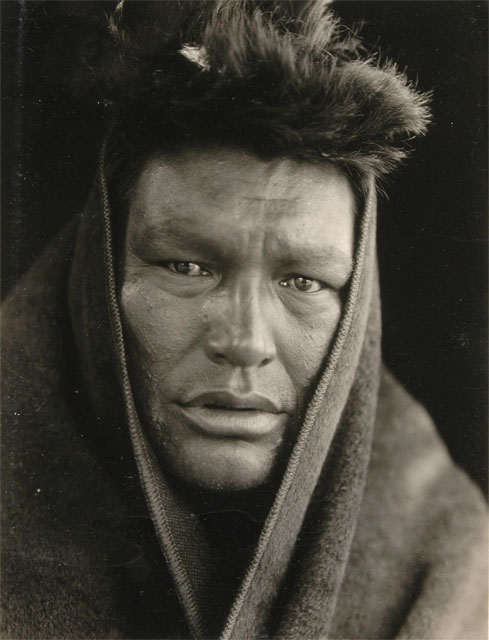
Cree Elder Harry Blackbird
(born in the 1920s at Waterhen Lake First Nation,
roots in Makwa Sahgaiehcan (Loon Lake) First Nation, Saskatchewan, Canada)
“Nêhiyâwin”
.
Pêyakwâw êsa mîna ê-nanipât awa pêyak kisîyiniw, kâ-pawâtât onôtokwêma ê-pê-kiyokâkot. nikotwâsik askîy aspin ê-kî-nakataskîyit. êkwa ôma êkwa otahcahkwa kâ- pê-kiyokêyit. mitoni pîkwêyihtam êsa awa kisiyiniw, êkwa ôma ê-kamwâcipayit, ê- simatapit. nohtê-kiskêyihtam ôma, tânêhki kâ-pê-itohtêyit.
.
Mâci-pîkiskwêyiwa êsa ê-itikot, “ê-pê-itisahot ôma Mâmawi-ohtâwîmâw ta-pê- wihtamâtân kîkway. ana ohci oskinikîs kâ-kî-nakataskît ôta namôya kayâs.
.
Ispî kâ-takohtêt ôtê ahcahk-askîhk, pê-nakiskâk oskâpêwisa ê-kiskinohtahikot ê- wêhcasiniyik mêskanaw. pêyakwâyak anita, nîswâyak paski-môniyâw ôma mêskanaw nistam anima kihciniskêhk k-êsi-paskêmok mêskanaw, êyako pimitisahamwak. êyako mîna mitoni miywâsin ta-pimitisahamihk. piyisk kêtahtawê k-ôtihtahkik ita ê-ayâwiht tâskôc ê-wâ-wîkihk. sêmâk ôhi wîci-oskâya pêyakwan ê-ispihcisiyit, kâ-pê-nakiskâkot, êkoni ôhi osk-âya mêtoni nanâkatohkâtik.
.
Kâ-mâci-pîkiskwâtikot ôhi oskâya ê-nêhiyawêyit. mâka namôya nisitohtawêw awa oskinikîs tânisi ê-itwêyit âta wîsta ê-nêhiyawêt. ahpô mîna apihkêw tâskôc mâna ôki nêhiyawak mitoni kâ-pimitisahakik onêhiyâwininiwâw. pîkwêyihtam ê-wanihkêt awa oskinîkîs. âsamîna sipwêhtahik oskâpêwisa kotak êkwa anima mêskanaw ita kâ-kî- ohtohtêcik.
.
Êyako mîna ôma mêskanaw miywâsin êkwa wêhcasin ta-pimitisahamihk. otihtamwak wâskahikana ita câh-cîki ê-wâh-wîkihk. âsamîna êkota kotaka osk-âya pê- nakiskâk mâka êkwa ôki oskâyak namôya cîki pê-nâtik, wâhyawês ohci osâpamik, ê- pômênâkosicik ê-kanawâpamâcik ôhi oskinîkîsa ê-nêhiyâwinâkosiyit. nanitohtawêw ê- kîmôci-pîkiskwêyit. âtiht piko kîkway kâh-kahcicihtam. êkoni êkwa nisitohtawêw oskâya osâm piko ê-âkayâsîmocik, mâka namôya tâpwê cîkêyimik k-îsi-waskawîyit. mâmisihow, ê-pa-pêyakot ê-nitaw-mâmitonêyihtahk tânêhki êkâ nânitaw kâ-kî-wîcihiwêt.
.
Âsamîna êkota ohci sipwêhtahik oskâpêwisa awa oskinîkîs, mâka êkwa êkotê nakatik ita kâ-nîso-paskêmoniyiki mêskanawa, otahcahkwa ê-wanisiniyit mîna ê- papâmâcihoyit êkotê nâyiwâc osâm êkâ ê-ohci-kiskinohamâsot mîna êkâ ohci- wawîyêstahk onêhiyâwiwin mêkwâc ôta askîhk ê-pimâtisit.”
.
“Hâw, kisêyiniw”, itwêw awa nôtokwêw, “otahcahkwa pwâmayî-sipwêhtêt kâwi kiya êkwa piko ta-wihtamawacik, mîna t-âcimostawacik osk-âyak ôma âcimowin k-ôh-pê- itisahokawiyân ta-pê-wihtamâtân.”
“The Cree Way”: a teaching story told by Cree Elder Harry Blackbird
Translation into English by Mary Anne Martell
.
One day while sleeping, an elderly man was awakened by his deceased wife of six years. She came in spirit form. The elderly man had mixed feelings about this visit but nevertheless managed to remain calm and sat up curious wondering why she had come to visit him.
.
She began to speak, “Listen very carefully… I have been sent by the Creator to tell you about a boy who passed away recently.
.
Upon entering the spirit world he was greeted by an Oskapêwis (Helper) who led the young man down an easy road to follow. At a certain point the road forked going in two directions. They first traveled down the road to the right. This road was also easy to follow. After walking for some time they came to a village. A number of young people about the same age as the youth came running towards him. The group of young people stopped to observe the new boy who’d been brought to them by the Oskapêwis.
.
The young people then began to speak in the language of his ancestry – Nêhiyawêwin (the Cree language). Unfortunately the young man could not make out what they were saying even though he was of the same nation; Nêhiyaw. He even had the two long braids of hair, common trademarks for Nêhiyawak who were following the Nêhiyawin (Cree worldview) way. Confused and feeling lost, the young man was quickly whisked away by the Oskapêwis towards the other road at the fork.
.
This new road was also easy to follow. They came upon a cluster of houses and another group of young people came towards him. Only this time these youth kept their distance with disappointment written all over their faces upon viewing his Aboriginal features. Listening to their conversation as they whispered among themselves, the young man could only make out a few words. He was able to understand these youth because they spoke English, but they obviously weren’t interested in this new boy by their behaviour. He felt betrayed, alone and wondered why he didn’t fit in.
.
The Oskapêwis once again whisked him away and this time left the young man at the fork of the road. His spirit is lost and wandering now because while alive he hadn’t learned to find his way.”
.
“Now, my husband,” the deceased wife’s spirit added just before she vanished, “it is up to you to make certain that young Indian children are told this story I have been sent here to tell you.”
. . . . .
Top photograph: Napéu (Man)_Cree_1926 photograph by Edward Curtis
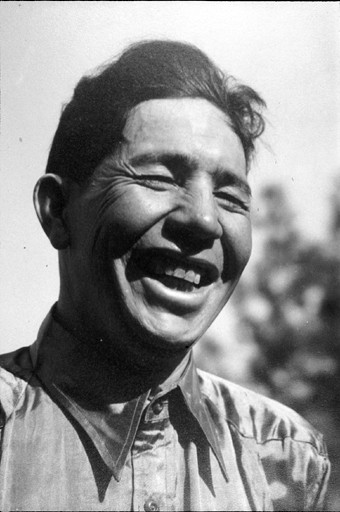
Middle photograph: Louis Nomee, Kalispel, Montana_photograph by Richard T. Lewis_1940s
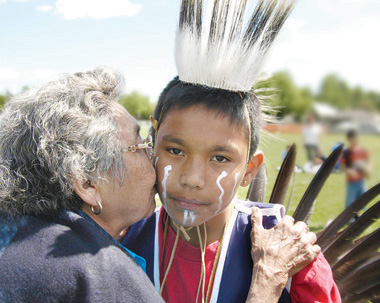
Bottom photograph: An Elder congratulates a boy upon his completion of Grade 6 at an Awasis Day event in Edmonton, Alberta_June 2005.
Mosha Folger: “Leaving my Cold Self behind”
Posted: April 29, 2013 Filed under: English, Mosha Folger Comments Off on Mosha Folger: “Leaving my Cold Self behind”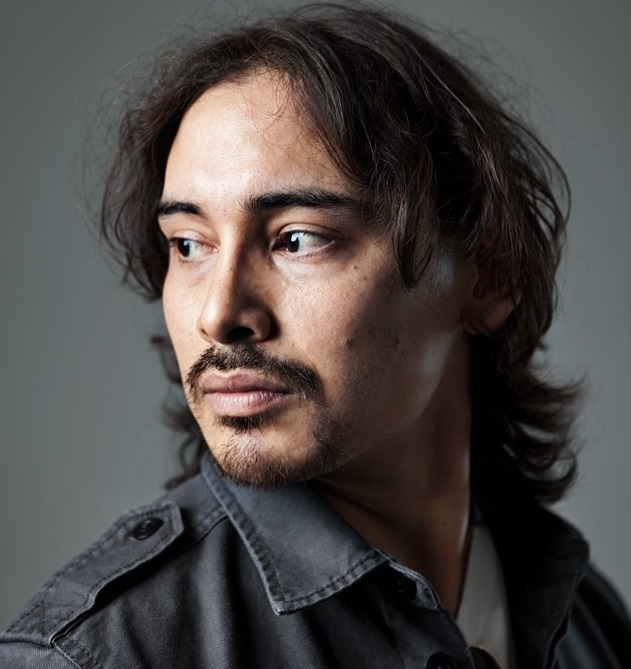
Mosha Folger
“Ancient Patience”
.
If you look back to the North
A couple of thousand years ago
To where the Atlantic ice fields
Battle the granite shield of the Arctic coast
You’d find a man staking claim to a land
That just doesn’t seem inhabitable
an Eskimo
a patient hunter who stood unmoving for hours
crouched over small bumps in the ice
subtle seal-breathing holes
Wicked winds pushing the temperature back down
from the comfort of twenty below
Facing the low sun so his shadow fell back
away from his goal
Waiting for a freezing breathe-out
to break the crystal white flatness of snow
.
Arm cocked, harpoon ready
eyes unblinking, blazing their own little holes
in the ice floe
Mouth closed, breath low
Because less movement, less sound
meant the night’s dinner was more likely to show
Yet sometimes that hunter
stood till the moon rose
before he finally shifted, breathed hard
and set off for home with nothing but cold toes
Nothing to bloody his wife’s arms to the elbows
Nothing to warm the guts of five kids
or silence the dogs’ moans
.
Nothing but the knowledge that
the next day when he woke
to stand again over that hole
maybe, just maybe
a seal would finally show him his nose
so the harpoon could come down
to deliver its lethal blow
Or maybe, just maybe
no
.
It’s that patience that allowed my people
to settle down and call the Arctic
our home.
. . .
“Summer Play”
.
In the Arctic desert where
the earth is sand and rocks
and the lichen cling
to the frayed edges of life
in granite fields
and the wet season feels like
three days of monsoon rains
.
In that place
patches of pavement
to a kid are
hallowed grounds
where devout children
offer their time
as sacrifice
with an endless circling of bikes
and an incessant bouncing of balls
like the pounding
and kneading
of rubber into cement
could stretch out
that holy land
.
How wondrous that
a tiny square of earth
can be home to so many
boundless dreams
.
But the reality is mostly
the sand and rocks
and gravel roads, and so
the games played adapt
games of writing
or drawing in the sand
and for one reason or another
chasing each other around
.
A television drawn in the dirt
with movies and shows
initialed inside
to be guessed at
D dot P dot S dot and
if someone gets it right
a frantic chase ensues
Or I Declare War
with a giant circle divided
into America and the USSR
Canada and sometimes Uganda
where the war of course
is chasing
and the fastest world leader
had dominion over all Man
.
And on the longest nights of daylight
baseball
Inuktitut style where groggy kids
up two days under constant sun
and stumbling
play with a rubber ball
by rules that themselves
are drowsy from the endless light
so the outfield
spans the whole town
making foul balls
as fair as any other
and the bases are run wrongwise
and whacking a runner
with the ball
is an out
.
Which means of course
the rest of the game is secondary
to learning how to throw
to anticipate
to picking off the right kid
in the right spot
every time
.
And so when a parent
with a voice that too
spans the whole town
finally calls in
one too many Expos
the real winners
aren’t on the team
with the most runs
but the team that
on the quick walk home
brags about the best
outs.
. . .
“Where have all the Shaman gone?”
.
In the blink of an eye
we’ve gone from a culture where
shaman conjured spirits and
swam, fed and bred
with giant Bowhead whales
for months at a time
And people held out hope that
sometime in their life
they’d be lucky enough to witness
that rare instance
of a distant-Inuit visit
Where men from another planet descended
to collect caches of rich seal fat
overloading their space-sleds
before packing up to head back
But blink
and we wake to a world where
all of that’s been reclassified filed and stacked
under the wild imaginations of
savage heathens
still unclean
cause they hadn’t discovered their
one true saviour and
path to heaven yet
Now elected Nunavut officials can be found
in a big hall amongst a big crowd
falling face down
wailing at the top of their lungs
praising Jesus’s name
and speaking in tongues
The holy spirit come upon their earthly vessel
leaving them convulsing
Spastic believers
shaking under the giant blue and white
Israeli flag they’ve hung
.
Inuit in the day
must have been some of the easiest
lost souls to convert
A hard frozen life of
struggle pain and loss made more palatable
with the promise of a kind of
spiritual dessert
Swallow the death cold and starvation down here
and when you die
enjoy the warm salvation up there
And some of those Arctic locals
fell hard for those lies
Or promises I guess you would call them
if you fell on the other side of the line
But it couldn’t have been made easy
or simplistic could it? No,
First the Anglicans and Catholics
split villages and
pit kin against kin
Families feuding over which clan
would really get to go
And which side
picked the wrong guy’s
rules to abide by
They’ve gotten over it now though
living in a kind harmony
that the rest of what we call
civilized society
should get to know
.
But now in the Arctic we have these
evangelical proselytizing types
whose fervour makes the Anglican and Catholic devotion
seem downright secular cause
they’ve got no HYPE
No souls being sucked
from bodies to on high
No chanting and dancing
with arms to the sky
No religious stakes in the continuation
of the state of Palestine
No possession
The craziest thing they’ve got
is a little blood into wine
Maybe a little shaman incantation
would do those folks some good
Could we at least get them a little reading
from the Koran or Talmud?
That’s unlikely though
Their faith blinds them so deep
The Good News Bible’s the only text
their eyes can see
We’ll have to get a closet shaman
to do a little midnight chanting
see if we can’t set some of those zealots free.
. . .
“Leaving my Cold Self behind”
.
Now there will be no more falling down
unique crunching packing sound
or children who know no other way to live winter
than to tumble sideways and upside-down
from snow banks ten feet off the ground
There will be no snow wind-blown
from parts unknown to all
but the most trained hunters
who brave the vast white fields alone
There will be no high-pitched wailing moan
of snowmobiles flying down
snow-packed gravel roads
No riders with grins plastered
Reveling in their temporary freedom from
small-town poor-me isolation syndrome
There will be no husky howls to wake me
to call me to their battle with the wind
the wind that howls back in kind
and relentless remorseless never fails to win
There will be no more dancing northern lights
chased from their nightly show
by southern skyline stage-fright
There will be only the warm glow
of a cold city that states its case
with what it sees as some divine right
to throw its gaudy remnants
high and loud into the night
There will be only nights where time is slowed
No sleep no comfort no peace
only this page this pen my words
and my message that
no matter the price sometimes
you just have to come in out of the cold.
. . .
“Old Indifferences”
.
Inuit existence was dependent partly on every member
of the encampment being able to at the very least get up
on their own two feet walk across the jagged tundra to follow
the moving caribou so everyone could eat
.
So we adopted an effective means of excising inefficient limbs
from the family tree that left the aged floating on ice pans and
insolent sons turned away to find their own path through
the cruel Arctic days
.
This isn’t a tradition we should reprise as it slides snugly into
its place in the still mostly unwritten Inuit histories but
it has a related convention that’s made its way down into
unofficial modern Inuit custom
.
If you’ve walked downtown Montreal you’ve seen it and in Ottawa
the spring thaw brings about the re-emergence in earnest of the
panhandling Eskimos downtown between the Mall and King Edward
on Rideau Street
.
Whether these people are a nuisance isn’t a question to me because
I have to ask if these people are friends or family maybe a second cousin
and do I have to follow protocol stop and ask a few
inconsequential questions
.
I try to avoid having to do that by changing up my Inuk stride
and remembering that from a distance I could look Thai
but Inuit could never fully ostracize so when I meet one
I stop say hi and try to be polite
.
I ask about my friend their son despite the likelihood that I
was the last to see their child and it hurts inside when they
ask and I have to tell them I hadn’t seen their kid in a little while but that
I knew he wasn’t going to trial
.
It requires a certain distance to sit back and witness these lives with blood
that courses from the same point as mine float away on slabs of concrete ice
but disease strikes and existence has always insisted
on a little bit of indifference.
.
All poems © Mosha Folger
. . .
Mosha Folger (aka M.O.) was born in Frobisher Bay, North-West Territories (now called Iqaluit, Nunavut) to an Inuk mother and American father. A poet, writer, performer, and “Eskimocentric” spoken-word/hiphop rhymer, Mosha has taken part in the Weesageechak Begins to Dance festival, also at WestFest in Ottawa, the Railway Club in Vancouver, and the Great Northern Arts Festival in Inuvik (where he was chosen a Best New Artist). His video, Never Saw It (2008), combined breakdancing with traditional Inupiat dancing, and was an official selection at the Winnipeg Aboriginal Film Festival. His very-personal film, Anaana, examined the effects of residential school (upon his mother). His hiphop song Muscox (2009), with Kinnie Starr, includes lyrics that refer to the suicide of a young friend: “I couldn’t be there when they buried my boy Taitusi … epitome of a boy who should grow into an Inuk man … artistic and witty … too smart for his own good God DAMN, too smart to live shitty … … Not knowing when he died / part of the rest of us went with him.” In North America circa 1491 (2011) – from his album String Games (with Geothermal M.C.) – he says he’ll “show you how far back in time you can date my rhyme … I’m a native son but I speak a foreign tongue – this is North America circa 1491.” And: “I’m out to win this – but the prize isn’t for the witless.”
Hiphop as self-expression for Inuit youth of the next generation younger than Folger is bursting into being, and performers such as Hannah Tooktoo of Nunavik (Northern Québec) effortlessly combine it with the unique “throat singing” of older generations of Inuk.
Mosha has been an active poetry performer in Ottawa, also a member of the Bill Brown 1-2-3 Slam collective. At Tungasuvvingat Inuit and at the Ottawa Inuit Children’s Centre he has brought the power and the fun of spoken-word and hiphop to teens and children.
. . . . .
“Yeah Bro, I should say we do have Eskimo Lies”: the poetry of Inuit writer Norma Dunning
Posted: April 25, 2013 Filed under: English, Inuktitut, Norma Dunning Comments Off on “Yeah Bro, I should say we do have Eskimo Lies”: the poetry of Inuit writer Norma Dunning.
Eskimo Pie I
.
Found on Wikipedia under “Eskimo Pie”:

.
My response to the ad:
.
YEAH BRO
I should say we do have
ESKIMO LIES
Not only in N. Canada and
Urban centers, but in
combina-
tions of all flavors.
Eskimo Lies is a
sugercoated
conception of Northern
Peoples
Handled at Our
GOVERNMENT OFFICES
and by our general public
LIBERALS, PCs, RCMP
& THE
ACADEMY
NO SENSE
Buy Eskimo Lies – A Quality
Product of Canada
The Home of PASTEURIZED
Inuit History
.
Eskimo Pie II

Oh give me a piece of that Eskimo Pie.
.
16 crushed chocolate wafers
4 tbsp of melted butter
.
An entire grouping of humanity
Secured in residential school, left to die
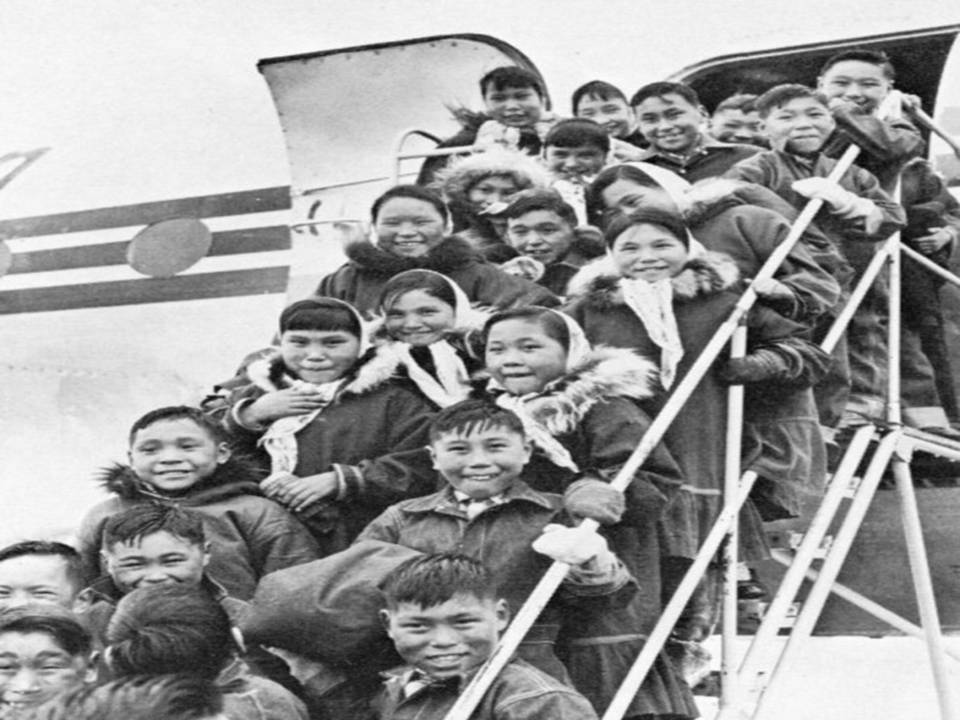
Let me see that chubby little brown face
Filled with 32 marshmallows
.
1/2 cup milk
1/8 tsp m.s.g.
Smiling inside a padlocked fur-ringed space

Include 1 tbsp of vanilla and
1 cup of heavy cream – whipped,
Beat the little heathens
Put them in their place

Melt the marshmallows,
Along with their mother tongues
Whiten with milk,
.
Add the salt
To the wounds
.
And vanilla in a double-boiler
Turn the heat on high

Bring to a boil
Simmer and strain
Removing all their relatives

Cool the filling
Fold in the whipped cream
Pour into a pie plate
.
Slice and Assimilate
.
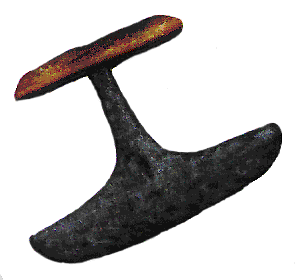
To the Eskimos of Canada
.
We came here to make them better
Teaching them church and knitting sweaters
.
Changed their names and made them right
These dirty little animals full of fight
.
Taught them how to wash their hands
Took them off their hostile lands
.
Bringing them to our enlightened age
Gave them names on a page
.
They’re happier than they’ve ever been
A better side of life they have finally seen
.
Our mission is soon complete
They will no longer eat raw meat
.
We’ll soldier on in our god’s name
These lowly people we will tame
.
They will thank us for this soon one day
And on their land we will forever stay
.
The Necklace
(Or Forms of 20th Century Shackling – The Eskimo Identification Canada System 1941-1978)

I gave you a necklace made out of sting
Such a pretty thing, such a pretty thing
I told you to wear forever and always
Such a pretty thing, such a pretty thing
I had a number put on it
Just for me!
I told you to remember it always
I did oh I did and oh I still do!
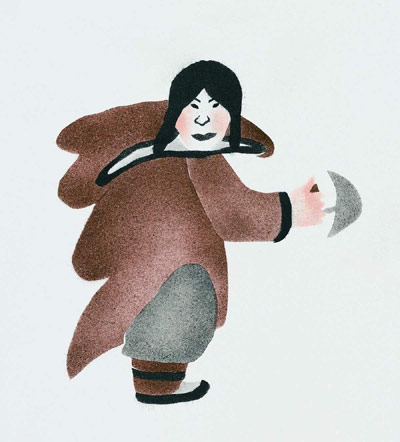
I said it was better than your name
It is oh it is and oh it still is!
If you didn’t have it I won’t be yours
Oh please, no threats, I’m yours always
Without it there would be no happy ever after
Oh please, no threats, no threats
PLEASE!
I told you to write it on all pieces of paper
I will and I have and I must and I do!
If it gets lost – we’re over!
I won’t and I haven’t and I must say I do!
This necklace is the best thing that’s ever
Happened to you
I seem to be lacking air or is
it hair or do I
dare say,
“I’m turning blue”?
.
Kudlik/Qulliq
by

(Norma – in Inuktitut)
.
There is more to this lamp than the lighting
of it. Shared in its shadows are laughter,
crying and the tears of so long ago.
The tears of a sickness changing us for
ever. Echoes of tuberculosis.
Once we were well and we gathered manniq. (wick of moss)
We slept in peace under spring stars hearing
Our giggles and sighs mixed only with the
sounds of the earth. Disease took us from
home and away, far away to stay locked
in the prison of white walls. To cough up
blood of my puvak and long for home. (lung)
No more the qulliq to warm our spirits (stone lamp)
Warm our hearts, heat our lives, feed our stomachs.
Our revolution came in Quallnaat
Bacteria and the light of the
qulliq grew dim. Black wisps answered our cries
blowing out the wick of what we once were.
.
For Mini Aodla-Freeman, the last living Inuit woman in Canada who knows the traditional uses of the Qulliq. She is the last keeper of this traditional Inuit flame.
. . . . .
In the poet’s words:
My name is Norma Dunning. I am a Beneficiary of Nunavut and a first-year M.A. Student at the University of Alberta with the inaugural class of M.A. Students in the Faculty of Native Studies. I am an urban Inuit writer. My M.A. Thesis is based on the Eskimo Identification Canada System which ran in Canada from 1941 to 1978. It is a system, simply put, that replaced Inuit names with numbers. The University of Alberta has been very kind towards my writing and I have been awarded the James Patrick Follinsbee Prize for Creative Prose (2011) and the Stephen Kapalka Memorial Prize for Prose (2012). My creative work, both prose and poetry, has never been published in hard copy. This does not stop me from writing and I would encourage all writers to remember that we write because of what is inside of us needing to get out onto a page.
Matna – Norma
Earth Day poems: “I’ve wanted to speak to the world for sometime now about you.”
Posted: April 22, 2013 Filed under: English, Maurice Kenny | Tags: Poems for Earth Day Comments Off on Earth Day poems: “I’ve wanted to speak to the world for sometime now about you.”
Maurice Kenny (Mohawk poet and teacher, born 1929)
new song
.
We are turning
eagles wheeling sky
We are rounding
sun moving in the air
We are listening
to old stories
Our spirits to the breeze
the voices are speaking
Our hearts touch earth
and feel dance in our feet
Our minds in clear thought
we speak the old words
We will remember everything
knowing who we are
We will touch our children
and they will dance and sing
As eagle turns, sun rises, winds blow,
ancestors, be our guides
Into new bloodless tomorrows.
. . .
ceremony
.
urgent/
night/ and not
even rain could
stop love-
making
in shadows
.
street unbuckled
rain slid down neck/
nipple/crotch
exposed to hands
all elements/
ancient mouth
tender as thistle-down
swallowed centuries
.
spent urgency
.
life re-newed/continues
stories are told
under winter moons
big orange melons
purple plums
.
Seminoles dance in this light
celebrate
Comanches dance in this light
celebrate, too/together
fixed in sweat/suction
of flesh to flesh
celebrate, too
.
rain/ and rain
washes sky clean
everything
is green
green sun, green moon, green dreams
and there is only
the good feeling
.
now to sleep
. . .
curt suggests
.
Passing through,
wolf presses snow,
disappears
as though winter moon
washed the fallen snow
drifting the mountain slope.
.
He howls
and I’m assured things
of the old mountain will
not only stay but survive.
It is all about survival…
not the internet, online
or standing, waiting for a big mac.
Humans have survived,
some say, perhaps too long.
Beauty. Nobility. Poetry.
Rewards for the warrior
who brought the village fire.
.
Wolf is always hunting.
Winter is long and frozen,
dark and deadly dangerous.
Farmers are armed.
Sleep without fat is eternal
and pups are bones in enemy’s teeth.
.
The politic is not the language,
not even the song belongs to the voice
until fires are built, walls erected
and it is safe to sleep. Then sing.
.
Raccoon falls from the elm,
a high branch.
Wolf watches from the hill.
Vocables quaver.
Rocks learn to sing
in the water of the swift river.
Now we stand erect
and walk through the green woods.
Our songs are safely sculpted
into ice and pray
it won’t melt
to the touch of the ear bending to echoes.
.
I don’t care if you are only passing
through these woods. Stay.
. . .
hawkweed
.
I’ve wanted to speak to the world
for sometime now about you.
There are many who confuse you with another wild
flower which is, in truth,
no relation not even
a distant, kissing cousin.
You don’t even look alike
nor survive in the same country-side.
Many people claim you are Indian
Paint Brush. Just today
a friend spotted your bloom
decorating the roadside grasses
and called out… “O there’s a beauty…
a paint brush.” I had
to explain the brush blooms
out west…Oklahoma…and
is red. Period.
.
You, on the other hand,
blossom here in the east
and your bloom is fire-
red or orange and sometimes
yellow and you came on the
Mayflower with the others
from across the seas.
.
Farmers think the hawk eats
your blossoms for sight,
vision, but we’re happy
you show up every spring
on the roadside or in the field
bringing colour to morning
though dotted with dew
or snake-spittle, bee-balm.
Up here in the Adirondacks
I’ve seen you rise in snow
when April/May arrived late.
.
Well, all I’ve really got
to say is if the farmer is right
then the red-tail is pretty smart
and deserves your sight.
Now we have to get the the other
humans to admit just who you are.
. . . . .
All poems © Maurice Kenny, from his collection In the Time of the Present (2000)
Photograph: Hieracium caespitosum a.k.a. meadow or field hawkweed
Poems for Earth Day: “The earth of my blood”: O’Connor, Ben the Dancer, La Fortune
Posted: April 22, 2013 Filed under: Ben the Dancer, English, Lawrence William O'Connor, Richard La Fortune / Anguksuar | Tags: Native-American poets, Poems for Earth Day Comments Off on Poems for Earth Day: “The earth of my blood”: O’Connor, Ben the Dancer, La Fortune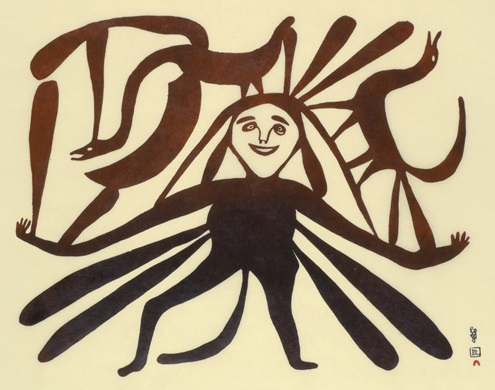
ZP_Mother Earth_stonecut from 1961 by Kenojuak Ashevak (1927-2013)
Lawrence William O’Connor (Winnebago poet)
“O Mother Earth”
.
Never will I plough the earth.
I would be ripping open the breast of my mother.
.
Never will I foul the rivers.
I would be poisoning the veins of my mother.
.
Never will I cut down the trees.
I would be breaking off the arms of my mother.
.
Never will I pollute the air.
I would be contaminating the breath of my mother.
.
Never will I strip-mine the land.
I would be tearing off her clothes, leaving her naked.
.
Never will I kill the wild animals for no reason.
I would be murdering her children, my own brothers and sisters.
.
Never will I disrespect the earth in anyway.
Always will I walk in beauty upon the earth my mother,
Under the sky my father,
In the warmth of the sun my sister,
Through the glow of the moon my brother.
. . .
Ben the Dancer (Yankton Lakota-Sioux, Rosebud (Sicangu), South Dakota)
“My Rug Maker Fine”
.
slowly as I laid my head
upon his chest
the rain outside beckoned
for me to kiss him
we forgot the names that were called
and as I looked into his deep brown eyes
I saw the earth of his people
the earth of his blood
and the earth of his birth
looking at me
.
there was much to be said
on that rainy night
but talking came secondary
and not much was said
some names were meant to scald
they can break steadfast ties
then I heard the earth of his people
the earth of his blood
and the earth of his birth
telling me
.
he left on that rainy night
without a kiss
he went home forever
the rain beckoned at him to go
the earth of his people told me
he was going home
the earth of his blood called him
to come home
and the earth of his birth took him
from me
.
oh how my heart went on a dizzy flight
I will him miss
knowing this was going to sever
our hearts and leave a hole
I know the drum of his people
that called him home
I feel the pulse of his blood
that drew him there
I smell the scent of his birth
that made me let him go
.
I have endured the name
the scalding brand
I stand on my own feet now
the earth of my people
the earth of my blood
and the earth of my birth
told me to let you go
I listened
I know now
and we are free.
. . .
Richard La Fortune/Anguksuar (Yupik Eskimo, born 1960, Bethel, Kuskokvagmiut, Alaska)
.
I have picked a bouquet for you:
I picked the sky,
I picked the wind,
I picked the prairies with their waving grasses,
I picked the woods, the rivers, brooks and lakes,
I picked the deer, the wildcat, the birds and small animals.
I picked the rain – I know you love the rain,
I picked the summer stars,
I picked the sunshine and the moonlight,
I picked the mountains and the oceans with their mighty waters.
I know it’s a big bouquet, but open your arms wide;
you can hold all of it and more besides.
.
Your mind and your love will
let you hold all of this creation.
. . . . .
All poems © each poet: Lawrence William O’Connor, Ben the Dancer, Richard La Fortune
Selections are from a compilation of “Gay American Indian” (including Lesbian and Two-Spirits) poetry, short stories and essays – Living the Spirit – published in 1988.
Poems for Earth Day: Rita Joe’s “Mother Earth’s Hair”, “There is Life Everywhere” and “When I am gone”
Posted: April 22, 2013 Filed under: English, Rita Joe | Tags: Poems for Earth Day Comments Off on Poems for Earth Day: Rita Joe’s “Mother Earth’s Hair”, “There is Life Everywhere” and “When I am gone”
ZP_Mother Earth as seen by modern science (Mercator projection)
Rita Joe (Mi’kmaw poet, 1932-2007)
“Mother Earth’s Hair”
.
In August 1989 my husband and I were in Maine
Where he died, I went home alone in pain.
We had visited each reservation we knew
Making many friends, today I still know.
Near a road a woman was sitting on the ground
She was carefully picking strands of grass
Discarding some, holding others straight
I asked why was she picking so much.
She said, “They are ten dollars a pound.”
My husband and I sat alongside of her, becoming friends.
A bundle my husband picked then, later my treasure.
I know, as all L’nu’k* know,
that sweetgrass is mother earth’s hair
So dear in my mind my husband picking shyly for me
Which he never did before, in two days he will leave me.
Today as in all days I smell sweetgrass, I think of him
Sitting there so shy, the picture remains dear.
.
*L’nu = an Aboriginal person
. . .
“There is Life Everywhere”
.
The ever-moving leaves of a poplar tree lessened my anxiety as I walked through the woods trying to make my mind work on a particular task I was worried about. The ever-moving leaves I touched with care, all the while talking to the tree. “Help me,” I said. There is no help from anywhere, the moving story I want to share. There is a belief that all trees, rocks, anything that grows, is alive, helps us in a way that no man can ever perceive, let alone even imagine. I am a Mi’kmaw woman who has lived a long time and know which is true and not true, you only try if you do not believe, I did, that is why my belief is so convincing to myself. There was a time when I was a little girl, my mother and father had both died and living at yet another foster home which was far away from a native community. The nearest neighbours were non-native and their children never went near our house, though I went to their school and got along with everybody, they still did not go near our home. It was at this time I was so lonely and wanted to play with other children my age which was twelve at the time. I began to experience unusual happiness when I lay on the ground near a brook just a few metres from our yard. At first I lay listening to the water, it seemed to be speaking to me with a comforting tone, a lullaby at times. Finally I moved my playhouse near it to be sure I never missed the comfort from it. Then I developed a friendship with a tree near the brook, the tree was just there, I touched the outside bark, the leaves I did not tear but caressed. A comforting feeling spread over me like warmth, a feeling you cannot experience unless you believe, that belief came when I was saddest. The sadness did not return after I knew that comfortable unity I shared with all living animals, birds, even the well I drew water from. I talked to every bird I saw, the trees received the most hugs. Even today I am sixty-six years old, they do not know the unconditional freedom I have experienced from the knowledge of knowing that this is possible. Try it and see. There is life everywhere, treat it as it is, it will not let you down.
. . .
“When I am gone”
.
The leaves of the tree will shiver
Because aspen was a friend one time.
Black spruce, her arms will lay low
And across the sky the eagles fly.
The mountains be still
Their wares one time like painted pyramids.
All gold, orange, red splash like we use on face.
The trees do their dances for show
Like once when she spoke
I love you all.
Her moccasin trod so softly, touching mother
The rocks had auras after her sweat
The grass so clean, she pressed it to cheek
Every blade so clean like He wants you to see.
The purification complete.
“Kisu’lkw” you are so good to me.
I leave a memory of laughing stars
Spread across the sky at night.
Try counting, no end, that’s me – no end.
Just look at the leaves of any tree, they shiver
That was my friend, now yours
Poetry is my tool, I write.
. . . . .
For more of Rita Joe’s poems please see our April 11th posts…
Alootook Ipellie: Artist, Writer, Dreamer !
Posted: April 11, 2013 Filed under: Alootook Ipellie, English, Writer-Artist-Dreamer: Alootook Ipellie Comments Off on Alootook Ipellie: Artist, Writer, Dreamer !
ZP_The agony and the ecstasy_illustration for a short story in Arctic Dreams and Nightmares_Alootook Ipellie, 1993
Alootook Ipellie (1951-2007)
“It Was Not ‘Jajai-ja-jiijaaa‘ Anymore – But ‘Amen’”
.
It was in the guise of the Holy Spirit
That they swooped down on the tundra
Single-minded and determined
To change forever the face
Of ancient Spirituals
These lawless missionaries from places unknown
Became part of the landscape
Which was once the most sacred tomb
Of lives lived long ago
The last connection to the ancient Spirits
Of the most sacred land
Would be slowly severed
Never again to be sensed
Never again to be felt
Never again to be seen
Never again to be heard
Never again to be experienced
Sadness supreme for the ancient culture
Jubilation in the hearts of the converters
Where was justice to be found?
They said it was in salvation
From eternal fire
In life after death
And unto everlasting Life in Heaven
A simple life lived
On the sacred land was no more
The psalm book now replaced
The sacred songs of shamans
The Lord’s Prayer now ruled
Over the haunting chant of revival
It was not ‘Jajai-ja-jiijaaa’ anymore
But-
‘Amen’
. . .
“How noisy they seem”
.
I saw a picture today, in the pages of a book.
It spoke of many memories of when I was still a child:
Snow covered the ground,
And the rocky hills were cold and gray with frost.
The sun was shining from the west,
And the shadows were dark against the whiteness of the
Hardened snow.
.
My body felt a chill
Looking at two Inuit boys playing with their sleigh,
For the fur of their hoods was frosted under their chins,
From their breathing.
In the distance, I could see at least three dog teams going away,
But I didn’t know where they were going,
For it was only a photo.
I thought to myself that they were probably going hunting,
To where they would surely find some seals basking on the ice.
Seeing these things made me feel good inside,
And I was happy that I could still see the hidden beauty of the land,
And know the feeling of silence.
. . .
“Walking Both Sides of an Invisible Border”
.
It is never easy
Walking with an invisible border
Separating my left and right foot
I feel like an illegitimate child
Forsaken by my parents
At least I can claim innocence
Since I did not ask to come
Into this world
Walking on both sides of this
Invisible border
Each and everyday
And for the rest of my life
Is like having been
Sentenced to a torture chamber
Without having committed a crime
Understanding the history of humanity
I am not the least surprised
This is happening to me
A non-entity
During this population explosion
In a minuscule world
I did not ask to be born an Inuk
Nor did I ask to be forced
To learn an alien culture
With its alien language
But I lucked out on fate
Which I am unable to undo
I have resorted to fancy dancing
In order to survive each day
No wonder I have earned
The dubious reputation of being
The world’s premier choreographer
Of distinctive dance steps
That allow me to avoid
Potential personal paranoia
On both sides of this invisible border
Sometimes the border becomes so wide
That I am unable to take another step
My feet being too far apart
When my crotch begins to tear
I am forced to invent
A brand new dance step
The premier choreographer
Saving the day once more
Destiny acted itself out
Deciding for me where I would come from
And what I would become
So I am left to fend for myself
Walking in two different worlds
Trying my best to make sense
Of two opposing cultures
Which are unable to integrate
Lest they swallow one another whole
Each and everyday
Is a fighting day
A war of raw nerves
And to show for my efforts
I have a fair share of wins and losses
When will all this end
This senseless battle
Between my left and right foot
When will the invisible border
Cease to be.
.
(1996)
. . . . .

ZP_Inverse Ten Commandments_Alootook Ipellie_1993
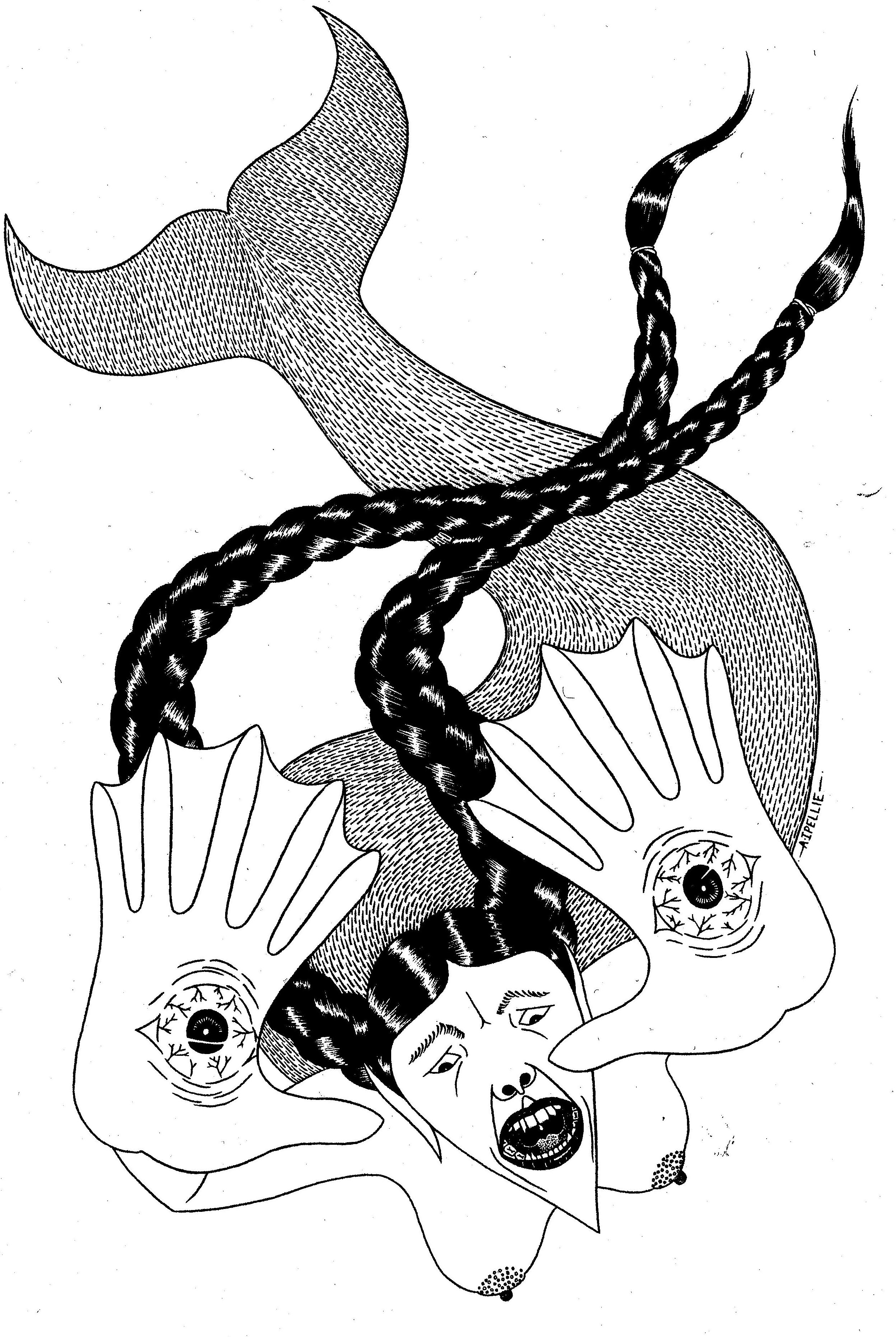
ZP_Sedna by Alootook Ipellie_1993

ZP_I, Crucified_Alootook Ipellie_1993
Alootook Ipellie
“Self-Portrait: Inverse Ten Commandments” (1993)
.
I woke up snuggled in the warmth of a caribou-skin blanket during a vicious storm. The wind was howling like a mad dog, whistling whenever it hit a chink in my igloo. I was exhausted from a long, hard day of sledding with my dogteam on one of the roughest terrains I had yet encountered on this particular trip.
.
I tried going back to sleep, but the wind kept waking me as it got stronger and even louder. I resigned myself to just lying there in the moonless night, eyes open, looking into the dense darkness. I felt as if I was inside a black hole somewhere in the universe. It didn’t seem to make any difference whether my eyes were opened or closed.
.
The pitch darkness and the whistling wind began playing games with my equilibrium. I seemed to be going in and out of consciousness, not knowing whether I was still wide awake or had gone back to sleep. I also felt weightless, as if I had been sucked in by a whirlwind vortex.
.
My conscious mind failed me when an image of a man’s face appeared in front of me. What was I to make of his stony stare – his piercing eyes coloured like a snowy owl’s, and bloodshot, like that of a walrus?
.
He drew his clenched fists in front of me. Then, one by one, starting with the thumbs, he spread out his fingers. Each finger and thumb revealed a tiny, agonized face, with protruding eyes moving snake-like, slithering in and out of their sockets! Their tongues wagged like tails, trying to say something, but only mumbled, since they were sticking too far out of their mouths to be legible. The pitch of their collective squeal became higher and higher and I had to cover my ears to prevent my eardrums from being punctured. When the high pitched squeal became unbearable, I screamed like a tortured man.
.
I reached out frantically with both hands to muffle the squalid mouths. Just moments before I grabbed them, they faded into thin air, reappearing immediately when I drew my hands back.
.
Then there was perfect silence.
I looked at the face, studying its features more closely, trying to figure out who it was. To my astonishment, I realized the face was that of a man I knew well. The devilish face, with its eyes planted upside down, was really some form of an incarnation of myself! This realization threw me into a psychological spin.
.
What did this all mean? Did the positioning of his eyes indicate my devilish image saw everything upside down? Why the panic-stricken faces on the tips of his thumbs and fingers? Why were they in such fits of agony? Had I indeed arrived at Hell’s front door and Satan had answered my call?
.
The crimson sheen reflecting from his jet-black hair convinced me I had arrived at the birthplace of all human fears. His satanic eyes were so intense that I could not look away from them even though I tried. They pulled my mind into a hypnotic state. After some moments, communicating through telepathy, the image began telling me horrific tales of unfortunate souls experiencing apocalyptic terror in Hell’s Garden of Nede.
.
The only way I could deal with this supernatural experience was to fight to retain my sanity, as fear began overwhelming me. I knew it would be impossible for me to return to the natural, physical world if I did not fight back.
.
This experience made my memory flash back to the priestly eyes of our local minister of Christianity. He had told us how all human beings, after their physical death, were bound by the doctrine of the Christian Church that they would be sent to either Heaven or Hell. The so-called Christian minister had led me to believe that if I retained my good-humoured personality toward all mankind, I would be assured a place in God’s Heaven. But here I was, literally shrivelling in front of an image of myself as Satan incarnate!
.
I couldn’t quite believe what my mind telepathically heard next from this devilish man. As it turned out, the ten squalid heads represented the Inverse Ten Commandments in Hell’s Garden of Nede. To reinforce this, the little mouths immediately began squealing acidic shrills. They finally managed to make sense with the motion of their wagging tongues. Two words sprang out thrice from ten mouths in unison: “Thou Shalt! Thou Shalt! Thou Shalt!” I could not believe I was hearing those two words. Why was I the object of Satan’s wrath? Had I been condemned to Hell’s Hole?
.
My mind flashed back to the solemn interior of our local church once more where these words had been spoken by the minister: “God made man in His own image.” In which case, the Satan could also have made man in his own image. So I was almost sure that I was face to face with my own image as the Satan of Hell!
.
“Welcome, welcome, welcome,” the image said, his hands reaching for mine. “Welcome to the Garden of Nede.”
.
I found his greeting repulsive, more so when he wrapped his squalid fingertips around my hands. The slithering eyes retreated into their sockets, closing their eyelids. The wagging tongues began slurping and licking my hands like hungry tundra wolves. I pulled my hands away as hard as I could but wasn’t able to budge them.
.
The rapid motion of their sharp tongues cut through my skin. The cruelty inflicted on me was unbearable! Blood was splattering all over my face and body. I screamed in dire pain. As if by divine intervention, I instinctively looked down between the legs of my Satanic image. I bolted my right knee upward as hard as I could muster toward his triple bulge. My human missile hit its target, instantly freeing my hands. In the same violent moment, the image of myself as the Satan of Hell’s Garden of Nede disappeared into thin air. Only a wispy odour of burned flesh remained.
.
Pitch darkness once again descended all around. Total silence. Calm. Then, peace of mind…
.
Some days later, when I had arrived back in my camp, I was able to analyze what I had experienced that night. As it turned out, my soul had gone through time and space to visit the dark side of myself as the Satan incarnate. My soul had gone out to scout my safe passage to the cosmos. The only way any soul is freed is for it to get rid of its Satan incarnate at the doorstep of Hell’s Garden of Nede. If my soul had not done what it did, it would have remained mired in Hell’s Garden of Nede for an eternity after my physical death. This was a revelation that I did not quite know how to deal with. But it was an essential element of my successful passage to the cosmos as a soul and therefore, the secret to my happiness in afterlife!

ZP_The Idiot Box is Here_Illustration by Alootook Ipellie, 1975, for Inuit Today magazine

ZP_Political illustration about the struggle to create Nunavut_Alootook Ipellie, 1980
When Inuk illustrator and writer Alootook Ipellie died of heart attack at the age of 56 in 2007 he had only just unveiled a series of new drawings at an Ottawa exhibition – this, after a decade of artistic silence. Paul Gessell of The Ottawa Citizen wrote: “Ipellie’s technical skills are unbeatable. His content ranges from playfully innocent to devilishly searing. These pen-and-ink drawings, although often minimal, carry a wallop.”
Born in 1951 to Napatchie and Joanassie at a nomadic hunting camp on Baffin Island, Ipellie’s family moved to Frobisher Bay (later Iqaluit) when Alootook was a little boy. As an adult the shy and thoughtful Ipellie lived in Ottawa for most of his life, and that was where he completed high school in the late 1960s. Although he enrolled in a lithography course at West Baffin Co-op, he dropped out of it in 1972 and took a job as both typist and translator for Inuit Today magazine. He also began to do one-box cartoons for the magazine, commenting on social issues with a wry humour that Inuit readers appreciated. He would wear many hats at Inuit Today, eventually becoming editor. In the early 1990s he drew a popular comic called “Nuna and Vut” for Nunatsiaq newspaper where he also penned a column called “Ipellie’s Shadow”.
Not one to travel – although he did plan to return to Nunavut in 2008, having grown tired of southern life – still, Ipellie had ventured as far as Germany and Australia to tour with his pen-and-ink drawings which were slowly gaining recognition – slowly very slowly, because the art collectors’ preference continues to be for the beautiful bird images of Kenojuak Ashevak (bless her!) over those of Annie Pootoogook – where the here-and-now ‘real-ness’ factor is paramount.
A poet and short-story writer as well, Ipellie explored a vividly creative imagination in his 1993 story-book with illustrations: Arctic Dreams and Nightmares.
In the preface he wrote: “This is a story of an Inuk who has been dead for a thousand years and who then recalls the events of his former life through the eyes of his living soul. It’s also a story about a powerful shaman who learned his shamanic trade as an ordinary Inuk. He was determined to overcome his personal weaknesses, first by dealing with his own mind and, then, with the forces out of his reach or control.”
In Arctic Dreams and Nightmares bawdy humour and frank descriptions of sex and violence give Ipellie’s stories much in common with the Inuit people’s stories from olden times. Ipellie writes of his main character’s encounter with his Satanic other self; of his crucifixion, too, complete with hungry wolves; of Sedna, the Inuit Mother of Sea Beasts’ sexual frustration and how shamans came up with a plan to help satisfy Her so that she would release walrus and seal once again for the starving ice fishermen and their families; a hermaphrodite shaman who is executed via harpoon plus bow-and-arrow; and a sealskin blanket-toss game for the purpose of throwing a man all the way up to ‘heaven’.
Alootook Ipellie’s perspective on his life as an Inuk was this:
“In some ways, I think I am fortunate to have been part and parcel of an era when cultural change pointed its ugly head to so many Inuit who eventually became victims of this transitional change. It is to our credit that, as a distinct culture, we have kept our eyes and intuition on both sides of the cultural tide, aspiring, as always, to win the battle as well as the war. Today, we are still mired in the battle but the war is finally ending.”
.
We thank John Thompson of the Iqaluit weekly Nunatsiaq News for biographical details of Alootook Ipellie’s life.
. . . . .
 Zócalo Poets