Mildred K. Barya compares Beverley Nambozo’s “At the graveyard” with Sylvia Plath’s “Daddy”
Posted: June 25, 2013 Filed under: 7 GUEST EDITORS, Beverley Nambozo, Mildred K. Barya, Sylvia Plath Comments Off on Mildred K. Barya compares Beverley Nambozo’s “At the graveyard” with Sylvia Plath’s “Daddy”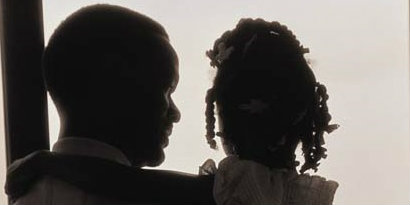
ZP Guest Editor Mildred K. Barya:
What Beverley Nambozo (Uganda) and Sylvia Plath (USA) have in common
My first poet is Beverley Nambozo, and the poem I’m focusing on is “At the graveyard.”
Beverley Nambozo
“At the graveyard”
.
At the graveyard I sit on my father’s lap.
Where we can talk.
Of what could have been but was not.
Here he has many friends,
Even his mother-in-law brings him flowers.
Now I understand why he has to write.
It keeps him alive.
We saved him by killing him.
Because now he writes.
He recited a poem for me
And my mother discovered my frozen tears
on my father’s stone.
. . .
What I like most is the balance between light and dark that comes from this poem. There’s a sense of grief and regret mixed with joy and comfort. The sadness comes from what could have been but was not, and the liberating feeling in ‘sitting on his lap so they can talk.’ I find that magical and refreshing. The father continues to be a father in this regard. He is not completely gone, and he is loved—the idea that even his mother-in-law brings him flowers. How punchy, precise and economical! In the old African culture, mothers–in-law are complicated beings whose relationships with their sons–in-law are often devoid of affection or open expression.
Beverley also does that cool thing of referencing Sylvia Plath without sounding banal. In Plath’s “Daddy” poem, her 2nd stanza begins in the direct, individual voice: Daddy, I have had to kill you. Beverley says in the collective, beginning of 3rd stanza: We saved him by killing him. I find this connection sweet and pleasant, especially when I realize that Beverley’s title could have been Daddy, but she lets the subject matter resolve that.
In Plath’s poem, we find the reason she’s had to “kill her Daddy.” She tried resurrecting him first: 4th line of the 3rd stanza: I used to pray to recover you. When that failed, she tried joining him. 12th stanza: At twenty I tried to die/And get back, back, back to you/I thought even the bones would do. For a long time she couldn’t accept the loss. So deep and long was her grieving. Bit my pretty red heart in two/I was ten when they buried you.
Beverley “saves her Daddy” by acknowledging that he’s alive – even in death. He now writes, and whenever she needs to talk with him she only has to visit, and hear him recite her a poem. It’s also her Daddy’s way of staying alive, so the goal is mutual and the action liberating for both daughter and father.
I like how these two poems deal with the loss of a father and grieve in a close but contrasting manner. So related they are, but with a twist in perspective. In order to heal and move on, the two poets find peace through poetry. One lets go through visions of the most dark form and then, severing the bond, so to speak, the other by imagining Daddy in the most friendly images: friends, flowers, and then reunion.
See Sylvia’s end stanza:
There’s a stake in your fat black heart
And the villagers never liked you.
They are dancing and stamping on you.
They always knew it was you.
Daddy, daddy, you bastard, I’m through.
And Beverley’s 4th line of her first stanza: “Here he has many friends”.
The two poems/poets belong to different traditions—African versus American—but are much alike in their approach. Writing is their saving grace. Their differences are also interesting; what and how they write based on their feelings and experiences.
One of the joys of reading poetry is when you come across one poem/poet that reminds you of another. It’s like hearing the echo that merges time, people, and places, connecting across centuries and generations.
. . .
Sylvia Plath (1932-1963)
“Daddy” (1962)
.
You do not do, you do not do
Any more, black shoe
In which I have lived like a foot
For thirty years, poor and white,
Barely daring to breathe or Achoo.
.
Daddy, I have had to kill you.
You died before I had time——
Marble-heavy, a bag full of God,
Ghastly statue with one gray toe
Big as a Frisco seal
.
And a head in the freakish Atlantic
Where it pours bean green over blue
In the waters off beautiful Nauset.
I used to pray to recover you.
Ach, du.
.
In the German tongue, in the Polish town
Scraped flat by the roller
Of wars, wars, wars.
But the name of the town is common.
My Polack friend
.
Says there are a dozen or two.
So I never could tell where you
Put your foot, your root,
I never could talk to you.
The tongue stuck in my jaw.
.
It stuck in a barb wire snare.
Ich, ich, ich, ich,
I could hardly speak.
I thought every German was you.
And the language obscene
.
An engine, an engine
Chuffing me off like a Jew.
A Jew to Dachau, Auschwitz, Belsen.
I began to talk like a Jew.
I think I may well be a Jew.
.
The snows of the Tyrol, the clear beer of Vienna
Are not very pure or true.
With my gipsy ancestress and my weird luck
And my Taroc pack and my Taroc pack
I may be a bit of a Jew.
.
I have always been scared of you,
With your Luftwaffe, your gobbledygoo.
And your neat mustache
And your Aryan eye, bright blue.
Panzer-man, panzer-man, O You——
.
Not God but a swastika
So black no sky could squeak through.
Every woman adores a Fascist,
The boot in the face, the brute
Brute heart of a brute like you.
.
You stand at the blackboard, daddy,
In the picture I have of you,
A cleft in your chin instead of your foot
But no less a devil for that, no not
Any less the black man who
.
Bit my pretty red heart in two.
I was ten when they buried you.
At twenty I tried to die
And get back, back, back to you.
I thought even the bones would do.
.
But they pulled me out of the sack,
And they stuck me together with glue.
And then I knew what to do.
I made a model of you,
A man in black with a Meinkampf look
.
And a love of the rack and the screw.
And I said I do, I do.
So daddy, I’m finally through.
The black telephone’s off at the root,
The voices just can’t worm through.
.
If I’ve killed one man, I’ve killed two——
The vampire who said he was you
And drank my blood for a year,
Seven years, if you want to know.
Daddy, you can lie back now.
.
There’s a stake in your fat black heart
And the villagers never liked you.
They are dancing and stamping on you.
They always knew it was you.
Daddy, daddy, you bastard, I’m through.
. . .
Mildred K. Barya is a Ugandan author of three poetry collections: Give Me Room to Move My Feet, The Price of Memory after the Tsunami, and Men Love Chocolates But They Don’t Say. She has also published short stories in various anthologies and taught creative writing at Alabama School of Fine Arts in Birmingham. She is a board member of African Writers Trust, and she blogs at: http://mildredbarya.com/
.
Beverley Nambozo‘s “At the graveyard”: from her poetry collection, Unjumping, published by Erbacce-press, U.K., 2010
.
Sylvia Plath‘s “Daddy”: from Sylvia Plath: Collected Poems, © 1965 / 1981, The Estate of Sylvia Plath
. . . . .
“That poem which lay in my heart like a secret”: Juliane Okot Bitek reflects upon Okot p’Bitek’s “Return the Bridewealth” and the role of the poet
Posted: June 24, 2013 Filed under: 7 GUEST EDITORS, English, Juliane Okot Bitek, Juliane Okot Bitek, Okot p’Bitek Comments Off on “That poem which lay in my heart like a secret”: Juliane Okot Bitek reflects upon Okot p’Bitek’s “Return the Bridewealth” and the role of the poetOur warmest thanks to Juliane Okot Bitek for the following Guest Editor post at Zócalo Poets:
.
Okot p’Bitek (1931 – 1982)
Return the Bridewealth (1971)
.
I
.
I go to my father
He is sitting in the shade at the foot of the simsim granary,
His eyes are fixed on the three graves of his grandchildren
He is silent.
Father, I say to him,
Father, gather the bridewealth so that I may marry the
Girl of my bosom!
My old father rests his bony chin in the broken cups of his
withered hands,
His long black fingernails vainly digging into the tough
dry skin of his cheeks
He keeps staring at the graves of his grandchildren,
Some labikka weeds and obiya grasses are growing on the mounds.
My old father does not answer me, only two large clotting
tears crawl down his wrinkled cheeks,
And a faint smile alights on his lips, causing them to
quiver and part slightly.
He reaches out for his walking staff, oily with age and
smooth like the long teeth of an old elephant.
One hand on his broken hip, he heaves himself up on
three stilts,
His every joint crackling and the bones breaking.
Hm! he sighs and staggers towards the graves of his
Grandchildren,
And with the bone-dry staff he strikes the mounds: One!
Two! Three!
He bends to pluck the labikka weeds and obiya grasses,
But he cannot reach the ground, his stone-stiff back cracks
like dry firewood.
Hm! he sighs again, he turns around and walks past me.
He does not speak to me.
There are more clotting tears on his glassy eyes,
The faint smile on his broken lips has grown bigger.
.
II
.
My old mother is returning from the well,
The water-pot sits on her grey wet head.
One hand fondles the belly of the water pot, the other
strangles the walking staff.
She pauses briefly by the graves of her grandchildren and
studies the labikka weeds and the obiya grasses waving
Like feathers atop the mounds.
Hm! she sighs
She walks past me;
She does not greet me.
Her face is wet, perhaps with sweat, perhaps with water
from the water-pot,
Perhaps some tears mingle with the water and the sweat.
The thing on her face is not a smile,
Her lips are tightly locked.
She stops before the door of the hut,
She throws down the wet walking staff, klenky, klenky!
A little girl in a green frock runs to her assistance;
Slowly, slowly, steadily she kneels down;
Together slowly, slowly, gently they lift the water-pot and
put it down.
My old mother says, Thank you!
Some water splashes onto the earth, and wets the little
girl’s school books.
She bursts into tears, and rolls on the earth, soiling her
beautiful green frock.
A little boys giggles.
He says, All women are the same, aren’t they?
Another little boy consoles his sister.
.
III
.
I go to the Town,
I see a man and a woman,
He wears heavy boots, his buttocks are like sacks of cotton,
His chest resembles the simsim granary,
His head is hidden under a broad-brimmed hat.
In one hand he holds a loaded machine-gun, his fingers at
the trigger,
His other hand coils round the waist of the woman, like a
starving python.
They part after a noisy kiss.
Hm! he sighs.
Hm! she sighs.
He marches past me, stamping the earth in anger, like an
elephant with a bullet in his bony head.
He does not look at me,
He does not touch me; only the butt of his weapon
touches my knee lightly,
He walks away, the sacks of cotton on his behind rising and
falling alternately
Like a bull hippo returning to the river after grazing in
the fresh grasses.
Hm! I sigh.
I go to the woman,
She does not look up to me,
She writes things in the sand.
She says, How are my children?
I say, Three are dead, and some labikka weeds and obiya
grasses grow on their graves.
She is silent.
I say, your daughter is now in Primary Six, and your little
boys ask after you!
The woman says, My mother is dead.
I am silent.
The agoga bird flies overhead,
He cries his sorrowful message:
She is dead! She is dead!
The guinea-fowl croaks in the tree near by:
Sorrow is part of me,
Sorrow is part of me. How can I escape
The baldness of my head?
She is silent.
Hm! I sigh.
She says, I want to see my children.
I tell the woman I cannot trace her father.
I say to her I want back the bridewealth that my father
paid when we wedded some years ago,
When she was full of charm, a sweet innocent
little hospital ward-maid.
She is silent.
I tell the woman I will marry the girl of my bosom,
I tell her the orphans she left behind will be mothered, and
the labikka weeds and obiya grasses
that grow on the graves of her children
will be weeded,
And the ground around the mounds will be kept tidy.
Hm! she sighs.
She is silent.
I am silent.
The woman reaches out for her handbag.
It is not the one I gave her as a gift last Christmas.
She opens it
She takes out a new purse
She takes out a cheque.
She looks up to me, our eyes meet again after many
months.
There are two deep valleys on her cheeks that were not
there before,
There is some water in the valleys.
The skin on her neck is rotting away,
They say the doctor has cut her open and
removed the bag of her eggs
So that she may remain a young woman forever.
I am silent
A broad witch-smile darkens her wet face,
She screams,
Here, take it! Go and marry your bloody woman!
I unfold the cheque.
It reads:
Shillings One thousand four hundred only!
. . .
Juliane Okot Bitek
A Poet May Lie Down Beside You
.
She might even let you run your palm over her hip
Round and round and round
So you remember what it’s like to lie down beside a woman
A poet may lie down beside you and listen to you sigh
Turn around, turn around
She may even take in your stories of days gone by
Turn around, turn around
Spit roasting like pigs
It’s been bloody weeks
It’s been long, stone years
Since you lay down beside a woman, anyone
A poet may lie down beside you
Let you bring the covers over her shoulders and
Lift the hair off her face
She will take you back to the lean months, lean years, two
Or has it been three?
She will take you all the way back to a time without kisses
Without touch
Forever since anyone touched you
A poet will take you back
And return with the clingy scent of yesterday
For several moments
Before this, before this
A poet might even let you kiss her
She might open up ovens and ovens of pent up heat inside you
A poet will let you think
That this is what it means
To lie down beside a woman
Rolling, rolling, drowning, searching
A poet may lie down beside you
And sing, or not sing, speak, or not speak
This is your time
A poet will not let a moment like this go wasted
So she lies down beside you and lets you touch her
So you know what it’s like
To lie down beside a woman.
. . .
I first encountered “Return the Bridewealth” in Poems from East Africa, a 1971 anthology edited by David Rubadiri and David Cook. It was a text that we used at Gayaza High School in Kampala, Uganda. It was a text from which our teachers found creative ways of engaging us with poetry. One teacher had us write a short story that incorporated the title of Jared Angira’s “No Coffin, No Grave” as the last words. Another teacher had us think about ways that we could have ‘built the nation,’ a lesson on citizenship based on Henry Barlow’s “Building the Nation”. And the fact that Barlow’s daughter was on the teaching faculty was not lost on us, even though she wasn’t the literature teacher for that class. I prayed that we would not study “Return the Bridewealth” or “They Sowed and Watered” – both poems were in the same anthology – and both had been written by my father – Okot p’Bitek.
I used to imagine that the teacher might put the burden on me to explain what the poet’s intention was as they did in the old days, as if anyone would know. I couldn’t have known what his intentions were in writing poetry and yet I was aware, even then, that my father’s poetry read like the truth. But I wasn’t mature enough to discern whether he wrote factually about everything. I was embarrassed to think that it might have dissolved into a class discussion in which my father would’ve had to beg his father and an ex-wife for money to get married. Perhaps the teachers knew not to assign those poems for our class, but that poem that read like a story (“Return the Bridewealth”) stayed with me over the years. I read my father’s other works and, after grad school, I was finally confident enough to discuss my father as a poet, an essayist, a novelist and a philosopher. But I never talked about that poem which lay in my heart like a secret, even though it remains a public document.
“Return the Bridewealth” reads true. It reads true because the poet, my dad, had an eye and an ear for the environment around a story. It wasn’t just the plot with main characters whose lives spanned time before and after the poem begins and ends. We hear the old woman’s stick: klenky, klenky! We see the old man’s fingers digging into his bony cheeks; we understand the insistence of weeds and the infuriation of the old couple who cannot maintain the graves of their grandchildren. This couple, who has endured the divorce of their son and his wife, are struggling to take care of their grandchildren, both dead and alive. And their son has the gall to return and ask for financial support to remarry.
It is a modern story, immediate and accessible. The poetry is in the language, the lines and the delivery of what might have been a short story by another writer and perhaps a novel by another’s hand. My dad boiled this story down to its bare bones and it still resists the notion that it could be a poem that celebrates its use of language and calls for attention to its lyricism.
For a man who founded the song school of poetry, Okot p’Bitek’s “Return the Bridewealth” is not a song, even though it is punctuated by the refrained sighs of all the main characters: Hm! the mother sighs; Hmm! The father sighs; Hm! the woman sighs. Hm!, the soldier sighs; Hm! I, the narrator sighs. The sigh may be a long and breathy sigh but as any Ugandan knows, hm is short and decisive. It means everything and sometimes it means nothing. But the boy giggles and the girl cries. The boy also says within earshot of his father: All women are the same, aren’t they? before he turns to console his sister.
Each conversation in “Return the Bridewealth” allows the reader to be a voyeur of the most intimate conversations. A grown man asks his elderly father for money. A boy shares a moment with his father, deriding all women and girls. A man confronts his ex-wife in an exercise that is fraught with pain and shame – neither parent is taking care of the kids and the money that will change hands is probably from the woman’s current lover in order that the man may marry his current lover – an extremely uncomfortable situation for which the title of the poem is wholly inadequate.
Okello Oculi, another poet from the same anthology, and a contemporary of Okot p’Bitek, includes this poem as one of many works that espouse shame as a trope for post colonial narratives on the fallout from having been colonized by foreigners. Sure, but we also see that there has to be shame from the behaviour of the children’s parents because we know those parents; we are those parents. We screw up, and sometimes, as parents, we don’t get our priorities right.
The poem is broken up into representations of the past, present and future. In the first section, the first person narrator introduces his father, an old man in the twilight of his life, a man whose bony fingers seem to be in the business of hastening his own death by clawing at his face. We’re brought into a home in which there are three buried children who lie in unkempt graves. It is a sorry homestead with a lovesick son who has returned for financial support from his father. His father doesn’t answer the request for money but a smile plays about the old man’s face, perhaps in hope for better circumstances still to come. The second section is a portrayal of the current state of affairs. The grandmother is still involved in the heavy domestic work, even at her advanced age, but her granddaughter is sensitive enough to go and help offload the precious cargo of water. The grade six girl’s and her grandmother’s struggle is symbolized by the water spilling onto the girl’s school textbook. The old woman does not acknowledge her son’s presence. She does not greet him and she doesn’t smile as her husband does. Her anger is evident from the way she “strangles” her walking stick and the “thing on her face” that is not a smile, but she reserves her thanks for her granddaughter who helps her with the heavy water pot on her head. The current state of affairs doesn’t belie the reality of the graves in the homestead from which the weeds are an affront; things are not as they should be.
In the third section, the narrator confronts his ex-wife who has just met up with her lover, a soldier whose well-fed form is represented by the way he fills out the bottom of his pants (“his buttocks are like sacks of cotton”). The woman wants to know about her children, but in the classic tension-filled relationship of exes, the man won’t give her the information she needs. Power plays and replays itself. The woman reveals that her mother is dead. No empathy from her ex. I can’t find your father to get my money back, the man says in response. And the woman, infuriated, writes a cheque which she retrieves from a handbag that the man realizes is not the one he bought for her last Christmas. She’s moved on. This is the present reality for many of us. We know about memory and the power of “stuff”. And this is the future because we witness a man accepting financial support from his ex-wife in order to marry the woman he’s in love with. Power reveals itself in a cash transaction.
Beyond the direct effects of colonialism which colour the poem, the culture of the Acholi people from which my father drew much inspiration, is in flux. Bridewealth, which was the purview of the man’s family, is now dependent on whoever has the money to pay for it – in this case, the man’s ex-wife and, presumably, her lover. The narrator unfolds the cheque to make sure of the amount – One Thousand Four Hundred only. In this modern cash economy, money can and does replace the former symbol of wealth – cattle. Much of the cattle of Acholi was lost in the war that lasted over two decades (1986-2007) and there are barely any Acholi cows with which to show prosperity. The narrator, emasculated by his ex-wife’s cheque, is the modern man, and there’s no shame – or is there? Who or what makes an Acholi man or woman marriageable?
My father’s only novel, a slim book titled White Teeth (first published in 1963 in the Acholi language as Lak Tar) is about a young man from an impoverished family who makes the journey to the capital, Kampala, to see if he can earn the money to pay the bride price for Cecilia Laliya, the woman he loves. Set in colonial times, just before Independence, the main character, Okeca Ladwong, is alienated by the skyscrapers, tarmac roads, traffic, a multi-ethnic society and the fast, fast pace of urban life. But he is buoyed by his love for Cecilia, and so he perseveres until he makes enough money to return to his hometown, Gulu. Okot p’Bitek, who argued against the willful discarding of Acholi culture for a modern and souless life, wouldn’t and couldn’t let Okeca return to Gulu and marry Cecilia with his newly-earned cash. That’s not the way it was done traditionally.
In Song of Lawino, it’s clear that Lawino, the spurned wife of a modern man, Ocol, can see the danger of rejecting one’s culture wholesale. Do not uproot the pumpkin, she keeps saying. Do not uproot the pumpkin. There’s no need to reject the wisdom of Acholi culture for modern ways. In “Return the Bridewealth,” the old man sighs, as does the old woman, the narrator, his ex-wife and her lover. All the adults know and express that something is terribly wrong. Hm! as they still say in Uganda. Hm!
“Return the Bridewealth” is certainly set in a time of flux for the narrator, his parents, children and ex-wife. Published in 1971, it was a time of instability in Uganda as well. 1971 was the year that Idi Amin overthrew the government of the man who had exiled my father – Apolo Milton Obote. Being the man that he was, Idi Amin did not want my father in the country either, so Okot p’Bitek remained in exile and brought us up in neighbouring Kenya, where I was born. Before Idi Amin was overthrown by organized exiles and with the support of the Tanzanian government in 1979, my father told of visiting Obote in Arusha, Tanzania, where the former president lived, and how they’d had a toast together to the life of an exile. My family returned from exile in 1980. Uganda experienced a series coup d’etats and a general election in 1980 that was heavily contested and led to the creation of a guerrilla movement that sought to overthrow the government of Milton Obote. That government was known as Obote II, given the fact that it was the second time in Obote’s career that he claimed presidency of the country.
In 1982, during the second term of my first year of high school, my father died. It was a surreal time. Dad had driven me to the bus stop at the beginning of that term where I’d caught the bus to Gayaza. I recall nothing about the drive there, not even if we talked, or what we might have talked about. I remember that he said bye very brightly and waved for a long time as he drove away. Maybe I remember a bright goodbye and a long wave because I need to.
I am a graduate student working on a PhD in interdisciplinary studies at the University of British Columbia, in Vancouver, Canada, but I’ve dabbled in creative writing for much of my life. My Bachelor’s Degree was in Fine Art with a focus on Creative Writing, so the question of the role of the poet isn’t incidental to me. I’ve thought about it. When my father wrote his Horn of My Love, a collection of Acholi songs, he declared in that book that poets were loved and feared in Acholi society. In Vancouver, love and fear are not what I associate with poets and poetry. There are small and passionate groups of poets, generally divided into the textual kind and the spoken-word kind, but they exist in a parallel universe for most of the general population. Sometimes, a local poet breaks through the barrier and everybody can see themselves in a poet’s work. Shane Koyzcan, a Vancouver poet, was one of the featured presenters at the Opening Ceremony of the 2010 Winter Olympics which was held in Vancouver. Recently, Koyzcan presented a poem on bullying, “To This Day”, at the TED talks, to much critical and popular acclaim. Like Okot p’Bitek, Koyczan’s poetry sounds like life. Nine million viewers have viewed “To This Day” on YouTube, generating thousands of responses from people who could relate to the poem. What is it about poems and poets and poetry?
I write poems, sometimes. I had my first poem published when I was a girl; I wrote it in response to the factions that were struggling for power in Uganda after the liberation war in April 1979 that saw the overthrow of Idi Amin. One afternoon, my father took me to The NationNewspaper offices in Nairobi and I was interviewed and photographed. That Sunday, my poem was published in the children’s section of that national newspaper.
In 1998, my Words in Black Cinnamon was published by Delina Press. In that book, I wrote about spurned love, dislocation and home, but nothing about what it means to be a poet. I considered poetry as one of the arts, one of the practices that human beings use to connect and reflect, but I never saw myself “connected” until Ali Farzat, the Syrian cartoonist, was tortured for his work. I wrote “A Poem for Ali Farzat” after several weeks of having heard about the torture of Farzat. I realized that I cannot afford the luxury of writing as an independent artist, making beauty for beauty’s sake. Art has a political function. It can drive change. It can make people think about what’s important to them. And for those of us who seek to work in solidarity with others, it can strengthen our resolve for change in the face of so much power against those that dare to present a dissenting voice. Today, it’s the protests in Turkey, the war in Syria, the dissenting young man who’s holed up in a hotel in Hong Kong while thousands of bones lie unburied in northern Uganda and South Sudan. How else can we deal with all this and more if we don’t immerse ourselves in art in order to understand the way we are?
The most direct poem I’ve ever written about the role of a poet comes from the very private experience of a “narrator poet” who sees her work as that of providing solace. The poet speaks of what she must do to alleviate the loneliness of a person she knows. The poet is a woman, a friend and lover. The poem remains a space in which fiction and fact trade spaces, feeling right and intimate, or distantly rational and strange. Recently, I wore a wide smile when I got a cheque for a small scholarship from my university. It was enough to pay some bills, do groceries and buy some school supplies. It read: One Thousand Four Hundred and Seventy Eight Dollars and Seventy One cents.
. . . . .
Five Poets from Trinidad and Tobago – with an introduction by Andre Bagoo
Posted: August 31, 2012 Filed under: 7 GUEST EDITORS, Andre Bagoo, Colin Robinson, Danielle Boodoo-Fortune, English, Mervyn Taylor, Nicholas Laughlin, Vahni Capildeo | Tags: Poets from Trinidad and Tobago Comments Off on Five Poets from Trinidad and Tobago – with an introduction by Andre Bagoo
Five poets from Trinidad and Tobago
THE WORLD meets in Trinidad and Tobago. Here is a Caribbean country open to the possibilities of permeable boundaries, enriched by cultural diversity and charged with the energy needed to drive a special art.
Today, as the former British colony marks its 50th anniversary as an independent nation, we take a look at the work of five contemporary Trinidad-born poets in a series of posts which you will see below.
Most of these poets live in Trinidad, others divide their time between Trinidad and homes in the United Kingdom or the United States. All share a remarkable vantage point; all have been influenced by a rich Caribbean literary tradition which predates independence. Here are travellers: between time, space, dimensions, selves, journeying to and from Shakespeare’s undiscovered country. They create richly-coloured gems, sparkling like the light bouncing off the floor of a cold, golden sea, and sharp as a diamond blade.
The first post features Mervyn Taylor, the Trinidad-born poet who also lives in New York. His poem ‘The Mentor’ – which features the persona of a poet “dancing his / mischievous meaning, / tieless, sparkling with / metaphor” – seeks reason but finds the crackling of bones. The poem is an audacious distillation of the challenges facing Trinidad, which may also reflect the challenges of the poet and the individual seeking freedom.
Then, as Queen Elizabeth celebrates her Jubilee year, the Oxford-based poet Vahni Capildeo takes us to London’s Hyde Park only to make us discover that we have never left the bottom of the Atlantic Ocean, “Opalescent, Crystalline, Amethyst. And Dark”. By the time she is done with us we are unsure what ground we walk on and feel walking on water to be a natural state.
In another post we feature the quietly disquieting work of Danielle Boodoo-Fortune, a poet and artist who lives in Sangre Grande, a town in the north-east of Trinidad.
There are also posts by Colin Robinson, whose poetry shows us the sublime in unexpected places, and Nicholas Laughlin, the editor behind the Caribbean Review of Books, whose own work is a tour de force of mood, sound and language – dissecting ideas of alienation like an anthropologist might but with unexpected lyricism. Both are poets living in Diego Martin, the suburb nestled in the cool mountains of northwest Trinidad which was only this month ravaged by flood.
These poems are not intended as any sort of programmatic depiction of anything. They are grouped here to speak, whether in harmony or dissonance, of feelings, ideas and impressions. They are an unauthorised biography which the subject might secretly relish.
Each post is accompanied by an image from the Trinidadian graphic artist Rodell Warner (rodellwarner.com) who manages to capture a mood and tone that say things about the work, but also about Trinidad and Tobago and its vitality.
—Andre Bagoo
.
ABOUT TODAY’S GUEST EDITOR
Andre Bagoo is a poet and journalist from Trinidad. His first book of poems, Trick Vessels, was published by Shearsman Books (UK) in March 2012. His poetry has appeared in Boston Review, Caribbean Review of Books, The Caribbean Writer, tongues of the ocean and elsewhere. One of his poems, ‘Carnival Monday in Trinidad’, was featured at Zócalo Poets earlier this year. He is Zócalo Poets’ guest editor today, the 50th anniversary of Trinidad and Tobago Independence.
Mervyn Taylor: The Mentor
Posted: August 31, 2012 Filed under: 7 GUEST EDITORS, Andre Bagoo, English, Mervyn Taylor | Tags: Poets from Trinidad and Tobago Comments Off on Mervyn Taylor: The Mentor
Mervyn Taylor
The Mentor
I.
In this dream there were
cows in every field,
breaths rising to create
clouds floating above
an island so green,
it seemed made of gases.
And out of this arose the
poet, in a grey suit,
as spry as I’ve ever
seen him, dancing his
mischievous meaning,
tieless, sparkling with
metaphor, asking his trick
question- are you going
with me, are we going
to look for reasons?
In this place I answered,
no one should ever starve,
or complain about things
other than an open gate
through which a stray might
wander lost and unmarked,
ending in dispute settled now
in such devious ways.
II.
You might remember Lena.
In the dream she too
was present, wearing
a hat like a teakettle cover,
remarking those boys who
now live where she grew up,
tattoos marking their bodies,
and a young girl hosting
a perfume sale every Friday,
advertised under
a Digicel sign and one
for computer repairs.
It is rumored this is the
house a mental outpatient
was looking for, when he
smashed the gate
at a wrong address,
took a wheelbarrow handle
and beat a bedridden
90 yr. old to death, those
who harbored the fugitive
he was seeking crouching
next door, saying
not a word, their weapons
like marshmallows in their
pockets, hands over their
ears, blocking the sound of
breaking bones, and screams.
III.
Cows crop the grass,
brown and white backs
seen from above, the land
in undulating waves below.
Out of the few houses,
people in black follow
funerals, fathers refusing
to accept each other’s
apologies, watching their sons
lowered, earth tamped,
they remain, conversing
with the dead. Ah, the poet
smiles his ineffable smile,
those adverbs he warned
against, they shuffle up.
What will we do with them,
now that he is going, trailing
long verses, joining the islands
like cans behind a wedding,
bells pealing in chapels
whose stone walls he worked
hard to capture, inside the
host on Sunday morning,
blood in silver chalices,
the priest’s voice intoning
from memory- sunlight,
stained glass, sin, all in
four-by-four refrain.
IV.
This is where they’ve
chosen to reenact the story
of sacrifice, with animals,
gold and greed,
where the washing of hands
goes on every day, governors
and guards swearing
each other away, poets
in corners swearing out
long poems like warrants,
lists of charges read aloud
in a difficult language,
the one in grey asking,
are you going with me, are
we going to understand
what it is we do, and why?
. . .
ABOUT THE POET
Mervyn Taylor is a Trinidad-born poet who divides his time between Brooklyn and his native island. He has taught in the New York City public school system, at Bronx Community College and The New School, and is the author of four books of poetry, namely, An Island of His Own (1992), The Goat (1999), Gone Away (2006), and No Back Door (2010, Shearsman Books). He can be heard on an audio collection, Road Clear, accompanied by bassist David Williams.
Vahni Capildeo: Water / Ice Cream in Hyde Park with Nikki
Posted: August 31, 2012 Filed under: 7 GUEST EDITORS, Andre Bagoo, English, Vahni Capildeo | Tags: Poets from Trinidad and Tobago Comments Off on Vahni Capildeo: Water / Ice Cream in Hyde Park with Nikki
Vahni Capildeo
Water
.
I. Cold Hands
There is a moment when
the water seems as if it might be warm.
Quick
wash your face
in the illusion
.
II. The Atlantic. Like
Putting a handspan square of glass
flat on the sea, thinking I see
something. That’s the sky.
Calling the colour roaring grey
heard in December, when the tide
discourages. That’s a lie
.
III. Opalescent, Crystalline, Amethyst. And Dark
The sea is.
In my mind I never left you.
The sea
is.
Place-holder, holder of a place:
The sea
Who can hold to this? A causeway.
is.
Essential ground for memory.
Twig-runes dust the shore with bird-tracks.
And the wind
.
IV. Changes
Swans and rain and swans in rain
Swans and rain
Swans again
. . .
Ice Cream In Hyde Park With Nikki
Time flies / she’s a dancer / seagulls & eagles
we’re watching walkers’ & cyclists’ ankles
straight up & down as posts! / larks & starlings
they ain’t / that’s Time / stopping & starting
singlescoop chocolatemint slipup
delicious / xylophonic strip / perfume-smelling forearms
vintage gardenia topnote soprano orangeblossom
she swoops / she sings / Time high-steppng
to her Lambretta scooter!
New York, hold your sidewalk breath
.
[From Utter (completed 2011; revised 2012. Forthcoming.
‘Water’ is taken from ‘December’, in the 14-month ‘Winter to Winter’ calendar,
Undraining Sea (Norwich: Egg Box, 2009)]
. . .
ABOUT THE POET
Vahni Capildeo (b. Trinidad, 1973) went to the UK as a student in 1991, completing her BA (Hons) (First Class) in English Language and Literature in 1995 at Christ Church, University of Oxford. A Rhodes Scholarship (1996-99) enabled her to pursue a doctorate in Old Norse at the same institution. After a Research Fellowship at Girton College, Cambridge, Capildeo worked for the Oxford English Dictionary on Etymology and quotational research.
Capildeo’s three poetry collections are: Dark & Unaccustomed Words (2012); Undraining Sea(Egg Box, 2009); and No Traveller Returns (Salt, 2003). Her poetry and prose have been widely anthologized, most recently in The Best British Poetry 2012 (Salt, forthcoming). She has been Highly Commended for the Forward Prize (individual poem category, 2009); shortlisted for the Guyana International Prize for Literature (2011).
Colin Robinson: Indivisible
Posted: August 31, 2012 Filed under: 7 GUEST EDITORS, Andre Bagoo, Colin Robinson, English | Tags: Poets from Trinidad and Tobago Comments Off on Colin Robinson: Indivisible
Colin Robinson
Indivisible*
.
He’s very well rounded
Like his lover like(s) me
An engineer, I have to pry it out
He jokes, I’m 569 years old
Dog years, I ask, what to divide by
Google it’s a prime number
We are linked online
By another man
He too does not remember
We chat routinely about random things
BRB
I cam a quickie with a mewling chubby boy
Fantasy is cute in ways reality doesn’t match up to LOL
I type, I never had a good imagination, he IMs back
How Mills & Boons are a good lesson in writing
To make a kiss last four pages
I ask what tongue you grew up speaking
I had to allow my language to fall on all ears
Today we move to a higher order
Talk fetishes, we like the same things
But my numeracy gets the better of me once again
As I calculate the probability
That in any triangulation
Two times out of three
There will be a remainder
Either two or one.
.
*for Shadath
. . .
ABOUT THE POET
Colin Robinson is executive director of CAISO, the Coalition Advocating for the Inclusion of Sexual Orientation. His poetry has appeared in many places, including Caribbean Erotic, an anthology published by Peepal Tree Press in 2010. He moves between the West Indies and the USA. He was NY field producer for Tongues Untied, led Studio Museum in Harlem’s first three creative responses to World AIDS Day and co-edited Other Countries: Black Gay Voices and Think Again.
Danielle Boodoo-Fortune: Morning Song for a Second Son
Posted: August 31, 2012 Filed under: 7 GUEST EDITORS, Andre Bagoo, Danielle Boodoo-Fortune, English | Tags: Poets from Trinidad and Tobago Comments Off on Danielle Boodoo-Fortune: Morning Song for a Second Son
Danielle Boodoo-Fortune
Morning Song for a Second Son
.
Second son, how I fear my own singing.
Each word sounds like regret,
like the rasp of torn laughter
sputtering from the kettle
of your prodigal’s tongue.
Lord knows, I cannot bear the sound.
The house sits deep in darkness,
tarsals click against tile as
you measure the breadth
of another’s shadow.
Son, of all the things I’ve made,
you are the truest, and the one
most unknown to me.
Each tic in your jaw is an ocean
of hurt I cannot cross
How I wish I could sing for you.
. . .
ABOUT THE POET
Danielle Boodoo-Fortune is a Trinidadian poet and artist. Her work has been featured in The Caribbean Writer, Bim: Arts for the 21st Century, Tongues of the Ocean, Anthurium: A Caribbean Studies Journal, Small Axe Literary Salon, and Poui: Cave Hill Journal of Creative Writing. Her art has been featured at Trinidad’s Erotic Art Week 2011, and the WoMA (Women Make Art) exhibition, in Grenada, 2012. Her art has also been featured in St. Somewhere Journal, Firestorm Literary Journal, Splash of Red Literary Arts Magazine, and on the cover of Blackberry: A Magazine. She was awarded the Charlotte and Isidor Paiewonsky Prize for first time publication in 2009, nominated for a Pushcart Prize in 2010, and shortlisted for the Small Axe Poetry Prize in 2009 and 2011.
Nicholas Laughlin: Self-Portrait in the Neotropics
Posted: August 31, 2012 Filed under: 7 GUEST EDITORS, Andre Bagoo, English, Nicholas Laughlin | Tags: Poets from Trinidad and Tobago Comments Off on Nicholas Laughlin: Self-Portrait in the Neotropics
Nicholas Laughlin
Self-Portrait in the Neotropics
.
Eleven of the strange years of my life.
Months on end I lived on tapioca,
I lived on mud and permanganate broth,
and river water red as rum,
bivouacked with rainflies
and fire ants and sundry native guides.
The parrots already knew some French.
Nous sommes les seuls français ici.
Call it sunstroke, le coup de bambou.
I came all this way with half a plan,
an extra handkerchief, and Humboldt (abridged).
Here I lack only the things I do not have.
*
Eleven years of untimely weather,
earthquakes and fireflies and mud.
The colonel writes his complaints to the general.
The general writes his complaints to the emperor.
The emperor writes to Jesus Christ,
who damns us all.
Nous sommes les seuls français left in the world.
I came all this bloody way
to sit in a cheap café with bandaged hands.
I translate detective novels, Dr. Janvier.
It keeps me in dinero, out of trouble.
I miss only the friends I do not have.
.
[From The Strange Years of My Life,
a sequence first published at Almost Island,
which you can read at: almostisland.com (see winter 2011/poetry)]
. . .
ABOUT THE AUTHOR
Nicholas Laughlin is the editor of The Caribbean Review of Books and the arts and travel magazine Caribbean Beat; programme director of the NGC Bocas Lit Fest, an annual literary festival based in Trinidad and Tobago; and co-director of the contemporary art centre Alice Yard.
Nurun Nahar’s “Mankind who – You, for such” – an inspirational Bengali poem for Eid-ul-Fitr 2012
Posted: August 19, 2012 Filed under: 7 GUEST EDITORS, Bengali (Bangla), English, Laboni Islam, Nurun Nahar | Tags: Poems for Eid-ul-Fitr Comments Off on Nurun Nahar’s “Mankind who – You, for such” – an inspirational Bengali poem for Eid-ul-Fitr 2012


Nurun Nahar (1924-1992) was born in Tangail, Bangladesh. She wrote this poem in her youth. Artist, writer, and mother of five, she could crochet blankets in her sleep. Translation by Syeda Parvin Shirin, her only daughter. Photo by Laboni Islam, one of Nurun’s many grand-daughters.
Nurun Nahar’s “Travellers”: An Inspirational Bengali Poem for Ramadan 2012
Posted: July 20, 2012 Filed under: 7 GUEST EDITORS, Bengali (Bangla), English, Laboni Islam, Nurun Nahar | Tags: বাংলা কবিতা, Bengali (Bangla) poems, Poems for Ramadan Comments Off on Nurun Nahar’s “Travellers”: An Inspirational Bengali Poem for Ramadan 2012


Nurun Nahar (1924-1992) was born in Tangail, Bangladesh. She wrote this poem in her youth. Artist, writer, and mother of five, she could crochet blankets in her sleep. Translation by Syeda Parvin Shirin, her only daughter. Photo by Laboni Islam, one of Nurun’s many grand-daughters.
* * *
 Zócalo Poets