“And Don’t Think I Won’t Be Waiting”: Love poems by Audre Lorde
Posted: June 18, 2013 Filed under: Audre Lorde, English Comments Off on “And Don’t Think I Won’t Be Waiting”: Love poems by Audre Lorde ZP_Solar Abstract_© photographer Wilda Gerideau-Squires
Audre Lorde (1934 – 1992)
“Pirouette”
.
I saw
your hands on my lips like blind needles
blunted
from sewing up stone
and
where are you from
you said
your hands reading over my lips for
some road through uncertain night
for your feet to examine home
where are you from
you said
your hands
on my lips like thunder
promising rain
.
a land where all lovers are mute.
.
And
why are you weeping
you said
your hands in my doorway like rainbows
following rain
why are you weeping?
.
I am come home.
.
(1968, revised 1976)
. . .
“Bridge through My Window”
.
In curve scooped out and necklaced with light
burst pearls stream down my out-stretched arms to earth.
Oh bridge my sister bless me before I sleep
the wild air is lengthening
and I am tried beyond strength or bearing
over water.
.
Love, we are both shorelines
a left country
where time suffices
and the right land
where pearls roll into earth and spring up day.
joined, our bodies have passage into one
without merging
as this slim necklace is anchored into night.
.
And while the we conspires
to make secret its two eyes
we search the other shore
for some crossing home.
.
(1968, revised 1976)
. . .
“Conversations in Crisis”
.
I speak to you as a friend speaks
or a true lover
not out of friendship nor love
but for a clear meeting
of self upon self
in sight of our hearth
but without fire.
.
I cherish your words that ring
like late summer thunders
to sing without octave
and fade, having spoken the season.
But I hear the false heat of this voice
as it dries up the sides of your words
coaxing melodies from your tongue
and this curled music is treason.
.
Must I die in your fever –
or, as the flames wax, take cover
in your heart’s culverts
crouched like a stranger
under the scorched leaves of your other burnt loves
until the storm passes over?
.
(1970, revised 1976)
. . .
“Recreation”
.
Coming together
it is easier to work
after our bodies
meet
paper and pen
neither care nor profit
whether we write or not
but as your body moves
under my hands
charged and waiting
we cut the leash
you create me against your thighs
hilly with images
moving through our word countries
my body
writes into your flesh
the poem
you make of me.
.
Touching you I catch midnight
as moon fires set in my throat
I love you flesh into blossom
I made you
and take you made
into me.
.
(1978)
. . .
“And Don’t Think I Won’t Be Waiting”
.
I am supposed to say
it doesn’t matter look me up some
time when you’re in my neighbourhood
needing
a drink or some books good talk
a quick dip before lunch –
but I never was one
for losing
what I couldn’t afford
from the beginning
your richness made my heart
burn like a roman candle.
.
Now I don’t mind
your hand on my face like fire
like a slap
turned inside out
quick as a caress
but I’m warning you
this time
you will not slip away
under a covering cloud
of my tears.
.
(1974)
. . . . .
Melvin Dixon as translator: a handful of “love letter” poems by Léopold Sédar Senghor
Posted: June 18, 2013 Filed under: English, French, Léopold Sédar Senghor Comments Off on Melvin Dixon as translator: a handful of “love letter” poems by Léopold Sédar Senghor Melvin Dixon in 1988_photograph from the collection of the New York Public Library
.
Léopold Sédar Senghor (1906 – 2001)
“What are you doing?”
.
“What are you doing? What are you thinking about? And of whom?”
This is your question and yours alone.
.
Nothing is more melodious than the one-hundred-metre runner
Whose arms and long legs are pistons of polished olive.
.
Nothing is more solid than the nude bust in the triangular
Harmony of Kaya-Magan flashing his thunderous charm.
.
If I swim like a dolphin in the South Wind,
If I walk in the sand like a dromedary, it is for you.
.
I am not the king of Ghana, or a hundred-metre runner.
Then will you still write to me, “What are you doing?”…
.
For I am not thinking – my eyes drink the blue rhythmically –
Except of you, like the wild black duck with the white belly.
. . .
“Que fais tu?”
.
“Que fais tu? A quoi penses-tu? A qui?”
C’est ta question et ta question.
Rien n’est plus mélodieux que le coureur de cent mètres
Que les bras et les jambes longues, comme les pistons d’olive polis.
.
Rien n’est plus stable que le buste nu, triangle harmonie du Kaya-Magan
Et décochant le charme de sa foudre.
.
Si je nage comme le dauphin, debout le Vent du Sud
C’est pour toi si je marche dans le sable, comme le dromadaire.
.
Je ne suis pas roi du Ghana, ni coureur de cent mètres.
Or tu ne m’écriras plus “Que fais tu?”…
.
Car je ne pense pas, mes yeux boivent le bleu, rythmiques
Sinon à toi, comme le noir canard sauvage au ventre blanc.
. . .
“Your letter on the bed”
.
Your letter on the bed and under the fragrant lamp,
Blue as the new shirt the young man smooths out as he hums,
Like the sky and sea, and my dream your letter.
And the sea has its salt, and air has milk, bread, rice,
I mean its salt. Life contains its sap and the earth
Its meaning. God’s meaning and movements.
Without your letter, life would not be life,
Your lips, my salt and sun, my fresh air and my snow.
. . .
“Ta lettre sur le drap”
.
Ta lettre sur le drap, sous la lampe odorante
Bleue comme la chemise neuve que lisse le jeune homme
En chantonnant, comme le ciel et la mer et mon rêve
Ta letter. Et la mer a son sel, et l’air le lait le pain le riz,
Je dis son sel.
La vie contient sa sève, et la terre son sens
Le sens de Dieu et son mouvement.
Ta lettre sans quoi la vie ne serait pas vie
Tes lèvres mon sel mon soleil, mon air frais et ma neige.
. . .
“My greeting”
.
My greeting is like a clear wing
To tell you this:
At the end of the first sleep, after reading your letter,
In the shadows and swamps, at the bottom of the poto-poto of anguish
And impasse, in the rolling stream of my dead dreams,
Like heads of children in the lost River,
I had only three choices: work, debauchery, or suicide.
.
I chose a fourth, to drink your eyes as I remember them
The golden sun on the white dew, my tender lawn.
.
Guess why I don’t know why.
. . .
“Mon salut”
.
Mon salut comme une aile claire
Pour te dire ceci:
A la fin du premier sommeil, après ta lettre, dans la ténèbre et le poto-poto
Au fond des fondrières des angoisses des impasses, dans le courant roulant
Des rêves morts, comme des têtes d’enfants le Fleuve perdu
Je n’avais que trois choix: le travail la débauche ou le suicide.
.
J’ai choisi quatrième, de boire tes yeux souvenir
Soleil d’or sur la rosée blanche, mon gazon tendre.
.
Devine pourquoi je ne sais pourquoi.
. . .
“The new sun greets me”
.
The new sun greets me on my bed,
The light of your letter and all the morning sounds,
The metallic cries of blackbirds, the gonolek bells,
Your smile on the lawn, on the splendid dew.
.
In the innocent light thousands of dragonflies
And crickets, like huge bees with golden-black wings
And like helicopters turning gracefully and calmly
On the limpid beach, the gold and black Tramiae basilares,
I say the dance of the princesses of Mali.
.
Here I am looking for you on the trail of tiger cats
Your scent always your scent, more exalting than the smell
Of lilies lifting from the bush humming with thorns.
Your fragrant neck guides me, your scent aroused by Africa
When my shepherd feet trample the wild mint.
At the end of the test and the season, at the bottom
Of the gulf, God! may I find again your voice
And your fragrance of vibrating light.
. . .
“Le salut du jeune soleil”
.
Le salut du jeune soleil
Sur mon lit, la lumière de ta lettre
Tous les bruits que fusent du matin
Les cris métalliques des merles, les clochettes des gonoleks
Ton sourire sur le gazon, sur la rosée splendide.
.
Dans la lumière innocente, des milliers de libellules
Des frisselants, comme de grandes abeilles d’or ailes noires
Et comme des hélicoptères aux virages de grâce et de douceur
Sur la plage limpide, or et noir les Tramiae basilares
Je dis la danse des princesses du Mali.
.
Me voici à ta quête, sur le sentier des chats-tigres.
Ton parfum toujours ton parfum, de la brousse bourdonnant des buissons
Plus exaltant que l’odeur du lys dans sa surrection.
Me guide ta gorge odorante, ton parfum levé par l’Afrique
Quand sous mes pieds de berger, je foule les menthes sauvages.
Au bout de l’épreuve et de la saison, au fond du gouffre
Dieu! que je te retrouve, retrouve ta voix, ta fragrance de lumière vibrante.
.
Kaya-Magan – one of the emperor’s titles in an old dynasty of Mali
poto-poto – “mud”, in the Wolof language
gonolek – a bird common to Senegal
. . . . .
The above poems first appeared in Senghor’s Lettres d’Hivernage (Letters in the Season of Hivernage), published in 1972. They were written during brief quiet moments alone by a busy middle-aged man who was the first President of the new Republic of Senegal (1960 to 1980) but who’d also been a poet in print since 1945 (Chants d’Ombre/Shadow Songs). The poems are addressed to Senghor’s second wife, Colette Hubert; the couple was often apart for weeks at a time.
.
Melvin Dixon (1950 to 1992) was an American novelist, poet, and Literature professor. He translated from French into English the bulk of Senghor’s poetic oeuvre, including “lost” poems, and this work was published in 1991 as The Collected Poetry by Léopold Sédar Senghor. Justin A. Joyce and Dwight A. McBride, editors of A Melvin Dixon Critical Reader (2006), have written of Dixon: “Over the course of his brief career he became an important critical voice for African-American scholarship as well as a widely read chronicler of the African-American gay experience.” They also noted Dixon’s ability to “synthesize criticism, activism, and art.” His poetry collections included Change of Territory (1983) and Love’s Instruments (1995, posthumous) and his novels: Trouble the Water (1989) and Vanishing Rooms (1990).
In his Introduction to his volume of Senghor’s Collected Poetry Dixon writes: “Translating Senghor has provided an opportunity for me to bring together much of what I have learned over the years about francophone literature and how my own poetry has been inspired in part by the geography and history of Senegal.”
. . . . .
Melvin Dixon as poet: AIDS, Love, Community
Posted: June 18, 2013 Filed under: English, Melvin Dixon Comments Off on Melvin Dixon as poet: AIDS, Love, Community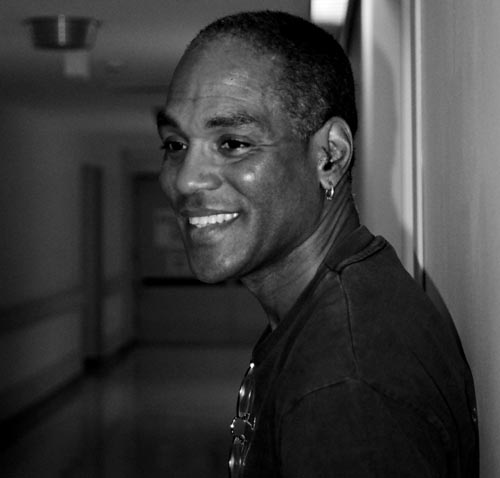
ZP_Phill Wilson, now a Thriver_HIV positive for more than a generation_Activist and founder of The Black AIDS Institute
.
Melvin Dixon (1950 – 1992)
“One by One”
They won’t go when I go. (Stevie Wonder)
Live bravely in the hurt of light. (C.H.R.)
.
The children in the life:
Another telephone call. Another man gone.
How many pages are left in my diary?
Do I have enough pencils? Enough ink?
I count on my fingers and toes the past kisses,
the incubating years, the months ahead.
.
Thousands. Many thousands.
Many thousands gone.
.
I have no use for numbers beyond this one *,
one man, one face, one torso
curled into mine for the ease of sleep.
We love without mercy,
We live bravely in the light.
.
Thousands. Many thousands.
.
Chile, I knew he was funny, one of the children,
a member of the church, a friend of Dorothy’s.
.
He knew the Websters pretty well, too.
Girlfriend, he was real.
Remember we used to sit up in my house
pouring tea, dropping beads,
dishing this one and that one?
.
You got any T-cells left?
The singularity of death. The mourning thousands.
It begins with one and grows by one
and one and one and one
until there’s no one left to count.
.
* this one – Dixon’s lover, Richard Horovitz
. . .
“Heartbeats”
.
Work out. Ten laps.
Chin ups. Look good.
.
Steam room. Dress warm.
Call home. Fresh air.
.
Eat right. Rest well.
Sweetheart. Safe sex.
.
Sore throat. Long flu.
Hard nodes. Beware.
.
Test blood. Count cells.
Reds thin. Whites low.
.
Dress warm. Eat well.
Short breath. Fatigue.
.
Night sweats. Dry cough.
Loose stools. Weight loss.
.
Get mad. Fight back.
Call home. Rest well.
.
Don’t cry. Take charge.
No sex. Eat right.
.
Call home. Talk slow.
Chin up. No air.
.
Arms wide. Nodes hard.
Cough dry. Hold on.
.
Mouth wide. Drink this.
Breathe in. Breathe out.
.
No air. Breathe in.
Breathe in. No air.
.
Black out. White rooms.
Head out. Feet cold.
.
No work. Eat right.
CAT scan. Chin up.
.
Breathe in. Breathe out.
No air. No air.
.
Thin blood. Sore lungs.
Mouth dry. Mind gone.
.
Six months? Three weeks?
Can’t eat. No air.
.
Today? Tonight?
It waits. For me.
.
Sweet heart. Don’t stop.
Breathe in. Breathe out.
. . .
“Turning 40 in the ’90s”
.
April 1990
.
We promised to grow old together, our dream
since years ago when we began
to celebrate our common tenderness
and touch. So here we are:
.
Dry, ashy skin, falling hair, losing breath
at the top of the stairs, forgetting things.
Vials of Septra and AZT line the bedroom dresser
like a boy’s toy army poised for attack –
your red, my blue, and the casualties are real.
.
Now the dimming in your man’s eyes and mine.
Our bones ache as the muscles dissolve,
exposing the fragile gates of ribs, our last defense.
And we calculate pensions and premiums.
You are not yet forty-five, and I
not yet forty, but neither of us for long.
.
No senior discounts here, so we clip coupons
like squirrels in late November, foraging
each remaining month or week, day or hour.
We hold together against the throb and jab
of yet another bone from out of nowhere poking through.
You grip the walker and I hobble with a cane.
Two witnesses for our bent generation.
. . .
“Aunt Ida pieces a Quilt”
.
They brought me some of his clothes. The hospital gown.
Those too-tight dungarees, his blue choir robe
with the gold sash. How that boy could sing!
His favourite colour in a necktie. A Sunday shirt.
What I’m gonna do with all this stuff?
I can remember Junie without this business.
My niece Francine say they quilting all over the country.
So many good boys like her boy, gone.
At my age I ain’t studying no needle and thread.
My eyes ain’t so good now and my fingers lock in a fist,
they so eaten up with arthritis. This old back
don’t take kindly to bending over a frame no more.
Francine say ain’t I a mess carrying on like this.
I could make two quilts the time I spend running my mouth.
Just cut his name out the cloths, stitch something nice
about him. Something to bring him back. You can do it,
Francine say. Best sewing our family ever had.
Quilting ain’t that easy, I say. Never was easy.
Y’all got to help me remember him good.
Most of my quilts was made down South. My Mama
and my Mama’s Mama taught me. Popped me on the tail
if I missed a stitch or threw the pattern out of line.
I did “Bright Star” and “Lonesome Square” and “Rally Round,”
what many folks don’t bother with nowadays. Then Elmo and me
married and came North where the cold in Connecticut
cuts you like a knife. We was warm, though.
We had sackcloth and calico and cotton. 100% pure.
What they got now but polyester-rayon. Factory made.
Let me tell you something. In all my quilts there’s a secret
nobody knows. Every last one of them got my name Ida
stitched on the backside in red thread.
That’s where Junie got his flair. Don’t let anybody fool you.
When he got the Youth Choir standing up and singing
the whole church would rock. He’d throw up his hands
from them wide blue sleeves and the church would hush
right down to the funeral parlour fans whisking the air.
He’d toss his head back and holler and we’d all cry Holy.
And never mind his too-tight dungarees.
I caught him switching down the street one Saturday night,
and I seen him more than once. I said, Junie,
You ain’t got to let the whole world know your business.
Who cared where he went when he wanted to have fun?
He’d be singing his heart out come Sunday morning.
When Francine say she gonna hang this quilt in the church
I like to fall out. A quilt ain’t no show piece,
it’s to keep you warm. Francine say it can do both.
Now I ain’t so old fashioned I can’t change,
but I made Francine come over and bring her daughter
Belinda. We cut and tacked his name, JUNIE.
Just plain and simple. “JUNIE, our boy.”
Cut the J in blue, the U in gold. N in dungarees
just as tight as you please. The I from the hospital gown
and the white shirt he wore First Sunday. Belinda
put the necktie E in the cross stitch I showed her.
Wouldn’t you know we got to talking about Junie.
We could smell him in the cloth.
Underarm. Afro-Sheen pomade. Gravy stains.
I forgot all about my arthritis.
When Francine left me to finish up, I swear
I heard Junie giggling right along with me
as I stitched Ida on the backside in red thread.
Francine say she gonna send this quilt to Washington
like folks doing from all across the country,
so many good people gone. Babies, mothers, fathers,
and boys like our Junie. Francine say
they gonna piece this quilt to another one,
another name and another patch
all in a larger quilt getting larger and larger.
Maybe we all like that, patches waiting to be pieced.
Well, I don’t know about Washington.
We need Junie here with us. And Maxine,
she cousin May’s husband’s sister’s people,
she having a baby and here comes winter already.
The cold cutting like knives. Now where did I put that needle?
. . .
The poems above are from Melvin Dixon’s posthumously-published poetry collection, Love’s Instruments (1995) © Faith Childs Literary Agency
.
When He calls me, I will answer…I’ll be somewhere, I’ll be somewhere…
I’ll be somewhere Listening for My Name.
These are words from a Gospel hymn that Melvin Dixon (see the ZP Senghor post immediately above this one for Dixon’s biographical details) quoted when he delivered a speech to The Third National Lesbian and Gay Writers Conference – “OutWrite 92” – in Boston, Massachusetts. That was in 1992, and Dixon hadn’t long to live – AIDS would soon carry him off. He urged those in attendance to “guard against the erasure of our experience and our lives. As white gays become more and more prominent – and acceptable to mainstream society – they project a racially exclusive image of gay reality…(And) as white gays deny multiculturalism among gays, so too do black communities deny multisexualism among their members. Against this double cremation, we must leave the legacy of our writing and our perspectives on gay and straight experiences. Our voice is our weapon…We alone are responsible for the preservation and future of our literature.”
Dixon’s opening remarks are worth quoting at length; they evoke the battle scars of that first brutal decade of AIDS and also demonstrate Dixon’s absolute integrity in acknowledging the interwoven-ness of sexuality and race. Society’s attitude towards AIDS and HIV has evolved somewhat since 1992 but none of that progress came easily; it was the result of courageous and dedicated activism. (Note the un-reclaimed use of the word “nigger” (still, in fact, a lightning-rod word in 2013) and the complete absence of the word “queer” – a hateful slur that was still in popular use by ‘polite’ homophobes in place of the coarser “faggot”):
Melvin Dixon:
“As gay men and lesbians, we are the sexual niggers of our society. Some of you may have never before been treated like a second-class, disposable citizen. Some of you have felt a certain privilege and protection in being white, which is not to say that others are accustomed to or have accepted being racial niggers, and feel less alienated. Since I have never encountered a person of no colour, I assume that we are all persons of colour. Like fashion victims, though, we are led to believe that some colours have been so endowed with universality and desirability that the colour hardly seems to exist at all – except, of course, to those who are of a different colour and pushed outside the rainbow. My own fantasy is to be locked inside a Benetton ad.
No one dares call us sexual niggers, at least not to our faces. But the epithets can be devastating or entertaining: we are faggots and dykes, sissies and bulldaggers. We are funny, sensitive, Miss Thing, friends of Dorothy, or men with ‘a little sugar in the blood’, and we call ourselves what we will. As an anthropologist/linguist friend of mine calls me in one breath: “Miss Lady Sister Woman Honey Girl Child.” Within this environment of sexual and racial niggerdom, recovery isn’t easy. Sometimes it is like trying to fit a size-12 basketball player’s foot into one of Imelda Marcos’ pumps. The colour might be right, but the shoe still pinches. Or, for the more fashionable lesbians in the audience, lacing up those combat boots only to have extra eyelets staring you in the face – and you feel like Olive Oyl gone trucking after Minnie Mouse.
As for me, I’ve become an acronym queen: BGM ISO same or other. HIV plus or minus. CMV, PCP, MAI, AZT, ddl, ddC. Your prescription gets mine.
Remember those great nocturnal emissions of your adolescent years? They told us we were men, and the gooey stuff proved it. Now, in the 1990s, our nocturnal emissions are night sweats, inspiring fear, telling us we are mortal and sick, and that time is running out…I come to you bearing witness of a broken heart; I come to you bearing witness to a broken body – but a witness to an unbroken spirit. Perhaps it is only to you that such witness can be brought and its jagged edges softened a bit and made meaningful…We are facing the loss of our entire generation…(gay men lost to AIDS.) What kind of witness will You bear? What truth-telling are you brave enough to utter and endure the consequences of your unpopular message?”

ZP_Poster for the USA’s National Black HIV / AIDS Awareness Day_ February 2013
“Baby, I’m for real”: Black-American Gay poets from a generation ago
Posted: June 18, 2013 Filed under: Don Charles, English, Lamont B. Steptoe, Steve Langley | Tags: Black gay poets Comments Off on “Baby, I’m for real”: Black-American Gay poets from a generation ago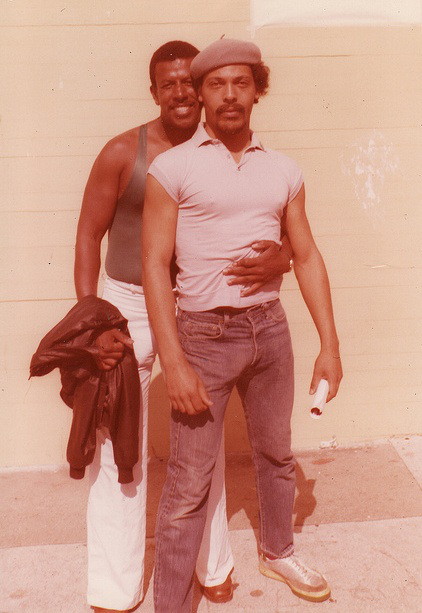
. . .
“I dream of Black men loving and supporting other Black men, and relieving Black women from the role of primary nurturers in our community. I dream, too, that as we receive more of what we want from each other that our special anger reserved for Black women will disappear. For too long we expected from Black women that which we could only obtain from other men. I dare myself to dream.”
Joseph Fairchild Beam (1954 – 1988) from Brother to Brother: Words from the Heart, a passionate 1984 essay directed at all – not just gay – Black men
. . .
Lamont B. Steptoe (born 1949)
“Maybelle’s boy”
.
I get from other men
what my daddy never gave
He just left me a house
full of lonesome rooms
and slipped on in his grave.
.
Now
when muscled arms enfold me
A peace descends from above
Someone is holdin’ Maybelle’s boy
and whisperin’ words of love.
. . .
Don Charles (born 1960)
“Comfort”
.
When you looked and
saw my Brown skin
Didn’t it make you
feel comfortable?
.
Didn’t you remember that
old blanket
You used to wrap up in
when the nights got cold?
.
Didn’t you think about that
maplewood table
Where you used to sit and
write letters to your daddy?
.
Didn’t you almost taste that
sweet gingerbread
Your granny used to make?
(And you know it was good.)
.
When you looked and
saw my Brown eyes
Didn’t they look just like
home?
. . .
Don Charles
“Jailbait”
.
You better quit coming around here like that
with no shirt on
and them gold chains on your neck
.
In them tight shorts
halfway pushed down the back
and your jockstrap showing
.
Ass jerking from side to side
and your legs all sweaty and shining
.
Trying to talk dirty
with that Kangol hat cocked to one side
.
Some dude’s gonna grab you
yank them shorts right down
throw you ‘cross the hood of his car
and ram his dick up your little ass so hard
it’ll make you walk more funny than you do.
.
Couldn’t nobody blame him neither
the way you walk around
acting like you want something
.
Hell!
I may be the one who jams you –
You just better quit coming around here.
. . .
Don Charles
“If he hadn’t kissed me”
.
And the fool said to me
as he humped my behind:
“You ought to try
fucking a woman some time.”
.
“Gotta have you some pussy
to be a real man,”
he said while I jacked him off
on my divan.
.
I wanted to ask him
to see if he knew:
“Why would I mess with
a jackass like you,
if pussy was what
I wanted to do?”
.
And if he hadn’t kissed me,
I would have, too.
. . .
David Warren Frechette (died 1991)
“Non, Je ne regrette rien”
(for Keith Barrow and Larry McKeithan)
I had big fun if I don’t get well no more.
(“Going Down Slow”, as sung by Bobby ‘Blue’ Bland)
.
Sister Chitlin’, Brother NeckBone and
Several of their oxymoron minions
Circle round my sick room,
Swathed in paper surgical gowns.
.
Brandishing crosses, clutching bibles,
(God, please don’t let them sing hymns!)
Pestering me to recant the
Wicked ways that brought me here.
.
“Renounce your sins and return to Jesus!”
Shouts one of the zealous flock.
“The truth is I never left Him,”
I reply with a fingersnap.
“Don’t you wish you’d chosen a normal lifestyle?”
“Sister, for me, I’m sure I did.”
.
Let the congregation work overtime
For my eleventh-hour conversion.
Their futile efforts fortify
My unrepentant resolve.
.
Though my body be racked by
Capricious pains and fevers,
I’m not even about to yield to
Fashionable gay Black temptation.
.
Mother Piaf’s second greatest hit title
Is taped to the inside of my brain
And silently repeated like a mantra:
“Non, je ne regrette rien.”
.
I don’t regret the hot Latino boxer
I made love to on Riverside Drive
Prior to a Washington march.
I don’t regret wild Jersey nights
Spent in the arms of conflicted satyrs;
I don’t regret late night and early a.m.
Encounters with world-class insatiables.
.
My only regrets are being ill,
Bed-ridden and having no boyfriend
To pray over me.
And that now I’ll never see Europe
Or my African homeland except
In photos in a book or magazine.
.
Engrave on my tombstone:
“Here sleeps a happy Black faggot
Who lived to love and died
With no guilt.”
.
No, I regret nothing
Of the gay life I’ve led and
There’s no way in Heaven or Hell
I’ll let anyone make me.
. . .
David Warren Frechette
“The Real Deal”
.
Don’t want death to catch me crying and acting like I been bad.
Don’t want no hypocrites around my bedside making me feel sad.
When my man comes my way with His golden book and silver scythe,
Then says, “Come along now, David…it’s the end of your life!”
I’ll answer Him,
“I’m a natural fighter, I ain’t gonna go easy,
Although my breath is short, and my stomach quite queasy.”
If I must leave this world hunched over, I got this reliance
That death will have to find me – arms folded in defiance.
. . .
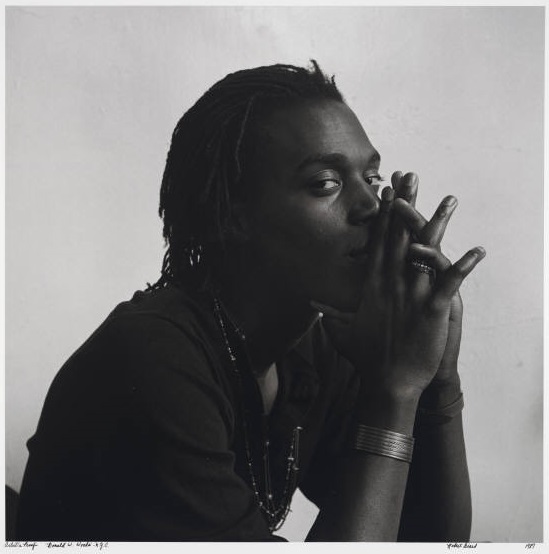 ZP_Donald W. Woods photographed in 1987 by Robert Giard
.
Donald W. Woods (1958 – 1992)
“What do I do about you?”
.
holy ghost of my heart
grinding my memory
humping my need
.
throw your head like the dinka
shake your arms like the maasai
a french whore flirting
lickin lips at strangers
.
been waiting for your lightbulb
to glow for me
.
waiting
to exchange hard ass love
calloused affection
.
slapping high fives
capable and competent
listless and lonely
.
turn the blaze up slow
so I can breathe your
mourning breath
wet my pillow
part your eyelids
.
I’m a typewriter
randy and selfish and wise
a sonnet
a beat box
.
serve the next line
in your salty metaphors
and smoked salmon humour
.
wet me with
the next line
.
the resounding refrain
of grown men in love.
. . .
Cary Alan Johnson
“Stoned”
.
I used your letter to roll a joint
and as your lies burned
I inhaled them;
they made me laugh.
. . .
Cary Alan Johnson
“Surrender”
.
Last night
I fell silently into your
black sea.
Hair everywhere, in my
mouth, deep inside me,
deep, deeper
than we’d ever
gone before.
Did you know this
time would come?
. . .
Djola Bernard Branner
“Red Bandanas”
(as rapped to 101 beats per minute minus-one)
.
red bandanas
mean fuck me
when worn
in the right
hip pocket
in the right crowd
.
on castro
or christopher
streets
.
but mine is worn
around the neck.
.
it means that
i am remembering
granddad
who wiped
the sweat from his
brow onto it
or used it to catch
the contents of
a cough
or laundered it /
and wore it
around his neck.
.
red bandanas
mean fuck me
when worn
in the right
hip pocket
in the right crowd
.
on castro
or christopher
streets
.
but mine is worn
around the neck.
.
it means that
i am remembering
moms
who placed it
in the palm of
my hand /
and dried
the tears she
cried in it
’cause her
father died
with nothing
but his /
.
red bandanas
mean fuck me
when worn
in the right
hip pocket
in the right crowd
.
on castro
or christopher
streets
.
but mine is worn
around the neck.
. . .
Steve Langley
“Tell Mama”
.
When I was 10 years old, I asked
my mama while she was making potato salad:
“Mama, what’s a homosexual?” She said:
“It’s a man who likes men.”
“What’s a lesbian?”
“It’s a woman who likes women.”
“What makes them like that?”
“I don’t know, son. Nobody knows.
It’s a freak of nature.”
.
When I was 14, I heard
her say to my stepfather:
“We can’t go nowhere
without you winkin’ and blinkin’
and makin’ advances at other men.
I see you.
I’ll never trust you as long as you got
a hole in your ass.”
.
When I was 17, I sat
with my mother on our front porch
as she shriveled from cancer.
We watched the stars, felt the breeze,
Tonight I would tell her,
tell her that I was like the men
she told me about,
that I was like my stepfather…
Ants gathered the words at my feet.
I felt them rise through my toes, my ankles,
and my legs. They were creeping through me,
at my waist, in my stomach, my chest.
My throat got thick, my tongue heavy.
I needed to tell her what she already knew.
I began,
But I couldn’t…..
. . .
Steve Langley
“Perseverance”
.
Build a wall
I’ll find a way to get over
Deal me a bad hand
Watch me change my luck
Turn up the heat
And I’ll make it colder
Do what you want
I’m never giving up.
. . .
Steve Langley
“Company”
.
I see stains
on your sheets
and tell myself
it’s chicken grease.
. . .
Steve Langley
“Checklist”
.
Say yes to love
Say no to sex
Say you, say me
Oh say can you see
We are afraid of each other
Say sister, say brother
Are you still messin’ ’round
Do you have a steady lover
Are you waitin’ for the cure
Are you sure
Are you savin’ yourself
Are you lovin’ yourself
Have you come yet
Are your dreams wet
Is your sex safe
Is it already too late?
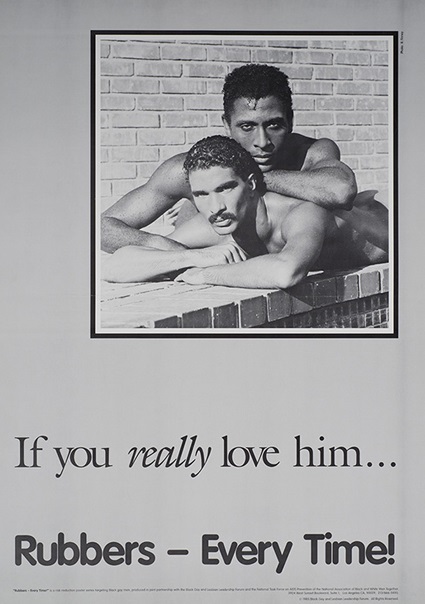 ZP_Safe sex poster from 1985 produced by the Black Gay and Lesbian Leadership Forum
.
Steve Langley
“Confection”
.
i’m chocolate candy
a handful of cookies
the goodies you’re forbidden
to eat
i’m a piece of cake
a slice of pie
an ice-cream bar
that chills your teeth
think of me
as your favourite treat
a pan of popcorn kernels
waitin’ for the heat.
. . .
The poems we’ve gathered here were mostly originally published in chapbooks and literary journals between the years 1988 and 1992. Then, along with short-stories, essays and interviews, some of them were anthologized in Brother to Brother: New Writings by Black Gay Men (1991), edited by Essex Hemphill, conceived by Joseph Fairchild Beam, with the project being managed by Joseph’s mother, Dorothy Beam. Others appeared in editor Assotto Saint’s Here to Dare: 10 Gay Black Poets (1992).
. . . . .
“Xigubo”(1964): seleção de poemas do poeta moçambicano José Craveirinha (1922 – 2003)
Posted: June 17, 2013 Filed under: José Craveirinha, Portuguese Comments Off on “Xigubo”(1964): seleção de poemas do poeta moçambicano José Craveirinha (1922 – 2003)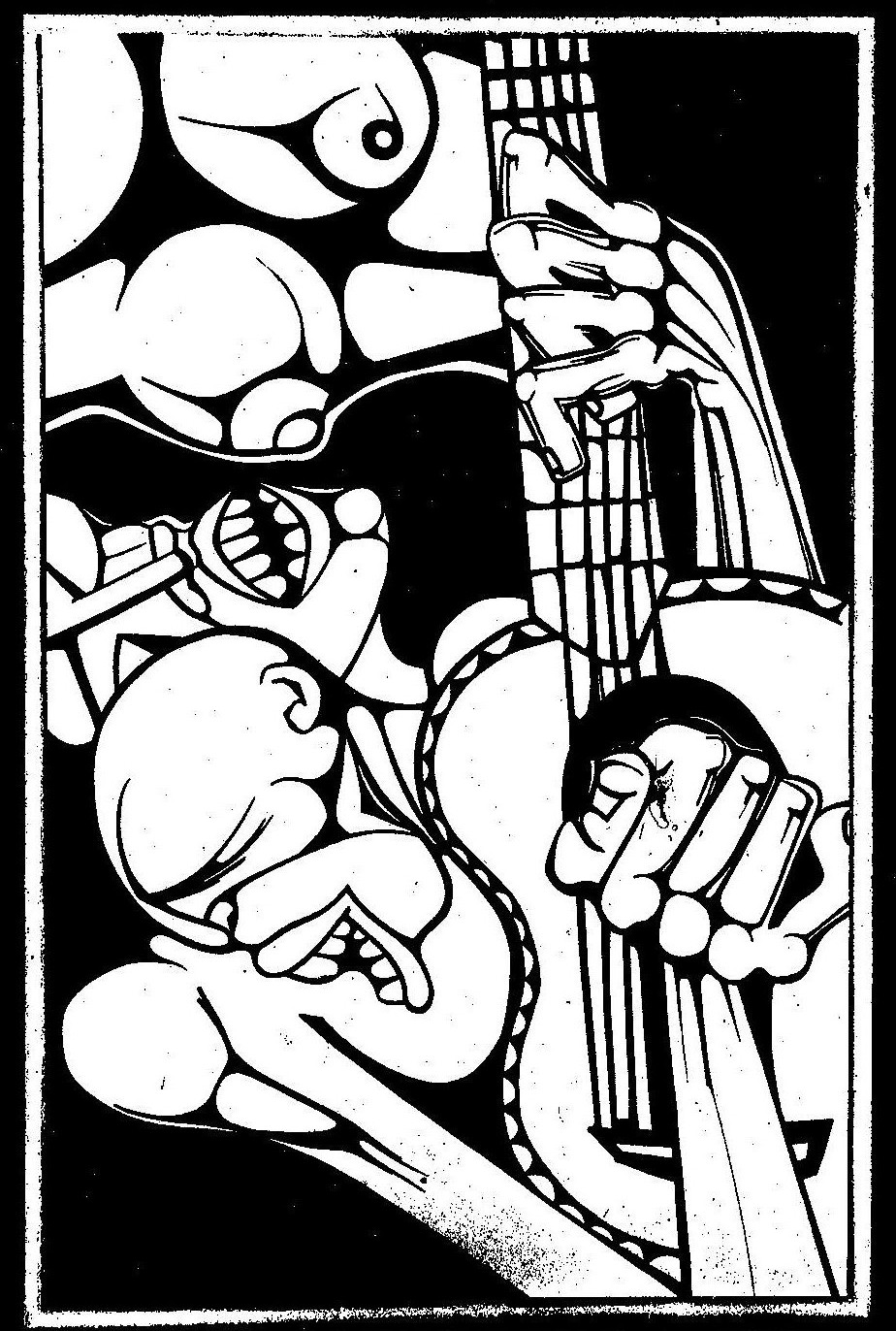
.
“Xigubo”
(para Claude Coufon)
.
Minha mãe África
meu irmão Zambeze
Culucumba! Culucumba!
.
Xigubo estremece terra do mato
e negros fundem-se ao sopro da xipalapala
e negrinhos de peitos nus na sua cadência
levantam os braços para o lume da irmã lua
e dançam as danças do tempo da guerra
das velhas tribos da margem do rio.
.
Ao tantã do tambor
o leopardo traiçoeiro fugiu.
E na noite de assombrações
brilham alucinados de vermelho
os olhos dos homens e brilha ainda
mais o fio azul do aço das catanas.
.
Dum-dum!
Tantã!
E negro Maiela
músculos tensos na azagaia rubra
salta o fogo da fogueira amarela
e dança as danças do tempo da guerra
das velhas tribos da margem do rio.
.
E a noite desflorada
abre o sexo ao orgasmo do tambor
e a planície arde todas as luas cheias
no feitiço viril da insuperstição das catanas.
.
Tantã!
E os negros dançam ao ritmo da Lua Nova
rangem os dentes na volúpia do xigubo
e provam o aço ardente das catanas ferozes
na carne sangrenta da micaia grande.
.
E as vozes rasgam o silêncio da terra
enquanto os pés batem
enquanto os tambores batem
e enquanto a planície vibra os ecos milenários
aqui outra vez os homens desta terra
dançam as danças do tempo da guerra
das velhas tribos juntas na margem do rio.
.
(1958)
. . .
“Grito Negro”
.
Eu sou carvão!
E tu arrancas-me brutalmente do chão
E fazes-me tua mina
Patrão!
.
Eu sou carvão!
E tu acendes-me, patrão
Para te servir eternamente como força motriz
mas eternamente não
Patrão!
.
Eu sou carvão!
E tenho que arder, sim
E queimar tudo com a força da minha combustão.
.
Eu sou carvão!
Tenho que arder na exploração
Arder até às cinzas da maldição
Arder vivo como alcatrão, meu Irmão
Até não ser mais tua mina
Patrão!
.
Eu sou carvão!
Tenho que arder
E queimar tudo com o fogo da minha combustão.
.
Sim!
Eu serei o teu carvão
Patrão!
. . .
“África”
.
Em meus lábios grossos fermenta
a farinha do sarcasmo que coloniza minha Mãe África
e meus ouvidos não levam ao coração seco
misturada com o sal dos pensamentos
a sintaxe anglo-latina de novas palavras.
.
Amam-me com a única verdade dos seus evangelhos
a mística das suas missangas e da sua pólvora
a lógica das suas rajadas de metralhadora
e enchem-me de sons que não sinto
das canções das suas terras
que não conheço.
.
E dão-me
a única permitida grandeza dos seus heróis
a glória dos seus monumentos de pedra
a sedução dos seus pornográficos Rolls-Royce
e a dádiva quotidiana das suas casas de passe.
Ajoelham-me aos pés dos seus deuses de cabelos lisos
e na minha boca diluem o abstracto
sabor da carne de hóstias em milionésimas
circunferências hipóteses católicas de pão.
.
E em vez dos meus amuletos de garras de leopardo
vendem-me a sua desinfectante benção
a vergonha de uma certidão de filho de pai incógnito
uma educativa sessão de ‘strip-tease’ e meio litro
de vinho tinto com graduação de álcool de branco
exacta só para negro
um gramofone de magaíza
um filme de heróis de carabina a vencer traiçoeiros
selvagens armados de penas e flechas
e o ósculo das suas balas e dos seus gases lacrimogéneos
civiliza o meu casto impudor africano.
.
Efígies de Cristo suspendem ao meu pescoço
em rodelas de latão em vez dos meus autênticos
mutovanas de chuva e da fecundidade das virgens
do ciúme e da colheita de amendoim novo.
E aprendo que os homens inventaram
a confortável cadeira eléctrica
a técnica de Buchenwald e as bombas V2
acenderam fogos de artifício nas pupilas
de ex-meninos vivos de Varsóvia
criaram Al Capone, Hollywood, Harlem
a seita Ku-Klux-Klan, Cato Manor e Sharpeville*
e emprenharam o pássaro que fez o choco
sobre os ninhos mornos de Hiroshima e Nagasaki
conheciam o segredo das parábolas de Charlie Chaplin
lêem Platão, Marx, Gandhi, Einstein e Jean-Paul Sartre
e sabem que Garcia Lorca não morreu mas foi assassinado
são os filhos dos santos que descobriram a Inquisição
perverteram de labaredas a crucificada nudez
da sua Joana D’Arc e agora vêm
arar os meus campos com charruas ‘Made in Germany’
mas já não ouvem a subtil voz das árvores
nos ouvidos surdos do espasmo das turbinas
não lêem nos meus livros de nuvens
o sinal das cheias e das secas
e nos seus olhos ofuscados pelos clarões metalúrgicos
extinguiu-se a eloquente epidérmica beleza de todas
as cores das flores do universo
e já não entendem o gorjeio romântico das aves de casta
instintos de asas em bando nas pistas do éter
infalíveis e simultâneos bicos trespassando sôfregos
a infinita côdea impalpável de um céu que não existe.
E no colo macio das ondas não adivinham os vermelhos
sulcos das quilhas negreiras e não sentem
como eu sinto o prenúncio mágico sob os transatlânticos
da cólera das catanas de ossos nos batuques do mar.
E no coração deles a grandeza do sentimento
é do tamanho ‘cowboy’ do nimbo dos átomos
desfolhados no duplo rodeo aéreo no Japão.
.
Mas nos verdes caminhos oníricos do nosso desespero
perdoo-lhes a sua bela civilização à custa do sangue
ouro, marfim, améns
e bíceps do meus povo.
.
E ao som másculo dos tantãs tribais o Eros
do meu grito fecunda o húmus dos navios negreiros…
E ergo no equinócio da minha Terra
o moçambicano rubi do nosso mais belo canto xi-ronga
e na insólita brancura dos rins da plena Madrugada
a necessária carícia dos meus dedos selvagens
é a tácita harmonia de azagaias no cio das raças
belas como altivos falos de ouro
erectos no ventre nervoso da noite africana.
.
*Cato Manor e Sharpeville – nomes de lugares onde ocorreram repressões policiais sangrentas na África do Sul contra trabalhadores africanos
. . .
.
“Manifesto”
.
Oh!
Meus belos e curtos cabelos crespos
e meus olhos negros como insurrectas
grandes luas de pasmo na noite mais bela
das mais belas noites inesquecíveis das terras do Zambeze.
.
Como pássaros desconfiados
incorruptos voando com estrelas nas asas meus olhos
enormes de pesadelos e fantasmas estranhos motorizados
e minhas maravilhosas mãos escuras raízes do cosmos
nostálgicas de novos ritos de iniciação
dura da velha rota das canoas das tribos
e belas como carvões de micaias
na noite das quizumbas.
E a minha boca de lábios túmidos
cheios da bela virilidade ímpia de negro
mordendo a nudez lúbrica de um pão
ao som da orgia dos insectos urbanos
apodrecendo na manhã nova
cantando a cega-rega inútil das cigarras obesas.
.
Oh! E meus belos dentes brancos de marfim espoliado
puros brilhando na minha negra reencarnada face altiva
e no ventre maternal dos campos da nossa indisfrutada colheita de milho
o cálido encantamento selvagem da minha pele tropical.
.
Ah! E meu
corpo flexível como o relâmpago fatal da flecha de caça
e meus ombros lisos de negro da Guiné
e meus músculos tensos e brunidos ao sol das colheitas e da carga
e na capulana austral de um céu intangível
os búzios de gente soprando os velhos sons cabalísticos de África.
.
Ah!
o fogo
a lua
o suor amadurecendo os milhos
a grande irmã água dos nossos rios moçambicanos
e a púrpura do nascente no gume azul dos seios das montanhas.
.
Ah! Mãe África no meu rosto escuro de diamante
de belas e largas narinas másculas
frementes haurindo o odor florestal
e as tatuadas bailarinas macondes
nuas
na bárbara maravilha eurítmica
das sensuais ancas puras
e no bater uníssono dos mil pés descalços.
.
Oh! E meu peito da tonalidade mais bela do bréu
e no embondeiro da nossa inaudita esperança gravado
o tótem mais invencível tótem do Mundo
e minha voz estentórea de homem do Tanganhica,
do Congo, Angola, Moçambique e Senegal.
.
Ah! Outra vez eu chefe zulo
eu azagaia banto
eu lançador de malefícios contra as insaciáveis
pragas de gafanhotos invasores.
Eu tambor
Eu suruma
Eu negro suaíli
Eu Tchaca
Eu Mahazul e Dingana
Eu Zichacha na confidência dos ossinhos mágicos do tintlholo
Eu insubordinada árvore de Munhuana
Eu tocador de presságios nas teclas das timbilas chopes
Eu caçador de leopardos traiçoeiros
E xiguilo no batuque.
E nas fronteiras de água do Rovuma ao Incomáti
Eu-cidadão dos espíritos das luas
carregadas de anátemas de Moçambique.
. . .
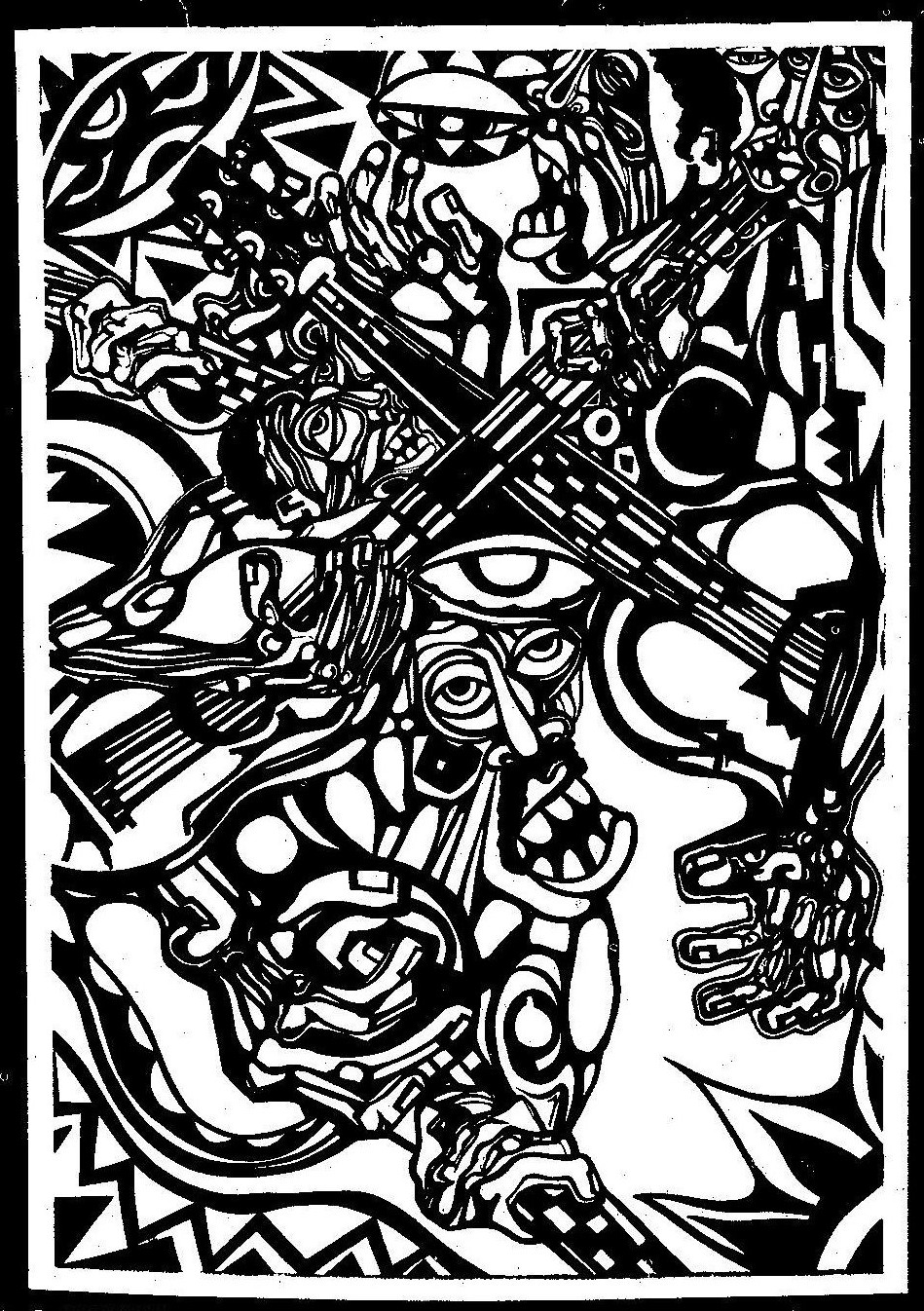
Illustrações de José Craveirinha Junior, da segunda edição de “Xigubo”(1980, Edições 70)
. . . . .
O Festival Internacional do Tambor Muhtadi: “Quero ser tambor” / “I want to be a drum”
Posted: June 10, 2013 Filed under: English, José Craveirinha, Portuguese Comments Off on O Festival Internacional do Tambor Muhtadi: “Quero ser tambor” / “I want to be a drum”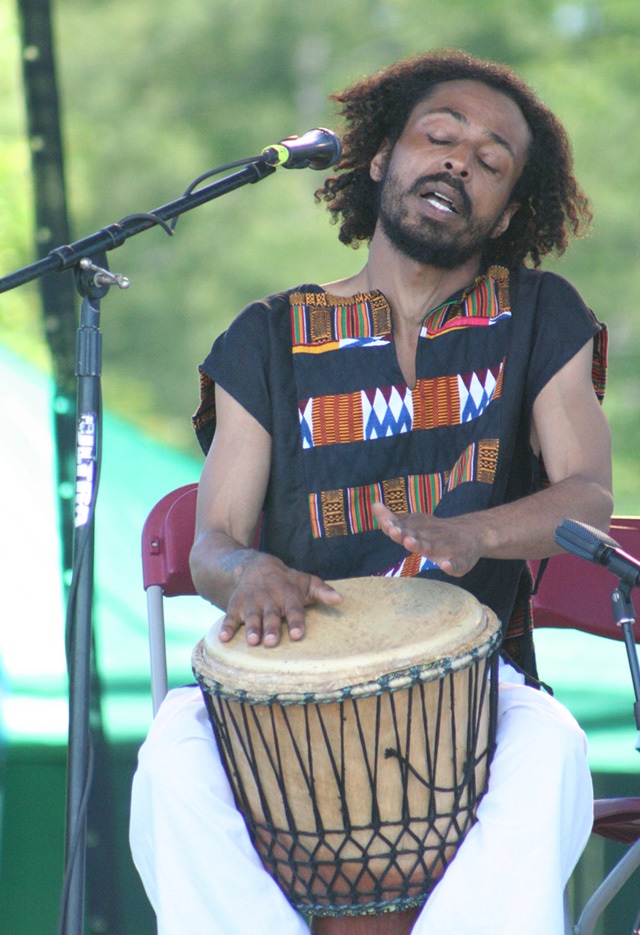 A performer deeply involved in the energy of The Drum_Muhtadi International Drumming Festival in Toronto_June 9th 2013_photograph by Elisabeth Springate
.
José Craveirinha
(1922–2003, Maputo, Moçambique)
“Quero ser tambor”
.
Tambor está velho de gritar
Oh velho Deus dos homens
deixa-me ser tambor
corpo e alma só tambor
só tambor gritando na noite quente dos trópicos.
.
Nem flor nascida no mato do desespero
Nem rio correndo para o mar do desespero
Nem zagaia temperada no lume vivo do desespero
Nem mesmo poesia forjada na dor rubra do desespero.
.
Nem nada!
.
Só tambor velho de gritar na lua cheia da minha terra
Só tambor de pele curtida ao sol da minha terra
Só tambor cavado nos troncos duros da minha terra.
.
Eu!
.
Só tambor rebentando o silêncio amargo da Mafalala
Só tambor velho de sentar no batuque da minha terra
Só tambor perdido na escuridão da noite perdida.
.
Ó velho Deus dos homens
eu quero ser tambor
e nem rio
e nem flor
e nem zagaia por enquanto
e nem mesmo poesia.
.
Só tambor ecoando como a canção da força e da vida
Só tambor noite e dia
dia e noite só tambor
até à consumação da grande festa do batuque!
.
Oh velho Deus dos homens
deixa-me ser tambor
só tambor!
.
 Isshin Daiko (“One Heart” Japanese-traditional drummers)_Muhtadi International Drumming Festival in Toronto_June 9th 2013_photograph by Elisabeth Springate
.
José Craveirinha
“I want to be a drum”
.
The drum is all weary from screaming
Oh ancient God of mankind
let me be a drum because I want to be a drum
body and soul – just a drum
just a drum playing in the hot tropical night.
I don’t want to be a flower born in the forest of despair
I don’t want to be a river flowing toward the sea of despair
I don’t want to be an assegai spear tempered in the hot flame of despair
Not even a poem forged in the searing pain of despair.
.
Nothing like that – I want to be a drum!
.
Just a drum worn from wailing in the full moon of my land
Just a drumskin cured in the sun of my land
Just a drum carved from the solid tree trunks of my land.
.
Just a drum splitting the bitter silence of Mafalala village
Just a drum worn from sitting in on the batuque jam-sessions of my land
Just a drum lost in the darkness of the lost night.
.
Oh ancient God of mankind
I want to be a drum – just a drum
not a river
not a flower
not an assegai spear just for now
and not even a poem – I don’t want to be a poem.
Only a drum echoing like the song of strength and life
Only a drum night and day,
day and night, only a drum
until the final great batuque jam session!
Oh ancient God of mankind
let me be a drum
just a drum!
. . .
Mafalala – a neighbourhood or bairro in the city of Maputo, Mozambique
batuque – festival of drumming
assegai – an African hardwood, used to make the iron-tipped “zagaia” spear
.
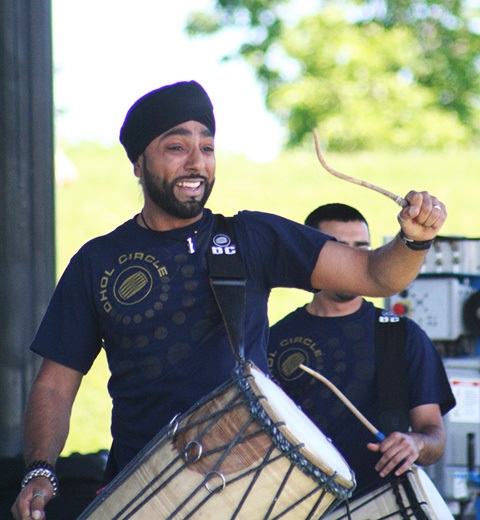 Dhol Circle_Muhtadi International Drumming Festival in Toronto_June 9th 2013_photograph by Elisabeth Springate
.
José Craveirinha é considerado o poeta maior de Moçambique. Em 1991, tornou-se o primeiro autor africano galardoado com o Prémio Camões, o mais importante prémio literário da língua portuguesa.
José Craveirinha (1922 – 2003) was a Mozambican journalist, short-story writer, and poet. He was the child of a Portuguese father and a black (Ronga) Mozambican mother. An impassioned supporter of the anti-Colonial group Frelimo during the Portuguese Colonial War/War of Liberation, he was imprisoned from 1966 to 1974. Craveirinha was one of the pioneers of Poesia Moçambicana da Negritude, a literary movement that highlighted African traditions and the reaffirmation of African values.
.
Master drummer Muhtadi Thomas came to Canada in 1974 from Trinidad and Tobago. He settled in Toronto where he has established himself as the premier percussion-instrument mentor among students in the city’s school and community programmes. He plays djembe, bongos, congas, timbales, plus T&T’s steel pan – among other world drums. June 8th and 9th, 2013, marked the 14th year of the Muhtadi International Drumming Festival.
.
Our thanks to Professor Kwachirere of the University of Zimbabwe for his Portuguese-into-English poem translation
. . . . .
Rita Letendre: “La lumière, depuis le premier choc à la naissance, jusqu’au dernier souffle – la lumière est la vie. En tout cas, ç’a été ma vie!” / “Light, from the first shock at birth up to the last breath, is life. Anyway, that’s been my life!”
Posted: June 1, 2013 Filed under: IMAGES Comments Off on Rita Letendre: “La lumière, depuis le premier choc à la naissance, jusqu’au dernier souffle – la lumière est la vie. En tout cas, ç’a été ma vie!” / “Light, from the first shock at birth up to the last breath, is life. Anyway, that’s been my life!”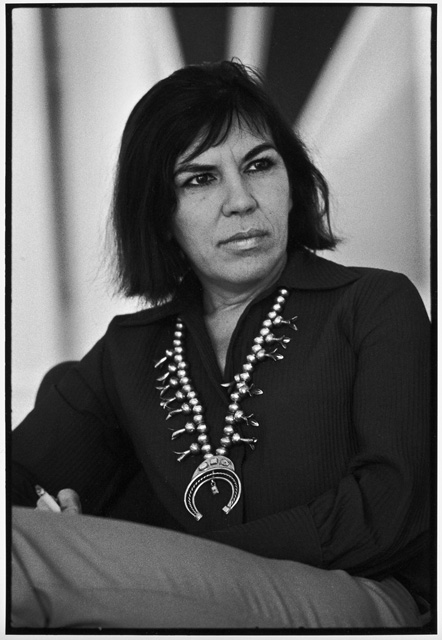 Rita Letendre in Montréal during the early 1970s
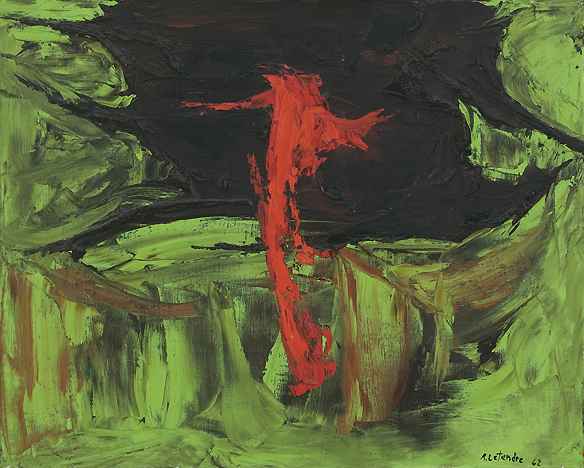 Rita Letendre_Le cri_oil on canvas_1962
 Rita Letendre_Incandescense_oil on canvas_1968
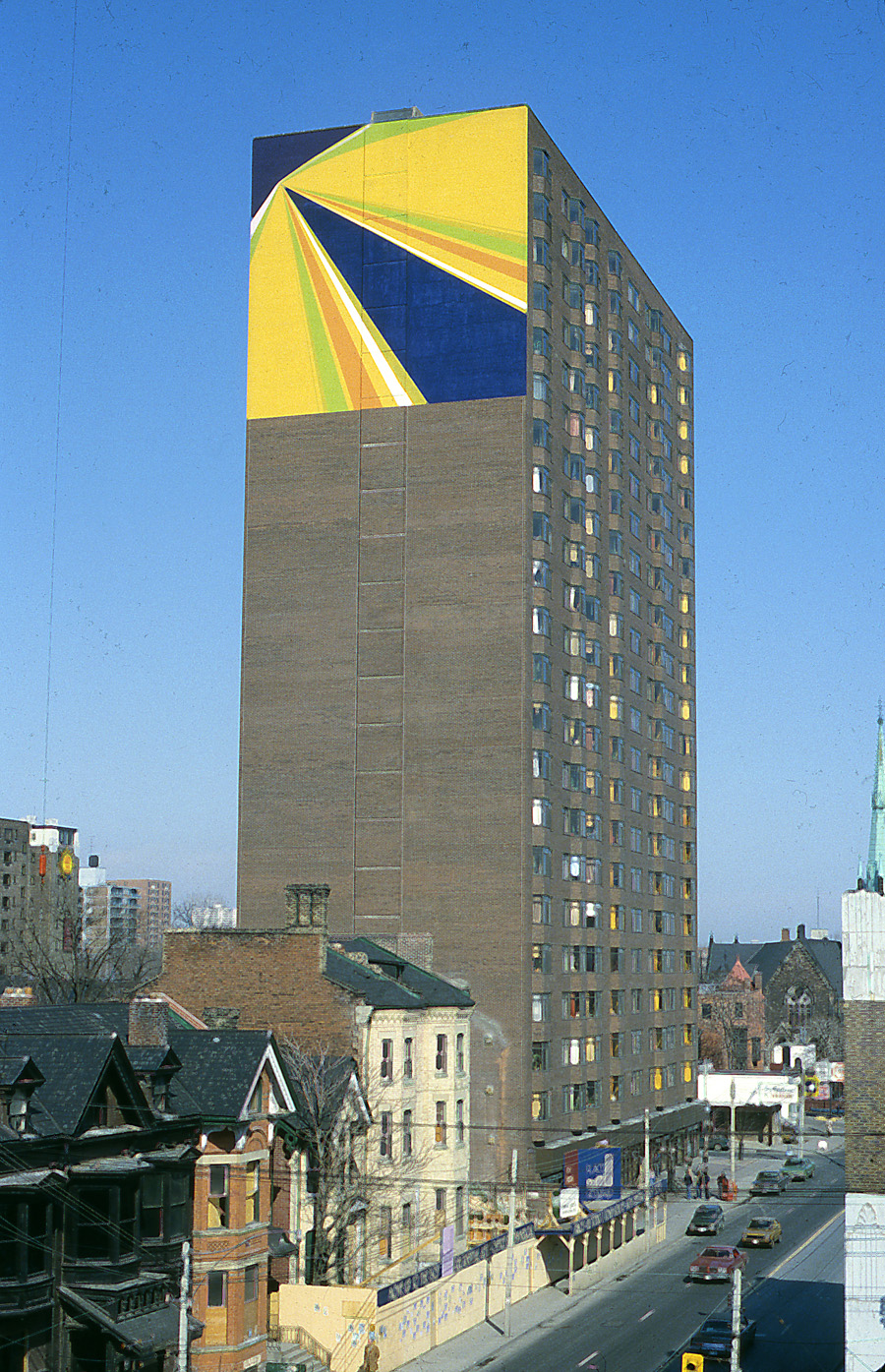 Rita Letendre_Sunrise_a mural on the side of Neill Wycik Residence, Gerrard Street East in Toronto_1971
 Rita Letendre_Blues_acrylic on canvas_1972
 Rita Letendre_Malapeque II_1973
 Rita Letendre_Romir_serigraph on paper_1979
 Rita Letendre_Always, is it?_oil on canvas_2011
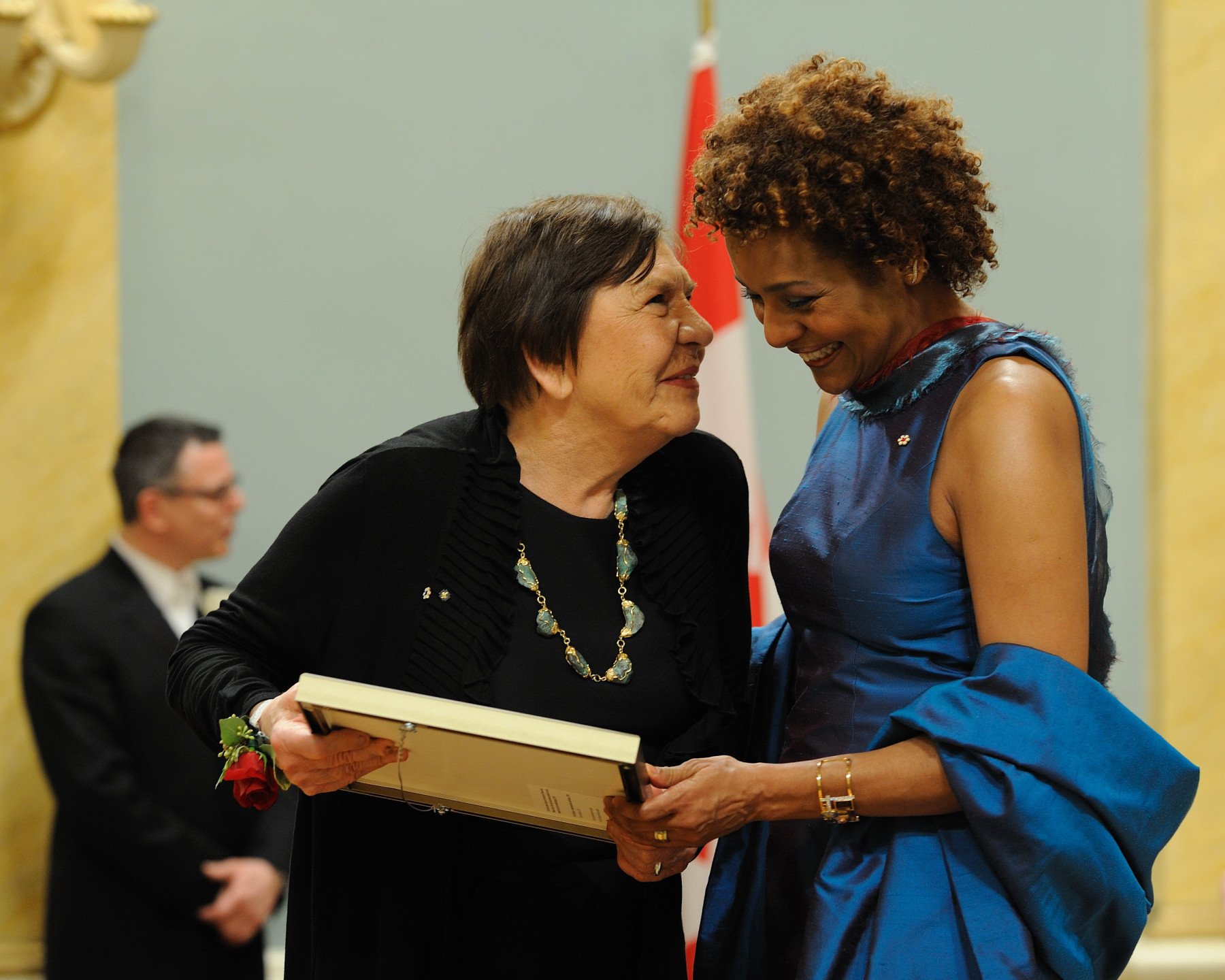 Rita Letendre receiving The Governor-General’s Award in Visual and Media Arts from Governor-General Michaëlle Jean in 2010
. . . . .
Rita Letendre, born in Drummondville, Québec, in 1928, is an internationally-acclaimed painter. She is one of the great stars of Canadian art, emerging with a breath-taking Modernist boldness during the 1970s. Her father was Québécois and her mother Abenaki (an Algonquian people). In her twenties she associated with Paul-Émile Borduas’ automatistes and her first solo show took place at the Montreal gallery L’Échourie in 1955. Her “classic” paintings in hard-edged, geometric abstraction – with their strong arrow motif – are instantly recognizable. The artist, a force even in her 80s, says: “La lumière, depuis le premier choc à la naissance, jusqu’au dernier souffle – la lumière est la vie. En tout cas, ç’a été ma vie!” / “Light, from the first shock at birth up to the last breath, is life. Anyway, that’s been my life!”
. . . . .
Rita Bouvier: Nakamowin’sa kahkiyaw ay’sînôwak kici / Wordsongs for all human beings
Posted: June 1, 2013 Filed under: Cree, English, Rita Bouvier Comments Off on Rita Bouvier: Nakamowin’sa kahkiyaw ay’sînôwak kici / Wordsongs for all human beings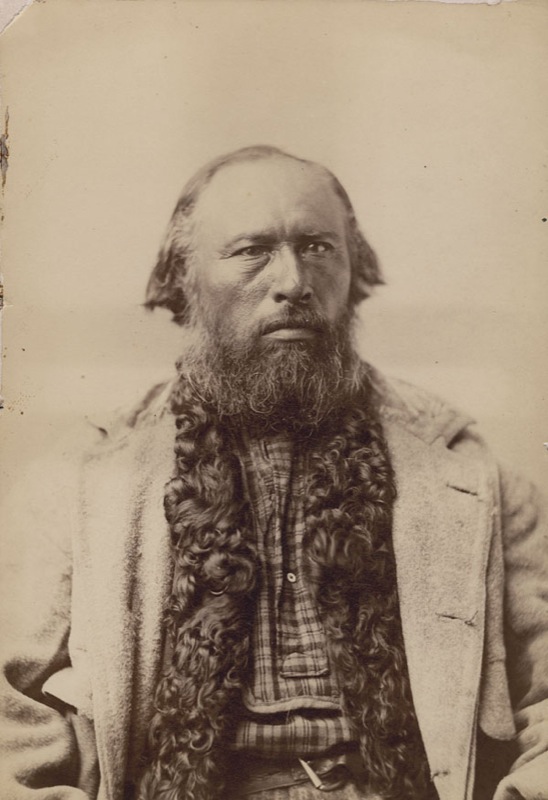 Gabriel Dumont, Métis Leader, photographed by Orlando Scott Goff, around 1886-1888
.
Rita Bouvier ( Île-à-la-Crosse (Sakittawak), Saskatchewan )
that was a long time ago, and here we are today
.
that was a long time ago
and here we are today
.
listen, listen
the heart of the land beats
.
our children curious
as all children are
will ask the right questions
.
why does a nation take up arms
in a battle knowing it will lose?
knowing it will lose
.
listen, listen
the heart of the land beats
.
when the long night turns to day
remember, hope is the morning
a songbird’s prayer
. . .
I am created
(for my father, Emile)
.
I am created by a natural bond
between a man and a woman,
but this one, is forever two.
one is white, the Other, red.
a polarity of being, absorbed
as one. I am nature with clarity.
.
against my body, white rejects red
and red rejects white. instinctively,
I have learned to love – I have learned to live
though the politics of polarity
is never far away. still, I am
waiting, waiting.
. . .
a spider tale
.
behind the shed
in the tall yellow grass
a cardboard box
is my make-believe home
no one can see me
but I can see
all
their comings
and goings
my auntie Albertine
is washing clothes today
and needs the power
of my long arms
and lanky legs
to haul pails and pails
of water from the lake
.
I watch
as she searches for me
mumbles something about
kihtimigan – that lazy one
walks back inside the house
and out again
calling my name
.
when I appear
out of nowhere
she looks relieved to see me
“nitânis, tânitê oma î kîtotîyin?”
“my daughter, where in the world have you been?”
I tell her –
I was here all along
.
what I don’t tell her is
that I have been spinning tales
trying to understand
the possibility of…
myself as a spider
all legs
travelling here and there
with disturbing speed
my preoccupation with food
my home a web
so intricate and fragile
yet strong as sinew
.
today I remembered
not as sure footed
as I would like to be
someone calling my name
I lost my footing
falling, falling
. . .
we say we want it all
.
we fight amongst ourselves
jealous, one of us is standing.
.
there are no celebrations
for brave deeds among the chaos, instead
.
we joing the banner call for rights
forgetting an idea from the past –
.
responsibility. we join the march
for freedom, forgetting an idea
.
from the past – peace keeping.
we say we want, want it all
.
a piece of the action we know destroys
our home – our relations with each other
.
we are mired so deep, drowning
in our own thinking, thinking
.
we too could have it all, if only…
if only we could see ourselves
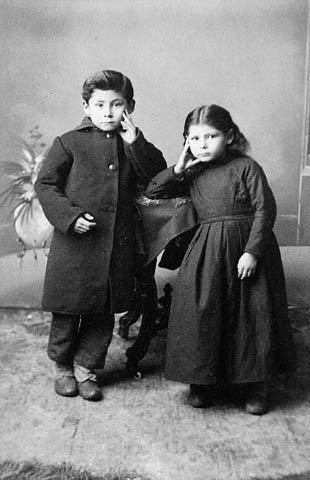 Louis Riel’s two children, Jean-Louis and Angélique, ages 6 and 5, photographed at Steele and Wings studio in Winnipeg, 1888
.
Riel is dead, and I am alive
.
I listen passively while strangers
claim monopoly of the truth.
one claims Riel is hero
while the other insists Riel was mad.
.
I can feel a tension rising, a sterile talk
presenting the life of a living people,
sometime in eighteen eighty five.
now, some time in nineteen ninety five
.
a celebration of some odd sort.
I want to scream. listen you idiots,
Riel is dead! and I am alive!
instead, I sit there mute and voiceless.
.
the truth unravelling, as academics
parade their lines, and cultural imperialists
wave their flags. this time the gatling gun
is academic discourse, followed
.
by a weak response of political rhetoric.
all mumbo-jumbo for a past that is
irreconcilable. this much I know
when I remember – I remember
.
my mother – her hands tender, to touch
my grandmother – her eyes, blue, the sky
my great grandmother – a story, a star gazer
who could read plants, animals and the sky.
. . .
that’s three for you
.
a young man came to me one day wanting
to understand me – the distance between
separate worlds, his and mine, his and mine.
surely, he begged, we could forsake the past
for the future, yours and mine, yours and mine.
.
I listened intently trying to find
the right words to say, to reassure him
my intentions, telling my story – the same.
I told him perhaps the past remembered
holds our future, yours and mine, yours and mine.
.
I wish it was easy to forget
as it is writing this poem for you.
I wish I could believe, I wish we could
break this damn cycle of separate worlds.
I wish I wish I wish. that’s three for you.
. . .
last night at Lydia’s
.
Celtic toe-tapping fiddle
Red River jigging rhythm
runs in my veins
a surge like lightning
.
that testosterone
in the mix tonight.
ohhhh, it feels good
to be alive
.
plaid shirted, tight blue jeans
good-looking, knows it kind-a-man
you hurt my eyes
.
pony-tailed, dark skinned
women in arm kind-a-man
your hurt my eyes
.
rugged, canoe-paddling
handsome kind-a-man
you hurt my eyes
.
muscle busting, v-necked
silver buckled kind-a-man
you hurt my eyes
.
cool leathered, scotch-sipping
drinking kind-a-man
you hurt my eyes
.
quiet wire-rimmed
spectacled kind-a-man
you hurt my eyes
.
you – you – you –
holding my hand kind-a-man
ohhhh, you hurt my eyes
 Shane Yellowbird_Cree country-music singer from Alberta
.
hand on hand
.
we made a pact but you were only three.
I was so much older I should have known
better. I promised then to take care of you
as long as my hands were bigger than yours.
.
in return, you promised to take care of
me, when your hands would grow bigger than mine.
today, you came to me wanting to measure
your hand against mine; I said, go away
.
your hands growing way, way too fast for me.
just then, a thick fog descended across
the street. you ran into it curious
unafraid, unaware you were disappearing
.
with every step you took. I ran after you
trying as best as I could to hold on
with you in sight, letting go at each step.
hand on hand we made a pact, you were three.
. . .
wordsongs of a warrior
.
what is poetry? how do I explain
this affliction to my mother
in the language she understands,
words strung together, woven
pieces of memory, naming
and telling the truth in a way
that dances, swings and sways
.
why the subject of my poetry
is sometimes difficult to deliver
why my subjects are terrorized
even controversial, why
the subjects are the essence
of my own being – close to the bone.
.
nakamowin’sa wordsongs
kahkiyaw ay’sînôwak kici for all human beings
ta sohkihtama kipimâsonaw to give strength on this journey
kitahtawî ayis êkwa one of these days, for sure now
kam’skâtonanaw we will find each other
. . .
when the silence breaks
.
I am a reluctant speaker
violence not just a physical thing.
.
words are one thing
I can hold them in my hand
later embroider them
like you do fine silk
on white deer hide
if I want.
but dead silence
that’s another matter
there is nothing to hold on to
like the falling
before you awaken.
.
I imagine it this way, simply
kitahtawî êkwa
one of these days now
when the silence breaks
the deer will stop in their tracks
pausing eyes wide
the wolverine will roll over and over
on the hillside, and
you will hear my voice
as if for the first time
distant and then melodic
and you will recognize it
as your very own.
kitahtawî êkwa
. . .
a ritual for goodbye
(in memory of Albertine)
.
walking the shoreline
this crisp spring morning
in our matching
red-line rubber boots
my cousin and I
are reminiscing
the days gone by
.
I remember first
one early spring
the water so low
we could get
from one island
to the next
our clothes piled high
over our heads
.
she remembers then
no human debris
like there is now
just the odd
piece of driftwood
she reminded me
we wondered then
where it came from
a guessing game
.
walking the shoreline
this crisp spring morning
our walk is certain
clinging close
to what we know best
this shoreline, this bond,
we don’t speak of the fact
that our aunt is dying
. . .
earthly matters
.
when I came to your grave site
late last fall, a chill in the air,
I was feeling sorry for myself.
I came looking for a sign
one might say it was –
guidance on earthly matters.
.
lifting my face skyward
I found nothing but blue sky.
I searched the horizon,
it was then I discovered
a la Bouleau in the distance.
I smiled, recalling
that walk we took
through the new cemetery
on a break from city life.
you didn’t want to be buried
near the saints anyway,
roped in, in a chain-link fence.
you were pointing out,
as if it were a daily business
family plots here and there.
best of all, you claimed
you had selected the ideal plot
for yourself and your family,
a la Bouleau in the distance.
. . .
All poems © Rita Bouvier – from her Thistledown Press collection entitled Papîyâhtak. In the Cree language Papîyâhtak means: to act in a thoughtful way, a respectful way, a joyful way, a balanced way.
.
Rita Bouvier is a journeyer who searches along the way. Her poems are unafraid to take chances; they are complex in emotion, unsparing in intellect. Papîyâhtak includes a number of poems written for actors in The Batoche Musical which was conceived and developed by a theatre and writers’ collective and performed at Back to Batoche Days in Batoche, Saskatchewan. The poem That was a long time ago, and we are here today was inspired by an essay written by South African anti-apartheid activist Steve Biko.
. . .
Gabriel Dumont (1837 – 1906) was a leader of the Métis people in what is now the province of Saskatchewan. It was Dumont who brought the exiled Louis Riel (1844 – 1885) back to Canada to pressure Canadian authorities to recognize the Métis as a Nation. Sharpshooter with a rifle, Dumont was Riel’s chief right-hand man and he led the Métis forces in the North-West Resistance (or Rebellion – as Ottawa-centric history books described it) of 1885.
Louis Riel was one of the towering Hero figures of Canadian history. For more on Riel – and a letter/poem he wrote to Sir John A. Macdonald, his ideological opposite – (along with a letter/poem addressed to Macdonald by contemporary Métis poet Marilyn Dumont) – click the following ZP link for January 11th, 2012:
https://zocalopoets.com/category/poets-poetas/marilyn-dumont/
. . . . .
Hydro-Electricity and Eeyou Istchee (The People’s Land): a Cree poet’s perspective
Posted: June 1, 2013 Filed under: English, Margaret Sam-Cromarty Comments Off on Hydro-Electricity and Eeyou Istchee (The People’s Land): a Cree poet’s perspective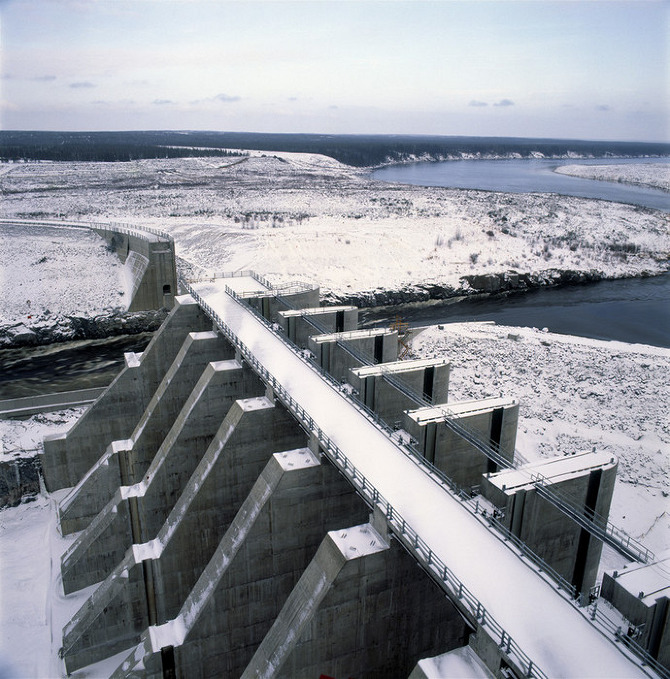 A segment of the massive James Bay hydroelectric project in Québec_ photograph © David Maisel
.
Margaret Sam-Cromarty (born 1936, Fort George Island, James Bay, Québec)
“Rivers”
.
Tears are like rivers;
they never stop flowing.
Rivers are like tears;
they become dry.
. . .
“Sphagnum Moss (Baby Moss)”
.
By my door she stood,
an old bag in her hand.
The bag she held
was full of moss from the land.
.
She asked me: Do you need
fresh moss for baby?
Yes, I said,
it keeps the baby dry.
.
She smiled, If you want
I will get more for you.
Knowing her skill,
I nod my head.
.
She goes early to the wet swamps
to find and pick moss
for a little baby.
.
She never wears gloves,
her hands red from cold.
She loves
gathering the soft moss.
.
She chooses a spot
where the sun shines a lot.
The wet cold moss has to dry
before she brings some to me.
.
Over the years I never used
anything so soft and fine
for a baby’s behind
as the moss she brought with a smile.
. . .
“A Cree Child”
.
On the east coast of James Bay
both governments didn’t care.
Other matters were more important
than a Cree child
who sometimes had little to eat.
.
There was no dancing,
no feasting,
in this, the height of the Depression.
The Indians had a passion –
hunting and following
the fur-bearing animals.
.
But the price of furs
was at its lowest.
The Crees did their best
to feed and clothe themselves.
.
In the early days
Crees’ lives
meant the Hudson Bay Company
traders who sometimes denied
Indians credit.
.
The church played a part,
an important role,
saw the suicidal conditions,
decided it best to save souls.
.
I recall small steps
in the cold Northern snow,
a sweet life taken,
a little boy with no shoes.
.
Deeply moved, I weep.
He was my brother.
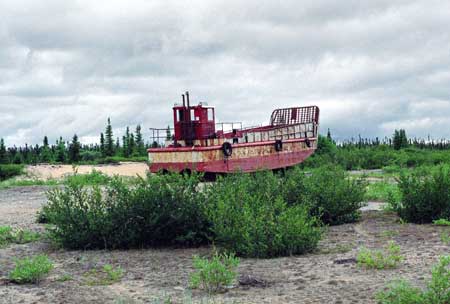 The now-derelict ferry to Fort George Island just off the Chisasibi Road_near James Bay in Québec
.
“Memories of Fort George
and of Alice who lived there until her death”
.
My memories of Fort George
are warm and sad.
Down by the river banks
cooled by gentle breezes
from the open bay
the elders sit on the tall grass
playing checkers all day.
.
Someone shouts, “I see the ship”.
Mr. Duncan, the storekeeper,
is down by the Hudson Bay dock.
Game forgotten, they watch
as John the Native navigator
safely guides the supply ship.
.
Navigation by John and other Crees
was needed by captains.
There were no light beacons
to mark the dangerous
sandbars and rock.
Fort George Island never
joined the mainland.
.
The excitement reached the teepees
surrounding the grounds
of the Hudson Bay store.
Women and children rush to the river,
the smell of smoke in their clothing,
to welcome the supply ship.
.
Another big event –
the long midsummer’s eve service.
The Native catechists
in white robes against the crimson sunset,
the women in bright shawls,
the men in their best clothes,
babies with happy smiles.
.
My memories of a hunt
of the coastal people:
a big seal, a white whale.
Someone shouted, “We share –
bring your pots and pans.”
No money changes hands.
The same sharing if someone
kills a black bear
among the inland people.
.
My fondest memory
is of a lovely lady.
Her baked bannock – so good.
I see her sitting in her smoke teepee,
around her the sweet smell
of many spruce boughs.
. . .
“James Bay”
.
James Bay, my home,
is closer than the moon,
its regions so bare,
aloof and remote.
.
Hudson Bay flows
to James Bay,
both beautiful,
wild and free.
.
The rugged coasts
of James Bay and Hudson Bay,
their charm
meets my eyes.
.
The sights and sounds
of James Bay.
They wrap around me,
giving me peace.
. . .
“Black Island”
.
I love your high cliffs,
your rocky shores,
the sounds of surf
and the shadows of a midsummer’s eve.
.
I love your coves,
the strong winds
causing high tides
and heavy fog.
.
I love the smell of seaweed
on your beaches, and driftwood,
the hot breezes from the south
causing low tides, bringing sinking mud.
.
I love the rumble of thunder
far away,
lightning zig-zags across the sky,
creatures seeking shelter.
.
I love to hear the wild ducks
feeding in the marshes,
the white gulls hovering,
the heat wave shimmering.
.
I love the islands
in James Bay:
Governor’s Island, Fort George Island,
Grassy Island and Ship Island.
. . .
“Steel Towers”
.
One cold day
I stood on the shores of James Bay.
The sun shone bright, the sky blue.
I wanted to find a clue.
.
Why, among the spruce and pine
rows of steel towers stood in line.
They were out of place,
near and Indian camp.
.
Looking for white birds’ tracks,
instead as I turn my back
Tracks of bulldozers meet my sight –
Ruining the landscape in the fading light.
.
Against the sky and beyond
stand stark steel towers.
In this harsh land of ice and snow
these steel towers are colder than forty below.
.
We Cree live in harmony
on this beautiful land.
In a land where no man had trod,
in the fresh snow I read
.
Signs of upheaval of black earth.
Bulldozers making roads
and steel towers standing tall.
. . .
“Promises”
(for the many who committed suicide in Chisasibi)
.
I am alone.
I feel so lost.
I am not in need
of material things.
.
I am confused.
Looking at myself
I abuse
love and understanding.
.
Stay with me, for my sake.
Despair I have.
No one hears
my pleas.
.
We lived in fancy houses –
no more outhouses.
The leaders of my people
made promises and promises.
.
I love to learn,
to assure myself
I have a reason
to save my soul.
.
In shame I suffer.
Nobody to ease my hurt.
I found myself afraid,
the problems too great.
. . .
“Life”
.
In this time
of steel
and of speed,
we need
poetry.
Like a friend
warm and true
shedding a tear.
See it hang,
roll down,
feel things unseen.
Drawn
to things we see,
like the setting sun
of breathtaking colours.
A new dawn:
in its blue-shadow world
things move so fast.
.
Now moving faster and faster.
. . .
Margaret Sam-Cromarty, Cree mother, grandmother, and poet, was among about 5,000 Native people whose villages and hunting lands were flooded as part of the province of Québec’s huge hydro-electricity projects involving many rivers which drain into James Bay (the lower portion of Hudson Bay). Damming, river diversion, the creation of huge reservoirs – all of this has reconfigured the surrounding landscape – submerging vast tracts of Boreal forest (black spruce and bogs, mainly) under water, and making mercury contamination a health issue (fish and drinking water). Caribou migration, waterfowl habitat, salmon spawning – all have been affected adversely. The massive water-energy-harnessing infrastructure building-boom began in 1971 (with the construction of the first permanent road into the “taiga” landscape, the James Bay Road) and continues into 2013. It has included the La Grande Project (which saw the elimination of Sam-Cromarty’s birthplace-island, Fort George Island, as a habitable place – and the relocation of Cree villagers from FGI and neighbouring settlements to the government-planned town of Chisasibi in 1981); and the Great Whale Project – a lightning rod for environmental political activism in the early 1990s – which saw Cree Grand Chief Matthew Coon Come garner favourable publicity as he “canoed” to New York City – from Hudson Bay to the Hudson River – and New York State (the #1 hydroelectric energy client of Hydro-Québec) decided not to sign yet another energy agreement with the province. But North America’s appetite for Energy does not lessen; the Eastmain and Sarcelle generating stations have since been built, and 70% of the Rupert River was diverted in 2009-2010. In this latest phase Québec has signed a cooperation agreement over environmental regulations and impact with the Grand Council of the Crees representing 18,000 Crees living on or near present – and future – Hydro Project lands. One thing is for sure by now, and the poet knows it: You cannot go Home again – only in dreams and poems.
. . . . .
Nous connaissons le secret de la petite épinette / We know the secret of the little spruce: poèmes d’une Aînée Crie / poems of a Cree Elder
Posted: June 1, 2013 Filed under: English, French, Margaret Sam-Cromarty Comments Off on Nous connaissons le secret de la petite épinette / We know the secret of the little spruce: poèmes d’une Aînée Crie / poems of a Cree Elder.
Margaret Sam-Cromarty (née à l’île Fort George, La baie James, Québec, 1936)
“Un étranger très élégant”
.
Un jour, dans un village nordique,
tout le monde se préparait
en vue du départ
pour la chasse printanière.
Vers le début de la soirée,
les enfants en train de jouer ont commencé à crier:
“Nous voyons venir un étranger.
Il est bien habillé.”
.
En effet, l’étranger était saisissant.
Personne ne semblait le connaître.
Les jeunes filles tournaient autour de lui…
les mouches aussi.
.
On l’invita à l’intérieur de la tente.
La chaleur du feu de camp
mit l’étranger mal à l’aise.
Tout le monde se demandait pourquoi.
.
Souriant aux jeunes filles,
il sortit prendre l’air.
Une mauvaise odeur flottait derrière lui
et les mouches lui bourdonnaient tout autour.
.
Les jeunes filles voulaient qu’il reste
mais il est parti comme il était venu.
Bientôt il disparut,
laissant les jeunes filles à leur tristesse.
.
L’une d’entre elles suivit ses traces
qui la menèrent à un tas de fumier.
La chaleur avait fait fondre l’étranger.
Les mouches bourdonnaient et chantaient:
“Merde et vielles guenilles,
merde et vielles guenilles,
s’étaient changées en homme!”
. . .
“The Handsome Stranger”
.
Once in a northern village
people were making ready
to move away
for the spring hunt.
.
Now it was towards evening
when children at play began to shout
“We see a stranger coming.
He is smartly dressed.”
Indeed the stranger was striking.
No one seemed to know him.
The young girls hung around him.
So did the flies.
.
He was invited inside the tent.
The heat from the campfire
made the stranger uncomfortable.
Everyone wondered why.
.
Smiling at the girls
he went outside for the air.
The stranger left a wave of smell
and buzzing flies behind.
.
The young girls wanted him to stay
but he left the way he came.
Soon he disappeared,
leaving the girls sad.
.
One of them followed his tracks
until they led to manure.
He had melted from the heat.
Flies buzzing around sang:
“Shit and old rags,
shit and old rags,
turned himself into a man.”
. . .
“Un garçon”
.
Des cheveux noirs comme du jais
qu’il avait de naissance,
Des yeux noirs
qui brillaient d’un amour chaleureux.
.
De mains fines,
de bonnes mains de musicien.
Ce garçon a découvert
que grandir était douloureux.
.
Il préférait attraper des grenouilles,
taquiner sa soeur,
serrer ses bras
autour de sa mère.
.
Il a grandi,
aussi grand qu’un arbre.
Une personne gentille,
ce garçon qui est le mien!
. . .
“Boy”
.
His jet black hair
he had from birth
His dark eyes
flashed loving warmth
.
His fine shaped hands
right for a musician
This boy who found
Growing up a pain
.
He’d rather catch frogs
tease his sister
Throw his arms
around his mother
.
He has grown
tall as a tree
A gentle person
this boy of mine
. . .
“Une fille”
.
Une fille aux yeux noirs et brillants,
au sourire doux et timide,
à la peau fine cuivrée,
qui n’a pas besoin du soleil d’été.
.
Elle avait
de longs cheveux d’ébène.
Plusieurs étaient d’accord:
elle était belle.
.
C’était le vent.
C’était le ciel.
C’était ma fille…
Mary.
. . .
“Girl”
.
A girl her dark eyes bright
Her smile shy and sweet
Her fine copper skin
needs no summer sun
.
She was blessed
with long raven hair
many agreed
she was fair
.
She was wind
She was sky
She was my daughter
Mary
. . .
“Maman”
.
Une mère
passe à travers
les rejets, les dépressions,
la solitude et les critiques.
.
C’est une femme courageuse
douée d’un humour fin.
Une créature qu’on appelle
Maman.
. . .
“Mother”
.
A mother
goes through
rejections, depressions
.
Loneliness and criticism
.
A courageous woman
with gentle humour,
a creature known as
Mother
. . .
“Maris et Femmes”
.
Le mari est le ciel
et la femme le nuage.
.
Parfois le ciel
apporte le vent
et le nuage une pluie rafraîchissante.
.
Parfois les nuages
se regroupent
et apportent orages et vents.
Maris et femmes font de même.
.
Maris et femmes dérivent séparément
comme les nuages le font parfois.
Mais au milieu de nuages gris,
jaillit le ciel bleu clair.
.
Comme les nuages se rassemblent
pour former le temps,
ainsi font maris et femmes
pour mener leurs vies.
.
Les anneaux autour du soleil
nous rappellent le mauvais temps.
Les anneaux du mari et de la femme
scellent un amour infini.
. . .
“Husbands and Wives”
.
Husband is the sky
a wife the cloud
.
Sometimes the sky
brings wind,
the cloud a refreshing rain
.
Sometimes the clouds
form to gather
It brings storms and winds
Husbands and wives do the same
.
Husbands and wives drift apart
like clouds sometimes do
But between the greyish clouds
burst bright blue skies
.
As the clouds come to gather
to create our weather
So do husbands and wives
carry on with their lives
.
The rings around the sun
remind us of bad weather
The rings of husbands and wives
shield a love forever
. . .
“La gentillesse”
.
La gentillesse, c’est faire cuire de la banic,
mélanger la farine et la levure.
Il faut y mettre de l’eau.
.
Pour faire une bonne banic,
on y ajoute de l’huile.
Dans nos vies,
on a besoin de la gentillesse.
.
La gentillesse est comme les graines.
Beaucoup se perdent.
Pas de graine,
Pas de gentillesse.
. . .
“Kindness”
.
Kindness is baking bannock
blending flour, baking powder
It’s natural to put water
.
A good bannock
oil is added
In our lives
kindness is needed
.
Kindness is like grain
many are lost
without grain
without kindness
. . .
“La Paix”
.
Trouvez la paix dans le silence,
le silence qui règne ici.
Le vent froid
purifie la terre.
.
La splendeur.
Il n’y a pas de terreur.
Des tiges de plantes séchées se tiennent
bien droites.
.
Écoutez le vent impétueux.
Regardez les sentiers blancs, les grands cercles,
la rivière tranquille,
le ciel, bon et puissant.
. . .
“Peace”
.
Find peace in silence
Silence it reigns here
The cold wind
Purifies the land
.
The splendour
There is no terror
Stalks of dried plants stand
upright
.
Hear the rushing wind
See the white paths, the wide circles
A quiet river,
the sky, bold and good.
. . . . .
Quelques pensées de la poétesse:
Mon père et ma mère étaient des Cris. Ils vivaient à la baie James. C’est là que je suis née, dans le village de l’île Fort George, où la rivière La Grande se jette dans la baie James. J’ai appris à parler et à écrire l’anglais. Les Cris sont des chasseurs et des trappeurs…Nous comprenons les animaux et les oiseaux…Nous connaissons le secret de la petite épinette…Et nous écoutons nos frères et soeurs comme nos Aînés nous l’ont enseigné… (Maintenant) nous vivons à Chisasibi… Et c’est aussi là que grandissent nos petits-enfants… Dans ma mémoire vibre encore le village de Fort George, un village qui n’a pas été inondé ni abandonné et qui est plein de Cris joyeux. C’est de cette façon que je veux me rappeler l’île de Fort George…
Some thoughts from the poet:
My father and mother were Cree. Their home was James Bay in Northern Québec. This is where I was born, at a Cree village of Fort George Island, where the La Grande River empties into James Bay. I was taught to speak and write English. My people, the Crees, are hunters and trappers… We understand the animals and birds… We know the secret of the little spruce… And we hear our brothers and sisters the way our Elders taught us… (We) now live in a town called Chisasibi… Our grandchildren are growing up in Chisasibi… In my memory stands a Cree village of Fort George not flooded or abandoned but full of happy Crees… It’s the way I would like to remember Fort George Island…
.
Editor’s note: Chisasibi or ᒋᓴᓯᐱ in Cree syllabics (meaning Great River) is a town created by the Québec government to relocate Crees who were forced from their James Bay watershed lands (including Fort George Island) because of damming/redirecting of tributary rivers flowing into the La Grande River as part of Hydro-Québec’s James Bay Project which began in the 1970s and continues into the present day.
. . . . .
 Zócalo Poets