Essex Hemphill: “We keep treasure any king would count as dear”: Poems of lust, poems of tenderness
Posted: June 29, 2013 Filed under: English, Essex Hemphill | Tags: Black gay poets Comments Off on Essex Hemphill: “We keep treasure any king would count as dear”: Poems of lust, poems of tenderness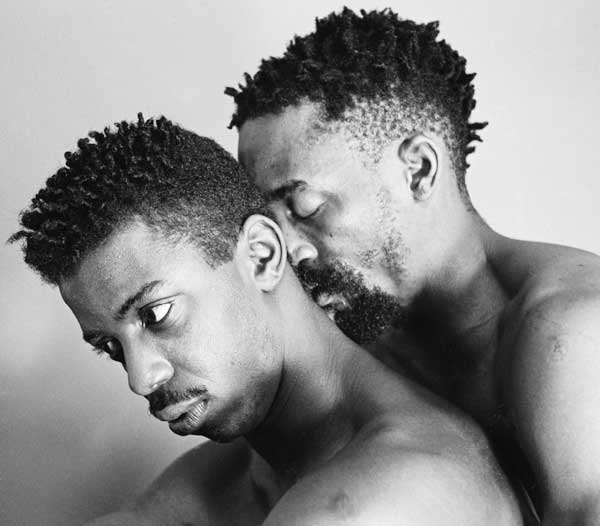 ZP_portrait by Rotimi Fani-Kayode_Dennis Carney and Essex Hemphill in Brixton, London, 1988. Hemphill is holding Carney and kissing the back of his neck.
.
Essex Hemphill (1957-1995)
From: Ceremonies (1992)
“Rights and Permissions”
.
Sometimes I hold
my warm seed
up to my mouth
very close
to my parched lips
and whisper
“I’m sorry,”
before I turn my head
over the toilet
and listen to the seed
splash into the water.
.
I rinse what remains
down the drain,
dry my hands –
they return
to their tasks
as if nothing
out of place
has occurred.
.
I go on being,
wearing my shirts
and trousers,
voting, praying,
paying rent,
pissing in public,
cussing cabs,
fussing with utilities.
.
What I learn
as age advances,
relentless pillager,
is that we shrink
inside our shirts
and trousers,
or we spread
beyond the seams.
The hair we cherished
disappears.
.
Sometimes I hold
my warm seed
up to my mouth
and kiss it.
. . .
“Object Lessons”
.
If I am comfortable
on the pedestal
you are looking at,
if I am indolent and content
to lay here on my stomach,
my determinations
indulged and glistening
in baby oil and sweat,
if I want to be here, a pet,
to be touched, a toy,
if I choose
to be liked in this way,
if I desire to be object,
to be sexualized
in this object way,
by one or two at a time,
for a night or a thousand days,
for money or power,
for the awesome orgasms
to be had, to be coveted,
or for my own selfish wantonness,
for the feeling of being
pleasure, being touched.
The pedestal was here,
so I climbed up.
I located myself.
I appropriated this context.
It was my fantasy,
my desire to do so
and lie here
on my stomach.
Why are you looking?
What do you wanna
do about it?
. . .
“Invitations All Around”
.
If he is your lover,
never mind.
Perhaps, if we ask,
he will join us.
. . .
From: Earth Life (1985)
.
“Black Beans”
.
Times are lean,
Pretty Baby,
the beans are burnt
to the bottom
of the battered pot.
Let’s make fierce love
on the overstuffed
hand-me-down sofa.
We can burn it up, too.
Our hungers
will evaporate like – money.
I smell your lust,
not the pot burnt black
with tonight’s meager meal.
So we can’t buy flowers for our table.
Our kisses are petals,
our tongues caress the bloom.
Who dares to tell us
we are poor and powerless?
We keep treasure
any king would count as dear.
Come on, Pretty Baby.
Our souls can’t be crushed
like cats crossing streets too soon.
Let the beans burn all night long.
Our chipped water glasses are filled
with wine from our loving.
And the burnt black beans –
caviar.
. . .
“Better Days”
.
In daytime hours,
guided by instincts
that never sleep,
the faintest signals
come to me
over vast spaces
of etiquette
and restraint.
Sometimes I give in
to the pressing
call of instince,
knowing the code of my kind
better than I know
the National Anthem
or “The Lord’s Prayer”.
I am so driven by my senses
to abandon restraint,
to seek pure pleasure
through every pore.
I want to smell the air
around me thickly scented
with a playboy’s freedom.
I want impractical relationships.
I want buddies and partners,
names I will forget by sunrise.
I only want to feel good.
I only want to freak sometimes.
There are no other considerations.
A false safety compels me
to think I will never need kindness,
so I don’t recognize
that need in someone else.
.
But it concerns me,
going off to sleep
and waking
throbbing with wants,
that I am being
consumed by want.
And I wonder
where stamina comes from
to search all night
until my footsteps ring
awake the sparrows,
and I go home, ghost walking,
driven indoors to rest
my hunter’s guise,
to love myself as fiercely
as I have in better days.
. . .
From: Conditions (1986)
.
“Isn’t It Funny”
.
I don’t want to hear you beg.
I’m sick of beggars.
If you a man
take what you want from me
or what you can.
Even if you have me
like some woman across town
you think you love.
.
Look at me
standing here with my dick
as straight as yours.
What do you think this is?
The weathercock on a rooftop?
.
We sneak all over town
like two damn thieves,
whiskey on our breath,
no streetlights on the back roads,
just the stars above us
as ordinary as they should be.
.
We always have to work it out,
walk it through, talk it over,
drink and smoke our way into sodomy.
I could take you in my room
but you’re afraid the landlady
will recognize you.
.
I feel thankful I don’t love you.
I won’t have to suffer you later on.
.
But for now I say, Johnnie Walker,
have you had enough, Johnnie Walker?
Do-I-look-like-a-woman-now?
Against the fogged car glass
do I look like your crosstown lover?
Do I look like Shirley?
.
When you reach to kiss her lips
they’re thick like mine.
Her hair is cut close, too,
like mine –
isn’t it?
. . .
“Between Pathos and Seduction”
(For Larry)
.
Love potions
solve no mysteries,
provide no comment
on the unspoken.
Our lives tremble
between pathos and seduction.
Our inhibitions
force us to be equal.
We swallow hard
black love potions
from a golden glass.
New language beckons us.
Its dialect present.
Intimate.
Through my eyes
focused as pure, naked light,
fixed on you like magic,
clarity. I see risks.
Regrets? There will be none.
Let some wonder,
some worry, some accuse.
Let you and I know
the tenderness
only we can bear.
. . .
“American Wedding”
.
In america,
I place my ring
on your cock
where it belongs.
No horsemen
bearing terror,
no soldiers of doom
will swoop in
and sweep us apart.
They’re too busy
looting the land
to watch us.
They don’t know
we need each other
critically.
They expect us to call in sick,
watch television all night,
die by our own hands.
They don’t know
we are becoming powerful.
Every time we kiss
we confirm the new world coming.
.
What the rose whispers
before blooming
I vow to you.
I give you my heart,
a safe house.
I give you promises other than
milk, honey, liberty.
I assume you will always
be a free man with a dream.
In america,
place your ring
on my cock
where it belongs.
Long may we live
to free this dream.
. . .
Essex Hemphill (1957 – 1995) was a poet and activist, as frank and raw – and as radical – as one can get. Hemphill’s compañero (and hero) in activism was Joseph Fairchild Beam (1954 – 1988), writer, editor, Black-Gay civil-rights agitator for positive change. In a 1984 essay Beam declared: “The bottom line is this: We are Black men who are proudly gay. What we offer is our lives, our love, our visions. We are rising to the love we all need. We are coming home with our heads held up high.”
When Hemphill wrote “In america, place your ring on my cock where it belongs” he was probably – though one cannot be sure – not talking about the symbolic ring of the traditional marriage rite as we all know it. And yet…his fervent desire was for Black, Gay Americans to be meaningfully re-connected to their own communities, communities to which they felt a powerful yearning to belong – having never left them, deep down in their hearts. We feature the following photographs because we feel that Hemphill – even though he called his black, gay world “this tribe of warriors and outlaws” – would get it. To paraphrase the final line of his poem American Wedding: Long may you live to free your dream.
.
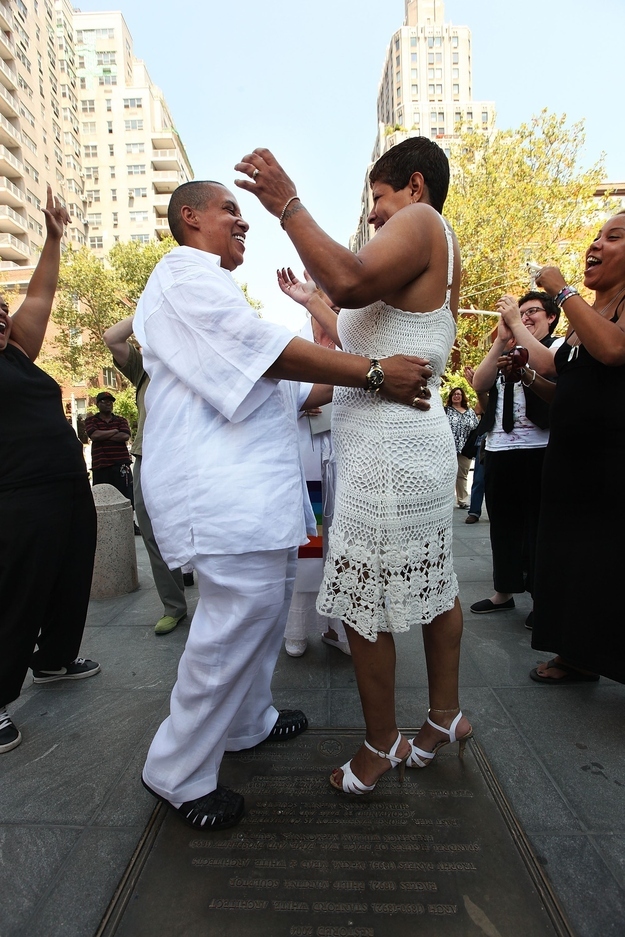 ZP_Two women celebrate with friends and relatives after their outdoor marriage in Washington Square Park , New York City, 2011.
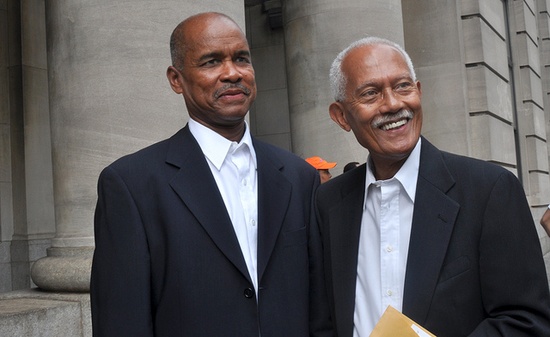 ZP_After 33 years together these two handsome septuagenarian New Yorkers married legally in 2011. Dignity and great pride are evident on their faces.
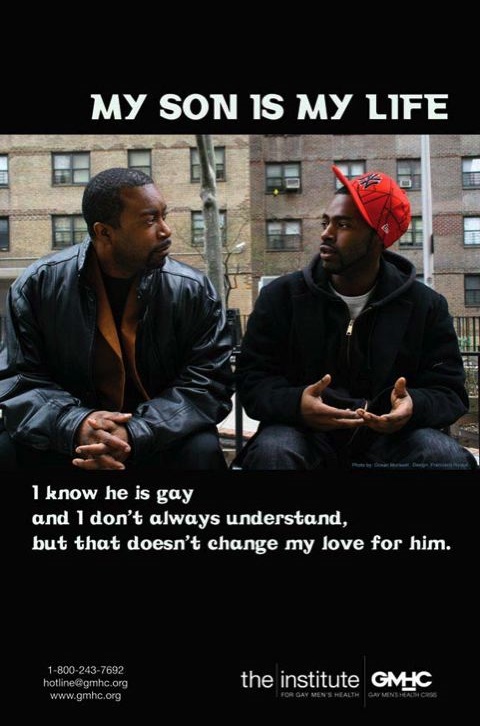 ZP_2008 poster directed toward the fathers of young, black, gay men_Gay Men’s Health Center, NYC_© photographer Ocean Morisset_Essex Hemphill, were he alive today, would’ve been heartened by such an initiative, knowing full well that the blood, sweat and tears of many ordinary people – who are also activists who love their communities – made such progress possible.
. . . . .
T’ai Freedom Ford: “fourth: a blues”
Posted: June 29, 2013 Filed under: English | Tags: Black lesbian poets Comments Off on T’ai Freedom Ford: “fourth: a blues”
.
T’ai Freedom Ford
“fourth: a blues”
.
…she taste like the colour blue…all beautifully bruised and melancholy on my tongue. like blue glinting golden…bee-stung and swollen in a field of cotton…like blue verging black until all memory’s forgotten…she taste like blues…like muddy waters…like daughters of the dust…like mississippi goddamn…like thrust and thirst…like heartbreak so new it tastes like trust at first…like a wound you must nurse with your own salty tears…she taste like blue…cause that’s the colour of her: fears/fierce…like an azure hue reminiscent of sky breaking wide open…blue like coloured girls who done tried dope when hope wasn’t enough…when that man wasn’t enough…when being tough wasn’t enough…blue like nina’s voice and storm clouds…she rains blue-black…arm, tattooed jack, and sometimes her loyalty is tragic…still she blue like magic…all stardust and confetti and taps of wands…and when the house of cards collapses she responds…with jesus on her breath…eyes watery with devotion…taste like blue: royal and periwinkle and aqua…blue like the fifth chakra vibrating her throat translucent…rocking with holyghost trying to shake loose sin…within her, blues run deep and honeysuckle sweet like grandmama’s hambone on a sunday morn…blue like early morning beckoning sinners toward their reckoning…blue like night sky sucking up light like a magic trick…tragic as guitar strings breaking like my heart…she taste blue like tragedy…all shakespearean and love unfulfilled…but that’s what she do…slips into characters like new skin…ingénue…sparkling blue on silver screens…beautifully blue…making art outta life…all spit-shined and bruised like the blues of the south…a new shade of truth…exploding its name in my mouth…she taste like…
. . .
T’ai Freedom Ford is an American “slam poet” who performs at spoken-word events. Of performance she has playfully said: “Most poets would say it’s about sharing their message or rallying a cause, but let’s be honest: it’s about ego. Signifyin’ and looking cute.”
. . . . .
Loving the Ladies: the poems of Pat Parker
Posted: June 29, 2013 Filed under: English, Pat Parker | Tags: Black lesbian poets Comments Off on Loving the Ladies: the poems of Pat Parker ZP_Pat Parker in 1989_photograph © Robert Giard
Pat Parker
“Sunshine”
.
If it were possible
to place you in my brain
to let you roam around
in and out
my thought waves
you would never
have to ask
why do you love me?
.
This morning as you slept
I wanted to kiss you awake
say I love you till your brain
smiled and nodded yes
this woman does love me.
.
Each day the list grows
filled with the things that are you
things that make my heart jump
yet words would sound strange
become corny in utterance.
.
In the morning when I wake
I don’t look out my window
to see if the sun is shining.
I turn to you instead.
. . .
“I have”
.
i have known
many women
and the you of you
puzzles me.
.
it is not beauty
i have known
beautiful women.
.
it is not brains
i have known
intelligent women.
.
it is not goodness
i have known
good women.
.
it is not selflessness
i have known
giving women.
.
yet you touch me
in new
different
ways.
.
i become sand
on a beach
washed anew with
each wave of you.
.
with each touch of you
i am fresh bread
warm and rising.
.
i become a newborn kitten
ready to be licked
and nuzzled into life.
.
you are my last love
and my first love
you make me a virgin
and I want to give myself to you.
. . .
“Sublimation”
.
It has been said that
sleep is a short death.
I watch you, still,
your breath moving –
soft summer breeze.
Your face is velvet
the tension of our love,
gone.
No, false death is not here
in our bed
just you – asleep
and me – wanting
to make love to you,
writing words instead.
. . .
“Metamorphosis”
.
you take these fingers
bid them soft
a velvet touch
to your loins
.
you take these arms
bid them pliant
a warm cocoon
to shield you
.
you take this shell
bid it full
a sensual cup
to lay with you
.
you take this voice
bid it sing
an uncaged bird
to warble your praise
.
you take me, love,
a sea skeleton
fill me with you
and I become
pregnant with love
give birth
to revolution.
. . .
“For Willyce”
.
When i make love to you
i try
with each stroke of my tongue
to say
i love you
to tease
i love you
to hammer
i love you
to melt
i love you
and your sounds drift down
oh god!
oh jesus!
and i think
here it is, some dude’s
getting credit for what
a woman
has done
again.
. . .
Pat Parker (1944-1989) was a Black-American lesbian and feminist. She was born in Houston, Texas, and lived and worked (at a women’s health centre) in Oakland, California, from 1978 almost up until her death from breast cancer. Racism, misogyny, homophobia – Parker “kept it real” about such facts at numerous poetry readings throughout the 1970s. She had had two marriages – and raised two children from them – but when her second marriage ended in divorce she journeyed down a different road, stating: “After my first relationship with a woman, I knew where I as going.” Known for her “hard truths” in poems such as “Exodus”, “Brother”, “Questions” and “Womanslaughter”, Parker also had a whole other lesser-known side to her as a poet who made love poems – several of which we present here. Some are tender and euphoric and one – “For Willyce” – has Parker’s characteristic ‘edge’.
. . . . .
Zwelethu Mthethwa, Zanele Muholi, Rotimi Fani-Kayode, Samuel Fosso: African photographers who make you think
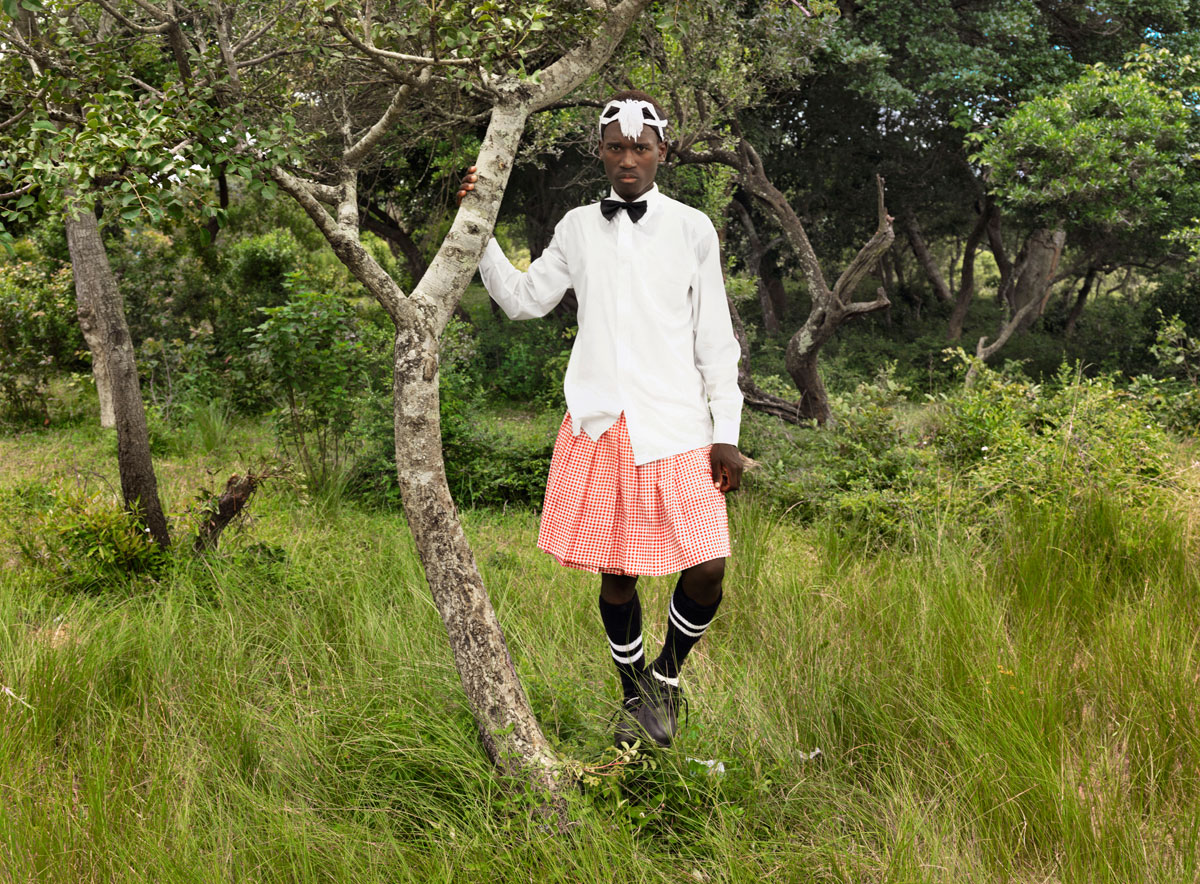
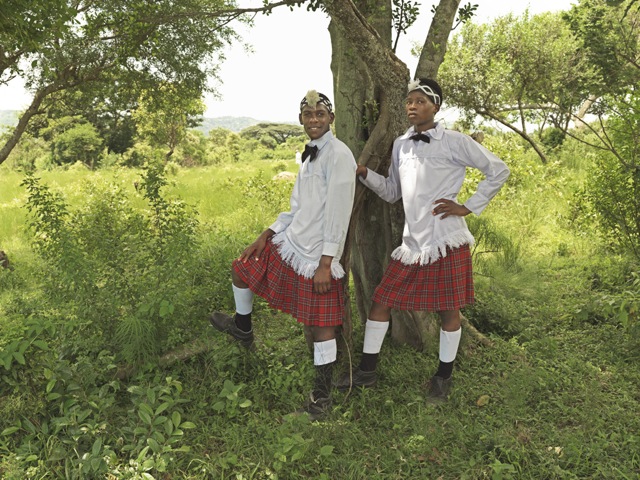
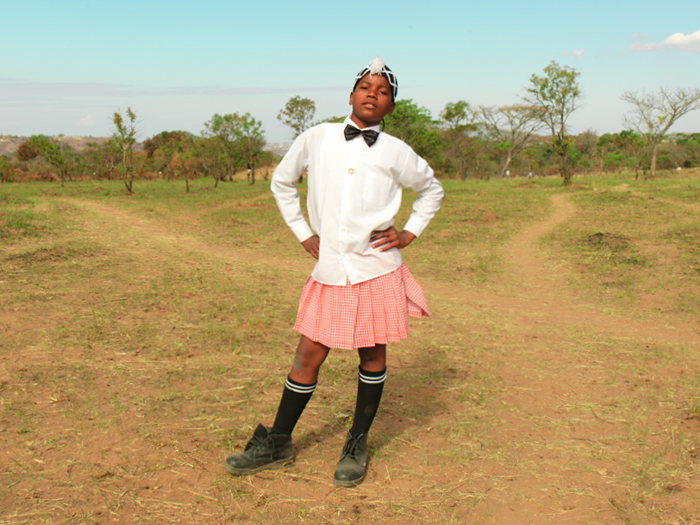
Posted: June 29, 2013 Filed under: IMAGES Comments Off on Zwelethu Mthethwa, Zanele Muholi, Rotimi Fani-Kayode, Samuel Fosso: African photographers who make you thinkZwelethu Mthethwa (born 1960, Durban, South Africa) photographed pre-adolescent and teenage boys in KwaZulu-Natal in 2010. The boys are adherents to the doctrines of a branch of the charismatic Shembe Nazareth Baptist Church. Mthethwa named this photograph series “The Brave Ones”. He has specialized in photo-essays of sometimes-marginalized people in South Africa’s “Townships”, including migrant workers, miners and sugarcane harvesters.
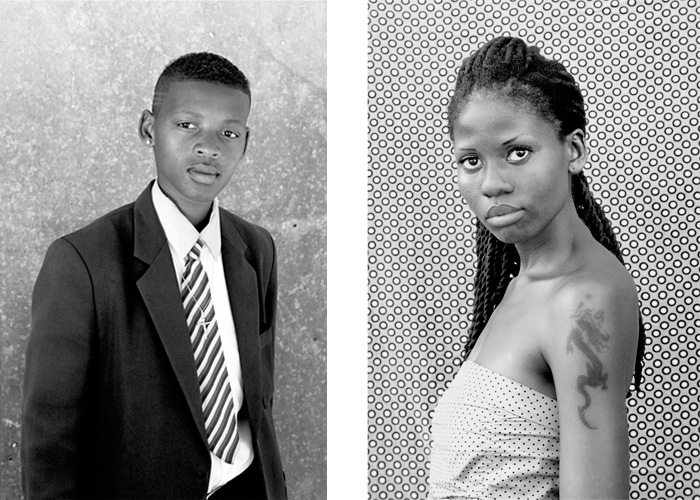
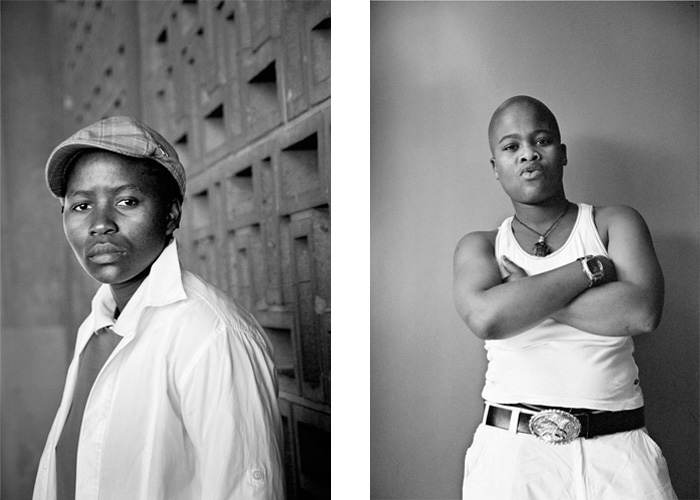
 Zanele Muholi (born 1972, Umlazi, South Africa) is a lesbian photographer and “visual activist”. Among numerous projects, she has documented the lives of South African lesbians, some of whom have suffered from persecution and violence.
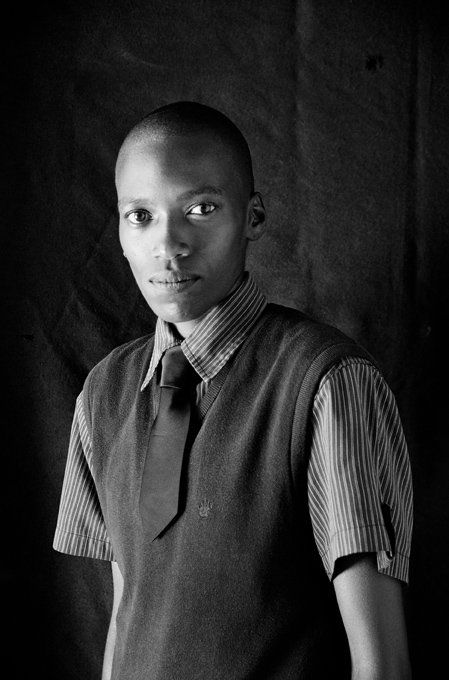 ZP_Nhlanhla Esther Mofokeng, Thokoza, Johannesburg_© Zanele Muholi_2010
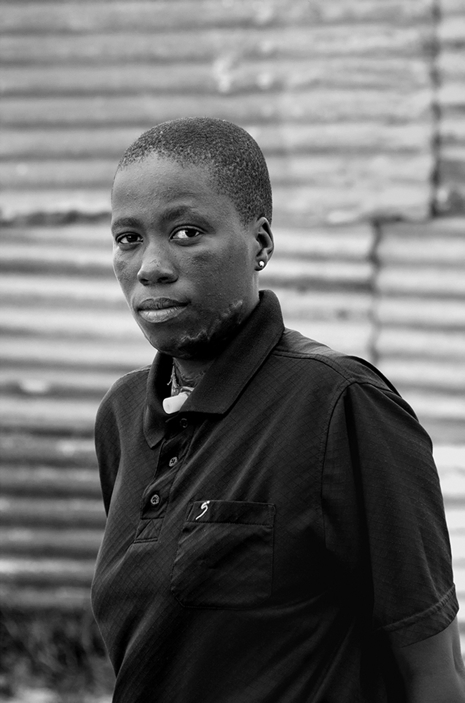 ZP_Anelisa Mfo Nyanga, Cape Town_© Zanele Muholi_2010
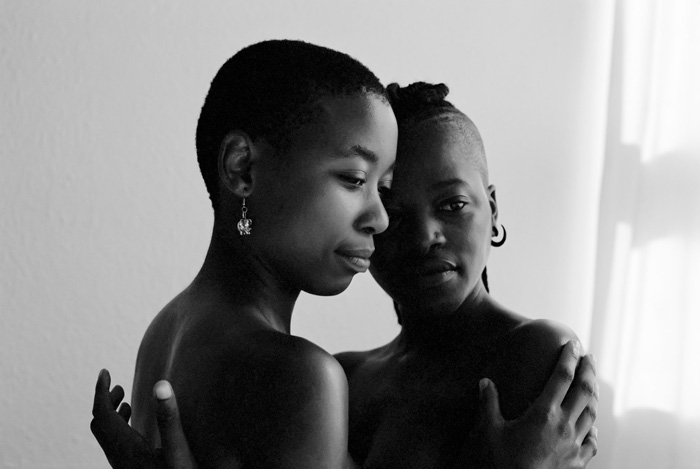
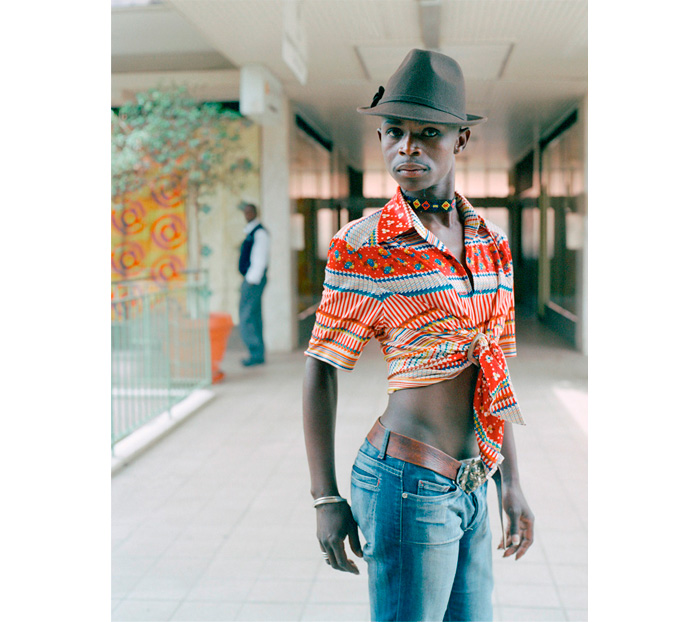 ZP_Martin Machapa_photograph © Zanele Muholi
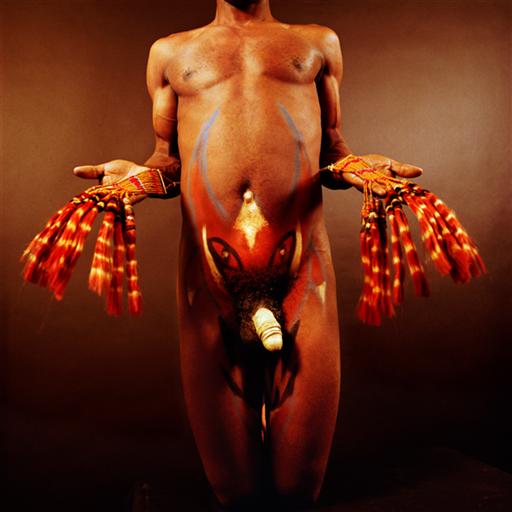 ZP_Rotimi Fani-Kayode_Untitled, 1987_Rotimi Fani-Kayode was born in 1955 in Lagos, Nigeria, and he died of an AIDS-related heart attack in London, England, in 1989. Of photography he said: “It is the tool by which I feel most confident in expressing myself. It is photography therefore — Black, African, homosexual photography — which I must use not just as an instrument but as a weapon if I am to resist attacks on my integrity and, indeed, my existence on my own terms.”
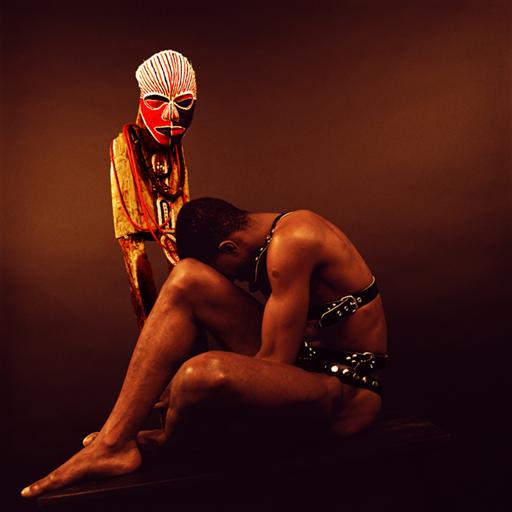 ZP_Rotimi Fani-Kayode_Nothing to Lose IX (Bodies of Experience)_1989
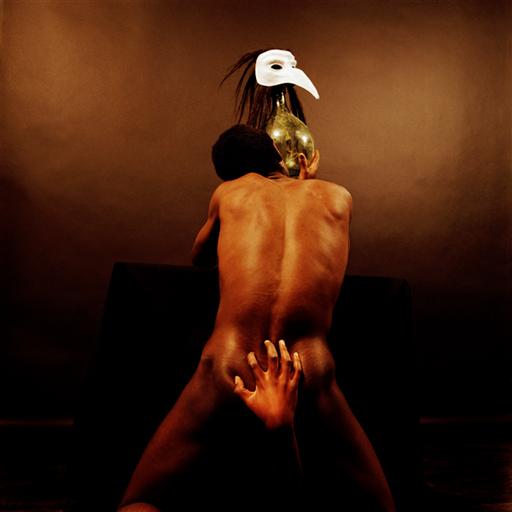 ZP_Rotimi Fani-Kayode_Every Moment Counts II_1989
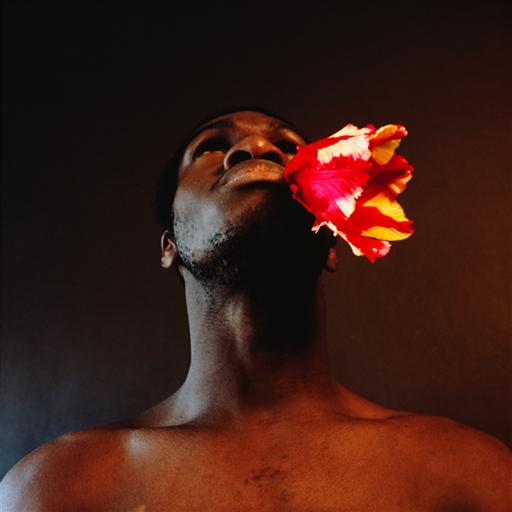 ZP_Rotimi Fani-Kayode_Tulip Boy_1989
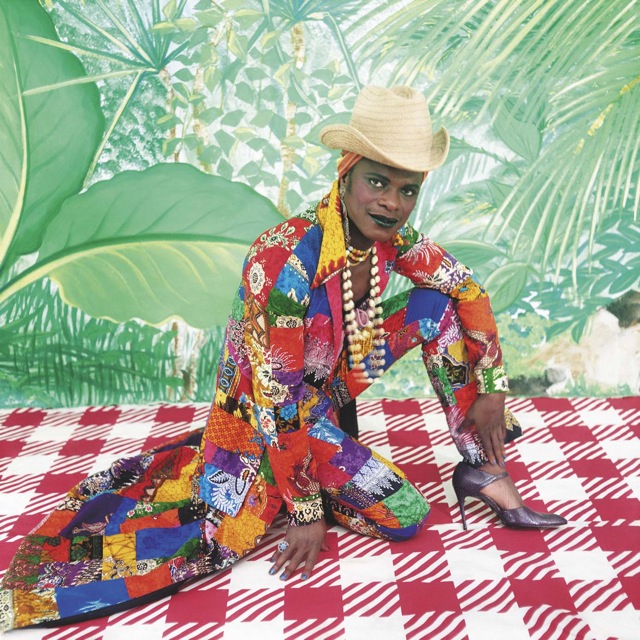
ZP_La femme américaine libérée des années 70_© Samuel Fosso (as both photographer and model)_1997. Samuel Fosso was born in 1962 in Kumba, Cameroon. At the age of 12 he began to work as an assistant to a portrait photographer. By the end of his teens he had his own studio where he frequently shot self-portraits, many of them fanciful or referencing famous figures in Black popular culture.
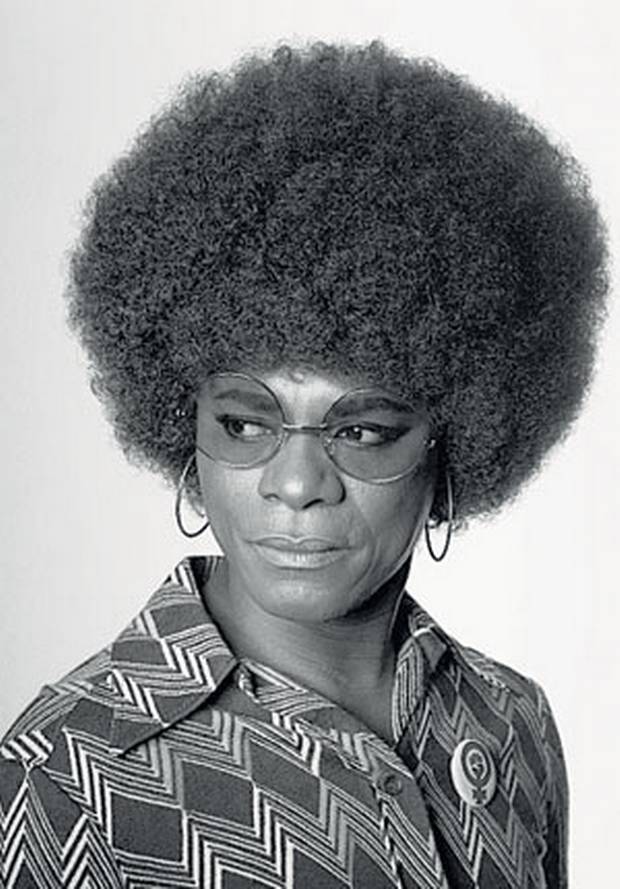 ZP_Samuel Fosso_From the series Autoportraits des années 70_Selfportrait as Angela Davis
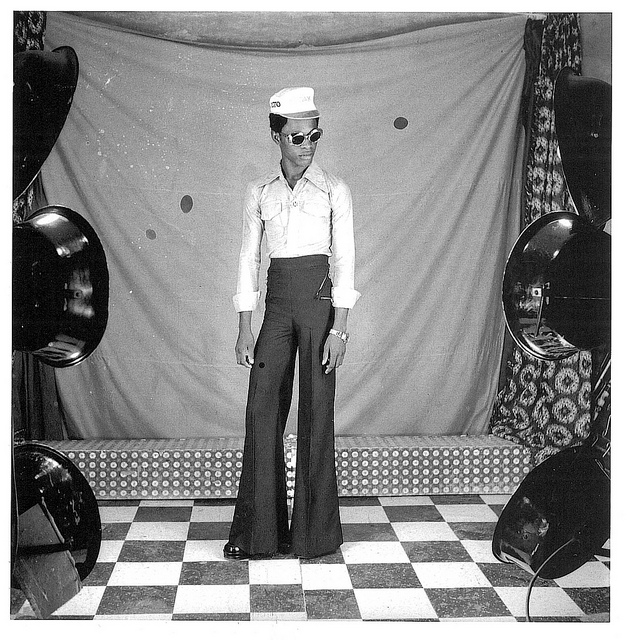 ZP_Samuel Fosso_From the series Autoportraits des années 70_a teenaged selfportrait as himself 2
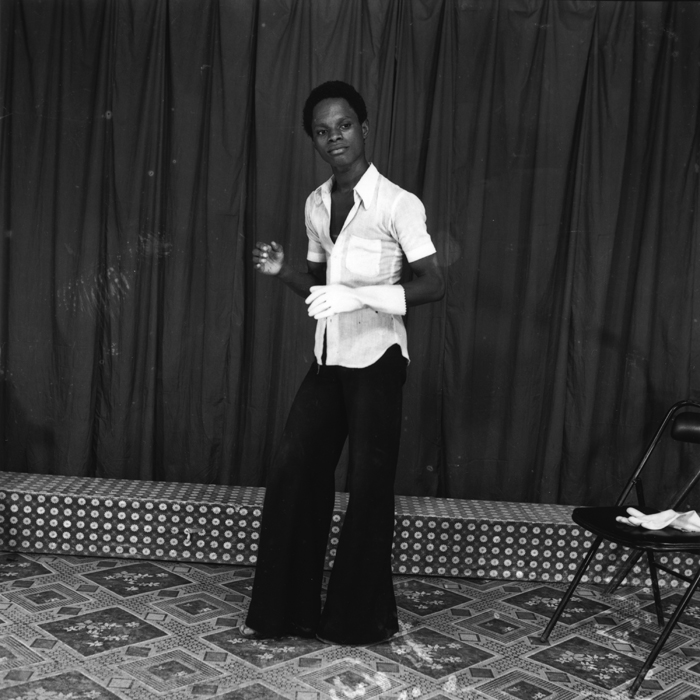 ZP_Samuel Fosso_From the series Autoportraits des années 70_a teenaged selfportrait as himself 1
From Lagos with Love: two gay poets
Posted: June 29, 2013 Filed under: Abayomi Animashaun, English, Rowland Jide Macaulay | Tags: African gay poets Comments Off on From Lagos with Love: two gay poets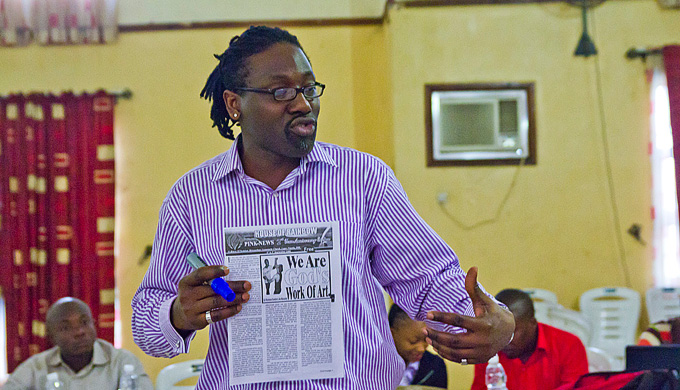 ZP_Pastor Macaulay leading a House of Rainbow gathering of conversation and loving prayer
.
Rowland Jide Macaulay (born 1966) is an openly gay Nigerian poet and pastor who – as of tomorrow (June 30th 2013) will also be an ordained preacher in The Church of England. He begins duties as a curate in London this July and says that his will be “an inclusive parish ministry – and I cannot wait!”
Macaulay’s involvement in church activity has deep roots. He was raised Pentecostal in Lagos, where his father, Professor Augustus Kunle Macaulay, is the principal of Nigeria’s United Bible University.
But the truth of his sexuality needed telling and Rowland reached a juncture in the spiritual road, founding House of Rainbow Fellowship which gives pastoral care to sexual minorities in Nigeria, and includes sister fellowships in Ghana, Lesotho and several other African states.
The Easter story holds great power for Macaulay; the following is a poem he wrote in 1999:
.
Rowland Jide Macaulay
“In Just Three Days”
.
For a life time
He came that we may have life
He died that we may have life in abundance.
In Just Three Days
Better known than ever before
Crowned King of kings
Tired but never gave up
Alone, forsaken and frightened
The world is coming to a close
Doors closing, wall to wall thickening.
In Just Three Days
Prophecies have been fulfilled
Unto us a child is born…
Destroy the world and build the kingdom
Followers deny His existence
His betrayer will accompany the enemy.
In Just Three Days
The world had Him and lost Him
Chaos in the enemies’ camp
Death could not hold Him prisoner
In the grave, Jesus is Lord.
Bethany, the house of Simon the leper,
Alabaster box of precious oil
Ointment for my body
Gethsemane, place of my refuge
Watch and pray.
In Just Three Days
Destruction, Rebuilding
Chastisement, Loving, Caring
Killing, Survival
Mockery, Praises
Passover, Betrayal
The people, The high priest
Crucify him, crown of thorns
Hail him, Strip him, bury him.
In Just Three Days
He is risen
Come and see the place where the Lord lay
His arrival in the clouds of heaven.
In Just Three Days
He was dead and buried
My resurrection, my hope, my dream
Hopelessness, helplessness turned around
In Just Three Days
In Just Three Days.
. . .
Nigerian Abayomi Animashaun, now living in the U.S.A., completed a university degree in mathematics and chemistry but then took that precise quantum leap into the ever-expanding universe that is Poetry. He teaches at The University of Wisconsin (Oshkosh).
The following poem is from his 2008 collection, The Giving of Pears.
.
Abayomi Animashaun
“In bed with Cavafy”
.
After pleasing each other,
We laid in bed a long time…
Curtains drawn,
Bolt fastened,
We’d been cautious,
Had made a show for others—
We ordered meat and wine
From the local restaurant.
And, like other guys, we talked loud
About politics into the night,
But whispered about young men
We’d bent in the dark.
At midnight, when from the bars drunks
Staggered onto the streets,
We shook hands the way they did,
Laughed their prolonged laughs,
And warned each other to steer clear
From loose girls and diseases—
All the while knowing
He’ll circle round as planned,
Sit in the unused shack behind my house
Till my neighbours’ candles are blown out.
And, after his soft knock,
I’ll slowly release the latch
– As I did last night.
. . .
Editor’s note: “In bed with Cavafy” captures the mood, nuance, and subtle tone of the poetic voice of Constantine Cavafy (1863-1933), the homosexual Greek poet who was a native of Alexandria, Egypt. Animashaun updates this Cavafy-an “voice”, making it heard in his description of two bisexual lovers in Lagos who are caught up in strategies of social hypocrisy and secret honesty in a place where sexual open-ness means great personal risk.
.
Special Thanks to Duane Taylor (York University, Toronto) for his editorial assistance!
. . . . .
Frank Mugisha: “People say I am their inspiration – but they are an inspiration to me – so I can never talk about leaving the country.”
Posted: June 29, 2013 Filed under: English | Tags: LGBT Rights Activists in Africa Comments Off on Frank Mugisha: “People say I am their inspiration – but they are an inspiration to me – so I can never talk about leaving the country.” ZP_Frank Mugisha at the First Uganda Pride March on August 4th, 2012_The March took place on the shores of Victoria Lake, outside of Entebbe, away from Uganda’s bustling capital, Kampala. Mugisha, as Captain Pride in a rainbow-sashed sailor suit, told journalist Alexis Okeowo: “I just wish I had a switch to turn on that would make everyone who’s gay say they are gay. Then everyone who is homophobic can realize their brothers, their sisters, and their aunts are gay.” He told another reporter: “Next time we begin the march from the police station [in Kampala]…”
. . .
The Canadian HIV/AIDS Legal Network’s 5th Symposium on HIV, Law and Human Rights was held in Toronto on June 13th and 14th, 2013. One of the events was “A conversation with Frank Mugisha” which took place at the Toronto Reference Library, attended by about 300 people. The CBC’s Ron Charles interviewed Mr. Mugisha in front of the audience, members of whom asked questions at the end.
The diminutive 30-year old Mugisha was calm and reasonable throughout, coming across as a man who has had to do some hard thinking and to strategize with love. He spoke about new voices for LGBT rights in Uganda – mainly, but not only – in Kampala; about threats to the emerging community: American author and anti-Gay activist Scott Lively and his pivotal “The Homosexual Agenda” slide-show and lecture in 2009; Ugandan M.P. David Bahati and his stalled Anti-Homosexual parliamentary bill; and angry anti-Gay protests in the streets after Ugandan tabloid newspaper “Rolling Stone” published names and addresses of Kampala “Homos”, stating: “Hang them!”. Mugisha spoke also of David Kato, one of the founders of Ugandan human-rights organization S.M.U.G. (Sexual Minorities Uganda), murdered in 2011 because of his outspoken-ness, and who also campaigned for children’s and women’s rights; and of former Ugandan Bishop Christopher Senyonjo, an Anglican clergyman who is still a vocal defender of LGBT rights.
He said he is looking forward to the 2nd Uganda Pride March – to be held during the summer of 2013 – and he confirmed his own religious faith; he is still a Christian, still a Catholic. Asked by Ron Charles what keeps him in Uganda – where he requires a chaperone wherever he goes and must carefully plan his movements – when he could find asylum in other nations, Mugisha said: “People say I am their inspiration – but they are an inspiration to me – so I can never talk about leaving the country. Why do I keep smiling? I try to keep a positive attitude after all the bad stories I’ve heard and I want to put a human face on our work. ‘Those people’ – what some Ugandans call homosexuals – are they devils, selling their bodies, molesting children? – well, I try to reach these Ugandans who do not know us, I try to reach them one on one.”
Finally, Mugisha suggested to Charles that Progressive Christian voices need to speak up, and sensitive international diplomacy should be applied on such a “delicate” issue as homosexuality in Uganda; that media shock tactics will harm those most vulnerable plus inflame the majority. He said that if money comes to Uganda to do good – then “follow the money” and make sure that human-rights issues in Uganda are being addressed as a group, because it’s not just about homosexuality. Mugisha reminded the audience that the South African government has spoken out against the anti-Gay movement in Uganda, and that Cameroon, Nigeria, Tanzania and Zambia are more homophobic – voices are silenced – than Uganda which is by and large known for the warm-heartedness of its people. Charles finished by asking the obvious question: what does the future hold for LGBT rights in Uganda? Mugisha spoke methodically, thoughtfully, as he had for the entire hour and a half: “I don’t think there will be acceptance – in my lifetime. But tolerance, yes. Perhaps even anti-hate-crimes legislation.”
.
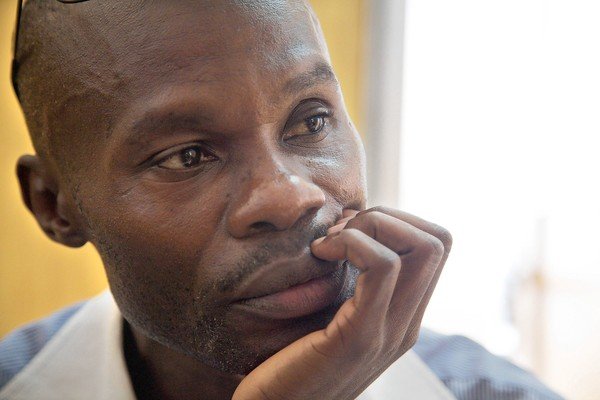 ZP_Teacher and LGBT activist David Kato (1964 – 2011), the first publicly gay man in Uganda
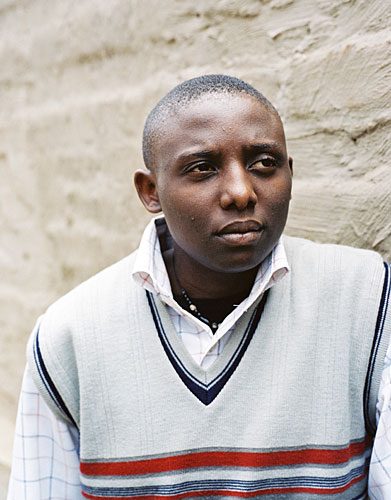 ZP_Juliet Victor Mukasa, a founder, with David Kato, of S.M.U.G. (Sexual Minorities Uganda)
.
The following is an interview with Frank Mugisha by journalist Elizabeth Palmberg from March 2013. We thank Soujourners website (“Faith in Action for Social Justice”) for provision of this text:
1. What’s your response to the letter U.S. religious leaders signed last year, which condemned the “Anti-Homosexuality Bill” before Uganda’s Parliament because it “would forcefully push lesbian, gay, bisexual, and transgender (LGBT) people further into the margins”?
Mugisha:
Uganda is a very Christian country. About 85 percent of our population is Christian—Anglican, Catholic, and Pentecostal. So for religious leaders to speak out against the Ugandan legislation, that is very important for me and for my colleagues in Uganda, because it speaks not only to the politicians and legislators, but also to the minds of the ordinary citizens.
It is very important to have respected religious leaders involved, including Archbishop Desmond Tutu, because these are leaders who have spoken out on other human rights issues such as apartheid, women’s rights, and slavery. And for us, for the voice of LGBT rights, to join with these other issues, clearly indicates that our movement is fighting for human rights.
2. Before Parliament adjourned without passing the “kill the gays” bill, an official had suggested it would pass as a “Christmas gift.” As a Catholic yourself, what’s your response to that image?
Mugisha:
What I’ve always said is that instead of promoting hatred, we should promote love. And clearly, this law has so much discrimination, the language is full of hatred; this is not appropriate for Jesus’ birthday, because he said love your God and love your neighbour as you love yourself—those are the greatest commandments.
3. As an African, how do you see all this?
Mugisha:
The bill itself violates our own culture as Africans, because Africans are people who are united to each other, but this bill clearly divides. For example, it includes a clause that says that every person should report any “known homosexual” to authorities, and failure to do that becomes criminal—it calls for a witch hunt that was never seen in African culture. The bill also criminalizes the “promotion of homosexuality,” which would criminalize any kind of dialogue or talk about homosexuality in my country.
4. Would it require clergy to turn in gay members of their flocks?
Mugisha:
Yes, priests taking confession and any religious leader—whether giving health support, psychosocial counseling, or anything—are required to go and report to the authorities. So this totally violates Christian teaching, including the Catholic faith.
5. Does the bill threaten efforts to fight HIV?
Mugisha:
Even if the death penalty is removed, the legislation itself will drive LGBT people underground—already now, without the bill passing, there’s fear. People are afraid to go to health workers and say that they’re in same-sex relations, so this will happen underground, with no information, and that will greatly increase the spread of HIV/AIDS.
6. What message do you have for Christians in the U.S.A.?
Mugisha:
It is important for people to know that there has been a lot of influence from American fundamentalist Christians in promoting this hatred in Uganda; some of them have been very vocal. We think that Christians in the U.S.A. should hold these preachers accountable.
. . . . .
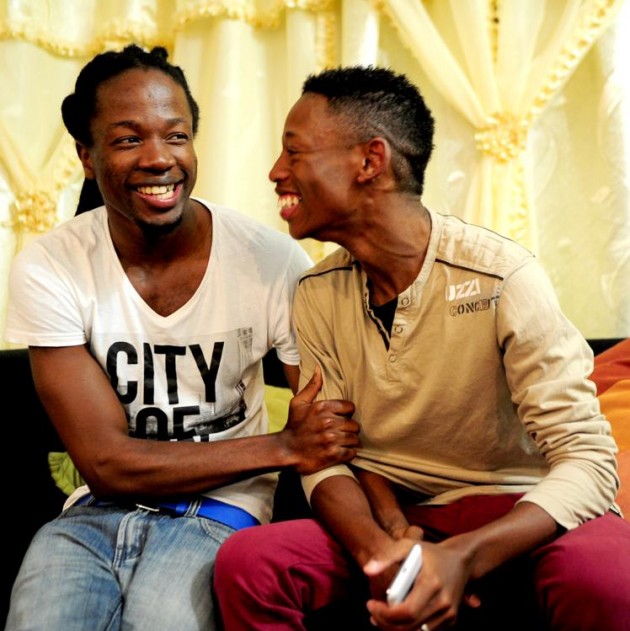 ZP_Two 27-year-old Zulu men, Thoba Sithole and Tshepo Modisane, married in the town of KwaDukuza in April 2013. South Africa legalized same-sex marriage in 2006.
. . . . .
Mildred K. Barya compares Beverley Nambozo’s “At the graveyard” with Sylvia Plath’s “Daddy”
Posted: June 25, 2013 Filed under: 7 GUEST EDITORS, Beverley Nambozo, Mildred K. Barya, Sylvia Plath Comments Off on Mildred K. Barya compares Beverley Nambozo’s “At the graveyard” with Sylvia Plath’s “Daddy”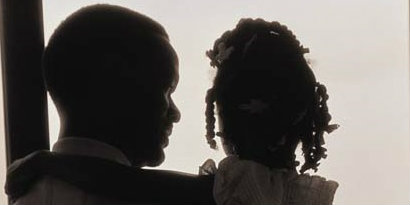
ZP Guest Editor Mildred K. Barya:
What Beverley Nambozo (Uganda) and Sylvia Plath (USA) have in common
My first poet is Beverley Nambozo, and the poem I’m focusing on is “At the graveyard.”
Beverley Nambozo
“At the graveyard”
.
At the graveyard I sit on my father’s lap.
Where we can talk.
Of what could have been but was not.
Here he has many friends,
Even his mother-in-law brings him flowers.
Now I understand why he has to write.
It keeps him alive.
We saved him by killing him.
Because now he writes.
He recited a poem for me
And my mother discovered my frozen tears
on my father’s stone.
. . .
What I like most is the balance between light and dark that comes from this poem. There’s a sense of grief and regret mixed with joy and comfort. The sadness comes from what could have been but was not, and the liberating feeling in ‘sitting on his lap so they can talk.’ I find that magical and refreshing. The father continues to be a father in this regard. He is not completely gone, and he is loved—the idea that even his mother-in-law brings him flowers. How punchy, precise and economical! In the old African culture, mothers–in-law are complicated beings whose relationships with their sons–in-law are often devoid of affection or open expression.
Beverley also does that cool thing of referencing Sylvia Plath without sounding banal. In Plath’s “Daddy” poem, her 2nd stanza begins in the direct, individual voice: Daddy, I have had to kill you. Beverley says in the collective, beginning of 3rd stanza: We saved him by killing him. I find this connection sweet and pleasant, especially when I realize that Beverley’s title could have been Daddy, but she lets the subject matter resolve that.
In Plath’s poem, we find the reason she’s had to “kill her Daddy.” She tried resurrecting him first: 4th line of the 3rd stanza: I used to pray to recover you. When that failed, she tried joining him. 12th stanza: At twenty I tried to die/And get back, back, back to you/I thought even the bones would do. For a long time she couldn’t accept the loss. So deep and long was her grieving. Bit my pretty red heart in two/I was ten when they buried you.
Beverley “saves her Daddy” by acknowledging that he’s alive – even in death. He now writes, and whenever she needs to talk with him she only has to visit, and hear him recite her a poem. It’s also her Daddy’s way of staying alive, so the goal is mutual and the action liberating for both daughter and father.
I like how these two poems deal with the loss of a father and grieve in a close but contrasting manner. So related they are, but with a twist in perspective. In order to heal and move on, the two poets find peace through poetry. One lets go through visions of the most dark form and then, severing the bond, so to speak, the other by imagining Daddy in the most friendly images: friends, flowers, and then reunion.
See Sylvia’s end stanza:
There’s a stake in your fat black heart
And the villagers never liked you.
They are dancing and stamping on you.
They always knew it was you.
Daddy, daddy, you bastard, I’m through.
And Beverley’s 4th line of her first stanza: “Here he has many friends”.
The two poems/poets belong to different traditions—African versus American—but are much alike in their approach. Writing is their saving grace. Their differences are also interesting; what and how they write based on their feelings and experiences.
One of the joys of reading poetry is when you come across one poem/poet that reminds you of another. It’s like hearing the echo that merges time, people, and places, connecting across centuries and generations.
. . .
Sylvia Plath (1932-1963)
“Daddy” (1962)
.
You do not do, you do not do
Any more, black shoe
In which I have lived like a foot
For thirty years, poor and white,
Barely daring to breathe or Achoo.
.
Daddy, I have had to kill you.
You died before I had time——
Marble-heavy, a bag full of God,
Ghastly statue with one gray toe
Big as a Frisco seal
.
And a head in the freakish Atlantic
Where it pours bean green over blue
In the waters off beautiful Nauset.
I used to pray to recover you.
Ach, du.
.
In the German tongue, in the Polish town
Scraped flat by the roller
Of wars, wars, wars.
But the name of the town is common.
My Polack friend
.
Says there are a dozen or two.
So I never could tell where you
Put your foot, your root,
I never could talk to you.
The tongue stuck in my jaw.
.
It stuck in a barb wire snare.
Ich, ich, ich, ich,
I could hardly speak.
I thought every German was you.
And the language obscene
.
An engine, an engine
Chuffing me off like a Jew.
A Jew to Dachau, Auschwitz, Belsen.
I began to talk like a Jew.
I think I may well be a Jew.
.
The snows of the Tyrol, the clear beer of Vienna
Are not very pure or true.
With my gipsy ancestress and my weird luck
And my Taroc pack and my Taroc pack
I may be a bit of a Jew.
.
I have always been scared of you,
With your Luftwaffe, your gobbledygoo.
And your neat mustache
And your Aryan eye, bright blue.
Panzer-man, panzer-man, O You——
.
Not God but a swastika
So black no sky could squeak through.
Every woman adores a Fascist,
The boot in the face, the brute
Brute heart of a brute like you.
.
You stand at the blackboard, daddy,
In the picture I have of you,
A cleft in your chin instead of your foot
But no less a devil for that, no not
Any less the black man who
.
Bit my pretty red heart in two.
I was ten when they buried you.
At twenty I tried to die
And get back, back, back to you.
I thought even the bones would do.
.
But they pulled me out of the sack,
And they stuck me together with glue.
And then I knew what to do.
I made a model of you,
A man in black with a Meinkampf look
.
And a love of the rack and the screw.
And I said I do, I do.
So daddy, I’m finally through.
The black telephone’s off at the root,
The voices just can’t worm through.
.
If I’ve killed one man, I’ve killed two——
The vampire who said he was you
And drank my blood for a year,
Seven years, if you want to know.
Daddy, you can lie back now.
.
There’s a stake in your fat black heart
And the villagers never liked you.
They are dancing and stamping on you.
They always knew it was you.
Daddy, daddy, you bastard, I’m through.
. . .
Mildred K. Barya is a Ugandan author of three poetry collections: Give Me Room to Move My Feet, The Price of Memory after the Tsunami, and Men Love Chocolates But They Don’t Say. She has also published short stories in various anthologies and taught creative writing at Alabama School of Fine Arts in Birmingham. She is a board member of African Writers Trust, and she blogs at: http://mildredbarya.com/
.
Beverley Nambozo‘s “At the graveyard”: from her poetry collection, Unjumping, published by Erbacce-press, U.K., 2010
.
Sylvia Plath‘s “Daddy”: from Sylvia Plath: Collected Poems, © 1965 / 1981, The Estate of Sylvia Plath
. . . . .
“That poem which lay in my heart like a secret”: Juliane Okot Bitek reflects upon Okot p’Bitek’s “Return the Bridewealth” and the role of the poet
Posted: June 24, 2013 Filed under: 7 GUEST EDITORS, English, Juliane Okot Bitek, Juliane Okot Bitek, Okot p’Bitek Comments Off on “That poem which lay in my heart like a secret”: Juliane Okot Bitek reflects upon Okot p’Bitek’s “Return the Bridewealth” and the role of the poetOur warmest thanks to Juliane Okot Bitek for the following Guest Editor post at Zócalo Poets:
.
Okot p’Bitek (1931 – 1982)
Return the Bridewealth (1971)
.
I
.
I go to my father
He is sitting in the shade at the foot of the simsim granary,
His eyes are fixed on the three graves of his grandchildren
He is silent.
Father, I say to him,
Father, gather the bridewealth so that I may marry the
Girl of my bosom!
My old father rests his bony chin in the broken cups of his
withered hands,
His long black fingernails vainly digging into the tough
dry skin of his cheeks
He keeps staring at the graves of his grandchildren,
Some labikka weeds and obiya grasses are growing on the mounds.
My old father does not answer me, only two large clotting
tears crawl down his wrinkled cheeks,
And a faint smile alights on his lips, causing them to
quiver and part slightly.
He reaches out for his walking staff, oily with age and
smooth like the long teeth of an old elephant.
One hand on his broken hip, he heaves himself up on
three stilts,
His every joint crackling and the bones breaking.
Hm! he sighs and staggers towards the graves of his
Grandchildren,
And with the bone-dry staff he strikes the mounds: One!
Two! Three!
He bends to pluck the labikka weeds and obiya grasses,
But he cannot reach the ground, his stone-stiff back cracks
like dry firewood.
Hm! he sighs again, he turns around and walks past me.
He does not speak to me.
There are more clotting tears on his glassy eyes,
The faint smile on his broken lips has grown bigger.
.
II
.
My old mother is returning from the well,
The water-pot sits on her grey wet head.
One hand fondles the belly of the water pot, the other
strangles the walking staff.
She pauses briefly by the graves of her grandchildren and
studies the labikka weeds and the obiya grasses waving
Like feathers atop the mounds.
Hm! she sighs
She walks past me;
She does not greet me.
Her face is wet, perhaps with sweat, perhaps with water
from the water-pot,
Perhaps some tears mingle with the water and the sweat.
The thing on her face is not a smile,
Her lips are tightly locked.
She stops before the door of the hut,
She throws down the wet walking staff, klenky, klenky!
A little girl in a green frock runs to her assistance;
Slowly, slowly, steadily she kneels down;
Together slowly, slowly, gently they lift the water-pot and
put it down.
My old mother says, Thank you!
Some water splashes onto the earth, and wets the little
girl’s school books.
She bursts into tears, and rolls on the earth, soiling her
beautiful green frock.
A little boys giggles.
He says, All women are the same, aren’t they?
Another little boy consoles his sister.
.
III
.
I go to the Town,
I see a man and a woman,
He wears heavy boots, his buttocks are like sacks of cotton,
His chest resembles the simsim granary,
His head is hidden under a broad-brimmed hat.
In one hand he holds a loaded machine-gun, his fingers at
the trigger,
His other hand coils round the waist of the woman, like a
starving python.
They part after a noisy kiss.
Hm! he sighs.
Hm! she sighs.
He marches past me, stamping the earth in anger, like an
elephant with a bullet in his bony head.
He does not look at me,
He does not touch me; only the butt of his weapon
touches my knee lightly,
He walks away, the sacks of cotton on his behind rising and
falling alternately
Like a bull hippo returning to the river after grazing in
the fresh grasses.
Hm! I sigh.
I go to the woman,
She does not look up to me,
She writes things in the sand.
She says, How are my children?
I say, Three are dead, and some labikka weeds and obiya
grasses grow on their graves.
She is silent.
I say, your daughter is now in Primary Six, and your little
boys ask after you!
The woman says, My mother is dead.
I am silent.
The agoga bird flies overhead,
He cries his sorrowful message:
She is dead! She is dead!
The guinea-fowl croaks in the tree near by:
Sorrow is part of me,
Sorrow is part of me. How can I escape
The baldness of my head?
She is silent.
Hm! I sigh.
She says, I want to see my children.
I tell the woman I cannot trace her father.
I say to her I want back the bridewealth that my father
paid when we wedded some years ago,
When she was full of charm, a sweet innocent
little hospital ward-maid.
She is silent.
I tell the woman I will marry the girl of my bosom,
I tell her the orphans she left behind will be mothered, and
the labikka weeds and obiya grasses
that grow on the graves of her children
will be weeded,
And the ground around the mounds will be kept tidy.
Hm! she sighs.
She is silent.
I am silent.
The woman reaches out for her handbag.
It is not the one I gave her as a gift last Christmas.
She opens it
She takes out a new purse
She takes out a cheque.
She looks up to me, our eyes meet again after many
months.
There are two deep valleys on her cheeks that were not
there before,
There is some water in the valleys.
The skin on her neck is rotting away,
They say the doctor has cut her open and
removed the bag of her eggs
So that she may remain a young woman forever.
I am silent
A broad witch-smile darkens her wet face,
She screams,
Here, take it! Go and marry your bloody woman!
I unfold the cheque.
It reads:
Shillings One thousand four hundred only!
. . .
Juliane Okot Bitek
A Poet May Lie Down Beside You
.
She might even let you run your palm over her hip
Round and round and round
So you remember what it’s like to lie down beside a woman
A poet may lie down beside you and listen to you sigh
Turn around, turn around
She may even take in your stories of days gone by
Turn around, turn around
Spit roasting like pigs
It’s been bloody weeks
It’s been long, stone years
Since you lay down beside a woman, anyone
A poet may lie down beside you
Let you bring the covers over her shoulders and
Lift the hair off her face
She will take you back to the lean months, lean years, two
Or has it been three?
She will take you all the way back to a time without kisses
Without touch
Forever since anyone touched you
A poet will take you back
And return with the clingy scent of yesterday
For several moments
Before this, before this
A poet might even let you kiss her
She might open up ovens and ovens of pent up heat inside you
A poet will let you think
That this is what it means
To lie down beside a woman
Rolling, rolling, drowning, searching
A poet may lie down beside you
And sing, or not sing, speak, or not speak
This is your time
A poet will not let a moment like this go wasted
So she lies down beside you and lets you touch her
So you know what it’s like
To lie down beside a woman.
. . .
I first encountered “Return the Bridewealth” in Poems from East Africa, a 1971 anthology edited by David Rubadiri and David Cook. It was a text that we used at Gayaza High School in Kampala, Uganda. It was a text from which our teachers found creative ways of engaging us with poetry. One teacher had us write a short story that incorporated the title of Jared Angira’s “No Coffin, No Grave” as the last words. Another teacher had us think about ways that we could have ‘built the nation,’ a lesson on citizenship based on Henry Barlow’s “Building the Nation”. And the fact that Barlow’s daughter was on the teaching faculty was not lost on us, even though she wasn’t the literature teacher for that class. I prayed that we would not study “Return the Bridewealth” or “They Sowed and Watered” – both poems were in the same anthology – and both had been written by my father – Okot p’Bitek.
I used to imagine that the teacher might put the burden on me to explain what the poet’s intention was as they did in the old days, as if anyone would know. I couldn’t have known what his intentions were in writing poetry and yet I was aware, even then, that my father’s poetry read like the truth. But I wasn’t mature enough to discern whether he wrote factually about everything. I was embarrassed to think that it might have dissolved into a class discussion in which my father would’ve had to beg his father and an ex-wife for money to get married. Perhaps the teachers knew not to assign those poems for our class, but that poem that read like a story (“Return the Bridewealth”) stayed with me over the years. I read my father’s other works and, after grad school, I was finally confident enough to discuss my father as a poet, an essayist, a novelist and a philosopher. But I never talked about that poem which lay in my heart like a secret, even though it remains a public document.
“Return the Bridewealth” reads true. It reads true because the poet, my dad, had an eye and an ear for the environment around a story. It wasn’t just the plot with main characters whose lives spanned time before and after the poem begins and ends. We hear the old woman’s stick: klenky, klenky! We see the old man’s fingers digging into his bony cheeks; we understand the insistence of weeds and the infuriation of the old couple who cannot maintain the graves of their grandchildren. This couple, who has endured the divorce of their son and his wife, are struggling to take care of their grandchildren, both dead and alive. And their son has the gall to return and ask for financial support to remarry.
It is a modern story, immediate and accessible. The poetry is in the language, the lines and the delivery of what might have been a short story by another writer and perhaps a novel by another’s hand. My dad boiled this story down to its bare bones and it still resists the notion that it could be a poem that celebrates its use of language and calls for attention to its lyricism.
For a man who founded the song school of poetry, Okot p’Bitek’s “Return the Bridewealth” is not a song, even though it is punctuated by the refrained sighs of all the main characters: Hm! the mother sighs; Hmm! The father sighs; Hm! the woman sighs. Hm!, the soldier sighs; Hm! I, the narrator sighs. The sigh may be a long and breathy sigh but as any Ugandan knows, hm is short and decisive. It means everything and sometimes it means nothing. But the boy giggles and the girl cries. The boy also says within earshot of his father: All women are the same, aren’t they? before he turns to console his sister.
Each conversation in “Return the Bridewealth” allows the reader to be a voyeur of the most intimate conversations. A grown man asks his elderly father for money. A boy shares a moment with his father, deriding all women and girls. A man confronts his ex-wife in an exercise that is fraught with pain and shame – neither parent is taking care of the kids and the money that will change hands is probably from the woman’s current lover in order that the man may marry his current lover – an extremely uncomfortable situation for which the title of the poem is wholly inadequate.
Okello Oculi, another poet from the same anthology, and a contemporary of Okot p’Bitek, includes this poem as one of many works that espouse shame as a trope for post colonial narratives on the fallout from having been colonized by foreigners. Sure, but we also see that there has to be shame from the behaviour of the children’s parents because we know those parents; we are those parents. We screw up, and sometimes, as parents, we don’t get our priorities right.
The poem is broken up into representations of the past, present and future. In the first section, the first person narrator introduces his father, an old man in the twilight of his life, a man whose bony fingers seem to be in the business of hastening his own death by clawing at his face. We’re brought into a home in which there are three buried children who lie in unkempt graves. It is a sorry homestead with a lovesick son who has returned for financial support from his father. His father doesn’t answer the request for money but a smile plays about the old man’s face, perhaps in hope for better circumstances still to come. The second section is a portrayal of the current state of affairs. The grandmother is still involved in the heavy domestic work, even at her advanced age, but her granddaughter is sensitive enough to go and help offload the precious cargo of water. The grade six girl’s and her grandmother’s struggle is symbolized by the water spilling onto the girl’s school textbook. The old woman does not acknowledge her son’s presence. She does not greet him and she doesn’t smile as her husband does. Her anger is evident from the way she “strangles” her walking stick and the “thing on her face” that is not a smile, but she reserves her thanks for her granddaughter who helps her with the heavy water pot on her head. The current state of affairs doesn’t belie the reality of the graves in the homestead from which the weeds are an affront; things are not as they should be.
In the third section, the narrator confronts his ex-wife who has just met up with her lover, a soldier whose well-fed form is represented by the way he fills out the bottom of his pants (“his buttocks are like sacks of cotton”). The woman wants to know about her children, but in the classic tension-filled relationship of exes, the man won’t give her the information she needs. Power plays and replays itself. The woman reveals that her mother is dead. No empathy from her ex. I can’t find your father to get my money back, the man says in response. And the woman, infuriated, writes a cheque which she retrieves from a handbag that the man realizes is not the one he bought for her last Christmas. She’s moved on. This is the present reality for many of us. We know about memory and the power of “stuff”. And this is the future because we witness a man accepting financial support from his ex-wife in order to marry the woman he’s in love with. Power reveals itself in a cash transaction.
Beyond the direct effects of colonialism which colour the poem, the culture of the Acholi people from which my father drew much inspiration, is in flux. Bridewealth, which was the purview of the man’s family, is now dependent on whoever has the money to pay for it – in this case, the man’s ex-wife and, presumably, her lover. The narrator unfolds the cheque to make sure of the amount – One Thousand Four Hundred only. In this modern cash economy, money can and does replace the former symbol of wealth – cattle. Much of the cattle of Acholi was lost in the war that lasted over two decades (1986-2007) and there are barely any Acholi cows with which to show prosperity. The narrator, emasculated by his ex-wife’s cheque, is the modern man, and there’s no shame – or is there? Who or what makes an Acholi man or woman marriageable?
My father’s only novel, a slim book titled White Teeth (first published in 1963 in the Acholi language as Lak Tar) is about a young man from an impoverished family who makes the journey to the capital, Kampala, to see if he can earn the money to pay the bride price for Cecilia Laliya, the woman he loves. Set in colonial times, just before Independence, the main character, Okeca Ladwong, is alienated by the skyscrapers, tarmac roads, traffic, a multi-ethnic society and the fast, fast pace of urban life. But he is buoyed by his love for Cecilia, and so he perseveres until he makes enough money to return to his hometown, Gulu. Okot p’Bitek, who argued against the willful discarding of Acholi culture for a modern and souless life, wouldn’t and couldn’t let Okeca return to Gulu and marry Cecilia with his newly-earned cash. That’s not the way it was done traditionally.
In Song of Lawino, it’s clear that Lawino, the spurned wife of a modern man, Ocol, can see the danger of rejecting one’s culture wholesale. Do not uproot the pumpkin, she keeps saying. Do not uproot the pumpkin. There’s no need to reject the wisdom of Acholi culture for modern ways. In “Return the Bridewealth,” the old man sighs, as does the old woman, the narrator, his ex-wife and her lover. All the adults know and express that something is terribly wrong. Hm! as they still say in Uganda. Hm!
“Return the Bridewealth” is certainly set in a time of flux for the narrator, his parents, children and ex-wife. Published in 1971, it was a time of instability in Uganda as well. 1971 was the year that Idi Amin overthrew the government of the man who had exiled my father – Apolo Milton Obote. Being the man that he was, Idi Amin did not want my father in the country either, so Okot p’Bitek remained in exile and brought us up in neighbouring Kenya, where I was born. Before Idi Amin was overthrown by organized exiles and with the support of the Tanzanian government in 1979, my father told of visiting Obote in Arusha, Tanzania, where the former president lived, and how they’d had a toast together to the life of an exile. My family returned from exile in 1980. Uganda experienced a series coup d’etats and a general election in 1980 that was heavily contested and led to the creation of a guerrilla movement that sought to overthrow the government of Milton Obote. That government was known as Obote II, given the fact that it was the second time in Obote’s career that he claimed presidency of the country.
In 1982, during the second term of my first year of high school, my father died. It was a surreal time. Dad had driven me to the bus stop at the beginning of that term where I’d caught the bus to Gayaza. I recall nothing about the drive there, not even if we talked, or what we might have talked about. I remember that he said bye very brightly and waved for a long time as he drove away. Maybe I remember a bright goodbye and a long wave because I need to.
I am a graduate student working on a PhD in interdisciplinary studies at the University of British Columbia, in Vancouver, Canada, but I’ve dabbled in creative writing for much of my life. My Bachelor’s Degree was in Fine Art with a focus on Creative Writing, so the question of the role of the poet isn’t incidental to me. I’ve thought about it. When my father wrote his Horn of My Love, a collection of Acholi songs, he declared in that book that poets were loved and feared in Acholi society. In Vancouver, love and fear are not what I associate with poets and poetry. There are small and passionate groups of poets, generally divided into the textual kind and the spoken-word kind, but they exist in a parallel universe for most of the general population. Sometimes, a local poet breaks through the barrier and everybody can see themselves in a poet’s work. Shane Koyzcan, a Vancouver poet, was one of the featured presenters at the Opening Ceremony of the 2010 Winter Olympics which was held in Vancouver. Recently, Koyzcan presented a poem on bullying, “To This Day”, at the TED talks, to much critical and popular acclaim. Like Okot p’Bitek, Koyczan’s poetry sounds like life. Nine million viewers have viewed “To This Day” on YouTube, generating thousands of responses from people who could relate to the poem. What is it about poems and poets and poetry?
I write poems, sometimes. I had my first poem published when I was a girl; I wrote it in response to the factions that were struggling for power in Uganda after the liberation war in April 1979 that saw the overthrow of Idi Amin. One afternoon, my father took me to The NationNewspaper offices in Nairobi and I was interviewed and photographed. That Sunday, my poem was published in the children’s section of that national newspaper.
In 1998, my Words in Black Cinnamon was published by Delina Press. In that book, I wrote about spurned love, dislocation and home, but nothing about what it means to be a poet. I considered poetry as one of the arts, one of the practices that human beings use to connect and reflect, but I never saw myself “connected” until Ali Farzat, the Syrian cartoonist, was tortured for his work. I wrote “A Poem for Ali Farzat” after several weeks of having heard about the torture of Farzat. I realized that I cannot afford the luxury of writing as an independent artist, making beauty for beauty’s sake. Art has a political function. It can drive change. It can make people think about what’s important to them. And for those of us who seek to work in solidarity with others, it can strengthen our resolve for change in the face of so much power against those that dare to present a dissenting voice. Today, it’s the protests in Turkey, the war in Syria, the dissenting young man who’s holed up in a hotel in Hong Kong while thousands of bones lie unburied in northern Uganda and South Sudan. How else can we deal with all this and more if we don’t immerse ourselves in art in order to understand the way we are?
The most direct poem I’ve ever written about the role of a poet comes from the very private experience of a “narrator poet” who sees her work as that of providing solace. The poet speaks of what she must do to alleviate the loneliness of a person she knows. The poet is a woman, a friend and lover. The poem remains a space in which fiction and fact trade spaces, feeling right and intimate, or distantly rational and strange. Recently, I wore a wide smile when I got a cheque for a small scholarship from my university. It was enough to pay some bills, do groceries and buy some school supplies. It read: One Thousand Four Hundred and Seventy Eight Dollars and Seventy One cents.
. . . . .
Hoy, Zócalo Poets llegan a las 100 mil visitas…Today we reach our 100 thousandth visitor…
Posted: June 19, 2013 Filed under: IMAGES Comments Off on Hoy, Zócalo Poets llegan a las 100 mil visitas…Today we reach our 100 thousandth visitor…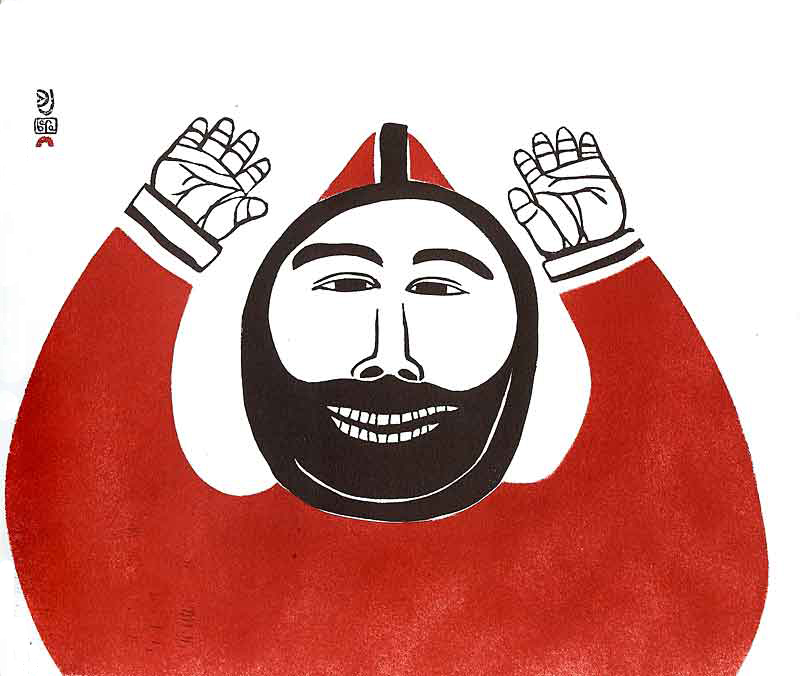
Hoy llegamos a las 100 mil visitas…Today we reach our 100 thousandth visitor at ZP…
.
Hoy, Zócalo Poets llegan a las cien mil visitas de nuestras páginas de web – desde mayo de 2011. Les agradecemos a ustedes – los lectores de ZP.
Los paises-visitantes los 10 principales son: México, EE.UU., Perú, Canadá, Bolivia, India, Reino Unido, Argentina, España, Francia.
.
Los 5 idiomas más buscados en nuestro sitio de web son:
1. Español
2. Inglés
3. Quechua
4. Maya
5. Francés
.
Entre 300+ aportes de poemas los 10 más buscados son:
Poemas de amor del idioma maya,
Poemas de amor en el idioma quechua / Sunqupa Harawinkuna,
Poemas de amor del idioma zapoteco,
Poemas para el Día de la Madre – la Madre Luna, la Madre de Dios y la Madre Patata – todos del idioma quechua,
Poema para el Día de Acción de Gracias,
Nezahualcoyotzin: in xochitl in cuicatl / Nezahualcóyotl: su ‘flor y canto”(poesía náhuatl)…y poemas del siglo xxi, inspirados en él,
Oración a La Virgen de Guadalupe,
Macuilxochitzin / Macuilxóchitl: poesía mexica del siglo xv,
Nicolás Guillén: Bongo Song / La canción del bongo,
Louise Bennett-Coverley and Jamaican Patois: a unique truth.
. . .
Zócalo Poets has just reached the 100,000 mark – that’s how many of you have visited our multilingual poetry website since we began in May of 2011.
We are grateful to our readers – keep spreading the word! Poetry enlarges our lives, and its emotional, intellectual and spiritual value for us cannot be quantified; we need it.
.
Our top ten visitor-countries are:
Mexico, U.S.A., Peru, Canada, Bolivia, India, United Kingdom, Argentina, Spain, and France.
.
Our 5 most-searched-for poem-languages are:
1. Spanish
2. English
3. Quechua
4. Maya
5. French
.
Among 300-plus searched-for poetry posts our top 10 are:
Poemas de amor del idioma maya,
Poemas de amor en el idioma quechua / Sunqupa Harawinkuna,
Poemas de amor del idioma zapoteco,
Poemas para el Día de la Madre – la Madre Luna, la Madre de Dios y la Madre Patata – todos del idioma quechua,
Poema para el Día de Acción de Gracias,
Nezahualcoyotzin: in xochitl in cuicatl / Nezahualcóyotl: su ‘flor y canto”(poesía náhuatl)…y poemas del siglo xxi, inspirados en él,
Oración a La Virgen de Guadalupe,
Macuilxochitzin / Macuilxóchitl: poesía mexica del siglo xv,
Nicolás Guillén: Bongo Song / La canción del bongo,
Louise Bennett-Coverley and Jamaican Patois: a unique truth.
. . . . .
Illustration: ” Joyfully I see ten caribou ! ” Stonecut print by Inuit artist Kananginak Pootoogook
Audrey Lorde and Essex Hemphill: Mothers and Fathers
Posted: June 18, 2013 Filed under: Audre Lorde, English, Essex Hemphill Comments Off on Audrey Lorde and Essex Hemphill: Mothers and Fathers.
Audre Lorde and Essex Hemphill…
Two Black-American poets: one a New Yorker from Harlem with family roots in Grenada and Barbados, the other growing up in Washington D.C. with roots in Columbia, South Carolina; one a passionately political Lesbian with children, the other a passionately political Gay man who would die of complications from AIDS. Both of these writers, in poems and essays combining clear thinking with deep feeling – and in the facts of their lived lives – sought to widen what later came to be known as “identity politics”. Their work goes far beyond it, establishing a universality of truth. In the poems below Lorde and Hemphill reflect upon the meaning of relationship (and sometimes the lack thereof) with their mothers and fathers. These are poems of great intimacy and intelligence with head and heart in thrilling unison.
.
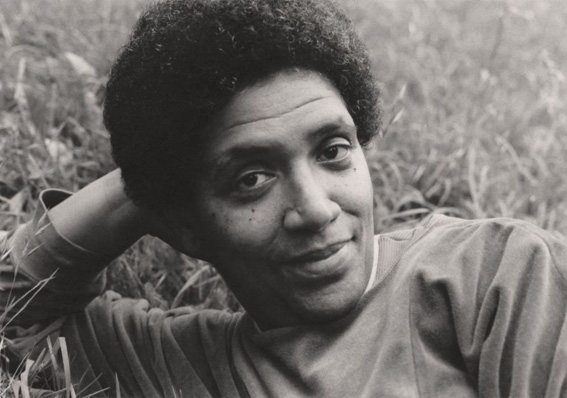 Audre Lorde in Berlin_1984_photograph © Dagmar Schultz
.
Audre Lorde (1934 – 1992)
“Legacy – Hers”
.
When love leaps from my mouth
cadenced in that Grenada wisdom
upon which I first made holy war
then I must reassess
all my mother’s words
or every path I cherish.
.
Like everything else I learned from Linda*
this message hurtles across still uncalm air
silent tumultuous freed water
descending an imperfect drain.
.
I learn how to die from your many examples
cracking the code of your living
heroisms collusions invisibilities
constructing my own
book of your last hours
how we tried to connect
in that bland spotless room
one bright Black woman
to another bred for endurance
for battle
.
island women make good wives
whatever happens they’ve seen worse…
.
your last word to me was wonderful
and I am still seeking the rest
of that terrible acrostic
.
(from Lorde’s collection The Marvelous Arithmetics of Distance, 1993)
*Linda was the name of Lorde’s mother.
. . .
Audre Lorde
“Father Son and Holy Ghost”
.
I have not ever seen my father’s grave.
.
Not that his judgement eyes have been
forgotten
nor his great hands’ print
on our evening doorknobs
one half turn each night
and he would come
drabbled with the world’s business
massive and silent as the whole day’s wish
ready to redefine each of our shapes –
but that now the evening doorknobs wait
and do not recognize us as we pass.
.
Each week a different woman –
regular as his one quick glass each evening –
pulls up the grass his stillness grows
calling it week. Each week
A different woman has my mother’s face
and he, who time has,
changeless.
must be amazed
who knew and loved but one.
.
My father died in silence, loving creation
and well-defined response.
He lived
still judgements on familiar things
and died
knowing a January 15th that year me.
.
Lest I go into dust
I have not ever seen my father’s grave.
.
(1968, revised 1976)
. . .
Audre Lorde
“Inheritance – His”
.
I
.
My face resembles your face
less and less each day. When I was young
no one mistook whose child I was.
Features build colouring
alone among my creamy fine-boned sisters
marked me *Byron’s daughter.
.
No sun set when you died, but a door
opened onto my mother. After you left
she grieved her crumpled world aloft
an iron fist sweated with business symbols
a printed blotter. dwell in a house of Lord’s
your hollow voice chanting down a hospital corridor
yea, though I walk through the valley
of the shadow of death
I will fear no evil.
.
II
.
I rummage through the deaths you lived
swaying on a bridge of question.
At seven in Barbados
dropped into your unknown father’s life
your courage vault from his tailor’s table
back to the sea
Did the Grenada treeferns sing
your 15th summer as you jumped ship
to seek your mother
finding her too late
surrounded with new sons?
.
Who did you bury to become enforcer of the law
the handsome legend
before whose raised arm even trees wept
a man of deep and wordless passion
who wanted sons and got five girls?
You left the first two scratching in a treefern’s shade
the youngest is a renegade poet
searching for your answer in my blood.
.
My mother’s Grenville tales
spin through early summer evenings.
But you refused to speak of home
of stepping proud Black and penniless
into this land where only white men
ruled by money. How you laboured
in the docks of the Hotel Astor
your bright wife a chambermaid upstairs
welded love and survival to ambition
as the land of promise withered
crashed the hotel closed
and you peddle dawn-bought apples
from a pushcart on Broadway.
Does an image of return
wealthy and triumphant
warm your chilblained fingers
as you count coins in the Manhattan snow
or is it only Linda
who dreams of home?
.
When my mother’s first-born cries for milk
in the brutal city winter
do the faces of your other daughters dim
like the image of the treeferned yard
where a dark girl first cooked for you
and her ash heap still smells curry?
.
III
.
Did the secret of my sisters steal your tongue
like I stole money from your midnight pockets
stubborn and quaking
as you threaten to shoot me if I am the one?
the naked lightbulbs in our kitchen ceiling
glint off your service revolver
as you load whispering.
.
Did two little dark girls in Grenada
dart like flying fish
between your averred eyes
and my pajama-less body
our last adolescent summer
eavesdropped orations
to your shaving mirror
our most intense conversations
were you practising how to tell me
of my twin sisters abandoned
as you had been abandoned
by another Black woman seeking
her fortune Grenada Barbados
Panama Grenada.
New York City.
.
IV
.
You bought old books at auction
for my unlanguaged world
gave me your idols Marcus Garvey Citizen Kane
and morsels from your dinner place
when I was seven.
I owe you my Dahomeyan jaw
the free high school for gifted girls
no one else thought I should attend
and the darkness that we share.
Our deepest bonds remain
the mirror and the gun.
.
V
.
An elderly Black judge
known for his way with women
visits this island where I live
shakes my hand, smiling
“I knew your father,” he says
“quite a man!” Smiles again.
I flinch at his raised eyebrow.
A long-gone woman’s voice
lashes out at me in parting
“You will never be satisfied
until you have the whole world
in your bed!”
.
Now I am older than you were when you died
overwork and silence exploding in your brain.
You are gradually receding from my face.
Who were you outside the 23rd Psalm?
Knowing so little
how did I become so much
like you?
.
Your hunger for rectitude
blossoms into rage
the hot tears of mourning
never shed for you before
your twisted measurements
the agony of denial
the power of unshared secrets.
.
(Written January – September 1992. From Lorde’s The Marvelous Arithmetics of Distance)
*Byron was the name of Lorde’s father.
. . . . .
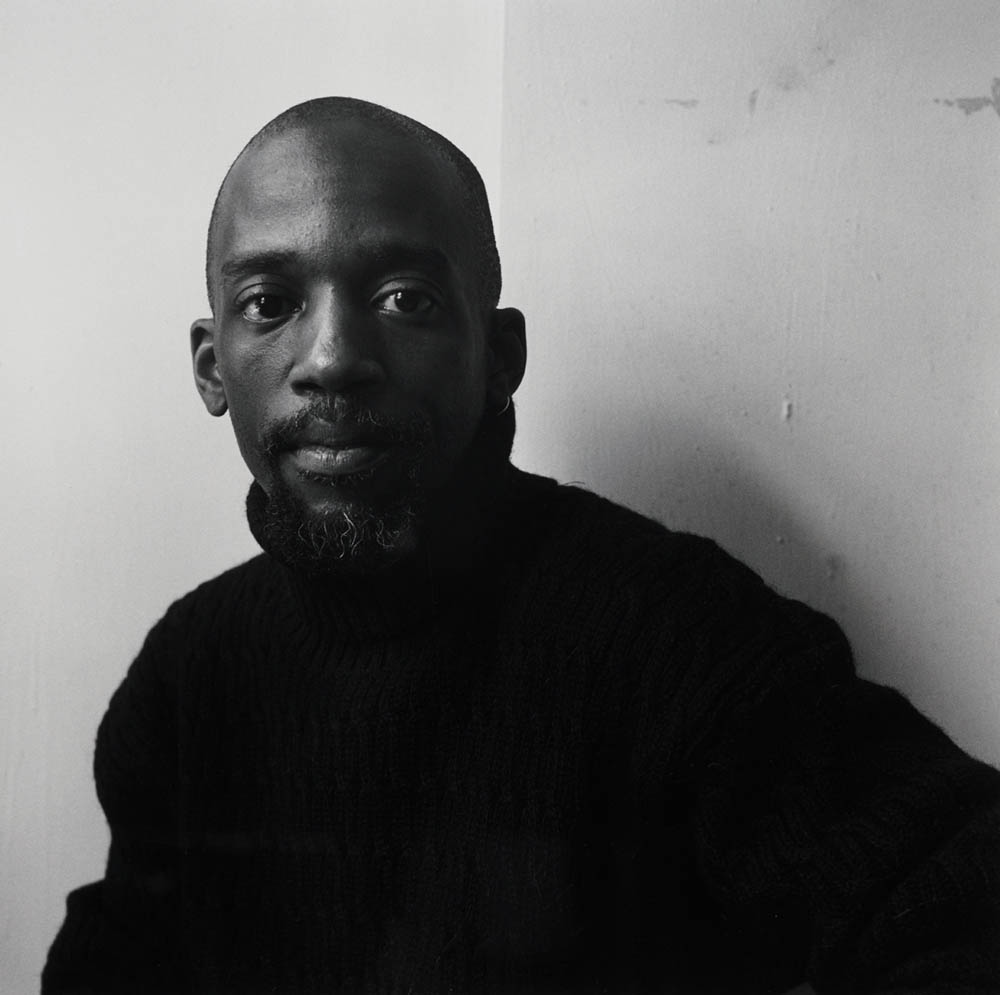 Essex Hemphill in 1991
.
Essex Hemphill (1957 – 1995)
“The Father, Son, and Unholy Ghosts”
.
We are not always
the bravest sons
our fathers dream.
Nor do they always
dream of us.
We don’t always
recognize him
if we have never
seen his face.
We are suspicious
of strangers.
Question:
is he the one?
.
I stand waist deep
in the decadence of forgetting.
The vain act of looking the other way.
Insisting there can be peace
and fecundity without confrontation.
The nagging question of blood hounds me.
How do I honour it?
.
I don’t understand
our choice of angers,
your domestic violence,
my flaring temper.
I wanted tenderness
to belong to us
more than food or money.
The ghost of my wants
is many things:
lover, guardian angel,
key to our secrets,
the dogs we let sleep.
The rhythm of silence
we do not disturb.
.
I circle questions of blood.
I give a fierce fire dance.
The flames call me.
It is safe. I leap
unprepared to be brave. I surrender
more frightened of being alone.
I have to do this
to stay alive.
To be acknowledged.
Fire calls. I slither
to the flames
to become birth.
.
A black hole, gaseous,
blisters around its edge,
swallows our estranged years.
They will never return
except as frightening remembrances
when we are locked in closets
and cannot breathe or scream.
I want to be free, daddy,
of the black hole between us.
The typical black hole.
If we let it be
it will widen enough
to swallow us.
Won’t it?
.
In my loneliest gestures
learning to live
with less is less.
I forestalled my destiny.
I never wanted
to be your son.
You never
made the choice
to be my father.
What we have learned
from no text book:
is how to live without
one another.
How to evade the stainless truth.
Drug pain bleary-eyed.
Harmless.
Store our waste in tombs
beneath the heart,
knowing at any moment
it could leak out.
And do we expect to survive?
What are we prepared for?
Trenched off.
Communications down.
Angry in alien tongues.
We use extreme weapons
to ward off one another.
Some nights, our opposing reports
are heard as we dream.
Silence is the deadliest weapon.
We both use it.
Precisely. Often.
.
(1987)
. . .
“In the Life”
.
Mother, do you know
I roam alone at night?
I wear colognes,
tight pants, and
chains of gold,
as I search
for men willing
to come back
to candlelight.
.
I’m not scared of these men
though some are killers
of sons like me. I learned
there is no tender mercy
for men of colour,
for sons who love men
like me.
.
Do not feel shame for how I live.
I chose this tribe
of warriors and outlaws.
Do not feel you failed
some test of motherhood.
My life has borne fruit
no woman could have given me
anyway.
.
If one of these thick-lipped,
wet, black nights
while I’m out walking,
I find freedom in this village.
If I can take it with my tribe
I’ll bring you here.
And you will never notice
the absence of rice
and bridesmaids.
.
(1986)
. . .
Audre Lorde poems © The Audre Lorde Estate
Essex Hemphill poems © Cleiss Press
. . . . .
 Zócalo Poets