Kofi Awoonor: “America” y “A los viejos poetas”
Posted: August 16, 2015 Filed under: English, Kofi Awoonor, Spanish | Tags: African poetry - Ghana Comments Off on Kofi Awoonor: “America” y “A los viejos poetas”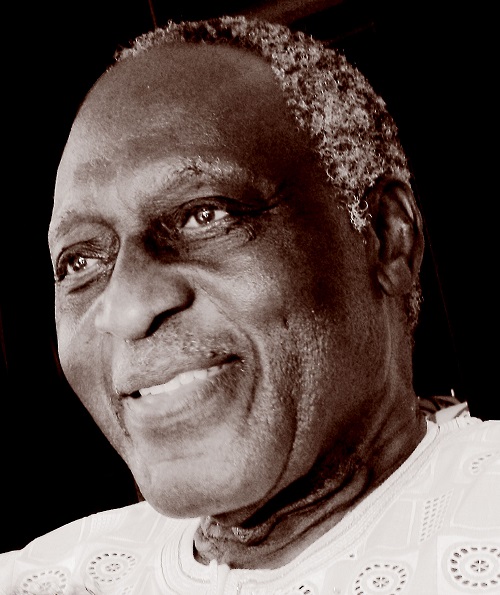
. . .
Kofi Awoonor (Ghanaian poet, 1935-2013)
America
.
A name only once
crammed into the child’s fitful memory
in malnourished villages,
vast deliriums like the galloping foothills of the Colorado:
of Mohawks and the Chippewa,
horsey penny-movies
brought cheap at the tail of the war
to Africa. Where indeed is the Mississippi panorama
and the girl that played the piano and
kept her hand on her heart
as Flanagan drank a quart of moonshine
before the eyes of the town’s gentlemen?
What happened to your locomotive in Winter, Walt,
and my ride across the prairies in the trail
of the stage-coach, the gold-rush and the Swanee River?
Where did they bury Geronimo,
heroic chieftain, lonely horseman of this apocalypse
who led his tribesmen across deserts of cholla
and emerald hills
in pursuit of despoilers,
half-starved immigrants
from a despoiled Europe?
What happened to Archibald’s
soul’s harvest on this raw earth
of raw hates?
To those that have none,
a festival is preparing at graves’ ends
where the mockingbird’s hymn
closes evening of prayers
and supplication, as
new winds blow from graves
flowered in multi-coloured cemeteries,
even where they say the races are intact.
.
From: The Promise of Hope: New and Selected Poems, 1964-2013 (University of Nebraska Press, 2014)
. . .
Kofi Awoonor (1935-2013) was born George Awoonor-Williams in Wheta, Ghana, to ethnic Ewe parents. He was a poet, literary critic, and professor of comparative literature; he served as a kind of “ambassador” for Ghana. Awoonor earned a BA from University College of Ghana, an MA from University College, London, and a PhD in comparative literature from SUNY at Stony Brook, New York state, U.S.A.. He wrote novels, plays, political essays, literary criticism, and several volumes of poetry, including Rediscovery and Other Poems (1964), Night of My Blood (1971), Ride Me, Memory (1973), The House by the Sea (1978), The Latin American and Caribbean Notebook (1992), and a volume of collected poems, Until the Morning After (1987).
.
Awoonor’s grandmother was an Ewe dirge singer, and the form of his early poetry draws from the Ewe oral tradition. He translated Ewe poetry in his critical study Guardians of the Sacred Word and Ewe Poetry (1974). Other works of literary criticism include: The Breast of the Earth: A Survey of the History, Culture, and Literature of Africa South of the Sahara (1975).
.
In the early 1970s, Awoonor served as chairman of the Department of Comparative Literature at SUNY Stony Book. He returned to Ghana in 1975 to teach at University College of Cape Coast. In Ghana, he was arrested and tried for suspected involvement in a coup d’état. He was imprisoned without trial and was later released; he wrote about his time in jail in The House by the Sea. Awoonor resumed teaching after his prison sentence. In the 1980s he was the Ghanaian ambassador to Brazil and Cuba and served as ambassador to the United Nations from 1990 to 1994; in 1990 he published Ghana: A Political History from Pre-European to Modern Times.
.
Awoonor is author of the novels This Earth, My Brother (1971) and Comes the Voyager at Last: A Tale of Return to Africa (1992). He died randomly with other innocents in the Westgate shopping-mall attack in Nairobi, Kenya in September of 2013.
. . .
“A los viejos poetas” por Kofi Awoonor de Ghana – su poema traducido en español durante El Festival de la Poesía Internacional de Medellín (Colombia), 2007:
Ghana’s Rising Star: Rocky Dawuni
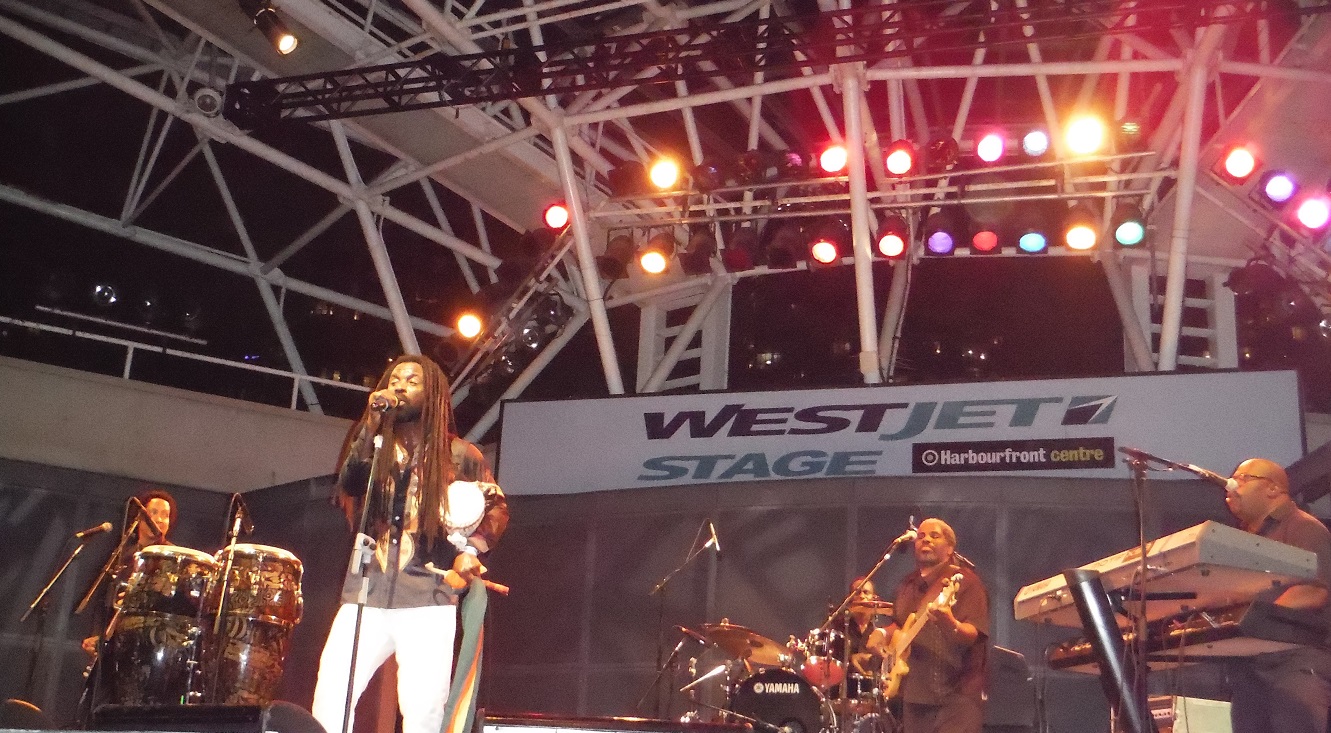
Posted: August 15, 2015 Filed under: IMAGES Comments Off on Ghana’s Rising Star: Rocky Dawuni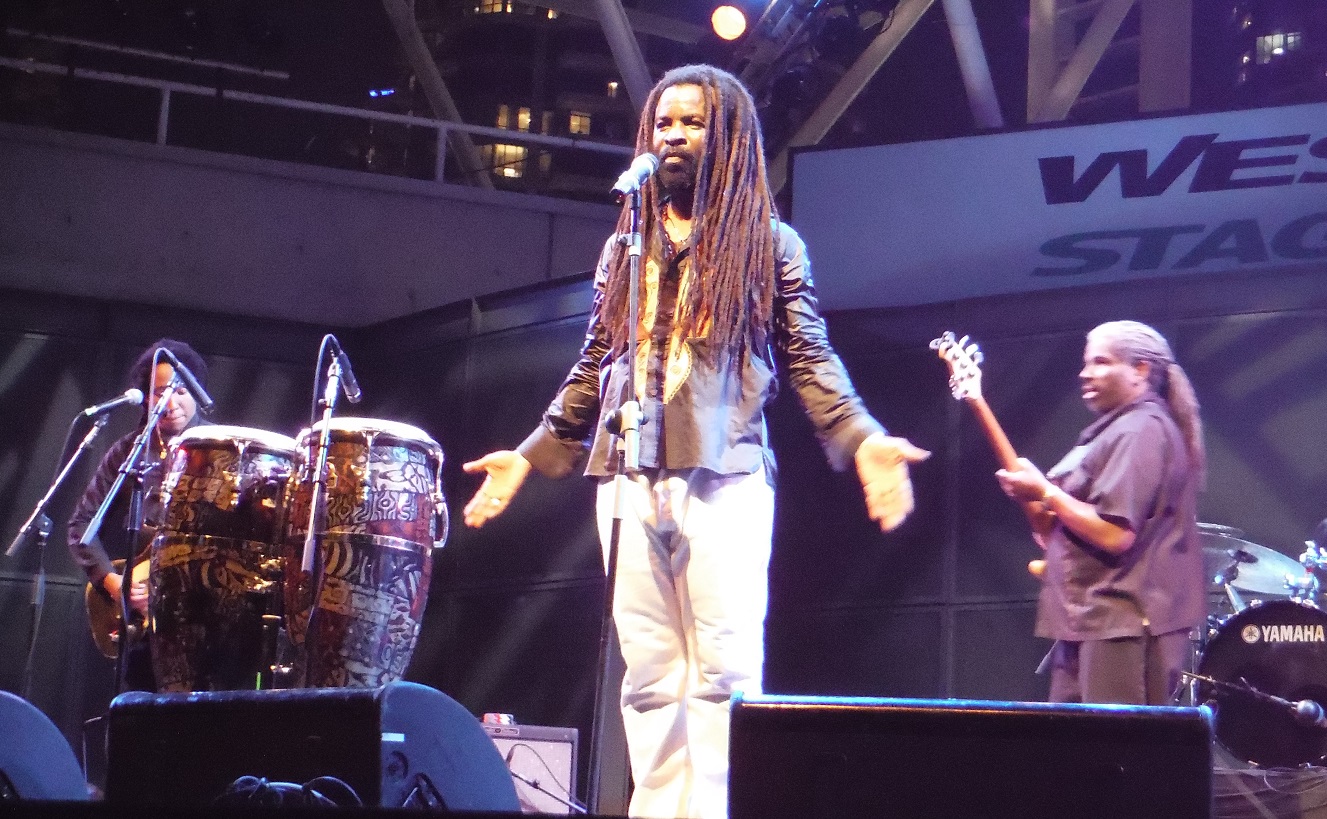 Singer/songwriter Rocky Dawuni performed with his band at Harbourfront last night. All day and evening was rainy but those of us who made the trek down to Lake Ontario got swept up in the Ghanaian music artist’s “positive vibrations”. Rambunctious joy and passionate sincerity were the hallmarks of Dawuni’s personality, and for style and content the influence of Fela Kuti and – most especially – Bob Marley, made for a Best of Summer 2015 experience here in Toronto!

Poets from Ghana: New Voices in 2015: Adwini-Poku, Dadson, Atsu, Nartey, Kyeraah
Posted: August 12, 2015 Filed under: English | Tags: African poetry - Ghana Comments Off on Poets from Ghana: New Voices in 2015: Adwini-Poku, Dadson, Atsu, Nartey, Kyeraah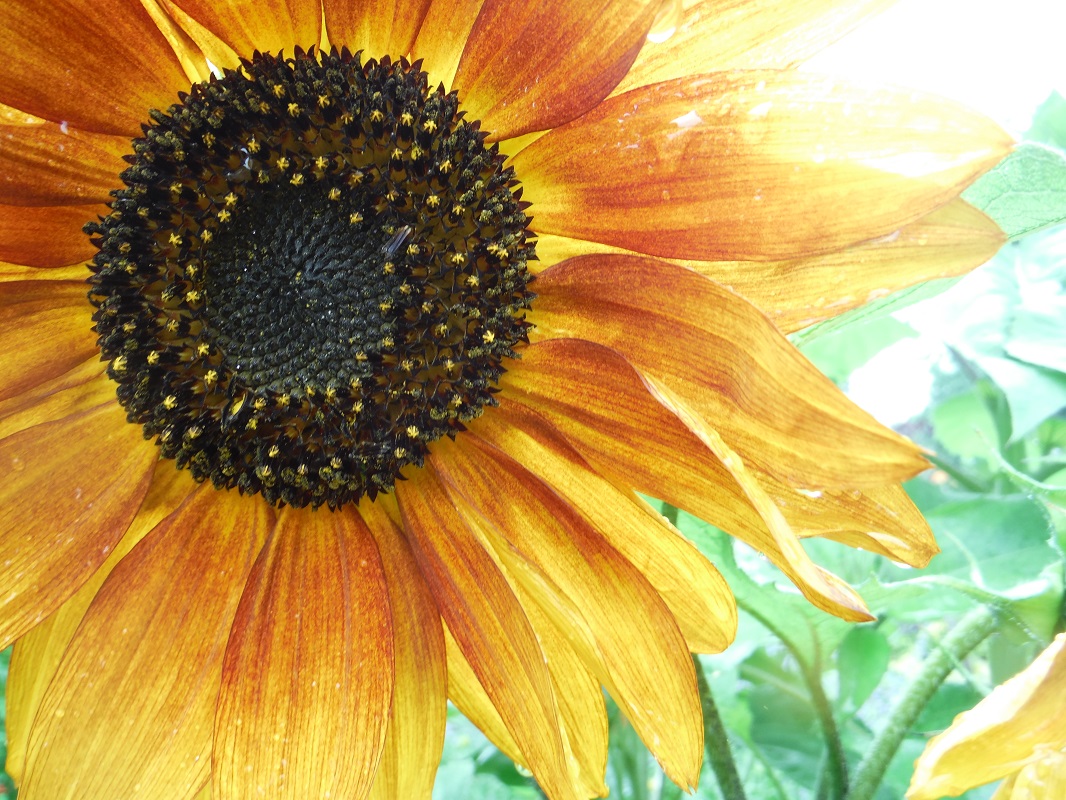
Lambert Adwini-Poku
“But Sometimes, When We Touch –”
.
But sometimes when we touch,
the tears of yesterday when eyes turned rain
and the heart felt alone in the crowd
that was when your voice set it free.
.
But sometimes when we touch,
the shadows of psychology and emotions
and the fullness of the mind with no data
that was when your face melted away loneliness.
.
But sometimes when we touch,
the warmth of anger and of its illness
and when no distinction was made
that was when your embrace smiled at me.
.
But sometimes when we touch,
the deafening of the sense organs
and when eyes, nose, and ears were meaningless
that was when your note in my hand breathed on me.
.
But sometimes when we touch,
the concept of reality and destiny
and of may and/or may not
that is when our lives are determined.
.
But sometimes when we touch,
we touch love and friendship.
. . .
Kay Dadson
“Paper Planes”
.
Sometimes, we fly like paper planes
Gliding in the air, silent, with no roar of a jet.
Sometimes proud, putting on the mane like we’re never gonna hit the dirt.
Changing our lanes every time we get hurt.
With the least turbulence and bad weather
We turn around or pummel to the ground when we experience danger.
Fly like a jumbo;
Not depending solely on the flow.
Fly majestically. Ride the wild winds.
Break through the ice in the clouds.
Even if you begin to fall,
Do not enter the state of dismay, whether in a stall.
This ain’t no mayday, do not make that call.
You may have struck ice,
but believe in yourself.
You ain’t no titanic.
This day isn’t that different. Enjoy it.
It’s a can-day.
Fire the engines once again. Make that ascent.
Be a jetfighter. Let the stars cream.
Like a transformer, make some changes.
As the typhoon, ride the winds. Take the journey across.
Your weakness may be air-to-ground but I think we all agree:
that isn’t your purpose.
Be a sidewinder missile. Seek your target,
Don’t give up. Do not explode. No. Not just yet.
Like the shuttle, launch into space, out of this domain.
Not even the sky is your limit.
Time to close this piece. Returning to base.
Continue to be who you are. Be different.
. . .
Patrick K. Atsu
“The Bleeding Heart”
.
Serenity blushes the shadows mild
And blow soft wind like “pepi”
As your dent romances me with pains
That worm over my body like death.
.
Erecting my emotions like breath
As disappointments walk me through this journey of solitary
With my prints clapping in the sands
Hiding my fears in clouds of tears.
.
As if there were no you tomorrow
Here the scorching sun shivers
Sharing her cries over my head
To console this bereft heart
.
That bleeds in tons of memories
With skips of pages one after the other
To silent the sweet tastes
That last but for a while.
.
It is this bleeding heart.
. . .
Jonathan Nartey
“How did Death find Me?”
.
How did Death find me?
I thought I was just dreaming.
O, like seriously:
I slapped death.
I know you can’t!
But I just did.
.
Look!
This is how I reprobated his blue.
I fetched the sky for him to sip
Since his throat was dusty
Like the harmattan.
Yet still a smile did not dance on his face.
.
Again!
The waft of the volcano slapped him up
So he was dripping here like a crying bottle
Filled with unflustered water.
Poor you!
O poor you!
.
Look!
I pleaded with the heavens
For the seed of air
Since Mr. Death was dripping here
Like nobody’s business.
.
Hm, hm, hm.
I can’t believe this.
Mr. Death is indeed a Judas.
Upon all the things I did for you, Mr. Death,
You made me devour the knife.
.
O Mr. Death,
So can you crunch the moon?
.
O Mr. Death,
O Mr. Death,
Did you know deep within that
I’m more than a Victor?
No, you don’t!
Yes! I know very well you don’t!
. . .
Dorothy Kyeraah
“I’m Pressing On Still”
.
On rocky ground I did fall
But up I got and still am pressing on
Tears did soak my pillow all day
But my heart be not weary
Oh I am pressing on
My eyes still on the prize
Though my feet hurt
I shall not rest
‘Cos am still holding onto the prize
With sore feet and trembling hands
I will crawl to the throne
To receive my own crown
Even with tattered clothes
I will retire not till I get hold of the gold.
. . .
Dorothy Kyeraah
“Gazing at the Sun”
.
Gazing at the sun in the late of the day
I am lost in thought of life so infinite
What tomorrow brings so bleak my mind goes wandering
Yet in this element lies the seed of life
Going down it casts its beautiful bright light
A sight so spectacular it blows my mind
It gets me to wonder at the power of the creator
And the awesome beauty it beholds
Colours so bright you just name them
As the day closes and this beauty fades away
It is almost as if all hope is lost
Yet early next morning there it is
Mighty Sun from the east does appear
Vibrant and majestic it shines in all glamour
And powers the whole earth.
. . . . .
Michael Ray Burch: Translations from Japanese poets Kurihara Sadako and Takashi Tanemori
Posted: August 9, 2015 Filed under: English | Tags: Hiroshima and Nagasaki: 70th anniversary of the Atom Bomb horror Comments Off on Michael Ray Burch: Translations from Japanese poets Kurihara Sadako and Takashi Tanemori
Nagasaki Japan_August 8th 2015_eve of the 70th anniversary of the Atom Bomb Fat Man dropped on the city killing 70,000 people
The U.S.A. dropped atomic bombs on the Japanese cities of Hiroshima and Nagasaki on August 6th and August 9th, 1945. This was the final stage of the Second World War, taking place not in Europe but in Asia and the Pacific. The two August 1945 bombings killed approximately 129,000 people – the largest “single-day” killings in the entire history of human war; and they remain until the present day the only use of nuclear weapons for warfare. Tens of thousands died of radiation sickness in the months that followed – and the majority of the dead were civilians. On August 15th, Japan announced its surrender to the Allies, and in early September of 1945 Japan signed an international document/treaty, bringing WWII to an end.
. . .
Kurihara Sadako (a Hiroshima Bomb survivor)
Let Us Be Midwives!
(translation from the Japanese by Michael R. Burch)
.
Midnight . . .
the basement of a shattered building . . .
atomic bomb survivors sniveling in the darkness . . .
not a single candle between them . . .
the odour of blood . . .
the stench of death . . .
the sickly-sweet smell of decaying humanity . . .
the groans . . .
the moans . . .
Out of all that, suddenly, miraculously, a voice:
“The baby’s coming!”
In the hellish basement, unexpectedly,
a young mother had gone into labour.
In the dark, lacking a single match, what to do?
Scrambling to her side,
forgetting their own suffering . . .
. . .
Kurihara Sadako
War Close Up
(translated from the Japanese by Michael R. Burch)
.
Stirring bugles! Rousing martial music!
The announcer reporting “victory”
like some messenger from on high,
fanning, fanning the fervoured flames of battle!
.
Masterful state magicians materializing
in a wizardly procession,
spreading cleverly poisoned words
to bewilder reason!
Artistic expression abracadabra’d into state-sponsored magic!
The sound of boots, guns, bombs, cannons
as our army advances, advances, advances toward the enemy!
The thunder of our invincible tanks advancing! Alleluia!
The sudden, sweet gurgles of drowning enemy ships!
.
The radio broadcasts the sounds of battle:
A war hymn resounding to the skies,
sung by courageous men and women
who worship this cruel idol, War.
.
Oh, so powerful the merest whiff
addles even the most independent spirit—
the opium of patriotism!
the religion of race!
.
While on scenic islands
scattered like stepping stones across the globe,
and on farflung continents,
driven by boundless avarice,
the landlords rage and rave again,
instilling hatred in indigenous populations
then prodding, driving them into battle.
Full of high-sounding pretexts
inevitably adapted to expediency
they raise indisputable banners—
God is on our side!
Righteous war!
Holy war!
.
“Right” becomes the password of thieves.
They square their shoulders:
“To secure world peace,
annihilate
the evil opponent!”
.
They bark commands:
“For ten years, a hundred years,
fight to the last man, the last woman!”
The master magicians’ martial music
resounds magisterially;
fanatic bull-mad patriots
roar and run amok;
completely bewitched, the people carol in unison:
“O, let me die by the side of my sweet Sovereign!”
. . .
Takashi “Thomas” Tanemori
The Blade of Grass in a Dreamless Field
.
Only a few knew it existed;
No one knew its power;
The world would never be the same again,
Changing irrevocably and forever.
The six-hundred-year history of Hiroshima
Disappeared in the ashes,
On this Judgment Day, on this Morning!
(i)
Blameless souls forever vanish
on this morning, this judgment day.
Our silent cries, to heaven we appeal,
scattered like the ash of withered leaves.
Our ebbing souls
cling to that lonely sky;
we try in vain to escape this sea of flame.
Oh, Hiroshima, once my haven,
why has your life been sacrificed?
(ii)
The abounding sadness within my heart . . .
drowning my loneliness in tears of self-pity.
Four abandoned children;
wishing to feel our mother’s love,
just once more;
if only in our dreams.
The heat of yet another long night lingers.
Oh, Hiroshima, once my home,
my tears run dry waiting for the breaking dawn.
(iii)
My soul is torn—this rage inside,
an orphan of war;
why does this make me feel guilty?
Why do my neighbours turn away
or close their ears when I speak?
Bitterness poisons this innocent child,
I madly waste away.
Oh, Hiroshima, once my cradle,
I am waiting to die.
(iv)
Gathering remnants of my courage,
I stand alone in this notorious America, land of the enemy.
An outcast with slanted eyes,
I fall before the indifference of strangers;
sightlessly, they trample upon my dignity.
This life of anguish seems to be my destiny.
Praying for death, I endure time.
Oh, Hiroshima, once my comfort,
I am lost in dreams of revenge.
(v)
Budding leaves renew this tired place, this tired soul;
gently the rain is embraced—your love,
comforting this savaged heart.
A blade of grass emerges from the ashes,
and my heart becomes a light,
connecting me to heaven.
Living for one another, this is my path!
Oh Hiroshima, forever my love,
may my life become a bridge from you and others.
(vi)
At the dawn of the 21st century,
we honour this passage through darkness.
We must have the courage to enter
the void again . . . and again,
emerging with the gift of new life.
Healing only comes through learning to forgive
and making peace with our past.
Only then, will the wind whisper:
“Hibakusha, you have not lived in vain!”
. . .
Sadako Kurihara was present on August 6th, 1945 ,when the Atom Bomb was dropped on Hiroshima. It was at that moment that her life was transformed from being a shopkeeper to becoming one of Japan’s most controversial poets. Her first major collection of poems, Black Eggs, published in 1946, was censored during the American Occupation because of her boldly addressing the horrors of the aftermath of the Bomb. The full volume of Black Eggs was not published until 1986. Over the years Kurihara has taken a stand on Japan’s aggressive rule in its Chinese occupation, the mistreatment of Koreans in Japan, plus the need for a world-wide ban on nuclear weapons. She was born in 1913 and died in 2005.
. . .
Takashi “Thomas” Tanemori (born 1938) is a “hibakusha“, and an Atomic Bomb survivor. After the bombing, he went from being the treasured Number One Son to being an Oyanashigo or “street urchin”. As he tried to survive after the loss of his parents, he became a “rat”, searching waste sites and garbage cans for food, just to stay alive in the rubble of post-war Japan. He fought constantly against a traditional society that showed no mercy to a “fatherless” child, and was ostracized by his fellow Japanese. Takashi’s life has been controlled by the emotion of Revenge, and he has lashed out at people for their icy unwillingness to help him. He emigrated to the United States in 1956, and, though he initially experienced prejudice and rejection, he has journeyed his way toward a vision of Hope.
. . .
Michael Ray Burch (born 1958) is an American poet and peace activist who lives in Nashville, Tennessee. He has translated the poems of Basho, Brecht, Allama Iqbal, Ono no Komachi, Miklós Radnóti, and Rainer Maria Rilke, among others.
. . . . .
Festival Kompa Zouk Ontario 2015 – et poèmes par les haïtiens Joelle Constant, Emanyel Ejen, Suze Baron, Dominik Batravil, etc.
Posted: August 5, 2015 Filed under: Creole / Kréyòl, Emanyel Ejen, English, French, Joelle Constant Comments Off on Festival Kompa Zouk Ontario 2015 – et poèmes par les haïtiens Joelle Constant, Emanyel Ejen, Suze Baron, Dominik Batravil, etc.

Une famille congolaise qui habite á Toronto…prête pour Le Festival Kompa Zouk Ontario 2015_02 août 2015
Translations from Creole (Kréyòl) into English by Merete Mueller:
Dominik Batravil
PAPYE 33
.
Depi lapli
Pa vini ak van
Siyati chovsouri
Chaje mi prizon
PAPER 33
As long as rain
marks no wind
signatures of bats
burden prison walls
. . .
Woudof Mile
Yo Ti Fanm Sezan Ki Kanpe
On ti fanm sezan
ki kanpe
kwen gran ri ak ri demirak
a onze diswa
lan yon to wob fatigue
On ti fanm sezan
ki kanpe kon yon I
anba on galeri
Li pa p’tann pesonn moun
Selman lakay li
manman-l grangou
prêt pou mouri
lit pito ret kanpe la
gwo onze diswa
lan fredi anba yon galeri
sou gran ri.
A SIXTEEN YEAR OLD GIRL STANDS
Sixteen year old girl
standing
corner of Miracle and Main
at eleven p.m.
in a faded dress
A sixteen year old girl
stands alone
under the arcade
Not waiting for the bus
Not waiting for anybody
at home her
starving mother is
about to die
But she’d rather be standing
here with the eleven
p.m. crowd in the cold
on Main Street.
. . .
Suze Baron
YO DI
Yo di
san kretyen
enrichi
late
Si sete vre
Si sete vret
mezanmi
ala diri
pitmi
ak mayi
ki ta genyen
la peyi
D’Ayiti
.
They say
human blood
enriches
soil
If that were true
If that were true
my friends
how rice
millet
and corn
would thrive
in
Haiti
. . .
Lenour Suprice
TI BO LANMOU LITTLE LOVE KISS
(Pou A-F.L.) (For A-F.L.)
Soley kouchan Sunlight reclines
Ti bouch ou your little mouth
K’ap pentire paints my eyes with
Syel grenn je-m flecks of sky
Fe dan-m siret siret My sweet mango tender
Nan dan-w between your teeth
Fe dan-w siret siret Your sweet mango tender
Nan dan-m between mine
Fe mwen domi I fall asleep
Nan bra-w in your arms
Fe ou domi You fall asleep
Anba-m down below me
. . .
Merete Mueller:
Creole Poetry from Haiti:
These are poems that I translated as part of a poetry project in 2005, as a student at Naropa University.
Despite not speaking the Creole language, I was inspired to explore the poetry of Haiti by my dear friend, Dominique, who is Haitian and also a writer. I first began reading Haitian poetry in an attempt to learn about the culture of a person whom I admire and care for, and ended up realizing how little I knew about the history of Haiti, despite my own country’s (U.S.A.) influence on its ups and downs.
I made a conscious choice to translate poetry originally written in Creole, rather than French, because Creole has long been the language of Haiti’s dis-empowered majority—less than 10% of the country can read and speak French, despite the fact that it was the country’s official language until 1961. For many writers in Haiti and in the Haitian diaspora, to write in Creole is a political statement, a conscious effort to include all Haitians, and not just an educated élite.
As I dug into the Creole language, word by word, I discovered for the first time that a language is actually a worldview.
Syntax and vocabulary are not only tools for communication, but for organizing and understanding the world that surrounds us. The moment that I really understood this was when I looked up the word “poverty” in my Creole-English dictionary and found that it was also the used to describe a “hollow tin can.” The power of this image is breathtaking, and one that belongs solely to Creole.
I decided to dig up these poems and share them online when I read an email from Dominique…She wrote that amidst the heartbreak of seeing the country that she loves so much in devastation (the 2010 earthquake), and her worry for family members still living there, she had been focusing on the beauty of the country, its history and culture:
“The most beautiful sight I remember ever seeing was in Haiti. And people associate Haiti with ugly, but I see beauty in its complicated history. I see beauty in what I know of Haiti, not what people think they know or read.” I believe that it is important for us to send our appreciation to the people of Haiti, for their accomplishments and artistic vitality, as well as our aid during difficult times. Let’s remember that it’s a country of life, and not just devastation.”
. . .
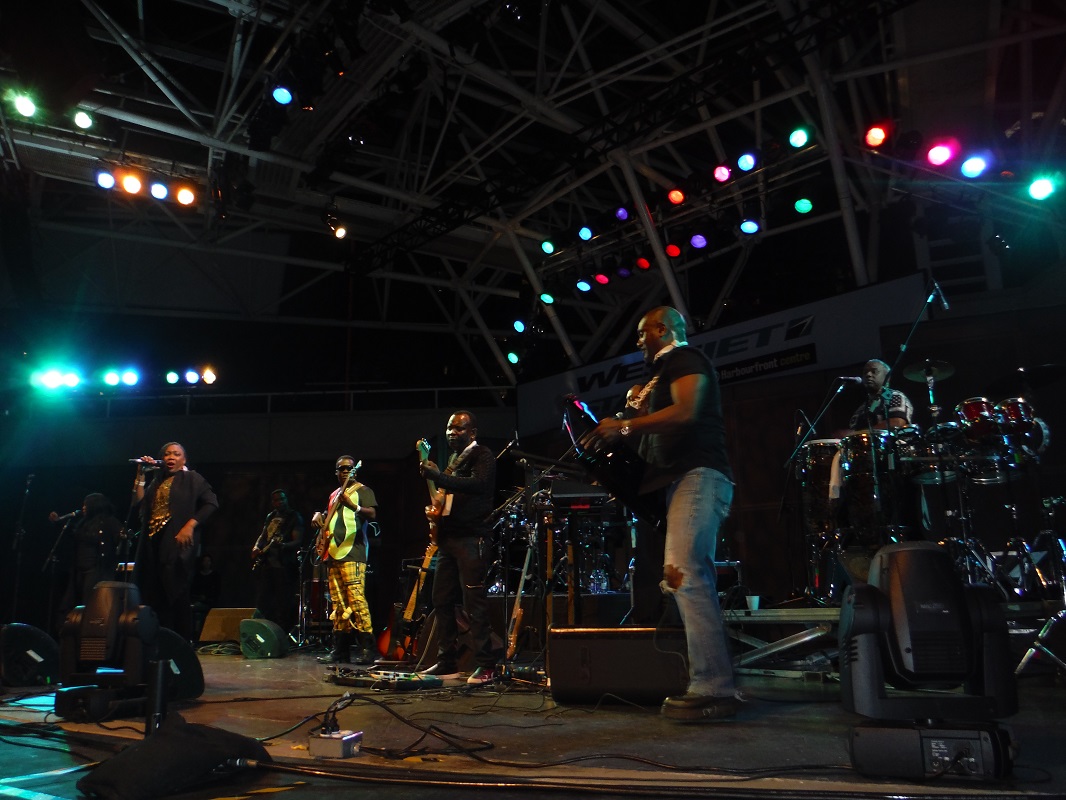
Les Phantoms avec King Kino_Harbourfront, Toronto_02 août 2015
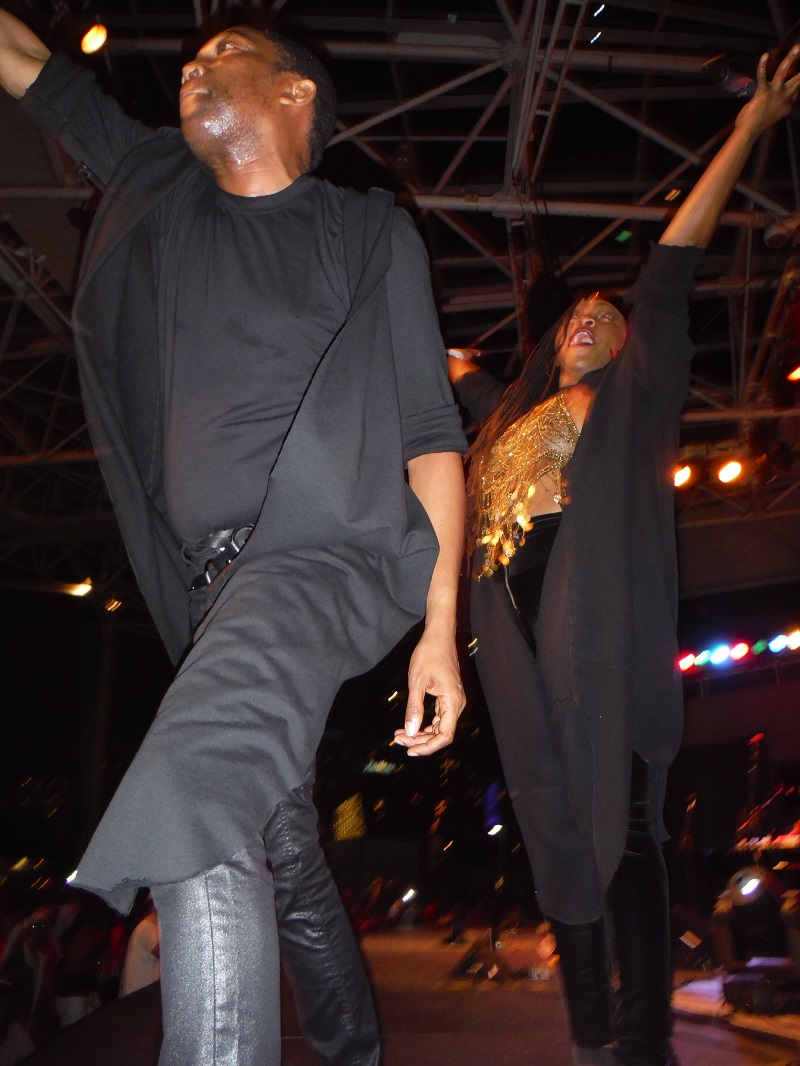
Chanteurs haïtiens du grand spectacle du groupe Les Phantoms_Festival Kompa Zouk Ontario 2015
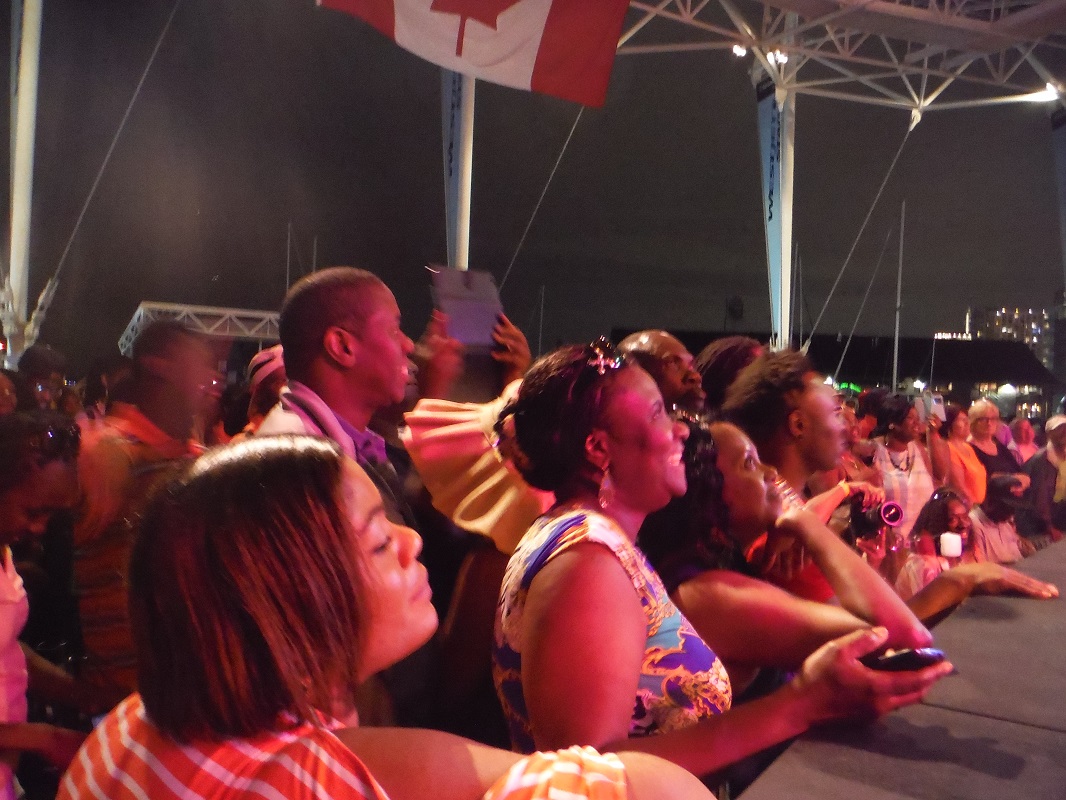
La joyeuse foule durant le spectacle-musicale “zouk” à Harbourfront, Toronto_02 août 2015
EMANYEL EJEN
WONGOL POEM
Pwezi Wongol
Pou Ayida
I.
Gendele m’rete
M’gade-ou Ayida
Loloj-mwen vire
Tet-ou gridap se vre
Men lannuit genle
Domi nan cheve-ou
Ayida o!
Soley galonnen
Nan tout plenn lakay
Timounn-yo manje grangou
Vant deboutonnen
Poban lannuit
Tonbe sou fey lavi
Lalin-nan tounen biva
Men nwase-a pews konpe!
Ayida o!
Kile jou-a va sevre?
Zonbi sige l’ale
Zetwal file tonbe
Zwazo leve chante
Nan veye kay Ayida
Zekle file pase
Zam rale tire
Zanset leve kanpe
Deblozay pete kay Ayida
I.
Sometimes I stop
I look at you Ayida
My head spins
Your hair may be kinky
but the night rests
in its tangles
Ayida o!
sunlight pours onto
each pity of our home
Children feasting on hunger
bellies unscrewed
Night fills a jar
collapses into life, paper thin
daydreams become blotters but
man, darkness is thick
Ayida o!
When will daylight attack?
Zombies struggle to die
Stars streak, fall
Birds wake, sing
Watch over the house, Ayida
Lightning shoots through
weapons drawn
Ancestors rise erect
Riots shake the house, Ayida
II.
Youn zetwal file tonbe
Fann fonten tet-mwen
Pakanpak
Youn loray gwonde tonbe
Nan mitan zantray-mwen
Tidife boule kale nan ke-m tou wouj
Ou met koupe-m
Rache-m jete-m
Ou met boule-m
Fe chabon ak mwen
Zwazo p’ap sispann
Fe nich nan rasin-mwen
Lespwa p’ap bouke
Fleri nan ke-m
Mwen se samba
Rasin-mwen pa gen tobout
II.
Star sharpens and falls
splits my forehead
temple to temple
Lightning burns
within my gut
Flames hatch in
my pounding heart
You can cut me off
uproot me, toss me away
You can burn me
into charcoal
Birds won’t quit
nesting in my roots
Hope doesn’t wither
but blossoms in me
I am a poet
my roots grow thick
III.
Le youn fledize blese
A dize tapan
Li mouri tetanus
Pa gen anyen nan sa
Le youn choublak senyen
San ko-l benyen ko-l
Wanganeges rele
Sa pa di anyen
Men le youn pye flanbwayan
Fe emoraji
Tout zwazo vole gage
Nan ekziltik y’al chante
Lot bo dlo y’al kriye
Lapenn sa k’rete deye
Van pote nouvel
Nouvel gaye
Zorey Ayida Konen
Li pa tande anyen
III.
When a ten o’clock flower is wounded
at ten o’clock sharp
It dies of tetanus
Nothing gained
When one hibiscus bleeds, its
body bathed in its own blood
hummingbirds cry out
but say nothing
Here, when one poinciania bush
hemorrhages, all the birds
scratch to leave the cockfight
In exile their singing fades
Across the water their weeping fades
Sorrow for those left behind
Wind brings and
scatters the news
Ayida’s ears ring
She hears nothing
IV.
Chak gout lannuit ki koule
Se youn tas kafe anme nan ke-nou
Nan je-nou lawouze koule
Detenn kouch poud
Nan machwa douvanjou
Malfini gagannen jou
Beke soley nan grenn je
Limye bite twa fwa
Anvan li trepase gran jounen
Tout kat libete-nou anba kod
Rev-nou mezire nan timamit
Silans-nou fele
Pasyans-nou kankannen sou nou
Men oumenm ki mezire node
Ki lonnen jipon-ou
Nan kat pwendino
Ki peze lanme nan balans-ou
Loray pete twa fwa nan patmen-ou
Le van kase kod
Ki mounn ki va koupe jaret-li
Le lanme souke jipon-l
Ki mounn ki va di-l san lizay
Le loray va bat kalinda-a
Ki mounn ki va leve danse
IV.
Each drop that sinks through the night
Is a cup of bitter coffee in our stomachs
Dew trickles from our eyes
streaks the gunpowder
that coats the jaws of dawn
Hawk strangles daylight
Pecks sunlight into pieces
Light flickers three times
Before the whole day dies
All four freedoms under arrest
Our dreams held in tin cans
Our silence breaks
Patience blisters among us
You watch for the storm
measuring out your hem
to the four directions
You weigh the ocean on scales
Thunder cracks three times in your palm
When wind breaks the law
Whose blade will gash its haunches?
When the ocean shakes its underskirt
Who will say it has no breeding?
When thunder comes beating the kalinda
Who will rise to dance?
. . .
Merete Mueller’s
Notes on “Wongol Poem”:
The Wongol is a form of poetry developed in Haiti during the 1960s. Traditionally a poem of two to six lines, the Wongol conveys a brief message expressing deep discontent against the status-quo. Wongols were meant to inspire dissent towards the government.
The Kalinda were the nocturnal dances performed before the Haitian Revolution, probably to conceal the outlawed practices of Voudun ceremonies.
The Zombie is a constant theme in Haitian literature and poetry. Jean Zombi, aiding in the execution of all remaining French settlers after the Haitian Revolution, forced men to strip naked before having their stomachs slit open. In Voudun, the zombie is a dead person resurrected through sacred ritual. After being resurrected, the body has no will of its own, remaining under the control of whomever performed the ritual. Figuratively, the zombie has come to represent an easily manipulated, apathetic person with little awareness of his or her surroundings.
In Rasin-mwen pa gen tobout, the last line of Part II, gen, which I have translated as ‘grow’, can also be translated as ‘earn’. Tobout, ‘thick’ or ‘tough’, also means “prison cell”. While one meaning of the line is “My roots grow thick”, Ejen is also saying, “My origins earn me a prison cell”.
. . .
Emanyel Ejen (born Emmanuel Eugène, in 1946) – pseudonym Manno Ejen – was forced to leave Haiti, but chose to return in 1986, after the end of the Duvalier régime. Upon returning, he co-founded the weekly Creole newspaper Libete (Freedom) in Port-au-Prince, where he currently lives and serves on the newspaper’s editorial board.
Né à Cuba en 1946 de parents haïtiens, Emmanuel Eugène vivait à Montréal pour plus de trente ans. Il est ouvrier et poète. Sa poésie engage le meilleur de nous-mêmes : l’enfance, l’amour, l’espoir.
. . .
Jeanie Bogart Jourdain
Distance
.
Je marche pieds nus
déshabillée
dans les ruelles de ton coeur
tous les sentiers
me mènent à toi
là, je retrouve
mon lever de soleil
mes jeux de cache-cache
parler sans cesse
continuer d’avancer
ce que nous réserve l’avenir
mystère
décembre
le froid pénètre mon cerveau
Père Noël m’a oubliée
j’essaie de tendre la main
au-delà des frontières
pour que nos doigts
puissent se toucher
s’électriser
jusqu’au tressaillement
je t’envoie mon coeur
tu m’envoies le tien
ils restent suspendus
en cours de route
gelés par le froid
d’Amérique du nord
un verre de rhum
comme je les aime
un petit coup fil
au milieu de la nuit
quelques mots qui me glacent
qui me brûlent
qui ressuscitent mes sens
ma passion
mes désirs
mes rêves
mes sensations
mes vilaines pensées
une si longue distance
condamné notre cœur
de côté l’amour
. . .
Distans
.
M ap mache pye atè
toutouni nan riyèl kè w
tout santye
mennen m yon sèl kote
de pla men w
se la m jwenn
solèy leve m
sere liben m
pale pale
mache bouske pi devan
sa demen sere pou nou
se mistè
mwa d desanm
gen yon fredi k antre
jouk nan sèvo m
tonton nwèl bliye m
m lonje menm tout longè
eseye fè l janbe fwontyè
wè si pwent dwèt nou
te ka touche
pase kouran
fè san n mache
mwen voye kè m ba ou
ou voye pa w ban mwen
yo ret kwoke nan wout
fredi lamerik dinò
fè yo tounen glas
yon vè wonm
jan m renmen l la
yon ti kout fil
nan mitan lanwit
de twa ti mo
ki fè m frèt fè m cho
ki reveye dènye sans mwen
pasyon mwen
anvi mwen
rèv mwen
sansasyon mwen
panse malelve mwen
yon distans lan mitan nou
kè nou kondane
lanmou fè jeretyen
. . .
Joelle Constant
Toi
.
Ton visage
Reflet de ta beauté intérieure
Ton expression
Témoin de ton cœur d’écrivain
Tes lèvres
Porte-parole de tes amours non avouées
Tes mains
Messagers infatigables de ta tendresse
Tes yeux
Porteurs de tes désirs inassouvis
Ton corps
Aimant attirant le pôle opposé
. . .
Joelle Constant
Ton Franc Sourire
.
Ton franc sourire
Une source d’émotions
Qui ne peut tarir
Une invitation
Chargée de désirs
La représentation
D’une histoire à écrire
Une poignée de chansons
Entonnées en délire
L’annonce d’une saison
Qui tarde à venir
Ton franc sourire
L’image de ton nom
Que je me plais à redire
. . .
Joelle Constant
Le poète
On ne touche pas un poète
Avec des mains d’acier
On ne parle pas à un poète
Avec des mots vulgaires
On ne regarde pas un poète
Avec des yeux méchants
On ne sent pas un poète
Juste parce qu’il est présent
On n’écoute pas un poète
Avec des oreilles distraites
On ne goûte pas un poète
Comme on goûte l’homme naturel
Un poète, on le traite
Avec délicatesse
Un poète, on le touche
Avec des doigts d’artiste
En interpelant son art
Un poète, on lui parle
Avec révérence
Comme à une divinité
Un poète, on le regarde
Avec les yeux d’un peintre
Car il peint aussi ses mots
Dans sa pensée
Un poète, on le sent
Même absent
Car son œuvre le tient présent
Un poète, on l’écoute
Même si son message
Nous déroute
Un poète, on le goûte
Tout en dégustant
La saveur de ses vers
Un poète, on l’élève
Parce qu’il transcende
Et parce qu’il est
Un poète.
. . . . .
. . . . .
El verano es un sueño que nos sueña…
Posted: July 31, 2015 Filed under: Alexander Best, Spanish Comments Off on El verano es un sueño que nos sueña…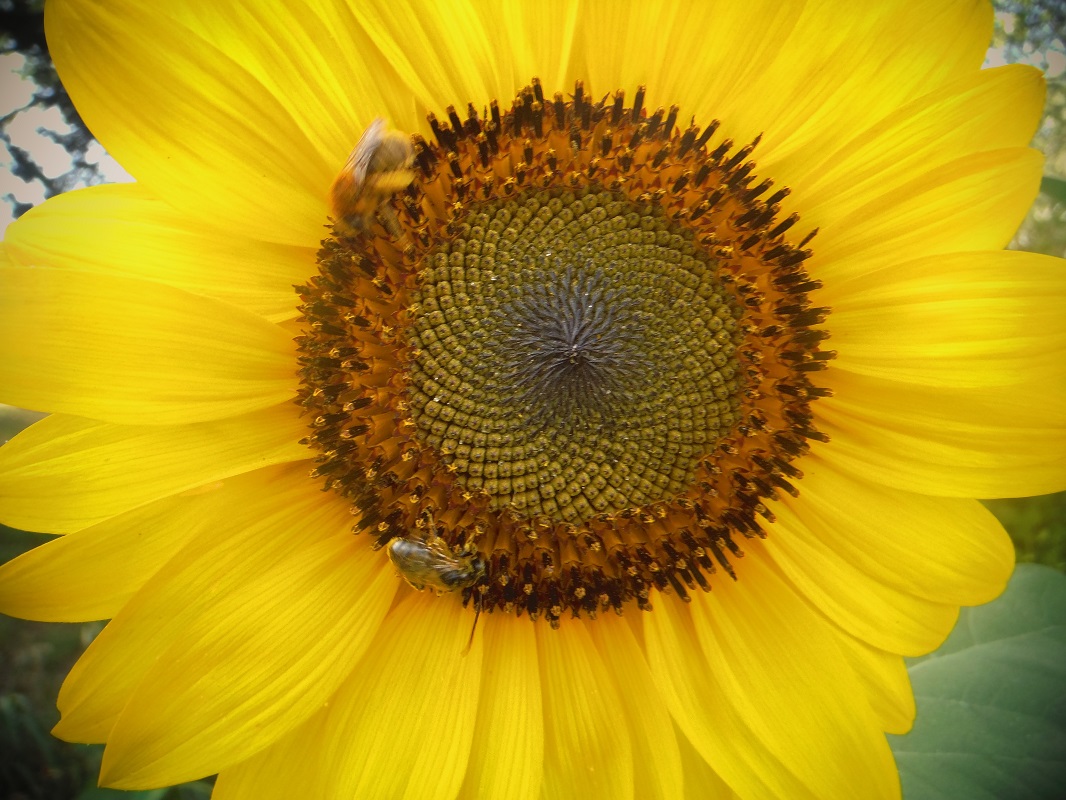
El verano es un sueño que nos sueña; es el mismo el invierno. Son dos estaciones en un equilibrio de extremos: + 30 grados centígrados o negativo 20; banquetas abrasadores o la nariz cambiando azul. El girasol es la grande cara del calor (julio/agosto), y el copo de nieve es la flor diminuta del frío (enero/febrero). ¡Me dan placer estas dos flores! Y son las caras de unas hermanas preciosas canadienses – hermanas mías.
. . .
Alexander Best
31.07.2015
. . .
Summer is a dream, a dream that dreams us…
And it’s the same with Winter.
These are two seasons in an equilibrium of extremes:
+ 30 degrees celsius or minus 20;
baking-hot sidewalks or your nose turning blue.
Sunflowers are the big face of Heat (July/August),
and the Snowflake is that tiny “flower” of the Cold (January/February).
I love these two flowers.
They are sisterly faces, special and Canadian – and they’re
my sisters!
. . .
Alexander Best
31.07.2015
. . . . .
Wayne Keon: poemas de “Hierba Dulce II”
Posted: July 31, 2015 Filed under: Spanish, Wayne Keon, ZP Translator: Alexander Best Comments Off on Wayne Keon: poemas de “Hierba Dulce II”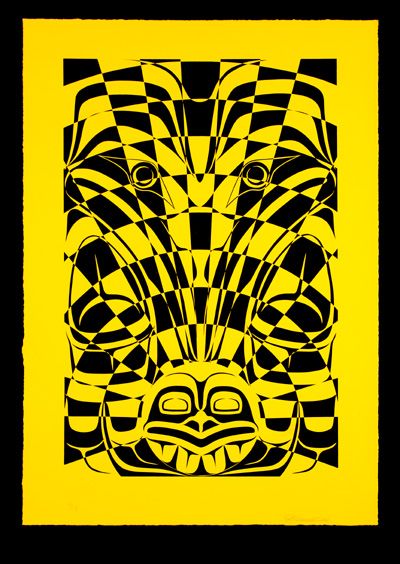
El Cuervo Grande Roba La Luz_Raven Steals The Light_por John Brent Bennett_artista de la Nación Haida Gwaii_Canadá
Wayne Keon (Nación Nipissing-Ojibwe, n. 1946, Pembroke, Ontario, Canadá)
.
en este pueblito
.
En este pueblito,
este gran pueblito
.
soy
el profeta del sol
de ningún hombre
.
llamado “Canadá”
en la lengua
.
apenas
puedo dirigir
mis propios incidentes
día a día
.
de mi madre,
tierra-ojibwe,
tierra-algonkin
.
o resolver
lo que es el pasado
también
el misterio del sol
.
el Pueblo
del tiempo atrás
.
me paro
ante de ti,
sol
. . .
sueño-despertar
.
en mis sueños
los caballeros del espíritu
.
vuela
sobre el sol
radiente en azul
cielo y Cielo
.
mientras todo la gente
está mirando
y
locamente aclama
.
la carrera
completerá
.
ningún vencedor
declarado
.
y
es porque
el hombre-cuervo
.
todavía
no ha regresado de
.
afuera
mi puerta
la gata está rascando,
arañando
la pared
por algo a comer,
el hambre despierta a ella
.
también
se ha levantado
mi mujer
.
abre la puerta,
conecta la pava eléctrica para café
. . .
xxiv
.
me dijiste tarde de noche
que hacías bien tu trabajo
.
naturalmente tu tipo de trabajo
era ayudar – la profesión de ayuda
.
yo tenía miedo
decirte que
la mía era
la profesión de
desesperanza
. . .
color plata y negro
.
necesitó tres noches
para inscribir ésto:
sus brazaletes
están hechos de
plata y negro
plateado y negro
plata-morado
plateado-negro
plata y negro
.
no tengo ningunos pretextos
– buenas líneas son una obra ardua
. . .
bahía de trueno
.
afuera
en la
bahía donde
.
duerme
el
gigante
.
las
olas
son silenciosas
.
aquí
a lo largo de
la costa
.
donde
yacen
los ancianos
.
lamen
las rocas y
.
el viento
continua hacia
la estación tercera
mientras
la cámara de comercio
pide
.
setenta y cinco centavos
por un tour-lección de los huesos
.
todavía
no está aclarado
el gran misterio
.
el color plateado
refleja
a lo largo de la costa
. . .
noches de tierra
.
he estado fuera
de esta tierra y suelo natal
tan largo tiempo
.
llamé a
una banda plata, simple,
de círculos
.
donde la luna
monta al lado
.
radiante del sol
ella lucía una máscara
y miraba a
.
los ancianos
girando
las luces
.
le veo a ella
allí
júpiter
.
¿pueda yo verle
de nuevo?
.
dijo
no hay prisa
.
ahora
veo al hombre-cuervo
no hay que
relatar el cuento
alrededor de las fogatas
tarde de noche
.
y deseo esa senda
flameante
entre las estrellas
.
tierra
he estado
fuera de ella
demasiado tiempo
.
el planeta-estrella júpiter
es más cerca
que creas
.
está por encima de
tu comprensión
.
puedo
ver eso
puedo
ver
eso
.
puedo ver
que no habrá
ningún descanso
ahora
. . .
el trabajo del águila
.
ella – el águila – ella
golpea a su presa
agarrado del aire
.
con un solo porrazo
chillando
sangre y garra
.
rauda, limpia, orgullosa
.
y estoy torturando esta página
cada hora
.
hasta que
mi alma se tropeza con
su ser de testigo oficial
– estando enferma de todo
.
pero mi alma
empieza a caminar y hablar y
bailar
en alto
. . .
rueda sur
.
es
todas esas fogatas
mágicas
el fuego encendido
tarde de noche
.
es leones
y zorros
y el oso
.
es el naranja
y rojo
ámbar y blanco
.
es lavar tus ojos
con el sol
con la luz
.
es
“hierba dulce”
y canela
cedro
y oro
.
es
bailar con el amor,
amar hasta que
envejeces
. . .
truco de un cuervo
.
hay un río que
fluye con colores
.
en un sueño donde
fue el oso para esconderse
.
hay una cinta de
“hierba dulce”
alrededor de ti
.
en un sueño donde nunca lloró el alce
.
hay una pluma azul
del cuervo
junto a ti
.
hay una turquesa de piedra
en tu mano
.
hay una sombra de amor
en tu entrada
.
en un sueño hecho de
plata y arena
.
hay una piedra lunar
atrapado en tu belleza
.
hay un bolsillo de
oro recién descubierto
.
hay el hombre
en la noche,
esperando
.
en tu sueño que
nunca puede
envejecer
.
en tu sueño que nunca puede envejecer
. . .
humo y tomillo
.
me dijeron
dejar de vestir
esa vieja “camisa-medicina”
a la oficina
.
y esta vez
accedí
.
pero nunca les dije
de la “bolsa-medicina”
que hice
muy tarde de una noche
.
o sobre la llama de cedro
el humo y el tomillo
. . .
“atrapasueños” y la danza
.
cuando
yo bailaba con
el Pueblo
bajo del cielo negro
.
sueño en el ojo de ella
y el cuervo que baila
.
yo no podía creer – ya no
yo miraba su sonrisa
yo no podía creer – ya no
yo miraba su sonrisa
y el zorro que baila
en frente de mi
.
tambor aporreando
dentro mi cabeza
y yo no podía pensar en nada
en medio de
un trance
.
lo que yo podía sentir – ya no – fue
el “atrapasueños”
el plateado
y las estrellas
– todos llenos en mi mano
. . .
Poemas del poemario “Hierba Dulce” II por Wayne Keon
Sweetgrass II: poems by Wayne Keon, © 1990, Wayne Keon and The Mercury Press (Aya Press), Stratford, Ontario, Canadá
Traducción en español: Alexander Best
. . . . .
Deborah Amar: The Lilies whisper Poetry
Posted: July 28, 2015 Filed under: English Comments Off on Deborah Amar: The Lilies whisper Poetry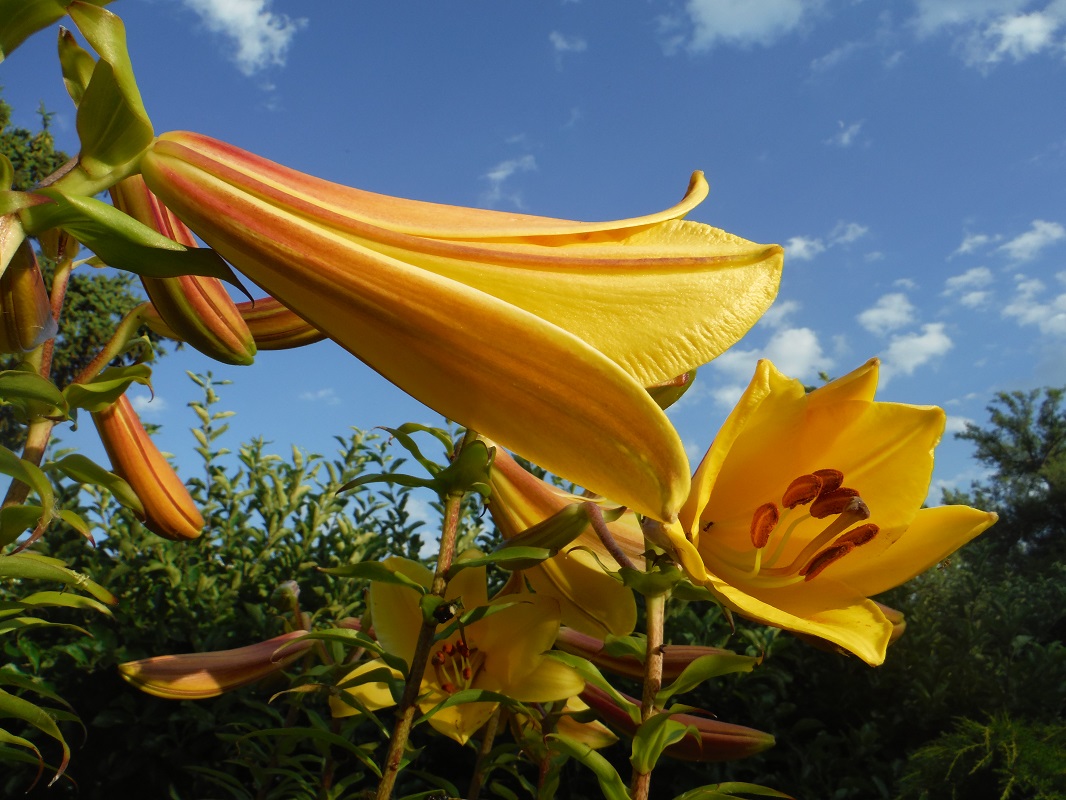 Deborah Amar
The Lilies whisper Poetry
.
A summer day can never end,
Or so it seems each year;
The longer cycles of the sun
Make cloudy skies seem clear.
.
Each time the wind begins to chime
And end begins to near,
A whisper of the softest sort
Flows gently to the ear.
.
The scent and sight enough are great
Yet lilies live for more:
The lilies whisper poetry
As none have heard before.
.
The lilies whisper to the day
That sends the breeze below;
It touches ground that none can see
Where lilies lively grow.
.
Beautifully arrayed in white
And drinking from the soil,
Free to whisper their poetry
Without the need to toil.
.
But flowers do not last the year
And newer buds must bloom;
So short the span of lily life
To give new blossoms room.
.
The lilies whisper poetry
That none shall ever know;
For just as summer cannot last
The lilies cease to grow.
.
But beauty lives from that which dies
And leaves something to last:
For lilies whisper poetry
For lilies of the past.
. . .
Deborah Amar understands the “brief poetry” that is the Lily in bloom at this time of year (July, here in Canada).
Ms. Amar holds an Honours English Literature BA from the University of California at Los Angeles. She writes poetry and short stories, and is working on a SciFi/Fantasy epic. She lives in Japan.
. . . . .
Miriam Isabel Quintana: El Lirio
Posted: July 28, 2015 Filed under: Spanish Comments Off on Miriam Isabel Quintana: El Lirio
Miriam Isabel Quintana (Venezuela)
El Lirio
.
De la flor del camino,
Tomé un bello lirio,
Para llegar a su bohío,
Mañana, a mañana es tan mío.
.
Llamas del crepúsculo,
Y no seco tus ríos,
Las hojas de tu alma,
Más allá de tus pétalos vigilo.
.
Lirio, mi destino,
¡Voz de pájaros cantas!
Profundos, tus anhelos,
Destino, mi corazón, y morada.
.
¡Libre corre fuente!
No seques, mi lirio,
¡Sus hojas ramillete!
Sus raíces abrazo, mi ombligo.
.
Allí está mi destino,
Y viajando besas,
Los cuidados míos,
Lirio: sin ti vivir, no me imagino.
. . . . .
Rabia y El Diente de León: poemas de Lee Maracle
Posted: July 21, 2015 Filed under: Lee Maracle, POETS / POETAS, Spanish, ZP Translator: Alexander Best Comments Off on Rabia y El Diente de León: poemas de Lee Maracle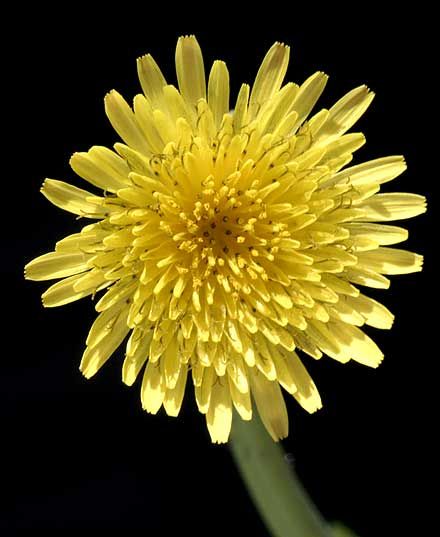
Lee Maracle
(Escritora/poeta Salish-Sto:lo, n. 1950, Vancouver, British Columbia, Canadá)
Rabia
.
Voceo mi rabia
hacia las páginas de un libro
– que yo trate bien humanamente posible
a la gente.
. . .
Sin título
.
No discutamos ninguna cosa,
No seamos razonable;
porque éso supone que somos humanos:
seres cariñosos y solícitos,
que necesitan paciencia, dulzura y amor.
.
La meta no es unidad; es ganar esta lucha.
Contraataca. Patea el orgullo de tu amante.
Desmantela su dignidad.
Y bebe, bebe, bebe
a los fantasmas en tu clóset.
. . .
Sola
.
Estoy sola, tan sola.
Solitaria, sí – y quiero permanecer como eso.
.
Me gustan sombras breves y entreviendos de los hombres.
.
En la ausencia de un auténtico amor,
me conformaré con el engaño.
. . .
Esfuerzos
.
Tomé fuertemente del vino del colonizador,
aprendí muy bien su lengua,
y contemplé con asombro en su éxito.
.
Me tambaleé a través de su cultura, fermentado en escuelas del oeste.
.
Mi empeño me sirvió para nada.
Ahora es ese seguir intentando que me provoca tan vergüenza.
. . .
Diente de León
.
Hay un diente de león al lado de una calle de hormigón – en Toronto.
Sus hojas: una mezcla desarreglada en verde y marrón.
Este diente de león ralo está rengueando.
.
Hay una flor junto a un bloque de concreto,
en la calle Bay, en la ciudad de Toronto.
Permanentemente rebelándose contra
tacones con clavos y trajes de sarga azul.
.
El desfile monetario por la calle Bay a las cinco de la tarde
desdeña:
“¡Flor amarilla de pollito!”
Y está sordo a los chillidos silenciosos del león delgado y envejecido.
.
Mis hojas, mi rostro, mi piel…
Ellos me rascan, ellos me descarapelan la piel.
.
Hay una flor, al arcén del camino…
Necesita martillos neumáticos y aparatos brutos
para desenterrar el hormigón de las banquetas de las calles de Toronto
– ¡para hermosear la ciudad por los trajes de sarga azul!
.
Pero, con este león “dandy” (chachi),
solo existía una semilla,
unas gotas de lluvia-ácida,
“pantalones” y temple,
y un deseo negro de renguearse hacia adelante
(si un poco mugroso).
.
Hay una flor…
. . .
Poemas del poemario Bent Box (Caja de Madera Curvada) por Lee Maracle, © 2000 (Theytus Books Ltd., Penticton, British Columbia)
. . . . .
 Zócalo Poets