Claude McKay: “And some called it the Resurrection flower…”
Posted: April 8, 2012 Filed under: Claude McKay, English Comments Off on Claude McKay: “And some called it the Resurrection flower…”
Claude McKay (Jamaican-American poet, 1889-1948)
“The Easter Flower”
Far from this foreign Easter damp and chilly
My soul steals to a pear-shaped plot of ground,
Where gleamed the lilac-tinted Easter lily
Soft-scented in the air for yards around;
*
Alone, without a hint of guardian leaf!
Just like a fragile bell of silver rime,
It burst the tomb for freedom sweet and brief
In the young pregnant year at Eastertime;
*
And many thought it was a sacred sign,
And some called it the Resurrection flower;
And I – a pagan – worshipped at its shrine,
Yielding my heart unto its perfumed power.
Poema para el Domingo de Pascua: “Cristo de Corcovado” por Jair Córtes / Poem for Easter Sunday: “The Corcovado Christ” by Jair Córtes
Posted: April 8, 2012 Filed under: English, Jair Córtes, Spanish, ZP Translator: Lidia García Garay Comments Off on Poema para el Domingo de Pascua: “Cristo de Corcovado” por Jair Córtes / Poem for Easter Sunday: “The Corcovado Christ” by Jair Córtes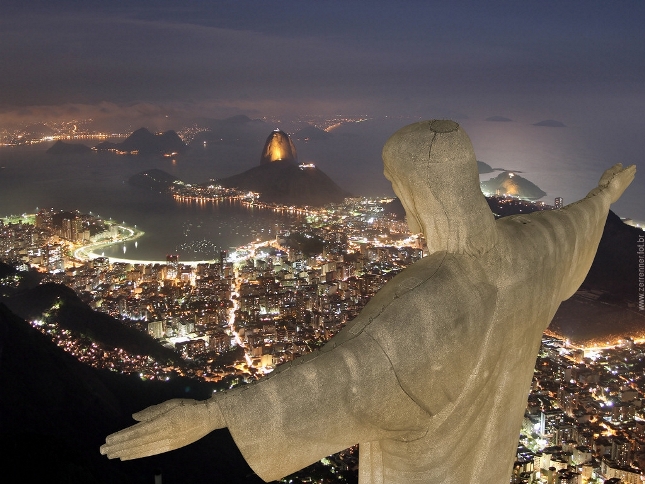
Jair Córtes
(Poet and translator, born 1977, Calpulalpan, Tlaxcala, México)
“The Corcovado Christ”
There was no beginning to this path:
that slope is the continuation of the water that washed your face,
of the light you lit in that dark hour when you awoke.
Rise. And elevate yourself from among the living.
Languages. New tongues have met, all suddenly
” in the same boat”, joined together in the air.
And at the summit
His arms open above the clouds to receive you:
to receive you
to receive you,
and you arrive.
Every rock, petrified words, frozen eyes that shine.
His arms are open to receive you
you whose lips are glued to a passport,
and you don’t know how someone so huge, at such a meridian,
someone like Him, can have arms open wide, saying:
LOOK, see what I see,
this marvel is also for you.
_____
Jair Córtes
(Poeta y traductor, nace 1977, Calpulalpan, Tlaxcala, México)
“Cristo de Corcovado”
En este camino no hubo comienzo:
esa pendiente es la prolongación del agua con la que lavaste tu cara,
de la luz que encendiste en la hora oscura cuando despertaste.
Asciendes. Te elevas entre los vivos.
Lenguas. Idiomas encontrados de repente,
puestos en el mismo vagón para mezclarse con el aire.
Ya en la cumbre,
Sus brazos se abren encima de las nubes para recibirte:
para recibirte
para recibirte
y llegas.
Cada piedra, vocablos pétreos, ojos incrustados que relumbran.
Sus brazos están abiertos para recibirte,
a ti, que llegas con los labios cosidos al pasaporte
y no sabes cómo, qué tan grande, cuál meridiano,
quién como Él, que tiene los brazos abiertos y dice:
MIRA, mira lo que yo miro,
esta maravilla
también es para ti.
_____
Traducción del español al inglés / Translation from Spanish into English: Lidia García Garay



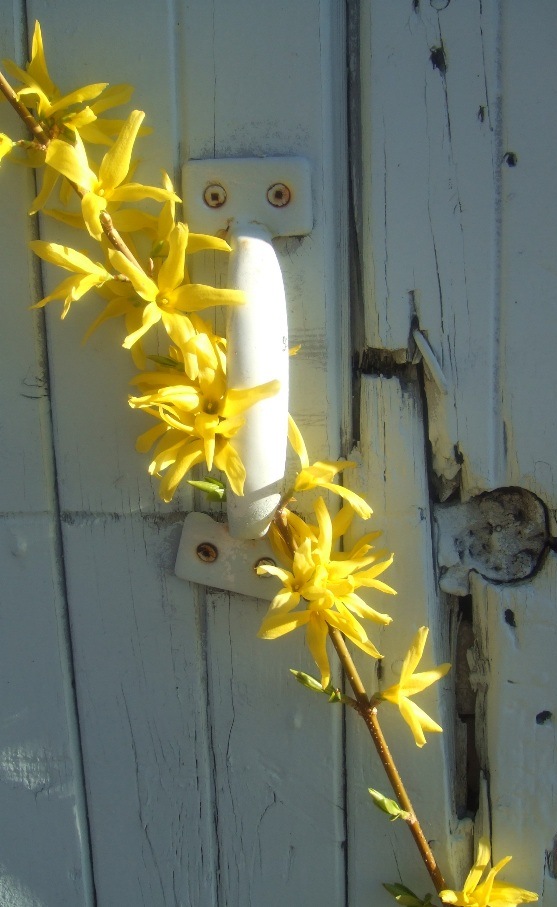
Two Nigerian Painters: Ehikhamenor and Ofili
Posted: April 7, 2012 Filed under: IMAGES Comments Off on Two Nigerian Painters: Ehikhamenor and Ofili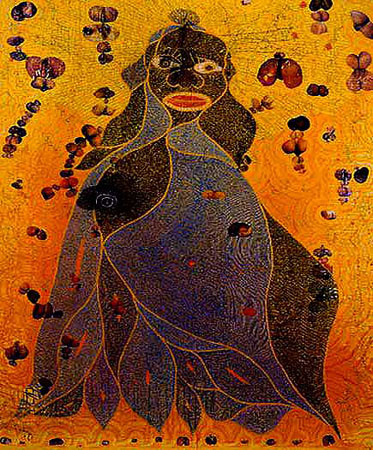
Of God and “Hard questions that crack the teeth”: Five Nigerian Poets
Posted: April 7, 2012 Filed under: Abubakar Othman, English, Helon Habila, Nike Adesuyi, Sunday Ayewanu, Tony Kan Comments Off on Of God and “Hard questions that crack the teeth”: Five Nigerian Poets_____
Helon Habila
(for the unknown child)
.
They say souls of the dead
Sometimes turn into birds
*
In the still morning
Metal rings against stone and sand
*
The men in a semi-circle
Display minds in flux
There is no sadness here:
*
The morning offers only greenery
Rude petals distract the mind
With sudden beauty.
*
Petals that wither
Like a child’s body
Not having lived to sin
Not having sinned to die
*
Birds in bright feathers
Fan out behind bushes, fresh, like hidden fire
Roaring suddenly into flame
Into life, into maturity…..
*
They say the souls of the dead,
Small children, often persist as birds,
To strive further, not to return empty
To their maker.
*
Not having known sin and growth,
The doom, the antidote.
_____
Tony Kan
A Prayer for a Good Death
.
Dear Lord,
I offer this prayer for a good death
May I never fall from a Molue on a Monday morning
May I never know the hard feel of asphalt’s bite
On bare skin
May the road and its ogres never bare their fangs
when I tread the pathways
*
Secrets have sprouted tendrils
And like the spider’s feet they spin
A web of fear around my mind
I stutter, I flutter, I flutter like a candle
In the cold embrace of the wind
I find empty solace in silence
*
There in the cloying warmth of the womb
The unborn child suckles silence
Weaving toneless ditties
From the sad monodies of nascent dreams
*
Why are we born? Why do we die?
Hard questions that crack the teeth
Hard questions that eclipse answers
Drowning them in the penumbra of their beginnings
*
So I circle the pregnant gloom
I reach a febrile finger into its depths
I finger its rancid entrails
Exciting worms and maggots
I feel the osmosis, the kinesis
The end of life’s ultimate synthesis
*
So I offer this prayer, dear Lord,
On this morning of death and renewal
Having tasted joy and supped on tears
And having seen that man fall and die
I, who have known love and heartache
Sweet passion and its after-glow
I beg of thee, Sweet Lord,
May I not lose my head in the urgent dialogue of
tar and tyres.
_____
Sunday Ayewanu
God’s Voice
.
The servant was startled
To see his master at the door,
Staring at him
*
What! He thought aloud
I should be cleaning the rooms
And dusting the tables
I should be washing his clothes;
Those clothes, soiled
By the spoils of high society
I should…
*
The boy stopped his morning meditation
And put his bible aside
*
“where are your roots?”
The voice was calm,
Was clear enough
*
“The streets, my lord. You picked me from the streets
As I walked through the valley of the shadow of death”
The servant answered tremulously
*
The lord said nothing, but rather
Cast a cold glance at the bible
Beside the poor boy’s pillow
“Who then is your God?”
The servant fell on his knees
Raising his hands as if in supplication
Blurting
“You are my God; for you provide me shelter
And give me my daily bread”.
_____
Nike Adesuyi
The New Testament
.
I walk the coasts of Ibeju Lekki
White sands, a blue sea and a
Happy sun distil putrid visions
*
I run into the winds;
A kite buoyed on the wings of fun
*
I race the wind to an infinity of sands and shells
Until my feet are shocked by the magic of Mammon**:
Asphalt scarifies the polish of the sands like tribal marks
*
Beyond the billowing wrapper of the sea,
In places secret to the coastal eyes,
Principalities and powers are violating
Our maiden of mercies
*
In Ogoni** the fishes are fevered
From the typhoid of crude
Oil paints the sea black
And all the waters mourn.
.
** Mammon – wealth or greed as a deity
** Ogoni refers to Ogoniland in Nigeria,
where The Shell Oil Company vastly polluted the Niger River Delta.

Abubakar Othman
The Dual Call
.
Hayyal al salat, hayyal al salat
Hayyal al falah, hayyal al falah
*
Awake my soul
Hearken to this call
The first call of the five chores
When the dawn is falling down
Over the dull slumbering town
Awake my soul
*
Al salat hairun min al naum
Al salat hairun min al naum
*
But an incubus clad to my bosom
Weighs me down in the cozy embrace
Of another call
The intimate voice of her throbbing heart
Mixes with the distant voice of the minaret
In the sensuous ears of my soul
And I am lost in the dual call
*
Awake my soul
Awake from the cozy embrace of a siren
To the real call of the distant minaret
Awake my soul and say
*
Allahu akbar, Allahu akbar
La ilaha illallah, Allahu akbar
_ _ _ _ _
Translation of the poet’s transliterated Arabic:
Hurry to prayer, hurry to prayer
Hurry to success – to salvation
*
Prayer is better than sleep
Prayer is better than sleep
*
God is most great, God is most great
There is no God but Allah, God is most great
_____
This compilation © Nigerian poet and editor Toyin Adewale
Speak speak, that we may know the end of this travelling: Mahmoud Darwish محمود درويش
Posted: April 7, 2012 Filed under: Arabic, English, Mahmoud Darwish Comments Off on Speak speak, that we may know the end of this travelling: Mahmoud Darwish محمود درويشWe are grateful to A. Z. Foreman for the following translation from Arabic into English.
Visit his site: http://www.poemsintranslation.blogspot.com
_____
Mahmoud Darwish / محمود درويش
(Palestine/Israel,1941-2008)
We travel like anyone else
We travel like anyone else, but do not return to anything
as if travelling
Were the way of the clouds. We buried our loved ones deep
in the shadow of the clouds and among the trunks of the trees.
We told our wives: give birth by us for centuries,
that we may complete this journey and see
A moment of a country, a meter of what can’t be.
In the carriages of the psalms we travel, in the tent of the prophets we sleep,
we come out of the words the gypsies speak.
We measure space with a hoopoe’s beak
or sing to while the distance away or wash the moonlight clear.
Long is your path, so dream of seven women to bear this long path on
Your shoulders. Shake the palmtree for each one
to know her name and which shall be
the mother of the boy from Galilee*.
Ours is a country of words. Speak, speak,
that I may lay my road on stone of stone to something.
Ours is a country of words. Speak speak
that we may know the end of this travelling.
* “the mother of the boy from Galilee”
refers to Mary, mother of Jesus
Passover poems: “An experience of redemption, more or less…”
Posted: April 7, 2012 Filed under: English Comments Off on Passover poems: “An experience of redemption, more or less…”Mrs. Bracha Meshchaninov
“Pesach”*
House cleaned
more or less
kitchen surfaces covered
more or less
food ready
more or less
an experience of redemption
more or less
_____
“The Seder”**
We chewed the hand-made bread
of redemption
and wine specially made
children primed for performance… performed
and wonderful guests came and prayed
yet his eyes were sad and her skin showed strain
We left Mitzraim***
but in pain we stayed.
* Pesach = Passover, the Jewish holyday and festival
** The Seder = a ritual feast of Passover, includes family and friends
re-telling the story of the Israelites’ flight from Ancient Egypt
*** We left “Mitzraim” = We left “Ancient Egypt”,
referring to The Exodus from slavery under The Pharaohs
_____
Today, April 7th, is the first day of Passover 2012.
Jesus’ Descent from The Cross: 3 contemporary painters
Posted: April 7, 2012 Filed under: IMAGES Comments Off on Jesus’ Descent from The Cross: 3 contemporary painters


Pauline Johnson: “I do not feel the thorns so much today…”
Posted: April 6, 2012 Filed under: English, Pauline Johnson Comments Off on Pauline Johnson: “I do not feel the thorns so much today…”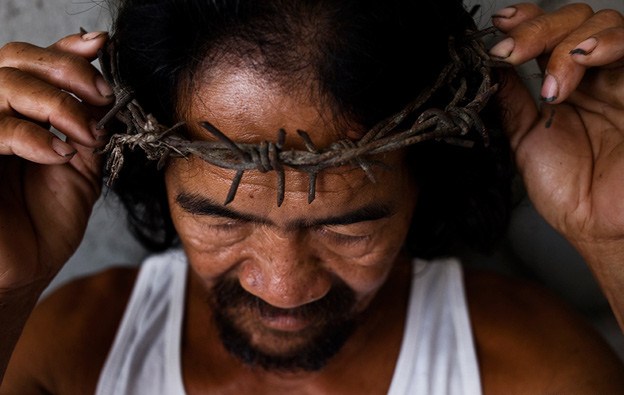
Pauline Johnson (“Tekahionwake”)
(Ontario Mohawk poet, 1861-1913)
“Brier: Good Friday”
Because, dear Christ, your tender, wounded arm
Bends back the brier that edges life’s long way,
That no hurt comes to heart, to soul no harm,
I do not feel the thorns so much today.
*
Because I never knew your care to tire,
Your hand to weary guiding me aright,
Because you walk before and crush the brier,
It does not pierce my feet so much tonight.
*
Because so often you have hearkened to
My selfish prayers, I ask but one thing now,
That these harsh hands of mine add not unto
The crown of thorns upon your bleeding brow.
_____
Poema para Viernes Santo / “Good Friday” poem: Javier Álvarez
Posted: April 6, 2012 Filed under: English, Javier Álvarez, Spanish, ZP Translator: Lidia García Garay Comments Off on Poema para Viernes Santo / “Good Friday” poem: Javier Álvarez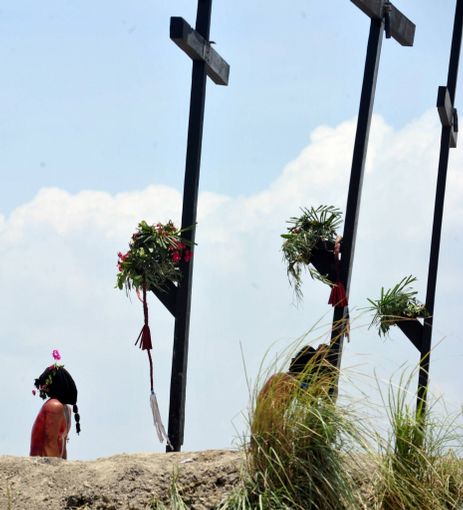
Javier Álvarez
“Good Friday”
It’s gone to the dogs, this afternoon;
a cold rain slaps my face,
the wind numbs my skin.
A bad day for running!
On the rock the rain’s turned to snow.
That proverb’s proven again:
Comes snow in October, seven months till it’s over.
Yes, a rotten day for running!
Dismal April afternoon,
not a soul in the street.
A darkness like winter’s
– the wrong day for rushing around!
Vast hellish afternoon
that the mind carves in verse:
“Save humankind, oh Lord, in this hour
of horror, of tragic destiny;
we know neither where we’re headed, nor whence we came…”
Gloomy night of death,
this evening in transit
– Good Friday evening –
A terrible day to be running…away!
Editor’s note:
In Latin-American cultures Good Friday, traditionally, has been a day to
tread softly upon the ground – not to pound or stomp, or run. The folk
belief is that we walk this day and night upon the body of Jesus.
Álvarez the poet may also be implying that we cannot run away from the
truth of pain, sacrifice, suffering.
_____
Javier Álvarez
“Viernes Santo”
Tarde de perros;
la lluvia fría azota la cara,
el viento entumece la piel.
¡Mal día para correr!
En la peña el agua es nieve.
El dicho se cumple otra vez:
La de octubre, siete meses cubre *.
¡Mal día para correr!
Tarde desolada de abril,
ni un alma por la calle.
Oscuridad de invierno,
¡Mal día para correr!
Tarde de abismal infierno,
que la mente cincela en verso:
“Salva al hombre, Señor, en esta hora
horrorosa, de trágico destino;
no sabe adónde va, de dónde vino…”
Noche oscura de muerte
esta tarde de tránsito:
Tarde de Viernes Santo
– ¡Mal día para correr!
* “La nieve de octubre siete meses cubre” (un refrán castellano)
Traducción del español al inglés / Translation from Spanish into English:
Lidia García Garay
 Zócalo Poets