Langston Hughes as Translator: Lorca’s “Gypsy Ballads”
Posted: February 1, 2012 Filed under: English, Federico García Lorca, Langston Hughes, Spanish | Tags: Black poets Comments Off on Langston Hughes as Translator: Lorca’s “Gypsy Ballads”_____
Brawl
Half way down the ravine,
Gay with rival blood
The knives of Albacete
Shine like fishes.
*
A light hard as playing cards
In the acid greenness
Silhouettes furious horses
And the profiles of riders.
*
On the crest of an olive tree
Two old women cry.
The bull of the dispute
Charges up the walls.
Black angels bring
Handkerchiefs and snow-water,
Angels with big wings
Made of knives from Albacete.
*
Juan Antonio of Montilla
Rolls dead down the hill,
His body full of lilies
And a pomegranate at his temples.
Now he rides a cross of fire
On the road to death.
*
The judge, with the Civil Guards,
Comes through the olive groves.
Slippery blood sings
A silent song of serpents.
Honourable Civil Guards:
The same as usual –
Four Romans dead
And five Carthaginians.
*
Crazed with hot rumours and fig trees,
The afternoon falls fainting
On the wounded limbs of the riders.
Black angels fly
Through the western air,
Angels with long braids
And hearts of oil.
_____
“Reyerta”
En la mitad del barranco
las navajas de Albacete,
bellas de sangre contraria,
relucen como los peces.
*
Una dura luz de naipe
recorta en el agrio verde
caballos enfurecidos
y perfiles de jinetes.
*
En la copa de un olivo
lloran dos viejas mujeres.
El toro de la reyerta
su sube por la paredes.
Angeles negros traían
pañuelos y agua de nieve.
Angeles con grandes alas
de navajas de Albacete.
*
Juan Antonio el de Montilla
rueda muerto la pendiente
su cuerpo lleno de lirios
y una granada en las sienes.
Ahora monta cruz de fuego,
carretera de la muerte.
*
El juez con guardia civil,
por los olivares viene.
Sangre resbalada gime
muda canción de serpiente.
Señores guardias civiles:
aquí pasó lo de siempre.
Han muerto cuatro romanos
y cinco cartagineses
*
La tarde loca de higueras
y de rumores calientes
cae desmayada en los muslos
heridos de los jinetes.
Y ángeles negros volaban
por el aire del poniente.
Angeles de largas trenzas
y corazones de aceite.
_____
The Faithless Wife
I took her to the river
Thinking she was single,
But she had a husband.
It was Saint James’ Eve,
And almost because I had to.
The street lights went out
And the crickets lit up.
At the farthest corners
I touched her sleeping breasts
And they opened for me quickly
Like bouquets of hyacinths.
The starch of her underskirts
Rustled in my ears
Like a piece of silk
Slit by ten knives.
With no silver light to crown them
The trees grew bigger,
While a horizon of dogs barked
Afar from the river.
*
Beyond the brambles,
The bulrushes, and the hawthorns,
I made her mat of hair
Hollow the muddy bank.
I took off my tie,
She took off her dress,
Me, my belt with the pistol,
She, the four parts of her bodice.
Neither lilies nor snail shells
Have such a lovely skin,
Nor do the crystals of the moon
Shine with such a light.
Half bathed in fire
And half bathed in ice,
Her thighs slipped from me
Like frightened fish.
That night I rode
Down the best of roads
On a mother-of-pearl filly
With no bridle and no stirrups.
Being a man, I can’t tell you
The things that she told me.
The light of understanding
Makes me very careful.
Soiled with kisses and sand
I led her away from the river
While the swords of the lilies
Battled with the breeze.
I acted like the thoroughbred
Gypsy that I am,
And gave her a present,
A big sewing box
Of straw-coloured satin.
But I didn’t want
To fall in love with her
For, having a husband,
She told me she was single
When I took her to the river.
_____
“La Casada Infiel”
Y que yo me la llevé al río
creyendo que era mozuela,
pero tenía marido.
Fue la noche de Santiago
y casi por compromiso.
Se apagaron los faroles
y se encendieron los grillos.
En las últimas esquinas
toqué sus pechos dormidos,
y se me abrieron de pronto
como ramos de jacintos.
El almidón de su enagua
me sonaba en el oído,
como una pieza de seda
rasgada por diez cuchillos.
Sin luz de plata en sus copas
los árboles han crecido
y un horizonte de perros
ladra muy lejos del río.
*
Pasadas las zarzamoras,
los juncos y los espinos,
bajo su mata de pelo
hice un hoyo sobre el limo.
Yo me quité la corbata.
Ella se quitó el vestido.
Yo el cinturón con revólver.
Ella sus cuatro corpiños.
Ni nardos ni caracolas
tienen el cutis tan fino,
ni los cristales con luna
relumbran con ese brillo.
Sus muslos se me escapaban
como peces sorprendidos,
la mitad llenos de lumbre,
la mitad llenos de frío.
Aquella noche corrí
el mejor de los caminos,
montado en potra de nácar
sin bridas y sin estribos.
No quiero decir, por hombre,
las cosas que ella me dijo.
La luz del entendimiento
me hace ser muy comedido.
Sucia de besos y arena
yo me la llevé del río.
Con el aire se batían
las espadas de los lirios.
*
Me porté como quién soy.
Como un gitano legítimo.
La regalé un costurero
grande, de raso pajizo,
y no quise enamorarme
porque teniendo marido
me dijo que era mozuela
cuando la llevaba al río.
_____
Langston Hughes ( February 1st 1902 – 1967)
lived in México for part of his boyhood, and,
two decades later, travelled to
Spain when he became interested in Communism.
Though he was familiar with the Spanish poetry of
Federico García Lorca (1898-1936),
the poet had already been killed by the time
Hughes got to Spain (toward the end of
The Spanish Civil War) in 1938.
*
Inspired by the Fiesta de Cante Jondo (Festival of
Deep Song) in 1922, Lorca had immersed himself
in the gypsy subculture of Andalucía, Spain. The
result was his 1928 collection of poems,
“Primer romancero gitano”. In 1951, Langston
Hughes published his translations into English
of a dozen or so of these “Gypsy Ballads”,
two of which we feature here.
_____

Robbie Burns: “To a Louse”
Posted: January 25, 2012 Filed under: English: Scots, Robert Burns Comments Off on Robbie Burns: “To a Louse”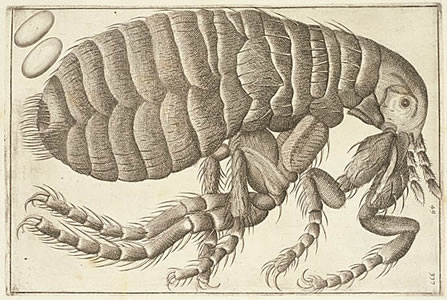
Filippo Bonanni_Drawing of a louse observed under a microscope_1709
“To a Louse*:
On Seeing One on a Lady’s Bonnet, at Church”
(1786)
.
Ha! whaur ye gaun, ye crowlin ferlie?
Your impudence protects you sairly;
I canna say but ye strunt rarely,
Owre gauze and lace;
Tho’, faith! I fear ye dine but sparely
On sic a place.
Ye ugly, creepin, blastit wonner,
Detested, shunn’d by saunt an’ sinner,
How daur ye set your fit upon her-
Sae fine a lady?
Gae somewhere else and seek your dinner
On some poor body.
Swith! in some beggar’s haffet squattle;
There ye may creep, and sprawl, and sprattle,
Wi’ ither kindred, jumping cattle,
In shoals and nations;
Whaur horn nor bane ne’er daur unsettle
Your thick plantations.
Now haud you there, ye’re out o’ sight,
Below the fatt’rels, snug and tight;
Na, faith ye yet! ye’ll no be right,
Till ye’ve got on it-
The verra tapmost, tow’rin height
O’ Miss’ bonnet.
My sooth! right bauld ye set your nose out,
As plump an’ grey as ony groset:
O for some rank, mercurial rozet,
Or fell, red smeddum,
I’d gie you sic a hearty dose o’t,
Wad dress your droddum.
I wad na been surpris’d to spy
You on an auld wife’s flainen toy;
Or aiblins some bit dubbie boy,
On’s wyliecoat;
But Miss’ fine Lunardi! fye!
How daur ye do’t?
O Jeany, dinna toss your head,
An’ set your beauties a’ abread!
Ye little ken what cursed speed
The blastie’s makin:
Thae winks an’ finger-ends, I dread,
Are notice takin.
O wad some Power the giftie gie us
To see oursels as ithers see us!
It wad frae mony a blunder free us,
An’ foolish notion:
What airs in dress an’ gait wad lea’e us,
An’ ev’n devotion!
.
*Louse = the singular of Lice
. . . . .
Robbie Burns: “A Bottle and Friend”
Posted: January 25, 2012 Filed under: English: Scots, Robert Burns Comments Off on Robbie Burns: “A Bottle and Friend”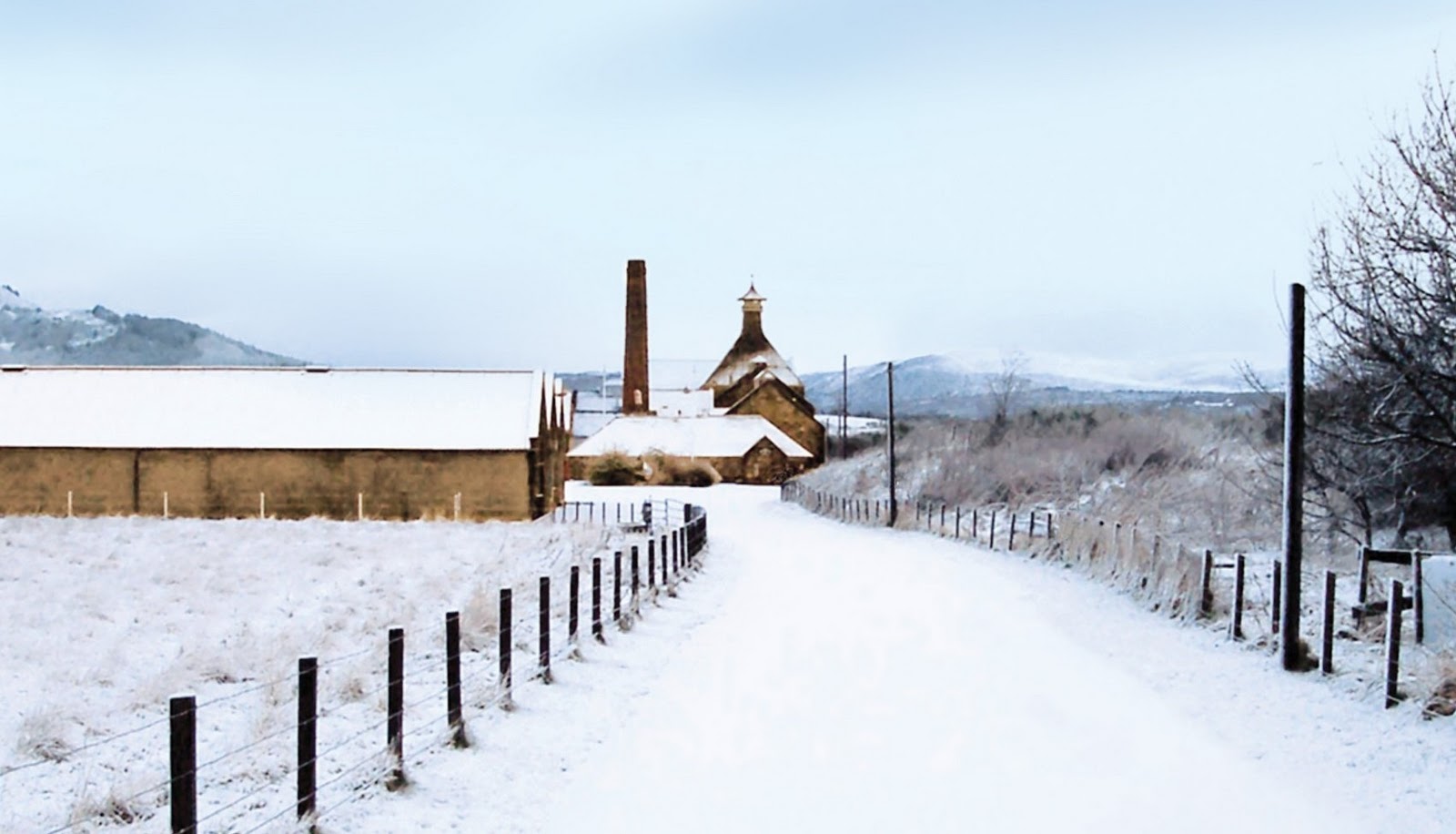
Balblair Distillery in Scotland
“A Bottle and Friend”
(1789)
.
There’s nane that’s blest of human kind,
But the cheerful and the gay, man,
Fal, la, la, &c.
Here’s a bottle and an honest friend!
What wad ye wish for mair, man?
Wha kens, before his life may end,
What his share may be o’ care, man?
Then catch the moments as they fly,
And use them as ye ought, man:
Believe me, happiness is shy,
And comes not aye when sought, man.
. . .
Scotland’s “Bard”,
Robert Burns (1759-1796),
was born on
this day – January 25th.
. . . . .
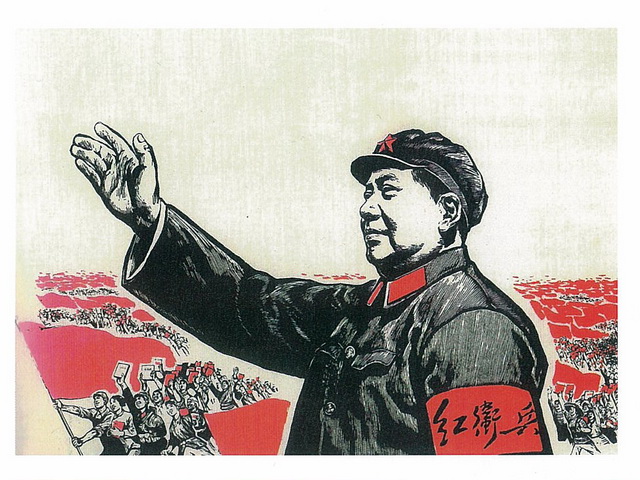
Mao Zedong: “New Year’s Day”
Posted: January 23, 2012 Filed under: English, Mao Zedong Comments Off on Mao Zedong: “New Year’s Day”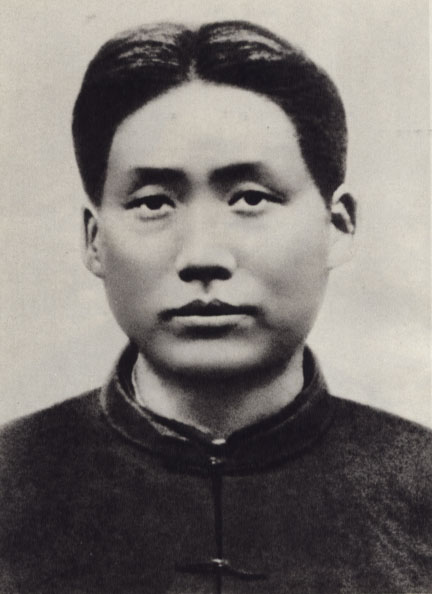
New Year’s Day (January 29th, 1930)
– to the tune of Ju Meng Ling
Ninghua, Chingliu, Kueihua–
What narrow paths, deep woods and slippery moss!
Whither are we bound today?
Straight to the foot of Wuyi Mountain.
To the mountain, the foot of the mountain,
Red flags stream in the wind in a blaze of glory.
* English translation from Mandarin Chinese *
The New Year…and Crows!
Posted: January 23, 2012 Filed under: Chinese (Mandarin), English Comments Off on The New Year…and Crows!January 2
I thought I wanted to say something
I looked at the snow then went back to the desk
Or perhaps I counted money or perhaps I did laundry
Crows flew in the suburbs flew by the front door
I waited quietly
like a hotpot in winter
There won’t be any more discounted plane tickets
I waited to sacrifice myself and then it was the new year
*
January 13
The new year’s bus
shines in the sunlight the dust shines too
the crows have no eyes
iron’s leaves the hearts inside of stones
last year the year before pale blue shoulders
slide toward the next wave
_____
© Yan Jun
Translations: © 2010, 2011,
Ao Wang and Eleanor Goodman
Special Thanks to PIW
_____
Editor’s note:
Yan Jun’s “new year” in these two poems
appears to be of the Western – not the
Lunar/Chinese – Calendar. But we have
posted them this Chinese New Year’s Day
(January 23rd) so as to contrast them
with Mao Zedong’s poem “New Year’s Day”.
_____
Contemporary Chinese poets: 1
Posted: January 23, 2012 Filed under: English Comments Off on Contemporary Chinese poets: 1I demand that the whole of mankind have the right to vote for
I demand an increase in birth control, the encouragement of
I demand the revision of constitutional law, deleting
I demand a ban on mahjong and KTV, the detainment of those who
I demand the abolition of art and of changing one’s life;
I demand that salt be rubbed in wounds, that wine be poisoned, that a
I demand the erection of two amps the size of buildings and the
I demand that you and I be together, never to be separated;
I demand memories, black flowers, stars that shine above bicycles
I demand the release of imprisoned words like
I demand demands, forbidden forbiddenments, annulled annulments,
I demand loud singing at the gates of hell and sleeping on the bus;
I demand that we maintain quiet . . .
_____
Born in Lanzhou in 1973, Yan Jun is a poet who’s also
a musician, giving live “hypnotic noise” concerts.
For him, writing poetry is a political act – witness
his list of “demands” in the poem above…
_____
© 2008, Yan Jun
Translation from Chinese: © 2011, Ao Wang and Eleanor Goodman
Special Thanks to PIW
_____
Contemporary Chinese poets: 2
Posted: January 23, 2012 Filed under: Chinese (Mandarin), English Comments Off on Contemporary Chinese poets: 2_____
Zhang Zao (1962-2010)
The Chairs Sit out in the Winter . . .
The chairs sit out in the winter, all in all
three of them—coldness being muscle—
spaced out in a line,
terrified of logic. Among angels,
there are not three who could
sit themselves down in them, waiting for
the barber who skates across a river of ice, though
ahead is still a large mirror,
magpies tidying away small coins.
The wind’s weaving loom weaves the surroundings.
The Void is Lord, remote
he stands on the outskirts, exhaling warm air,
features painted heavily, counting the chairs:
without touching it, he could eliminate
that middle position,
if he were to transplant that chair on the left
all the way to the farthest right, forever—
Such an assassin at the heart of
the universe. Suddenly,
in among the three chairs, that unwarranted
fourth chair, the one and only,
also sits out in the winter. Just as it was that winter . . .
. . . I love you.
_____

Elegy
a letter opens, someone says:
the weather’s turned cold
another letter opens
it’s empty, empty
but heavier than the world
a letter opens
someone says: he sings at the tops of his lungs from the mountain
someone says: no, even if the potato died
the inertia living inside it
would still bring forth tiny hands
another letter opens
you sleep soundly as a tangerine
but someone, after peeling you of your nakedness, says:
he has touched another you
another letter opens
they’re all laughing out loud
everything around them guffaws endlessly
a letter opens
a cloud-natural, river-smooth style on the rampage outdoors
a letter opens
I chew over certain darknesses
another letter opens
a bright moon hung in the sky
after another letter opens, it shouts:
death is real.
© Estate of Zhang Zao
Translations: © 2003, Simon Patton
Special Thanks to PIW
_____
After Mao Zedong’s death in 1976 Chinese poetry began to shift away from
the oratorical and inspirational toward the private – and the obscure.
From Hunan province, Zhang Zao went in his own direction, mixing
Western and Chinese worldviews, and distributed his poems via photocopies.
He lived abroad for a number of years and taught himself several languages –
something that both widened and strengthened his Chinese-language poetry.

 Zócalo Poets