Chinua Achebe: “Pine Tree in Spring” and “Their Idiot Song”
Posted: April 18, 2012 Filed under: Chinua Achebe, English | Tags: Black poets Comments Off on Chinua Achebe: “Pine Tree in Spring” and “Their Idiot Song” .
.
Chinua Achebe
Pine Tree in Spring
(for Léon Damas *)
.
Pine tree
flag bearer
of green memory
across the breach of a desolate hour
*
Loyal tree
that stood guard
alone in austere emeraldry
over Nature’s recumbent standard
*
Pine tree
lost now in the shade
of traitors decked out flamboyantly
marching back unabashed to the colours they betrayed
*
Fine tree
erect and trustworthy
What school can teach me
your silent, stubborn fidelity?
.
*Léon Damas, 1912-1978, French poet, born in French Guiana (“Guyane”); one of the founders,
along with Léopold Senghor and Aimé Césaire, of the “Négritude” literary and ideological movement
. . .
Their Idiot Song
.
These fellows, the old pagan said, surely are out of their mind – that old proudly impervious derelict skirted long ago by floodwaters of salvation: Behold the great and gory handiwork of Death displayed for all on dazzling sheets this hour of day its twin nostrils plugged firmly with stoppers of wool and they ask of him: Where is thy sting?
Sing on, good fellows, sing on!
Someday when it is you he decks out on his great iron bed with cotton wool for your breath, his massing odours mocking your pitiful makeshift defences of face powder and township ladies’ lascivious scent, these others roaming yet his roomy chicken coop will be singing and asking still but
YOU by then no longer will be in doubt!
. . .
Chinua Achebe was born in Nigeria in 1930,
of the Igbo People. He is a world-famous poet and writer,
and his first novel, “Things Fall Apart”, is among the most
widely-read books in African literature.
. . . . .
መልካም ፋሲካ / Melkam Fasika !
Posted: April 15, 2012 Filed under: Amharic, Elyas Mulu Kiros, English Comments Off on መልካም ፋሲካ / Melkam Fasika !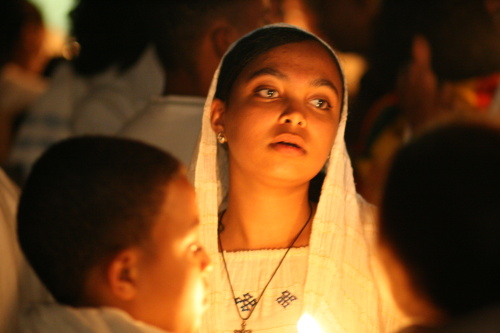
* * * * *
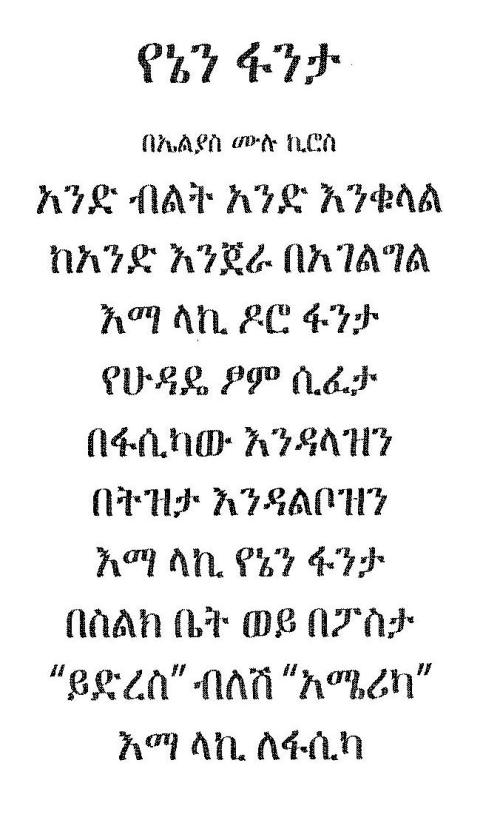
Elyas Mulu Kiros
“Missing Mom’s Cooking”
Here I crave
my mom’s cooking
on Easter eve
I die longing for
mom’s Doro Wot
mouth burning
spicy hot
And that Injera
flat bread
of primavera
that I enjoy
eating by hand
day after day.
I ask my mom
to send her son
the tasty spell
via cell phone
or aéropostale.
_____
Today, April 15th, is Ethiopian Easter Sunday.
We thank Elyas Mulu Kiros for this special 2012 Fasika poem !
कबीर Kabir: “Of the Musk Deer”: 15th-century Hindi poems
Posted: April 11, 2012 Filed under: English, Hindi, Kabir Comments Off on कबीर Kabir: “Of the Musk Deer”: 15th-century Hindi poems
Kabir (144o-1518)
Of the Musk Deer
Musk lies in the musk deer’s own nave,
But roam in the forest he does – it to seek;
Alike, God pervades heart to heart,
But men of the world this don’t conceive.
*
In man himself the Master dwells,
But man, deluded, knows not this,
So similar to the musk deer who
Again and again the grass sniffs.
*
The seeker of Ram*, says Kabir,
To the Singhal Island** did march;
When in himself he was convinced,
He found that Ram pervaded his heart.
*
God exists, profuse, in each place,
So don’t think He’s less here and more there,
Those who say He’s far – He is far,
Those who know Him near – He’s near.
*
I knew God to be far away,
But He is ubiquitous – here and there;
Thou didst know Him to be far off,
He’s far off though very near.
_
* Ram, one of the incarnations of Vishnu, and
the central character of the Ramayana epic
** Today known as Sri Lanka
_

Of the Virtueless
It drizzled in graceful drizzles,
On the stone fell showers of rain,
Soil melted when it got watered,
But the stone showed no mark of change.

Of Thinking
Who utters as wells forth the tongue
Without thinking what he doth say,
Holding the sword of his tongue in hand
The souls of others he doth slay.

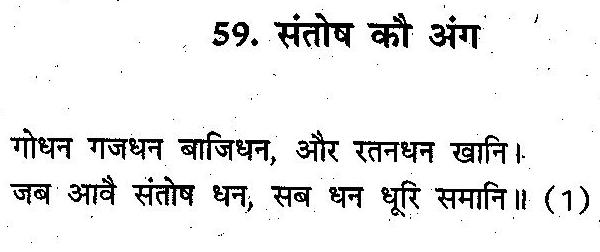
Of Contentment
Cow-rich, elephant-rich, horse-rich,
And rich treasures of precious stones,
All those riches are like the dust
Until to man contentment comes.
Of the Middle
If I say I’m Hindu, I’m not,
Nor as well a Muslim I’m,
An effigy of five elements
– in me plays the spark divine.
*
It’s not good in excess to speak,
Nor good in excess to keep mum,
To rain in excess is not good,
Nor good an excess of sun.


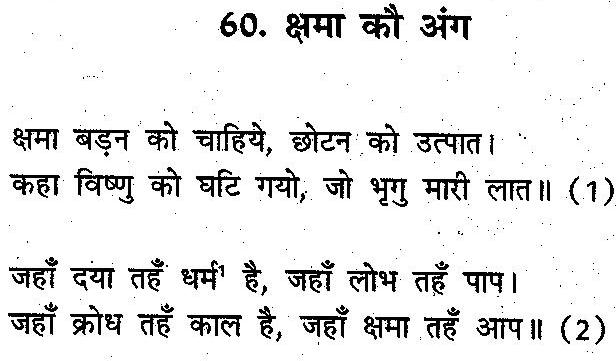
Of Pardon
Pardon suits the magnanimous,
One who is low mischiefs befit;
Speak! In what way did Vishnu lose
When Bhrigu a kick did Him hit?
*
Where there’s mercy there’s religion;
Where there’s avarice there’s sin;
Where there is anger there is Death,
Where there’s pardon there God dwells in.
Kabir was born in 1440 in Lahartara (modern-day Varanasi), on the sacred Ganges River of India.
His mother, a Brahmin widow, had given birth to him long past the death of her husband – hence she
was socially disgraced. She left her new-born in some shrubs where he was discovered and adopted by
Neema and Neeru, a Muslim couple who were weavers.
Kabir became a disciple of Ramananda, who revered Vishnu as one of the Forms of God.
But as his devotion to poetry grew hand in hand with the breadth of his religious education,
Kabir worked out his own distinctive spirituality, drawing upon both Hinduism and Islam,
and bringing together what is essential in each faith.
Biographer Evelyn Underhill wrote that upon Kabir’s death in 1518 ” his Muslim and Hindu disciples disputed the possession of his body; which the Muslims wished to bury, the Hindus to burn. As they argued together, Kabir appeared before them, and told them to lift the shroud and look at that which lay beneath. They did so, and found in the place of the corpse a heap of flowers, half of which were buried by the Muslims at Maghar, and half carried by the Hindus to the holy city of Benares to be burned – fitting conclusion to a life which had made fragrant the most beautiful doctrines of two great creeds. ”
Poems translated from Hindi into English by Mohan Singh Karki
Niyi Osundare: “Àlùpàyídà” / “Metamorphosis”
Posted: April 11, 2012 Filed under: English, Niyi Osundare Comments Off on Niyi Osundare: “Àlùpàyídà” / “Metamorphosis”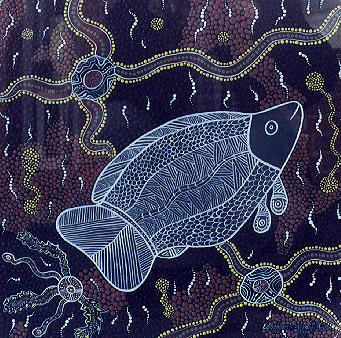
Niyi Osundare
Àlùpàyídà / Metamorphosis
I stay very long in the river
And I become a fish
With a head made of coral
And fins which tame the distance
Of billowing depths
*
I stay very long in the fish
And I become a mountain
With a mist-cradled crest
And feet carpeted by grass
Which sweetens dawnbreath with jasmine magic
*
I stay very long on the mountain
And I become a bird
With a net of polyglot straw
And songs which stir the ears
Of slumbering forests
*
I stay very long with the bird
And I become a road
With long dusty eyes
And limbs twining through the bramble
Like precocious pythons
*
I stay very long on the road
And I become a cigarette
Lighted both ends by powerful geysers,
Ash-winged firefly on nights
Of muffled darkness
*
I stay very long with the cigarette
And I become a clown
With a wide, painted face
And a belly stuffed to the brim
With rippling laughters
*
I stay very long with the clown
And I become a sage
With a twinkling beard
And fables which ply the yarn
Of grizzled memories
*
I stay very long in s-i-l-e-n-c-e
I become a Word.
Àlùpàyídà = the Yoruba word for Metamorphosis
_____
Niyi Osundare was born in Ikere-Ekiti, Nigeria, in 1947.
He is a poet, dramatist, and university professor,
now teaching in the USA.
Writing under successive dictatorial governments in Nigeria,
Osundare has always been passionate about free speech and
is political as a poet, knowing how very necessary that is in the
contemporary African context. “To utter is to alter” is his belief;
we must use the power of words.
Niyi Osundare: “La palabra es un huevo” y “Comida de oído” / “The word is an egg” and “Ear food”
Posted: April 11, 2012 Filed under: English, Niyi Osundare, Spanish, ZP Translator: Alexander Best Comments Off on Niyi Osundare: “La palabra es un huevo” y “Comida de oído” / “The word is an egg” and “Ear food”_____
Niyi Osundare (nace 1947, Nigeria)
“La palabra es un huevo” *
Mi lengua es un fuego rosado
No le permitas que prenda fuego a tus orejas
Cuando los proverbios chocan
En La calle de risas esperandos
Y momentos murmurandos sacan
Un canto fúnebre de los labios del sol atardeciente
Contaremos los dientes
De la luna
Y cantaremos coronitas
Para las estrellas desaparecidas…
La Palabra, es un huevo la Palabra:
Si se cae en el saliente
De una lengua tropezando
Se quiebra sin reunirse.
* un proverbio del idioma yoruba
_____
Niyi Osundare (born 1947, Nigeria)
“The word is an egg” *
My tongue is a pink fire
Don’t let it set your ears on fire
When proverbs clash
In the street of waiting laughters
And murmuring moments eke out
A dirge from the lips of the setting sun
We shall count the teeth
Of the moon
And sing little wreaths
For missing stars…
The Word, the Word
Is an egg:
If it falls on the outcrop
Of a stumbling tongue
It breaks
Ungatherably.
* a proverb from the Yoruba language
_____
“Comida de oído”
¿Lo has visto
a quién que puede alimentar a una multitud de orejas
Con siete pescados de imaginación
y tres panes de silencio?
¿Has visto a la Palabra
que brotó una serpiente
a la sorpresa frenética de Faraón?
Caminan estas Palabras sobre el mar
Y nunca se hunden.
_____
“Ear food”
Have you seen him
who can feed a multitude of ears
With seven fishes of fancy
And three loaves of silence?
Have you seen the Word
which sprang a serpent
to Pharaoh’s frenetic surprise?
These Words walk on the sea
and they never sink.
_____
Traducción del inglés al español / Translation from English into Spanish:
Alexander Best
Hope springs eternal…
Posted: April 8, 2012 Filed under: IMAGES Comments Off on Hope springs eternal…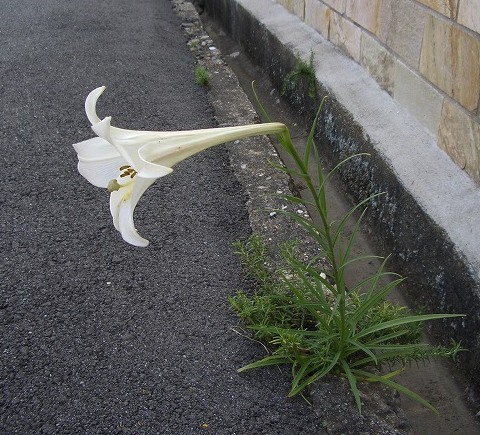
Claude McKay: “And some called it the Resurrection flower…”
Posted: April 8, 2012 Filed under: Claude McKay, English Comments Off on Claude McKay: “And some called it the Resurrection flower…”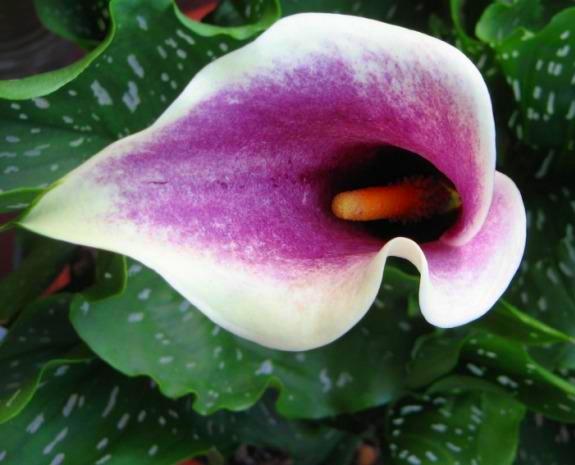
Claude McKay (Jamaican-American poet, 1889-1948)
“The Easter Flower”
Far from this foreign Easter damp and chilly
My soul steals to a pear-shaped plot of ground,
Where gleamed the lilac-tinted Easter lily
Soft-scented in the air for yards around;
*
Alone, without a hint of guardian leaf!
Just like a fragile bell of silver rime,
It burst the tomb for freedom sweet and brief
In the young pregnant year at Eastertime;
*
And many thought it was a sacred sign,
And some called it the Resurrection flower;
And I – a pagan – worshipped at its shrine,
Yielding my heart unto its perfumed power.
Poema para el Domingo de Pascua: “Cristo de Corcovado” por Jair Córtes / Poem for Easter Sunday: “The Corcovado Christ” by Jair Córtes
Posted: April 8, 2012 Filed under: English, Jair Córtes, Spanish, ZP Translator: Lidia García Garay Comments Off on Poema para el Domingo de Pascua: “Cristo de Corcovado” por Jair Córtes / Poem for Easter Sunday: “The Corcovado Christ” by Jair Córtes
Jair Córtes
(Poet and translator, born 1977, Calpulalpan, Tlaxcala, México)
“The Corcovado Christ”
There was no beginning to this path:
that slope is the continuation of the water that washed your face,
of the light you lit in that dark hour when you awoke.
Rise. And elevate yourself from among the living.
Languages. New tongues have met, all suddenly
” in the same boat”, joined together in the air.
And at the summit
His arms open above the clouds to receive you:
to receive you
to receive you,
and you arrive.
Every rock, petrified words, frozen eyes that shine.
His arms are open to receive you
you whose lips are glued to a passport,
and you don’t know how someone so huge, at such a meridian,
someone like Him, can have arms open wide, saying:
LOOK, see what I see,
this marvel is also for you.
_____
Jair Córtes
(Poeta y traductor, nace 1977, Calpulalpan, Tlaxcala, México)
“Cristo de Corcovado”
En este camino no hubo comienzo:
esa pendiente es la prolongación del agua con la que lavaste tu cara,
de la luz que encendiste en la hora oscura cuando despertaste.
Asciendes. Te elevas entre los vivos.
Lenguas. Idiomas encontrados de repente,
puestos en el mismo vagón para mezclarse con el aire.
Ya en la cumbre,
Sus brazos se abren encima de las nubes para recibirte:
para recibirte
para recibirte
y llegas.
Cada piedra, vocablos pétreos, ojos incrustados que relumbran.
Sus brazos están abiertos para recibirte,
a ti, que llegas con los labios cosidos al pasaporte
y no sabes cómo, qué tan grande, cuál meridiano,
quién como Él, que tiene los brazos abiertos y dice:
MIRA, mira lo que yo miro,
esta maravilla
también es para ti.
_____
Traducción del español al inglés / Translation from Spanish into English: Lidia García Garay




Two Nigerian Painters: Ehikhamenor and Ofili
Posted: April 7, 2012 Filed under: IMAGES Comments Off on Two Nigerian Painters: Ehikhamenor and Ofili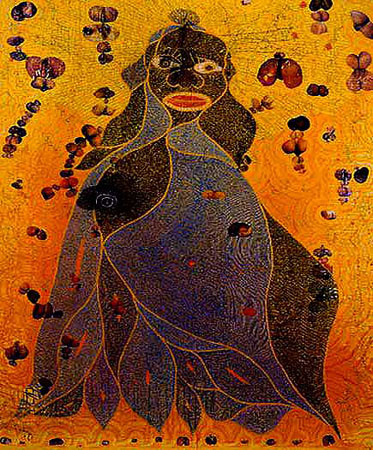
 Zócalo Poets